
4 min read
Preparations for Next Moonwalk Simulations Underway (and Underwater)
Every spring in Palestine, Texas, the wide-open fields around NASA’s Columbia Scientific Balloon Facility fill with students and faculty from across Louisiana. They arrive carrying sensors, laptops, and carefully engineered payloads they have spent months preparing. The goal is to send their experiments to the edge of space and return with meaningful data, while reflecting NASA’s long-standing commitment to develop future scientists and engineers.
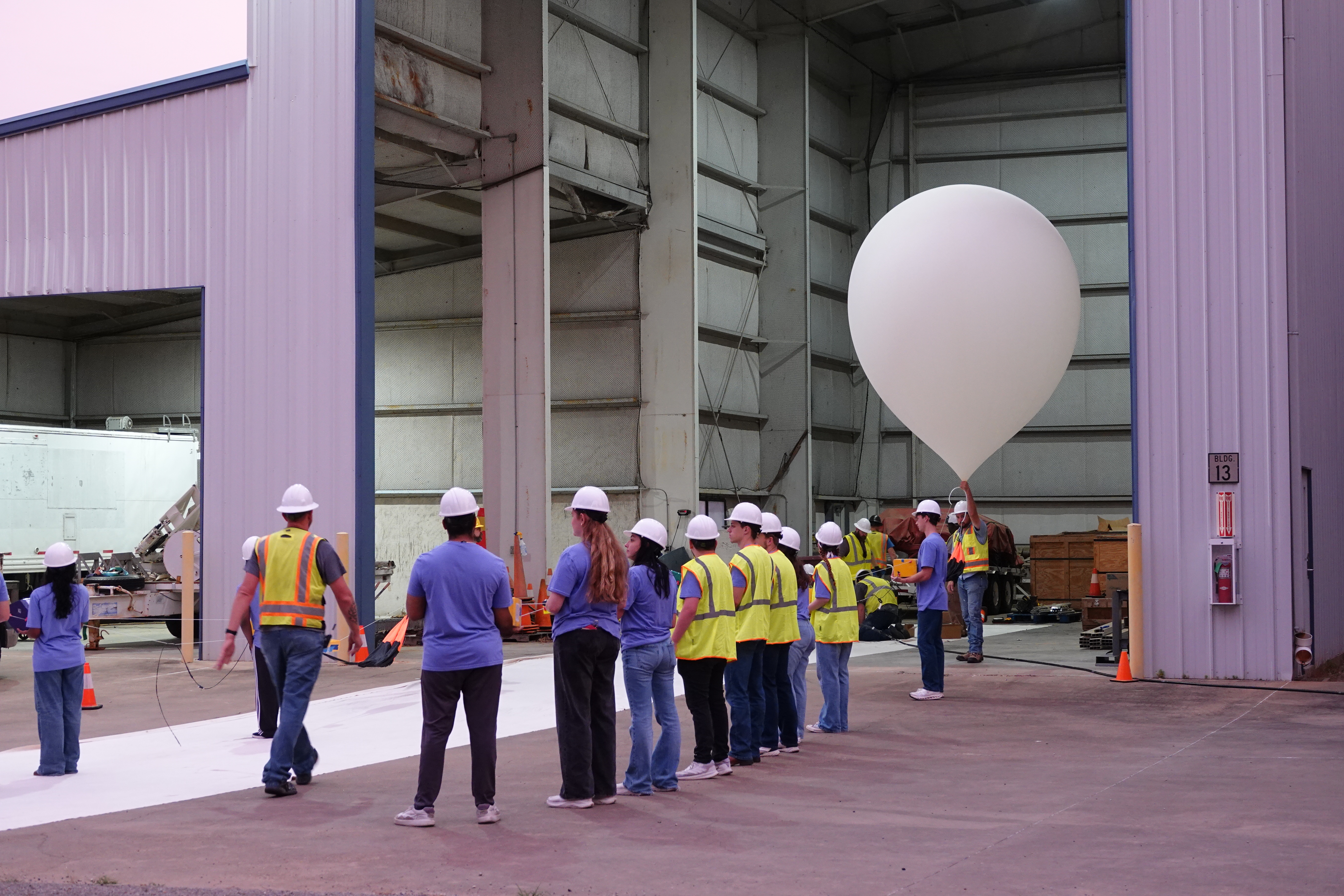
NASA’s student programs have long served as an entry point for hands-on exploration, connecting students to the agency’s missions and giving them direct exposure to real aerospace environments. Among these initiatives, the Louisiana Aerospace Catalyst Experiences for Students, also known as LaACES, provides a robust undergraduate introduction to scientific ballooning.
Just after dawn on May 19, student-crafted instruments lifted off smoothly from the flight line, notching the 74th and 75th launches in a long-running collaboration between the facility and Louisiana Space Grant Consortium. The 2026 LaACES campaign consisted of 11 payloads that were designed and built by nine Louisiana university teams — Louisiana State University, Northwestern State, Southeastern Louisiana State, McNeese State, Loyola University, and Southern University, as well as and one high school team, St. Joseph’s Academy, during the weeklong event.
The teams’ scientific objectives included a wide of research, such as atmospheric science, cosmic ray detection, thermal management, ultraviolet characterization, stratospheric wind analysis, and solar cell performance.
Before arriving in Texas, students advanced their mission concepts through a structured sequence of design reviews modeled after NASA’s engineering lifecycle. From preliminary design to flight readiness, each team defended technical decisions, refined their payloads, and demonstrated their readiness for launch.
Once cleared for flight by program directors Doug Granger and Aaron Ryan, who oversee the LaACES initiative, the students shifted their work to Palestine, Texas, where the Columbia Scientific Balloon Facility supported the 2026 LaACES campaign. Facility personnel provided daily weather briefings, performed helium fills for both latex balloons, and offered launch-line guidance to ensure safe and successful operations. “We enjoy being able to support the students’ launches here and hope to help them cultivate a love for ballooning,” said Hugo Franco, operations manager at the balloon facility.
The two flight trains of associated student payloads, LACES-74 and LACES-75, on May 19 marked the start of the program’s first launch window. The balloons, capable of supporting 7- to 9-pound payloads, ascended to near-space altitudes and were monitored using various communication and tracking systems. Both missions completed their flights successfully and were recovered roughly 60 miles north of the launch site near Ben Wheeler, Texas.
“My most memorable experience during the course of this year was seeing the plots for the first time post flight,” said Savannah Matlock, a Louisiana State University student. “When we saw the data behave in the way we’d expected it to, and saw the science we were able to demonstrate, it makes it all worth it. It’s a great feeling to see all of your hard work pay off.”
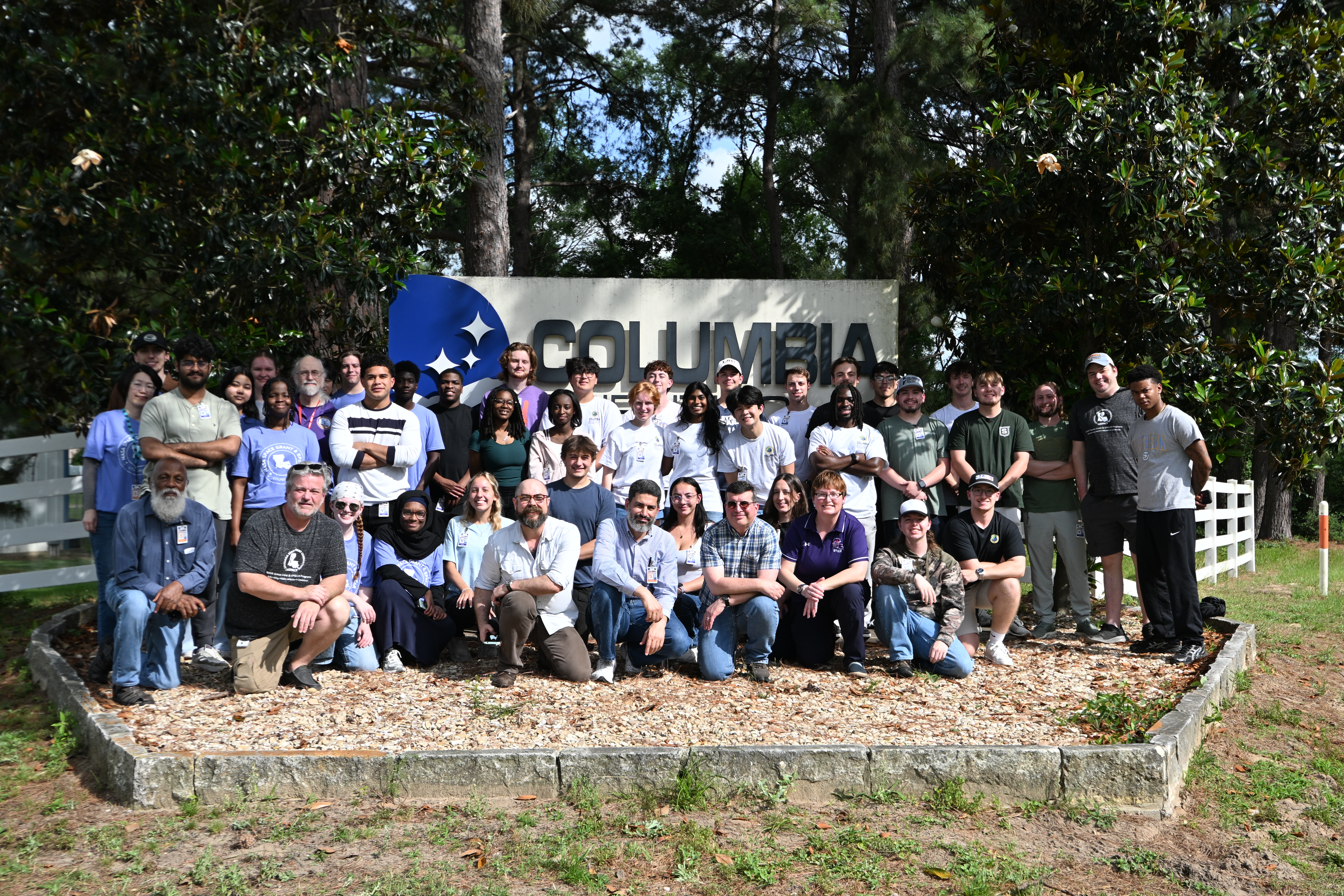
Following recovery, student teams analyzed their sensor data and environmental measurements and then presented their findings to balloon facility engineers and technicians along with faculty mentors and peers.
Programs like LaACES mirror the operational environment of NASA’s broader Scientific Balloon Program. NASA scientific balloons are more than just “weather balloons”: The reality is far more sophisticated. NASA Columbia Science Balloon Facility supports the launch, tracking, and recovery of large scientific balloons capable of carrying advanced research instruments to the edge of space. These flights support investigations in astrophysics, atmospheric science, planetary research, technology demonstrations, and more.
By placing students in this ecosystem, LaACES acts as a bridge between academic learning and national research operations. Students witness firsthand how scientific experiments are prepared, integrated, launched, tracked, and recovered — experiences that can reshape career paths and open doors to future opportunities within NASA, academia, and aerospace industries.
Funded by NASA’s National Space Grant College and Fellowship program, LaACES is a statewide program of the Louisiana Space Grant Consortium. Since its inception, LaACES has supported more than 500 students across 13 higher‑education institutions, launching over 60 balloon flights and roughly 135 unique payloads. As NASA continues to advance scientific discovery, programs like LaACES help ensure a strong pipeline of future innovators. For these Louisiana students, watching their payload rise into the sky is more than a technical milestone — it is a defining moment, a spark that turns curiosity into possibility.
Details
Explore More
from NASA https://ift.tt/iwNjk4O


No comments:
Post a Comment