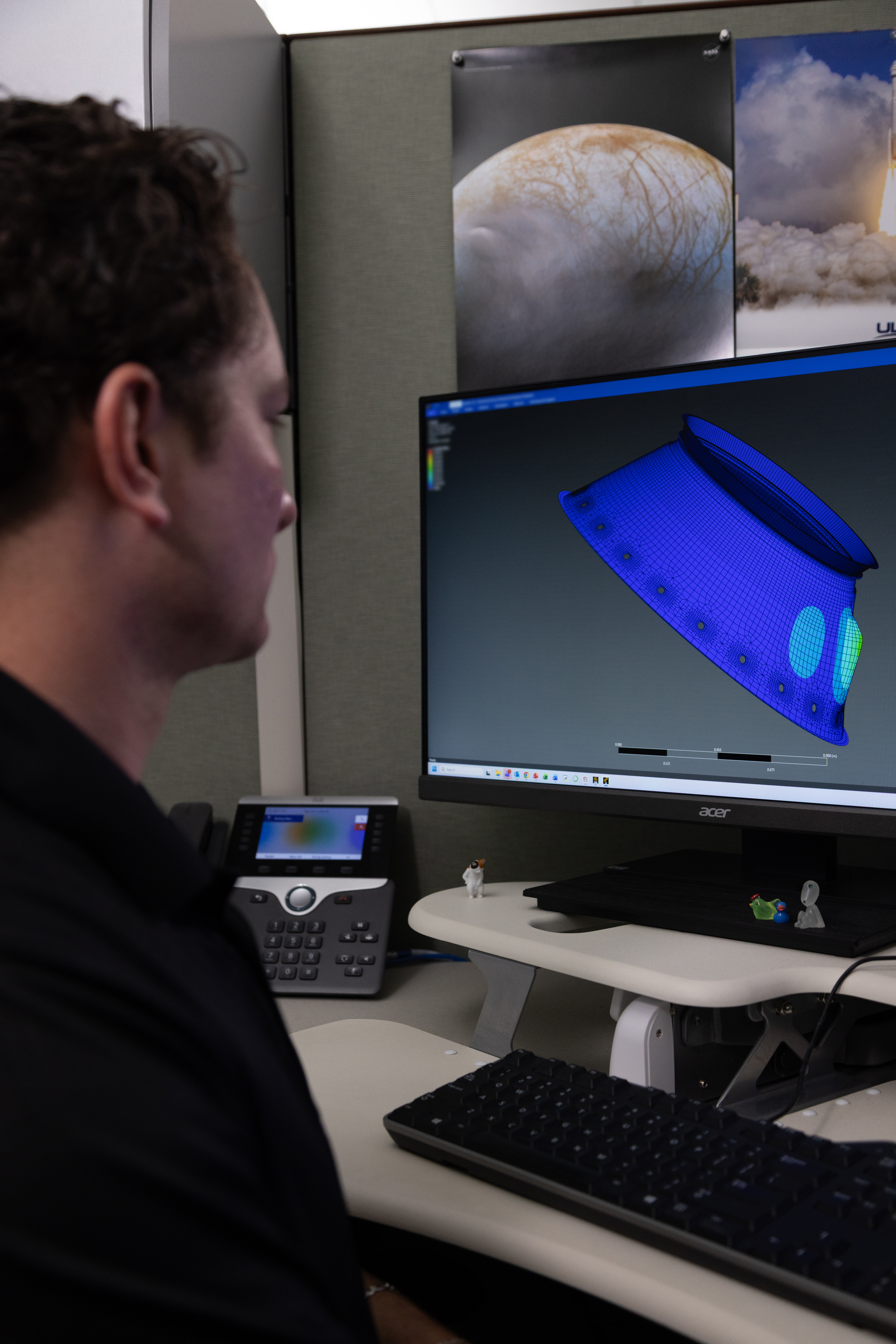
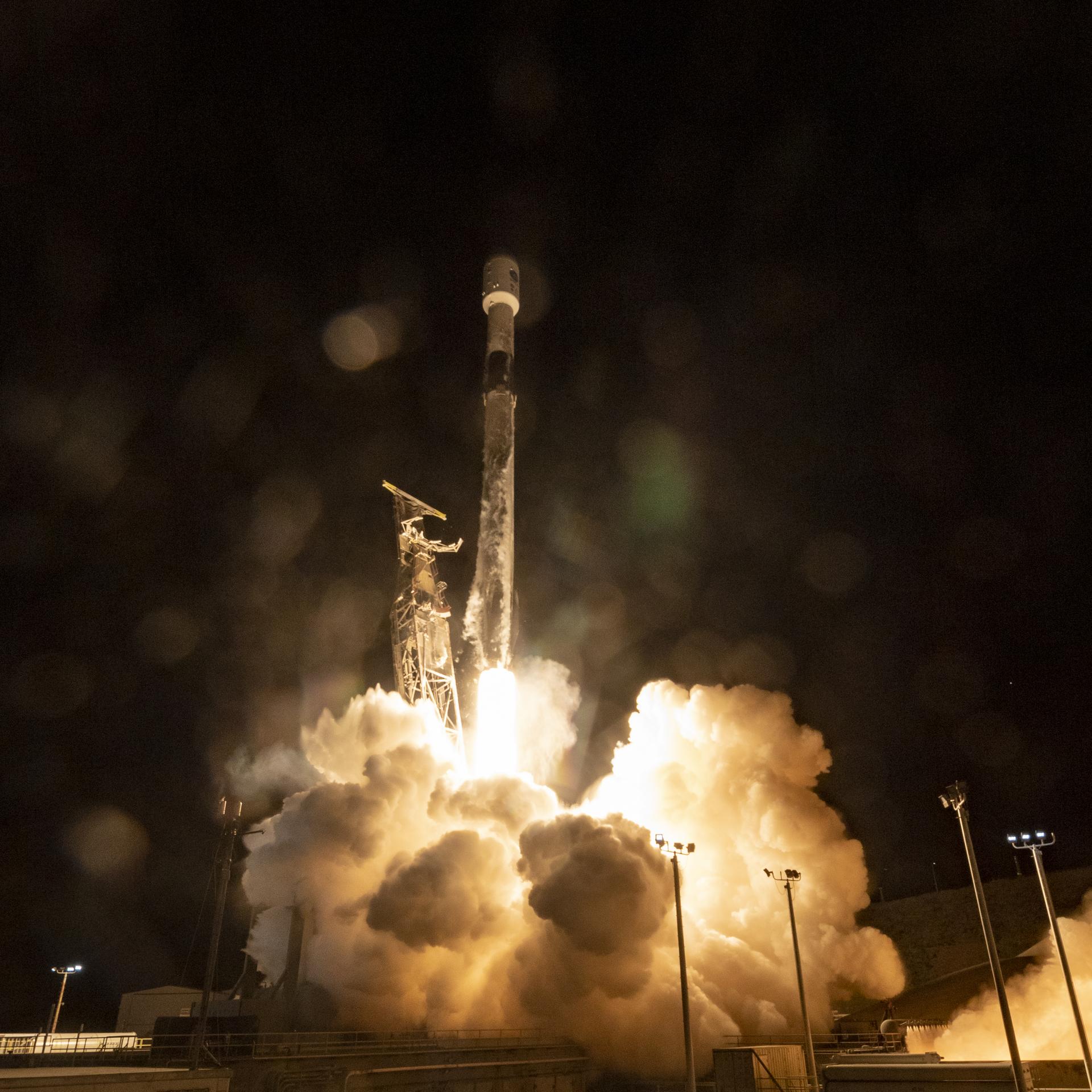
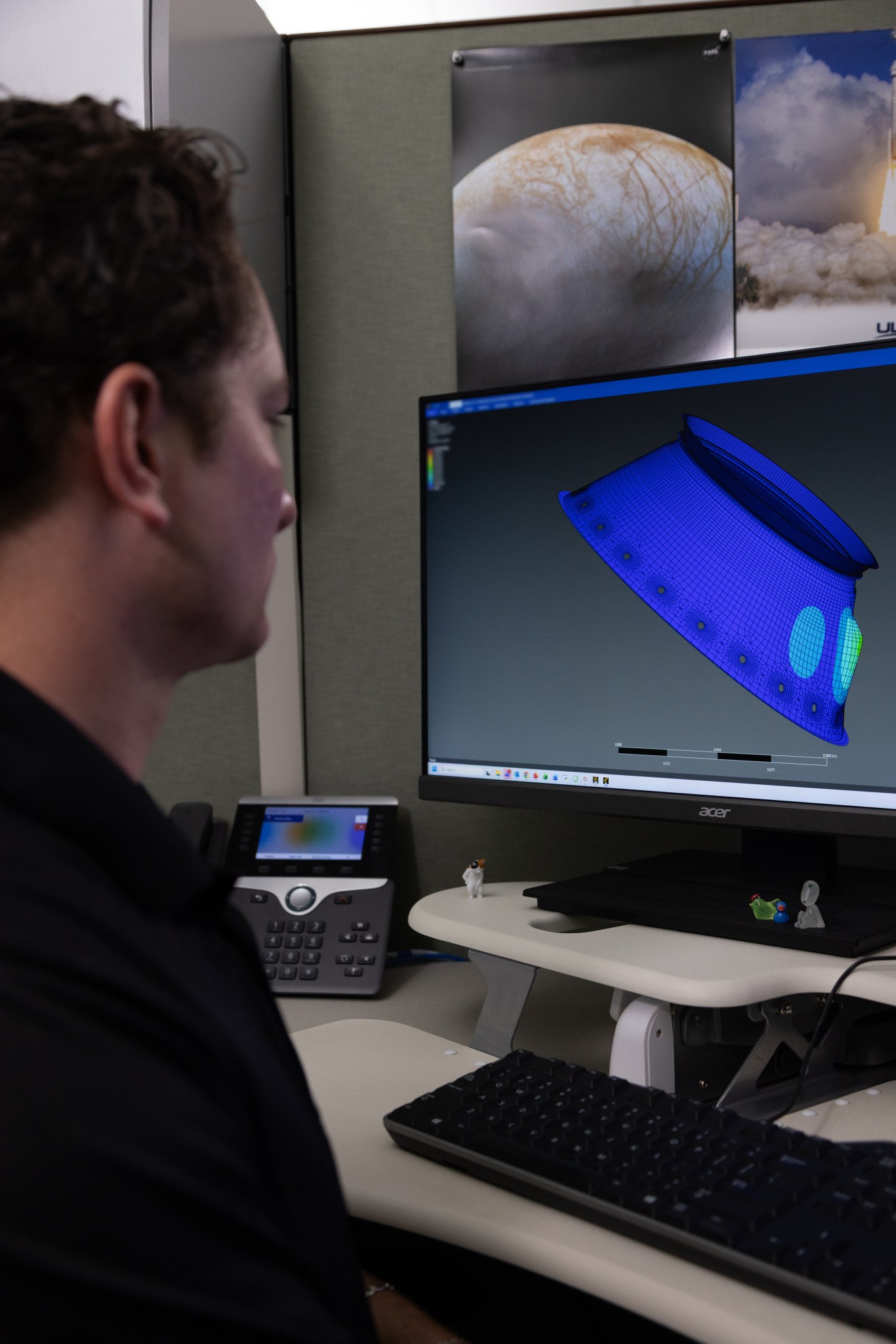
Stirling Allen, part of the Dynamic Environments Group with NASA’s Launch Services Program Office, showcases a commercial digital software at NASA’s Kennedy Space Center in Florida. The software performs finite element modeling to support shock and vibration analysis and ensure spacecraft and rockets can withstand harsh vibration, shock, stress, or other physical forces before launch, strengthening mission safety in the process.
NASA/Clayton Rougelot
Rockets vibrate, shake, and flex intensely as they climb into space, and spacecraft packed with delicate scientific instruments must survive those forces. Before any rocket leaves the ground, NASA engineers work to predict how those stresses will affect every part of a spacecraft.
To do that, engineers in the Dynamic Environments Group with NASA’s Launch Services Program Office at the agency’s Kennedy Space Center in Florida have streamlined how they ensure spacecraft and rockets can withstand harsh vibration, shock, stress, or other physical forces, strengthening mission safety in the process.
Using a commercial digital software tool in a new way, the engineers developed a standardized modeling workflow for finite element modeling to strengthen shock and vibration analysis and ensure hardware is prepared for the extreme environments of launch and ascent.
“This computer-based method helps predict how rockets and spacecraft behave under extreme conditions before hardware is built and helps identify weak spots and potential failure risks early so the team can address the findings,” said Brian Beaver, chief of the Flight Analysis Division with the Launch Services Program Office at NASA Kennedy.
The team recently used the software for the first time while certifying a commercial launch provider’s rocket selected for a NASA mission. The commercial partner provided vibration testing but not shock testing. The Dynamic Environments Group determined shock testing was needed and used a template the group created to run what-if comparisons, visualize structural behavior, and answer complex questions that would have required extensive manual modeling in the past. The team verified the company’s testing results for flight environments, and the analysis provided new insights addressing shock during transport.
“We are using a tool that’s existed for decades, but it’s not normally used by the dynamic environments disciplines,” said Alex Hardt, aerospace engineer with the Launch Services Program Office at NASA Kennedy. “But we’re changing that. We’re using it in a relatively new area of dynamics.”
Although rockets and spacecraft are designed to absorb shocks and vibrations, those forces can cause wear and tear or potentially flight failures, especially during launch and ascent.
“We define how severe the random vibration levels and shock levels are, and then we verify that all the parts going on future rockets have been tested to those levels, maximizing their longevity,” Hardt said.
Software time saver
For decades, engineers have estimated shock and vibration environments using rules of thumb or by scaling previous data to estimate how each rocket component or spacecraft equipment would be impacted once assembled and flown. The approach worked, but relied heavily on engineering judgment and simple approximations drawn from past missions.
Because most dynamic environments engineers use finite element modeling tools infrequently, they often need to re-learn complex workflows. The software replaces older tools and provides a standard template that guides engineers more quickly and thoroughly through vibration profiles and shock conditions.
Finite element analysis is a powerful simulation technique that breaks a complex structure into smaller components so computers can accurately predict how a spacecraft or rocket could respond to specific forces or launch environments. This is important because issues can be addressed on the ground; once the rocket leaves the launch pad, most problems cannot be repaired or corrected, making early identification essential.
“We’ve used it to get really valuable insight very quickly into verifying a provider’s system,” Hardt said. “It’s already provided some really deep insight into something that normally takes a lot of effort.”
Hardt says having the ability to visualize non-intuitive dynamics problems using finite element models also highlights the software’s valuable impact on learning, efficiency, and alignment with NASA’s people focused culture. The workflow can help the engineers share knowledge, refine assessments with additional flight data, and increase proficiency with modeling tools. This capability already has saved months by allowing the team to run analysis independently without having to request and wait for analysis reports or data, and by helping them identify risks that weren’t previously considered.
NASA’s Launch Services Program Office is responsible for launching rockets delivering spacecraft that observe the Earth, visit other planets and explore the universe, from weather satellites to space telescopes to Mars rovers. The team is constantly adopting new tools like this to give the agency the highest practical chance of success for each mission.
Preparations for Next Moonwalk Simulations Underway (and Underwater)
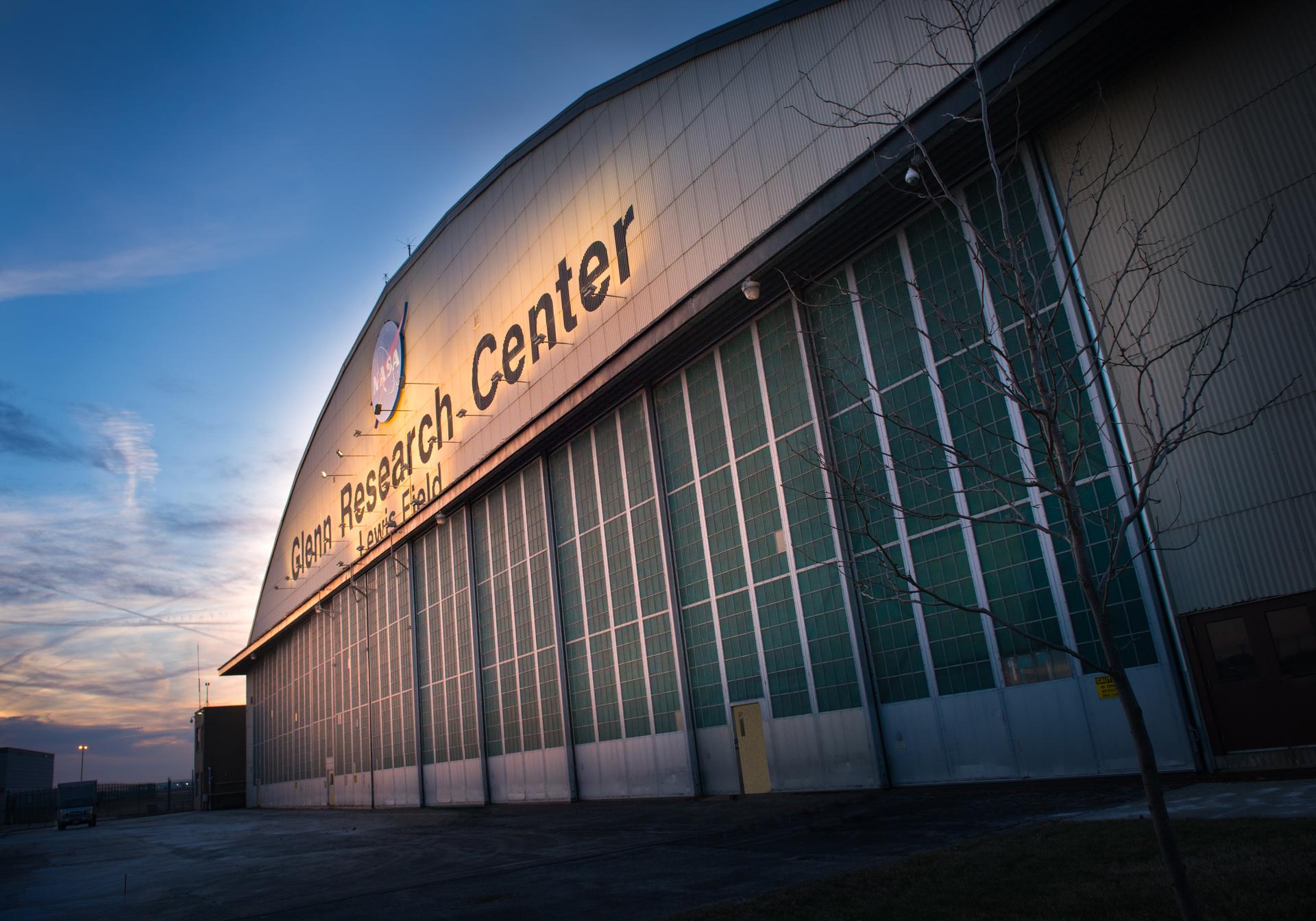
Research teams at the NASA Glenn Research Center perform experiments in world-class facilities such as the 9- by 15-Foot Low-Speed Wind Tunnel (9 x15 LSWT), the Aero-Acoustic Propulsion Laboratory (AAPL), the Small Hot Jet Acoustic Rig (SHJAR), the Nozzle Acoustic Test Rig (NATR), the DGEN AeroPropulsion Research Turbofan (DART), and the Acoustical Testing Laboratory (ATL).
9×15 Low-Speed Wind Tunnel (9×15 LSWT)
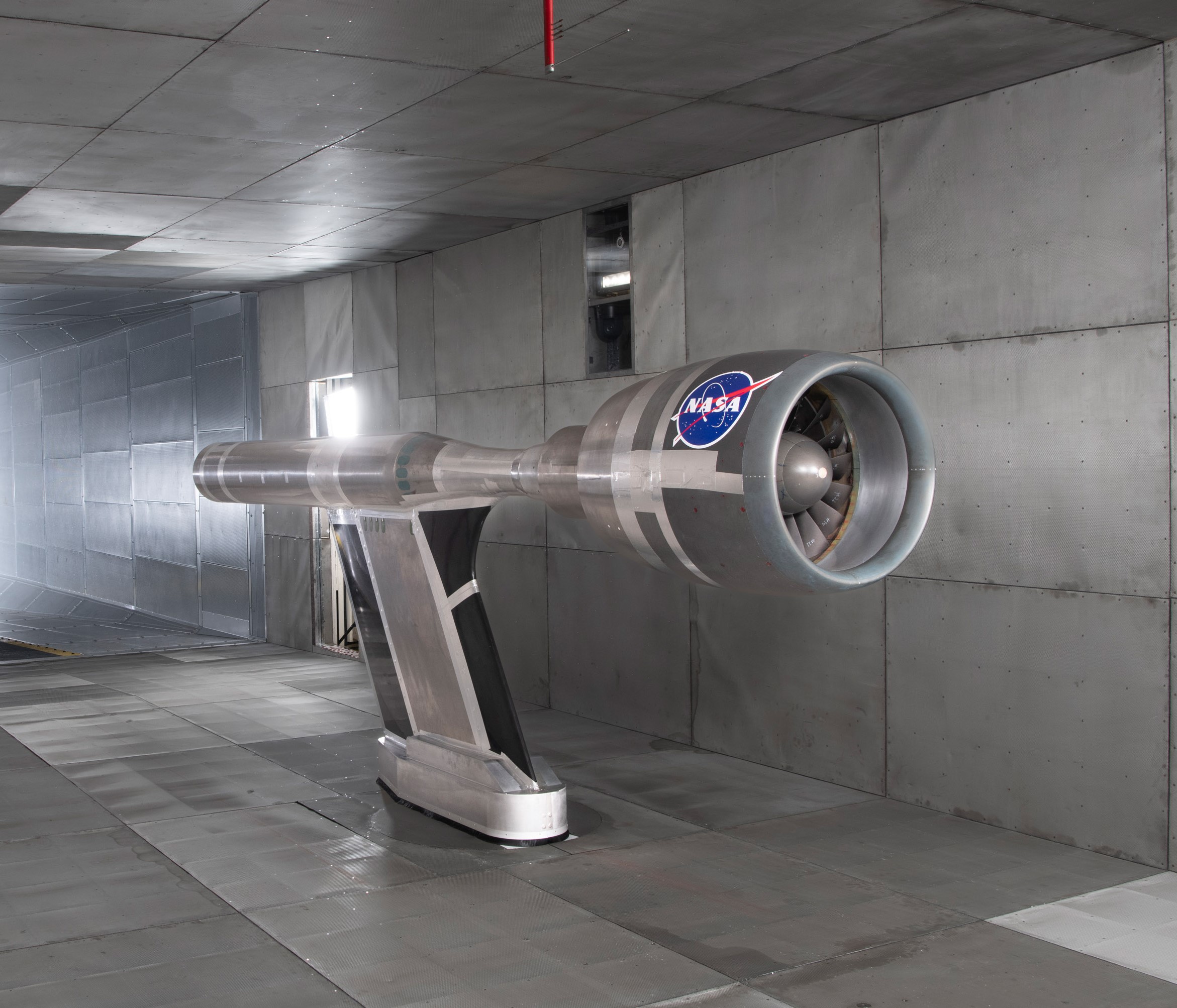
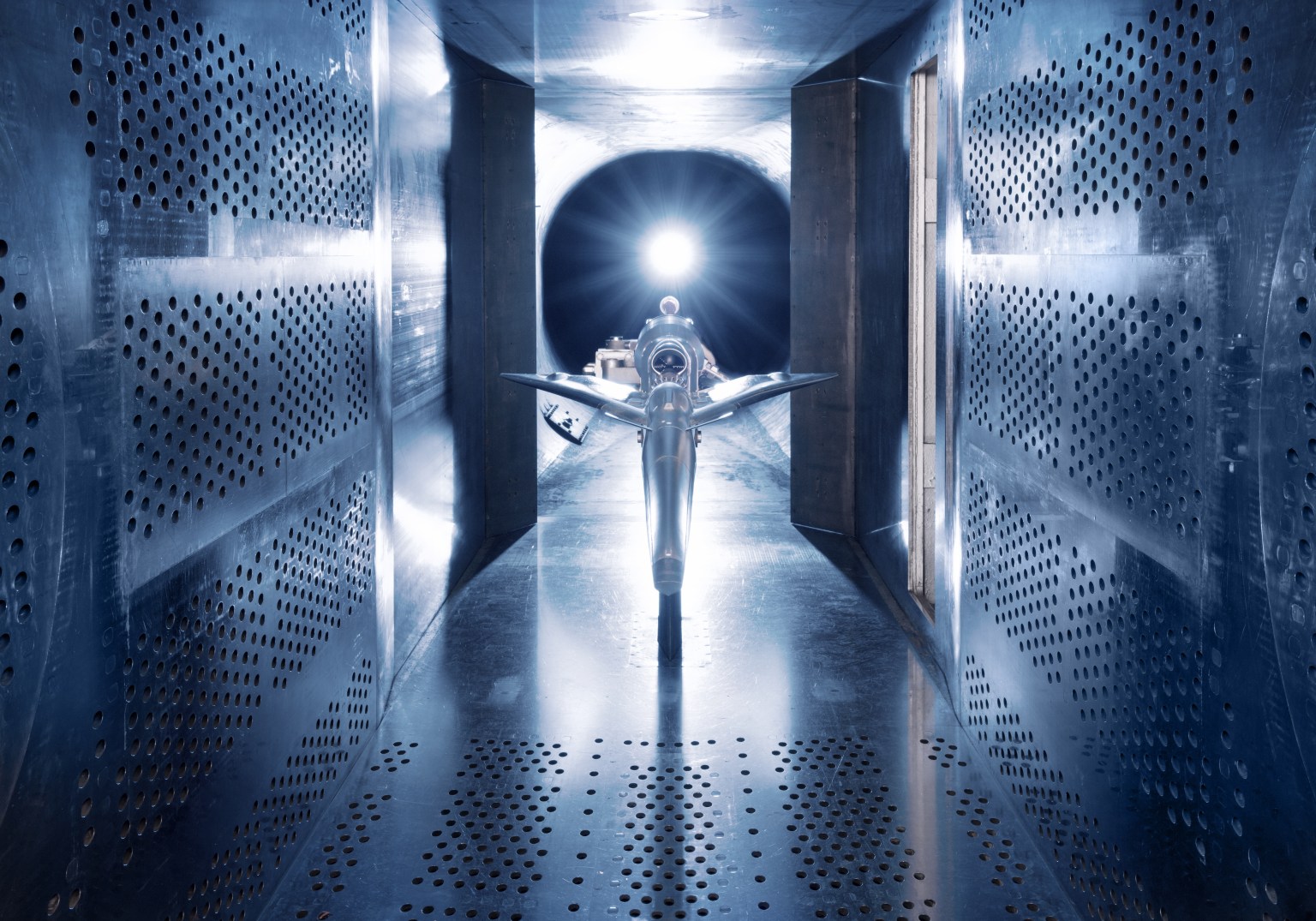
The 9- by 15-Foot Low Speed Wind Tunnel is specially designed to give researchers a controlled environment to study aircraft engine aerodynamics and acoustics at takeoff and landing conditions. This helps us to reduce noise in communities near airports. Major modifications were completed in 2019 to improve the flow and lower the background noise of the tunnel. A new 5-sensor traversing microphone rake helps measure sound produced by scale experimental propulsors. Read more about the capabilities of the 9 x 15 LSWT on our facilities page.
Advanced Ducted Propulsor (ADP) Fan Commissioning Test (side view) in the 9×15 Low-Speed Wind Tunnel.
NASA
Aero-Acoustic Propulsion Laboratory (AAPL)
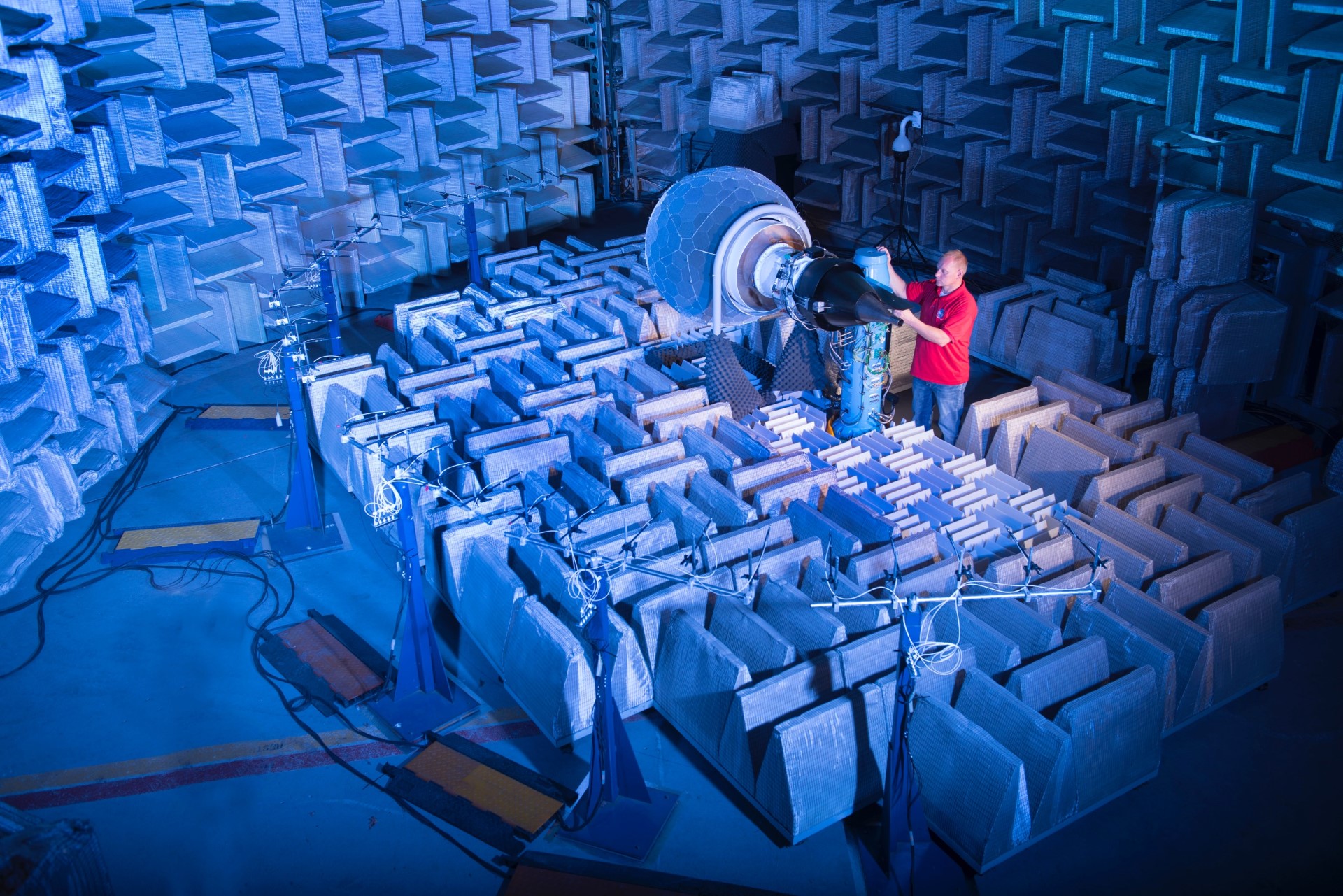
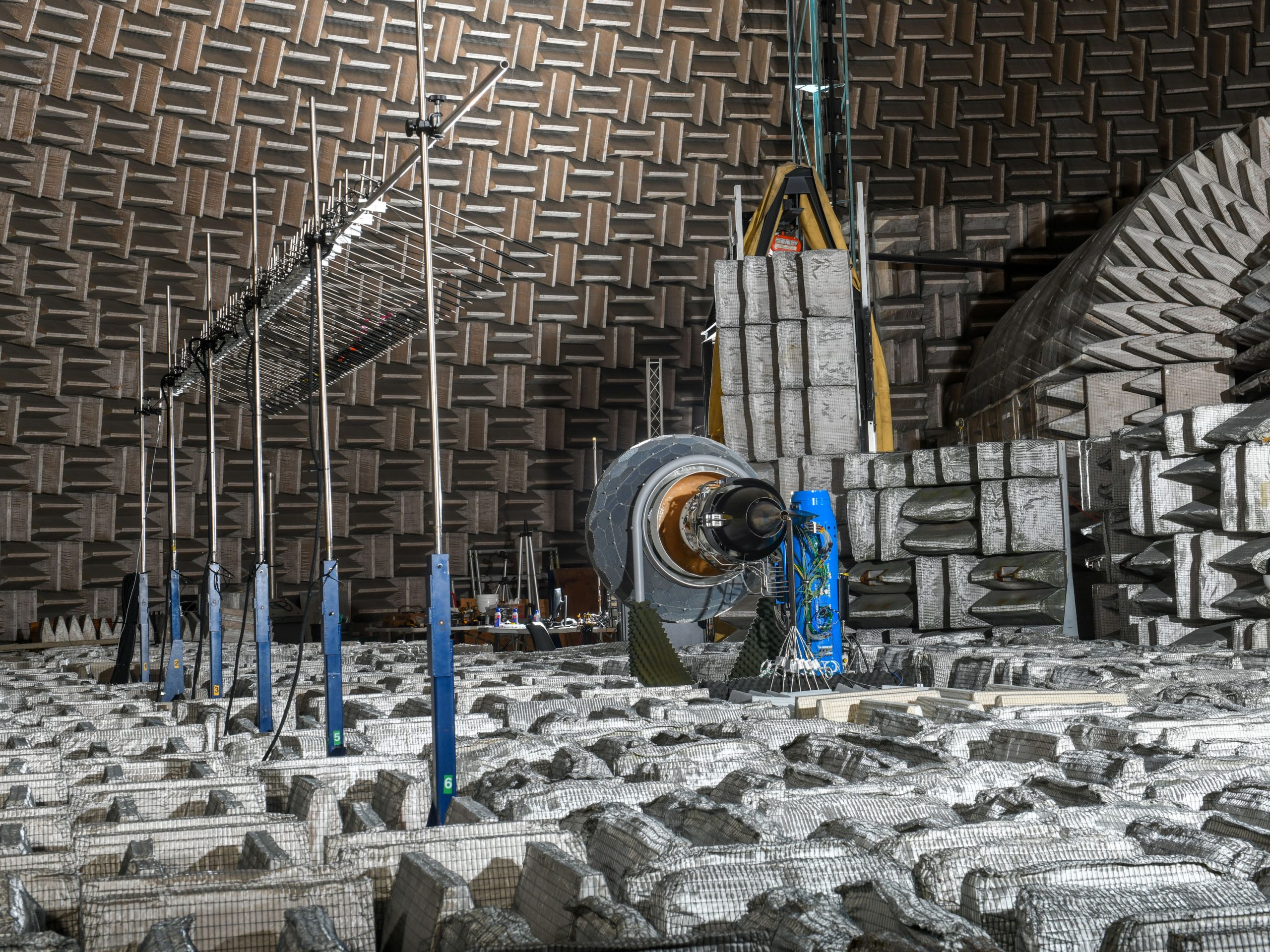
The Aero-Acoustic Propulsion Laboratory (AAPL) is a dual-purpose 65-foot radius geodesic dome used to reduce community noise and perform aeroacoustic tests of aircraft engines and engine components. The test area inside the dome can be configured as a hemi-anechoic or anechoic chamber. There are no echoes in the dome during tests because 17,000 custom-designed 2-ft thick fiberglass wedges are mounted to the inside surface of the dome walls and placed on the floor and around test rigs to absorb sound and prevent sound reflections. When AAPL was constructed in 1993, it was the first known free-standing geodesic dome to include materials to reduce transmission of sound through the walls and absorb sound within it. AAPL currently houses the Nozzle Acoustic Test Rig (NATR), Small Hot Jet Acoustic Rig (SHJAR), and the DGEN 380 Aeropropulsion Research Turbofan (DART). Read more about the capabilities of the AAPL on our facilities page.
The Aero-Acoustic Propulsion Laboratory at The NASA Glenn Research Center in Cleveland is an anechoic chamber used to measure noise from experimental aircraft engines such as the DGEN 380 Aeropropulsion Research Turbofan (DART) shown here.
NASA/Bridget Caswell
Small Hot Jet Acoustic Rig (SHJAR)
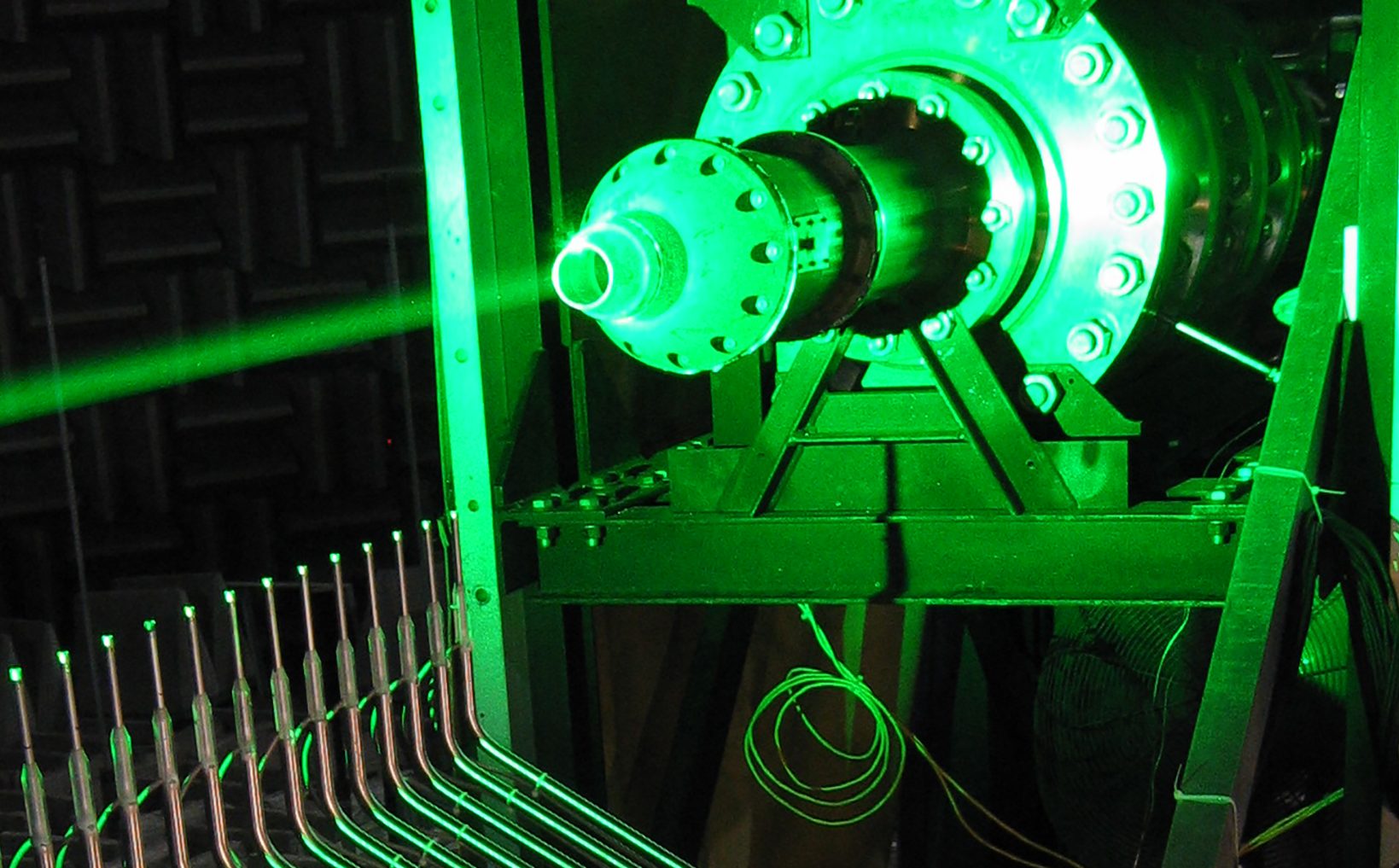
SHJAR is one of three rigs installed inside the anechoic dome of the Aeroacoustic Propulsion Lab. It can be used to test single stream nozzles up to 5 cm in diameter, Mach 2.0 and 800 K. SHJAR is a key tool in connecting the dots between nozzle geometry, jet flow, and noise. Creative nozzle designs are inexpensively created for this rig, and their impact on flow and noise is measured with world-leading measurement techniques. Researchers at NASA Glenn have been using SHJAR to develop advanced flow measurement techniques like Rayleigh Scattering, Raman Scattering, digital Schleiren, and real-time Particle Image Velocimetry. Three-dimensional microphone arrays have been deployed to map the sources of the noise. These techniques hold the promise of unlocking some of the mysteries of how the turbulence caused by the nozzle creates noise. The data from this rig is used to validate the computer codes that are being developed to calculate jet noise. Better noise prediction codes will help engineers design quieter nozzles.
Among the many firsts in turbulent jet research produced on SHJAR, time-resolved measurements of turbulent temperature were recently made using Raman-based optical methods, achieving high-frequency measurements of thermodynamic temperature fluctuations needed to complete turbulence models used in heat transfer as well as jet noise. In 2006, researchers had used the first time-resolved particle image velocimetry to measured space-time correlations of turbulent velocities in hot jets, a flow statistic key to the production of noise. Time-resolved velocimetry was also used to map convection speeds of turbulence, another flow metric required by jet noise theory but previously unavailable in hot jets.
The SHJAR is not only a good place to develop advanced diagnostic techniques, it has been a good testbed for exploring canonical problems in jet noise such as how the installation of the jet on an aircraft changes the noise produced by the jet. Jet-surface interaction, where the plume of the jet interacts with the wings, flaps, and tail of an aircraft, was identified as a fundamentally different noise mechanism in SHJAR tests.
Most of these ground-breaking measurement techniques and practical noise insights first developed on the relatively simple SHJAR have been deployed on the high-fidelity Nozzle Acoustic Test Rig (NATR), co-located in the Aero-Acoustic Propulsion Lab. Read more about the capabilities of the SHJAR on our facilities page.
Simultaneous measurements of turbulent flow and near-field acoustics in the Small Hot Jet Acoustic Rig (SHJAR)
NASA
Nozzle Acoustic Test Rig (NATR)
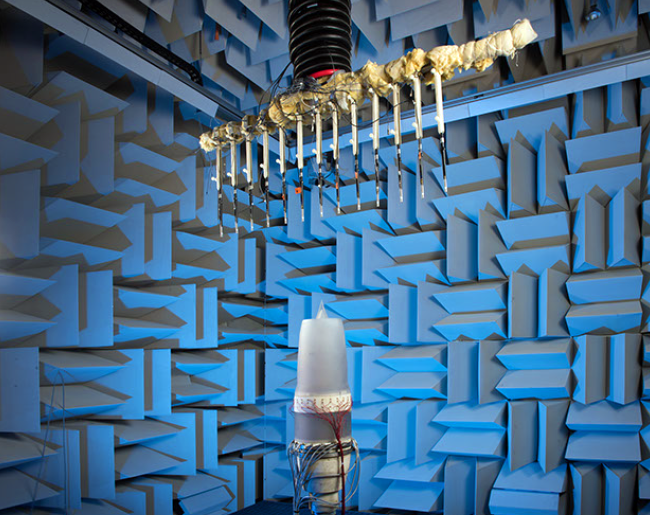
The Nozzle Acoustic Test Rig (NATR), a free-jet wind tunnel, plays a key role in evaluating jet noise reduction concepts so that only the most promising concepts are selected for full-scale engine tests. Scale models of nozzles from both military and commercial aircraft engines can be tested in the NATR, which is one of three test rigs housed in the NASA Glenn Aero-Acoustic Propulsion Lab. The NATR can simulate take-off and landing flight conditions up to Mach 0.35. A jet engine simulator with up to three streams of air at a variety of pressures and temperatures simulate the flow of a turbofan engine to evaluate advanced nozzle concepts. The arc of microphones overhead simultaneously measures the far-field noise at all angles, allowing accurate translation of measurements to those of an actual aircraft flying overhead. The NATR enables engineers to evaluate a number of nozzle noise reduction concepts at a fraction of the cost and time required for a full-scale engine test.
Over its 30-year history, NATR has been the origin of many important jet noise breakthroughs. First built to support jet noise testing for the High-Speed Research program on commercial supersonic airliners, the facility has hosted many test programs led by NASA and industry. The chevron nozzles seen flying on today’s aircraft were first ‘discovered’ during a NASA-led test campaign in 1997. Over the years industry has used the rig to develop noise prediction methods for near-term designs. NASA has explored low-noise concepts for engines that are not yet available, such as engines with dual-fan systems. Recent tests have measured the noise likely to be heard from supersonic airliners, reducing the risk that these unique aircraft will not be allowed to fly from current airports. The tests also point to technologies to reduce their noise, allowing the aircraft designers to make the aircraft more efficient and environmentally acceptable.
The ability to test nozzle with flight is critical, as this has a strong impact on the noise produced by the relative velocity of the jet and the surrounding air, and it is a key feature allowing noise measurements to be directly transformed to what would be heard from a real airplane flying overhead. The large size of the anechoic space around the NATR is also critical to measuring the true acoustic far-field of the jet nozzle. The NATR in the Aero-Acoustic Propulsion Lab is one of the very few facilities in the world where these measurements are possible, and the only facility where both flow diagnostics and acoustics can be made on the same rig, a key capability in understanding the relationship between jet flow and noise. Read more about the capabilities of the NATR on our facilities page.
Harware photographs of Lear Jet Nozzle Test 2018 in the Aero-Acoustic Propulsion Laboratory AAPL, Nozzle Acoustic Test Rig, NATR
NASA/ Rami Daud
DGEN AeroPropulsion Research Turbofan (DART)
DGEN 380 is the primary component integrated into the NASA Glenn Research Center’s DGEN Aero-propulsion Research Turbofan (DART). It serves as a flexible, relevant, experimental aeroacoustic and aero-performance test bed, providing valuable information throughout NASA’s technology maturation process for a variety of multidisciplinary research that includes turbofan noise, engine controls, installation effects, and measurement technologies.
Recent tests were completed August 2019 to develop a better understanding of propulsion-noise sources to enable improved turbofan noise-prediction methods and noise-mitigation techniques. Simultaneous acoustic measurements were obtained using a circumferential infinite-tube-probe array at the core-nozzle exit in conjunction with sideline and farfield microphone arrays. The extensive data set will allow for the application of advanced source-separation and phased-array methods to elucidate not only the core-noise structure, but also the propagation characteristics of other propulsion noise sources. Read more about the capabilities of the DART on our facilities page.
DGEN 380 AeroPropulsion Research Turbofan (DART) in the Aero-Acoustic Propulsion Laboratory.
NASA
Acoustical Testing Laboratory
The Acoustical Testing Laboratory at NASA GRC is used to support NASA’s human space exploration and aeronautics research missions. The ATL is a versatile test chamber that can be configured as an anechoic or hemi-anechoic chamber. Dense rubber material in the walls and ceiling of the ATL absorb or reflect sound from the outside. 34-inch deep fiberglass wedges that line the walls and floor are designed to absorb 99% of incident sound above 100 Hz which helps create an ideal environment for making acoustic measurements. A separate control room is attached for any noisy equipment or persons needed to perform the measurements.
The ATL has been used to quantify the noise emissions of experiments performed on the International Space Station, to measure noise sources and levels from electric motors, to calibrate microphone equipment, to measure the effectiveness of acoustic liners for aircraft engine models and to evaluate the over-the-wing engine placement for reducing takeoff and landing noise. Recent tests in the ATL have also included a scale model of a supersonic aircraft engine inlet and a spacecraft cabin ventilation fan.
Preparations for Next Moonwalk Simulations Underway (and Underwater)
To measure airflow and sound, research teams at the NASA Glenn Research Center use special instrumentation like particle image velocimetry, hot wire anemometry, Raman spectroscopy, microphones in phased arrays or continuously rotating rakes. The global aviation noise reduction community relies on data from NASA GRC experiments to validate theory and noise prediction software.
Rotating Rake Mode Measurement System (RRMS)
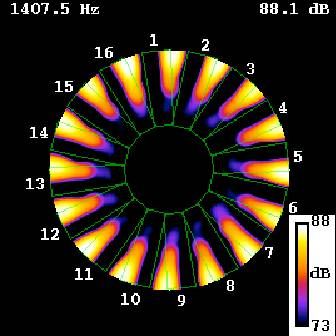
Hear an annoying tone from your turbofan engine? Engineers might prescribe an advanced liner or specially tuned active noise control system to quiet it down.
To get it right, though, more information about the modal content of the tone is needed. This kind of data can’t be measured with a stationary microphone, which is why NASA Glenn engineers pioneered procedures using rotating microphones in the 1990s.
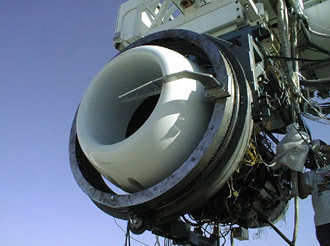
Rotating Microphone Rakes have been used by NASA Glenn researchers in a wide variety of tests ranging from low-speed proof of concept tests in the Advanced Noise Control Fan Rig and 9- by 15-Foot Low Noise Wind Tunnel to full-scale turbofan engine ground tests.
Rotating Rake Mode Measurement System (RRMS)
NASA
Microphone Phased Arrays
In a phased array system, microphones are placed in a 1D, 2D or 3D arrangement and when sound measurements from these microphones are properly processed, noise sources can be pinpointed.
NASA Glenn has an Array48 microphone system that has been used extensively to locate noise sources in scale-model jet flows, a counter-rotating open rotor fan model, and even a full-scale F404 military engine. Through NASA funding, a method has been developed to use microphones embedded in the fan duct of an engine to determine the location of noise sources on the rotating blades.
Phased Array Microphones determining the location of noise sources on the rotating blades.
NASA
Hotwire, Hotfilm, and Laser Doppler Velocimetry
We know that annoying tone noises can be created by periodic disturbances, such as when the wake from a fan blade interacts with a downstream stator vane. We also know that broadband noise is generated when an aircraft engine ingests turbulent air. Therefore, we must be able to record detailed velocity measurements of the air passing through an experimental propulsor so we can identifying noise sources and work to mitigate them. We must use special instrumentation like hotwire probes and Laser Doppler Velocimeters (LDV) to measure the air velocity upstream, downstream, and between the rotor and the stator of an experimental propulsor. Plots of the velocity measurements can be made which allow us to visualize the disturbances that the rotor created. Hotwire and LDV data are routinely used to validate calculations used to estimate noise from turbofan engines.
Hotwire, Hotfilm, and Laser Doppler Velocimetry
NASA
Contact Us
Need to reach us for more information about our research, software, or data? Get in touch via the link below.
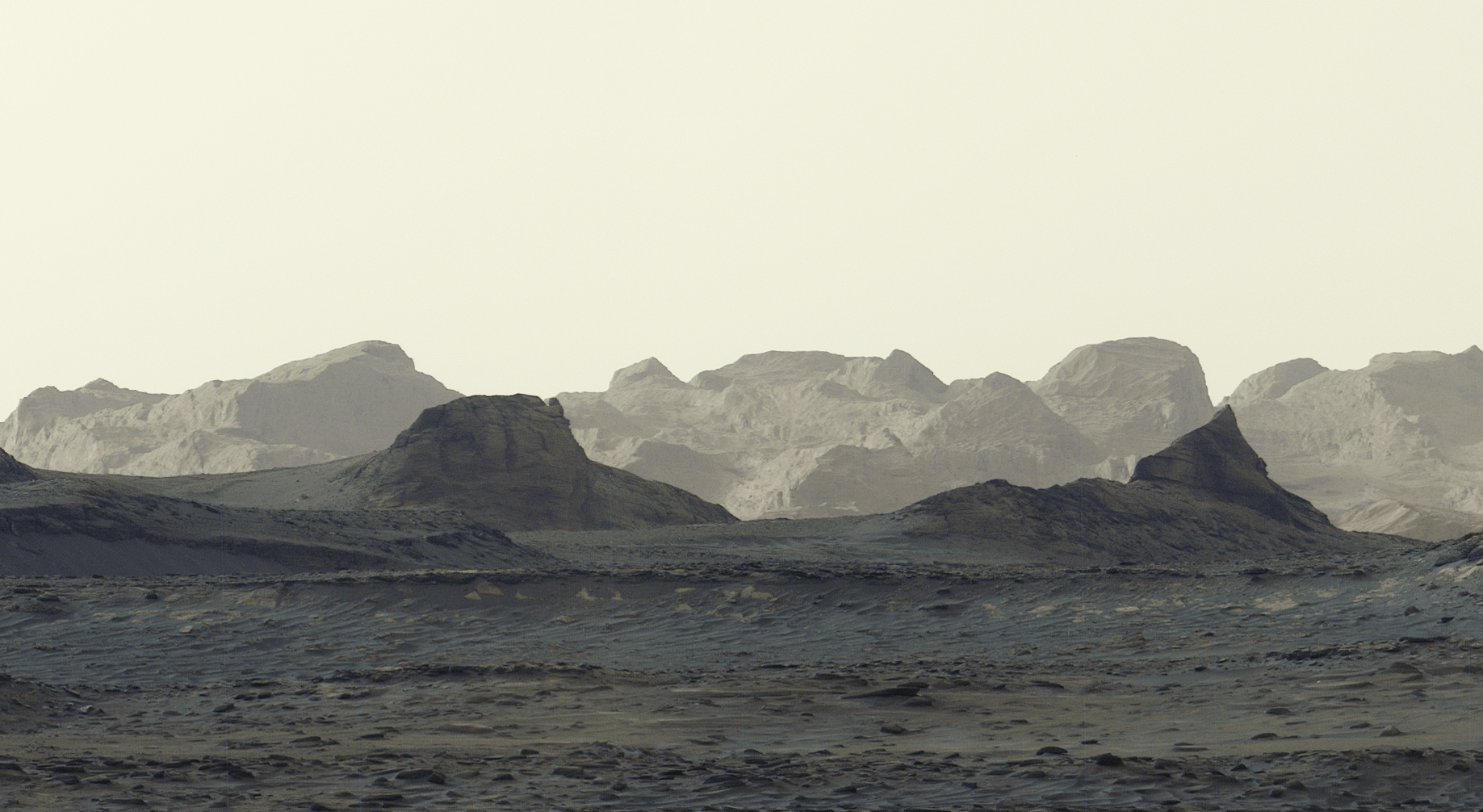
NASA’s Curiosity captures the dawn on Mars – as well as elongated ridges formed by wind erosion, or yardangs – in this close-up from a panorama released on Oct. 6, 2026. This is the most detailed view yet of distant, wind-carved Martian cliffs, highlighting features the mission’s scientists have long been waiting to see up close.
The panorama was captured by Curiosity’s Mastcam on Aug. 11, the 4,982nd Martian day, or sol, of the mission, and comprises six individual images that were stitched together after being sent to Earth.
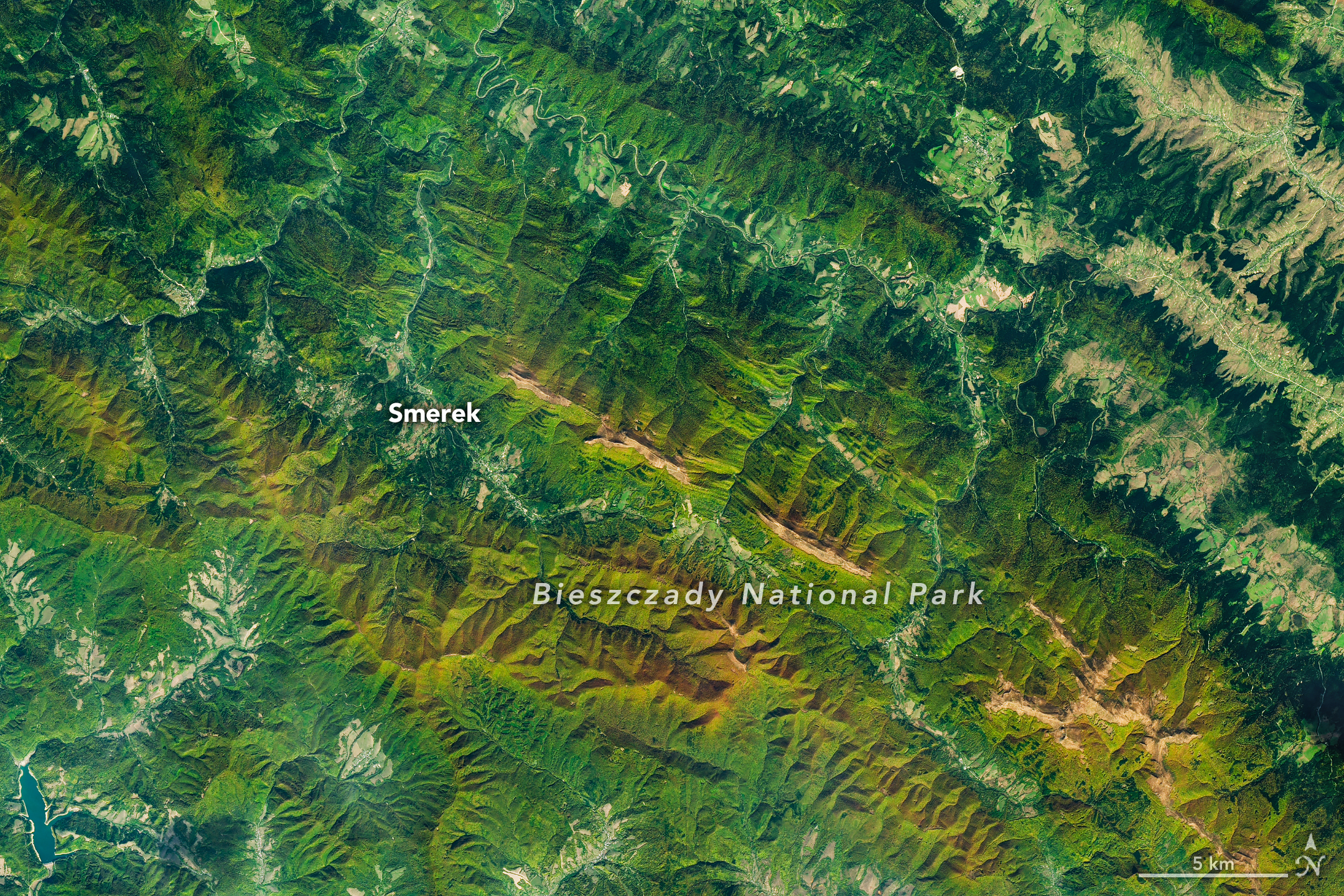
As the air grows cooler and days shorter, brown bears prowl the Carpathian Mountains of southern Poland with the goal of fattening up ahead of winter hibernation. In a more conspicuous sign of autumn, beech and other deciduous trees blanketing the hillsides start to sport reds and golds. The seasonal transformation was underway in southeast Poland’s Bieszczady National Park on October 8, 2026, when the OLI (Operational Land Imager) on the NASA-USGS Landsat 9 satellite captured this image.
European beech (Fagus sylvatica) dominates the area’s forests, with other species such as sycamore maple (Acer pseudoplatanus) also contributing to vibrant color in the fall. Dropping air temperatures and waning daylight cause these trees to curtail the production of chlorophyll, the molecule that plants use to synthesize food. Without it, the leaves’ green pigments fade, allowing the yellows and reds of other pigments to show through.
A descendent of ice-age survivors, the European beech has persisted across millennia in a range of climates. After the glaciers retreated, beech forests spread northward across the European continent from isolated refugia in the Carpathians, Alps, and other mountain ranges, and played a crucial role in reforesting the previously ice-covered land. Portions of Bieszczady National Park are included within UNESCO’s network of ancient and primeval beech forests spanning 18 countries.
Expansive as their footprint across Europe may be, beech forests reach only so high in elevation—about 1,000 to 1,260 meters (3,300 to 4,100 feet)—in this area. Above that is the realm of the polonina, a Slavic term for subalpine meadow, consisting of open grasslands and shrubby thickets of rowan (mountain ash), willows, and green alder. Patches of polonina stretch across ridge tops to the east-southeast of Smerek and appear tan, having lost their summer greenness.
The Bieszczady Mountains are renowned not only for forests and mountain meadows but also for charismatic wildlife. European bison, once extinct in the wild, were reintroduced to the area in the 1960s and now roam the hills by the hundreds, according to recent surveys. Additionally, populations of brown bears and Eurasian lynx find refuge and ample food sources in the forests.
NASA Earth Observatory image by Michala Garrison, using Landsat data from the U.S. Geological Survey. Story by Lindsey Doermann.
Discover the cosmos! Each day a different image or photograph of our fascinating universe is featured, along with a brief explanation written by a professional astronomer.
Sonified: Eagle Nebula Pillars
Explanation: Yes, but have you ever experienced the Eagle Nebula with your ears? The famous nebula M16 is best known for the feast it gives your eyes, highlighting bright young stars forming deep inside dark towering structures. These light-years long columns of cold gas and dust are some 6,500 light-years distant toward the constellation of the Serpent (Serpens). Sculpted and eroded by the energetic ultraviolet light and powerful winds from M16‘s cluster of massive stars, the cosmic pillars themselves are destined for destruction. But the turbulent environment of star formation within M16, whose spectacular details are captured in this combined Hubble (visible) and Chandra (X-ray) image, is likely similar to the environment that formed our own Sun. In the featured video, listen for stars and dust sounding off as the line of sonification moves left to right, with vertical position determining pitch.
Discover the cosmos! Each day a different image or photograph of our fascinating universe is featured, along with a brief explanation written by a professional astronomer.
3D 67P
Explanation:Put on your red/blue glasses and float next to the jagged and double-lobed nucleus of Churyumov-Gerasimenko, also known as Comet 67P . The stereo anaglyph was created by combining two images from the Rosetta spacecraft’s narrow angle OSIRIS camera taken on July 25, 2015 from a distance of 184 kilometers. Numerous jets are emanating from the small solar system world’s active surface near its closest approach to the Sun. The larger lobe is around 4 kilometers in diameter, joined to a smaller, 2.5 kilometer diameter lobe by a narrow neck. Rosetta’s mission to the comet ended in September 2016 when the spacecraft was commanded to a controlled impact with the comet’s surface . Keep those 3D glasses on though. You can check out a catalog of nearly 1400 stereo anaglyphs created from Rosetta image data on this website.
NASA Administrator Jared Isaacman has named Stephen Cash director of the agency’s Marshall Space Flight Center in Huntsville, Alabama, effective Monday, Oct. 19. Cash, a veteran NASA engineer and aerospace executive, returns to lead the center where he began his career more than four decades ago.
“Marshall contributions to NASA’s missions are historic and it’s no question why it’s the Center of Excellence for propulsion,” said Isaacman. “Steve Cash is a Marshall legend, has spent his career around the hardware, the people and has been in the seat before making the decisions when human spaceflight is on the line. As Marshall continues its critical role in Artemis and takes on new challenges in advanced propulsion, nuclear power, and the systems that will carry us deeper into the solar system, Steve brings the experience, technical judgment, and mission focus needed to lead the center into that next chapter. I am also grateful to Rae Ann Meyer for the leadership she has provided to Marshall during this transition and for her continued service to NASA.”
“Leading a NASA center requires a commitment to its people and to the technical capabilities entrusted to them,” said Amit Kshatriya, NASA associate administrator and chief engineer. “Steve understands that the jewel of Marshall is its workforce and that engineering excellence is sustained by giving talented people the opportunity to design, build, test, and learn through hands-on work. As Marshall continues strengthening the manufacturing, structural loads and dynamics, and propulsion capabilities that underpin NASA’s exploration enterprise, Steve’s leadership will help ensure the workforce has opportunities to develop and apply the expertise needed to deliver the agency’s most ambitious missions.”
As center director, Cash will lead one of NASA’s largest field centers, overseeing a workforce of more than 5,000 civil service and contractor employees and a broad portfolio of propulsion, space systems, scientific research, and technology development activities. Marshall plays a critical role in NASA’s Artemis program, including the development of NASA’s SLS (Space Launch System) rocket, management of the Human Landing System Program, as well as other capabilities supporting sustained exploration of the Moon and future missions to Mars. Further, Marshall plays a key role in the advancement of nuclear power and propulsion, an area of focus that is expected to grow as NASA works towards sending the first humans to Mars.
“It is a profound honor to be back home at the Marshall Space Flight Center,” said Cash. “I am humbled to stand alongside the brilliant minds here as we continue to turn the impossible into everyday history.”
Cash began his NASA career at Marshall in 1982 and spent 34 years with the agency, holding senior engineering and management positions supporting some of the nation’s most significant human spaceflight programs.
During his NASA career, Cash served as manager of Marshall’s Space Shuttle Propulsion Office, overseeing critical propulsion systems supporting shuttle through its final missions. He later served as director of Marshall’s Safety and Mission Assurance Directorate from 2011 until his retirement in 2016, providing leadership in safety, reliability, and quality engineering to support mission success across the center.
Following his retirement from NASA, Cash continued his work in the aerospace industry, including serving as vice president for advanced space systems at Axient, supporting the development and execution of major spaceflight programs. In 2024, he was inducted into the Alabama Engineering Hall of Fame in recognition of his contributions to engineering and the nation’s space program.
Cash succeeds Rae Ann Meyer, who has served as Marshall’s acting center director since September 2025. Meyer, who previously served as Marshall’s deputy center director and associate director, has provided leadership and continuity across the center’s programs and operations during her tenure as acting director. Meyer will return to her role as Deputy Center Director.
Established in 1960, Marshall has played a central role in American space exploration for more than six decades, from developing the Saturn rockets that carried astronauts to the Moon during Apollo to advancing the propulsion systems, infrastructure, and technologies supporting the next era of human spaceflight.
For more information about NASA’s Marshall Space Flight Center, visit:
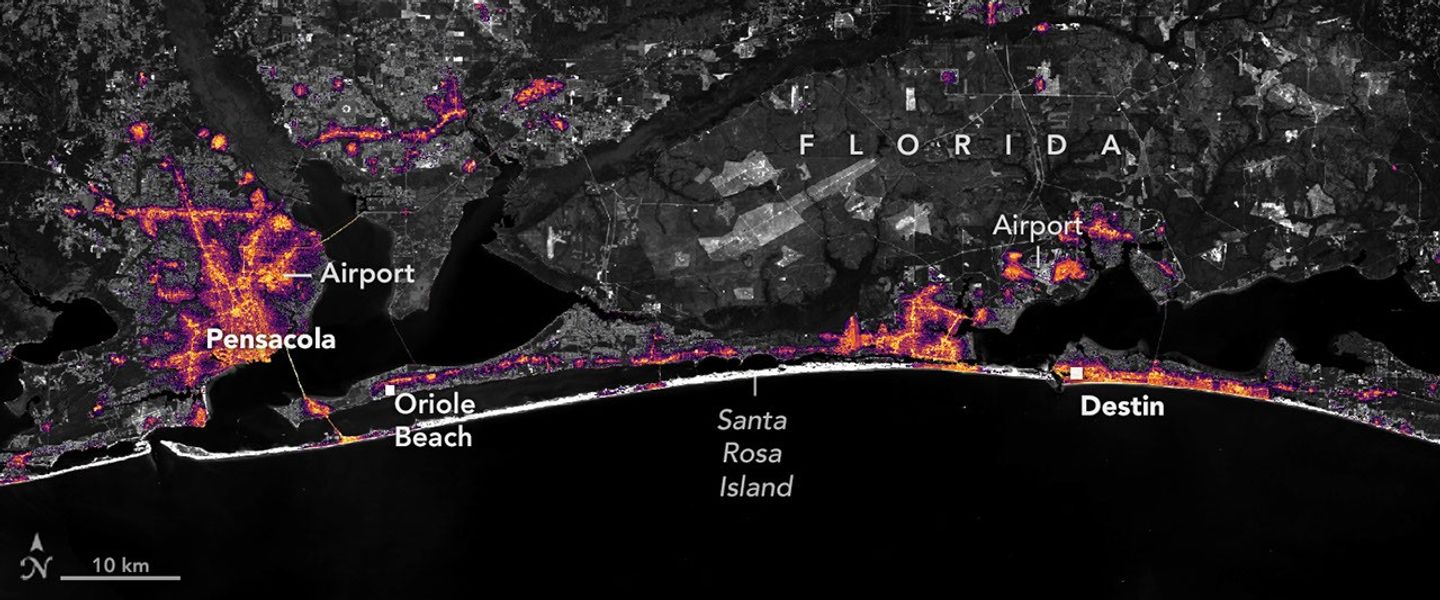
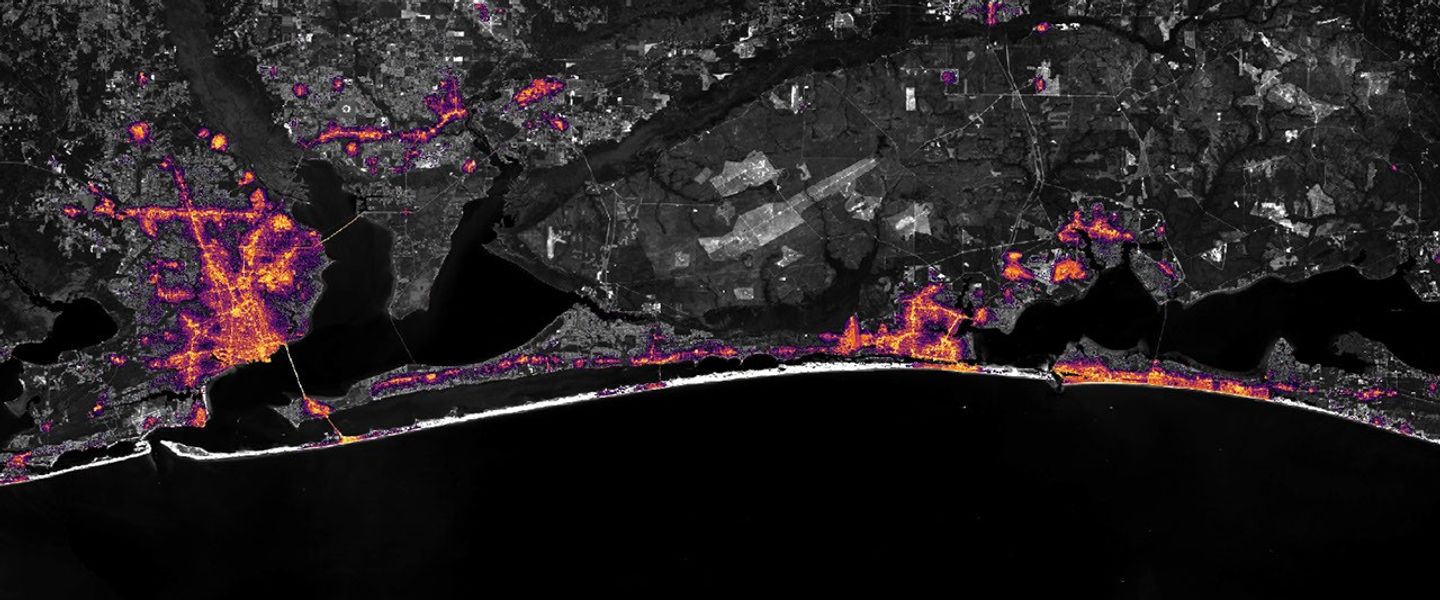
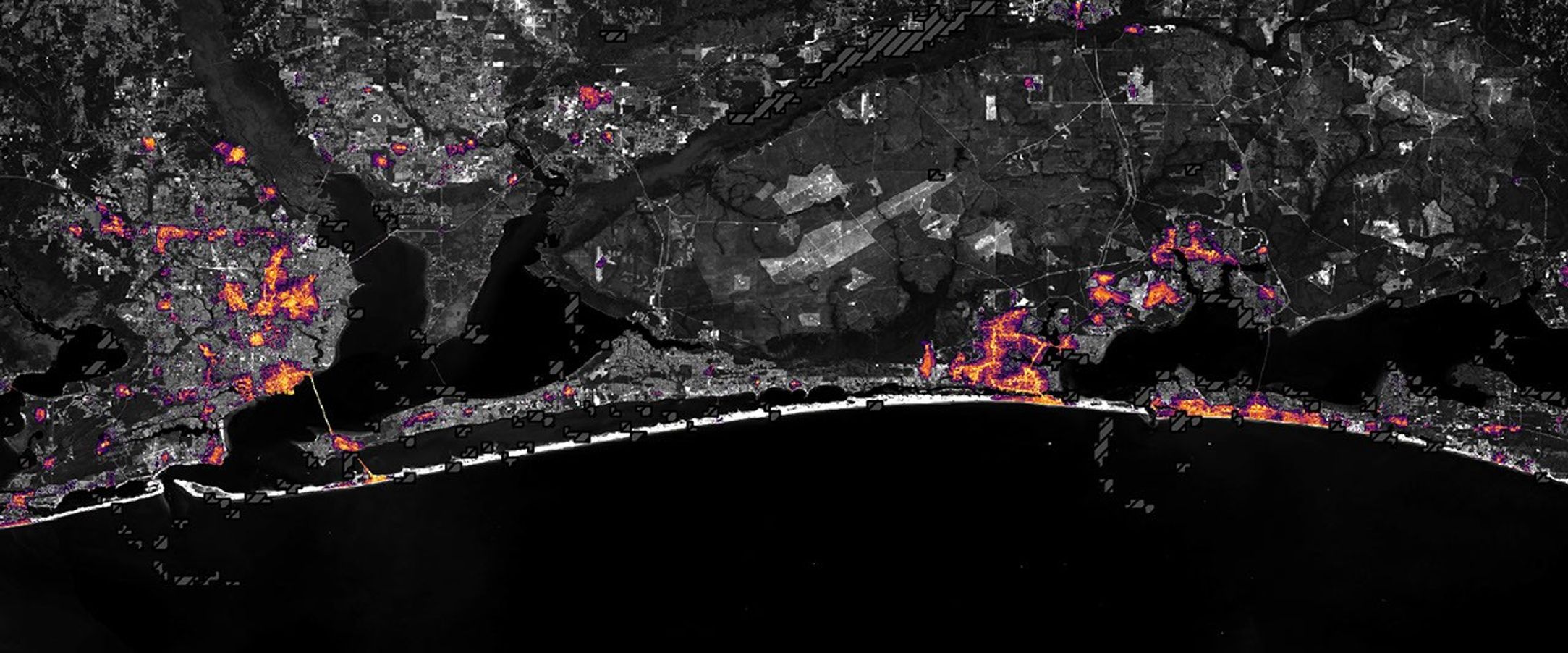
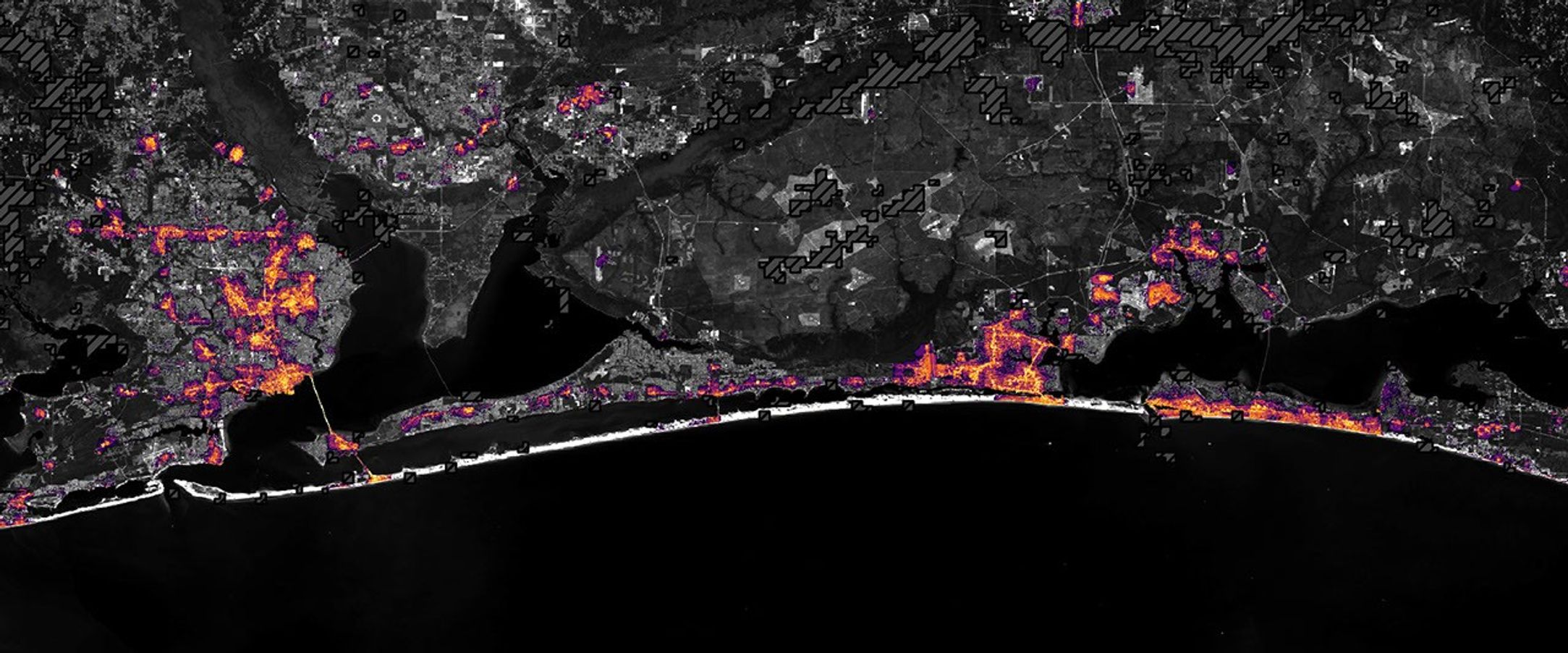
Nighttime lights along the Florida Panhandle coast in August 2026, brightest in Pensacola and Destin and along the road between them.
NASA Earth Observatory / Lauren Dauphin
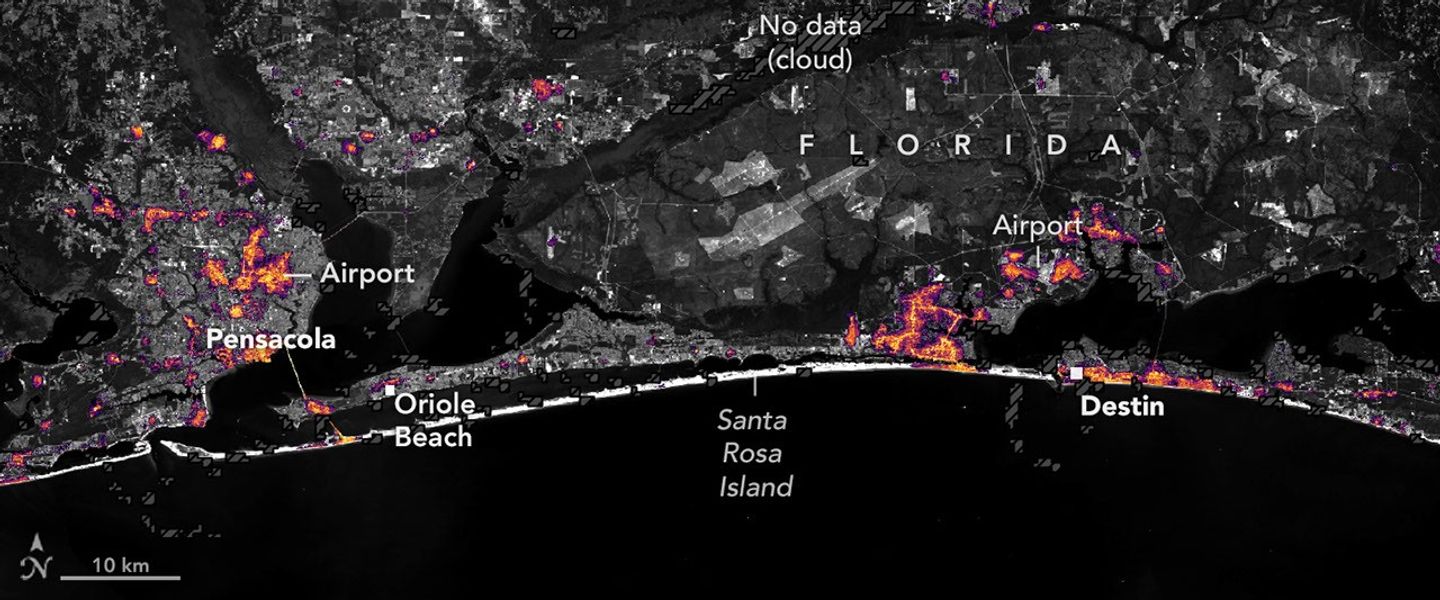
Nighttime lights along the Florida Panhandle coast on October 11, 2026, after Hurricane Isaias, with fewer and dimmer lights in Pensacola and Destin and gaps along the road between them.
NASA Earth Observatory / Lauren Dauphin
Nighttime lights along the Florida Panhandle coast in August 2026, brightest in Pensacola and Destin and along the road between them.
NASA Earth Observatory / Lauren Dauphin
Nighttime lights along the Florida Panhandle coast on October 11, 2026, after Hurricane Isaias, with fewer and dimmer lights in Pensacola and Destin and gaps along the road between them.
NASA Earth Observatory / Lauren Dauphin
August 2026 Composite
October 11, 2026
Lights around Pensacola, Florida, and along the U.S. Route 98 corridor toward Destin appear sharply reduced on October 11, 2026 (right), compared with typical conditions in August 2026 (left), suggesting widespread power outages after Hurricane Isaias. Images are from NASA’s Black Marble HD product.
After a quiet start to the 2026 Atlantic hurricane season, Isaias became the season’s first hurricane on October 8 as it tracked toward the U.S. Gulf Coast. The storm brought heavy rain and flash flooding to parts of the Southeast, including Alabama and the Florida Panhandle, and winds that toppled trees and downed power lines, leaving many people in the dark.
Isaias made landfall near Destin, Florida, on the evening of October 9 as a Category 2 hurricane with maximum sustained winds of 105 miles (170 kilometers) per hour. Gusts topped 100 miles per hour along a corridor west of the storm’s center, according to the National Weather Service, with preliminary reports showing a 117-mile-per-hour gust in Oriole Beach and a 102-mile-per-hour gust at Pensacola City Hall.
These areas of high winds overlapped a broader area west of the storm’s eye where satellite images showed substantial decreases in nighttime lights. The image pair above shows nighttime lights before and after the storm. The left image is a composite of August 2026 data representing typical conditions, and the right image shows lights on October 11, after most of the storm’s clouds had cleared.
The data depicted in the images, provided by Ranjay Shrestha of NASA’s Black Marble science team, come from the Black Marble HD product. The product uses data from the VIIRS (Visible Infrared Imaging Radiometer Suite) on the NOAA-20 satellite, which has a day-night band that detects light emitted and reflected at night. The team processed the data to account for changes in the landscape, the atmosphere, and phase of the Moon, and to filter out stray light that does not come from electric lights. Dark gray, hash-marked areas show where clouds prevented VIIRS from collecting data. The nighttime lights are shown over a base map from the Landsat 9 satellite.
“Standard Black Marble nighttime lights imagery, available through NASA Worldview, provides a broad picture of the storm’s immediate impacts,” Shrestha said. “Black Marble HD takes this a step further by allowing us to visualize these changes at a much finer spatial scale.”
At these finer scales, the images reveal lights decreasing sharply around parts of Pensacola, Florida, and along the U.S. Route 98 corridor toward Destin, suggesting widespread power disruptions. Shrestha also pointed out pockets where lights persisted, including Pensacola International Airport, Pensacola Christian College, and parts of downtown Pensacola. “These patterns could reflect backup power systems, differences in electrical infrastructure, or areas that maintained electricity during the storm, although the imagery alone cannot confirm the underlying reasons,” he said.
October 11, 2026
October 12, 2026
Nighttime lights along the Florida Panhandle coast on October 11, 2026, after Hurricane Isaias, with fewer and dimmer lights in Pensacola and Destin and gaps along the road between them.
NASA Earth Observatory / Lauren Dauphin
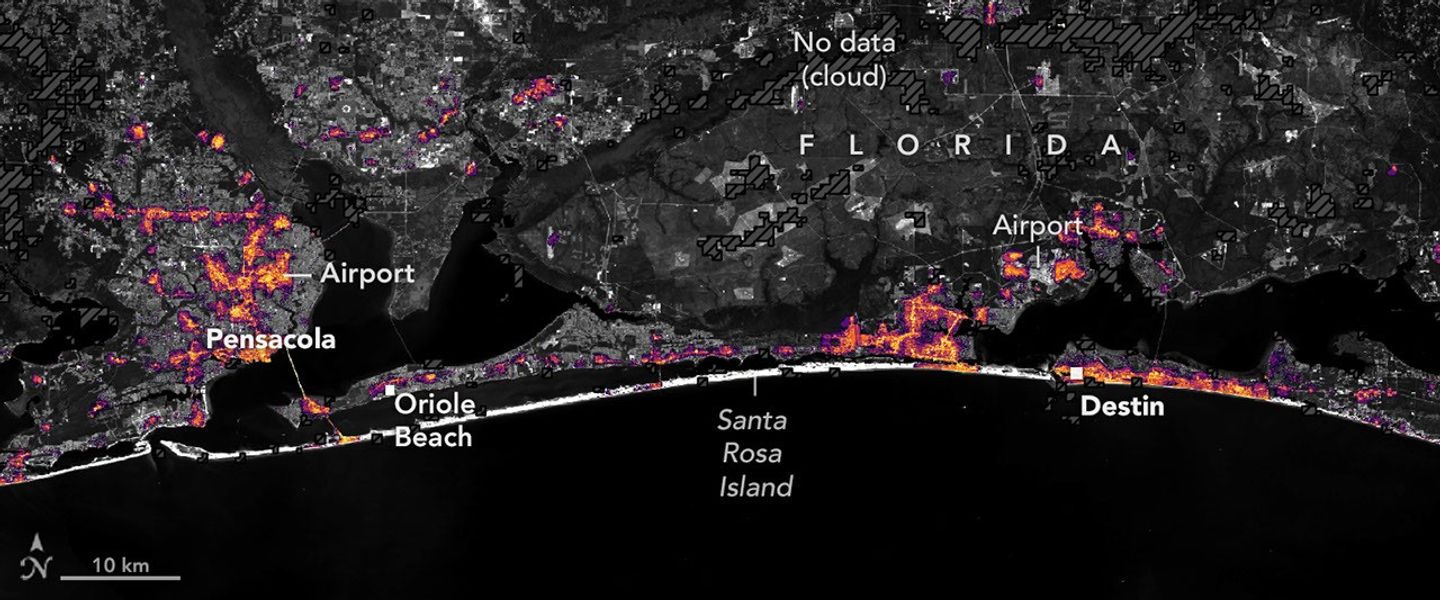
The same area on October 12, 2026, with lights in Pensacola and Destin and along the road between them closer to pre-storm levels.
NASA Earth Observatory / Lauren Dauphin
Nighttime lights along the Florida Panhandle coast on October 11, 2026, after Hurricane Isaias, with fewer and dimmer lights in Pensacola and Destin and gaps along the road between them.
NASA Earth Observatory / Lauren Dauphin
The same area on October 12, 2026, with lights in Pensacola and Destin and along the road between them closer to pre-storm levels.
NASA Earth Observatory / Lauren Dauphin
October 11, 2026
October 12, 2026
Widespread outages darken the region around Pensacola, Florida, and along the U.S. Route 98 corridor toward Destin on October 11, 2026 (left). By October 12 (right), lights have returned to some affected areas. Images are from NASA’s Black Marble HD product.
Black Marble HD images also reveal the pace and spatial patterns of recovery. The image pair above compares the same October 11 view (left) with one from October 12 (right), when lights had begun to return to some affected areas. By October 14, lighting patterns looked similar to pre-storm conditions.
“Understanding where recovery is progressing and where disruptions persist can help emergency responders and decision makers identify areas that may require additional attention, prioritize resources, and assess the effectiveness of restoration efforts,” Shrestha said.
Black Marble data complement ground-based outage reports rather than replace them, offering a more comprehensive view of disasters’ impacts and recovery. “Ultimately, this is where the value of Black Marble lies: turning nighttime Earth observations into actionable insights that support informed decisions and help bridge the gap between Earth science and action,” Shrestha said.
The NASA Disasters Program, in coordination with FEMA and the USGS Coastal Storms Team, is supporting the Alabama Red Cross and the Alabama Emergency Management Agency’s response to Hurricane Isaias. The team will be posting maps and data products on its open-access mapping portal as new information becomes available.
NASA Earth Observatory images by Lauren Dauphin, using Black Marble HD data courtesy of Ranjay Shrestha/NASA’s Goddard Space Flight Center and Landsat data from the U.S. Geological Survey. Story by Kathryn Hansen.