Monday, 30 September 2024

Sols 4318-4320: One Last Weekend in the Channel

2 min read

Sols 4318-4320: One Last Weekend in the Channel
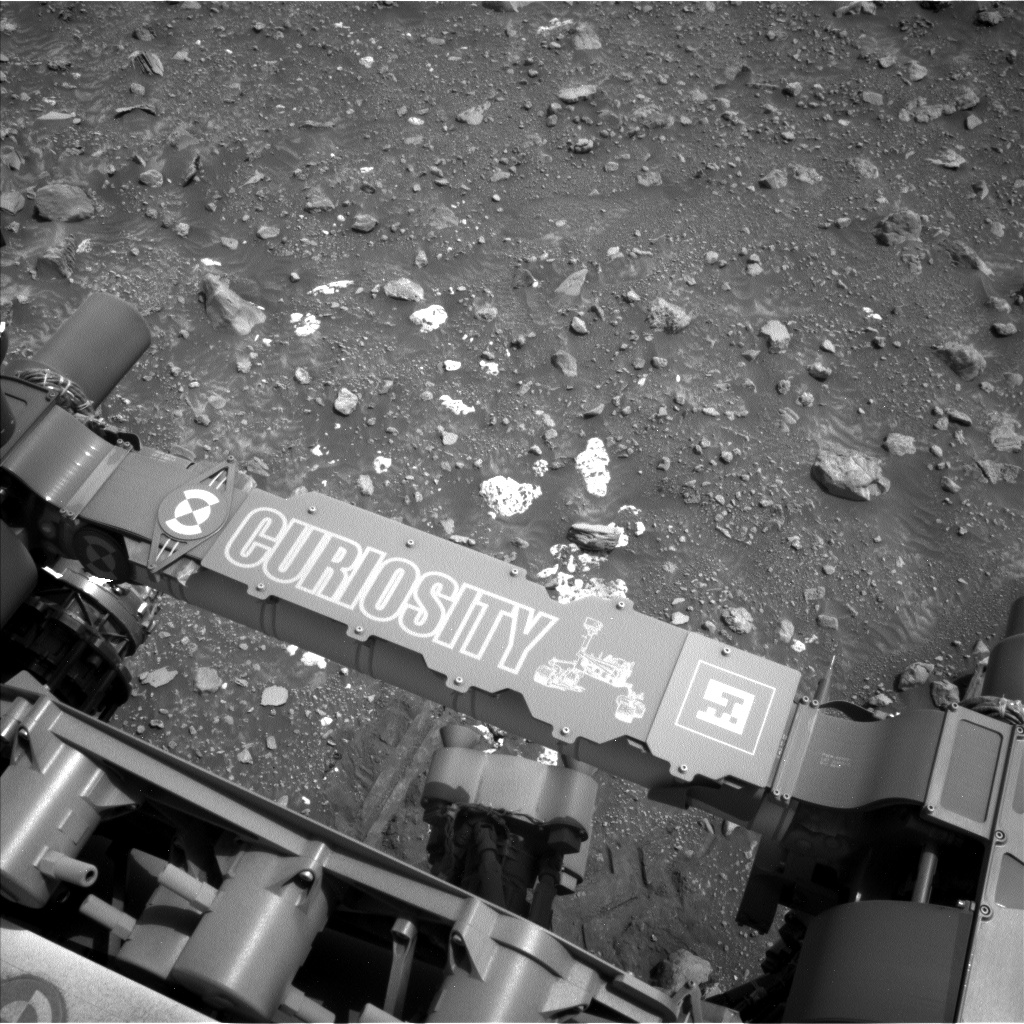
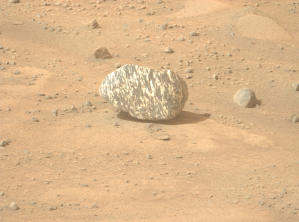
A grayscale photograph of the Martian surface from the Curiosity rover captures medium gray terrain with scattered small to medium sized rocks, with a few noticeably different rocks on the ground next to the rover, pockmarked and very bright-toned, almost white. The bottom of the frame shows parts of the rover, running from the middle left to the lower right corner of the image, including part of its robotic arm which carries a nameplate imprinted with “Curiosity” outlined in all capital letters, and to the right of that a line drawing of the rover.
This image from NASA’s Mars rover Curiosity shows the bright-toned rocks of the “Sheep Creek” target location, intriguing because of their resemblance to previous targets that contained unexpectedly high levels of elemental sulfur. The Left Navigation Camera aboard Curiosity captured this image on Sol 4316 — Martian day 4,316 of the Mars Science Laboratory mission — on Sept. 26, 2024, at 21:10:13 UTC.
NASA/JPL-Caltech

Earth planning date: Friday, Sept. 27, 2024 

We’re wrapping up our time in the channel with the highly anticipated examination of the “Sheep Creek” white stones. Last plan’s reposition was a success, so we are able to go ahead with contact science on them this weekend. MAHLI and APXS picked three targets to investigate: “Cloud Canyon,” “Moonlight Lake,” and “Angora Mountain,” all of which sound so lovely and soft, and are quite evocative of these pale stones, which stand out so much against the background. ChemCam is also examining another of the white stones, “Pee Wee Lake.”

Since this is looking like it will be our last weekend in the channel, we’re packing the plan with all the other last-chance targets before we leave them behind. Mastcam is making a large survey of some other light-toned rocks in the middle distance dubbed “Orchid Lake,” as well as getting a bit more context for an old target, “Marble Falls,” which we first imaged almost two weeks ago. A bit closer to the rover, it will examine a target we’re calling “Brown Bear Pass,” to study the surface properties of the soil. Mastcam will also be looking backwards at our tracks to see if we turned up anything interesting in our travels. And ChemCam has a couple of long-distance observations of another familiar target, “Buckeye Ridge.”

After all that, it’s time for us to turn back around and head toward the edge of the channel with a drive of 55 meters (about 180 feet) back to our exit point. Even then, our weekend still isn’t over. We have a ChemCam-filled third sol, using AEGIS to autonomously select a target, and then getting a passive sky observation to keep an eye on the amount of different gases like oxygen and water vapor in the atmosphere. Speaking of the atmosphere, here on the environmental side we’re kept busy this weekend looking for dust devils and clouds, and keeping an eye on the amount of dust in the air around us. We’ll wrap up the weekend as we often do — with an early morning dedicated environmental science block.

Written by Alex Innanen, Atmospheric Scientist at York University

Share

Details

Last Updated
Sep 29, 2024

Related Terms


from NASA https://ift.tt/yiHzdmQ
Sunday, 29 September 2024

NASA Astronaut Nick Hague Boosts Human Health Research in Space

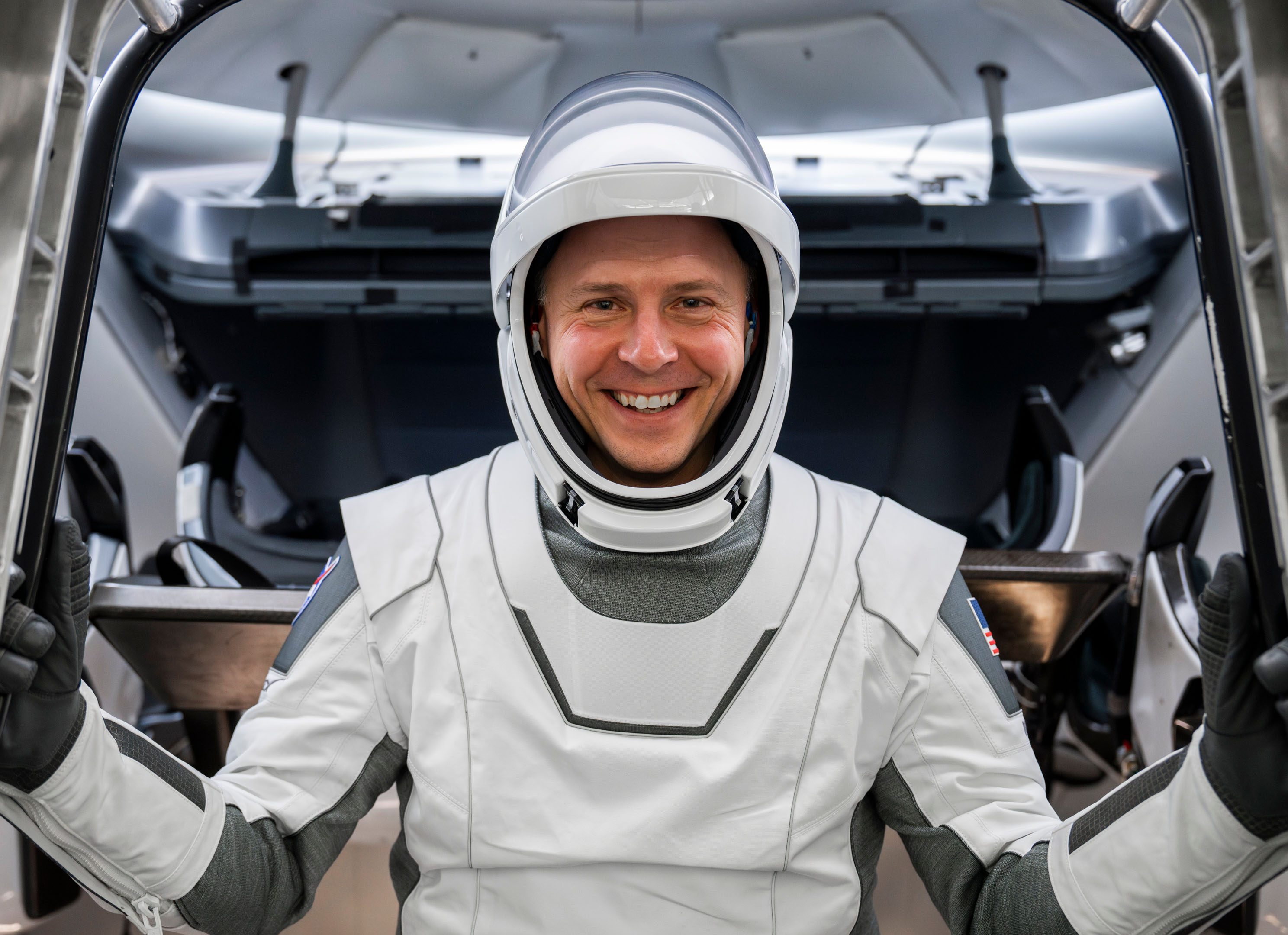
NASA’s SpaceX Crew-9 commander Nick Hague is pictured in his flight suit during training at SpaceX headquarters in Hawthorne, California. Hague will perform human health and performance research on the International Space Station as part of his mission (Credit: SpaceX).
NASA’s SpaceX Crew-9 commander Nick Hague is pictured in his flight suit during training at SpaceX headquarters in Hawthorne, California. Hague will perform human health and performance research on the International Space Station as part of his mission.
SpaceX

NASA astronaut Nick Hague and Roscosmos cosmonaut Aleksandr Gorbunov will soon dock with the International Space Station as part of the agency’s SpaceX Crew-9 mission, a venture which will enhance scientific research and bolster the knowledge about how people can live and work in space.

During the planned five-month mission, Hague’s mission tasks will include participating in a variety of research projects for NASA’s Human Research Program. Each study is designed to help address the health challenges that astronauts may face during future long-duration missions to the Moon, Mars, and beyond.

“Hague’s experiences and research may potentially lead to scientific breakthroughs that may not be possible on Earth,” said Steven Platts, chief scientist for human research at NASA’s Johnson Space Center in Houston.

A major focus for Hague’s time aboard the station is to study the suite of space-related vision disorders called Spaceflight Associated Neuro-ocular Syndrome (SANS) which occur as body fluids shift toward the head in weightlessness. These shifts can cause changes to the eye: the optic nerve can swell, the retina may develop folds, and the back of the eye can even flatten. Earlier research suggests multiple factors contribute to the syndrome, so two vision-related studies on this mission will tackle different yet distinct approaches that may help address or even prevent such changes during future missions.

One project, called Thigh Cuff, will explore whether wearing fitted cuffs could counter the syndrome by keeping more bodily fluids in the legs. Thigh cuffs are compact, lightweight, and easy to use, which makes them appealing for potential use during long-duration, deep space missions.

For this study, Hague will wear the thigh cuffs for six hours during two sessions. To help researchers measure how well the cuffs work, he will record ultrasound images of blood flow in his legs and neck veins during the sessions. Researchers will also compare this data against ultrasounds taken without the cuff to examine flow differences.

“Thigh cuffs like these may allow researchers to better investigate medical conditions that result in extra fluid in the brain or too much blood returning to the heart,” said study leader Brandon Macias at NASA Johnson.

In another study, Hague will test if a vitamin regimen may help combat SANS. The study, led by Sara Zwart, a nutritional biochemist at NASA Johnson, seeks to examine if a daily vitamin B supplement—taken before, during, and after flight—can prevent or mitigate swelling at the back of the eye. The research will also assess how an individual’s genetics may influence the response.

“Earlier research suggests that some people are more susceptible to this ocular syndrome than others based on genetics that can influence B vitamin requirements, so taking daily vitamins may make all the difference,” Zwart said. “We think by giving the B vitamins, we could be taking that piece of genetic variability out of the equation.”

The work also may eventually improve care options for women on Earth with polycystic ovary syndrome, a condition that can cause eye changes and infertility in women. Researchers hope that patients may similarly benefit from targeting the same genetic pathways and vitamin supplementation as crew members in space.

Hague also will record data to study whether a new way of administering a common anti-nausea medicine can help alleviate motion sickness following launch and landing. In this study, Hague can self-administer a novel nasal gel formulation of the medication scopolamine. Hague will note his experiences using this medicine and any other motion sickness aides, including alternative medications or behavioral interventions like specific head movements.

This research, led by neuroscientist Scott  Wood of NASA Johnson, eventually will include 48 people.

“Our goal is to understand how to help future space travelers adapt to motion sickness when living and working in space,” Wood said. “Crew members must stay healthy and perform key tasks, including landing on the Moon and other destinations.”

To help NASA plan future missions, Hague also will participate in human research studies that tackle other space challenges, such as avoiding injury upon landing back on Earth and learning how space travel affects the human body on a molecular level.

____

NASA’s Human Research Program pursues the best methods and technologies to support safe, productive human space travel. The program studies how spaceflight affects human bodies and behaviors through science conducted in laboratories, ground-based analogs, commercial missions, and the International Space Station. Such research continues to drive NASA’s mission to innovate ways that keep astronauts healthy and mission-ready as space exploration expands to the Moon, Mars, and beyond.


from NASA https://ift.tt/8AJsz4l

Liftoff! NASA’s SpaceX Crew-9 Launches to International Space Station

NASA’s SpaceX Crew-9 mission launched at 1:17 p.m. EDT Sept. 28, 2024, from Space Launch Complex-40 at Cape Canaveral Space Force Station in Florida. Credits: NASA

The two crew members of NASA’s SpaceX Crew-9 mission launched at 1:17 p.m. EDT Saturday, for a science expedition aboard the International Space Station. This is the first human spaceflight mission launched from Space Launch Complex-40 at Cape Canaveral Space Force Station in Florida, and the agency’s ninth commercial crew rotation mission to the space station.

A SpaceX Falcon 9 rocket propelled the Dragon spacecraft into orbit carrying NASA astronaut Nick Hague and Roscosmos cosmonaut Aleksandr Gorbunov. The spacecraft will dock autonomously to the forward-facing port of the station’s Harmony module at approximately 5:30 p.m., Sunday, Sept. 29, where Hague and Gorbunov will join Expedition 72 for a five-month stay aboard the orbiting laboratory.

“This mission required a lot of operational and planning flexibility. I congratulate the entire team on a successful launch today, and godspeed to Nick and Aleksandr as they make their way to the space station,” said NASA Administrator Bill Nelson. “Our NASA wizards and our commercial and international partners have shown once again the success that comes from working together and adapting to changing circumstances without sacrificing the safe and professional operations of the International Space Station.”

During Dragon’s flight, SpaceX will monitor a series of automatic spacecraft maneuvers from its mission control center in Hawthorne, California. NASA will monitor space station operations throughout the flight from the Mission Control Center at the agency’s Johnson Space Center in Houston.

NASA will provide live coverage of rendezvous, docking, and hatch opening, beginning at 3:30 p.m., Sept. 29, on NASA+ and the agency’s website. NASA also will broadcast the crew welcome ceremony once Hague and Gorbunov are aboard the orbital outpost. Learn how to stream NASA content through a variety of platforms, including social media.

The duo will join the space station’s Expedition 72 crew of NASA astronauts Michael Barratt, Matthew Dominick, Jeanette Epps, Don Pettit, Butch Wilmore, and Suni Williams, as well as Roscosmos cosmonauts Alexander Grebenkin, Alexey Ovchinin, and Ivan Vagner. The number of crew aboard the space station will increase to 11 for a short time until Crew-8 members Barratt, Dominick, Epps, and Grebenkin depart the space station in early October.

The crewmates will conduct more than 200 scientific investigations, including blood clotting studies, moisture effects on plants grown in space, and vision changes in astronauts during their mission. Following their stay aboard the space station, Hague and Gorbunov will be joined by Williams and Wilmore to return to Earth in February 2025.

With this mission, NASA continues to maximize the use of the orbiting laboratory, where people have lived and worked continuously for more than 23 years, testing technologies, performing science, and developing the skills needed to operate future commercial destinations in low Earth orbit and explore farther from Earth. Research conducted at the space station benefits people on Earth and paves the way for future long-duration missions to the Moon under NASA’s Artemis campaign, and beyond.

More about Crew-9

Hague is the commander of Crew-9 and is making his second trip to the orbital outpost since his selection as an astronaut in 2013. He will serve as a mission specialist during Expedition 72/73 aboard the space station. Follow @AstroHague on X and Instagram.

Roscosmos cosmonaut Aleksandr Gorbunov is flying on his first mission. He will serve as a flight engineer during Expeditions 72/73.

Learn more about NASA’s SpaceX Crew-9 mission and the agency’s Commercial Crew Program at:

https://www.nasa.gov/commercialcrew

-end-

Josh Finch / Jimi Russell
Headquarters, Washington
202-358-1100
joshua.a.finch@nasa.gov / james.j.russell@nasa.gov

Steven Siceloff / Danielle Sempsrott / Stephanie Plucinsky
Kennedy Space Center, Florida
321-867-2468
steven.p.siceloff@nasa.gov / danielle.c.semprott@nasa.gov / stephanie.n.plucinsky@nasa.gov

Leah Cheshier / Sandra Jones
Johnson Space Center, Houston
281-483-5111
leah.d.cheshier@nasa.gov / sandra.p.jones@nasa.gov

Share

Details

Last Updated
Sep 28, 2024


from NASA https://ift.tt/dPM7HjX

Saturday, 28 September 2024

The Science of the Perfect Cup for Coffee 

2 min read

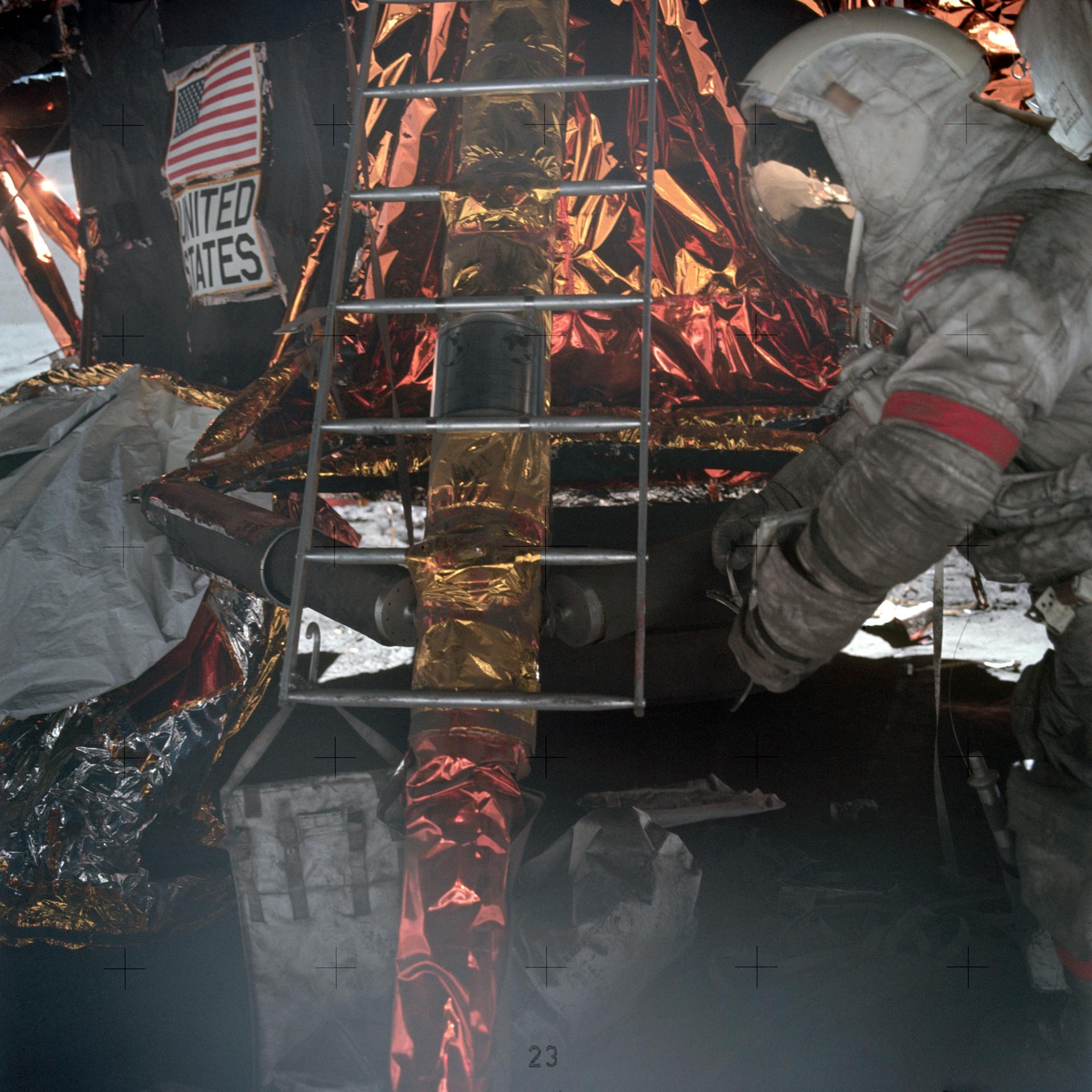
Preparations for Next Moonwalk Simulations Underway (and Underwater)

A selection of red and black Burnout coffee mugs.

Research into phase-change material (PCM) options for NASA helped one of the researchers find the ideal material to use in a mug that maintains the ideal temperature of a hot beverage for hours. ThermAvant International now offers mugs and tumblers.
Credit: ThermAvant International LLC

Dr. Hongbin Ma was tired of drinking coffee that had gone cold. Fortunately, Ma, the CEO of ThermAvant Technologies LLC in Columbia, Missouri, was working on a NASA-funded study of phase-change materials, which are used to hold a steady temperature. Materials absorb or release more heat as they transition from solid to liquid or vice versa than they do before or after this phase change.

NASA has long used phase-changing materials to manage temperature extremes in space. The Apollo lunar rover, International Space Station, Orion capsule, and headlights on the newest spacesuit design all utilize phase-change material. As part of his NASA-funded research, Ma tested and recommended a phase-change material that could be used in a spacesuit-cooling system, a modified version of those used in spacecraft.  

A phase-change material needs to transition at the desired temperature, but it also needs to be safe. Paraffin wax and refrigerants are effective but are toxic to humans, which would make a leak hazardous. Ma’s team ultimately recommended a bio-based option for spacesuits.  

Bio-based waxes also proved to be the perfect solution for maintaining optimal temperature for coffee. In this case, it was a beeswax-like soy substance. Ma’s company, ThermAvant Technologies, took the opportunity to infuse the bio-based waxes into a product on Earth.   

An image of a phase change material heat exchanger, a piece of equipment used to help control temperatures on a spacecraft.
A phase-change heat exchanger like this one uses uses a PCM that will help maintain a comfortable temperature in the Orion spacecraft. NASA-funded research into spacesuit material alternatives helped ThermAvant International LLC develop the Burnout thermal mug for coffee.
Credit: NASA

Released in 2018, the Burnout Mug is vacuum insulated with the wax called HeatZorb, sealed between the inner and outer shells. The wax is formulated to maintain the ideal temperature for hot drinks over time. As soon as hot liquid goes in, the wax absorbs excess heat and melts, resulting in a drinkable temperature in just a few moments. As the coffee starts to cool, that stored heat is released back into it. 

The company is developing other uses for the same technology to meet unique needs in the medical field. Two in development are a small insulin container and a donor organ transportation box – both of which rely on specific, controlled temperatures. From hot beverages to life-saving medical equipment, NASA’s research continues to drive innovation across industries.  

Share

Details

Last Updated
Sep 27, 2024


from NASA https://ift.tt/smg0bMC

Friday, 27 September 2024

Sols 4316-4317: Hunting for Sulfur

4 min read

Sols 4316-4317: Hunting for Sulfur

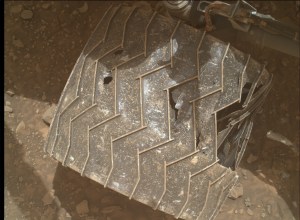
A grayscale image of the Martian surface shows uneven dark gray terrain dotted with several small, light-toned, almost whitish rocks. A few of the In the lower part of the frame about a half-dozen of the bright rocks are visible in the frame just above one of the rover's wheels, seen from overhead.
This image was taken by the Left Navigation Camera (NavCam) aboard NASA’s Mars rover Curiosity, and captures the bright stones of the “Sheep Creek” target — just above the rover wheel – which strongly resemble elemental sulfur blocks identified earlier in the traverse. This image was taken on sol 4314, Martian day 4,314 of the Mars Science Laboratory mission, on Sept. 24, 2024, at 20:24:50 UTC.
NASA/JPL-Caltech

Earth planning date: Wednesday, Sept. 25, 2024 

Navigating the rugged, unforgiving Martian terrain is always a challenge, and our recent attempt to reach the “Sheep Creek” target highlights this. We had aimed for small, distant bright rocks, but from 50 meters away (about 164 feet), the limited resolution of our images made it difficult to fine-tune navigation. After an ambitious drive, the rover came agonizingly close — stopping just short of these small bright rocks. The rocks, with their distinctive rounded and pitted “weathering” pattern (pictured), strongly resemble elemental sulfur blocks that we’ve encountered before. Frustratingly, although the target rocks were right under the front wheel and clearly visible in our navigation cameras, they remained just out of reach of the rover’s arm.

While the rover’s arm couldn’t quite reach the bright stones of Sheep Creek, we didn’t let that stop us and planned to use other onboard instruments to help us analyze the composition, textures, and context before we move to our next position. As the Keeper of the Plan for the Geology and Mineralogy theme group, my role was to ensure all those activities were recorded in the plan.

To find out the composition of the stones of Sheep Creek, we used ChemCam (our onboard laser) to observe two promising stones we’ve named “Arch Rock” and “Ash Mountain.” We’re hoping to see if they have any evidence of elemental sulfur as their appearance suggests. For a closer look at the texture, we will take high-resolution, color images with Mastcam (which you can also view in 3D with red and blue anaglyph glasses!). We also want to look at an interesting transition between light-colored and dark-colored bedrock nearby, which we will cover with more high-resolution, colored images. This transition could give us clues about where the unusual white rocks of Sheep Creek came from and how they formed.

We had our eye on another bright rock in the area, named “Beryl Lake.” It had an interesting bright-toned crusty appearance and as we could reach it with the rover arm, we used our APXS tool (think of it as a chemical scanner) to see its composition and if it had any traces of sulfur. We took a closer look with our rover hand lens (MAHLI) at a rock called “Aster Lake,” which had intriguing white patches that might be similar to the stones of Sheep Creek. Ultimately, our science goal this plan was to collect data on whether these bright-toned stones had evidence of elemental sulfur and increase our understanding on how they formed.

Next, we’ll carefully reposition the rover to move closer to these interesting targets — a maneuver that we call a “bump” — so that next plan, set to occur over the weekend, we’ll be able to get up close and personal with the white stones of Sheep Creek. While the rover waits for the weekend plan, we’re setting up the rover to do some “untargeted” science after the drive. This includes using an automated tool called AEGIS that finds interesting targets on its own and zaps them with the ChemCam laser. Plus, it’s a good time to record some observations of the modern Martian environment, so we’ll make the most of the time to measure dust levels, take movies that will hopefully capture some dust devils, and look at clouds — if any — in the Martian sky.

We’re looking forward to the weekend plan to hopefully get another chance to do some contact science on targets that may be rich in sulfur!

Written by Amelie Roberts, Ph.D. Candidate at Imperial College London

Share

Details

Last Updated
Sep 27, 2024

Related Terms


from NASA https://ift.tt/qvWbt04

Hubble Captures Steller Nurseries in a Majestic Spiral

2 min read

Hubble Captures Steller Nurseries in a Majestic Spiral

A spiral galaxy seen tilted diagonally. It has two large, curling arms that extend from the center and wrap around. Thick strands of dark reddish dust follow behind these arms. The galaxy’s arms and disk are speckled with glowing patches of gas — some are blue in color, others are pink — illuminated by new stars. A faint glow surrounds the galaxy, which lies on a dark, nearly empty background.
This NASA/ESA Hubble Space Telescope image features the spiral galaxy IC 1954.
ESA/Hubble & NASA, D. Thilker, J. Lee and the PHANGS-HST Team

This image from the NASA/ESA Hubble Space Telescope features the spiral galaxy IC 1954, located 45 million light-years from Earth in the constellation Horologium. It sports a glowing bar in its core, majestically winding spiral arms, and clouds of dark dust across it. Numerous glowing, pink spots across the disc of the galaxy are H-alpha regions that offer astronomers a view of star-forming nebulae, which are prominent emitters of red, H-alpha light. Some astronomers theorize that the galaxy’s ‘bar’ is actually an energetic star-forming region that just happens to lie over the galactic center.

The data featured in this image come from a program that extends the cooperation among multiple observatories: Hubble, the infrared James Webb Space Telescope, and the Atacama Large Millimeter/submillimeter Array, a ground-based radio telescope. By surveying IC 1954 and over 50 other nearby galaxies in radio, infrared, optical, and ultraviolet light, astronomers aim to fully trace and reconstruct the path matter takes through stars, mapping the interstellar gas and dust in each galaxy. Hubble’s observing capabilities form an important part of this survey: it can capture younger stars and star clusters when they are brightest at ultraviolet and optical wavelengths, and its H-alpha filter effectively tracks emission from nebulae. The resulting dataset will form a treasure trove of research on the evolution of stars in galaxies, which Webb can build upon as it continues its science operations into the future.

Media Contact:

Claire Andreoli
NASA’s Goddard Space Flight Center, Greenbelt, MD
claire.andreoli@nasa.gov

Share

Details

Last Updated
Sep 26, 2024
Editor
Andrea Gianopoulos


from NASA https://ift.tt/4HWdh8M

NASA Announces $1 Million to Students for Moon Base Challenge

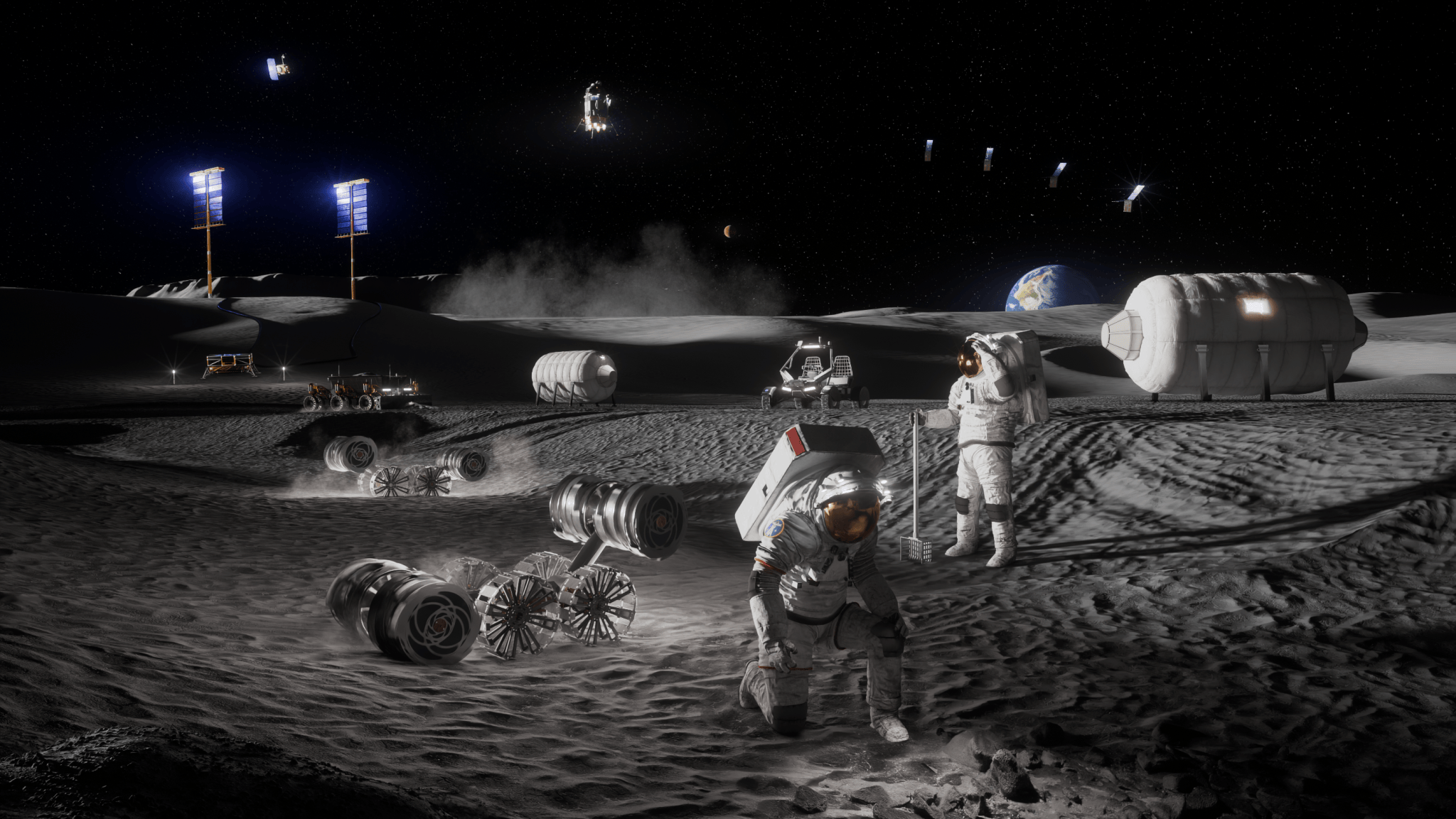
Artist’s concept depicting astronauts, habitats, rovers, power systems, and cargo operations supporting sustained human activities at the Mo...