On Sept. 16, 1994, astronaut Mark C. Lee tested out the Simplified Aid for EVA Rescue (SAFER) system, a system designed for use in the event a crew member becomes untethered while conducting a spacewalk. Occurring during the STS-64 mission, this was the first untethered U.S. spacewalk in 10 years.
This SAFER test was the first phase of a larger SAFER program whose objectives were to establish a common set of requirements for both space shuttle and space station program needs, develop a flight demonstration of SAFER, validate system performance and, finally, develop a production version of SAFER for the shuttle and station programs.
Preparations for Next Moonwalk Simulations Underway (and Underwater)
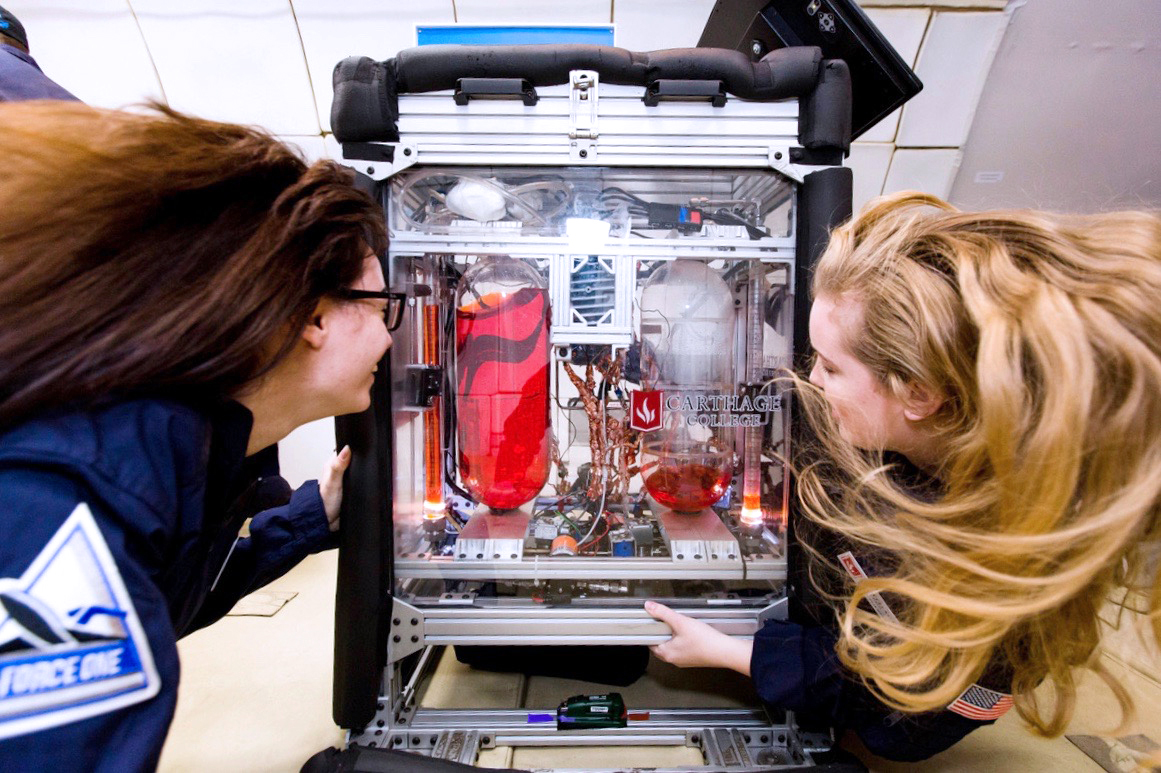
University of Florida researcher Rob Ferl (seated) and co-principal investigator Anna-Lisa Paul practice the experiment to study the effect of gravity transitions on the plants’ gene expression.
University of Florida
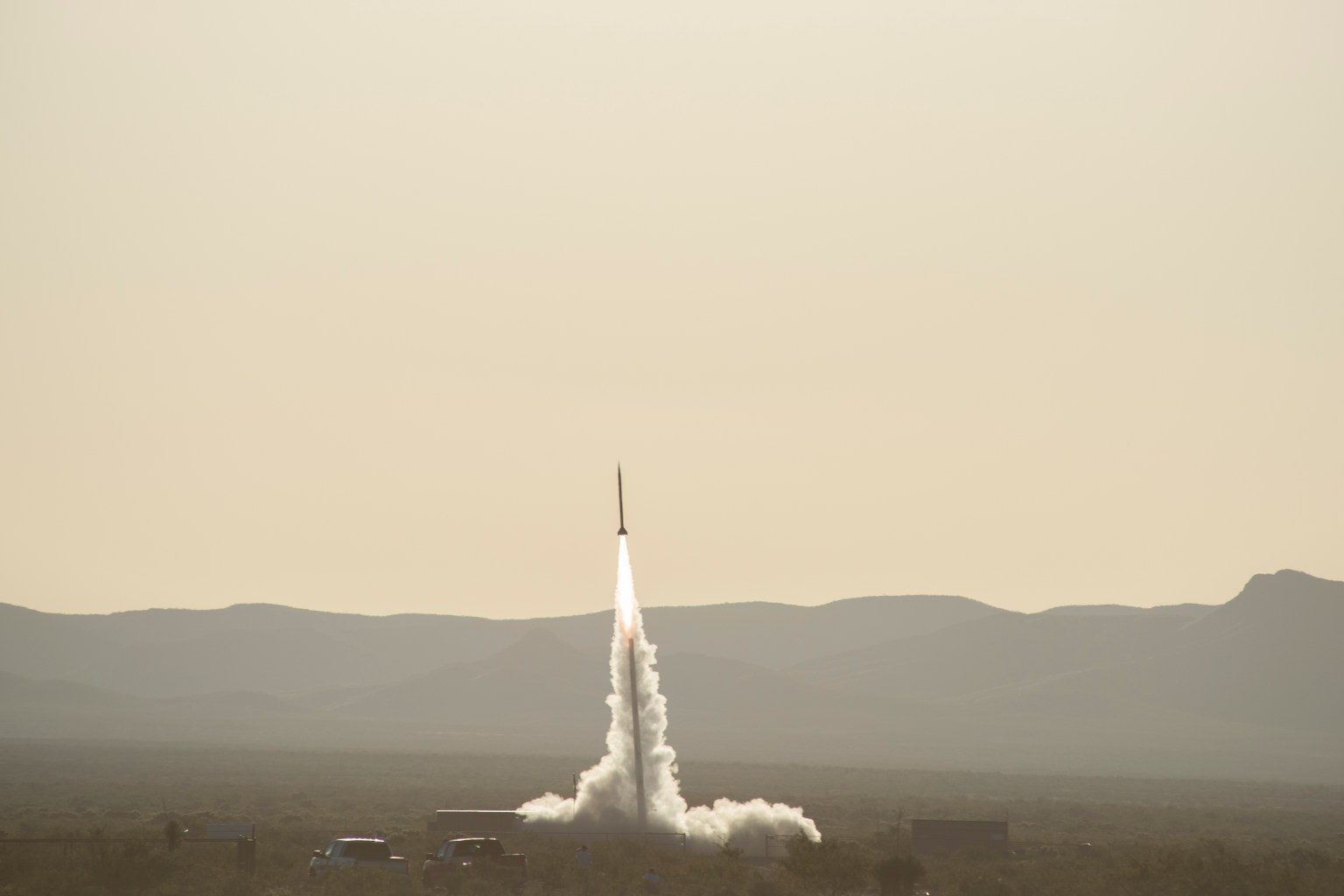
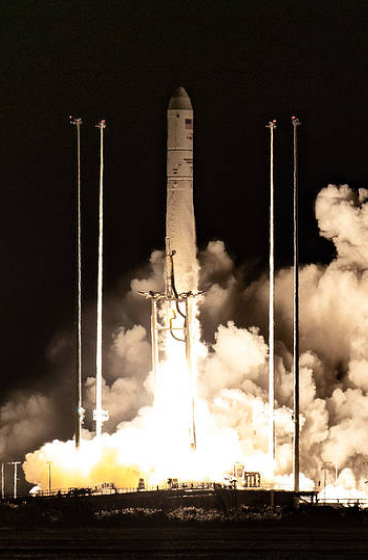
For the first time, a NASA-funded researcher will fly with their experiment on a commercial suborbital rocket. The technology is one of two NASA-supported experiments, also known as payloads, funded by the agency’s Flight Opportunities program that will launch aboard Blue Origin’s New Shepard suborbital rocket system on a flight test no earlier than Thursday, Aug. 29.
The researcher-tended payload, from the University of Florida in Gainesville, seeks to understand how changes in gravity during spaceflight affect plant biology. Researcher Rob Ferl will activate small, self-contained tubes pre-loaded with plants and preservative to biochemically freeze the samples at various stages of gravity. During the flight, co-principal investigator Anna-Lisa Paul will conduct four identical experiments as a control. After the flight, Ferl and Paul will examine the preserved plants to study the effect of gravity transitions on the plants’ gene expression. Studying how changes in gravity affect plant growth will support future missions to the Moon and Mars.
The university’s flight test was funded by a grant awarded through the Flight Opportunities program’s TechFlights solicitation with additional support from NASA’s Division of Biological and Physical Sciences. This experiment builds on NASA’s long history of supporting plant research and aims to accelerate the pace and productivity of space-based research.
The other Flight Opportunities supported payload is from HeetShield, a small business in Flagstaff, Arizona. Two new thermal protection system materials will be mounted to the outside of New Shepard’s propulsion module to assess their thermal performance in a relevant environment, since conditions will be similar to planetary entry. After the flight, HeetShield will analyze the structure of the materials to determine how they were affected by the flight.
Flight Opportunities, within NASA’s Space Technology Mission Directorate, facilitates demonstration of technologies for space exploration and the expansion of space commerce through suborbital testing with industry flight providers. Through various mechanisms, the program funds flight tests for internal and external technology payloads.
Eclipse Soundscapes AudioMoth Donations Will Study Nature at Night
During the April 8, 2024 total solar eclipse, approximately 770 AudioMoth recording devices were used to capture sound data as part of the Eclipse Soundscapes Project — a multisensory participatory science (also known as “citizen science”) project that is studying how eclipses impact life on Earth. Following the eclipse, participants had the option to keep or send back their AudioMoth device for donation. Fifty-two AudioMoths were sent back to Eclipse Soundscapes (ES) so that ES could donate them to projects or communities for future scientific usage. Eighteen of those AudioMoths have been donated to Dark Sky Missouri, an initiative to protect our night skies and the creatures that depend on them. On Wednesday, August 21, 2024, at 3 p.m. EST, Eclipse Soundscapes hosted a webinar with Dark Sky Missouri founder Don Ficken to learn more about how these AudioMoths will contribute to future participatory science.
Don Ficken is a Missouri Master Naturalist and amateur astronomer who found the Eclipse Soundscapes Project through SciStarter, an organization that helps bring together millions of curious and concerned people in the world to engage in real-world research questions through citizen science. He participated as a Data Collector in 2024. “[The Eclipse Soundscapes Project] opened up a door for me because I never really thought about sound acoustics in this way,” Ficken said.
It occurred to Ficken that acoustics could help bolster Dark Sky Missouri’s efforts to study and conserve night time wildlife. One of these efforts, Lights Out Heartland, encourages homeowners and businesses to minimize artificial light usage in order to protect migrating birds from collisions due to disorienting bright lights. Ficken hopes to use the AudioMoths to capture the birds’ nocturnal flight calls as they fly over locations like the Gateway Arch, Shaw Nature Reserve, and Missouri Botanical Gardens.
Dark Sky Missouri also hopes to take more general surveys of nature at night by placing AudioMoths in parks and natural areas. Even though parks are not typically open or staffed at night, the AudioMoths could help map the locations and movements of wildlife, creating talking points and learning opportunities for staff and visitors alike.
Both initiatives will be piloted during the fall bird migration, with the goal of developing a framework for an expanded long term project. While there are no opportunities for the general public to get involved in the projects just yet, Ficken says participatory scientists can benefit from the multisensory methods employed in the Eclipse Soundscapes Project. “I think that the thing that they should think about is really the door that acoustics would be opening for them,” he said. “In other words, you don’t have to just visually look at daytime. Think about sound. Think about night.” For more information on how Dark Sky Missouri will use the AudioMoth recorders, read the Eclipse Soundscapes blog post.
The Eclipse Soundscapes Project is supported by NASA under cooperative agreement award number 80NSSC21M0008 and is part of NASA’s Science Activation Portfolio. Learn more about how Science Activation connects NASA science experts, real content, and experiences with community leaders to do science in ways that activate minds and promote deeper understanding of our world and beyond: https://science.nasa.gov/learn
NASA, ESA, and L. C. Johnson (Northwestern University); Image Processing: Gladys Kober (NASA/Catholic University of America)
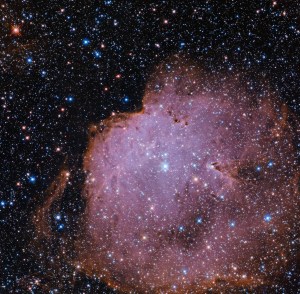
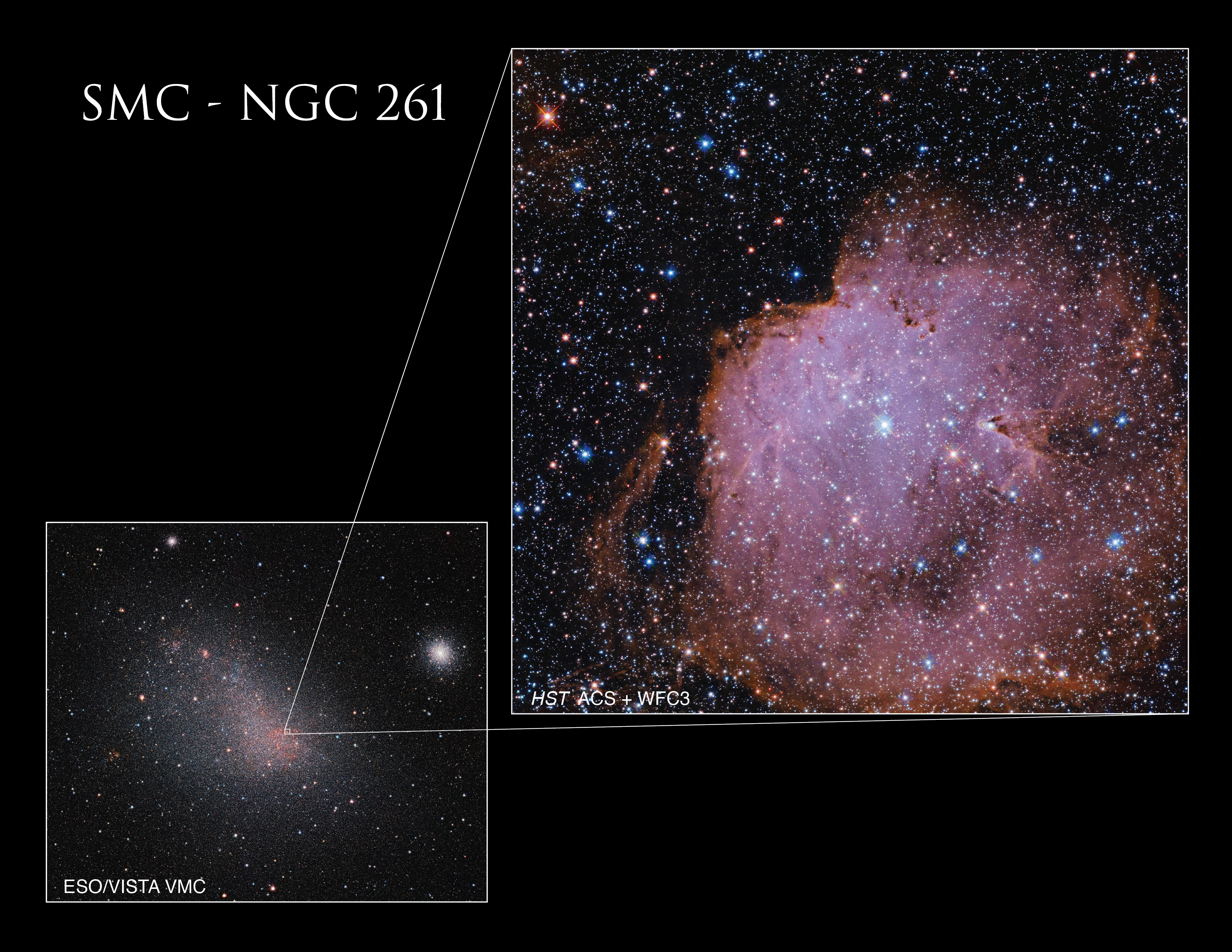
NGC 261 blooms a brilliant ruby red against a myriad of stars in this new image from NASA’s Hubble Space Telescope. Discovered on Sept. 5, 1826 by Scottish astronomer James Dunlop, this nebula is located in one of the Milky Way’s closest galactic companions, the Small Magellanic Cloud (SMC). The ionized gas blazing from within this diffuse region marks NGC 261 as an emission nebula. It is home to numerous stars hot enough to irradiate surrounding hydrogen gas, causing the cloud to emit a pinkish-red glow.
This inset image shows the location of NGC 261 within the Small Magellanic Cloud.
NASA, ESA, L. C. Johnson (Northwestern University), and ESO/VISTA VMC; Image Processing: Gladys Kober (NASA/Catholic University of America)
Hubble turned its keen eye toward NGC 261 to investigate how efficiently stars form in molecular clouds, which are extremely dense and compact regions of gas and dust. These clouds often consist of large amounts of molecular hydrogen — cold areas where most stars form. However, measuring this raw fuel of star formation in stellar nurseries is a challenge because molecular hydrogen doesn’t radiate easily. Since it is difficult to detect, scientists instead trace other molecules present in the molecular clouds.
The SMC hosts a gas-rich environment of young stars along with trace amounts of carbon monoxide (CO), a chemical correlated with hydrogen and often used to identify the presence of such clouds. Using the Advanced Camera for Surveys (ACS) and Wide Field Camera 3 (WFC3), Hubble imaged these stars in the southwest portion of the SMC where NGC 261 resides. The combined power of ACS and WFC3 allowed scientists to closely examine the nebula’s star-forming properties through its CO content at optical and near-infrared wavelengths. This research helps astronomers better understand how stars form in our home galaxy and others in our galactic neighborhood.
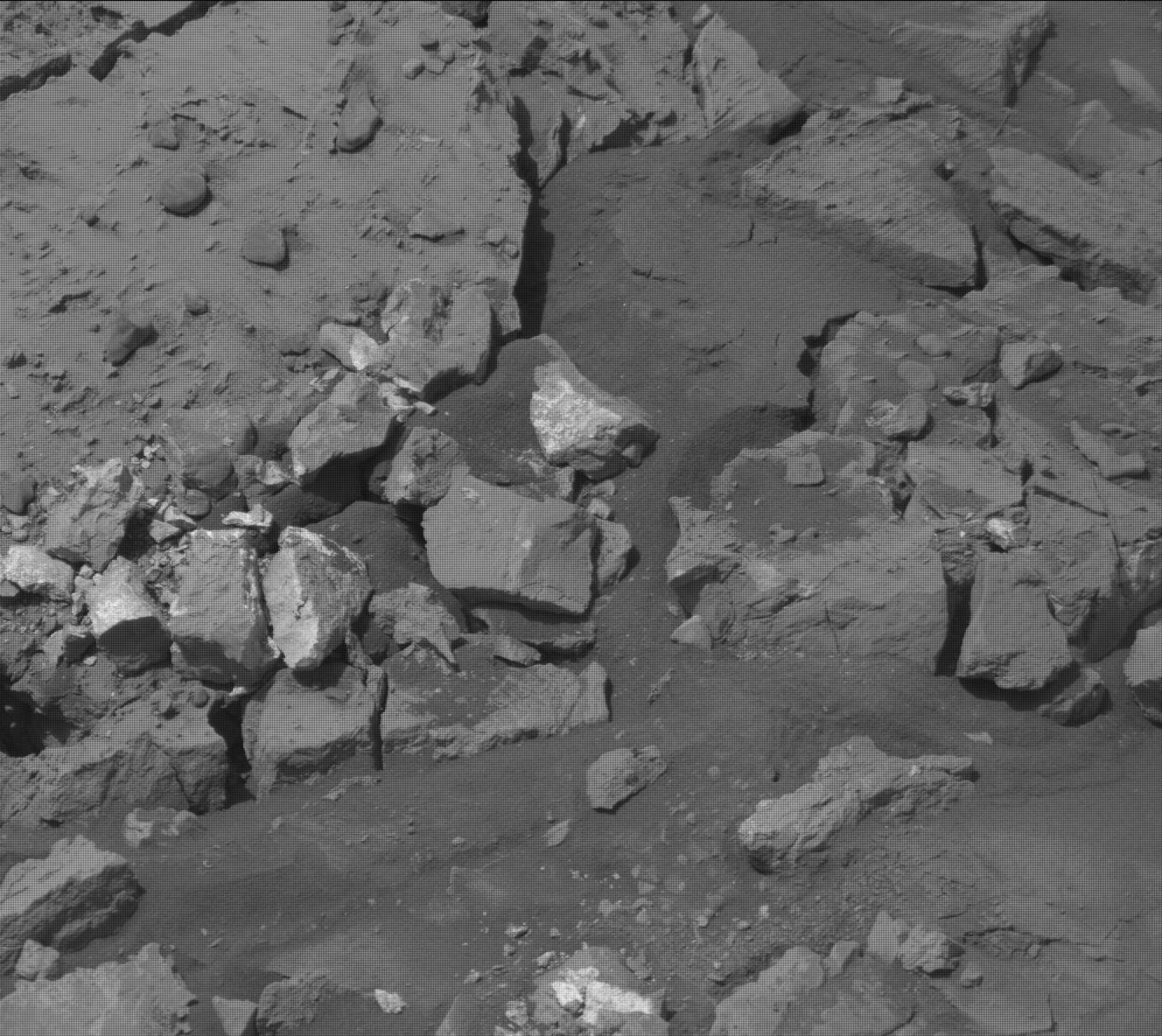
This image was taken by Mast Camera (Mastcam) aboard NASA’s Mars rover Curiosity on Sol 4284 — Martian day 4,284 of the Mars Science Laboratory mission — on Aug. 24, 2024, at 20:32:43 UTC.
NASA/JPL-Caltech/MSSS
Earth planning date: Monday, Aug. 26, 2024
Today’s planning day was a good example of how our team comes together to make quick decisions based on new information and science priorities.
The original intent of today’s plan was to perform contact science on some interesting bright-toned rubbly rocks in our workspace, seen in the image above. These rocks were just a short bump away from the location of our last sampling campaign and the team had been eyeing them for a few weeks, interested in the details of their composition from the APXS instrument and their morphology from MAHLI. However, before we ever unstow our robotic arm to perform these types of observations, our Rover Planners and Surface Property Scientists perform a “Slip Risk Assessment.” This assessment is used to determine whether the rover’s wheels are stable on the ground so that we can safely unstow the heavy robotic arm and place the arm-mounted instruments very close to the surface. In today’s case, the team determined that it was not safe to unstow our arm. If the science team was interested in observing the bright-toned rocks in our workspace, it would require adjusting the rover’s position and performing the observations in the next planning cycle, impacting our overall mission timeline.
With this information on hand, the science team had an excellent discussion, quickly assessing the pros and cons of sticking around with a small adjustment to get contact science at this location in our next plan, or continuing down the road to our next waypoint. I always enjoy listening to these discussions; they are led by our Long-Term Planners and provide the opportunity for all science advocates to voice their opinions. In today’s case, the science team decided to move along. This location had been opportunistic to begin with and more juicy science targets are certainly to come. Time is a precious resource to us, and we often consider the timeline cost of any given science observation, weighing the relative science benefit to the cost of planning cycles.
So given this reworking of priorities, today’s two-sol plan was adjusted to include targeted science on the first sol before driving away towards our next waypoint, followed by another sol with untargeted science. Our drive takes us about 25 meters north and we’ll pause part way through the drive to take Mastcam imaging of some bright nodular-appearing rocks to examine their relationship to other rock types.
Between the two sols of this plan, we’ll perform an empty-cell analysis of the CheMin cell used for our last sampling campaign, to determine if we have dumped all the sample out of it for future use with another sampling campaign. As always, we performed our normal environmental monitoring observations.
Onward, Curiosity!
Written by Elena Amador-French, Science Operations Coordinator at NASA’s Jet Propulsion Laboratory
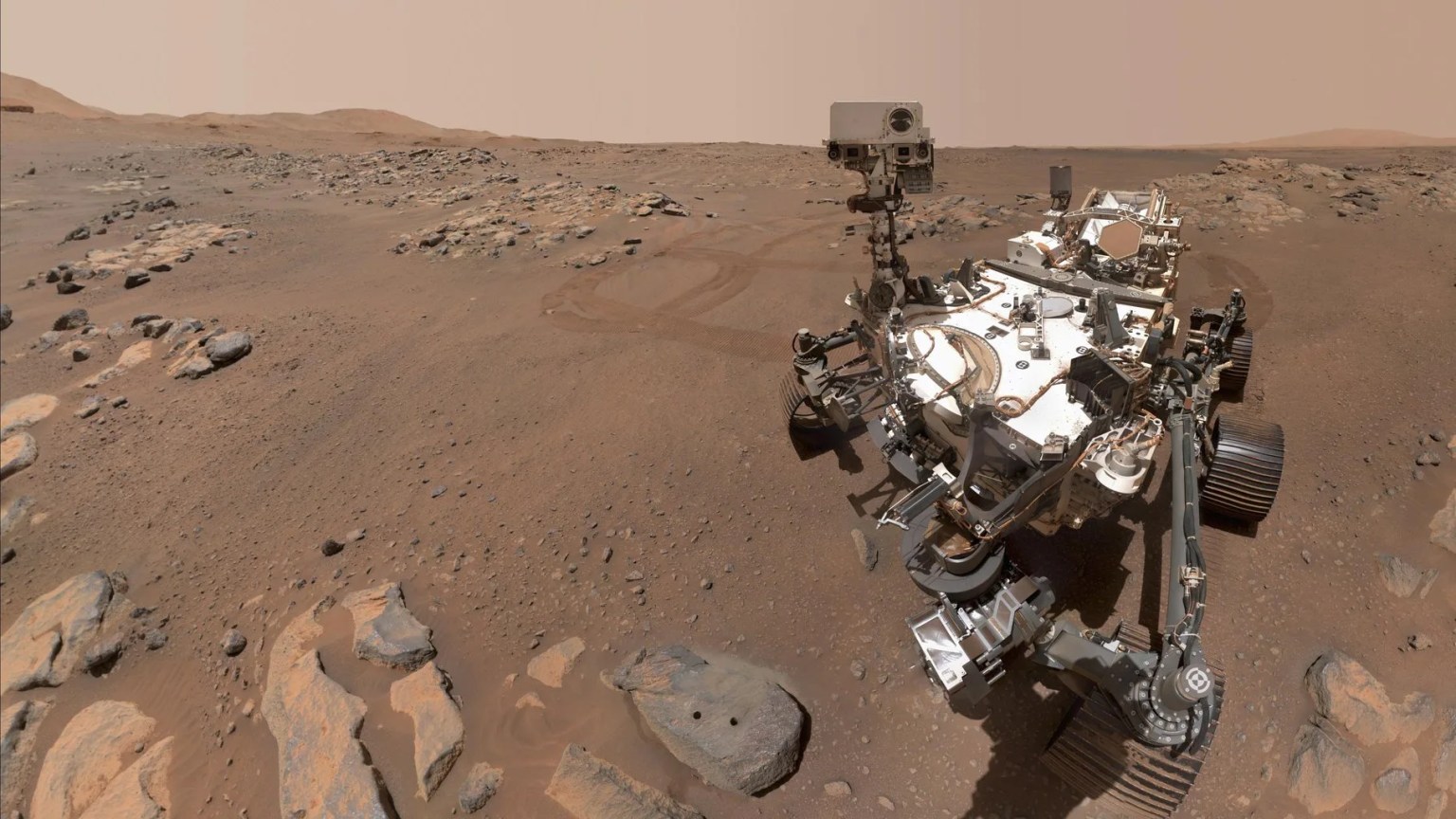
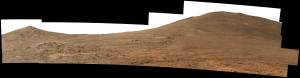
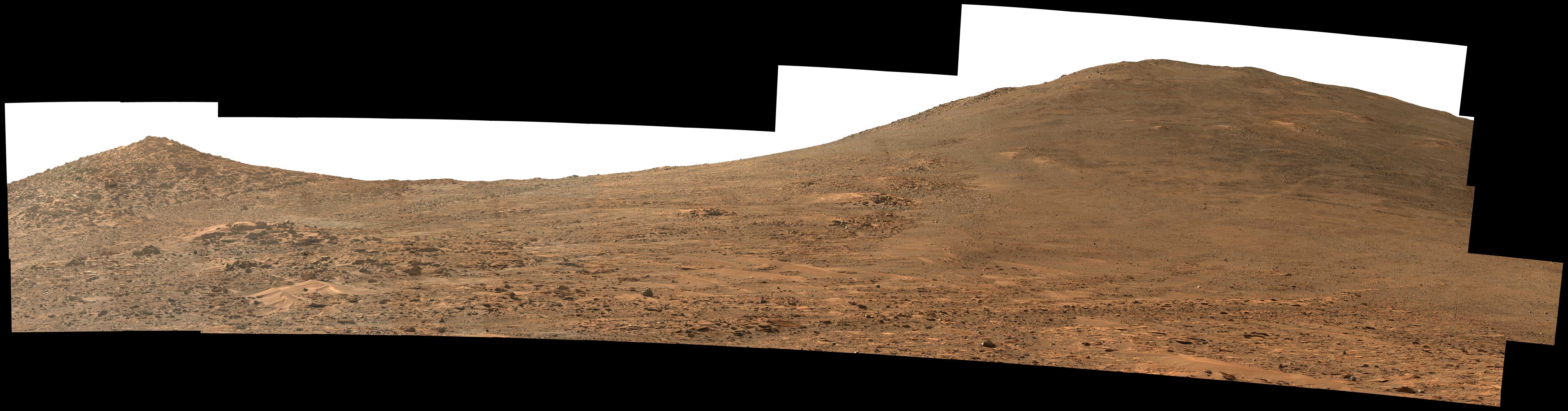
Mastcam-Z mosaic made of 59 individual Mastcam-Z images showing the area Perseverance will climb in the coming weeks on its way to Dox Castle, the rover’s first stop on the crater rim.
NASA/JPL-Caltech/ASU/MSSS
Perseverance is officially headed into a new phase of scientific investigation on the Jezero Crater rim!
For the last 2 months, the Perseverance rover has been exploring the Neretva Vallis region of Jezero Crater, where rocks with interesting popcorn-like textures and “leopard spot” patterns have fascinated us all. Now, the rover has begun its long ascent up the crater rim, and is officially kicking off a new phase of exploration for the mission.
Strategic (longer-term) planning is particularly important for the Mars 2020 mission given the crucial role Perseverance plays in collecting samples for Mars Sample Return, and the Mars 2020 team undertakes this planning in the form of campaigns. Perseverance has now completed four such campaigns— the Crater Floor, Delta Front, Upper Fan and Margin Unit campaigns respectively— making the Crater Rim Campaign next in line. Given its broad scope and the wide diversity of rocks we expect to encounter and sample along the way, it may be the most ambitious campaign the team has attempted so far.
The team also has less information from orbiter data to go on compared to previous campaigns, because this area of the crater rim does not have the high-resolution, hyperspectral imaging of CRISM that helped inform much of our geological unit distinctions inside the crater. This means that Mastcam-Z multispectral and SuperCam long-distance imaging will be particularly useful for understanding broadscale mineralogical distinctions between rocks as we traverse the crater rim. Such imaging has already proved extremely useful in the Neretva Vallis area, where at Alsap Butte we observed rocks that appeared similar to each other in initial imaging, but actually display an Andy-Warhol-esque array of color in multispectral products, indicative of varied mineral signatures.
Our next stop is Dox Castle where Perseverance will investigate the contact between the Margin Unit and the Crater rim, as well as rubbly material that may be our first encounter with deposits generated during the impact that created Jezero crater itself. Later in the campaign, we will investigate other light-toned outcrops that may or may not be similar to those encountered at Bright Angel, as well as rocks thought to be part of the regionally extensive olivine-carbonate-bearing unit, and whose relationship to both Séítah and the Margin Unit remains an interesting story to unravel. Throughout this next phase of exploration, comparing and contrasting the rocks we see on the rim to both each other and those previously explored in the mission will be an important part of our scientific investigations.
The whole Mars 2020 science team is incredibly excited to be embarking on the next phase of Perseverance’s adventure, and we expect these results, and the samples we collect along the way, to inform our understanding of not just Jezero itself, but the planet Mars as a whole. We can’t wait to share what we find!
Written by Eleni Ravanis, PhD Candidate and Graduate Research Assistant at University of Hawaiʻi at Mānoa
Cassiopeia A, Then the Cosmos: 25 Years of Chandra X-ray Science
By Rick Smith
On Aug. 26, 1999, NASA’s Chandra X-ray Observatory opened its powerful telescopic eye in orbit and captured its awe-inspiring “first light” images of Cassiopeia A, a supernova remnant roughly 11,000 light-years from Earth. That first observation was far more detailed than anything seen by previous X-ray telescopes, even revealing – for the first time ever – a neutron star left in the wake of the colossal stellar detonation.
Those revelations came as no surprise to Chandra project scientist Martin Weisskopf, who led Chandra’s development at NASA’s Marshall Space Flight Center in Huntsville, Alabama. “When you build instrumentation that’s 10 times more sensitive than anything that was done before, you’re bound to discover something new and exciting,” he said. “Every step forward was a giant step forward.”
Twenty-five years later, Chandra has repeated that seminal moment of discovery again and again, delivering – to date – nearly 25,000 detailed observations of neutron stars, quasars, supernova remnants, black holes, galaxy clusters, and other highly energetic objects and events, some as far away as 13 billion light-years from Earth.
Chandra has further helped scientists gain tangible evidence of dark matter and dark energy, documented the first electromagnetic events tied to gravitational waves in space, and most recently aided the search for habitable exoplanets – all vital tools for understanding the vast, interrelated mechanisms of the universe we live in.
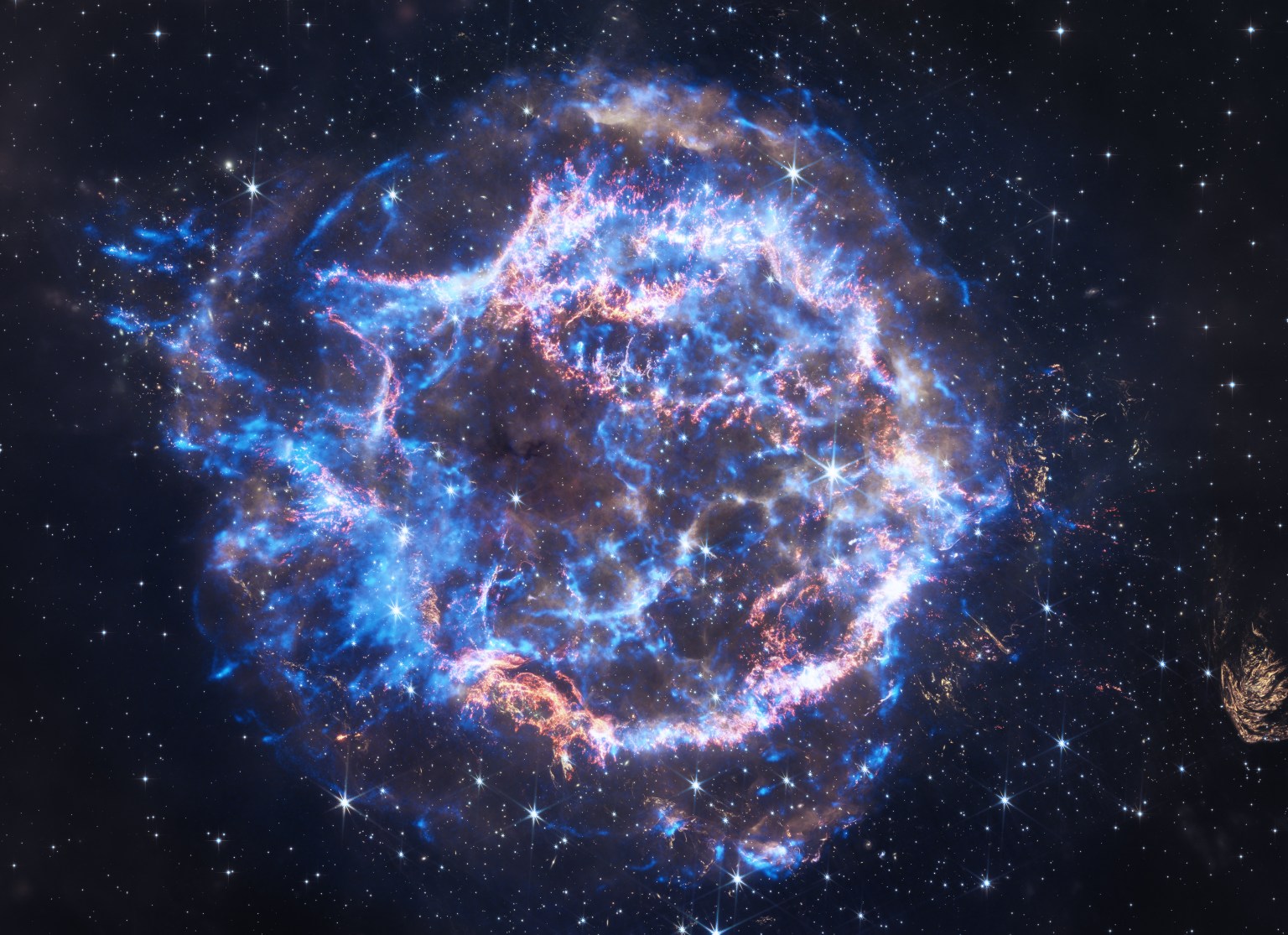
NASA’s Chandra X-ray Observatory has observed Cassiopeia A for more than 2 million total seconds since its “first light ” images of the supernova remnant on Aug. 26, 1999. Cas A is some 11,000 light-years from Earth. Chandra X-rays are depicted in blue and composited with infrared images from NASA’s James Webb Space Telescope in orange and white.
Credits: X-ray: NASA/CXC/SAO; Infrared: NASA/ESA/CSA/STScI/D. Milisavljevic (Purdue Univ.), I. De Looze (University of Ghent), T. Temim (Princeton Univ.); Image Processing: NASA/CXC/SAO/J. Schmidt, K. Arcand, and J. Major
“Chandra’s first image of Cas A provided stunning demonstration of Chandra’s exquisite X-ray mirrors, but it simultaneously revealed things we had not known about young supernova remnants,” said Pat Slane, director of the CXC (Chandra X-ray Center) housed at the Smithsonian Astrophysical Observatory in Cambridge, Massachusetts. “In a blink, Chandra not only revealed the neutron star in Cas A; it also taught us that young neutron stars can be significantly more modest in their output than what previously had been understood. Throughout its 25 years in space, Chandra has deepened our understanding of fundamental astrophysics, while also greatly broadening our view of the universe.”
Chandra often is used in conjunction with other space telescopes that observe the cosmos in different parts of the electromagnetic spectrum, and with other high-energy missions such as ESA’s (European Space Agency’s) XMM-Newton; NASA’s Swift, NuSTAR (Nuclear Spectroscopic Telescope Array), and IXPE (Imaging X-ray Polarization Explorer) imagers, and NASA’s NICER (Neutron Star Interior Composition Explorer) X-ray observatory, which studies high-energy phenomena from its vantage point aboard the International Space Station.
Chandra remains a unique, global science resource, with a robust data archive that will continue to serve the science community for many years.
“NASA’s project science team has always strived to conduct Chandra science as equitably as possible by having the world science community collectively decide how best to use the observatory’s many tremendous capabilities,” said Douglas Swartz, a USRA (Universities Space Research Association) principal research scientist on the Chandra project science team.
These images were released to commemorate the 25th anniversary of Chandra. They represent the wide range of objects that the telescope has observed over its quarter century of observations. X-rays are an especially penetrating type of light that reveals extremely hot objects and very energetic physical processes. The images range from supernova remnants, like Cassiopeia A, to star-formation regions like the Orion Nebula, to the region at the center of the Milky Way. This montage also contains objects beyond our own Galaxy including other galaxies and galaxy clusters.
“Chandra will continue to serve the astrophysics community long after its mission ends,” said Andrew Schnell, acting Chandra program manager at Marshall. “Perhaps its greatest discovery hasn’t been discovered yet. It’s just sitting there in our data archive, waiting for someone to ask the right question and use the data to answer it. It could be somebody who hasn’t even been born yet.”
That archive is impressive indeed. To date, Chandra has delivered more than 70 trillion bytes of raw data. More than 5,000 unique principal investigators and some 3,500 undergraduate and graduate students around the world have conducted research based on Chandra’s observations. Its findings have helped earn more than 700 PhDs and resulted in more than 11,000 published papers, with half a million total citations.
Weisskopf is now an emeritus researcher who still keeps office hours every weekday despite having retired from NASA in 2022. He said the work remains as stimulating now as it was 25 years ago, waiting breathlessly for those “first light” images.
NASA’s Chandra X-ray Observatory data, seen here in violet and white, is joined with that of NASA’s Hubble Space Telescope (red, green, and blue) and Imaging X-ray Polarimetry Explorer (purple) to show off the eerie beauty of the Crab Nebula. The nebula is the result of a bright supernova explosion first witnessed and documented in 1054 A.D.
Credits: X-ray: (Chandra) NASA/CXC/SAO, (IXPE) NASA/MSFC; Optical: NASA/ESA/STScI; Image Processing: NASA/CXC/SAO/J. Schmidt, K. Arcand, and L. Frattare
“We’re always trying to put ourselves out of business with the next bit of scientific understanding,” he said. “But these amazing discoveries have demonstrated how much NASA’s astrophysics missions still have to teach us.”
The universe keeps turning – and Chandra’s watchful eye endures.
More about Chandra
Chandra, managed for NASA by Marshall in partnership with the CXC, is one of NASA’s Great Observatories, along with the Hubble Space Telescope and the now-retired Spitzer Space Telescope and Compton Gamma Ray Observatory. It was first proposed to NASA in 1976 by Riccardo Giacconi, recipient of the 2002 Nobel Prize for Physics based on his contributions to X-ray astronomy, and Harvey Tananbaum, who would later become the first director of the Chandra X-ray Center. Chandra was named in honor of the late Nobel laureate Subrahmanyan Chandrasekhar, who earned the Nobel Prize in Physics in 1983 for his work explaining the structure and evolution of stars.
Learn more about the Chandra X-ray Observatory and its mission here: