Media are invited to see a test version of NASA’s Orion spacecraft, as well as the hardware that will be used to recover the spacecraft on its return from space, at 9 a.m. PST Wednesday, Nov. 7, at Naval Base San Diego.
from NASA Breaking News https://ift.tt/2z4JczA
via IFTTT

Friday, 26 October 2018

NASA to Host Briefing on November Mars InSight Landing
NASA's upcoming landing of the first-ever mission to study the heart of Mars will be the topic of a media briefing at 1:30 p.m. EDT Wednesday, Oct. 31 at NASA Headquarters in Washington.
from NASA Breaking News https://ift.tt/2SjVMU8
via IFTTT
from NASA Breaking News https://ift.tt/2SjVMU8
via IFTTT
NASA Awards Library and Information Services Technical Support Contract
NASA has awarded the Goddard Library and Information Services Technical Support (GLISTS) contract to Select Federal Services, LLC of Sweetwater, Tennessee. The work will be performed at NASA’s Goddard Space Flight Center in Greenbelt, Md.
from NASA Breaking News https://ift.tt/2Pl3r63
via IFTTT
from NASA Breaking News https://ift.tt/2Pl3r63
via IFTTT
NASA Invites Media to Learn About Urban Air Mobility
NASA is inviting media to attend a two-day Urban Air Mobility Grand Challenge Industry Day beginning at 8 a.m. PDT Thursday, Nov. 1, at the Seattle Marriott Waterfront.
from NASA Breaking News https://ift.tt/2CFfxAg
via IFTTT
from NASA Breaking News https://ift.tt/2CFfxAg
via IFTTT
Wednesday, 24 October 2018
Coming to America: Orion’s European Service Module Arrives for First Mission
NASA is inviting media to its Kennedy Space Center in Florida at 9 a.m. EST Friday, Nov. 16, for an event marking the arrival from Bremen, Germany, of the European Service Module – the powerhouse that will supply NASA’s Orion spacecraft with electricity, propulsion, thermal control, air and water.
from NASA Breaking News https://ift.tt/2OGXEYY
via IFTTT
from NASA Breaking News https://ift.tt/2OGXEYY
via IFTTT
Tuesday, 23 October 2018
NASA Invites Media to Visit Nanocomp Technologies, Discuss Space Technology Partnership
Media are invited to tour Nanocomp Technologies in Merrimack, New Hampshire, at 10:45 a.m. EDT Monday, Oct. 29, and learn about a nanotechnology that could enable lighter spacecraft and launch vehicles, making spaceflight and exploration more affordable.
from NASA Breaking News https://ift.tt/2z0L4Jl
via IFTTT
from NASA Breaking News https://ift.tt/2z0L4Jl
via IFTTT
Thursday, 18 October 2018
NASA Invites Media to Northrop Grumman Cygnus Launch from Virginia
Media accreditation now is open for the launch from Virginia of Northrop Grumman’s 10th commercial resupply services mission to deliver NASA science investigations, supplies and equipment to the International Space Station aboard its Cygnus spacecraft.
from NASA Breaking News https://ift.tt/2NMu5Qu
via IFTTT
from NASA Breaking News https://ift.tt/2NMu5Qu
via IFTTT
Wednesday, 17 October 2018
NASA to Host Briefings, Events for ICON Launch to Study Space Weather
NASA will host a series of media briefings leading up to the Friday, Oct. 26, launch of its Ionospheric Connection Explorer (ICON) mission to study the dynamic zone high in the atmosphere where terrestrial weather from below meets space weather above.
from NASA Breaking News https://ift.tt/2QYOzaQ
via IFTTT
from NASA Breaking News https://ift.tt/2QYOzaQ
via IFTTT
New NASA Podcast Shares ‘Invisible’ Stories of Spaceflight
Today, NASA released a new, limited-edition podcast called The Invisible Network, the first NASA podcast to embrace narrative storytelling. All six episodes can be downloaded and binged on NASA’s website, SoundCloud and Apple Podcasts.
from NASA Breaking News https://ift.tt/2OxdCov
via IFTTT
from NASA Breaking News https://ift.tt/2OxdCov
via IFTTT
Tuesday, 16 October 2018
NASA Television to Air Live Interviews with Astronaut Nick Hague
NASA astronaut Nick Hague, who has returned home to Houston this weekend after his launch to the International Space Station was aborted, will be interviewed by media about his experience at 11 a.m. EDT Tuesday, Oct. 16.
from NASA Breaking News https://ift.tt/2Epu1H0
via IFTTT
from NASA Breaking News https://ift.tt/2Epu1H0
via IFTTT
Friday, 12 October 2018
After Two Long Careers, QuikSCAT Rings Down the Curtain

Launched in June 1999 for an intended two-year mission, NASA's SeaWinds scatterometer instrument on the QuikSCAT spacecraft was turned off on Oct. 2 in accordance with its end-of-mission plan. QuikSCAT spent its first decade creating an unprecedented record of the speed and direction of winds at the ocean surface. Then, for another nine years, it served as the gold standard of accuracy against which new spaceborne scatterometers were calibrated.
Managed by NASA's Jet Propulsion Laboratory in Pasadena, California, QuikSCAT was a unique national resource that far surpassed NASA's original science objective for the mission. During its 10 years of observing winds over the global ocean surface, QuikSCAT measurements were used by the world's weather forecasting agencies to improve forecasts and identify and monitor hurricanes and other storms far out in the open seas. Its data also provided critical information for monitoring, researching, modeling, and forecasting the atmosphere, ocean, ice and climate.
Among its many accomplishments:
• QuikSCAT discovered that hurricane-strength winds occur frequently in the North Atlantic and North Pacific oceans, where such strong winds were not previously expected to exist.
• It provided high-resolution observations of the dramatically accelerating changes in sea ice cover on the Arctic Ocean.
• The mission's measurements were used widely beyond weather forecasting and research -- for example, to help identify efficient shipping routes, plan new offshore wind farms, and guide search-and-rescue operations at sea.
Michael Freilich, the QuikSCAT mission's original principal investigator and now director of NASA's Earth Science Division, noted, "QuikSCAT operated in space for nearly two decades, and we are certain that its impact and legacy will last much longer."
Ernesto Rodríguez, QuikSCAT project scientist at JPL, said, "The decommissioning of QuikSCAT marks the passing of an era. Many scientists and forecasters have built their careers over the last 20 years using QuikSCAT. Its data led to major discoveries on the interaction between the ocean and the atmosphere."
A few months after QuikSCAT's 10th anniversary, an age-related problem caused its spinning antenna to stop rotating, reducing its observing swath to only 19 miles (30 kilometers) wide. The extreme accuracy of this narrow swath measurement, however, allowed QuikSCAT to take on a second mission: calibrating newer satellites to enable a much longer data record of ocean winds.
Satellite instruments are regularly calibrated to ensure their readings match other data that are known to be accurate, and to correct for an instrument's normal drift in accuracy over time. QuikSCAT's exceptional stability made it invaluable in assuring that newer missions from the Indian and European space agencies and from NASA are providing apples-to-apples measurements. This function proved so important to the research community that QuikSCAT's decommissioning was postponed twice to allow time for new scatterometers to be launched and calibrated.
QuikSCAT project manager Rob Gaston of JPL said, "It's a testament to the research community's commitment to climate research that QuikSCAT's intercalibration mission has continued to receive the highest possible marks for science relevance in the reviews that NASA follows to establish funding priorities for missions like QuikSCAT. The intercalibration mission has enabled research that would not have been possible but for the remarkable stability of the SeaWinds instrument and the exceptional reliability and longevity of the QuikSCAT spacecraft."
QuikSCAT was originally a recovery mission after the loss of Japan's Advanced Earth Observing Satellite, which hosted the NASA Scatterometer (NSCAT). The QuikSCAT mission was conceived, developed and launched in less than two years. Ball Aerospace & Technologies Corp. in Boulder, Colorado, built the spacecraft bus, and JPL designed and built the SeaWinds instrument. QuikSCAT was operated by the Laboratory for Atmospheric and Space Physics at the University of Colorado at Boulder.
News Media Contact
Esprit Smith
Jet Propulsion Laboratory, Pasadena, California
818-354-4269
Esprit.Smith@jpl.nasa.gov
Written by Carol Rasmussen
NASA's Earth Science News Team
2018-239
from News and Features https://ift.tt/2IQ2Y6d
via IFTTT
Subscribe to:
Posts (Atom)
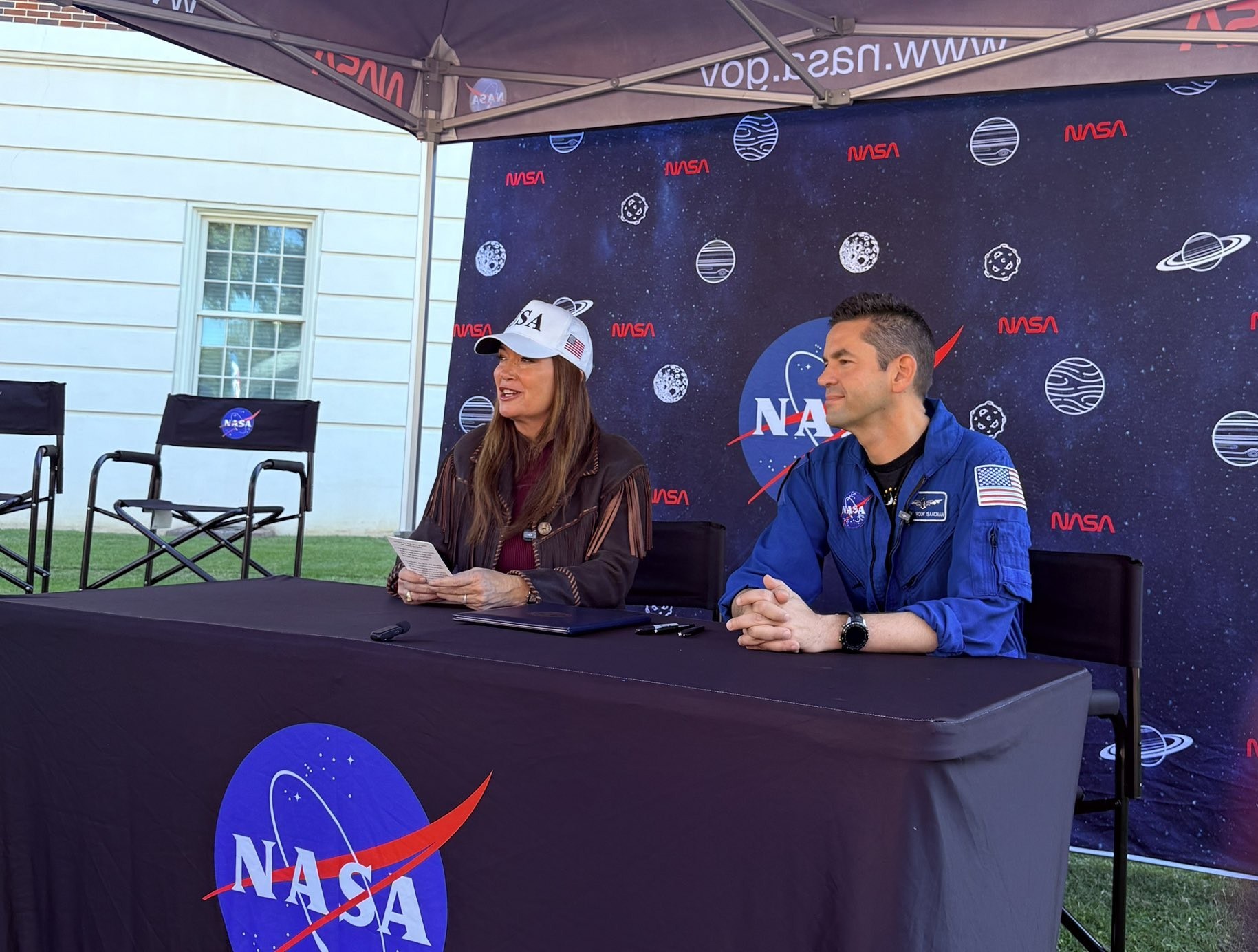
NASA, USDA Sign Agreement Advancing Earth Science, Agriculture
U.S. Secretary of Agriculture Brooke Rollins, left, and NASA Administrator Jared Isaacman signed a Memorandum of Understanding advancing agr...
-
NASA has exercised the second option of its Information Technology and Multimedia Services (ITAMS) contract with DB Consulting Group, Inc., ...
-
Science Earth Observatory A Subtle Return of La Niña Earth Earth Observatory Image of the Day EO Explorer All Topics ...
