Thursday, 31 May 2018

Dawn Mission: New Orbit, New Opportunities


NASA's Dawn spacecraft is maneuvering to its lowest-ever orbit for a close-up examination of the inner solar system's only dwarf planet.

In early June, Dawn will reach its new, final orbit above Ceres. Soon after, it will begin collecting images and other science data from an unprecedented vantage point. This orbit will be less than 30 miles (50 kilometers) above the surface of Ceres -- 10 times closer than the spacecraft has ever been.

Dawn will collect gamma ray and neutron spectra, which help scientists understand variations in the chemical makeup of Ceres' uppermost layer. That very low orbit also will garner some of Dawn's closest images yet.

The transfer from Dawn's previous orbit to its final one is not as simple as making a lane change. Dawn's operations team worked for months to plot the course for this second extended mission of the veteran spacecraft, which is propelled by an ion engine. Engineers mapped out more than 45,000 possible trajectories before devising a plan that will allow the best science observations.

Dawn was launched in 2007 and has been exploring the two largest bodies in the main asteroid belt, Vesta and Ceres, to uncover new insights into our solar system. It entered Ceres' orbit in March 2015.

"The team is eagerly awaiting the detailed composition and high-resolution imaging from the new, up-close examination," said Dawn's Principal Investigator Carol Raymond of NASA's Jet Propulsion Laboratory, Pasadena, California. "These new high-resolution data allow us to test theories formulated from the previous data sets and discover new features of this fascinating dwarf planet."

More detailed information about Dawn's planned orbit is in Marc Rayman's Dawn Journal. Rayman is Dawn's mission director and chief engineer.

More information about the Dawn mission is available at the following sites:

https://www.nasa.gov/dawn

https://dawn.jpl.nasa.gov

The Dawn mission is managed by JPL for NASA's Science Mission Directorate in Washington. Dawn is a project of the directorate's Discovery Program, managed by NASA's Marshall Space Flight Center in Huntsville, Alabama. JPL is responsible for overall Dawn mission science. Orbital ATK Inc., in Dulles, Virginia, designed and built the spacecraft. The German Aerospace Center, Max Planck Institute for Solar System Research, Italian Space Agency and Italian National Astrophysical Institute are international partners on the mission team.

For a complete list of mission participants, visit:

https://dawn.jpl.nasa.gov/mission

News Media Contact

Gretchen McCartney

Jet Propulsion Laboratory, Pasadena, Calif.

818-393-6215

gretchen.p.mccartney@jpl.nasa.gov

Dwayne Brown / JoAnna Wendel

NASA Headquarters, Washington

202-358-1726 / 202-358-1003

dwayne.c.brown@nasa.gov / joanna.r.wendel@nasa.gov

2018-119


from News and Features https://ift.tt/2sl1Ikr
via IFTTT

NASA Selects Small Business Technology Awards


NASA has selected 304 proposals from U.S. small businesses to advance research and technology in Phase I of its 2018 Small Business Innovation Research (SBIR) program and 44 proposals for the Small Business Technology Transfer (STTR) program, totaling $43.5 million in awards. These selections support NASA's future space exploration missions, while also benefiting the U.S. economy.

NASA's Jet Propulsion Laboratory in Pasadena, California, will manage 45 SBIR and four STTR awards, totaling $6.125 million.

"This round of Phase I ideas looks very promising and creative, and will enhance innovation throughout the Agency," said Jim Reuter, acting associate administrator for NASA's Space Technology Mission Directorate (STMD). "Many of the businesses that go through the SBIR program end up working with NASA on the research and technologies needed to advance our space exploration goals."

Proposals were selected according to their technical merit and feasibility, in addition to the experience, qualifications and facilities of the submitting organization. Additional criteria included effectiveness of the work plan and commercial potential.

The selected proposals will support the development of technologies in the areas of aeronautics, human space exploration and operations, science, and space technology.

The SBIR Phase I contracts last for six months and STTR Phase I contracts last for 13 months, both with a maximum funding of $125,000.

Phase I work and results provide a sound basis for the continued development, demonstration and delivery of the proposed innovation in Phase II and follow-on efforts. Phase III is the commercialization of innovative technologies, products and services resulting from either a Phase I or Phase II contract.

The SBIR and STTR programs encourage small businesses and research institutions to develop innovative ideas that meet the specific research and development needs of the federal government. The programs are intended to stimulate technological innovation in the private sector, increase the commercial application of research results, and encourage participation of socially and economically disadvantaged persons and women-owned small businesses. Since the 1970s, small businesses have created approximately 55 percent of all jobs in the United States.

The SBIR and STTR programs are managed for STMD by NASA's Ames Research Center in California's Silicon Valley. STMD is responsible for developing the cross-cutting, pioneering new technologies and capabilities needed by the agency to achieve its current and future missions. 

For more information about the SBIR/STTR program, including the selection list, visit:

https://sbir.nasa.gov/

For more information about NASA's investment in space technology, visit:

https://www.nasa.gov/spacetech

News Media Contact

Esprit Smith

Jet Propulsion Laboratory, Pasadena, Calif.

818-354-4269

esprit.smith@jpl.nasa.gov

Gina Anderson

NASA Headquarters, Washington

202-358-1160

gina.n.anderson@nasa.gov

Kimberly Minafra

Ames Research Center, Silicon Valley, Calif.

650-604-4789

kimberly.minafra@nasa.gov

2018-118


from News and Features https://ift.tt/2xrlnnQ
via IFTTT

Media Invited to See Latest NASA Drone Traffic Management Technologies

NASA invites media to learn the latest about its national campaign to test and refine its Unmanned Aircraft Systems (UAS) Traffic Management (UTM) technologies at 10 a.m. PDT Wednesday, June 6, at the agency’s Ames Research Center in Silicon Valley, California.

from NASA Breaking News https://ift.tt/2H8VoBf
via IFTTT

Saturday, 26 May 2018

NASA Administrator Reflects on Legacy Record-Breaking Skylab, Apollo Astronaut

The following is a statement from NASA Administrator Jim Bridenstine on the passing of Apollo and Skylab astronaut Alan Bean:

from NASA Breaking News https://ift.tt/2krmxX9
via IFTTT

Family Release Regarding the Passing of Apollo, Skylab Astronaut Alan Bean

The following is an obituary article released on the behalf of Alan Bean’s family:

from NASA Breaking News https://ift.tt/2xpgJab
via IFTTT

Friday, 25 May 2018

Take a Virtual Trip to a Strange New World with NASA

Are you looking for an exotic destination to visit this summer? Why not take a virtual trip to an Earth-size planet beyond our solar system with NASA's interactive Exoplanet Travel Bureau?

We live in a universe teeming with exoplanets, or planets outside our solar system. Unfortunately, even the nearest exoplanets are light-years away, so sending spacecraft and humans to these intriguing worlds remains a distant dream.

But on NASA's Exoplanet Exploration website, you can explore an imagined surface of an alien world via 360-degree, interactive visualizations. As you investigate each planet's surface, you'll discover fascinating features, like the blood-red sky of TRAPPIST-1d, or stand on a hypothetical moon of the massive planet Kepler-16b, which appears larger than either of the planet's two suns. The view from each planet's surface is an artist's impression based on the limited data that is available; no real photos of these planets exist.

The newest planet to feature this 360-degree surface visualization is Kepler-186f, an Earth-size planet orbiting a star much cooler and redder than the Sun. Scientists don't know if Kepler-186f has an atmosphere, but with the NASA visualization tool, you can see how the presence or absence of an atmosphere would change the view of the sky from the planet's surface.

TRAPPIST-1 The imagined surface of exoplanet Kepler-186f, on NASA's interactive Exoplanet Exploration website. Kepler-186f is an Earth-size planet orbiting a small red star, which may or may not have an atmosphere. No real photos of Kepler-186f exist. Credit: NASA/JPL-Caltech

Many of the exoplanets featured on the Exoplanet Exploration website were discovered by NASA's Kepler space telescope.

"Because Kepler-186f and the majority of Kepler-discovered planets are so distant, it is currently impossible to detect their atmospheres -- if they exist at all -- or characterize their atmospheric properties," said Martin Still, program scientist for NASA's newest space-based planet-hunting observatory, the Transiting Exoplanet Survey Satellite (TESS).

"Consequently, we have limited knowledge about what these distant worlds are really like, but these surface visualizations allow us to imagine some of the possibilities," Still said. "Current and future NASA missions, including TESS and the James Webb Space Telescope, will find the nearest exoplanets to our solar system and characterize their atmospheres, bridging the gap between speculation and what's really out there."

All the 360-degree visualizations are viewable on desktop and mobile devices, or in virtual reality headsets that work with smartphones. You can also peruse travelposters of such distant worlds as Kepler 186f; TRAPPIST-1e, or PSO J318.5-22, where the "nightlife never ends" because the planet doesn't orbit a star, but is instead floating freely through space.

Many exoplanets share characteristics with the planets that orbit our Sun -- some are gaseous like Saturn and Jupiter, while others are rocky like Earth and Mars. But these alien worlds also have unique features that set them apart. NASA is helping scientists discover and learn about these alien worlds with multiple telescopes and observatories, both on the ground and in space. For even more information and visualizations of these alien worlds, check out NASA's Eyes on Exoplanets mobile app.

The Exoplanet Travel Bureau was developed by NASA's Exoplanet Exploration Program communications team and program chief scientists. Based at the agency's Jet Propulsion Laboratory in Pasadena, California, which is a division of Caltech, the program is NASA's search for habitable planets and life beyond our solar system. The program develops technology and mission concepts, maintains exoplanet data archives and conducts ground-based exoplanet science for NASA missions.

Visit NASA's Exoplanet Exploration website:

https://exoplanets.nasa.gov/alien-worlds/exoplanet-travel-bureau/

News Media Contact

Calla Cofield

Jet Propulsion Laboratory, Pasadena, Calif.

818-393-1821

Calla.e.cofield@jpl.nasa.gov

2018-117


from News and Features https://ift.tt/2J1srvZ
via IFTTT

Thursday, 24 May 2018

Climate Change May Lead to Bigger Atmospheric Rivers


A new NASA-led study shows that climate change is likely to intensify extreme weather events known as atmospheric rivers across most of the globe by the end of this century, while slightly reducing their number.

The new study projects atmospheric rivers will be significantly longer and wider than the ones we observe today, leading to more frequent atmospheric river conditions in affected areas.

"The results project that in a scenario where greenhouse gas emissions continue at the current rate, there will be about 10 percent fewer atmospheric rivers globally by the end of the 21st century," said the study's lead author, Duane Waliser, of NASA's Jet Propulsion Laboratory in Pasadena, California. "However, because the findings project that the atmospheric rivers will be, on average, about 25 percent wider and longer, the global frequency of atmospheric river conditions -- like heavy rain and strong winds -- will actually increase by about 50 percent."

The results also show that the frequency of the most intense atmospheric river storms is projected to nearly double.

Atmospheric rivers are long, narrow jets of air that carry huge amounts of water vapor from the tropics to Earth's continents and polar regions. These "rivers in the sky" typically range from 250 to 375 miles (400 to 600 kilometers) wide and carry as much water -- in the form of water vapor -- as about 25 Mississippi Rivers. When an atmospheric river makes landfall, particularly against mountainous terrain (such as the Sierra Nevada and the Andes), it releases much of that water vapor in the form of rain or snow.

These storm systems are common -- on average, there are about 11 present on Earth at any time. In many areas of the globe, they bring much-needed precipitation and are an important contribution to annual freshwater supplies. However, stronger atmospheric rivers -- especially those that stall at landfall or that produce rain on top of snowpack -- can cause disastrous flooding.

Atmospheric rivers show up on satellite imagery, including in data from a series of actual atmospheric river storms that drenched the U.S. West Coast and caused severe flooding in early 2017.

The Study

Climate change studies on atmospheric rivers to date have been mostly limited to two specific regions, the western United States and Europe. They have typically used different methodologies for identifying atmospheric rivers and different climate projection models -- meaning results from one are not quantitatively comparable to another.

The team sought to provide a more streamlined and global approach to evaluating the effects of climate change on atmospheric river storms.

The study relied on two resources -- a set of commonly used global climate model projections for the 21st century developed for the Intergovernmental Panel on Climate Change's latest assessment report, and a global atmospheric river detection algorithm that can be applied to climate model output. The algorithm, developed earlier by members of the study team, identifies atmospheric river events from every day of the model simulations, quantifying their length, width and how much water vapor they transport.

The team applied the atmospheric river detection algorithm to both actual observations and model simulations for the late 20th century. Comparing the data showed that the models produced a relatively realistic representation of atmospheric rivers for the late 20th century climate.

They then applied the algorithm to model projections of climate in the late 21st century. In doing this, they were able to compare the frequency and characteristics of atmospheric rivers for the current climate with the projections for future climate.

The team also tested the algorithm with a different climate model scenario that assumed more conservative increases in the rate of greenhouse gas emissions. They found similar, though less drastic changes. Together, the consideration of the two climate scenarios indicates a direct link between the extent of warming and the frequency and severity of atmospheric river conditions.

What does this mean?

The significance of the study is two-fold.

First, "knowing the nature of how these atmospheric river events might change with future climate conditions allows for scientists, water managers, stakeholders and citizens living in atmospheric river-prone regions [e.g. western N. America, western S. America, S. Africa, New Zealand, western Europe] to consider the potential implications that might come with a change to these extreme precipitation events," said Vicky Espinoza, postdoctoral fellow at the University of California-Merced and first author of the study.

And secondly, the study and its approach provide a much-needed, uniform way to research atmospheric rivers on a global level -- illustrating a foundation to analyze and compare them that did not previously exist.

Limitations

Data across the models are generally consistent -- all support the projection that atmospheric river conditions are linked to warming and will increase in the future; however, co-author Marty Ralph of the University of California, San Diego, points out that there is still work to be done.

"While all the models project increases in the frequency of atmospheric river conditions, the results also illustrate uncertainties in the details of the climate projections of this key phenomenon," he said. "This highlights the need to better understand why the models' representations of atmospheric rivers vary."

The study, titled "Global Analysis of Climate Change Projection Effects on Atmospheric Rivers," was recently published in the journal Geophysical Research Letters.

News Media Contact

Alan Buis

Jet Propulsion Laboratory, Pasadena, Calif.

818-354-0474

Alan.Buis@jpl.nasa.gov

Written by Esprit Smith

JPL Media Relations

2018-116


from News and Features https://ift.tt/2GPvXVm
via IFTTT

NASA, Space Station Partners Announce Future Mission Crew Members

NASA astronauts Christina Hammock Koch and Andrew Morgan have been assigned to spaceflights scheduled to launch in 2019. Both Koch and Morgan were selected as NASA astronauts in 2013.

from NASA Breaking News https://ift.tt/2GLfilq
via IFTTT

Wednesday, 23 May 2018

Drilling Success: Curiosity is Collecting Mars Rocks


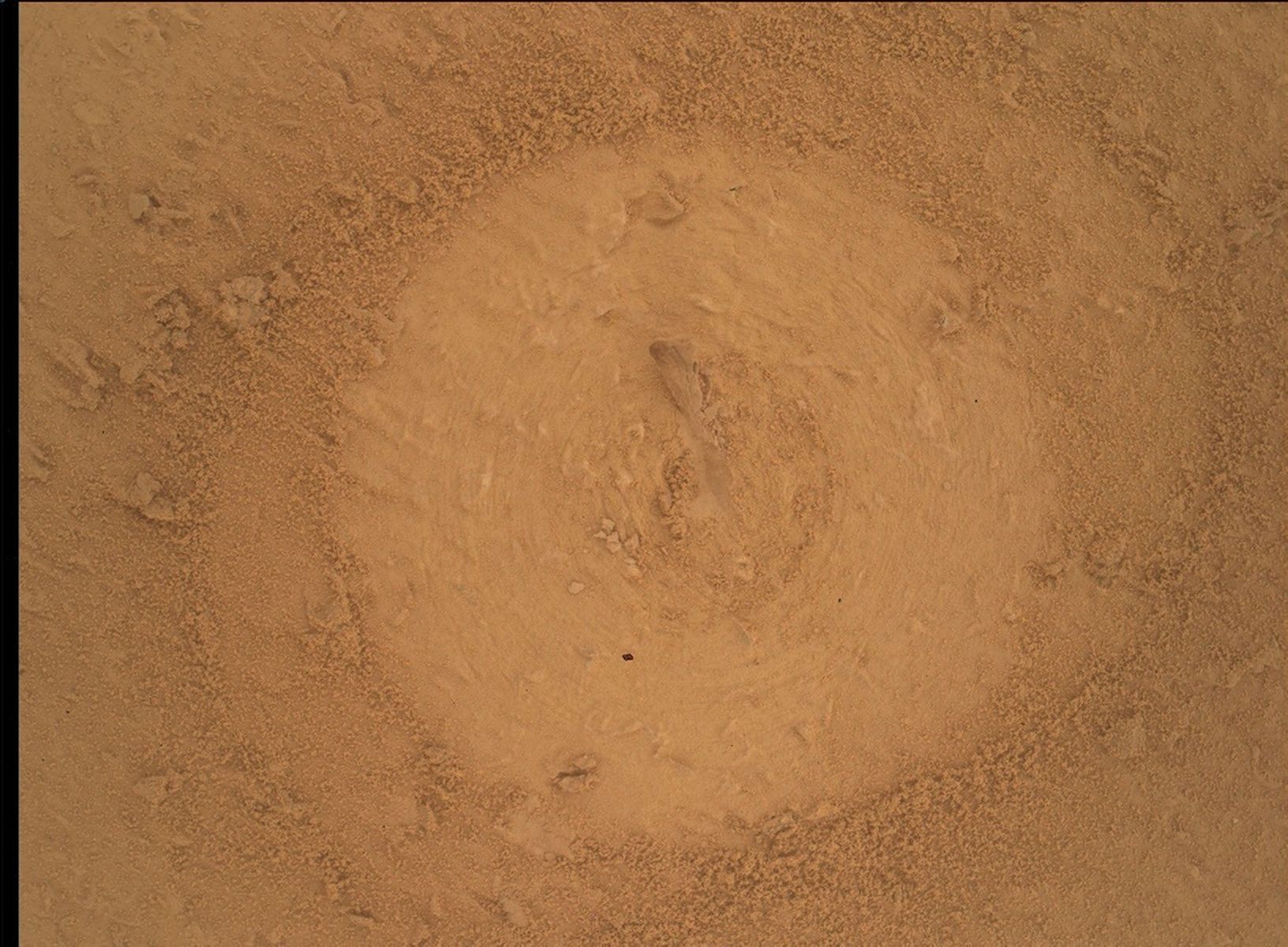
Engineers working with NASA's Curiosity Mars rover have been hard at work testing a new way for the rover to drill rocks and extract powder from them. This past weekend, that effort produced the first drilled sample on Mars in more than a year.

Curiosity tested percussive drilling this past weekend, penetrating about 2 inches (50 millimeters) into a target called "Duluth."

NASA's Jet Propulsion Laboratory in Pasadena, California, has been testing this drilling technique since a mechanical problem took Curiosity's drill offline in December of 2016. This technique, called Feed Extended Drilling, keeps the drill's bit extended out past two stabilizer posts that were originally used to steady the drill against Martian rocks. It lets Curiosity drill using the force of its robotic arm, a little more like the way a human would drill into a wall at home.

"The team used tremendous ingenuity to devise a new drilling technique and implement it on another planet," said Curiosity Deputy Project Manager Steve Lee of JPL. "Those are two vital inches of innovation from 60 million miles away. We're thrilled that the result was so successful."

Drilling is a vitally important part of Curiosity's capabilities to study Mars. Inside the rover are two laboratories that are able to conduct chemical and mineralogical analyses of rock and soil samples. The samples are acquired from Gale Crater, which the rover has been exploring since 2012.

Curiosity's science team has been eager to get the drill working before the rover leaves its current location near Vera Rubin Ridge. Fortunately, it was near enough to drill targets like Duluth to drive back down the ridge. Sunday's drill sample represents a quick taste of the region before Curiosity moves on.

Demonstrating that Curiosity's percussive drilling technique works is a milestone in itself. But that doesn't mean the work is over for engineers at JPL.

"We've been developing this new drilling technique for over a year, but our job isn't done once a sample has been collected on Mars," JPL's Tom Green, a systems engineer who helped develop and test Curiosity's new drilling method. "With each new test, we closely examine the data to look for improvements we can make and then head back to our testbed to iterate on the process."

There's also the next step to work on: delivering the rock sample from the drill bit to the two laboratories inside the rover. Having captured enough powder inside the drill, engineers will now use the rover's cameras to estimate how much trickles out while running the drill backwards. The drill's percussion mechanism is also used to tap out powder.

As soon as this Friday, the Curiosity team will test a new process for delivering samples into the rover's laboratories.

For more about Curiosity, visit:

https://mars.nasa.gov/msl/

News Media Contact

Andrew Good

Jet Propulsion Laboratory, Pasadena, Calif.

818-393-2433

andrew.c.good@jpl.nasa.gov

2018-113


from News and Features https://ift.tt/2s5jtU4
via IFTTT

Tuesday, 22 May 2018

Steve Jurczyk Appointed NASA Associate Administrator; Krista Paquin Retires; Melanie W. Saunders Named Acting Deputy Associate Administrator

NASA Administrator Jim Bridenstine has named Steve Jurczyk as associate administrator, the agency's highest-ranking civil servant position

from NASA Breaking News https://ift.tt/2rYblp0
via IFTTT

Monday, 21 May 2018

GRACE-FO Spacecraft Ready to Launch


Twin satellites that will monitor Earth's water cycle are scheduled to launch from Vandenberg Air Force Base in Central California on Tuesday, May 22, in a unique rideshare arrangement. The two Gravity Recovery and Climate Experiment Follow-On mission (GRACE-FO) spacecraft will join five Iridium NEXT communications satellites as the payload on a SpaceX Falcon 9 rocket.

Liftoff from Vandenberg's Space Launch Complex 4E is targeted for 12:47:39 p.m. PDT (3:47:39 p.m. EDT), with an instantaneous launch window. If needed, an additional launch opportunity is available on Wednesday, May 23.

GRACE-FO, a collaborative mission of NASA and the German Research Centre for Geosciences (GFZ), continues the work of the original GRACE mission in observing the movement of water and other mass around our planet by tracking the changing pull of gravity very precisely.

Launch Timeline

On liftoff, the Falcon 9 first-stage engines will burn for approximately 2 minutes and 45 seconds before shutting down at main engine cutoff (MECO). The Falcon 9's first and second stages will separate seconds later. Then, the second-stage engine will ignite for the first time (SES1) and burn until the vehicle reaches the altitude of the injection orbit, 305 miles (490 kilometers).

While this burn is going on, the payload fairing -- the launch vehicle's nose cone - will separate into two halves like a clamshell and fall away.

When the rocket's second stage has completed its ascent to the injection orbit altitude, it will pitch down (its nose points down) 30 degrees and roll so that one of the twin GRACE-FO satellites is facing down, toward Earth, and the other is facing up, toward space. Then the second stage engine will cut off (SECO).

About 10 minutes after liftoff, a separation system on the second stage will deploy the GRACE-FO satellites. Separation will occur over the Pacific Ocean at about 17.5 degrees North latitude, 122.6 degrees West longitude. The first opportunity to receive data from the spacecraft will occur at NASA's tracking station at McMurdo, Antarctica, about 23 minutes after separation.

After the GRACE-FO satellites are deployed, the Falcon 9 second stage will coast for half an orbit before reigniting its engine (SES2) to take the Iridium NEXT satellites to a higher orbit for deployment.

From Deployment to Science Separation Distance

At deployment, the GRACE-FO satellites will be released from their payload dispenser in opposite directions at a rate of 0.8 to 1 foot per second each (0.25 to 0.30 meters). The Earth-facing satellite will be pushed down into a lower orbit that is faster on average, while the space-facing satellite will be pushed up into a higher orbit that is slower on average.

For the first few days after launch, the lower, faster satellite will pull slowly ahead of the other until the two satellites are approximately 137 miles (220 kilometers) apart -- the optimal separation distance for science operations. Then the lower, leading satellite will be raised into the same orbit as the higher, trailing satellite. This maneuver will keep the two spacecraft from continuing to drift farther apart, so that the two continue to orbit on the same track, one following the other.

For more information about the mission, visit:

https://gracefo.jpl.nasa.gov

https://www.nasa.gov/missions/grace-fo

The GRACE-FO press kit is available online at:

https://www.jpl.nasa.gov/news/press_kits/grace-fo/

Video and images related to the mission are available at:

https://vimeo.com/266146377

https://nasa.gov/gracefo

News Media Contact

Alan Buis Jet Propulsion Laboratory, Pasadena, California 818-354-0474 Alan.Buis@jpl.nasa.gov Written by Carol Rasmussen NASA's Earth Science News Team 2018-107


from News and Features https://ift.tt/2kezNyk
via IFTTT

Curiosity Blog, Sols 5022-5028: Cashing in at Cache Creek

Mission Overview Where is Curiosity? Mission Updates Overview Instruments Highlights Exploration Goals News and Featu...