Preparations for Next Moonwalk Simulations Underway (and Underwater)
A fisheye lens attached to an electronic still camera was used to capture this image of NASA astronaut Don Pettit.
NASA
Science ideas are everywhere. Some of the greatest discoveries have come from tinkering and toying with new concepts and ideas. NASA astronaut Don Pettit is no stranger to inventing and discovering. During his previous missions, Pettit has contributed to advancements for human space exploration aboard the International Space Station resulting in several published scientific papers and breakthroughs.
Pettit, accompanied by cosmonauts Alexey Ovchinin and Ivan Vagner, will launch to the orbiting laboratory in September 2024. In preparation for his fourth spaceflight, read about previous “science of opportunity” experiments Pettit performed during his free time with materials readily available to the crew or included in his personal kit.
Freezing Ice in Space
Thin ice under polarized light frozen aboard the International Space Station.
NASA
Have you ever noticed a white bubble inside the ice in your ice tray at home? This is trapped air that accumulates in one area due to gravity. Pettit took this knowledge, access to a -90° Celsius freezer aboard the space station, and an open weekend to figure out how water freezes in microgravity compared to on Earth. This photo uses polarized light to show thin frozen water and the visible differences from the ice we typically freeze here on Earth, providing more insight into physics concepts in microgravity.
Space Cup
NASA astronaut Don Pettit demonstrates how surface tension, wetting, and container shape hold coffee in the space cup.
NASA
Microgravity affects even the most mundane tasks, like sipping your morning tea. Typically, crews drink beverages from a specially sealed bag with a straw. Using an overhead transparency film, Pettit invented the prototype of the Capillary Beverage, or Space Cup. The cup uses surface tension, wetting, and container shape to mimic the role of gravity in drinking on Earth, making drinking beverages in space easier to consume and showing how discoveries aboard station can be used to design new systems.
Planetary Formation
Astronaut Don Pettit demonstrates a mixture of coffee grounds and sugar sticking together in microgravity to understand planetary formation.
NASA
Using materials that break into very small particles, such as table salt, sugar, and coffee, Pettit experimented to understand planetary formation. A crucial early step in planet formation is the aggregation or clumping of tiny particles, but scientists do not fully understand this process. Pettit placed different particulate mixtures in plastic bags, filled them with air, thoroughly shook the bags, and observed that the particles clumped within seconds due to what appears to be an electrostatic process. Studying the behavior of tiny particles in microgravity may provide valuable insight into how material composition, density, and turbulence play a role in planetary formation.
Orbital Motion
Charged water particles orbit a knitting needle, showing electrostatic processes in space.
NASA
Knitting needles made of different materials arrived aboard station as personal crew items. Pettit electrically charged the needles by rubbing each one with paper. Then, he released charged water from a Teflon syringe and observed the water droplets orbit the knitting needle, demonstrating electrostatic orbits in microgravity. The study was later repeated in a simulation that included atmospheric drag, and the 3D motion accurately matched the orbits seen in the space station demonstration. These observations could be analogous to the behavior of charged particles in Earth’s magnetic field and prove useful in designing future spacecraft systems.
Astrophotography
Top: NASA astronaut Don Pettit photographed in the International Space Station cupola surrounded by cameras. Bottom: Star trails photographed by NASA astronaut Don Pettit in March of 2012.
NASA
An innovative photographer, Pettit has used time exposure, multiple cameras, infrared, and other techniques to contribute breathtaking images of Earth and star trails from the space station’s unique viewpoint. These photos contribute to a database researchers use to understand Earth’s changing landscapes, and this imagery can inspire the public’s interest in human spaceflight.
Christine Giraldo
International Space Station Research Communications Team
A partial lunar eclipse makes the full supermoon on Sept. 17th extra super. Also, chances to observe five planets this month, and a global night for observing.
Highlights
All month – Venus sits low in the west following sunset. Saturn’s visible all night. Jupiter and Mars rise in the couple of hours after midnight and are visible in the southeast before sunrise.
September 1-7 – If you’re in the Northern Hemisphere, you can spot Mercury this week during morning twilight if you can find an unobstructed view toward the east. It appears low in the east just before dawn.
September 2 – New moon
September 14 – Join fellow Moon enthusiasts around the world for International Observe the Moon Night tonight! Find an event or simply observe at home. Details at moon.nasa.gov/observe.
September 16 – The Moon leads Saturn across the sky tonight. Find them in the southeastern sky following sunset. For the western U.S., the Moon will begin to occult, or cover, Saturn the following morning before sunrise.
September 17 – Full moon – Harvest moon – Supermoon – Partial lunar eclipse. The eclipse is in the evening hours for U.S. observers (while the Moon is rising for the West Coast). The Moon looks ever so slightly bigger and brighter that the average full moon, though in practice it’s tough to tell the difference. The September full moon is often called the harvest moon, due to its association with harvest time in the Northern Hemisphere.
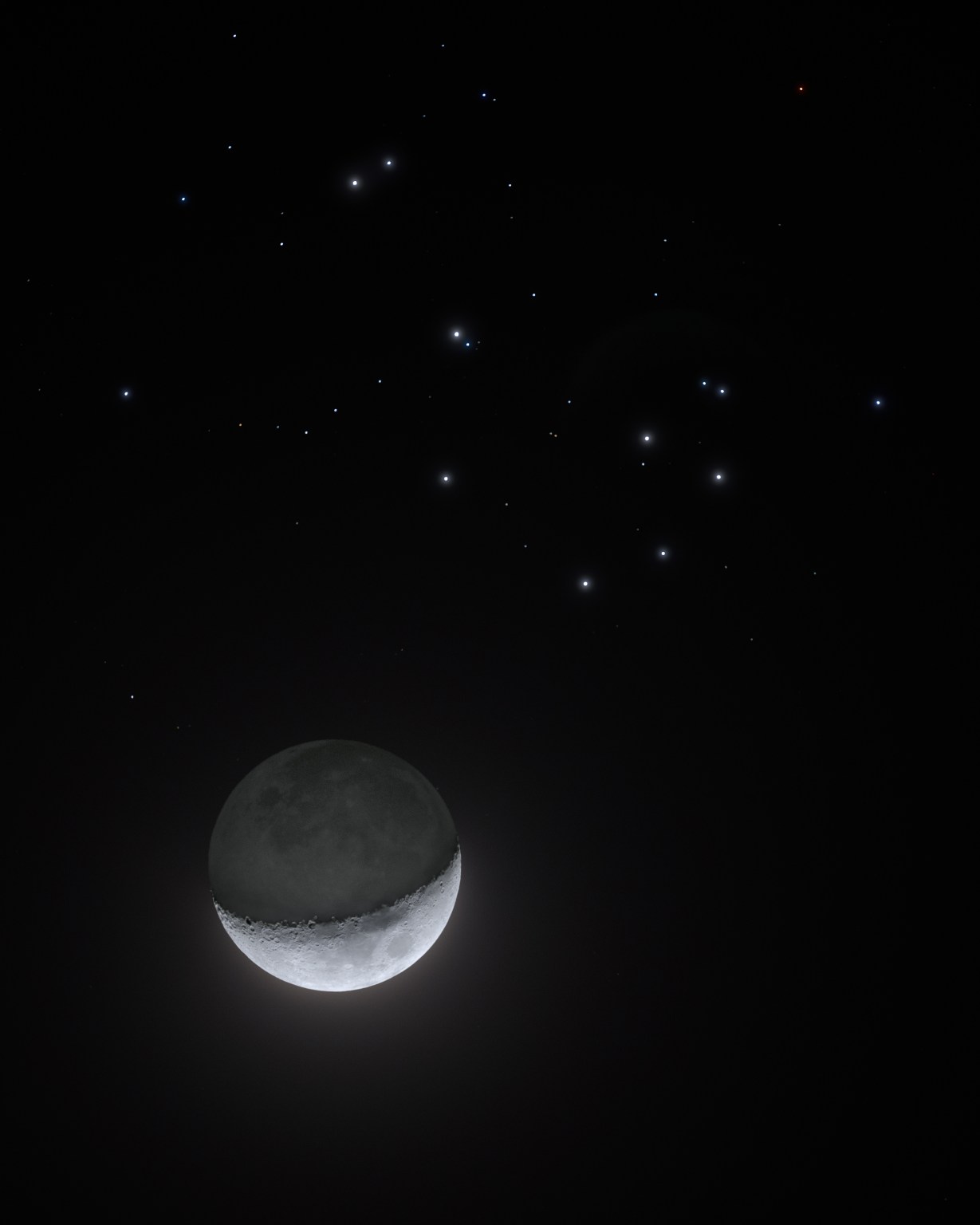
September 22 – The Moon passes through the Pleiades star cluster tonight for U.S. observers.
September 23 – Jupiter and the Moon glide across the sky together this evening. They rise late tonight and climb high into the southeast as dawn approaches.
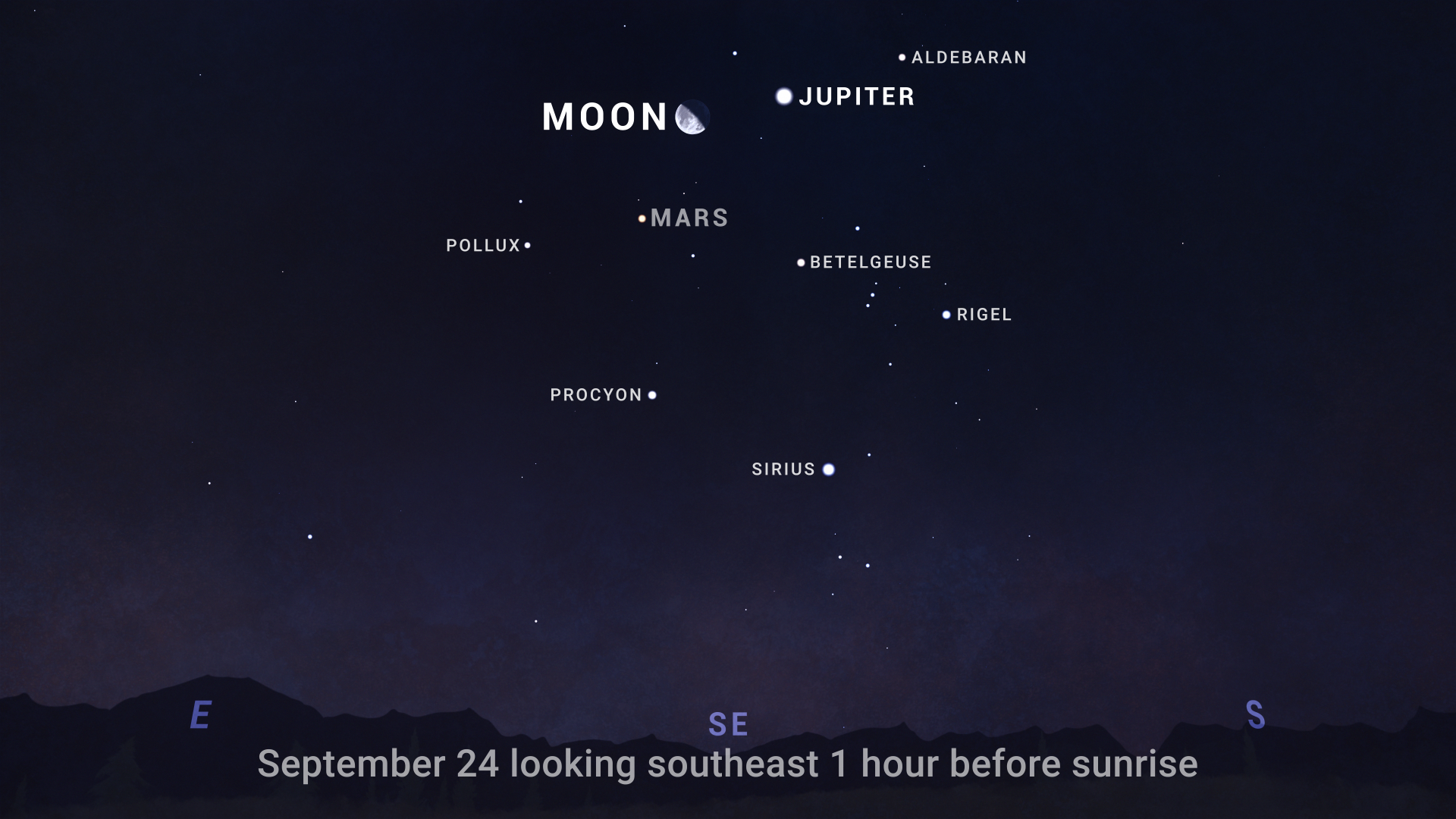
September 25 – The crescent moon appears near Mars this morning. See them with Jupiter and the bright stars of the winter constellations in the predawn sky.
The Moon passes through the Pleiades star cluster tonight for U.S. observers.
Transcript
What’s Up for September? Five planets and a supermoon eclipse, a NASA solar sail that you can spot from the ground, and a global night for the Moon. And stick around until the end to view some highlights shared in last month’s video.
Starting with the visibility of the planets this month, you’ll notice Venus sitting very low in the west in the hour following sunset. Over the next several months it will rise higher, increasingly becoming a fixture of the early evening sky for the rest of the year. Saturn’s in the southeastern sky early in the evening. From there it’ll be visible overhead all night, and you’ll find it setting in the west as dawn approaches.
Sky chart showing The Moon near Jupiter in the morning sky before sunrise on September 24, along with some of the well-known (Northern Hemisphere) winter stars and constellations.
NASA/JPL-Caltech
As for the ongoing pair-up of Jupiter and Mars, Jupiter’s rising around midnight or soon after, with Mars rising an hour to an hour and a half behind it. So it’s best to look for them high in the south-southeastern sky in the early morning before sunrise. And in morning twilight during the first week of September, if you can find an unobstructed view toward the east, it’s a decent opportunity to spot Mercury for those in the Northern Hemisphere.
Turning now to the Moon, the full moon on September 17th is a supermoon, meaning it’s just a little bit closer to Earth in its orbit than your average full moon. It looks ever so slightly bigger and brighter, though in practice, the difference is hard to see. It really is super though, as the September full moon is often called the “Harvest Moon” given its association with harvest time in the Northern Hemisphere, plus it’s also going to show us a partial lunar eclipse.
You’ll see a little bite taken out of one side of the Moon over about an hour.
Check the timing of the eclipse for your local area using your favorite skywatching app or website. In Europe, the eclipse takes place in the early morning hours; while in the U.S., it’s in the evening – and that’s while the Moon’s rising, for the West Coast.
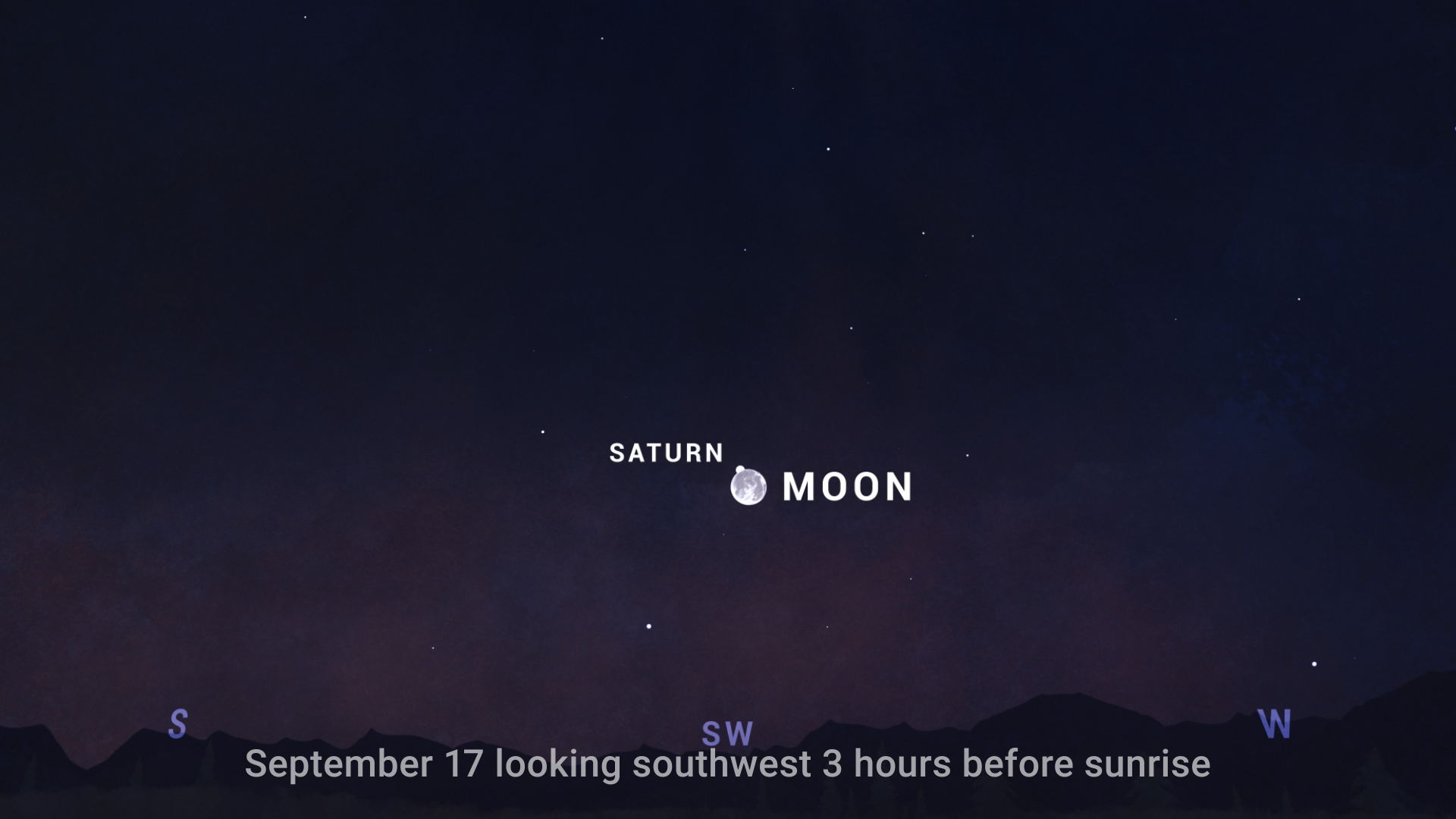
Sky chart showing the full moon very near Saturn in the morning sky for U.S. observers on September 17. The Moon occults, or passes in front of, Saturn as the pair get lower in the sky.
NASA/JPL-Caltech
As for Moon-planet pair-ups, the Moon leads Saturn across the sky on the 16th.
Look for the pair in the southeastern sky following sunset. For those in the U.S., the pair will appear very close together early the next morning on the 17th, as they get lower in the western sky. In fact, those in the western half of the U.S. can actually watch the Moon start to occult, or pass in front of Saturn before they set.
On the 22nd, the Moon rises a couple of hours after dark sitting super close to the Pleiades. And this is kind of a special pairing if you’re in the U.S., as the Moon will actually pass right through the Pleiades over the course of the night. So if you have binoculars or a small telescope, you can look periodically over the course of the night as the Moon crosses directly in front of the bright star cluster.
On the 23rd, the Moon rises in the late evening hours with giant Jupiter. They climb high into the southeast sky as dawn approaches.
And then on the morning of the 25th, the crescent Moon appears near Mars.
This last full week of September is really lovely before the sky brightens, as you have the Moon and two bright planets together with the bright stars of the winter constellations. So don’t miss it!
There’s a new opportunity to observe a bright NASA spacecraft sailing across the night sky. NASA’s Advanced Composite Solar Sail System, or “ACS3,” is a small satellite that’s testing new technologies in low Earth orbit. It recently deployed its 30-foot-wide solar sails. These are a means of propulsion that could allow small spacecraft to “sail on sunlight.” The ACS3 solar sails are highly reflective, and make the spacecraft appear nearly as bright as Sirius, the brightest star in the sky. You can find out when the solar sail spacecraft will pass over your location using the NASA app on your mobile device.
International Observe the Moon Night is September 14th. It’s an annual event when fellow Moon enthusiasts come together worldwide to participate in events and, you guessed it, observe our nearby natural satellite. You can join from wherever you are. Attend or host a virtual or in-person event, or simply observe the Moon from home.
20. On the 14th, in addition to many lunar maria and all 6 of the Apollo landing sites, this year offers an opportunity to see the Marius Hills – volcanic domes and cones that are notoriously difficult to observe even with a telescope, unless sunlight is streaming across them nearly horizontally. Fortunately, that will be the case on International Observe the Moon Night 2024, when we’ll get to watch a lunar sunrise across this knobby terrain. So however you pronounce it, grab your telescope, or find an event near you, and join this annual celebration of observation.
Here are a few views of the highlights in last month’s sky.
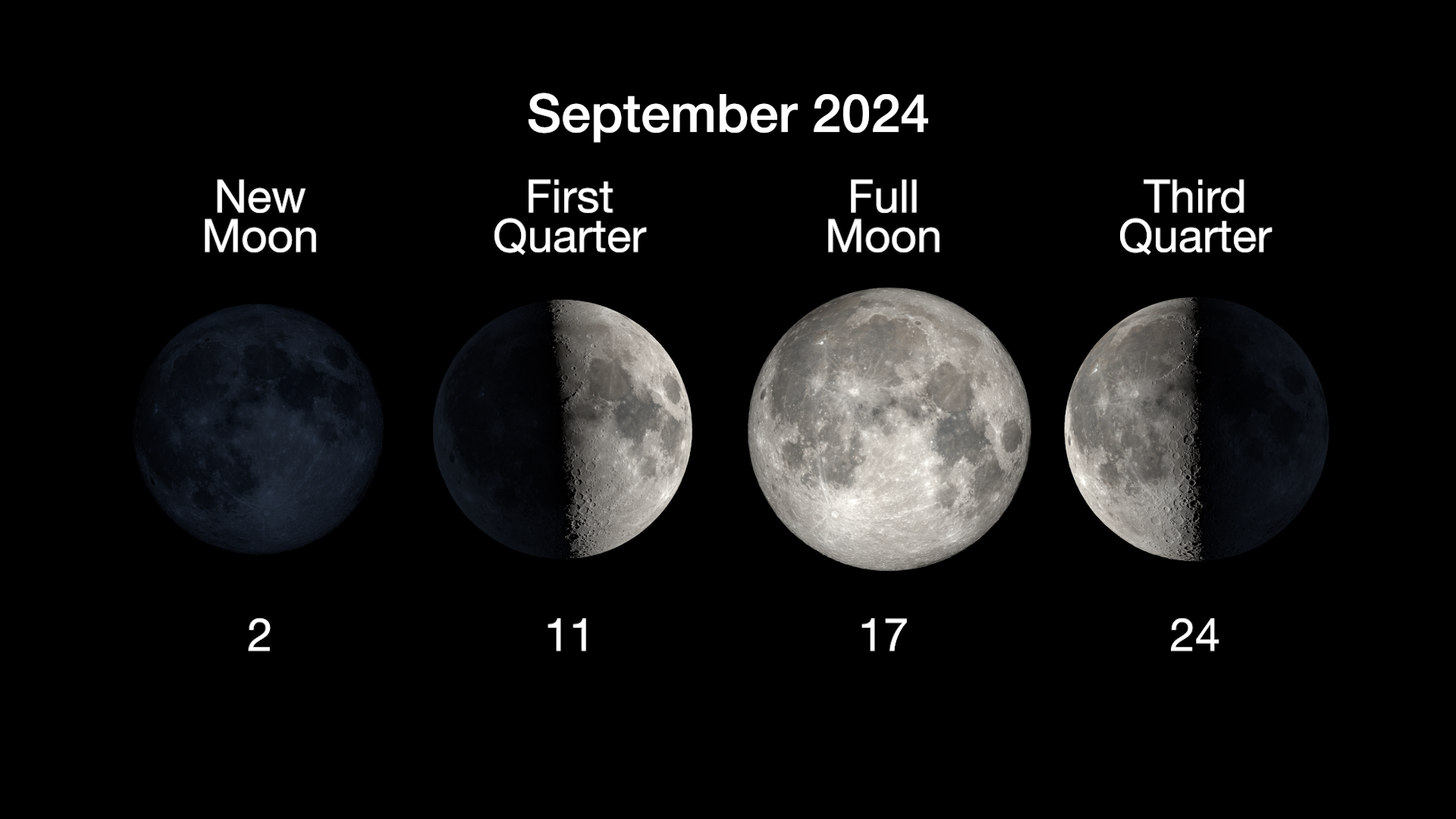
And here are the phases of the Moon for September.
The phases of the Moon for September 2024.
NASA/JPL-Caltech
Stay up to date on NASA’s missions exploring the solar system and beyond at science.nasa.gov. I’m Preston Dyches from NASA’s Jet Propulsion Laboratory, and that’s What’s Up for this month.
NASA Earth Science Education Collaborative Member Co-Authors Award-Winning Paper in Insects
On August 13, 2024, the publishers of the journal Insects notified authors of three papers selected to receive “Insects 2022 Best Paper Award” for research and review articles published in Insects from January 1 to December 31, 2022.
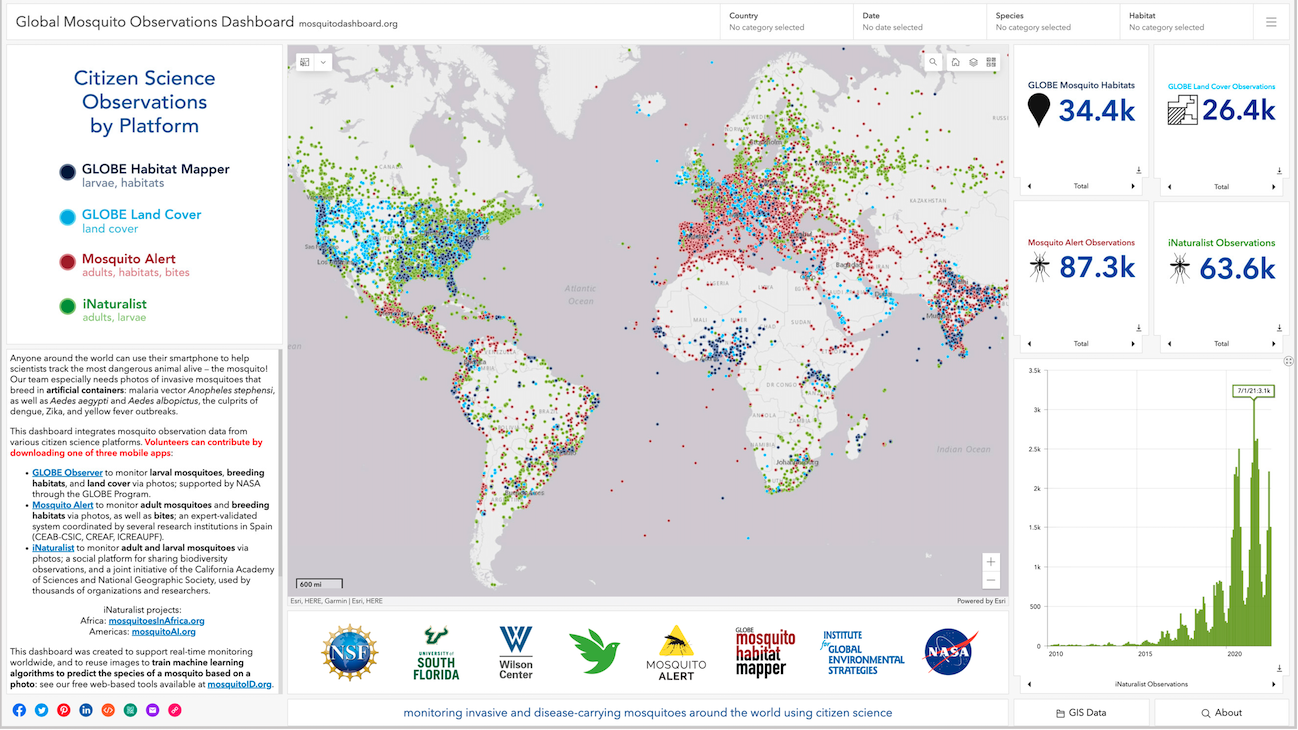
The paper – Integrating global citizen science platforms to enable next-generation surveillance of invasive and vector mosquitoes – was published as part of a special issue of Insects on Citizen Science Approaches to Vector Surveillance. It is in the top 5% of all research outputs scored by Altmetric, which is a high-level measure of the quality and quantity of online attention that it has received. The scoring algorithm takes various factors into account, such as the relative reach of the different sources of attention. The paper has been cited 23 times.
Papers were selected by the journal’s Award Committee according to the following criteria:
– Scientific merit and broad impact;
– Originality of the research objectives and/or the ideas presented;
– Creativity of the study design or uniqueness of the approaches and concepts;
– Clarity of presentation;
– Citations and downloads.
Each winner of the best paper award will receive CHF 500 and a chance to publish a paper free of charge in Insects in 2024 after peer review.
The paper is a result of a collaboration by IGES with University of South Florida, Woodrow Wilson International Center for Scholars, Universitat Pompeu Fabra, and iNaturalist.
Following is the full citation: Ryan M. Carney, Connor Mapes, Russanne D. Low, Alex Long, Anne Bowser, David Durieux, Karlene Rivera, Berj Dekramanjian, Frederic Bartumeus, Daniel Guerrero, Carrie E. Seltzer, Farhat Azam, Sriram Chellappan, John R. B. Palmer.Role of Insects in Human Society Citizen Science Approaches to Vector Surveillance. Insects 2022, 13(8), 675; https://doi.org/10.3390/insects13080675 – 27 Jul 2022
NESEC is supported by NASA under cooperative agreement award number NNX16AE28A and is part of NASA’s Science Activation Portfolio. Learn more about how Science Activation connects NASA science experts, real content, and experiences with community leaders to do science in ways that activate minds and promote deeper understanding of our world and beyond: https://science.nasa.gov/learn
Screenshot of the Global Mosquito Observations interactive dashboard that combines various types of observations from data streams into an interoperable visualization. Each color-coded dot represents a citizen scientist’s observation and can be clicked to access the associated photos and data.
Preparations for Next Moonwalk Simulations Underway (and Underwater)
Pollinators play a crucial role in both human agriculture and ecosystems by supporting thousands of plant species and crops which feed humans and livestock. Unfortunately, habitat loss, disease, and pesticides contribute to the decline in pollinator biodiversity worldwide, which has led to a substantial reduction in native bee species, impacts to honeybees, and the decline of the iconic Monarch Butterfly. In their efforts to integrate sustainable design, several NASA centers have implemented measures promoting preservation of pollinator habitats though gardens, meadows, and other initiatives.
Goddard Space Flight Center (GSFC)
In 2015, budget constraints resulted in the removal of plant beds to make way for low-maintenance turf grass. This prompted the Center’s Environmental Management team to propose a more sustainable landscape option resulting in the 0.1-acre Meadow Demonstration Project. With support from the University of Maryland Extension Service and Maryland Master Gardeners, the meadow became a certified Monarch Waystation. As the meadow flourished under the diligent efforts of staff and volunteers, an increasing number of pollinators were observed.
Due to the success of the initial meadow, GSFC partnered with USDA/Natural Resources Conservation Service to convert additional areas around the center with the goal of perfecting restoration methods. GSFC’s grounds provided an ideal environment to test various approaches. The latest addition is a 1.3-acre plot cultivated this year. GSFC partnered with the NRCS to display this project and participate in the Patuxent Wildlife Refuge Festival in May and the Pollinator Day Festival in June at the USDA HQ to showcase their project.
GSFC Natural Resources staff will be hosting a Monarch Workshop with the Monarch Joint Venture on September 25th. You may virtually attend the first part of the workshop on TEAMS, but afternoon sessions will be in-person only. You can learn more about ongoing and upcoming events at the Meadow Demonstration Project blog.
Johnson Space Center (JSC)
The Center is embedded in an urban landscape once dominated by Texas coastal prairies. To support resiliency of coastal prairie remnants on site, an altered mowing schedule promoting wildflower growth is implemented. JSC participates in a Houston Zoo program called the Prairie Pollinator Pathway to restore or recreate green pathways for pollinator movement through an otherwise highly fragmented urban environment. In 2012, a 30,000 square foot green roof was created on Building 12. Initially planted with non-native species that struggled in the Houston heat, the garden was replanted in 2022 with native grasses and flowers. To further protect pollinators, JSC employs alternative management techniques such as relocating honeybee swarms to minimize pesticide use wherever possible. Additionally, JSC continues to raise awareness about the importance of their prairies and pollinators.
Marshall Space Flight Center (MSFC)
Several groups work to enhance pollinator habitat and the understanding of pollinator species around the center. Two pollinator focused project have been completed at MSFC: the pollinator garden and the pollinator meadow. The pollinator garden was constructed by the MSFC Green Team in collaboration with the Northern Alabama Master Gardeners. Garden consists of five beds located just behind the MSFC Wellness Center on the south end of the Walking Trail and is certified with the North American Butterfly Association and a registered Monarch Waystation. In the fall of 2023, maintenance of the pollinator garden was handed over to the Pollinator Club. In the spring of 2023, a roughly 2-acre pollinator meadow was planted. The meadow includes a mix of native flowering plants and is mowed once each year.
In addition to the pollinator focused projects, MSFC also has a garden club, which maintains individual and club garden plots that attract pollinators to the Center. The MSFC Green Team and clubs hold regular education and outreach events to increase knowledge of pollinators, their importance, and threats to their survival.
Langley Research Center (LaRC)
In addition to a registered Monarch Waystation, Langley Research Center (LaRC) is home to beehive colonies following two rescue missions on center. The first occurred in April of 2023, when a swarm of honeybees was discovered under a picnic table near the cafeteria. To relocate this colony, the center enlisted the help of LaRC personnel Dr. Jeremy Pinier, a member of the Colonial Beekeepers Association, along with his 6-year-old daughter Olivia, his apprentice beekeeper. The bees were relocated to a habitat near the community garden, which hosts 16 year-round and 24 seasonal plots rented by active members of the LaRC Garden Club. The second hive was relocated in April 2024 from a service vehicle’s truck bed. The bees are flourishing and have earned the nickname “The Artemis Colony,” coined by Dr. Pinier. Center personnel have enjoyed the colony’s honey and remain committed to nurturing its bee population and preserving the garden for the future.
White Sands Test Facility (WSTF)
To enhance New Mexico’s natural beauty, four pollinator gardens were planted in 2022 on the south sides of B100 and B101 and at the main entrances to the cafeteria and rotunda. They were created to mitigate some function of the natural landscape that was offset to build the Center. These gardens also help to educate visitors on the beauty and names of surrounding desert flora and provide a peaceful place to sit and view the garden, the Jornada del Muerto, and mountains in the distance.
The native plants are drought resistant, hardy, and attract bees, butterflies, hummingbirds, and other pollinators. There are plans to install a trail camera at one of the garden sites to identify some of the visiting pollinator species. The Center also wants to register the gardens as wildlife habitats through the National Wildlife Federation and Monarch Waystations.
Conclusion
In addition to the great work already underway across NASA Centers, other sites such as Kennedy Space Center are developing plans for their own programs supporting local pollinators. Keep up to date with agency-wide education efforts and new developments in Pollinator Programs at EMD’s NRM Program EMD’s NRM Program Website.
A NASA-developed material made of carbon nanotubes will enable our search for exoplanets—some of which might be capable of supporting life. Originally developed in 2007 by a team of researchers led by Innovators of the Year John Hagopian and Stephanie Getty at NASA’s Goddard Space Flight Center, this carbon nanotube technology is being refined for potential use on NASA’s upcoming Habitable Worlds Observatory (HWO)—the first telescope designed specifically to search for signs of life on planets orbiting other stars.
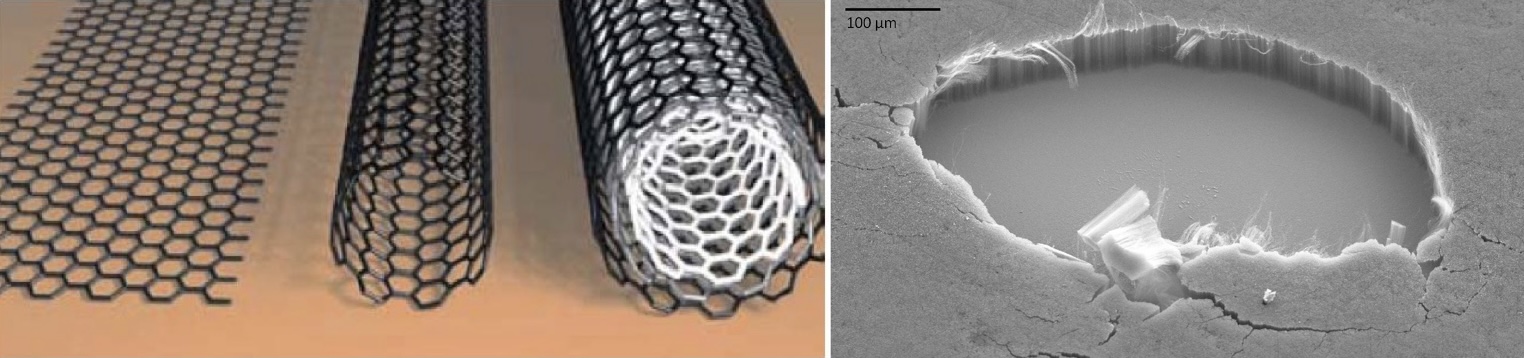
As shown in the figure below, carbon nanotubes look like graphene (a single layer of carbon atoms arranged in a hexagonal lattice) that is rolled into a tube. The super-dark material consists of multiwalled carbon nanotubes (i.e., nested nanotubes) that grow vertically into a “forest.” The carbon nanotubes are 99% empty space so the light entering the material doesn’t get reflected. Instead, the light enters the nanotube forest and jiggles electrons in the hexagonal lattice of carbon atoms, converting the light to heat. The ability of the carbon nanotubes to eliminate almost all light is enabling for NASA’s scientific instruments because stray light limits how sensitive the observations can be. When applied to instrument structures, this material can eliminate much of the stray light and enable new and better observations.
Left: Artist’s conception of graphene, single and multiwalled carbon nanotube structures. Right: Scanning electron microscope image of vertically aligned multiwalled carbon nanotube forest with a section removed in the center.
Credit: Delft University/Dr. Sten Vollebregt and NASA GSFC
Viewing exoplanets is incredibly difficult; the exoplanets revolve around stars that are 10 billion times brighter than they are. It’s like looking at the Sun and trying to see a dim star next to it in the daytime. Specialized instruments called coronagraphs must be used to block the light from the star to enable these exoplanets to be viewed. The carbon nanotube material is employed in the coronagraph to block as much stray light as possible from entering the instrument’s detector.
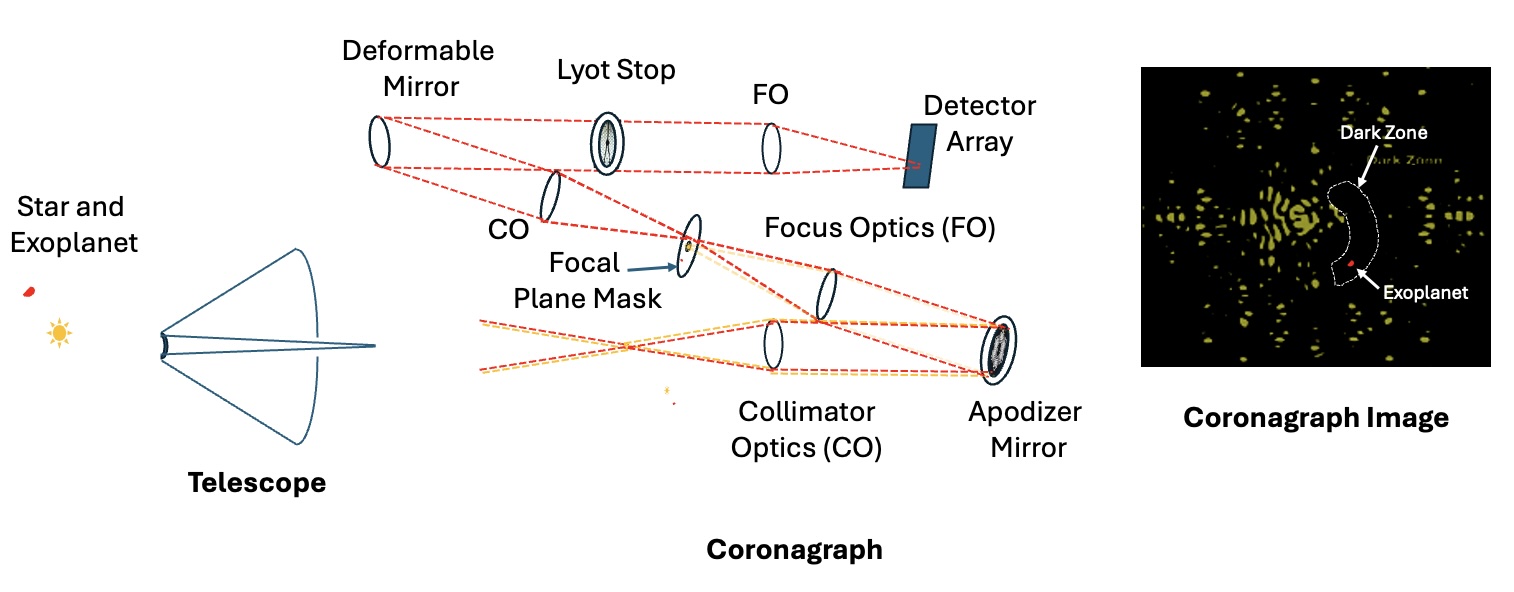
The image below depicts a notional telescope and coronagraph imaging an exoplanet. The telescope collects the light from the distant star and exoplanet. The light is then directed to a coronagraph that collimates the beam, making the light rays parallel, and then the beam is reflected off the apodizer mirror, which is used to precisely control the diffraction of light. Carbon nanotubes on the apodizer mirror absorb the stray light that is diffracted off edges of the telescope structures, so it does not contaminate the observations. The light is then focused on the focal plane mask, which blocks the light from the star but allows light from the exoplanet to pass. The light gets collimated again and is then reflected off a deformable mirror to correct distortion in the image. Finally, the light passes through the Lyot Stop, which is also coated with carbon nanotubes to remove the remaining stray light. The beam is then focused onto the detector array, which forms the image.
Even with all these measures some stray light still reaches the detector, but the coronagraph creates a dark zone where only the light coming from the exoplanet can be seen. The final image on the right in the figure below shows the remaining light from the star in yellow and the light from the exoplanet in red in the dark zone.
Schematic of a notional telescope and coronagraph imaging an exoplanet
Credit: Advanced Nanophotonics/John Hagopian, LLC
HWO will use a similar scheme to search for habitable exoplanets. Scientists will analyze the spectrum of light captured by HWO to determine the gases in the atmosphere of the exoplanet. The presence of water vapor, oxygen, and perhaps other gases can indicate if an exoplanet could potentially support life.
But how do you make a carbon-nanotube-coated apodizer mirror that could be used on the HWO? Hagopian’s company Advanced Nanophotonics, LLC received Small Business Innovation Research (SBIR) funding to address this challenge.
Carbon nanotubes are grown by depositing catalyst seeds onto a substrate and then placing the substrate into a tube-shaped furnace and heating it to 1382 degrees F, which is red hot! Gases containing carbon are then flowed into the heated tube, and at these temperatures the gases are absorbed by the metal catalyst and transform into a solution, similar to how carbon dioxide in soda water fizzes. The carbon nanotubes literally grow out of the substrate into vertically aligned tubes to form a “forest” wherever the catalyst is located.
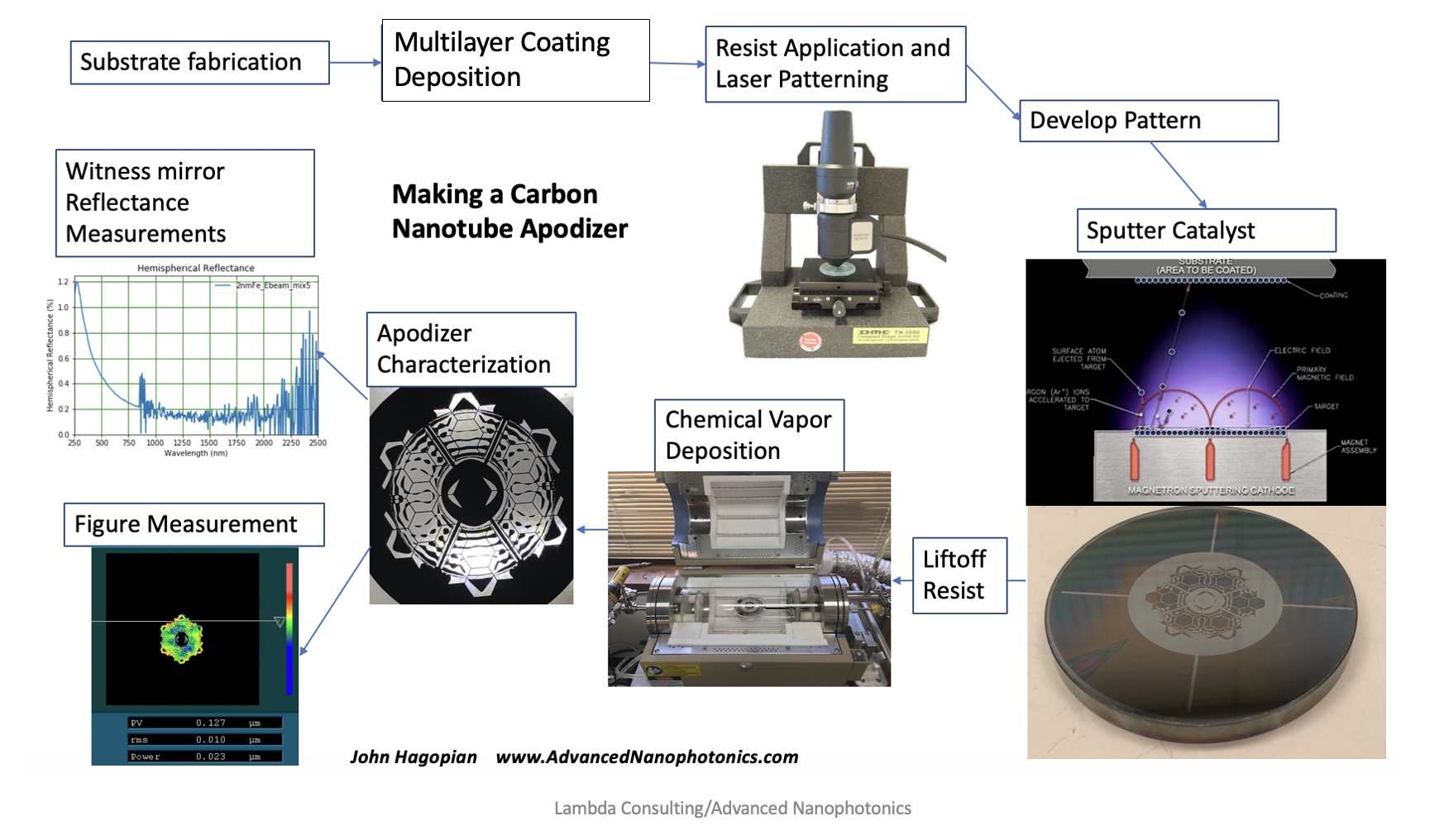
Since the growth of carbon nanotubes on the apodizer mirror must occur only in designated areas where stray light is predicted, the catalyst must be applied only to those areas. The four main challenges that had to be overcome to develop this process were: 1) how to pattern the catalyst precisely, 2) how to get a mirror to survive high temperatures without distorting, 3) how to get a coating to survive high temperatures and still be shiny, and 4) how to get the carbon nanotubes to grow on top of a shiny coating. The Advanced Nanophotonics team refined a multi-step process (see figure below) to address these challenges.
Making an Apodizer Mirror for use in a coronagraph
Credit: Advanced Nanophotonics/John Hagopian, LLC
First a silicon mirror substrate is fabricated to serve as the base for the mirror. This material has properties that allow it to survive very high temperatures and remain flat. These 2-inch mirrors are so flat that if one was scaled to the diameter of Earth, the highest mountain would only be 2.5 inches tall!
Next, the mirror is coated with multiple layers of dielectric and metal, which are deposited by knocking atoms off a target and onto the mirror in a process called sputtering. This coating must be reflective to direct the desired photons, but still be able to survive in the hot environment with corrosive gases that is required to grow carbon nanotubes.
Then a material called resist that is sensitive to light is applied to the mirror and a pattern is created in the resist with a laser. The image on the mirror is chemically developed to remove the resist only in the areas illuminated by the laser, creating a pattern where the mirror’s reflecting surface is exposed only where nanotube growth is desired.
The catalyst is then deposited over the entire mirror surface using sputtering to provide the seeds for carbon nanotube growth. A process called liftoff is used to remove the catalyst and the resist that are located where nanotubes growth is not needed. The mirror is then put in a tube furnace and heated to 1380 degrees Fahrenheit while argon, hydrogen, and ethylene gases are flowed through the tube, which allows the chemical vapor deposition of carbon nanotubes where the catalyst has been patterned. The apodizer mirror is cooled and removed from the tube furnace and characterized to make sure it is still flat, reflective where desired, and very black everywhere else.
The Habitable Worlds Observatory will need a coronagraph with an optimized apodizer mirror to effectively view exoplanets and gather their light for evaluation. To make sure NASA has the best chance to succeed in this search for life, the mirror design and nanotube technology are being refined in test beds across the country.
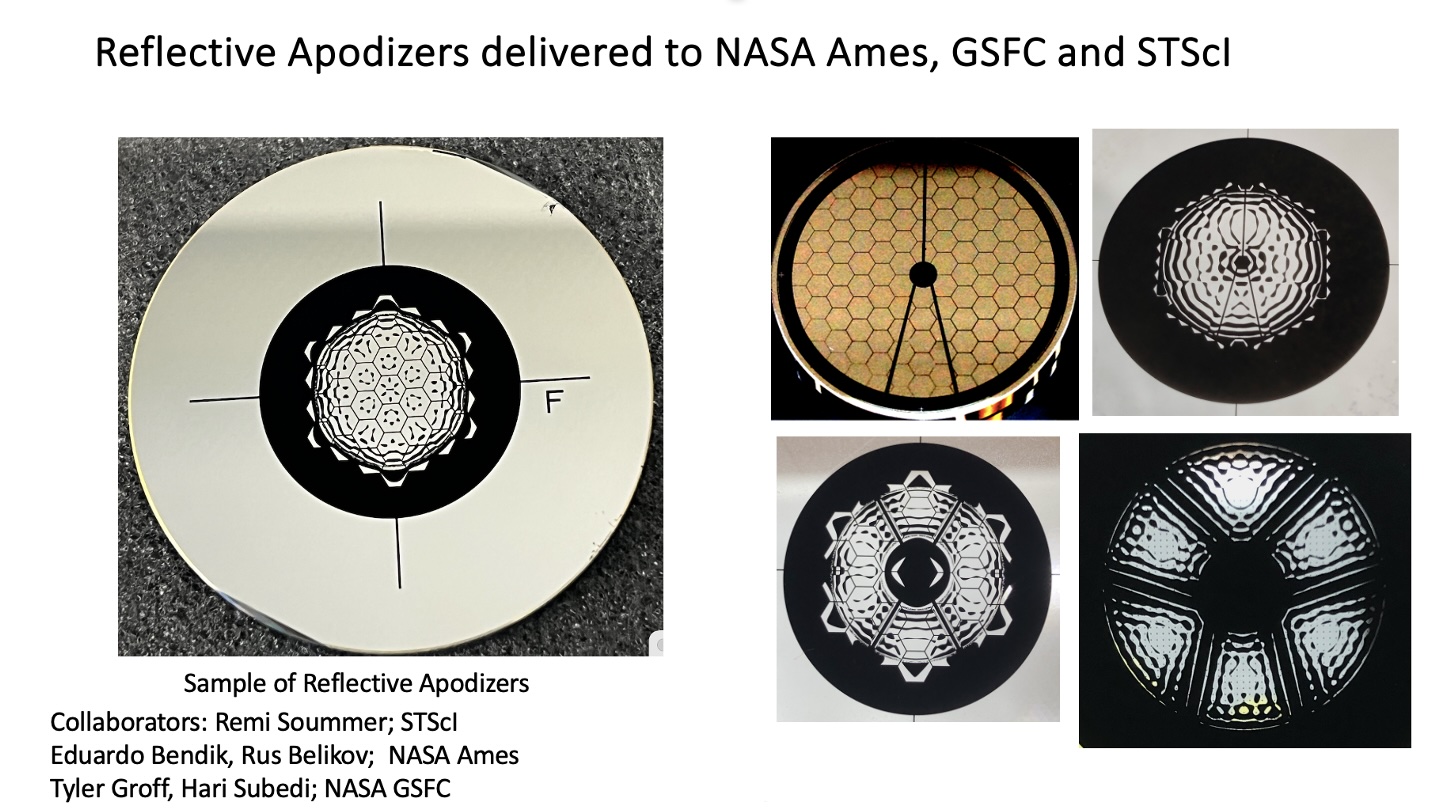
Under the SBIR program, Advanced Nanophotonics, LLC has delivered apodizers and other coronagraph components to researchers including Remi Soummer at the Space Telescope Science Institute, Eduardo Bendek and Rus Belikov at NASA Ames, Tyler Groff at NASA Goddard, and Arielle Bertrou-Cantou and Dmitri Mawet at the California Institute of Technology. These researchers are testing these components and the results of these studies will inform new designs to eventually enable the goal of a telescope with a contrast ratio of 10 billion to 1.
Reflective Apodizers delivered to Scientists across the country
Credit: Advanced Nanophotonics/John Hagopian, LLC
In addition, although the desired contrast ratio cannot be achieved using telescopes on Earth, testing apodizer mirror designs on ground-based telescopes not only facilitates technology development, but helps determine the objects HWO might observe. Using funding from the SBIR program, Advanced Nanophotonics also developed transmissive apodizers for the University of Notre Dame to employ on another instrument—the Gemini Planet Imager (GPI) Upgrade. In this case the carbon nanotubes were patterned and grown on glass that transmits the light from the telescope into the coronagraph. The Gemini telescope is an 8.1-meter telescope located in Chile, high atop a mountain in thin air to allow for better viewing. Dr. Jeffrey Chilcote is leading the effort to upgrade the GPI and install the carbon nanotube patterned apodizers and Lyot Stops in the coronagraph to allow viewing of exoplanets starting next year. Discoveries enabled by GPI may also drive future apodizer designs.
More recently, the company was awarded a Phase II SBIR contract to develop next-generation apodizers and other carbon nanotube-based components for the test beds of existing collaborators and new partners at the University of Arizona and the University of California Santa Clara.
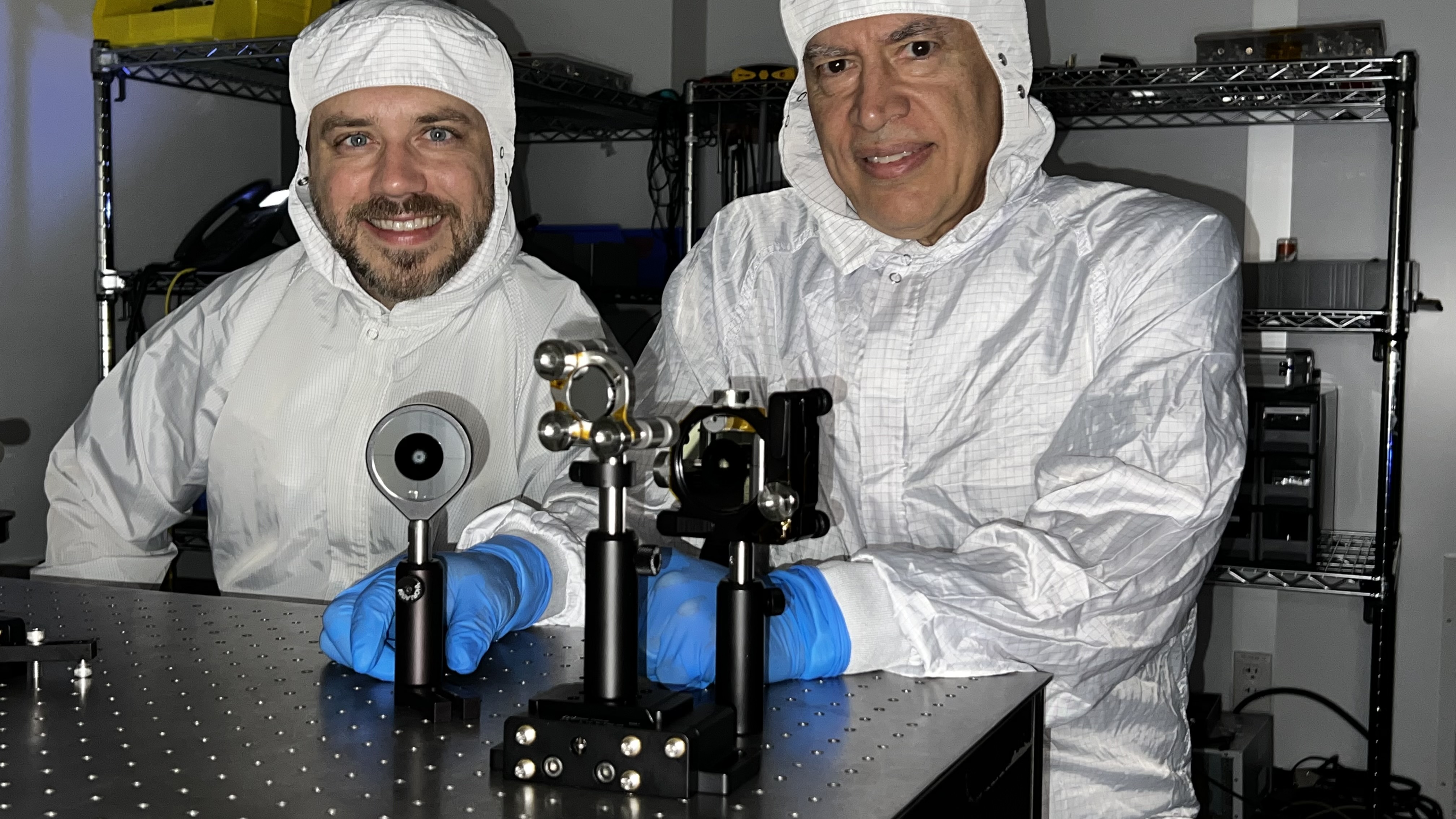
Tyler Groff (left) and John Hagopian (right) display a carbon nanotube patterned apodizer mirror used in the NASA Goddard Space Flight Center coronagraph test bed.
Credit: Advanced Nanophotonics/John Hagopian, LLC
As a result of this SBIR-funded technology effort, Advanced Nanophotonics has collaborated with NASA Scientists to develop a variety of other applications for this nanotube technology.
A special carbon nanotube coating developed by Advanced Nanophotonics was used on the recently launched NASA Ocean Color Instrument onboard the Plankton, Aerosol, Cloud, ocean Ecosystem (PACE) mission that is observing both the atmosphere and phytoplankton in the ocean, which are key to the health of our planet. A carbon nanotube coating that is only a quarter of the thickness of a human hair was applied around the entrance slit of the instrument. This coating absorbs 99.5% of light in the visible to infrared and prevents stray light from reflecting into the instrument to enable more accurate measurements. Hagopian’s team is also collaborating with the Laser Interferometer Space Antenna (LISA) team to apply the technology to mitigate stray light in the European Space Agency’s space-based gravity wave mission.
They are also working to develop carbon nanotubes for use as electron beam emitters for a project sponsored by the NASA Planetary Instrument Concepts for the Advancement of Solar System Observations (PICASSO) Program. Led by Lucy Lim at NASA Goddard, this project aims to develop an instrument to probe asteroid and comet constituents in space.
In addition, Advanced Nanophotonics worked with researcher Larry Hess at NASA Goddard’s Detector Systems Branch and Jing Li at the NASA Ames Research Center to develop a breathalyzer to screen for Covid-19 using carbon nanotube technology. The electron mobility in a carbon nanotube network enables high sensitivity to gases in exhaled breath that are associated with disease.
This carbon nanotube-based technology is paying dividends both in space, as we continue our search for life, and here on Earth.
Researchers used an interferometer that can precisely measure gravity, magnetic fields, and other forces to study the influence of International Space Station vibrations. Results revealed that matter-wave interference of rubidium gases is robust and repeatable over a period spanning months. Atom interferometry experiments could help create high-precision measurement capabilities for gravitational, Earth, and planetary sciences.
Using ultracold rubidium atoms, Cold Atom Lab researchers examined a three-pulse Mach–Zehnder interferometer, a device that determines phase shift variations between two parallel beams, to understand the influence of space station vibrations. Researchers note that atom sensitivities and visibility degrade due to the vibration environment of the International Space Station. The Cold Atom Lab’s interferometer uses light pulses to create a readout of accelerations, rotations, gravity, and subtle forces that could signify new physics acting on matter. Cold Atom Lab experiments serve as pathfinders for proposed space missions relying on the sustained measurement of wave-matter interference, including gravitational wave detection, dark matter detection, seismology mapping, and advanced satellite navigation.
Researchers developed a novel method to categorize and assess the fitness of each gene in one species of bacteria, N. aromaticavorans. Results published in BMC Genomics state that core metabolic processes and growth-promoting genes have high fitness during spaceflight, likely as an adaptive response to stress in microgravity. Future comprehensive studies of the entire genome of other species could help guide the development of strategies to enhance or diminish microorganism resilience in space missions.
The Bacterial Genome Fitness investigation grows multiple types of bacteria in space to learn more about important processes for their growth. Previous studies of microorganism communities have shown that spaceflight can induce resistance to antibiotics, lead to changes in biofilm formation, and boost cell growth in various species. N. aromaticivorans can degrade certain compounds, potentially providing benefits in composting and biofuel production during deep space missions.
Researchers burned large, isolated droplets of the hydrocarbon n-dodecane, a component of kerosene and some jet fuels, in microgravity and found that hot flames were followed by a prolonged period of cool flames at lower pressures. Results showed that hot flames were more likely to unpredictably reignite at higher pressures. Studying the burn behavior of hydrocarbons assists researchers in the development of more efficient engines and fuels that reduce fire hazards to ensure crew safety in future long-distance missions.
The Cool Flames investigation studies the low-temperature combustion of various isolated fuel droplets. Cool flames happen in microgravity when certain fuel types burn very hot and then quickly drop to a much lower temperature with no visible flames. This investigation studies several fuels such as pure hydrocarbons, biofuels, and mixtures of pure hydrocarbons to enhance understanding of low-temperature chemistry. Improved knowledge of low-temperature burning could benefit next-generation fuels and engines.