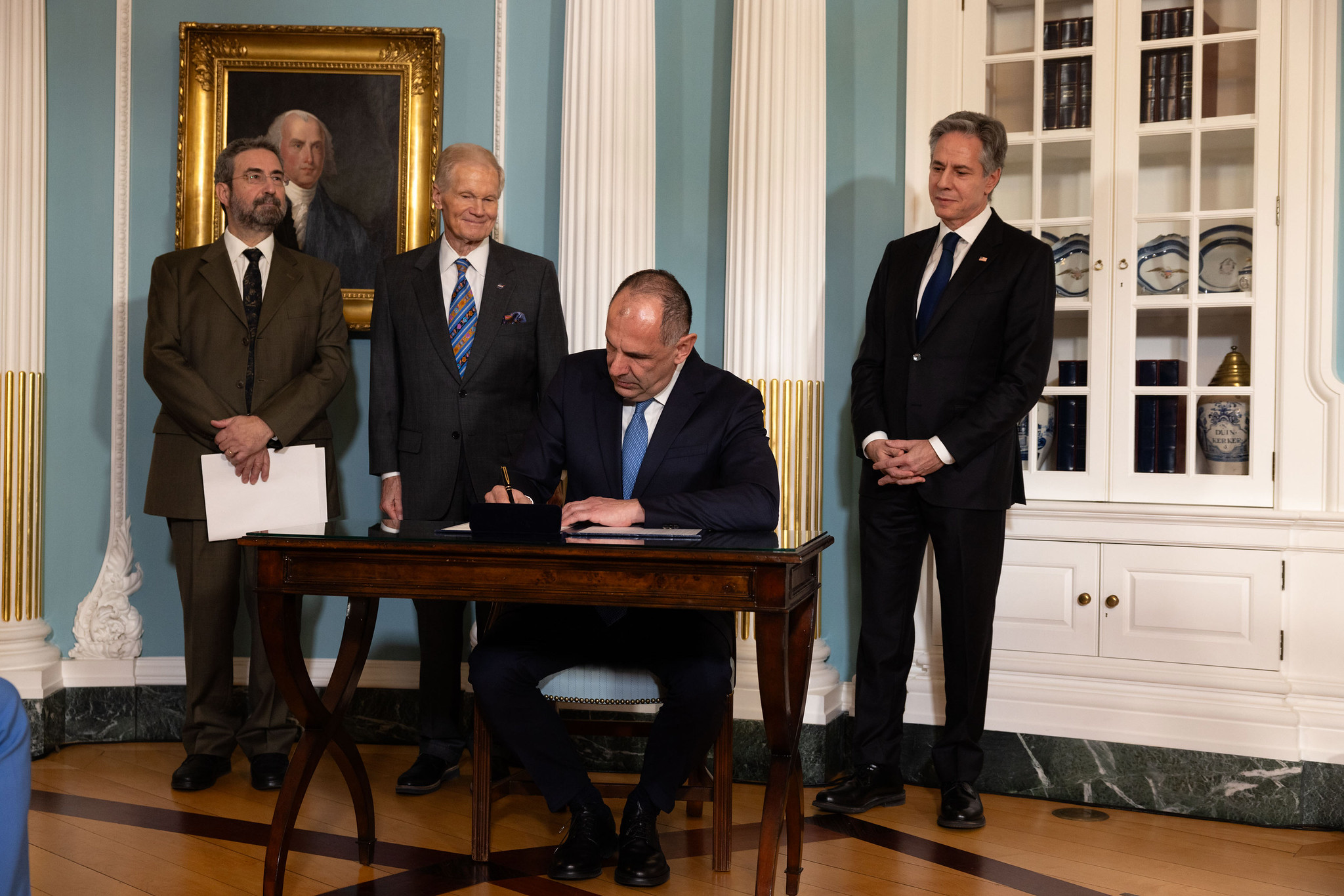
(From left) Ioannis Daglis, president of the Hellenic Space Center, NASA Administrator Bill Nelson, and U.S. Secretary of State, Antony Blinken, watch as Giorgos Gerapetritis, Greek foreign minister, signs the Artemis Accords on the margins of the U.S.-Greece Strategic Dialogue at the Department of State in Washington, Feb. 9, 2024.
Credits: Official State Department photo by Chuck Kennedy
NASA Administrator Bill Nelson participated in a signing ceremony Friday with Greece’s foreign minister, Giorgos Gerapetritis, as his country became the 35th country to sign the Artemis Accords.
The accords establish a practical set of principles to guide space exploration cooperation among nations.
Also participating in the event at the U.S. Department of State were NASA Deputy Administrator Pam Melroy, U.S. Secretary of State Antony Blinken, and Dr. Ioannis Daglis, president of the Hellenic Space Center. The signing occurred during the fifth United States-Greece Strategic Dialogue in Washington.
“Congratulations to Greece on becoming the 35th country to join the Artemis Accords family,” said Nelson. “The U.S. and Greece are long-time partners and friends, and we are excited to expand this partnership in the cosmos. Together, we are shaping the future of cooperation in space for the Artemis Generation.”
The Artemis Accords were established in 2020 by the United States together with seven other original signatories. Since then, the Accords signatories have held focused discussions on how best to implement the Artemis Accords principles.
“As humanity embarks on a great adventure, returning to the Moon and preparing for traveling beyond the Moon, the Artemis Accords serve as a beacon of collaboration and cooperation among nations, paving the way for a sustainable and peaceful exploration of space,” said Gerapetritis.
The Artemis Accords reinforce and implement key obligations in the 1967 Outer Space Treaty. They also strengthen the commitment by the United States and signatory nations to the Registration Convention, the Rescue and Return Agreement, as well as best practices NASA and its partners support, including the public release of scientific data.
More countries are expected to sign the accords in the months and years ahead, which are advancing safe, peaceful, and prosperous activities in space. Learn more about the Artemis Accords at:
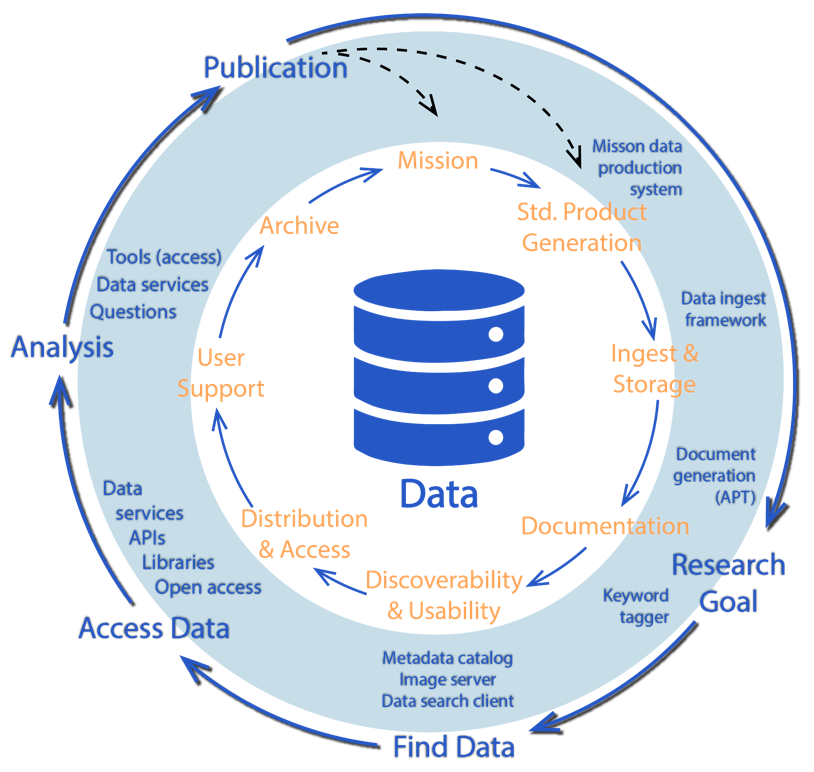
Rahul Ramachandran (ST11) wrote his American Geophysical Union (AGU) Leptoukh lecture as an essay titled “From petabytes to Insights: Tackling Earth Science’s Scaling Problem ”. While Ramachandran was unable to present at AGU, the essay was published on NASA EarthData website (https://www.earthdata.nasa.gov/learn/articles/2023-leptoukh-lecture-essay).
The essay addresses the challenge of scaling in Earth science due to increasing data volumes. Ramachandran discusses the integration of Artificial Intelligence into informatics as a potential solution to these challenges. He reflects on his journey in informatics and emphasizes the importance of managing the science data life cycle effectively in the face of ever-growing data volumes, advocating for innovative approaches to support the research life cycle.
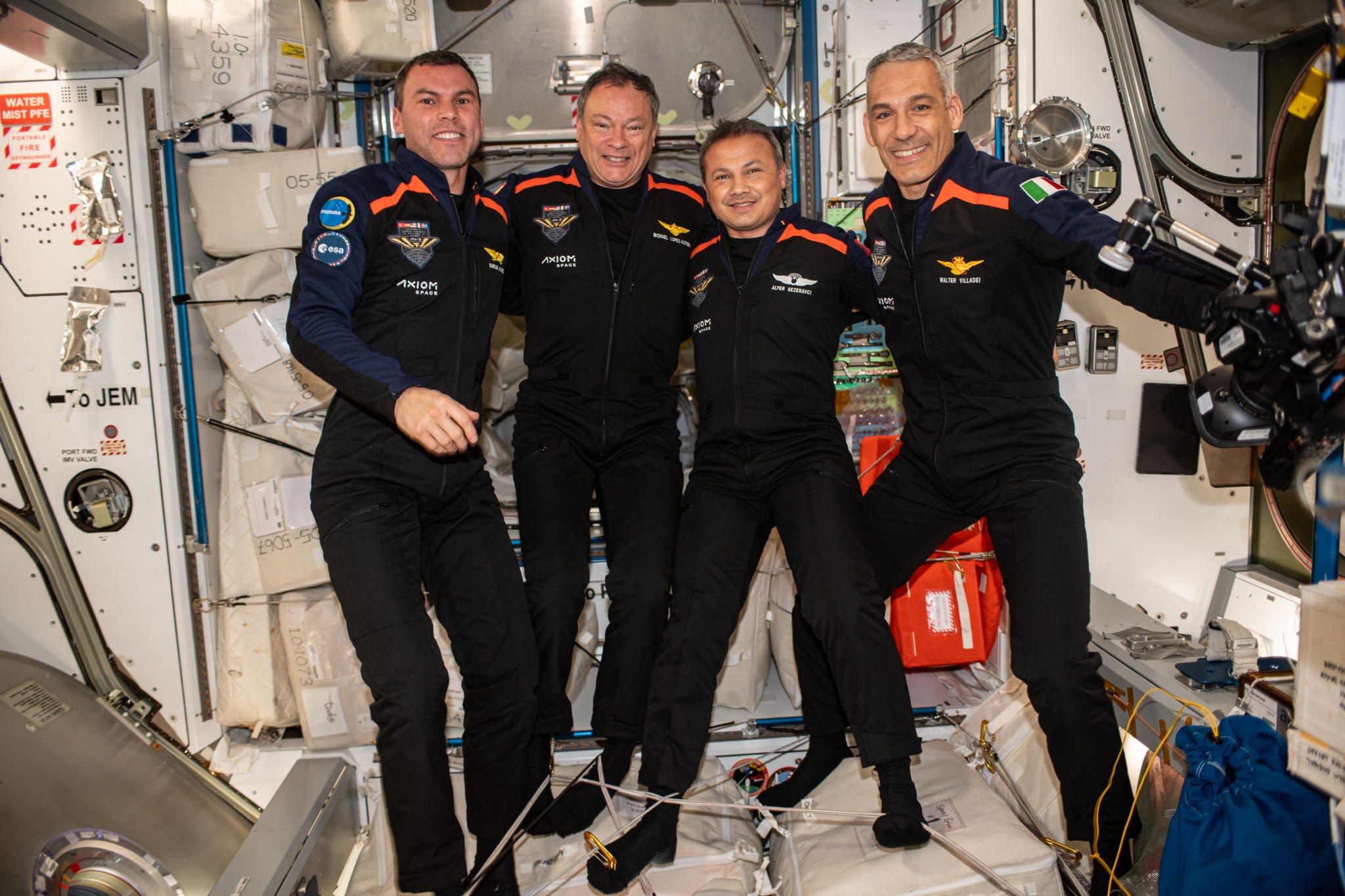
The Axiom Mission 3 crew aboard the International Space Station, pictured from left to right: Marcus Wandt, Michael López-Alegría, Alper Gezeravci, and Walter Villadei. Credits: Axiom Space
The third private astronaut mission to the International Space Station successfully completed its journey as part of NASA efforts to create commercial opportunities in space. Axiom Mission 3 (Ax-3) and its four crew members safely returned to Earth Friday, splashing down off the coast of Daytona, Florida.
Axiom Space astronauts, Michael López-Alegría, Walter Villadei, Marcus Wandt, and Alper Gezeravci returned to Earth aboard a SpaceX Dragon spacecraft at 8:30 a.m. EST, completing their nearly 22-day mission that included 18 days aboard the space station. Teams aboard SpaceX recovery vessels retrieved the spacecraft and astronauts.
“Low Earth orbit is now within humanity’s economic sphere of influence. It presents the best opportunities for the U.S. commercial space sector to capture new global and domestic markets and to provide critical capabilities to the nation’s space objectives,” said Phil McAlister, director of NASA’s commercial space division at NASA Headquarters in Washington. “This ground-breaking Ax-3 mission is part of a larger effort, enabled by NASA, to open space to more people, more research, and more opportunities as the agency prepares for the transition to future private space stations at the end of this decade.”
The Ax-3 mission launched at 4:49 p.m. Jan. 18 on a Falcon 9 rocket from NASA’s Kennedy Space Center in Florida. Approximately 37 hours later, Dragon docked to the Harmony module’s forward port. The astronauts undocked from the same port at 9:20 a.m. Wednesday, to begin the trip home.
The crew spent over two weeks conducting microgravity research, educational outreach, and commercial activities. The spacecraft returns to Florida for inspection and processing at SpaceX’s refurbishing facility at Cape Canaveral Space Force Station, where teams will examine the spacecraft’s data and performance throughout the flight. Throughout their mission, the astronauts conducted over 30 science experiments, and returned science, including NASA cargo, back to Earth.
Supporting private astronaut missions is part of NASA’s strategy to create a vibrant commercial economy in orbit where the agency will become just one of many customers.
The Ax-3 mission embodies the culmination of NASA’s efforts to foster a commercial market in low Earth orbit and continue a new era of space exploration that enables more people and organizations to fly multiple mission objectives. This partnership expands the arc of human spaceflight history and opens access to low Earth orbit and the International Space Station to more people, science, and commercial opportunities.
Learn more about how NASA is supporting a space economy in low-Earth orbit:
Preparations for Next Moonwalk Simulations Underway (and Underwater)
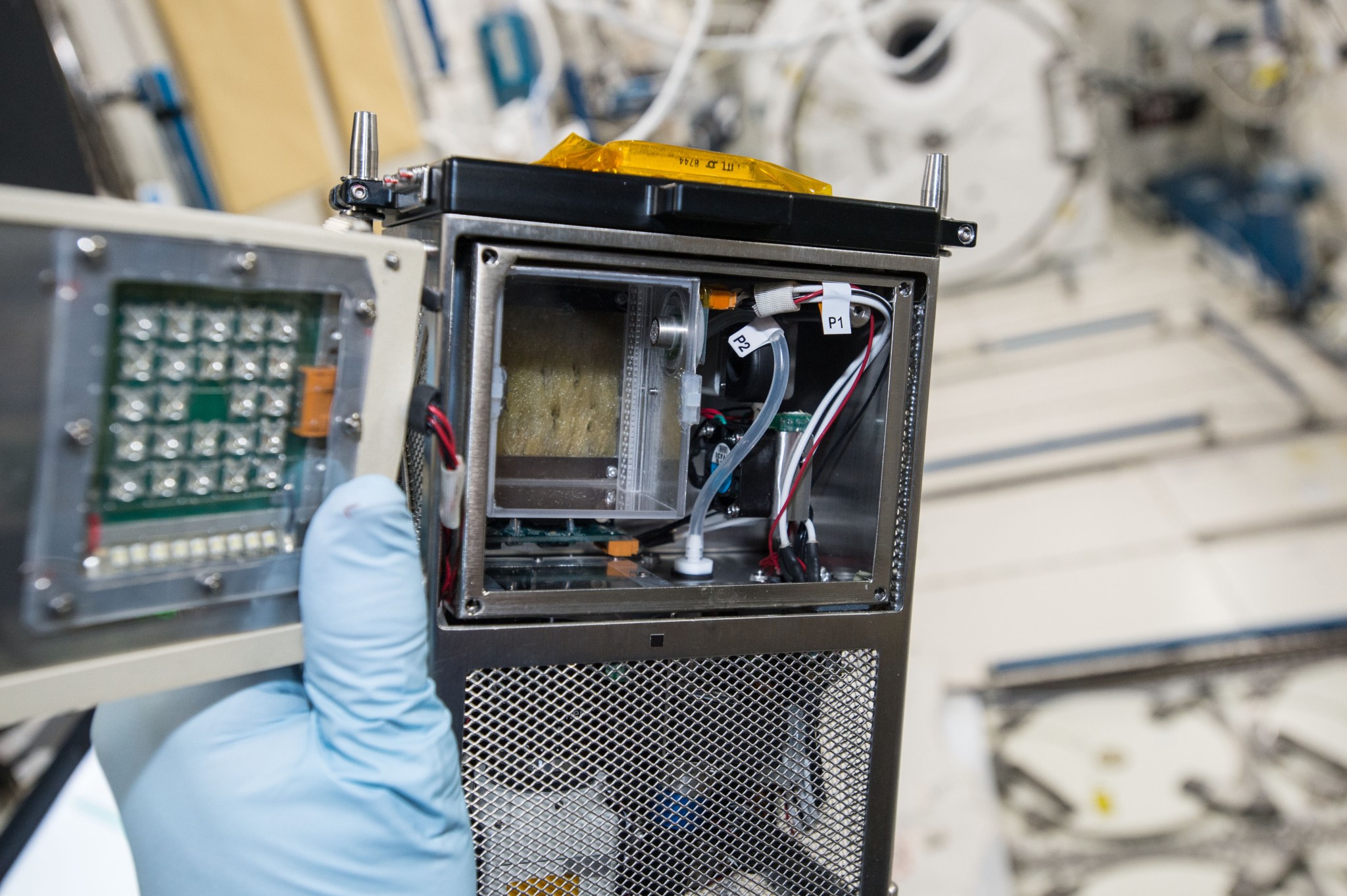
Studies of neurological organoids, plant growth, and shifts in body fluids are among the scientific investigations that NASA astronauts Matthew Dominick, Michael Barratt, Jeanette Epps, and Tracy C. Dyson will help support aboard the International Space Station as part of Expedition 71. The crew members are targeting launch to the space station in February and March.
Here are details on some of the work scheduled during this upcoming expedition aboard the microgravity laboratory:
Modeling Neuroinflammation
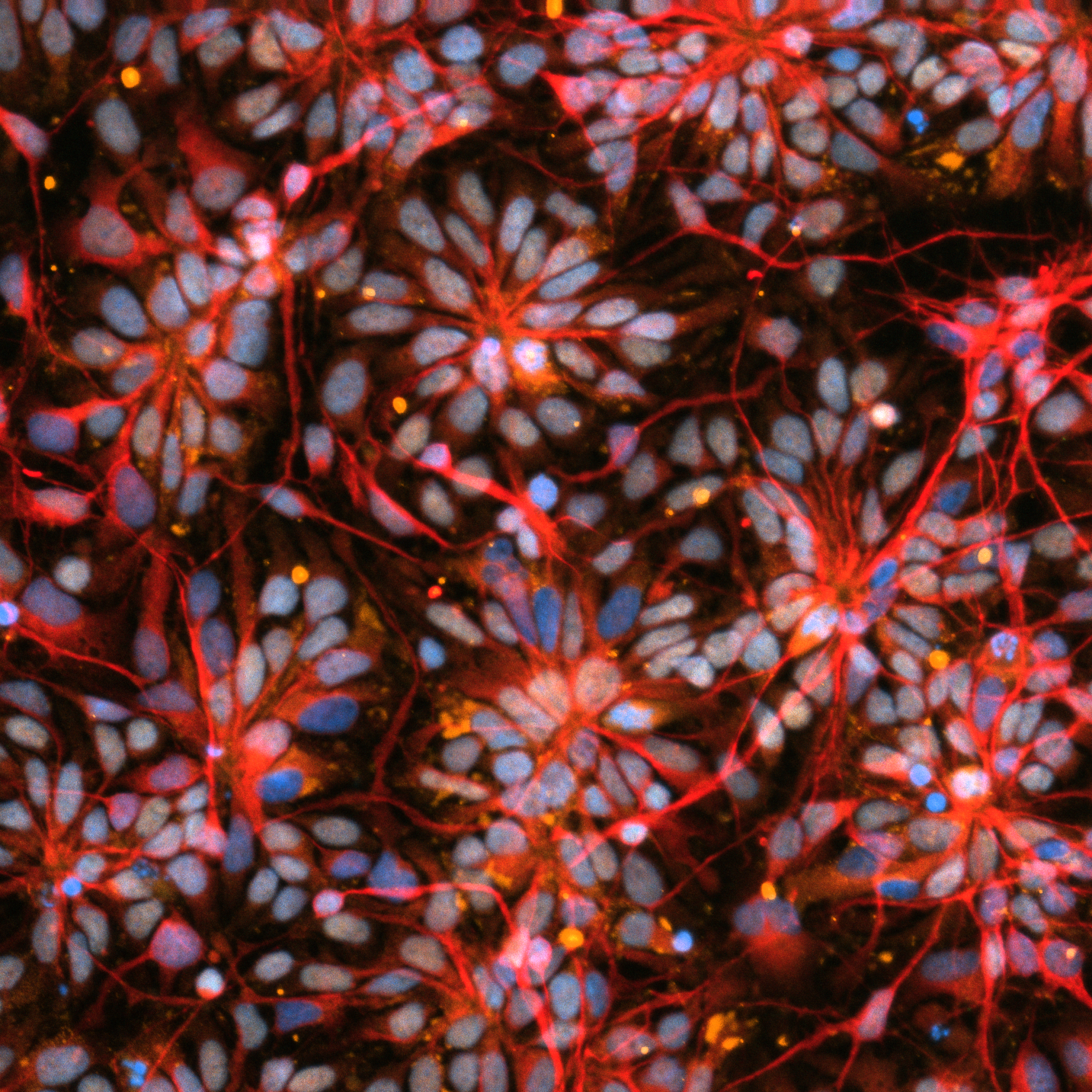
Human Brain Organoid Models for Neurodegenerative Disease & Drug Discovery (HBOND) studies the mechanisms behind neuroinflammation, a common feature of neurodegenerative disorders. Researchers create organoids using patient-derived iPSCs (induced pluripotent stem cells) from patients who have Parkinson’s disease and primary progressive multiple sclerosis. The sixth space station organoid investigation funded by the National Stem Cell Foundation, HBond includes for the first time Alzheimer’s iPSCs and testing of the effects of drugs in development to treat neuroinflammation. Results could help improve diagnostics, provide insights into the effects of aging, accelerate drug discovery, and identify therapeutic targets for patients suffering from neurodegenerative diseases. The organoid models also could provide a way to anticipate how extended spaceflight affects the brain and support development of countermeasures.
Brain organoid cells from the previous investigation Cosmic Brain Organoids are made of cells from people with Parkinson’s Disease and primary progressive multiple sclerosis.
New York Stem Cell Research Institute
Protecting Plants from Spaceflight Stressors
Plants can serve as a source of food and provide other life-support services on long-term missions to the Moon and Mars. The Study on Plant Responses Against the Stresses of Microgravity and High Ultraviolet Radiation in Space (Plant UV-B) examines how stress from microgravity, UV radiation, and the combination of the two affect plants at the molecular, cellular, and whole organism levels. Results could increase understanding of plant growth in space and support improvements in plant cultivation technologies for future missions.
This image shows the Plant Experiment Unit (PEU) hardware for the Plant UV-B investigation.
NASA
Positive Pressure
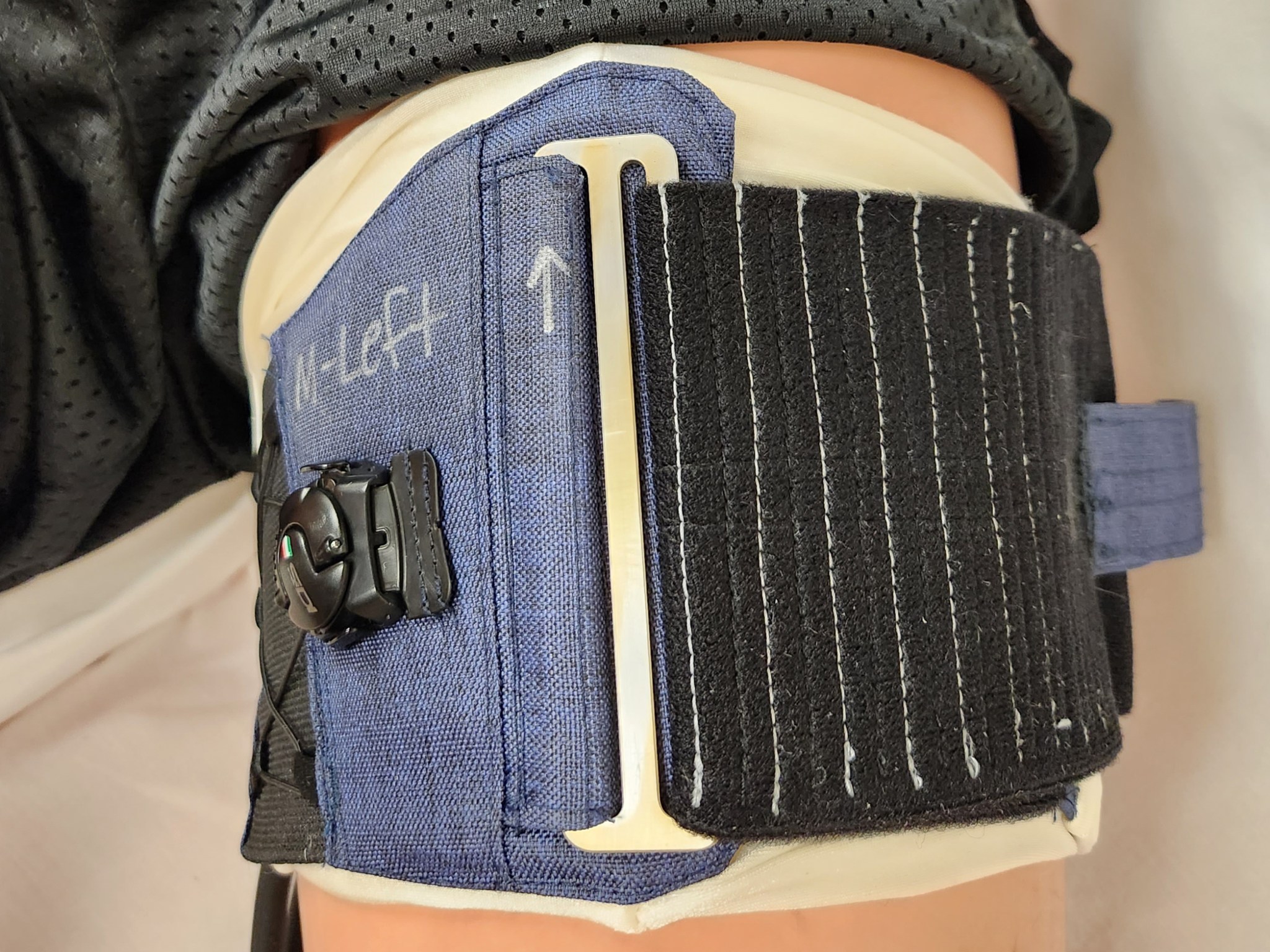
Microgravity causes fluids in the body to move toward the head, which can cause changes in eye structure and vision known as Spaceflight Associated Neuro-ocular Syndrome (SANS) and other health problems. Mitigating Headward Fluid Shifts with Veno-constrictive Thigh Cuffs During Spaceflight (Thigh Cuff) examines whether thigh pressure cuffs could provide a simple way to counter this shift of body fluids and help protect astronauts from SANS and other issues on future missions to the Moon and Mars. Thigh cuffs also could help treat or prevent problems for patients with conditions on Earth that can cause fluid accumulation in the body, such as long-term bedrest and diseases.
A test subject wears the device for the Thigh Cuff investigation pre-flight.
NASA
Incredible Edible Algae
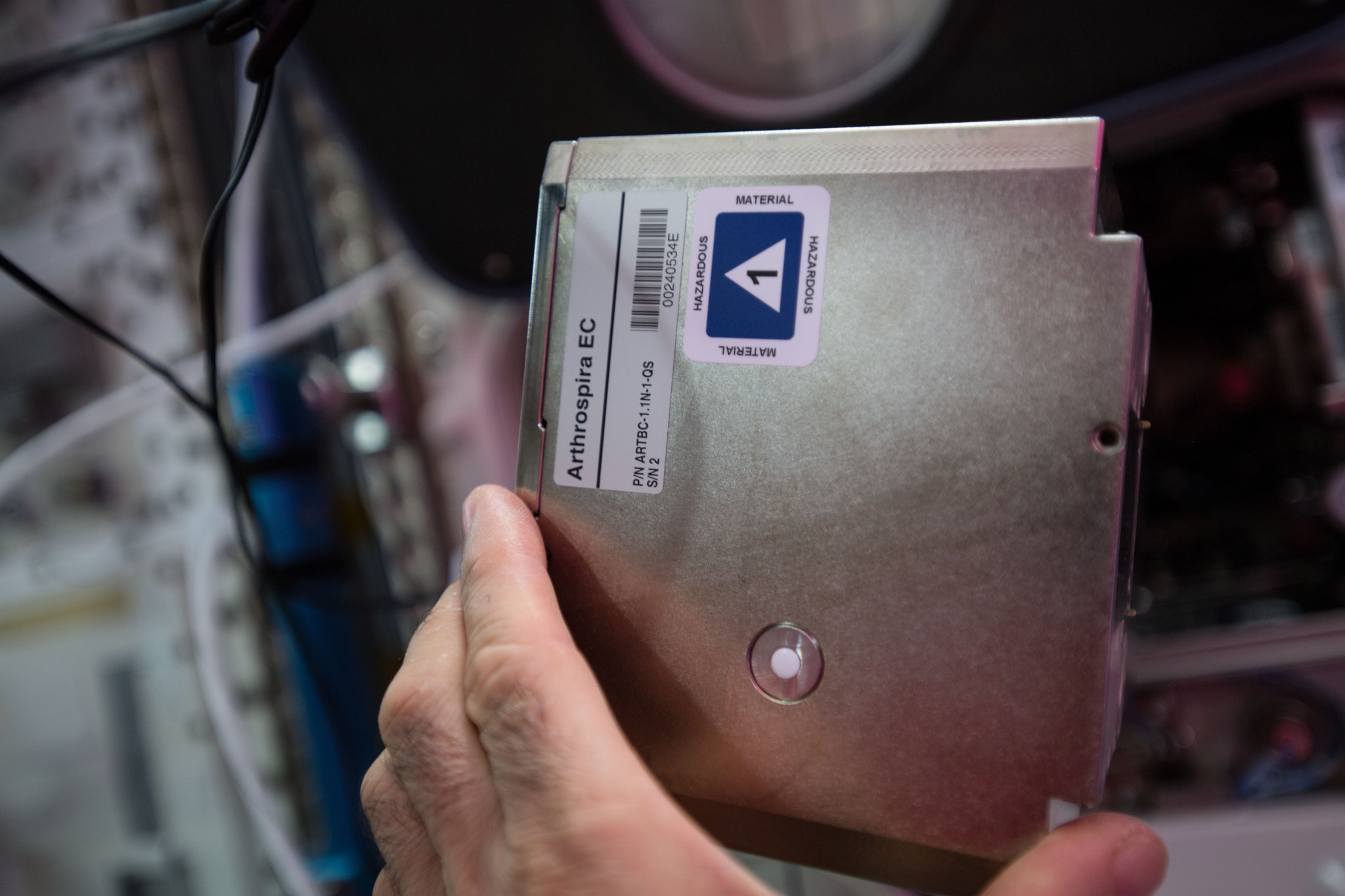
Arthrospira-C (Art-C), an investigation from ESA (European Space Agency) analyzes how the cyanobacterium Limnospira responds to spaceflight conditions and whether it produces the same quantity and quality of oxygen and biomass in space as on Earth. These microalgae, also known as Spirulina, could be used to remove carbon dioxide exhaled by astronauts, which can become toxic in an enclosed spacecraft, and to produce oxygen and fresh food as part of life support systems on future missions. Correct predictions of oxygen and biomass yields are crucial for design of life support systems using bioprocesses. Spirulina also has been shown to have radioprotective properties and eating it could help protect space travelers from cosmic radiation, as well as conserve healthy tissue in patients undergoing radiation treatment on Earth.
The container on the space station for Arthrospira-B, an investigation previous to Art-C.
NASA
Melissa Gaskill
International Space Station Program Research Office Johnson Space Center
Search this database of scientific experiments to learn more about those mentioned above.
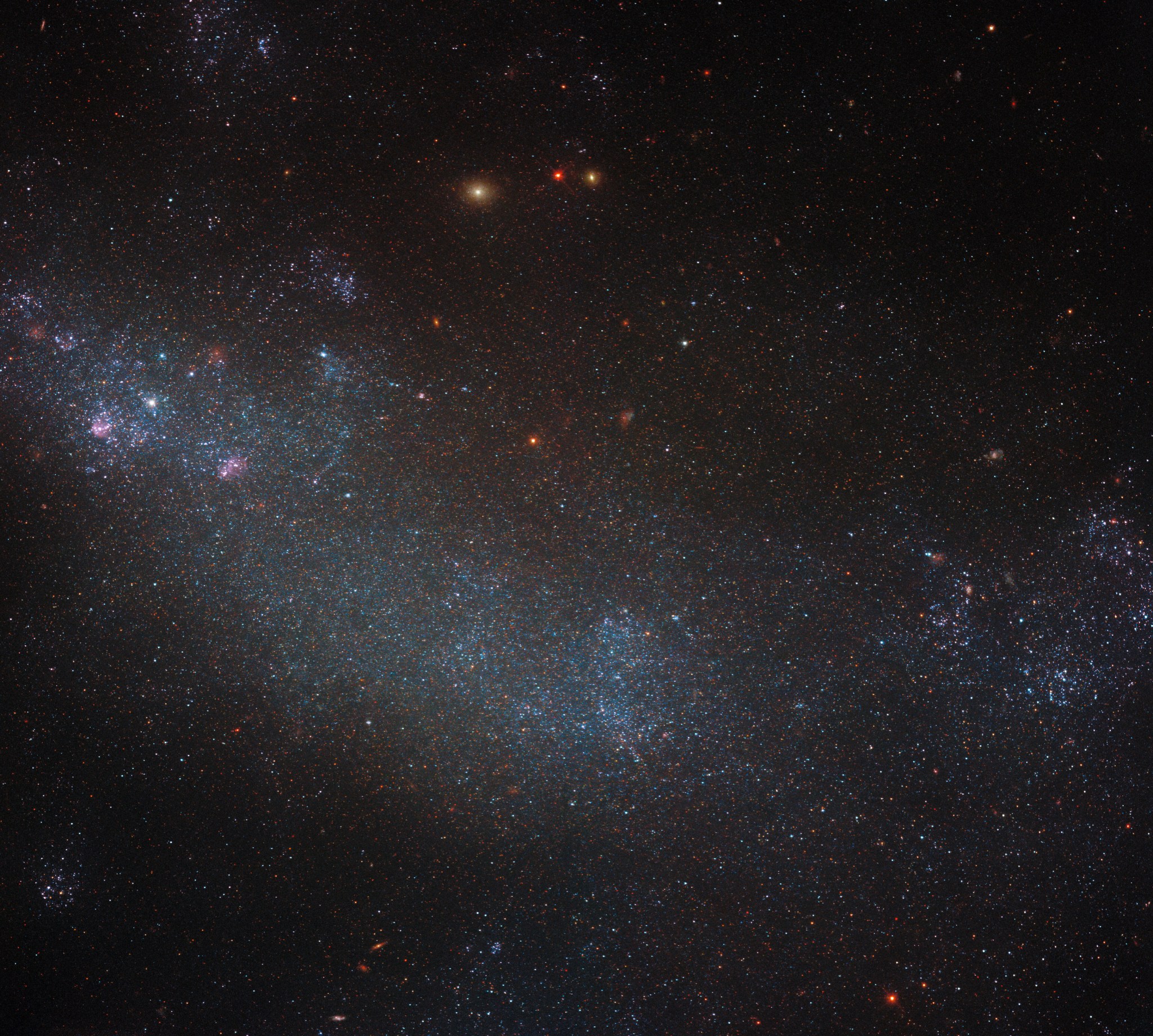
This Hubble image shows irregular galaxy, ESO 245-5, located some of 15 million light-years from Earth.
ESA/Hubble & NASA, M. Messa
This NASA/ESA Hubble Space Telescope image shows a densely packed field of stars laid upon a background of dust, gas, and light from more distant celestial objects. There are so many stars in this image’s field of view that it may be a little tricky to discern that you are in fact looking at a galaxy. Known as ESO 245-5, this galaxy may be harder to recognize because of its apparent lack of structure, which contrasts sharply with Hubble’s spectacular images of spiral galaxies that hold seemingly ordered spiral arms of stars, gas, and dust.
ESO 245-5 is an IB(s)m type of galaxy under the De Vaucouleurs galaxy classification system. This designation means that the galaxy is irregular (I) with no ordered structure. It is also barred (B) meaning it holds a dense bar of stars that crosses through its center. The third term ((s)) indicates that it has a slight spiral structure, while the last term (m) means it is a type of galaxy similar to the Large and Small Magellanic Clouds that are irregular satellite galaxies of the Milky Way. ESO 245-5 is a relatively close neighbor of the Milky Way. It is located some of 15 million light-years from Earth in the constellation Phoenix.
NASA has awarded $3.7 million to 11 teams to support new collaborations between the agency and United States institutions not historically part of the agency’s research enterprise. These are the first awards given through a new program from the agency’s Science Mission Directorate (SMD) to improve diversity, equity, inclusion, and accessibility in the science and engineering communities, as well as NASA’s workforce.
“As the agency continues to build relationships with under-resourced institutions through initiatives like the bridge program, we are intentionally increasing equitable access to NASA for the best and brightest talents in our nation,” said Shahra Lambert, NASA senior advisor for engagement. “These partnerships will help NASA develop a diverse and capable workforce to further our understanding of the cosmos.”
NASA’s SMD Bridge Program provides seed funding for research projects that will build strong foundations for long-lasting relationships with the agency. The projects offer hands-on training and mentorship for students, as well as new research opportunities for faculty, to help science and engineering students transition into graduate schools, employment by NASA, or science, technology, engineering, and math careers generally.
The teams are led by faculty at institutions that represent new collaborations for NASA. These include Hispanic-serving institutions, Historically Black Colleges and Universities, Asian American and Native American Pacific Islander-serving institutions, and primarily undergraduate institutions. The research projects connect these institutions to seven NASA centers and could impact more than 100 students.
“We applaud this inaugural cohort of grant recipients for their innovative research projects, which will make important connections between students, faculty, and NASA,” said Michael New, Science Mission Directorate deputy associate administrator for research at NASA Headquarters. “These awards are a first and important step for the SMD Bridge Program in supporting long-term relationships toward creating a more diverse and robust STEM workforce.”
There is an additional opportunity to apply for seed funding through the SMD Bridge Program. Applications are open until Friday, March 29.
The following projects were selected as the first cohort to receive seed funding:
“Diversifying Student Pipelines in STEM: Environmental Pollution Reduction Inspired by Planetary Science”
This project, a collaboration that brings California State University, Los Angeles, together with NASA’s Jet Propulsion Laboratory in Southern California, and California State Polytechnic University, Pomona, draws from the field of planetary science to address environmental pollution.
“FireSage: SJSU-NASA ARC Bridge Seed Program”
FireSage is a collaboration between San Jose State University’s Wildfire Interdisciplinary Research Center and the Earth Science Division at NASA’s Ames Research Center in California’s Silicon Valley. It engages students in a computing, artificial intelligence, and machine learning research project and training activities in wildfire science.
“Hampton University STEM Experience with NASA Langley Research Center Doppler Aerosol Wind Lidar”
This collaboration between Hampton University and NASA’s Langley Research Center in Hampton, Virginia, offers a foundation in the advancement of planetary boundary layer studies with Lidar remote sensing.
“Development of Antireflection Coatings for Future NASA Missions”
This project is a collaboration between Delaware State University and NASA Goddard, working with transparent, electrically conductive films to design and produce an environmentally durable anti-reflection coating for guidance, navigation, and control Lidar.
“CUBES: Capacity Building Using CubeSats for Earth Science”
This collaboration between Tuskegee University, the Laboratory for Atmospheric Science and Physics at University of Colorado, and NASA Ames uses CubeSats to provide faculty and students with experience designing and executing science mission flight projects.
“Space Materials and Microbiome Research: A Bridge to Future JSC Workforce”
In this project, the University of Houston-Clear Lake collaborates with NASA’s Johnson Space Center in Houston. The project’s Composite Materials track will develop a protective nanocomposite shield for spacecraft materials, while the Microbiome track will create a comprehensive library of draft bacterial genomes.
“The HALOQUEST: Halobacterium Astrobiological Laboratory for Observing and Questioning Extraterrestrial Signatures and Traits Project”
This collaboration between California State University, Northridge, and NASA JPL will study Halobacterium salinarum NRC-1 grown under simulated stressful environmental conditions, which could help understand possibilities for life on other planets.
“Observations of Ice-Water and Isotopes Using Mid-Infrared Laser Heterodyne Radiometer LIDAR”
In collaboration with NASA Goddard, Delaware State University will develop Earth science, planetary exploration, and sensing technologies, including a lunar rover payload with instruments to simultaneously detect and correlate water isotopes with other trace gas species.
“Application of Remote Sensing for Predicting Mosquito-Borne Disease Outbreaks”
This project is a collaboration between Southern Nazarene University and NASA JPL to identify areas at risk for mosquito-borne disease outbreaks using remote sensing data.
“Building a Diverse, Sustainable, and Robust Undergraduate-to-Graduate STEM Network through Inter-Institutional, Interdisciplinary Research Collaborations in Complex Fluids/Soft Matter”
This project is a collaboration between Colorado Mesa University and NASA’s Glenn Research Center in Cleveland to strengthen and grow a research, education, and training network centered around problems in complex fluids and soft matter, with initial emphasis on heat transfer and multiphase flows.
“Additive Manufacturing of Electronics for NASA Applications”
This project, a collaboration between Florida A&M University and NASA’s Marshall Space Flight Center in Huntsville, Alabama, and NASA Goddard, will explore technology solutions through additive manufacturing approaches to manufacture strain and gas sensors.
NASA has selected 8(a) vendor Seventh Sense Consulting LLC of Woodbridge, Virginia, to provide acquisition support services for non-inherently governmental functions across the agency.
The contractor will provide services agencywide, including document development support, procurement administrative services, acquisition policy support, procurement operations support, procurement source selection support, cost/pricing support, and contract closeout support. The latter will be performed at all NASA centers, and the acquisition support may be performed at any NASA center, either on-site, off-site, or hybrid.
This award will result in a single-award blanket purchase agreement to an 8(a) small business. The maximum contract value is about $77.5 million. A one-year base period begins on Friday, March 1. The contract includes up to four one-year options with the potential to extend services through Aug. 31, 2029.
For information about NASA and agency programs, visit:
NASA Administrator Announces New Marshall Space Flight Center Director
NASA Administrator Bill Nelson on Feb. 5 named Joseph Pelfrey director of the agency’s Marshall Space Flight Center, effective immediately. Pelfrey has served as acting center director since July 2023.
“Joseph is a respected leader who shares the passion for innovation and exploration at NASA Marshall. As center director, he will lead the entire Marshall workforce, which includes a world-renowned team of scientists, engineers, and technologists who have a hand in nearly every NASA mission,” said Nelson. “I am confident that under Joseph’s leadership, Marshall will continue to make critical advancements supporting Artemis and Moon to Mars that will benefit all humanity.”
Marshall Space Flight Center Director Joseph Pelfrey.
NASA
NASA Marshall is one of the agency’s largest field centers, and manages NASA’s Michoud Assembly Facility, where some of the largest elements of the SLS (Space Launch System) rocket and Orion spacecraft for the Artemis campaign are manufactured. The center also is responsible for the oversight and execution of an approximately $5 billion portfolio comprised of human spaceflight, science, and technology development efforts. Its workforce consists of nearly 7,000 employees, both civil servants and contractors.
“Marshall is renowned for its expertise in exploration and scientific discovery, and I am honored and humbled to be chosen to lead the center into the future,” said Pelfrey. “We will continue to shape the future of human space exploration by leading SLS and human landing system development for Artemis and leveraging our capabilities to make critical advancements in human landing and cargo systems, habitation and transportation systems, advanced manufacturing, mission operations, and cutting-edge science and technology missions.”
Pelfrey talks during a 2023 all-hands meeting at Marshall.
NASA/Charles Beason
Prior to joining NASA, Pelfrey worked in industry, supporting development of space station payload hardware. He began his NASA career as an aerospace engineer in the Science and Mission Systems Office, going on to serve in various leadership roles within the International Space Station Program, the Marshall Engineering Directorate and the SLS Spacecraft/Payload Integration and Evolution Office. He also served as manager for the Commercial Orbital Transportation Services Project at Marshall and the Exploration and Space Transportation Development Office in the Flight Programs and Partnerships Office.
Appointed to the Senior Executive Service in 2016, Pelfrey served as the associate director for operations in Engineering, later becoming deputy manager and subsequently manager for Marshall’s Human Exploration Development and Operations Office. He was appointed as Marshall’s deputy center director in April 2022.
Pelfrey received a bachelor’s degree in Aerospace Engineering from Auburn University in 2000.
NASA to Demonstrate Autonomous Navigation System on Moon
By Rick Smith
When the second CLPS (Commercial Lunar Payload Services) delivery is launched to the Moon in mid-February, its NASA payloads will include an experiment that could change how human explorers, rovers, and spacecraft independently track their precise location on the Moon and in cis-lunar space.
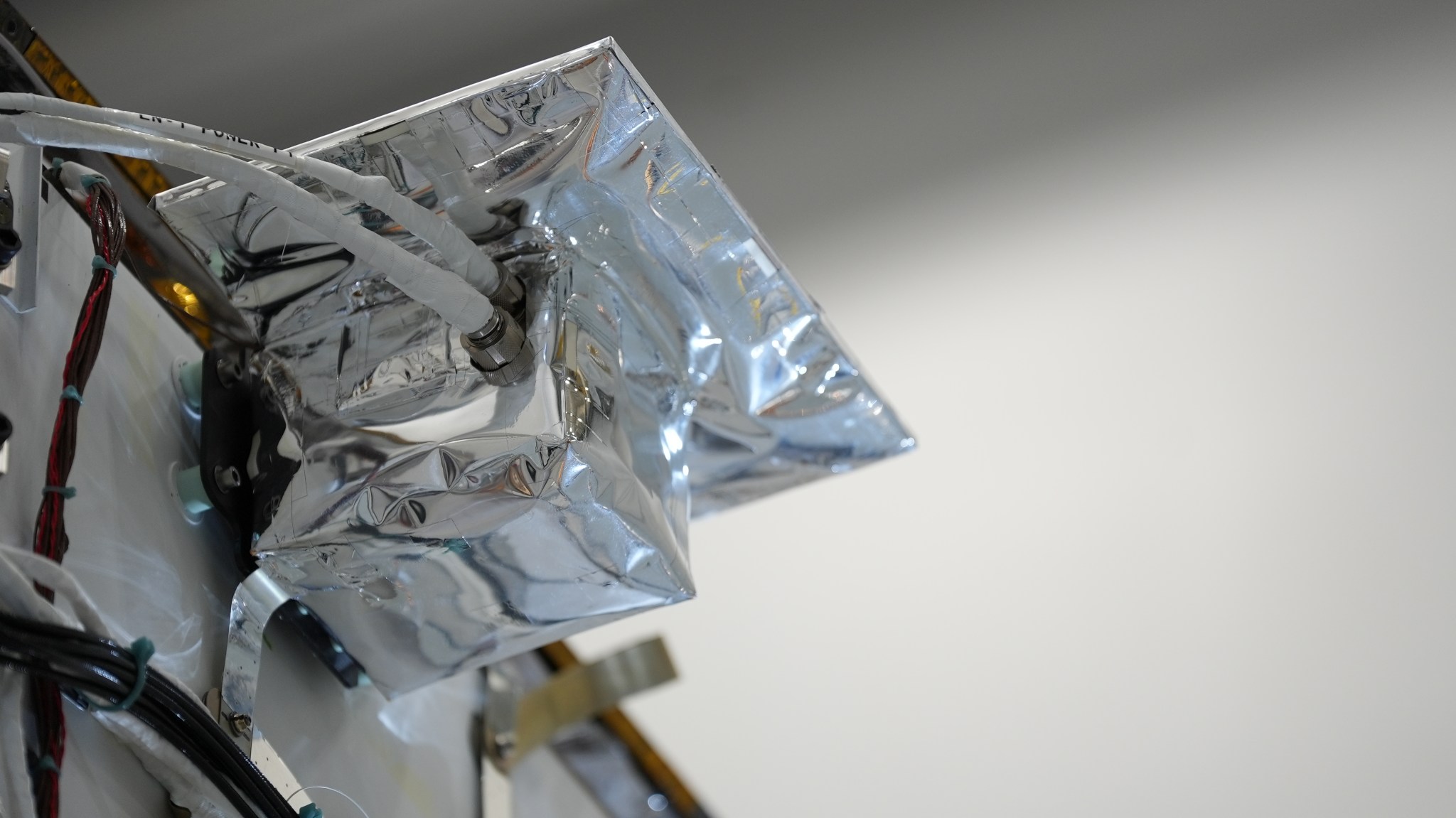
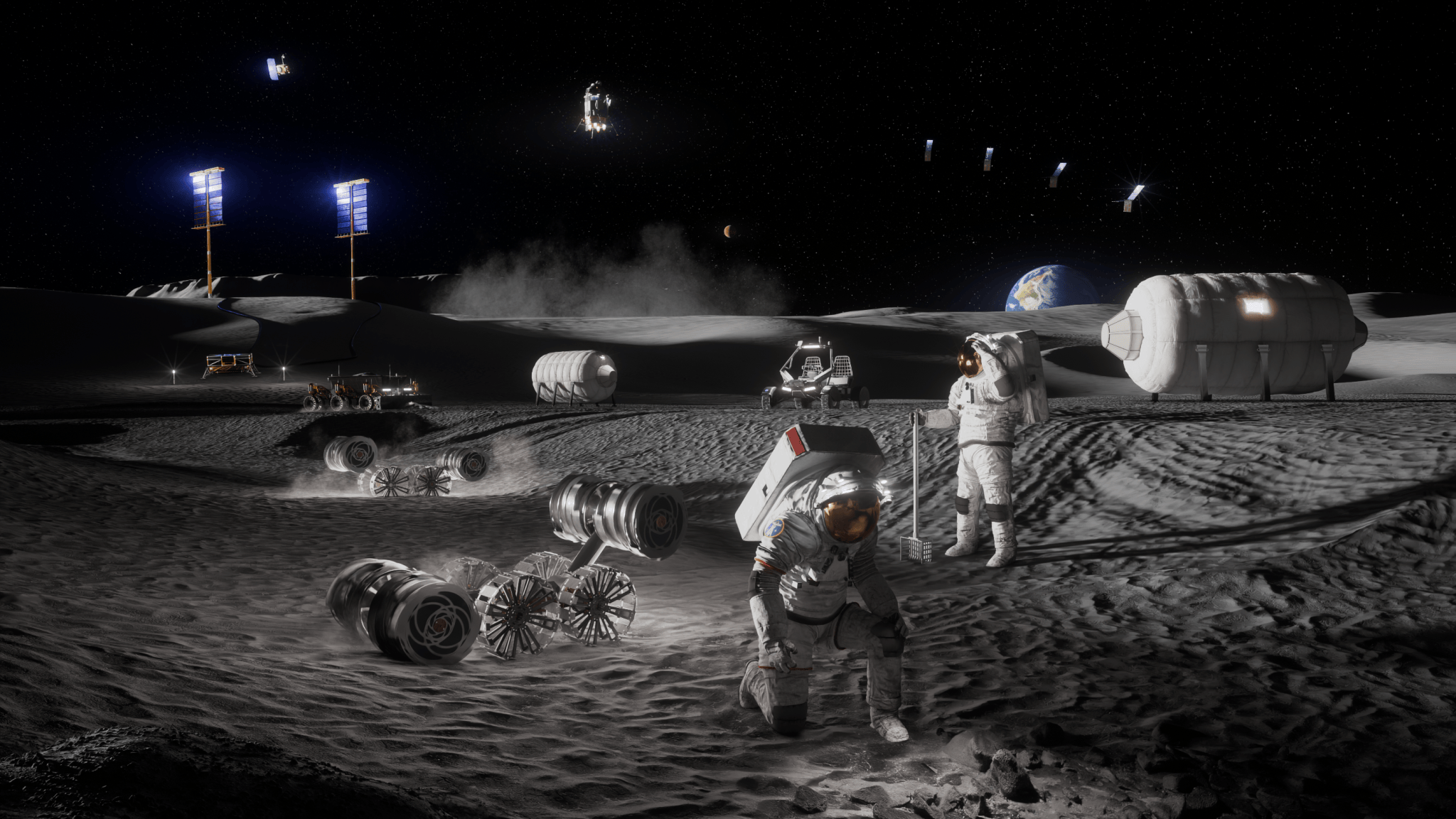
Demonstrating autonomous navigation, the Lunar Node-1 experiment, or LN-1, is a radio beacon designed to support precise geolocation and navigation observations for landers, surface infrastructure, and astronauts, digitally confirming their positions on the Moon relative to other craft, ground stations, or rovers on the move. These radio beacons also can be used in space to help with orbital maneuvers and with guiding landers to a successful touchdown on the lunar surface.
Lunar Node-1, or LN-1, an autonomous navigation payload that will change how human explorers safely traverse the Moon’s surface and live and work in lunar orbit, awaits liftoff as part of Intuitive Machines’ IM-1 mission, its first under NASA’s Commercial Lunar Payload Services initiative. LN-1 was developed, built, and tested at NASA’s Marshall Space Flight Center.
NASA/Intuitive Machines
“Imagine getting verification from a lighthouse on the shore you’re approaching, rather than waiting on word from the home port you left days earlier,” said Evan Anzalone, principal investigator of LN-1 and a navigation systems engineer at NASA’s Marshall Space Flight Center. “What we seek to deliver is a lunar network of lighthouses, offering sustainable, localized navigation assets that enable lunar craft and ground crews to quickly and accurately confirm their position instead of relying on Earth.”
The system is designed to operate as part of a broader navigation infrastructure, anchored by a series of satellites in lunar orbit as being procured under NASA’s Lunar Communications Relay and Navigation Systems project. Together, future versions of LN-1 would utilize LunaNet-defined standards to provide interoperable navigation reference signals from surface beacons as well as orbital assets.
Currently, navigation beyond Earth is heavily reliant on point-to-point services provided by NASA’s Deep Space Network, an international array of giant radio antennas which transmit positioning data to interplanetary spacecraft to keep them on course. These measurements typically are relayed back to Earth and processed on the ground to deliver information back to the traveling vehicle.
But when seconds count during orbital maneuvers, or among explorers traversing uncharted areas of the lunar surface, LN-1 offers a timely improvement, Anzalone said.
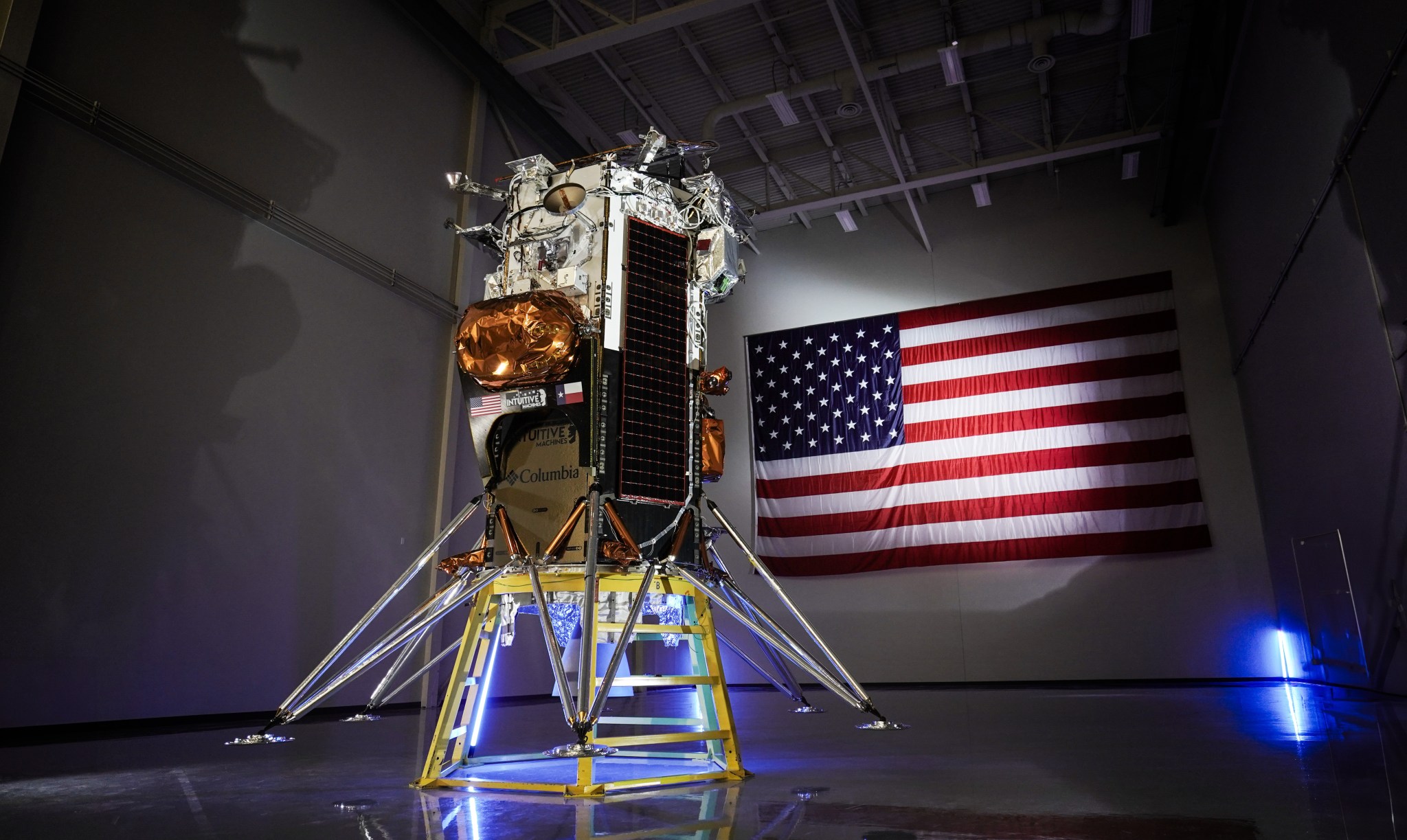
IM-1, the first NASA Commercial Launch Program Services launch for Intuitive Machines’ Nova-C lunar lander, will carry multiple payloads to the Moon, including Lunar Node-1, demonstrating autonomous navigation via radio beacon to support precise geolocation and navigation among lunar orbiters, landers, and surface personnel. NASA’s CLPS initiative oversees industry development of small robotic landers and rovers to support NASA’s Artemis campaign.
NASA/Intuitive Machines
The CubeSat-sized experiment is one of six payloads included in the NASA delivery manifest for Intuitive Machines of Houston, which will be launched via a SpaceX Falcon 9 from Cape Canaveral, Florida. Designated IM-1, the launch is the company’s first for NASA’s CLPS initiative, which oversees industry development, testing, and launch of small robotic landers and rovers supporting NASA’s Artemis campaign.
The Nova-C lander is scheduled to touch down near Malapert A, a lunar impact crater in the Moon’s South Pole region.
LN-1 relies on networked computer navigation software known as MAPS (Multi-spacecraft Autonomous Positioning System). Developed by Anzalone and researchers at Marshall, MAPS was successfully tested on the International Space Station in 2018 using NASA’s Space Communications and Navigation testbed.
Engineers at Marshall conducted all structural design, thermal and electronic systems development, and integration and environmental testing of LN-1 as part of the NASA-Provided Lunar Payloads project funded by the agency’s Science Mission Directorate. Anzalone and his team delivered the payload in 2021, having performed the payload build during the COVID pandemic. Since then, they refined the operating procedures, conducted thorough testing of the integrated flight system, and in October 2023, oversaw installation of LN-1 on Intuitive Machines’ lander.
Demonstrating autonomous navigation, the Lunar Node-1 experiment, or LN-1, is a radio beacon designed to support precise geolocation and navigation observations to orbiters, landers, and surface personnel, digitally confirming their positions on the Moon relative to other craft, ground stations, or rovers on the move. The system is designed to operate as part of a broader navigation infrastructure, anchored by a series of satellites in lunar orbit as being procured under NASA’s Lunar Communications Relay and Navigation Systems project. (NASA)
The payload will transmit information briefly each day during the journey to the Moon. Upon lunar touchdown, the LN-1 team will conduct a full systems checkout and begin continuous operations within 24 hours of landing. NASA’s Deep Space Network will receive its transmissions, capturing telemetry, Doppler tracking, and other data and relaying it back to Earth. Researchers at NASA’s Jet Propulsion Laboratory and at Morehead State University in Kentucky also will monitor LN-1’s transmissions throughout the mission, which is scheduled to last approximately 10 days.
Eventually, as the technology is proven and its infrastructure expanded, Anzalone expects LN-1 to evolve from a single lighthouse on the lunar shore into a key piece of a much broader infrastructure, helping NASA evolve its navigation system into something more akin to a bustling metropolitan subway network, wherein every train is tracked in real time as it travels its complex route.
“Spacecraft, surface vehicles, base camps and exploratory digs, even individual astronauts on the lunar surface,” Anzalone said. “LN-1 could connect them all and help them navigate more accurately, creating a reliable, more autonomous lunar network.”
Marshall’s LN-1 team is already discussing future Moon to Mars applications for LN-1 with NASA’s SCaN (Space Communications and Navigation) program – which oversees more than 100 NASA and partner missions. They’re also consulting with the European Space Agency and Japan Aerospace Exploration Agency, aiding the push to unite spacefaring nations via an interconnected, interoperable global architecture.
“Eventually, these same technologies and applications we’re proving at the Moon will be vital on Mars, making those next generations of human explorers safer and more self-sufficient as they lead us out into the solar system,” Anzalone said.
NASA’s CLPS initiative enables NASA to buy a complete commercial robotic lunar delivery service from leading aerospace contractors. The provider is responsible for launch services, owns its lander design, and leads landing operations. Learn more here.
Smith, an Aeyon/MTS employee, supports the Marshall Office of Communications.
Marshall Wraps Up Mentoring Month with Mega Meal, Mentoring Panel
By Jessica Barnett
There was no shortage of opportunities in January to learn about the benefits of mentoring from those who have experienced them firsthand. In fact, there was so much to share, team members at NASA’s Marshall Space Flight Center kept the celebration going through the first week of February.
“It was so great to see so many from our workforce out and excited about mentorship,” said Selina Salgado, who serves as the Mentoring Program coordinator at Marshall. “At every event throughout the month and when reading through the highlights, I was encouraged by the engagement and commitment that the Marshall team showed for development.”
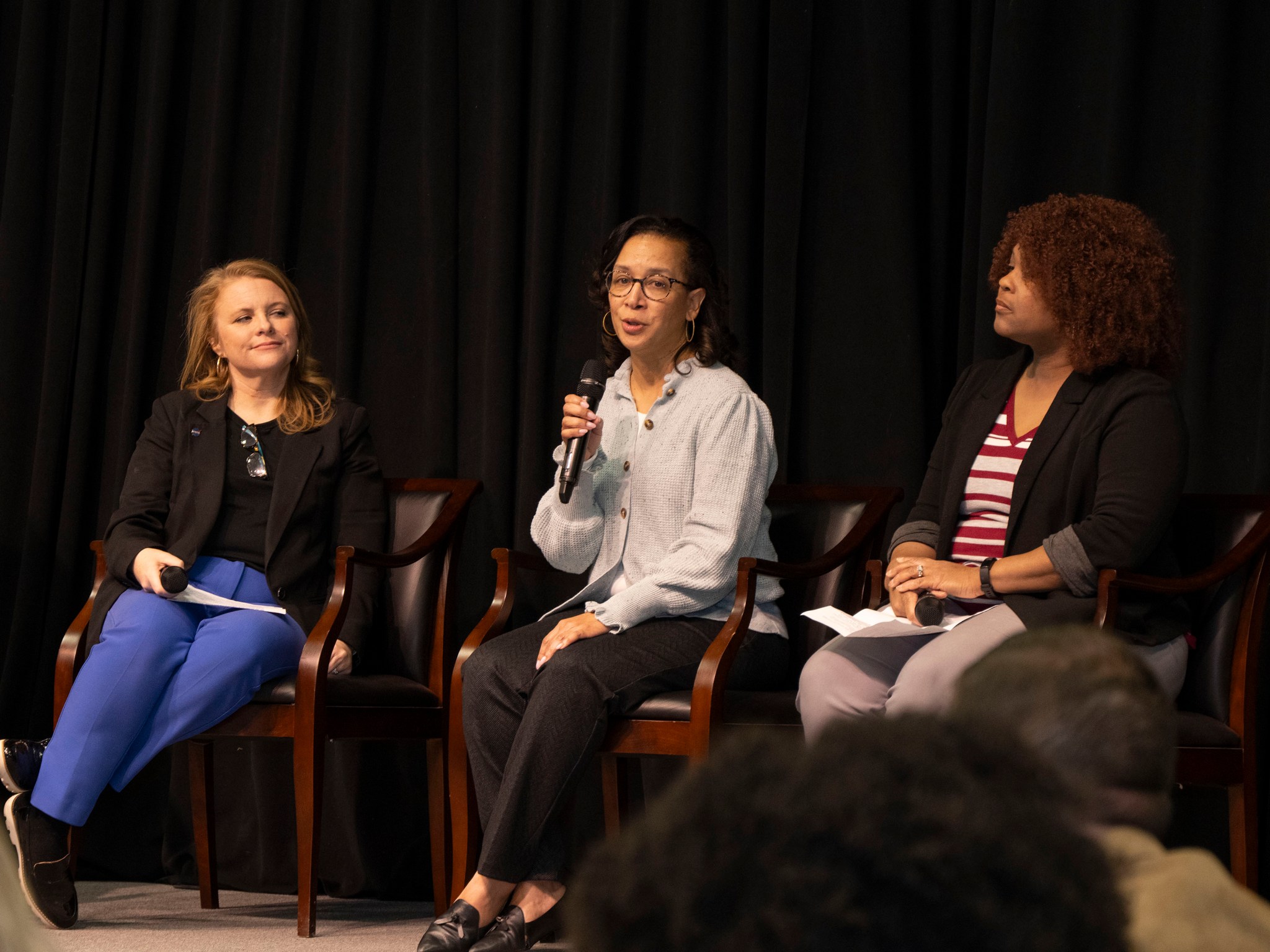
Marshall Space Flight Center Chief Financial Officer Rhega Gordon, center, who participates in the center’s Mentorship Program, discusses the benefits of mentoring and her advice for getting the most out of a mentoring relationship during a panel event held Feb. 6 in Activities Building 4316 as part of Marshall’s celebration of National Mentoring Month. Joining her on stage are two of her mentees, program specialist Kim Henry and Marshall Sustainability Coordinator Malene McElroy.
NASA/Danielle Burleson
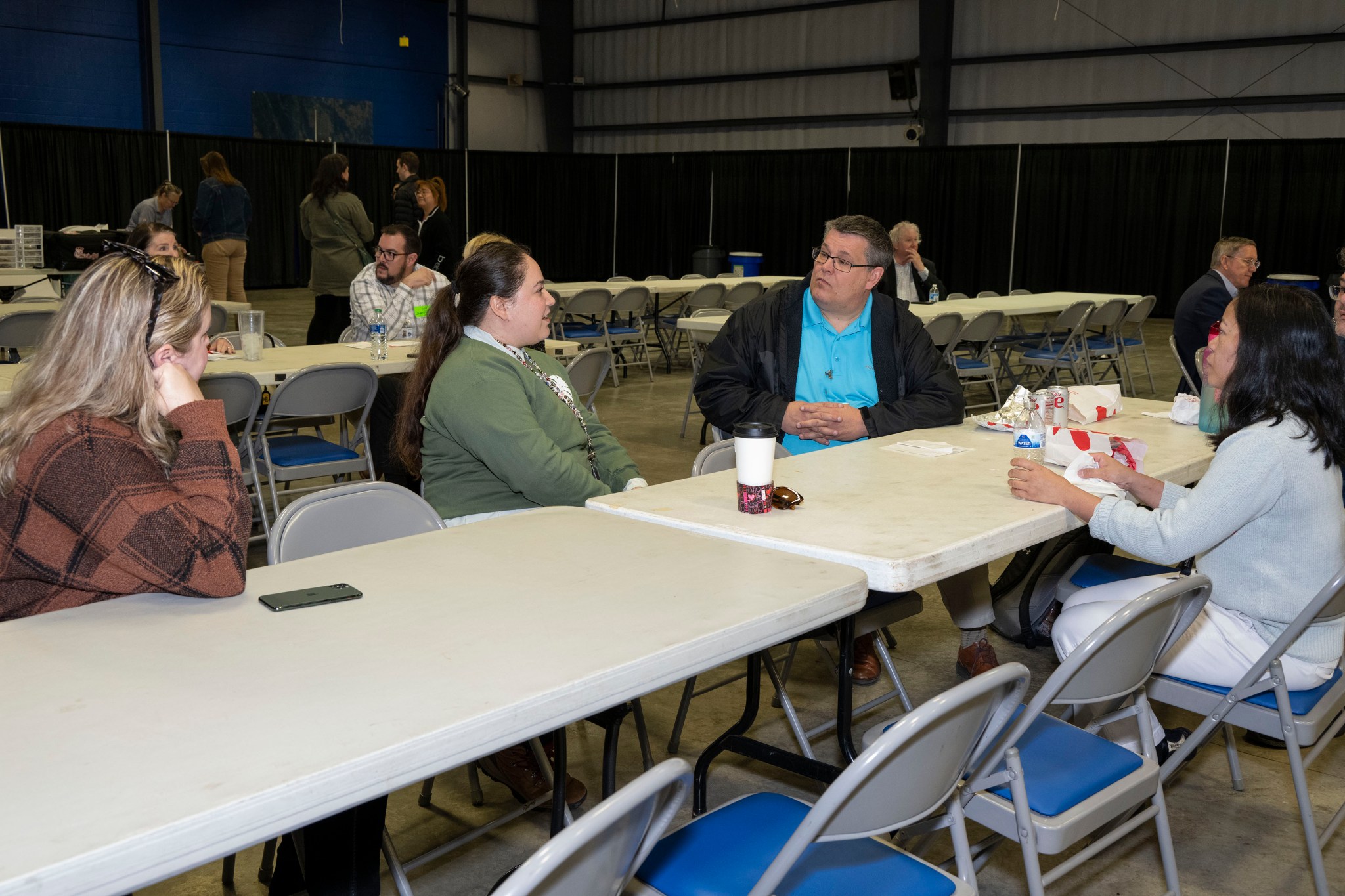
This year’s events included Meals with Mentors, in which team members could have lunch and chat with mentors from a variety of backgrounds and departments, and an in-person mentoring panel Feb. 6 featuring Marshall Chief Financial Officer Rhega Gordon and two of her mentees, Marshall Sustainability Coordinator Malene McElroy and program specialist Kim Henry.
Marshall also participated in the launch for AMPED (Agencywide Mentoring Pilot for Engagement & Development), which pairs mentors and mentees together using the MentorcliQ platform. Civil servants can sign up for AMPED now through Feb. 19.
Marshall team members can also participate in MERGE, a NASA-built mentoring application that allows users to create and view profiles to identify potential mentors or mentees. MERGE is recommended for casual, informal, or short-term mentoring relationships, as well as shadowing opportunities. Civil servants and contractors can sign up at any time.
Marshall Associate Center Director, Technical, Larry Leopard engages with center team members during a Meals with Mentors event Feb. 6 in Activities Building 4316. Team members were encouraged to chat with center leaders and potential mentors at the event as part of Marshall’s celebration of National Mentoring Month.
NASA/Danielle Burleson
In addition to in-person events and showcasing new options for finding a mentor or mentee, there were weekly tips to help team members get the most out of their mentorship journey and interviews with mentors and mentees, who shared their experiences, advice, and more.
“Our hope was that employees would reengage with mentorship, find value in their current relationships, or provide resources and guidance to help those who were new to the world of mentoring,” Salgado said.
Marshall team members can start or continue their mentorship journey by visiting the Marshall Mentorship Program page on Inside Marshall.
Barnett, a Media Fusion employee, supports the Marshall Office of Communications.
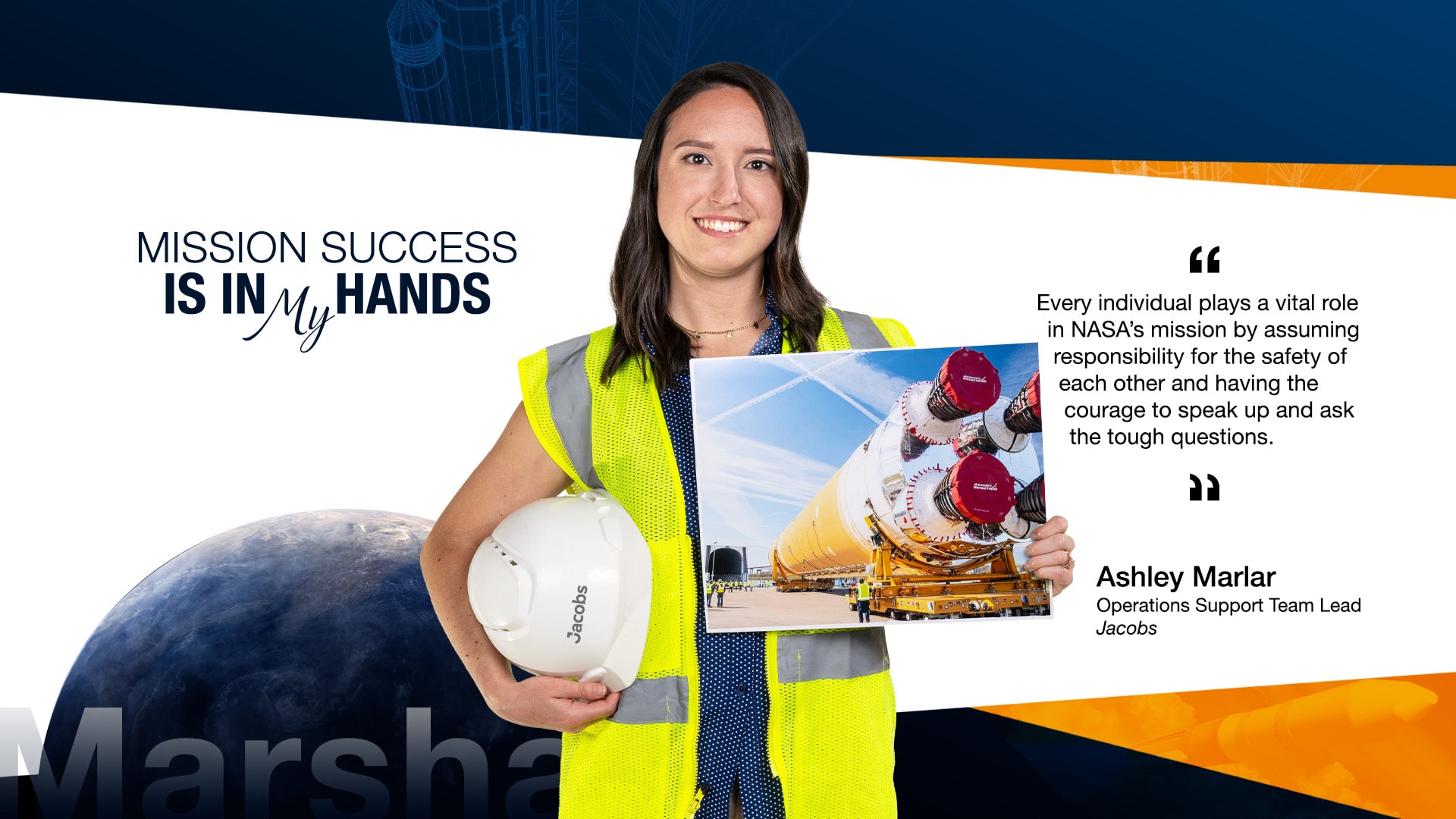
Mission Success is in Our Hands is a safety initiative collaboration between NASA’s Marshall Space Flight Center and Jacobs. As part of the initiative, eight Marshall team members are featured in new testimonial banners placed around the center. This is the fourth in a Marshall Star series profiling team members featured in the testimonial banners. The next Mission Success is in Our Hands Shared Experience Forum will be Feb. 22 and will feature Robert Conway, deputy director of NASA’s Safety Center. The 11:30 a.m. event will be in Activities Building 4316 for Marshall team members.
Ashley Marlar is the Jacobs Space Exploration Group team lead of Operations Engineering Support at Marshall, responsible for managing a team of four Jacobs Transportation engineers supporting the center’s Transportation and Logistics Engineering Office. Marlar and her team develop and execute detailed plans, procedures, and engineered lift analyses to transport NASA’s SLS (Space Launch System) flight hardware and test articles, as well as hardware for various other programs and projects at Marshall.
Ashley Marlar is the Jacobs Space Exploration Group Team Lead of Operations Engineering Support at NASA’s Marshall Space Flight Center, supporting the Transportation and Logistics Engineering Office.
NASA/Charles Beason
She has worked at Marshall for eight years, including six years with Jacobs, starting her career as a transportation and logistics engineer. A native of Hazel Green, Alabama, Marlar is a graduate of the University of Alabama in Huntsville where she earned a bachelor’s degree in aerospace engineering.
Question: How does your work support the safety and success of NASA and Marshall missions?
Marlar: The thorough coordination and detailed planning of each hardware movement is absolutely critical to the safety of the hardware and the personnel handling it, and the success of the mission. We must anticipate risks and consider contingency plans. Whether it’s offloading a welded component from the delivery truck, installing a test article into a structural test stand, or shipping the SLS core stage on the barge Pegasus from NASA’s Michoud Assembly Facility to the agency’s Kennedy Space Center, we meticulously plan every step of the operation to ensure the hardware is delivered without mishaps or delays.
Question: What does the Mission Success is in Our Hands initiative mean to you?
Marlar: To me it means every individual plays a vital role in making our missions safe and successful. We all contribute to NASA’s success by bringing our unique skills and perspectives to the table. And we are all responsible for the safety of ourselves and each other by having the courage to speak up and ask questions.
Question: Do you have a story or personal experience you can share that might help others understand the significance of mission assurance or flight safety?
Marlar: One of the things we do to help ensure mission safety is perform dry runs, like dress rehearsals, for many of our major moves. For example, we utilized the core stage Pathfinder vehicle to practice our transportation methods and iron out all the little details of our procedures without risking the actual core stage flight unit. We repeatedly practiced installing the Pathfinder onto ground support equipment, lifting and rotating it from horizontal to vertical orientation, and installing it into the B2 test stand at Stennis Space Center. Then we did everything in reverse. We did this multiple times to identify any challenges, safety issues, or workflow inefficiencies we might face when it came time to perform these tasks with the real thing, and then made many procedural changes and some hardware changes to mitigate those risks and resolve numerous issues. All of this paid off in a big way when we transported, lifted, and tested the flight core stage flawlessly.
Question: How can we work together better to achieve mission success?
Marlar: Mission success is a team effort and a shared responsibility. I think it’s vital to encourage and empower everyone to speak up and share their ideas and concerns as well as hold each other accountable. We should continue to reinforce the importance of communication and engagement, particularly as we emerge from a pandemic.
Question: Do you have anything else you’d like to share?
Marlar: My primary goal is to make sure my team gets home safe and sound at the end of the day. As important and grand as our mission is, our biggest asset is our people. We are a collective of many pieces in a large puzzle, but every piece is equally important to the whole.
Smith, a Media Fusion employee and the Marshall Star editor, supports the Marshall Office of Communications.
NASA Taps Alabama A&M University to Host Break the Ice Lunar Challenge
By Savannah Bullard
NASA has selected Alabama A&M University’s Agribition Center in Huntsville to host the final level of the agency’s Break the Ice Lunar Challenge, using indoor and outdoor space to ground test the finalists’ solutions.
The challenge opened in 2020 to find novel solutions for excavating icy lunar regolith and delivering acquired resources in extreme environmental conditions. In alignment with NASA’s Moon to Mars objectives, the challenge aims to develop technologies that could support a sustained human presence on the Moon.
Alabama A&M University’s Agribition Center will host the final Break the Ice Lunar Challenge featuring a large dirt-based indoor arena on 40 acres of land, offering plenty of green space to build Break the Ice’s complex testing infrastructure.
Photo Courtesy: Alabama A&M University Extension
Throughout the challenge, competitors have designed, built, and independently tested robots that could theoretically withstand the harsh environments inside permanently shadowed regions of the lunar South Pole. The six finalists who succeeded in Phase 2: Level 2 of the challenge were announced in December 2023.
“We were looking for a unique set of criteria to house the Break the Ice Lunar competition, so we partnered with Jacobs Space Exploration Group in finding a facility,” said Denise Morris, NASA Centennial Challenges program manager at NASA’s Marshall Space Flight Center. “Alabama A&M is a good fit for this challenge because of the on-site capabilities they have and being close to NASA facilities makes logistics much easier.”
Located a few miles east of the Alabama A&M University campus, the Agribition (agriculture + exhibition) Center is managed by the Alabama Cooperative Extension System with support from the university and its College of Agricultural, Life, and Natural Sciences. Its indoor arena features a large dirt space, typically equipped to support rodeos and other agricultural expos. Outside, the center sits on roughly 40 acres of land, offering plenty of green space to build the competition’s complex infrastructure.
The final Phase 2: Level 3 testing will occur June 10-12, 2024. There are two components that each team will focus on mastering: excavation and transportation.
Six identically sized concrete slabs will be set up inside the arena for the finalists’ robots to dig. The slabs, measuring 300 cubic feet, will have qualities similar to a permanently shadowed crater located at the Moon’s South Pole. A gravity-offloading crane and pulley system will lift the excavators while working, simulating the one-sixth gravity experienced on the Moon.
Each team will have one hour to dig as much material as possible or until they reach the payload capacity of their excavation robot. Up to three top-performing teams will earn an opportunity to test their solution inside one of the thermal vacuum chambers located at Marshall, which can simulate the temperature and vacuum conditions at the lunar South Pole.
Outside the Agribition Center, challenge teams will take turns on a custom-built track outfitted with slopes, boulders, pebbles, rocks, and gravel to simulate the lunar surface. This volatile surface will stretch approximately 300 meters and include several twists and turns for more intermediate handling.
Each team will get one hour on the track to deliver a payload and return to the starting point. Times, distances, and pitfalls will be recorded independently.
“These two testing methods address the excavation and transportation of large quantities of icy regolith, which are some of NASA’s current top technology gaps,” said Naveen Vetcha, NASA challenge manager at Jacobs Space Exploration Group. “This competition has enabled teams to develop lightweight, energy efficient, reliable and durable hardware, all while performing well in Moon-like conditions like reduced gravity and complex terrain.”
The total prize purse is $1.5 million, with the first-place winner taking home $1 million and the second-place winner receiving $500,000.
The Break the Ice Lunar Challenge is a NASA Centennial Challenge led by Marshall, with support from NASA’s Kennedy Space Center. Centennial Challenges are part of the Prizes, Challenges, and Crowdsourcing program under NASA’s Space Technology Mission Directorate. Ensemble Consultancy supports challenge competitors.
Bullard, a Manufacturing Technical Solutions Inc. employee, supports the Marshall Office of Communications.
Mars, Venus Appear Very Close to Each Other this Month
By Lauren Perkins
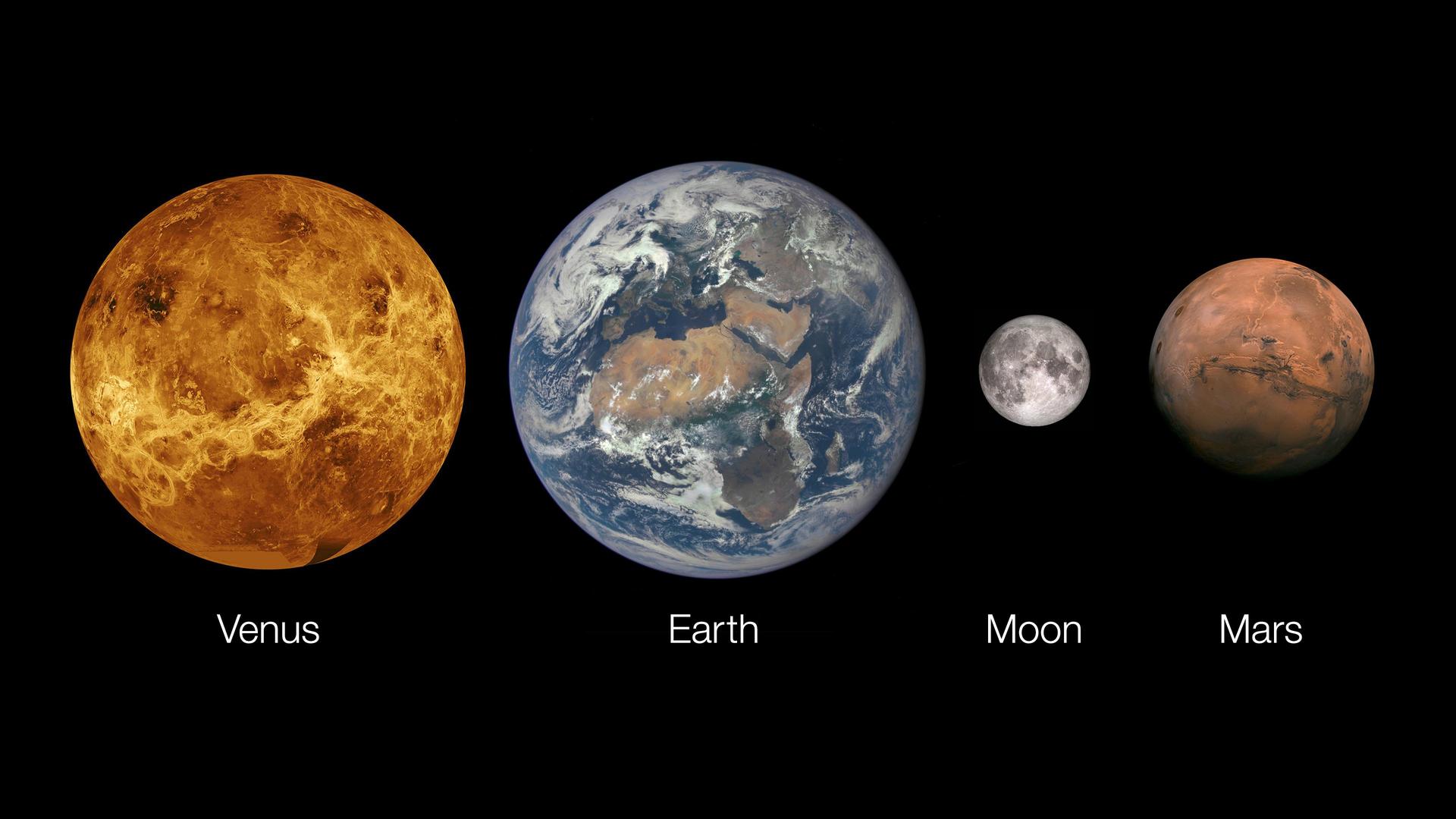
February is a great month for the early rising skygazers. Venus has been bright in the morning sky all year, rising just before the Moon.
This graphic shows Venus, Earth and its Moon, and Mars.
NASA/JPL-Caltech/ESA
In the minutes before dawn this week, Venus will rise to the upper left of the waning crescent Moon and will be joined by Mars. Over the coming weeks, Venus will shift towards Mars until they appear to merge into one another, just a half a degree apart, on Feb. 22.
To view this planetary illusion, you’ll need to find a place with a clear view of the western horizon – few to no tall trees or buildings.
For more skygazing opportunities, including observing spiral galaxy M81, check out the video from Jet Propulsion Laboratory’s monthly “What’s Up” video series.
Perkins, a Media Fusion employee, supports the Marshall Office of Communications.
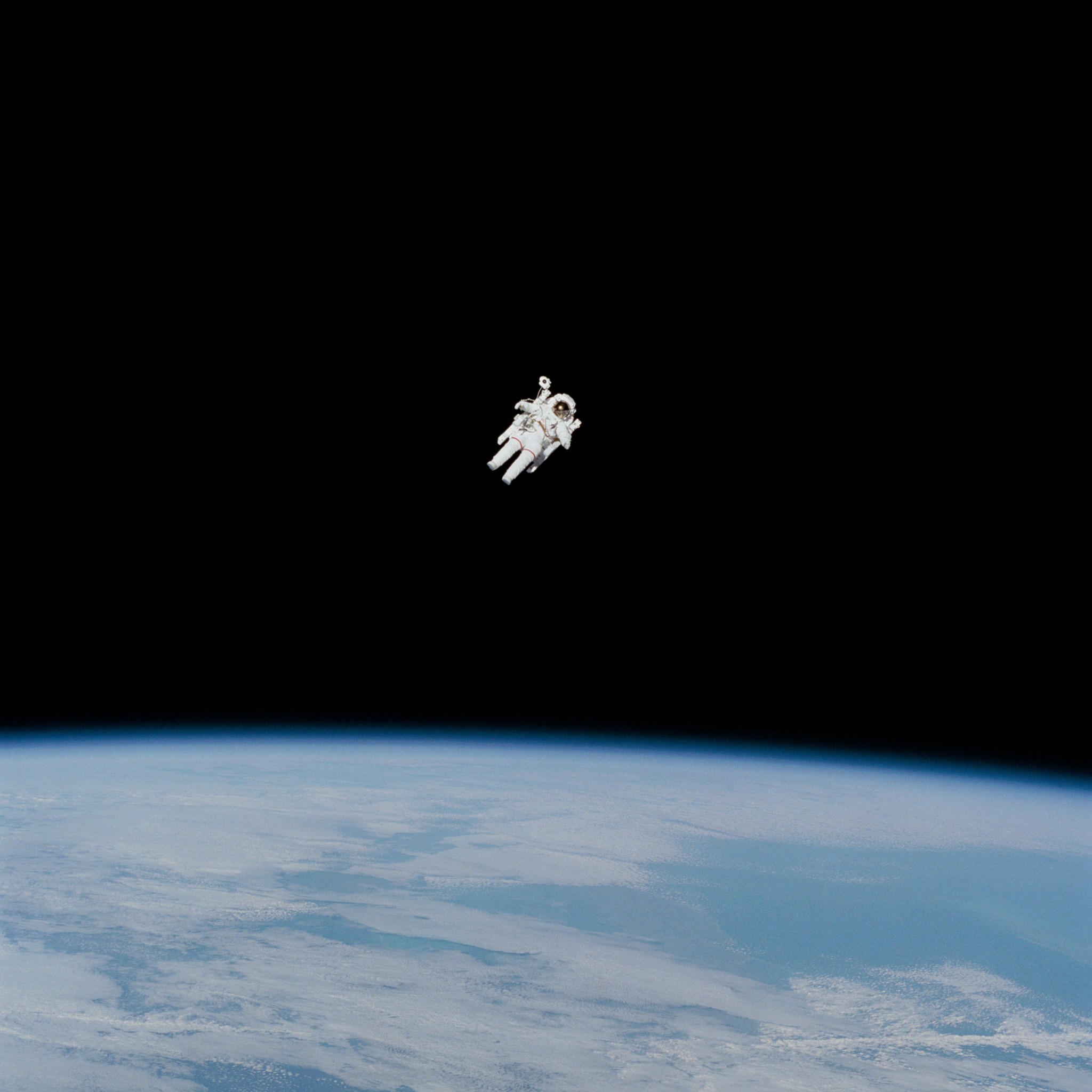
Astronaut Bruce McCandless II approaches his maximum distance from the Earth-orbiting Space Shuttle Challenger in this 70mm photo from Feb. 7, 1984. While testing out the nitrogen-propelled, hand-controlled back-pack device called the manned maneuvering unit (MMU) for the first time, McCandless’s fellow crewmembers aboard the reusable vehicle photographed him. The MMU allowed crews to move outside of the cargo bay and perform activities away from the safety of the spacecraft. “It may have been one small step for Neil,” he proclaimed, “but it’s a heck of a big leap for me.”