Saturday, 3 February 2024

The Iconic Photos from STS-41B: Documenting the First Untethered Spacewalk
4 Min Read

The Iconic Photos from STS-41B: Documenting the First Untethered Spacewalk

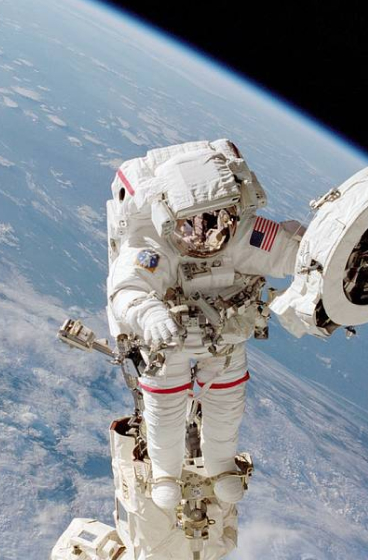
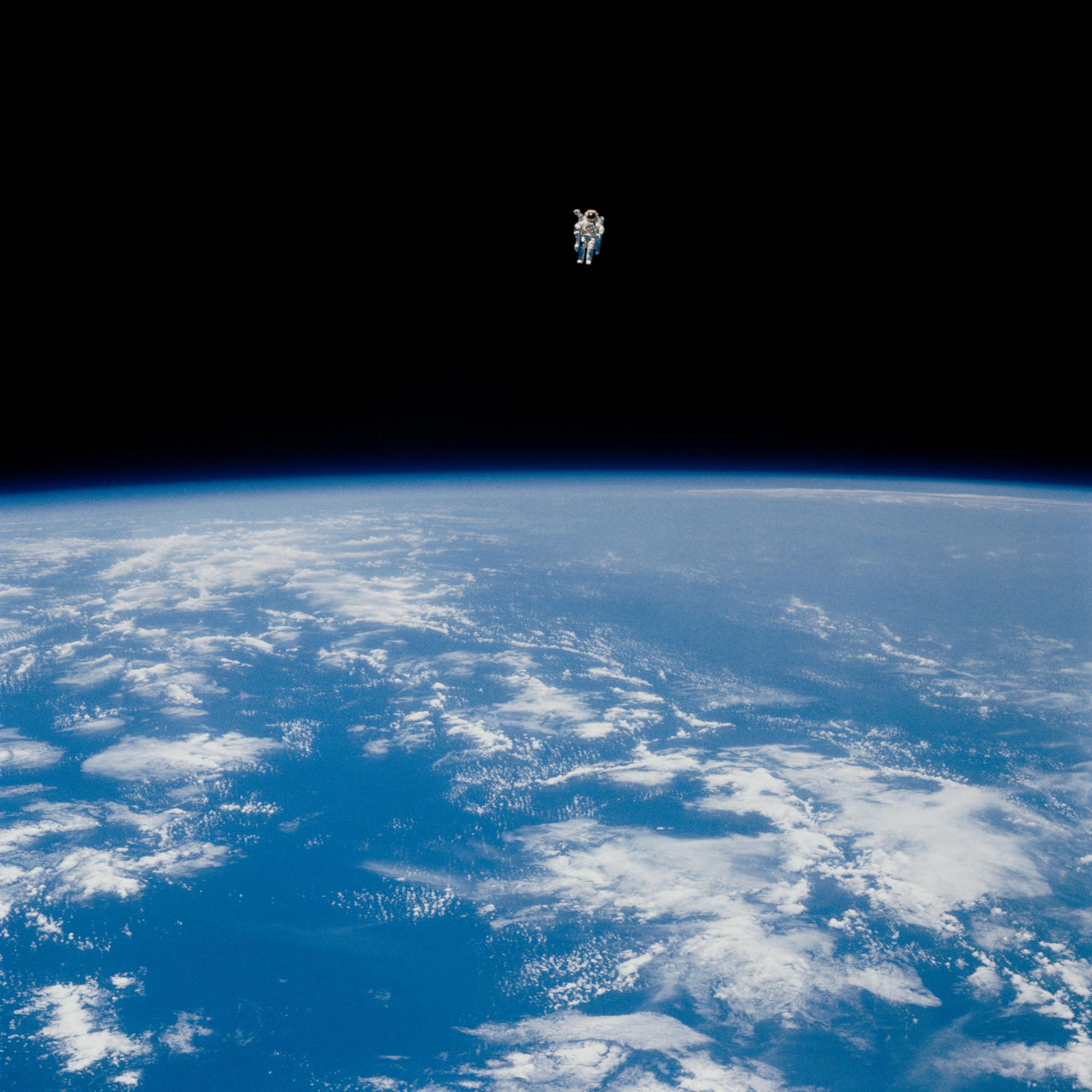
Astronaut Bruce McCandless II, STS-41B mission specialist, reaches his maximum distance from space shuttle Challenger before returning to the spacecraft using the Manned Maneuvering Unit (MMU).
Credits: NASA

As astronaut Bruce McCandless II flew the Manned Maneuvering Unit (MMU) out of the space shuttle Challenger’s payload bay for the first time on February 7, 1984, many in the agency were fearful about the use of a self-propelled and untethered backpack in space.  (Previous spacewalkers remained connected to the vehicle with tethers. This jet-pack allowed crews to move outside of the cargo bay and perform activities away from the safety of the spacecraft.) He remembered trying to ease the tension for his wife and the flight controllers in Mission Control, saying something similar to Neil Armstrong’s declaration as he first stepped on the Moon in 1969. “It may have been one small step for Neil,” he proclaimed, “but it’s a heck of a big leap for me.”

It may have been one small step for Neil, but it’s a heck of a big leap for me.
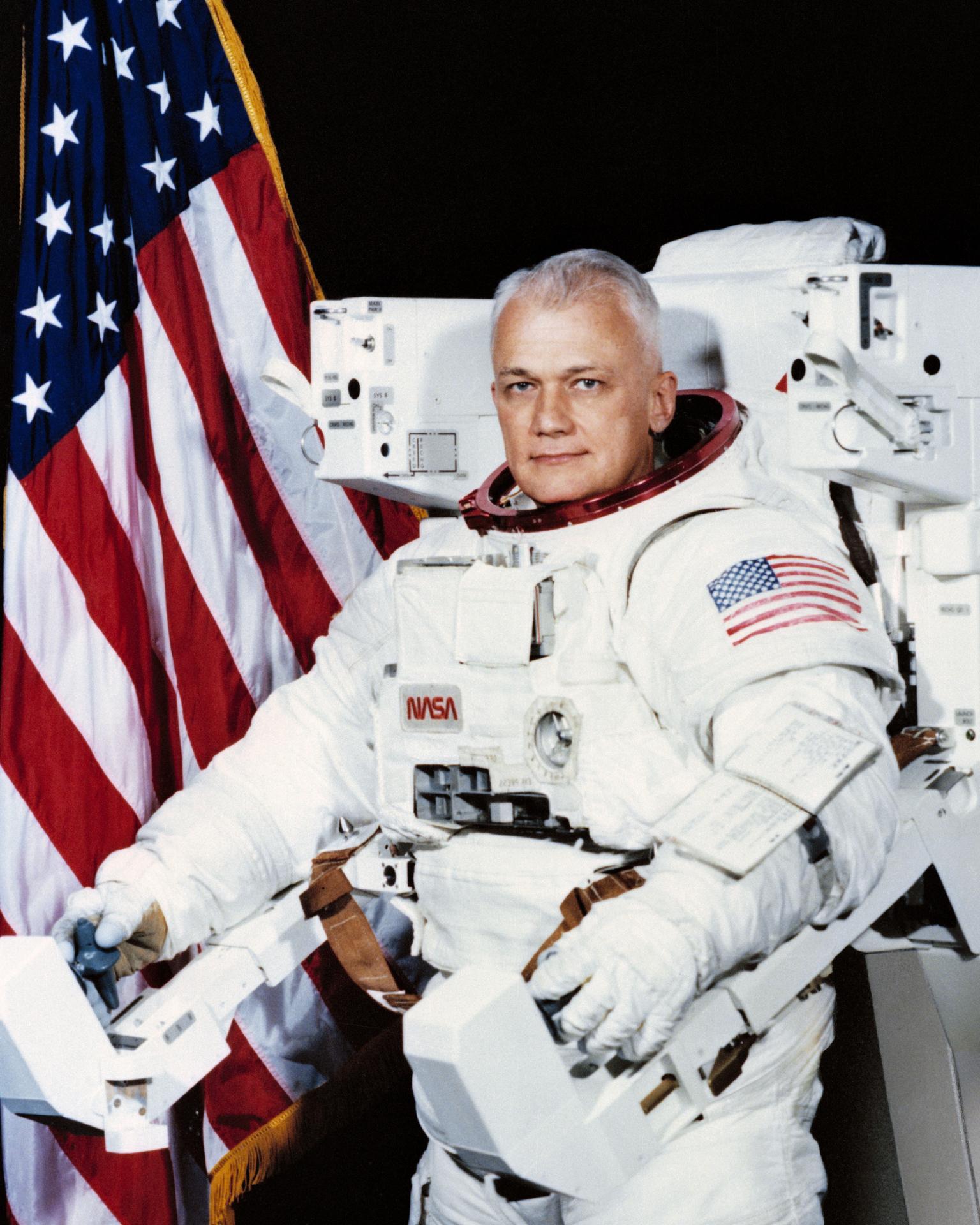
Bruce McCandless II

Bruce McCandless II

NASA Astronaut

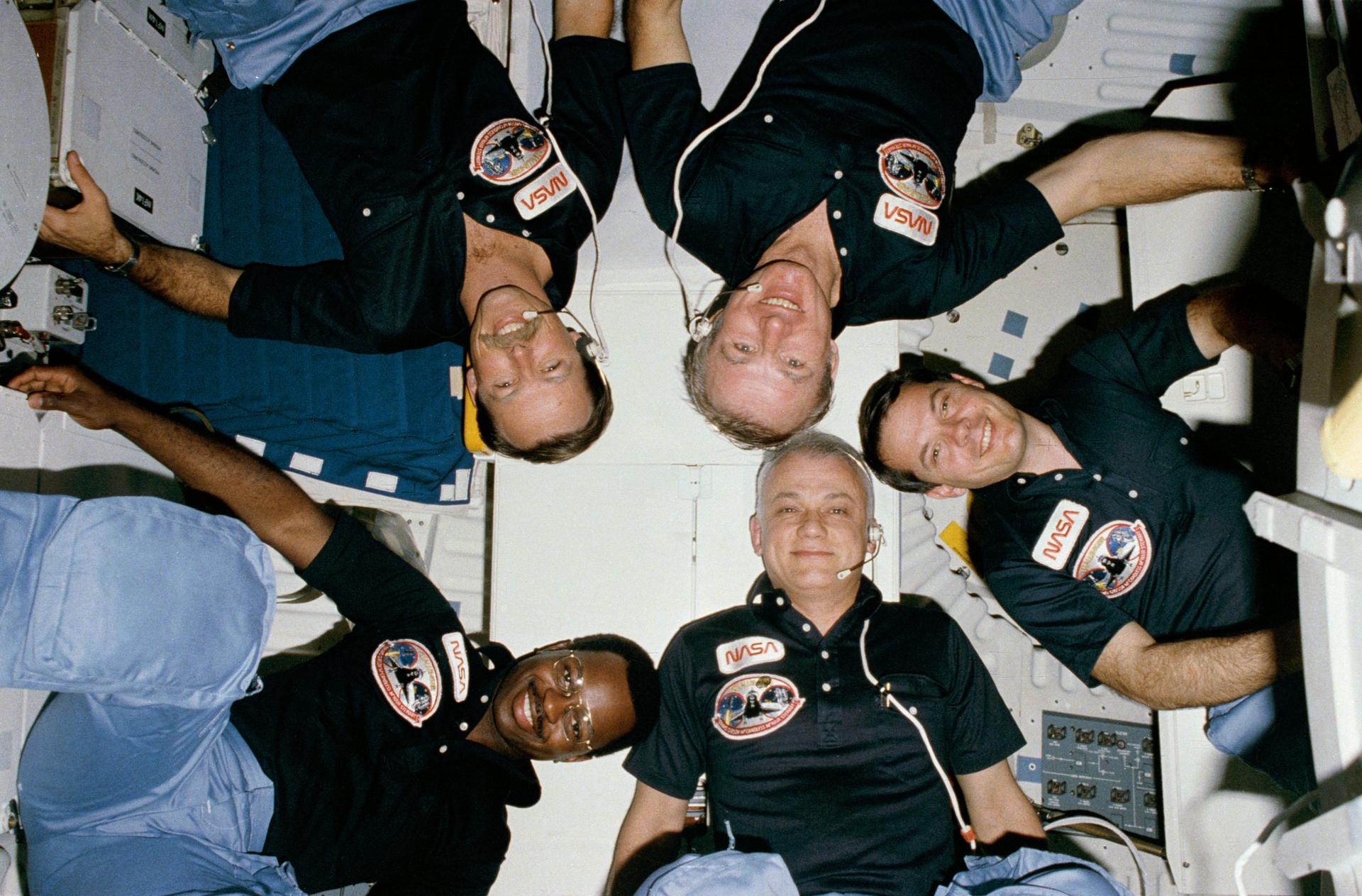
The 5-man crew of STS-41B take a group photo on the space shuttle
The crew of STS-41B take an informal portrait on the mid-deck of the Earth-orbiting Challenger. Counter clockwise from the top right are astronauts Vance D. Brand commander; Robert L. “Hoot” Gibson, pilot; and Dr. Ronald E. McNair, Bruce McCandless II, and Robert L. Stewart, all mission specialists.
NASA

The MMU was the highlight of the STS-41B mission as demonstrated by the stunning mission photographs that graced the cover of Aviation Week & Space Technology, not once, not twice, but three times.  

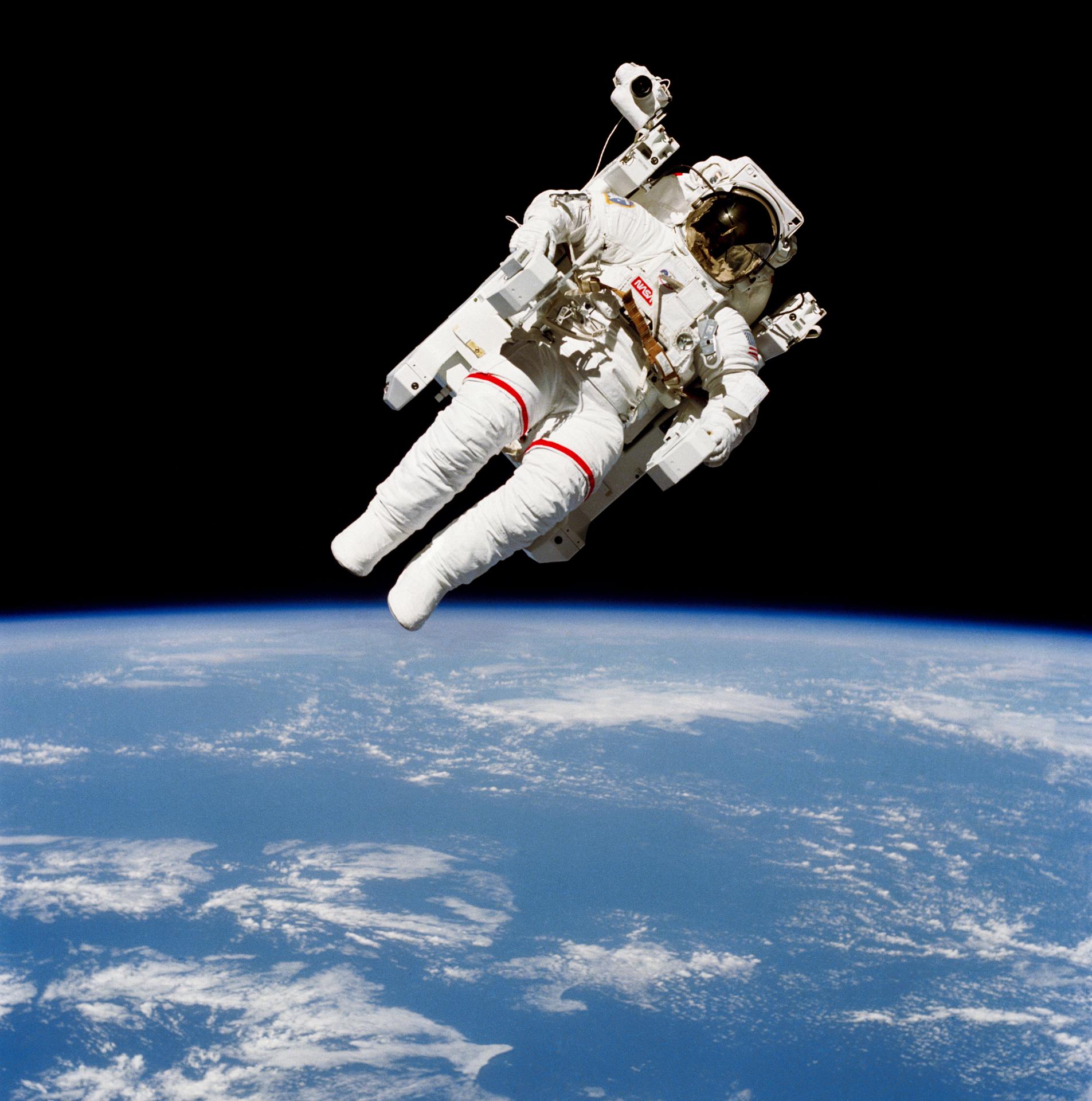
“Hoot” Gibson, the flight’s pilot, shot the photograph featured on the February 20, 1984, issue of the magazine from the crew cabin. Gibson remembered he was the only one on the crew that “had absolutely nothing to do” as McCandless made his way out into space, so he picked up a Hasselblad camera and began documenting the events. When he first looked through the camera’s viewfinder, he could not believe what an incredible sight it was to see McCandless untethered, floating above the Earth. Gibson wanted to capture what he was seeing and remembered how meticulous he was. For each photograph he took three light meter readings and checked the focus four times. In the crew’s photography training he learned that an off-kilter horizon looked wrong and was not pleasing to the eye. That presented a slight problem because Challenger was at a 28.5-degree inclination, so he “tilted the camera to put the horizon level in the pictures.”
An astronaut floats in space untethered with Earth far below
Astronaut Bruce McCandless II is a few meters away from the cabin of the Earth-orbiting space shuttle Challenger in this iconic photo taken by Hoot Gibson, which was featured on the February 20, 1984 issue of Aviation Week & Space Technology.
NASA

The result was one of NASA’s most iconic and requested images. McCandless called the photograph “beautiful, partly because the sun is shining directly on me.” His son, Bruce McCandless III, said his father “appears to be glowing.” Because the sun was in his eyes, he closed the helmet visor, which made it difficult to identify who exactly was inside the spacesuit. “My anonymity means people can imagine themselves doing the same thing,” he said. And, he added, “at visitor centres [sic], they often have life-sized cardboard versions with the visor cut out, so people can peep through.” Perhaps more importantly, as expressed by United States Senator John McCain, the photo “inspired generations of Americans to believe that there is no limit to the human potential.”

A second, but less recognized image, appeared on the cover of Aviation Week & Space Technology the following week: February 27, 1984. Also taken by Gibson, the image featured McCandless on the Manipulator Foot Restraint or “cherry picker” device at end of the Remote Manipulator System (RMS). The restraint was a platform where spacewalkers could work outside the vehicle but remain anchored at the end of the RMS to repair a satellite or other activities. STS-41B marked the first test of the new apparatus. Gibson explained how he chose to capture McCandless on the device. “What I did was I shifted the camera so that he wasn’t right in the center of the picture. I put him on the edge and the orbiter’s rudder on the other edge of the picture. That made a really cool photo.”
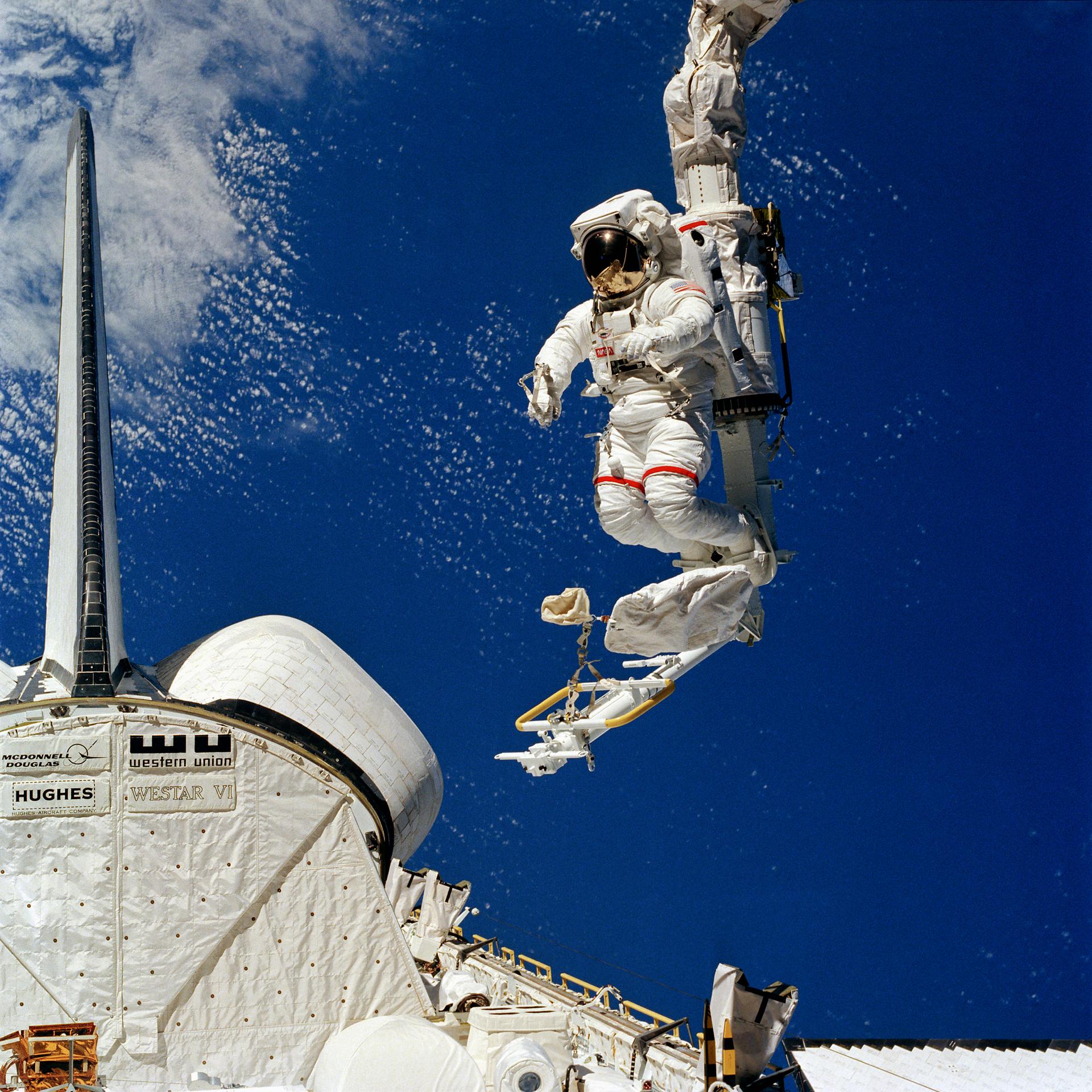
The feet of Bruce McCandless II are anchored in the Mobile Foot Restraint (MFR) and moved around by the Remote Manipulator System (RMS). The aft portion of the Challenger, to which the RMS is connected, is seen in lower left corner.
NASA

A third image from the mission appeared on the March 12, 1984, cover of the magazine. The photograph, taken by a fixed camera on McCandless’s helmet, captured Challenger in its entirety, which included the payload bay with the Shuttle Pallet Satellite and a glimpse of astronaut Robert Stewart standing just beneath the spacecraft’s RMS.
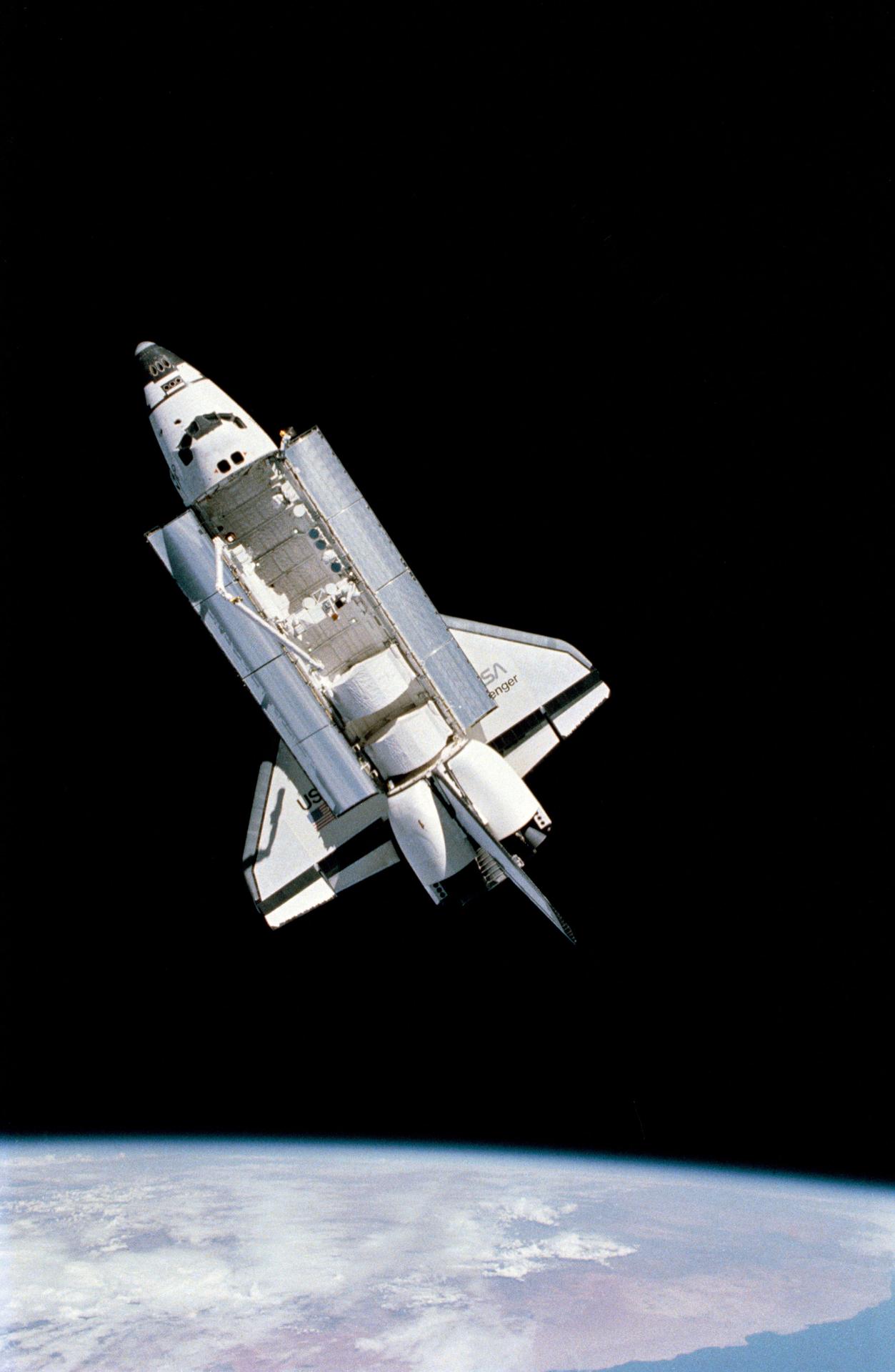
This photo of Challenger was the third from the STS-41B mission to be featured on the cover of Aviation Week & Space Technology.
NASA

These photographs from STS-41B, from the tenth flight of the space shuttle, illustrate just how engaging and exciting shuttle missions were. While flying in space became more routine in the 1980s, no one, not even the crew, “appreciated how spectacular” the first MMU flight “was going to be.” The STS-41B photos demonstrated that human spaceflight remained just as captivating, breathtaking, and inspiring as it had always been.

About the Author
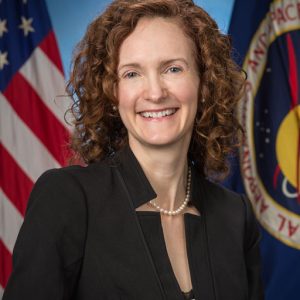
Jennifer Ross-Nazzal

Jennifer Ross-Nazzal

NASA Human Spaceflight Historian

Jennifer Ross-Nazzal is the NASA Human Spaceflight Historian. She is the author of Winning the West for Women: The Life of Suffragist Emma Smith DeVoe and Making Space for Women: Stories from Trailblazing Women of NASA's Johnson Space Center.

Share

Details

Last Updated
Feb 02, 2024


from NASA https://ift.tt/AQlrqHs
Meet the Creators, Part 3: NASA’s 2024 Total Solar Eclipse Posters

3 min read

Meet the Creators, Part 3: NASA’s 2024 Total Solar Eclipse Posters

A total solar eclipse is a captivating experience – evoking feelings of awe and wonder that are sometimes best expressed through art.

Inspired by the upcoming total solar eclipse of April 8, 2024, artists Tyler Nordgren and Kristen Perrin have designed two posters for NASA that present the magic of the eclipse in unique ways.

Tyler Nordgren

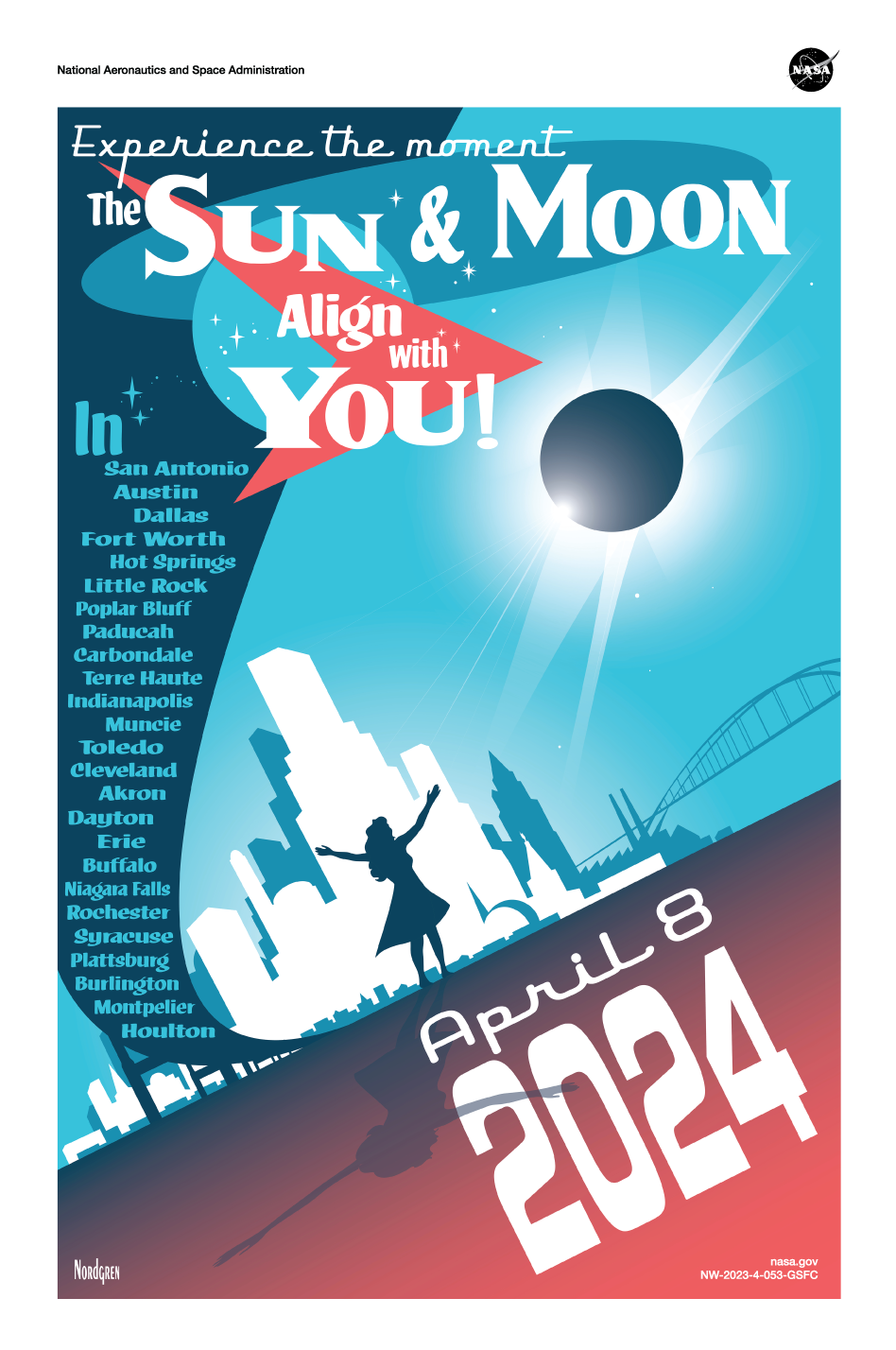
An illustrative poster shows the silhouette of a person with outstretched arms standing in front of a city skyline and looking up at a total solar eclipse in the sky. The top of the poster says “Experience the moment” and “The Sun & Moon Align with You!” The bottom of the poster has the date “April 8, 2024.” Along the left side, the word “In” appears above a list of 25 U.S. cities. The name “Nordgren” appears in the lower left corner.
Download the poster here.
NASA/Tyler Nordgren

In “The Sun and Moon Align with You” poster for NASA, Nordgren – who is a professional astronomer as well as an artist – said that his goal was to capture the experience that can be had by millions of people in cities across the United States in April, while reflecting on the last total solar eclipse that crossed the country in August 2017.

“For 2017, the total solar eclipse passed over so many national parks and natural landscapes with very few cities in the path. So I created a poster modeled after the 1930s ‘See America’ national parks posters produced by the Works Progress Administration to educate Americans about the parks. I figured I was doing the same thing. Now, seven years later in 2024, this time the total solar eclipse is passing over major metropolitan areas. Over 30 million people will be living directly in the path of totality – that’s almost three times the total in 2017. So I wanted to make a poster that emphasized what it would be like to see it in one of these cities.

“The poster shows a figure standing before a representative skyline where I used elements of different cities (like certain buildings and bridges) all across the path of totality. Along the underpass that sweeps overhead of our central figure are the names of major cities from every state along totality. It truly is stunning how many people in so many cities will get to see this. 

“Think about being in a sports or concert stadium when the crowd erupts in joy all at once. Now imagine, not just a stadium, but every single person in an entire city all at once at the instant the Sun goes black. This will be a day people will remember and talk about with awe for the rest of their lives. I hope I captured some small part of that.”

Kristen Perrin

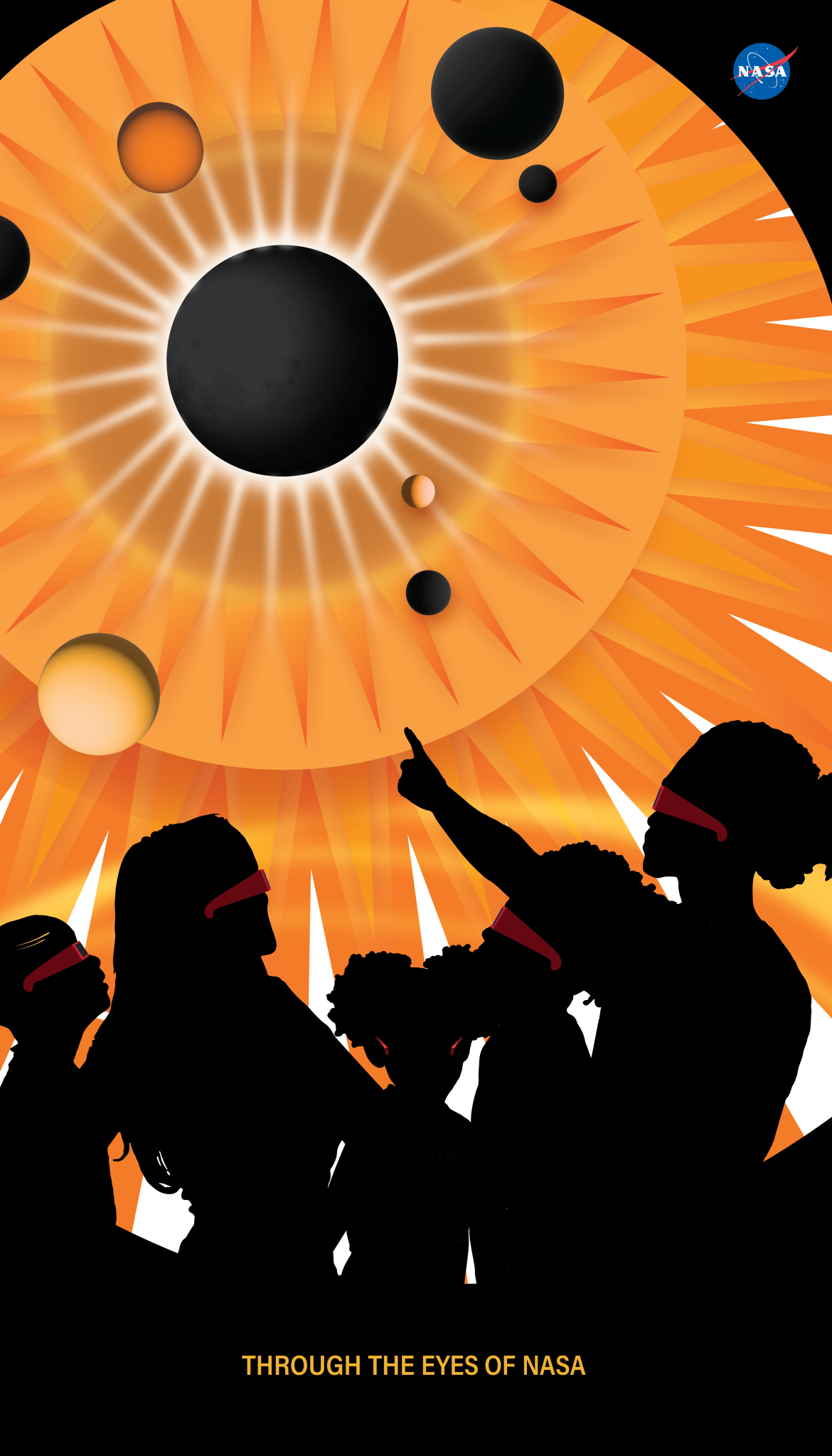
An illustrative poster shows the black silhouettes of five people of different heights wearing red eclipse glasses and looking at a total solar eclipse. One person points toward the eclipse. The eclipse is represented as a black disk surrounded by concentric circles of yellow and orange with white, orange, and red rays. Several spheres appear around the eclipse. At the bottom are the words “Through the eyes of NASA” and the NASA logo appears in the upper right.
Download the poster here.
NASA/Kristen Perrin

For her “Through the Eyes of NASA” poster, Perrin – who is an African American woman, mother of four, and the Senior Multimedia and Graphic Specialist on the NASA Heliophysics communications team – said she wanted to show that the eclipse is an experience for everyone.

“Designing the poster to commemorate the total solar eclipse happening on April 8 was an honor. I wanted to highlight the event using people that represented all demographics. This was done so that the eclipse could be recognized as an event for ALL. Using the spherical elements to represent the Moon and some of the planets within our solar system encouraged the overall visual to help the audience see where the eclipse takes place and understand, by the coloring, what would happen. The look of the skyline from the audience point of view was also designed to resemble an eye. This visual honed in on the tagline ‘Through the eyes of NASA’.”

To learn more about these artists and other eclipse posters they’ve created, read Meet the Creators of NASA’s Newest Eclipse Art.

by Vanessa Thomas
NASA’s Goddard Space Flight Center, Greenbelt, Md.

Share

Details

Last Updated
Feb 02, 2024


from NASA https://ift.tt/evRktUn

California, Massachusetts Students to Hear from NASA, ESA Astronauts

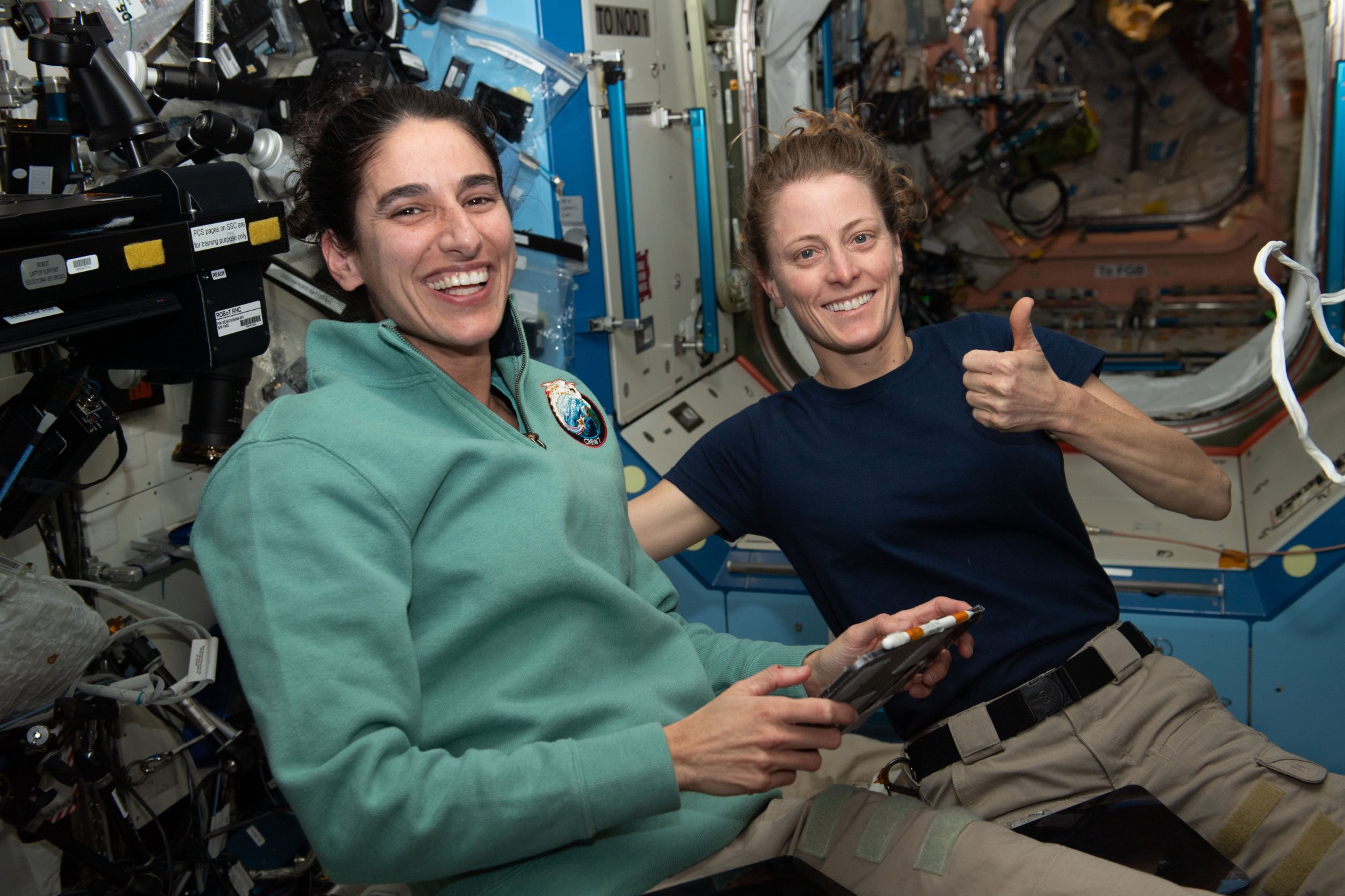
NASA astronauts and Expedition 70 Flight Engineers Jasmin Moghbeli, left, and Loral O’Hara in the Destiny laboratory celebrate the successful docking of a SpaceX Dragon cargo spacecraft to the International Space Station.
NASA

Students from California and Massachusetts will have separate opportunities next week to hear from NASA astronauts aboard the International Space Station.

The two Earth-to-space calls will air live Monday, Feb. 5, and Friday, Feb. 9, on NASA+ and agency’s website. Learn how to stream NASA TV through a variety of platforms including social media.

At 12:15 p.m. EST Feb. 5, NASA astronauts Loral O’Hara and Jasmin Moghbeli will answer prerecorded questions from students at Emblem Academy in Santa Clarita, California, a public transitional kindergarten through sixth-grade school. In preparation for the event, students and their families will participate in an engineering family night where they will participate in STEM design challenges related to the science, technology, engineering, and mathematics conducted on the space station.

Coverage on NASA+ will be live at:

https://go.nasa.gov/4bj0k5Q

Media interested in covering the event must  RSVP no later than 5 p.m. Friday, Feb. 2, to Katie Demsher at kdemsher@saugususd.org or 661-294-5315.

At 10:40 a.m. Feb. 9, O’Hara and ESA (European Space Agency) astronaut Andreas Mogensen will answer prerecorded questions from students at Central Tree Middle, part of the Wachusett Regional School District in Massachusetts. The day of the event, 13 schools from five cities will watch live from their classrooms.

Coverage on NASA+ will be live at:

https://go.nasa.gov/42uPAxm

Media interested in covering the event must RSVP no later than 5 p.m. Thursday, Feb. 8, to Dave Cornacchioli at david_cornacchioli@wrsd.net or 508-886-0073.

For more than 23 years, astronauts have continuously lived and worked aboard the space station, testing technologies, performing science, and developing the skills needed to explore farther from Earth. Astronauts living in space aboard the orbiting laboratory communicate with NASA’s Mission Control Center in Houston 24 hours a day through the Space Communications and Navigation (SCaN) Near Space Network.

Important research and technology investigations taking place aboard the International Space Station benefits people on Earth and lays the groundwork for future exploration. As part of Artemis, NASA will send astronauts to the Moon to prepare for future human exploration of Mars. Inspiring the next generation of explorers – the Artemis Generation – ensures America will continue to lead in space exploration and discovery.

See videos and lesson plans highlighting research on the space station at:

https://www.nasa.gov/stemonstation

-end-

Katherine Brown
Headquarters, Washington
202-358-1288
katherine.m.brown@nasa.gov

Sandra Jones 
Johnson Space Center, Houston
281-483-5111
sandra.p.jones@nasa.gov


from NASA https://ift.tt/W30NBdt

NASA Sets Coverage for Axiom Mission 3 Departure from Space Station

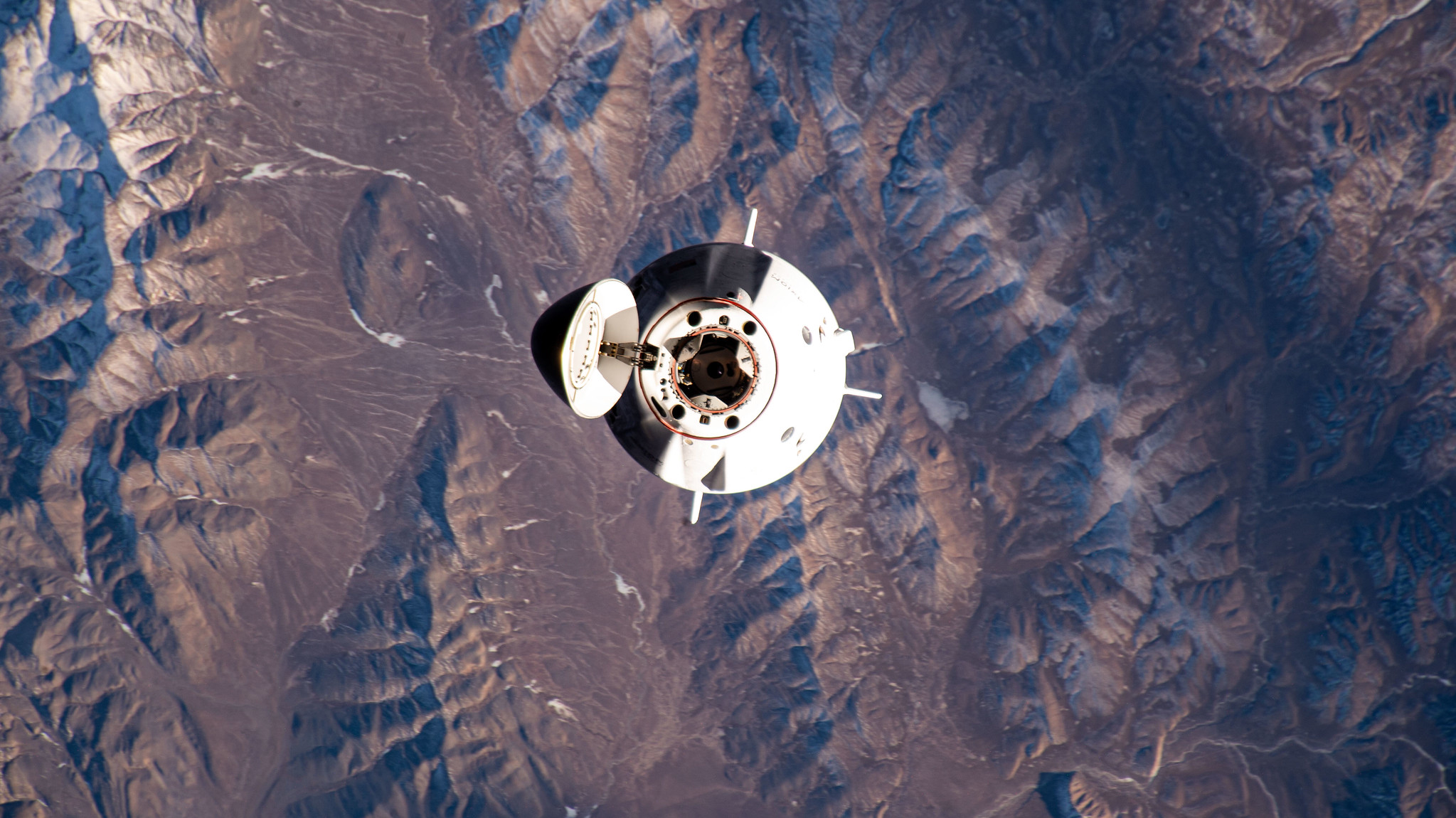
The SpaceX Dragon Freedom spacecraft carrying the four-member Axiom Mission 3 (Ax-3) crew is pictured approaching the International Space Station 260 miles above China north of the Himalayas.

NASA will provide live coverage of the undocking and departure of the Axiom Mission 3 (Ax-3) private astronaut flight from the International Space Station before the crew returns to Earth. 

The four-member astronaut crew is scheduled to undock no earlier than 6:05 a.m. EST Saturday, Feb. 3, from the space-facing port of the station’s Harmony module in a SpaceX Dragon spacecraft to begin the journey home and splashdown off the coast of Florida. 

NASA will provide live coverage of space station joint operations with Axiom Space and SpaceX. Coverage of hatch-closure preparations will begin at 4 a.m. NASA coverage of undocking will resume at 5:45 a.m. 

Coverage will be available on NASA+, NASA Television, the NASA app, YouTube, and the agency’s website. Learn how to stream NASA TV through a variety of platforms including social media. 

The four private astronauts, Michael López-Alegría, Walter Villadei, Marcus Wandt, and Alper Gezeravci, will complete about two weeks in space at the conclusion of their mission. The Axiom crew, along with Expedition 70, highlighted their stay aboard the space station during farewell remarks on Friday in advance of their undocking. 

Their SpaceX Dragon will return to Earth with more than 550 pounds of cargo, including NASA hardware and data from more than 30 different experiments the crew conducted during their mission. Splashdown is expected about 7 p.m. 

Ax-3, the third all-private astronaut mission to the International Space Station, successfully lifted off from NASA’s Kennedy Space Center in Florida Jan. 18. 

NASA’s undocking and departure coverage for Ax-3 is as follows (all times Eastern and subject to change based on operations): 

Saturday, Feb. 3 

4 a.m. – NASA coverage begins for 4:15 a.m. hatch closure 

5:45 a.m. – NASA coverage continues for 6:05 a.m. undocking 

NASA’s coverage ends approximately 30 minutes after undocking when space station joint operations with Axiom Space and SpaceX mission teams conclude. Axiom Space will resume coverage of Dragon’s re-entry and splashdown on the company’s website. 

The Ax-3 mission is part of NASA’s effort to foster a commercial market in low Earth orbit and continue a new era of space exploration that enables more people and organizations to fly multiple mission objectives. This partnership expands the arc of human spaceflight and opens access to low Earth orbit and the International Space Station to more people, science, and commercial opportunities. 

Learn more about how NASA is supporting a space economy in low Earth orbit: 

https://www.nasa.gov/humans-in-space/commercial-space/

-end- 

Julian Coltre
Headquarters, Washington
202-358-1100
julian.n.coltre@nasa.gov

Rebecca Turkington
Johnson Space Center, Houston
281-483-5111
rebecca.turkington@nasa.gov


from NASA https://ift.tt/eBQpGMN

Friday, 2 February 2024

Hubble Sees a Merged Galaxy

2 min read

Hubble Sees a Merged Galaxy

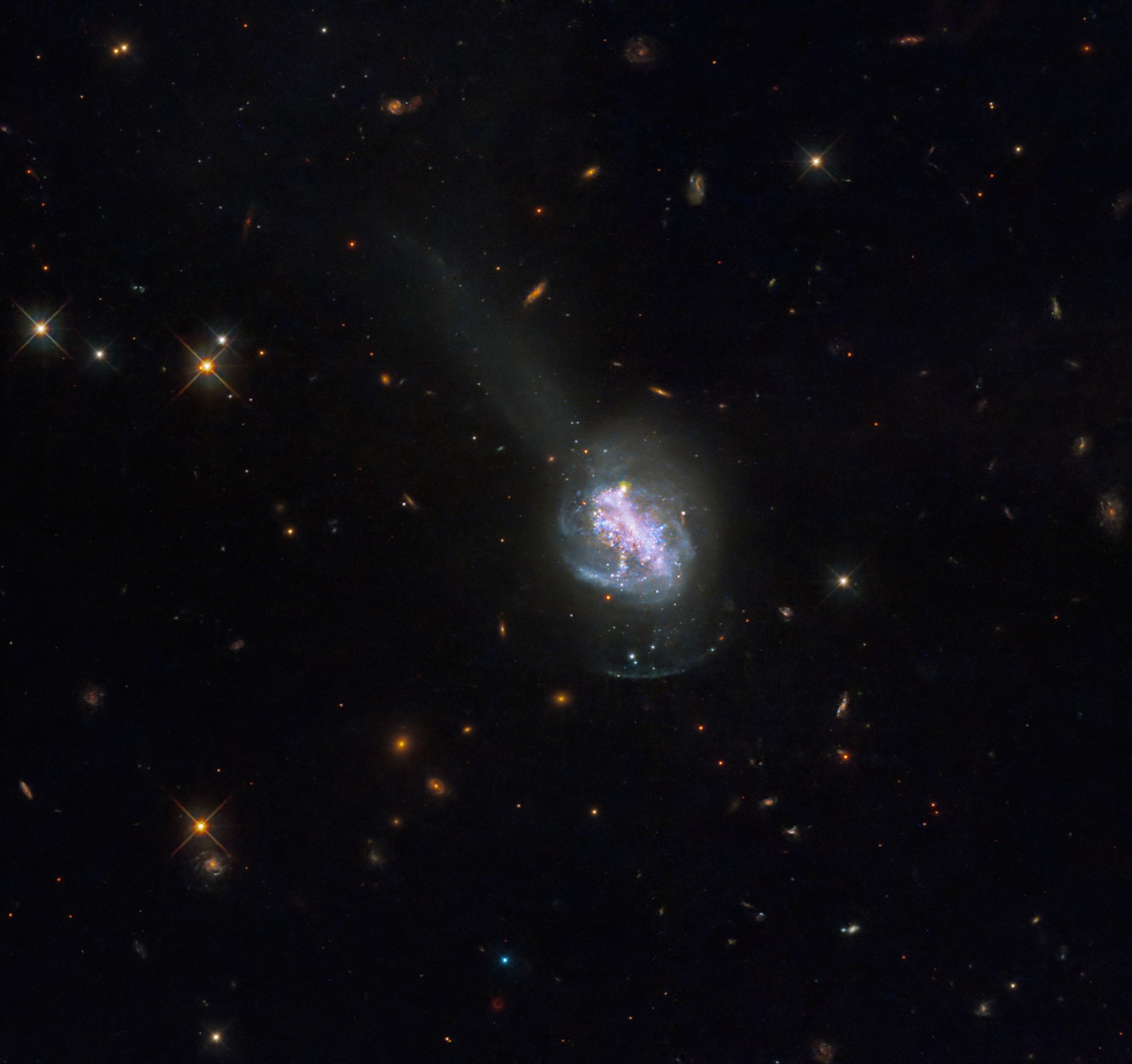
A bright, purplish galaxy glows at the image’s center, with blue stars interspersed and a blue-white haze extending outward, all against black space dotted with stars and distant galaxies.
This new NASA Hubble Space Telescope image reveals the luminous blue compact galaxy called ESO 185-IG013.
NASA, ESA, and R. Chandar (University of Toledo); Processing: Gladys Kober (NASA/Catholic University of America)

This new NASA Hubble Space Telescope image shows ESO 185-IG013, a luminous blue compact galaxy (BCG). BCGs are nearby galaxies that show an intense burst of star formation. They are unusually blue in visible light, which sets them apart from other high-starburst galaxies that emit more infrared light. Astrophysicists study BCGs because they provide a relatively close-by equivalent for galaxies from the early universe. This means that BCGs can help scientists learn about galaxy formation and evolution that may have been happening billions of years ago.

Hubble imaged ESO 185-IG013 in ultraviolet, visible, and infrared wavelengths to reveal details about its past. Hundreds of young star clusters, many of which are younger than 100 million years, populate the galaxy. A large number of star clusters are only 3.5 million years old – relative infants compared to the timescale of our universe. Scientists predict that many of these youngest clusters will not last, since young clusters can often perish after expelling too much of their gas. The large number of young star clusters indicates that this galaxy was part of a recent galaxy collision and merger. The perturbed structure of the galaxy, which likely occurred from the violent interactions of gas and dust during the collision, is another sign. The merger supplied the system with lots of fuel for star formation, which continues to take place today.

ESO 185-IG013 also contains a tidal shell, the diffuse glow surrounding its bright center, which is a common signal of galaxy mergers. Scientists believe that in a galaxy merger, the smaller of the two interacting galaxies gets disrupted by the larger galaxy, losing most of its material. This releases the material, which then gets pulled in again by the gravity of the larger galaxy. The dense area where the material gets repositioned is called the shell, and it contains many star clusters. In addition to the shell, ESO 185-IG013 boasts a tail of gas in the northeast.

All of the stars in the system have a combined mass more than 7 billion times that of our Sun. The system is located about 260 million light-years away.

LEARN MORE:

Media Contact:

Claire Andreoli
NASA’s Goddard Space Flight Center, Greenbelt, MD
claire.andreoli@nasa.gov

Share

Details

Last Updated
Feb 01, 2024
Editor
Andrea Gianopoulos
Location
Goddard Space Flight Center


from NASA https://ift.tt/yG1Zmuh

OpenET Moisture Measurement Tool is Proving Highly Accurate

5 min read

OpenET Moisture Measurement Tool is Proving Highly Accurate

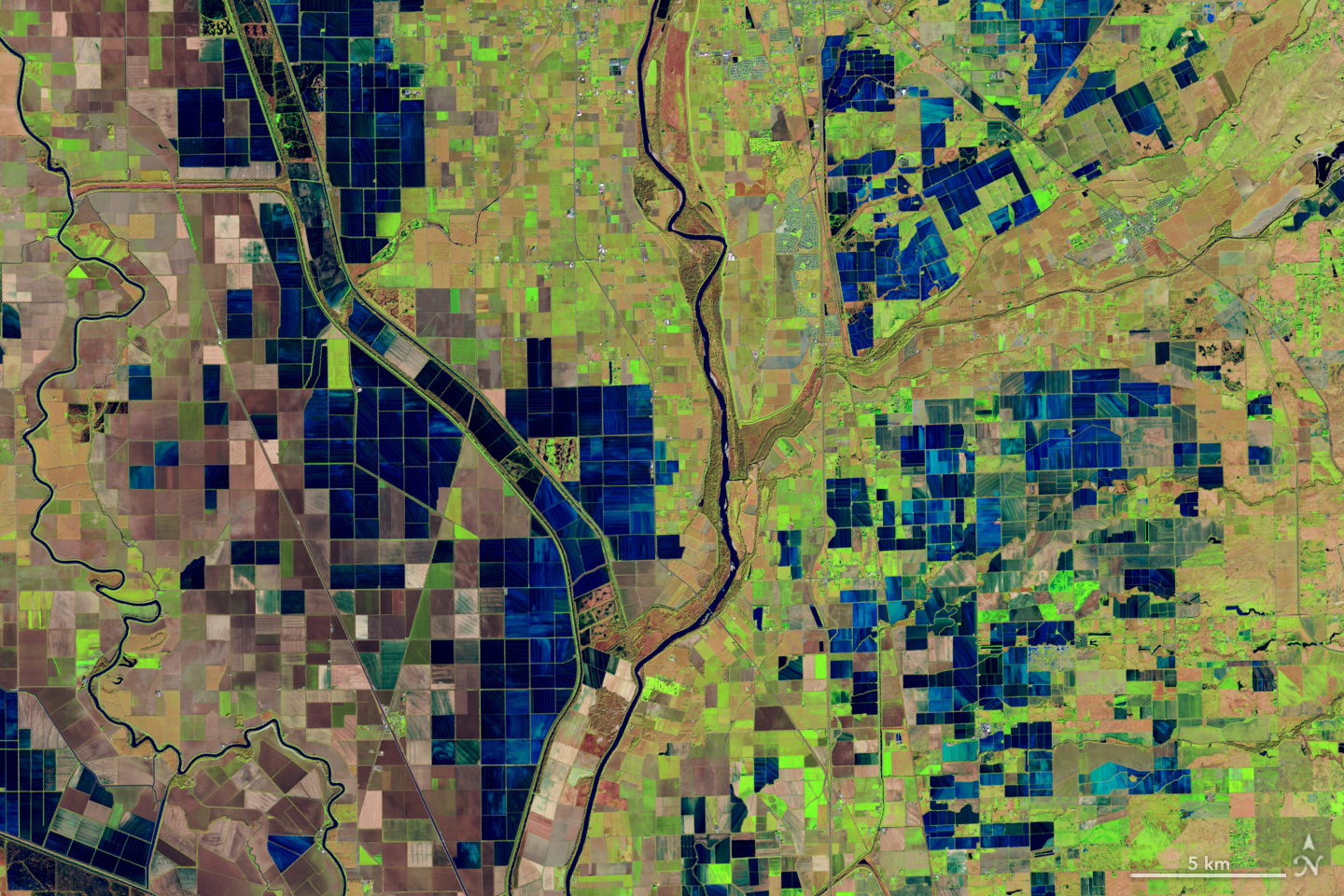
This satellite image centers the meandering Sacramento river surrounded by rice fields. The fields are broken into primarily square and rectangular areas with the fields nearest the river being full of green and brown vegetation, and farther from the river they are flooded and appear dark blue.
This is a false-color image, acquired December 26, 2018, with the OLI (Operational Land Imager) on Landsat 8, and shows flooded rice fields along the Sacramento and Feather Rivers. Inundated fields appear dark blue; vegetation is bright green.  
NASA Earth Observatory / Lauren Dauphin

As the world looks for sustainable solutions, a system tapping into NASA satellite data for water management has passed a critical test.

Called OpenET, the system uses an ensemble of six satellite-driven models that harness publicly available data from the Landsat program to calculate evapotranspiration (ET)—the movement of water vapor from soil and plant leaves into the atmosphere. OpenET does this on a field-level scale that is greatly improving the way farmers, ranchers, and water resource managers steward one of Earth’s most precious resources.

Researchers have now conducted a large-scale analysis of how well OpenET is tracking evapotranspiration over crops and natural landscapes. The team compared OpenET data with measurements from 152 sites with ground-based instruments across the United States. In agricultural areas, OpenET calculated evapotranspiration with high accuracy, especially for annual crops such as wheat, corn, soy, and rice. The researchers reported their findings on January 15 in Nature Water.

“I was pleasantly surprised by the results,” said John Volk, lead author of the study and assistant research scientist and software engineer at Desert Research Institute in Reno, Nev. “The accuracy in croplands was quite strong, particularly in western arid regions, which are important areas for agriculture and have water sustainability challenges.”

That’s welcome news for regions where OpenET data is already being put to work. In Northern California’s Sacramento-San Joaquin Delta, water resource managers are using OpenET to help farmers comply with state rules requiring them to report aspects of their water use. The new study “gives us more confidence that these numbers are accurate, and that OpenET is continually improving over time,” said Lindsay Kammeier, a senior engineer with the California State Water Board in Sacramento, who was not involved in the new research.

“ET is notoriously difficult to calculate,” she added. “Having a really accurate number helps us to make decisions to manage the environment, manage for agricultural uses, and manage for urban uses better and from a common understanding.”

Tracking the Invisible Movement of Water

While many people are familiar with what one inch of rainfall means, few stop to think about one inch of evapotranspiration returning to the atmosphere, said Forrest Melton, the OpenET project scientist at NASA’s Ames Research Center in California’s Silicon Valley. “OpenET is working to make the unseen process of evapotranspiration as easy to track as checking the amount of rainfall in the daily weather forecast.”

Evapotranspiration is the natural process in which water moves to the atmosphere from the surface. The term combines evaporation—water changing from liquid to gas (vapor) and rising from soil, lakes, and oceans—and transpiration, the “exhaling” by plants as they release moisture back into the air. After precipitation, evapotranspiration is one of the most important factors for estimating how much water is available for crops or other plants.

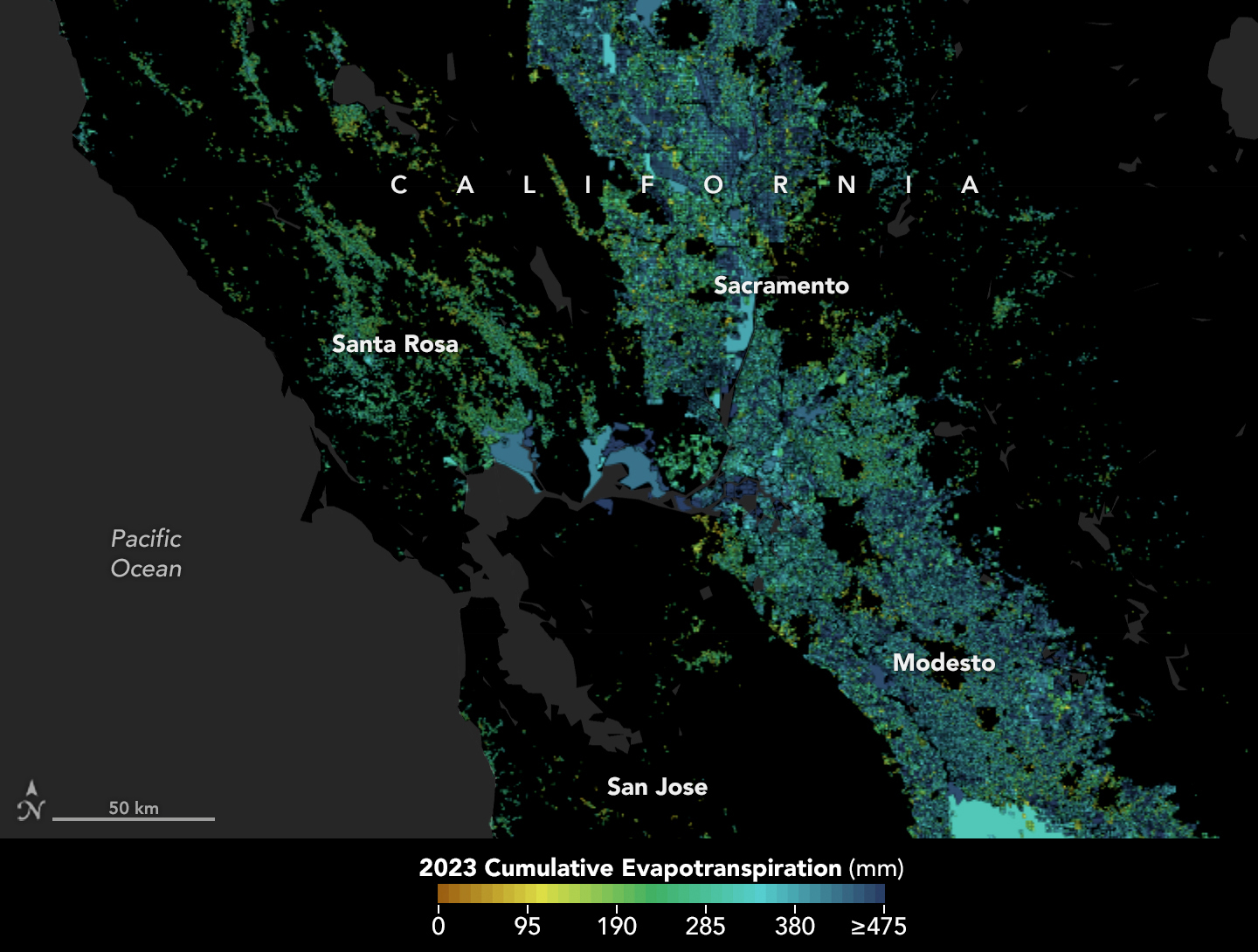
This map shows evapotranspiration levels across Central California including the Bay Area. Darker blue can be seen in the Central Valley.
In California, state officials and farmers are using satellite data through OpenET to track evapotranspiration to better manage water resources. The process is a window into the water consumed by plants and crops, such as those grown in the Central Valley.
NASA Earth Observatory using openetdata.org

For farmers and water managers, accurate data provides a measure of the amount of water required through irrigation to replace the water that has been consumed by evapotranspiration. Knowing precisely how much water is available helps people give plants the moisture they need to flourish, without needing to apply too much. And that, in turn, can help save money for water and for the electricity used to pump water for irrigation.

But all that rising water vapor is invisible, making it difficult and expensive to track on the ground.

Farmers, scientists, and others previously relied on estimates of “potential evaporation” based on temperature, humidity, and other weather data. Or they turned to ground-based stations such as flux towers, equipped with sensors that monitor carbon dioxide, water vapor, and the exchange of heat between Earth’s surface and the atmosphere—a process crucial to calculating evapotranspiration.

But while they tend to be highly accurate, flux towers are expensive to set up and maintain, so there are a limited number, and their data is local and cannot represent wider regions. That’s where calculating evapotranspiration from space comes in. Satellites pass over the same areas regularly, offering consistent monitoring.

OpenET’s primary observations come from the Landsat 8 and 9 satellites, a partnership between NASA and the U.S. Geological Survey. The satellites combine data on land surface temperatures and the greenness of plants, among other things. Cooler land surface temperatures over areas with healthier, denser vegetation, for example, usually indicate higher levels of transpiration. 

That data is then fed into models to calculate evapotranspiration at high resolution—about a quarter of an acre for each image pixel.

The new results show that for agricultural lands, OpenET data for monthly, growing season, and annual timescales had an average error rate of about 10-20%.

The OpenET consortium includes NASA, USGS, and the U.S. Department of Agriculture working with Desert Research Institute and nearly a dozen other universities, Environmental Defense Fund, and Google Earth Engine.

For more information, go to: https://openetdata.org/

By: Emily DeMarco, NASA Earth Science Division

About the Author

Emily DeMarco

Share

Details

Last Updated
Feb 01, 2024


from NASA https://ift.tt/AX9KSB5

Thursday, 1 February 2024

NASA Awards Environmental Restoration, Compliance Contract

NASA meatball logo

NASA has selected five companies to provide environmental restoration and compliance services at NASA centers, facilities, and other agency assets. The awardees are:

  • AECOM Technical Services, Inc., Orlando, Florida
  • HydroGeoLogic, Inc., Reston, Virginia
  • ISMS-Navarro LLC, Richland, Washington
  • Jacobs Geosyntec A Joint Venture, Cape Canaveral, Florida
  • Tetra Tech Inc., Pittsburgh

The NASA Environmental Restoration and Compliance Contract is an indefinite- delivery/indefinite-quantity fixed price contract not to exceed $375 million. The performance period begins Wednesday and runs through Jan. 30, 2029. 

The array of work includes support for environmental compliance activities including technical consultation, environmental sampling and investigations of contaminants that may have been released to the environment, as well as human health and ecological risk assessments. The contract also supports sustainability, pollution prevention, recycling, remediation, and long-term management of affected air, soil, groundwater and surface water, audits and inspections, hazardous materials management, spill clean-up, and more.

For more information about NASA and its programs, visit:

https://www.nasa.gov/

-end-

Roxana Bardan
Headquarters, Washington
202-358-1600
roxana.bardan@nasa.gov

Patti Bielling
Kennedy Space Center, Florida
321-501-7575
patricia.a.bielling@nasa.gov


from NASA https://ift.tt/ArWZaYG

NASA Shares Assignments for its SpaceX Crew-9 Space Station Mission

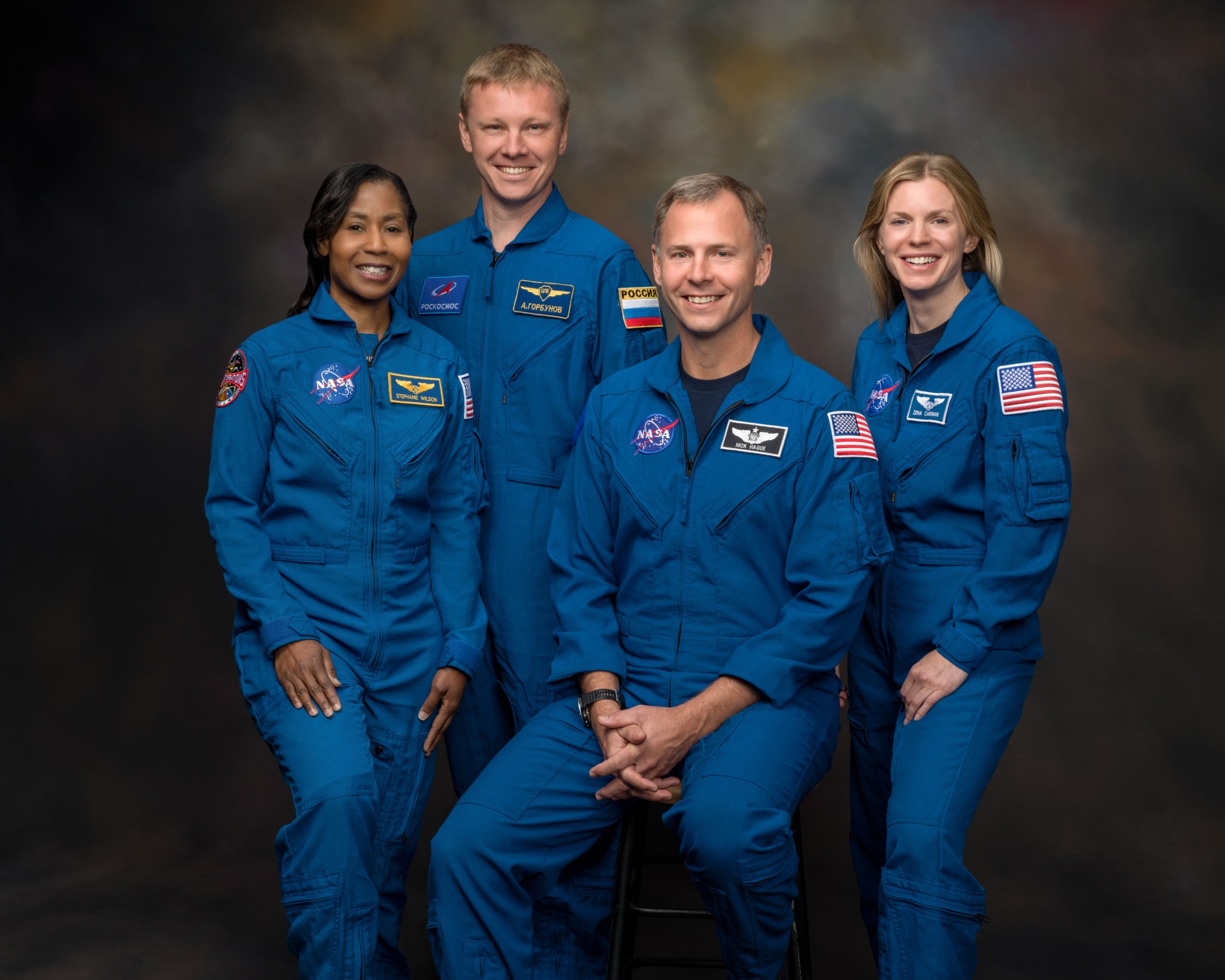
Official NASA’s SpaceX Crew-9 portraits with Zena Cardman, Nick Hague, Stephanie Wilson and Aleksandr Gorbunov
NASA

As part of NASA’s SpaceX Crew-9 mission, four crew members are preparing to launch to the International Space Station and conduct a wide-ranging set of operational and research activities for the benefit of all.

Launching aboard the Dragon spacecraft, NASA astronauts Commander Zena Cardman, Pilot Nick Hague, and Mission Specialist Stephanie Wilson, and Roscosmos cosmonaut Mission Specialist Aleksandr Gorbunov, will join Expedition 71 and 72 crew members no earlier than August. They will arrive to the space station for a short duration handover with NASA’s SpaceX Crew-8 mission

This will be the first spaceflight for Cardman, who was selected as a NASA astronaut in 2017. The Williamsburg, Virginia, native holds a bachelor’s degree in Biology and a master’s in Marine Sciences from the University of North Carolina at Chapel Hill. At time of selection, she was a doctoral candidate in geosciences. Cardman’s research focused on geobiology and geochemical cycling in subsurface environments, from caves to deep sea sediments. Since completing initial training, Cardman has supported real-time station operations and development for lunar surface exploration.

With a total of 203 days in space, this will be Hague’s third launch and second mission to the orbiting laboratory. During his first launch in 2018, Hague and his crewmate, Roscosmos cosmonaut Alexey Ovchinin, experienced a rocket booster failure resulting in an in-flight launch abort. The Soyuz MS-10 spacecraft landed safely. Five months later, Hague launched aboard Soyuz MS-12 and served as a flight engineer aboard the space station during Expeditions 59 and 60. Hague and his crewmates participated in hundreds of experiments in biology, biotechnology, physical science, and Earth science. Hague conducted three spacewalks, to upgrade space station power systems and install a docking adapter for commercial spacecraft. As an active-duty colonel in the U.S. Space Force, Hague completed a developmental rotation at the Defense Department in Washington, where he served as the USSF director of test and evaluation from 2020 to 2022. In August 2022, Hague resumed duties at NASA working on the Boeing Starliner Program until this flight assignment.

A veteran of three spaceflights, STS-121, STS-120, and STS-131, Wilson has spent 42 days in space aboard three separate space shuttle Discovery missions. Before her selection as a NASA astronaut in 1996, she earned her bachelor’s degree in Engineering Science from Harvard University in Cambridge, Massachusetts, a master’s degree in Aerospace Engineering from the University of Texas in Austin, and worked at Martin Marietta and NASA’s Jet Propulsion Laboratory in Southern California. During her first mission, STS-121 in November 2004, she and her crewmates spent 13 days in orbit. Wilson served as the robotic arm operator for spacecraft inspection, for the installation of the “Leonardo” Multi-Purpose Logistics Module, and for spacewalk support. In November 2006, Wilson and her STS-120 crewmates aboard Discovery delivered the Harmony module to the station and relocated a solar array. In May 2009, Wilson and her STS-131 crewmates completed another mission to resupply the station, delivering a new ammonia tank for the station cooling system, new crew sleeping quarters, a window observation facility, and a freezer for experiments. During her nearly 30 years with NASA, Wilson served as the integration branch chief for NASA’s Astronaut Office focusing on International Space Station systems and payload operations, and on a nine-month detail, served as the acting chief of NASA’s Program and Project Integration Office at the agency’s Glenn Research Center in Cleveland.

This will be Gorbunov’s first trip to space and the station. Born in Zheleznogorsk, Kursk region, Russia, he studied engineering with qualifications in spacecraft and upper stages from the Moscow Aviation Institute. Gorbunov graduated from the military department with a specialty in operation and repair of aircraft, helicopters, and aircraft engines. Before being selected as a cosmonaut in 2018, he worked as an engineer for Rocket Space Corporation Energia and supported cargo spacecraft launches from the Baikonur cosmodrome.

This is the ninth rotational mission to the space station under NASA’s Commercial Crew Program, which works with the American aerospace industry to meet the goal of safe, reliable, and cost-effective transportation to and from the orbital outpost on American-made rockets and spacecraft launching from American soil.

For more than two decades, humans have lived and worked continuously aboard the International Space Station, advancing scientific knowledge and demonstrating new technologies, making research breakthroughs not possible on Earth. The station is a critical testbed for NASA to understand and overcome the challenges of long-duration spaceflight and to expand commercial opportunities in low Earth orbit. As commercial companies focus on providing human space transportation services and destinations as part of a robust low Earth orbit economy, NASA’s Artemis campaign is underway at the Moon where the agency is preparing for future human exploration of Mars.

Find more information on NASA’s Commercial Crew Program at:

https://www.nasa.gov/commercialcrew

-end-

Joshua Finch
Headquarters, Washington
202-358-1100
joshua.a.finch@nasa.gov

Courtney Beasley
Johnson Space Center, Houston
281-483-5111
courtney.m.beasley@nasa.gov

Share

Details

Last Updated
Jan 31, 2024


from NASA https://ift.tt/FefgYkX

Cygnus Flies to the International Space Station

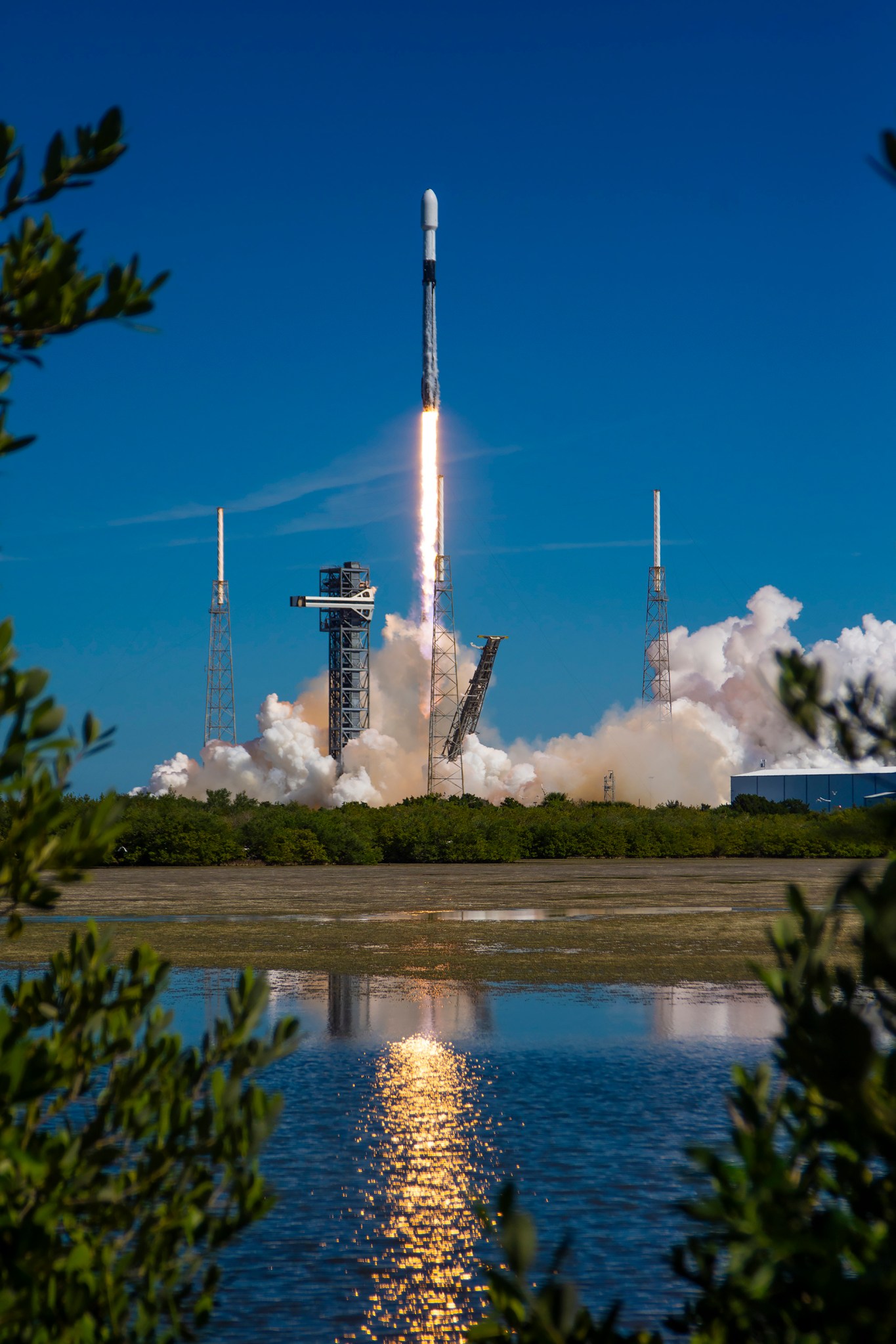
A black and white rocket takes off against the brilliant blue backdrop of the sky. It leaves a trail of fire and billowing clouds of white smoke behind it, which partially obscures some structures around the launchpad. The light reflects on the mirror-like surface of a nearby body of water. The image is delicately framed on the left, right, and bottom by green leaves.
SpaceX

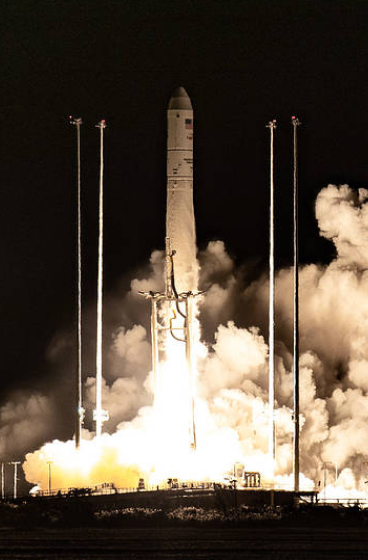
In this image from Jan. 30, 2024, an uncrewed Cygnus cargo spacecraft launches atop a SpaceX Falcon 9 rocket, starting its journey to the International Space Station. Launching from NASA’s Kennedy Space Center in Florida, Cygnus carries 8,200 pounds of science investigations and cargo to support dozens of research experiments. This is Northrop Grumman’s 20th cargo flight to the orbiting laboratory.

Watch NASA+ for live coverage of Cygnus’s approach to the space station on Feb. 1, 2024, beginning at 2:45 a.m. EST.

Image Credit: SpaceX


from NASA https://ift.tt/OJp1kcf

NASA Sets Coverage for Ocean, Atmosphere, Climate Mission

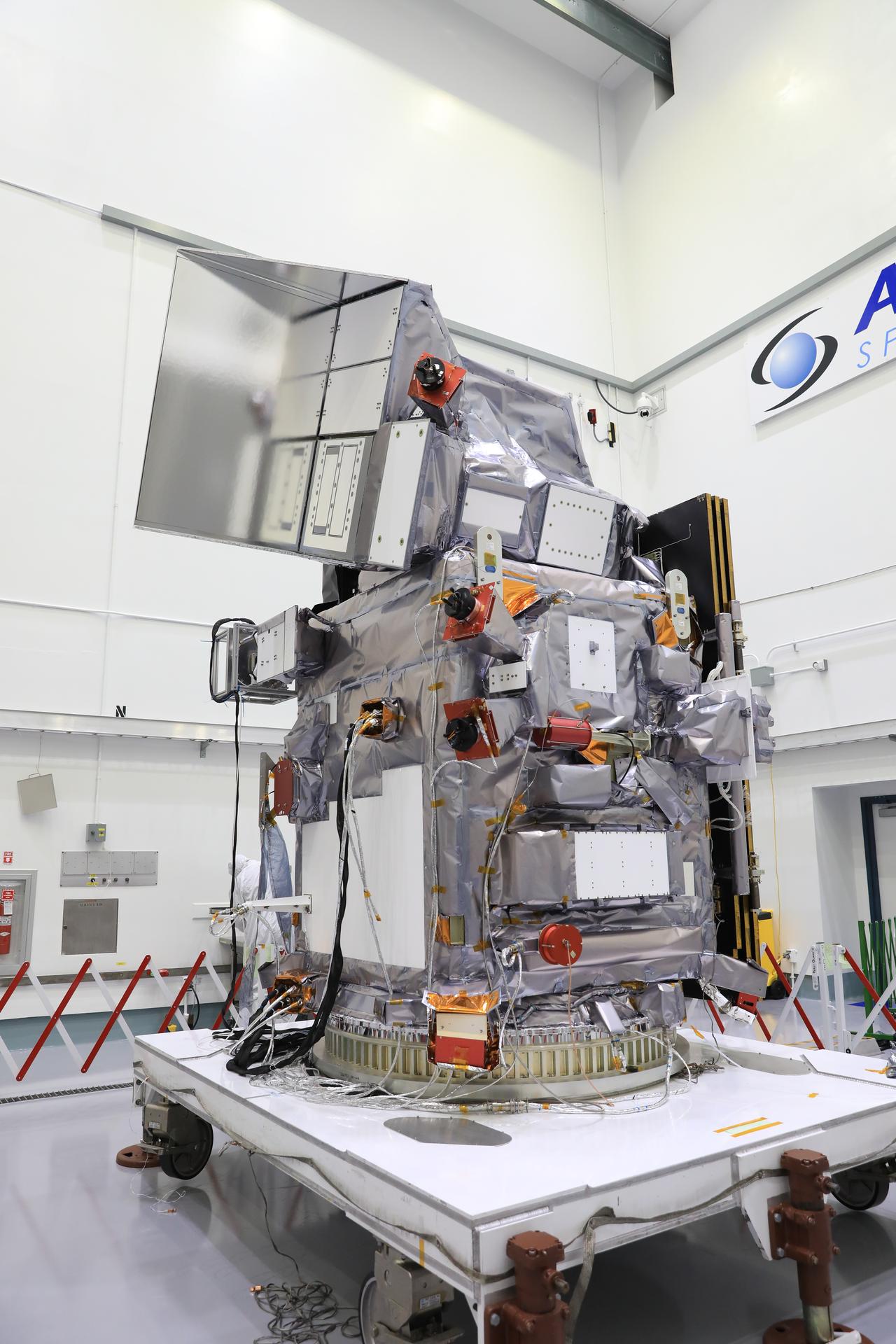
NASA’s Plankton, Aerosol, Cloud, ocean Ecosystem (PACE) observatory is inspected and processed on a spacecraft dolly in a high bay at the Astrotech Space Operations Facility near the agency’s Kennedy Space Center in Florida on Monday, Dec. 4, 2023.
NASA/Kim Shiflett

Editor’s note: This advisory was updated on Jan. 31, 2024, to update participant names in the science briefing.

NASA will provide coverage of the upcoming prelaunch and launch activities for its upcoming mission to study how our oceans and atmosphere interact in a changing climate.

Launch of the PACE (Plankton, Aerosol, Cloud, ocean Ecosystem) mission is targeted for 1:33 a.m. EST, Tuesday, Feb. 6, on a SpaceX Falcon 9 rocket from Space Launch Complex 40 at Cape Canaveral Space Force Station in Florida.

Once in orbit above Earth, PACE will shed light on the impact of tiny things – microscopic life in water and microscopic particles in the air.

Live launch coverage will begin at 12:45 a.m., Feb. 6, on NASA+, NASA Television, and the agency’s website. Full coverage of this mission including prelaunch activities is as follows (all times Eastern):

Sunday, Feb. 4

9:15 a.m. – NASA Social Panel livestream at NASA Kennedy. Watch live on YouTube, Facebook and X social media channels with the following NASA participants answering #AskNASA questions:

  • Karen St. Germain, director, Earth Science Division
  • Marjorie Haskell, PACE program executive
  • Laura Lorenzoni, PACE program scientist
  • Ivona Cetinic, PACE ocean scientist
  • Juli Lander, PACE deputy project manager

11 a.m. – PACE Science Briefing on NASA+ with the following agency participants:

  • Kate Calvin, chief scientist and senior climate advisor
  • Karen St. Germain, director, Earth Science Division
  • Jeremy Werdell, PACE project scientist
  • Andy Sayer, atmospheric scientist, Sciences and Exploration Directorate
  • Natasha Sadoff, Satellite Needs Program Manager

Media may request the news conference dial-in number and passcode by contacting the Kennedy newsroom no later than 4 p.m., Friday, Feb. 2, at ksc-newsroom@mail.nasa.gov. Members of the public also may ask questions, which may be answered in real time during the segment, by using #AskNASA on social media. On-site media may attend the briefing in person or via telephone.

12 p.m. – Immediately after the science briefing, the following NASA subject matter experts will be available for one-on-one media interviews at the Kennedy News Center on a first come, first-served basis.

  • Nicola Fox, associate administrator, Science Mission Directorate
  • Karen St. Germain, director, Earth Science Division
  • Kate Calvin, chief scientist and senior climate advisor
  • Jeremy Werdell, PACE project scientist
  • Andy Sayer, atmospheric scientist, Sciences and Exploration Directorate
  • Erin Urquhart, program manager, Water Resources Application Area
  • Mark Voyton, PACE project manager
  • Juli Lander, PACE deputy project manager
  • Gary Davis, PACE mission systems engineer

Monday, Feb. 5

8 a.m. – NASA EDGE will host the PACE rollout show. The rollout show will air live on NASA+, NASA TV, and YouTube.

9 a.m. – PACE Prelaunch News Conference on NASA+ and NASA TV with the following participants:

  • NASA Associate Administrator Jim Free
  • Karen St. Germain, director, Earth Science Division, NASA
  • Tim Dunn, senior launch director, Launch Services Program, NASA
  • Julianna Scheiman, director, Civil Satellite Missions, SpaceX
  • Brian Cizek, launch weather officer, 45th Weather Squadron, U.S. Space Force

Media may request the news conference dial-in number and passcode by contacting the Kennedy newsroom no later than 4 p.m., Friday, Feb. 2, at ksc-newsroom@mail.nasa.gov. Members of the public also may ask questions by using #AskNASA on social media. On-site media may attend the briefing in person or via telephone.

Tuesday, Feb. 6

12:45 a.m. – Technical feed begins on NASA TV media channel.

12:45 a.m. – Live launch coverage will begin on NASA+ and NASA TV public channel.

For NASA TV downlink information, schedules, and links to streaming video, visit:

https://nasa.gov/nasatv

The deadline has passed for media accreditation for in-person coverage of this launch. The agency’s media accreditation policy is available online. More information about media accreditation is available by emailing: ksc-media-accreditat@mail.nasa.gov. For all other questions, contact the newsroom at NASA’s Kennedy Space Center in Florida at 321-867-2468.

NASA Website Launch Coverage

Launch day coverage of NASA’s PACE mission will be available on the agency’s website. Coverage will include blog updates as well. Streaming video and photos of the launch will be available shortly after liftoff. Images of PACE’s processing and launch are available in this album.

Follow mission coverage on the PACE launch blog at:

https://blogs.nasa.gov/pace/

Audio Only Coverage

Audio only of the news conferences and launch coverage will be carried on the NASA “V” circuits, which may be accessed by dialing 321-867-1220, -1240, or -7135. On launch day, “mission audio,” countdown activities without NASA TV launch commentary, will be carried on 321-867-7135. A “tech feed” of the launch without NASA TV commentary will be carried on the NASA TV media channel.

Attend Launch Virtually

Members of the public can register to attend the PACE launch virtually. NASA’s virtual guest program for this mission includes curated launch resources, notifications about related opportunities or changes, and a stamp for the NASA virtual guest passport following a successful launch.

Watch, Engage Online

Let people know you’re following NASA’s PACE mission. On Facebook, Instagram, and X, use the hashtag #KeepingPACE and #AskNASA. You also can stay connected by following and tagging these accounts:

Facebook: NASA, NASAKennedy, NASAGoddard, NASAEarth, NASALSP

Instagram: @NASA, @NASAKennedy, @NASAEarth

X: @NASA, @NASAKennedy, @NASASocial, @NASAGoddard, @NASAEarth, @NASA_LSP

The PACE project is managed by NASA’s Goddard Space Flight Center in Greenbelt, Maryland. The agency’s Launch Services Program, based at NASA Kennedy, is responsible for managing the launch service for the PACE mission.

For more information about PACE, visit:

https://science.nasa.gov/mission/pace/

-end-

Karen Fox
NASA Headquarters, Washington
202-358-1600
karen.c.fox@nasa.gov

Jake Richmond
Goddard Space Flight Center, Greenbelt, Md.
240-713-1618
jacob.a.richmond@nasa.gov

Laura Aguiar
Kennedy Space Center, Florida
321-593-6245
laura.aguiar@nasa.gov

Share

Details

Last Updated
Jan 31, 2024

Related Terms


from NASA https://ift.tt/0lwBxVf

NASA Announces $1 Million to Students for Moon Base Challenge

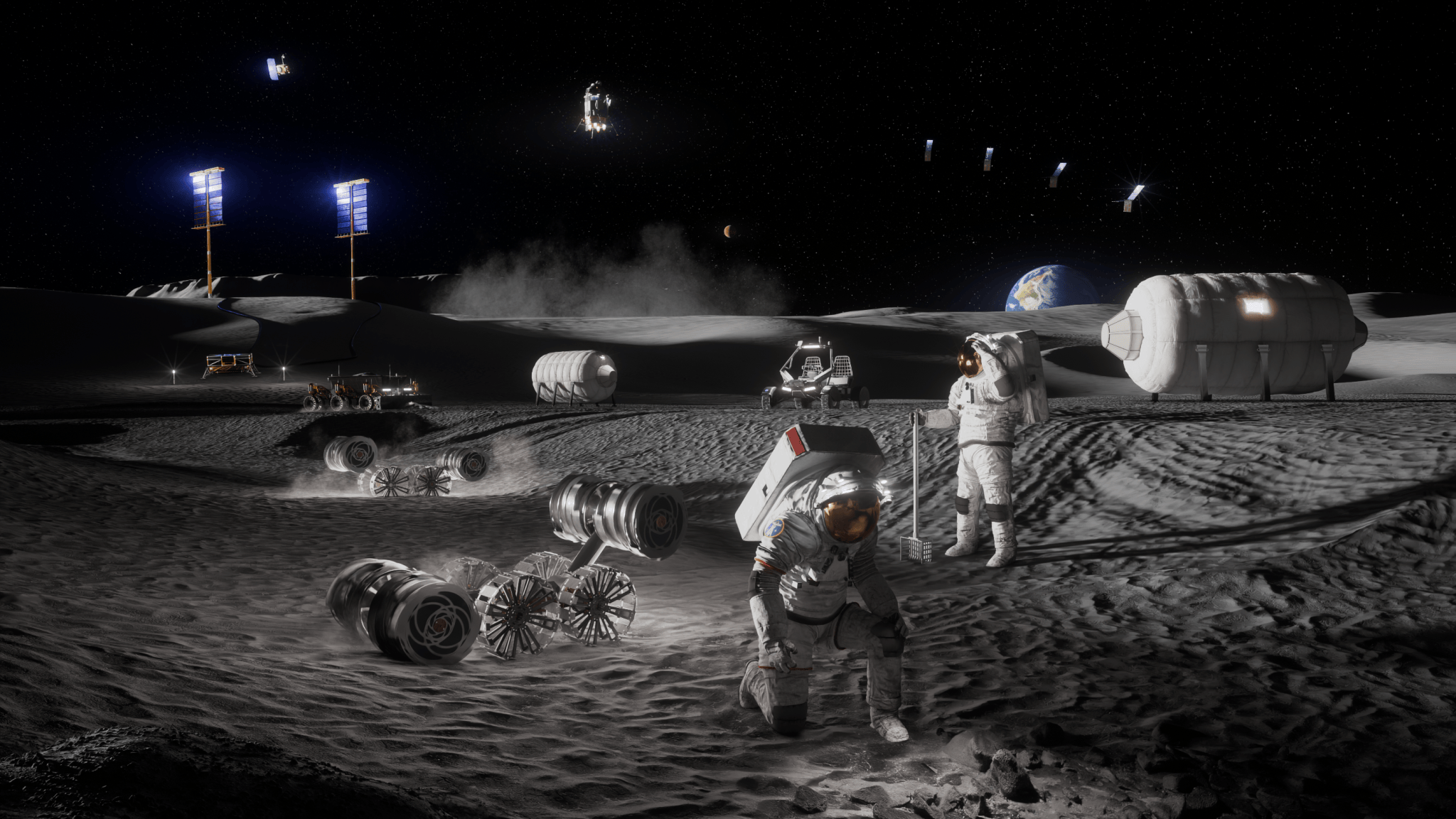
Artist’s concept depicting astronauts, habitats, rovers, power systems, and cargo operations supporting sustained human activities at the Mo...