Monday, 16 October 2023

COPV Standards

Our COPV team evaluates new emerging technologies for custom applications.
Credits: NASA WSTF

Through collaboration with other government agencies, U.S. national consensus organizations, and international governments, our engineers have developed nondestructive evaluation (NDE) standards for composites through  ASTM International.

Along with being lead supporters of NDE standards development through the NASA NDE Development Program, our team has pioneered many pressure vessel testing methods accepted by the American Institute of Aeronautics and Astronautics (AIAA) as standard practice and we continue to work closely with  AIAA to maintain several standards of COPV design, testing, and certification. 

In addition to our facilities’ contribution to standards development, our engineers have extensive experience with applicable  NASA and ISO standards that apply to COPVs.

American Institute of Aeronautics and Astronautics (AIAA)

  • Space Systems—Metallic Pressure Vessels, Pressurized Structures, and Pressure Components (ANSI/AIAA S-080A-2018)
    • This standard lays the foundational requirements for design, analysis, fabrication, and operation of various pressurized components. Additionally, the standard outlines requirements for maintaining several types of pressure vessels and pressurized structures and components (AIAA 2018)…Learn more
  • Space Systems—Composite Overwrapped Pressure Vessels (ANSI/AIAA S-081B-2018)
    • This standard covers foundational requirements for composite overwrapped pressure vessels (COPVs) fabricated with metal liners and carbon fiber/polymer overwrap. The standard includes requirements for COPV design, analysis, fabrication, test, inspection, operation, and maintenance (AIAA 2018)…Learn more
  • Space Systems—Non-Metallic Composite Overwrapped Pressure Vessels (In-Development)

ASTM International

  • Standard Practice for Shearography of Polymer Matrix Composites, Sandwich Core Materials and Filament-Wound Pressure Vessels in Aerospace Applications (ASTM E2581)
     
    • This ASTM standard (E2581) provides practices for shearography, which is used to measure strain, shearing, Poisson, bending, and torsional strains. Shearography proves useful during process design and optimization, and process control. Additionally, it can be used after manufacture and in-service inspections (ASTM 2019)…Learn more.
  • Acoustic Emissions Standard
    • Standard Practice for Examination of Gas-Filled Filament-Wound Composite Pressure Vessels Using Acoustic Emission (ASTM E2191)
      • With safety in mind, guidelines have been composed by Compressed Gas Association (CGA) and others to focus on inspections for natural gas vehicle (NGV) fuel containers. Acoustic Emission (AE) testing of Gas-Filled Filament-Wound Composite Pressure Vessels is an alternative method to the three-year visual examination which requires removal of the container from the vehicle (ASTM 2016)…Learn more.
    • Standard Practice for Acoustic Emission Examination of Plate-like and Flat Panel Composite Structures Used in Aerospace Applications (ASTM E2661)
      • Acoustic Emission (AE) examination of plate-like and flat panel composite structures proves useful in detecting micro-damage generation, new or existing flaws, and accumulation. Furthermore, AE examination assists in locating damage such as matrix cracking, fiber splitting, fiber breakage, fiber pull-out, debonding, and delamination (ASTM 2020)…Learn more.
    • Standard Practice for Acousto-Ultrasonic Assessment of Filament-Wound Pressure Vessels (ASTM E1736)
      • The Acousto-Ultrasonic (AU) method should be carefully considered for vessels that show no major defects and weaknesses. It is key to use other methods like immersion pulse-echo ultrasonics (Practice E1001) and AE (Practice E1067) to determine the existence of major flaws before starting with AU (ASTM 2015)…Learn more.
  • Eddy Current Standard
  • Strand Testing Standard

NASA Standards

 ISO Standards

Last Updated: Jan 13, 2021

Editor: Judy Corbett

National Aeronautics and Space Administration


from NASA https://ift.tt/1CTI4Vd

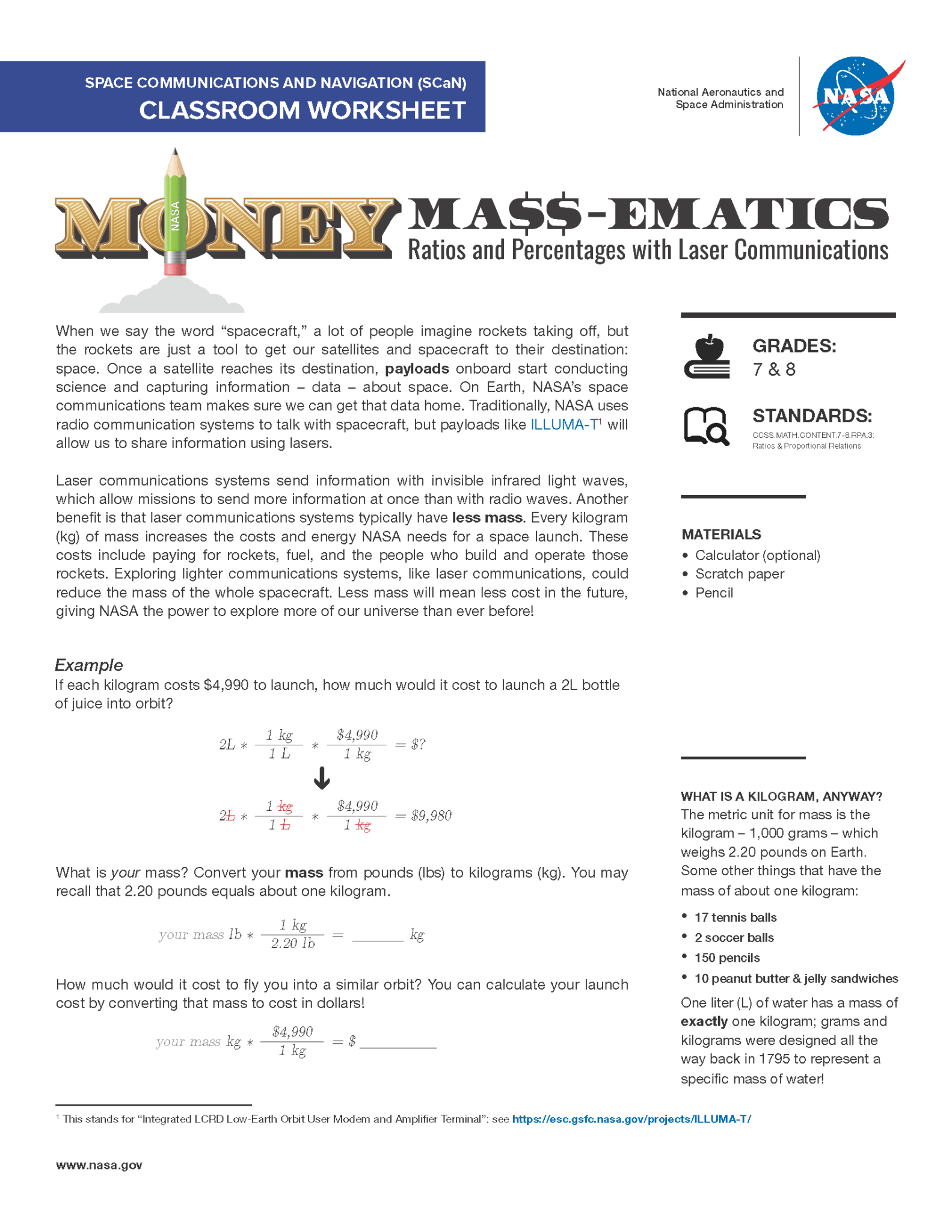
Money Mass-ematics

Common Core State Standards

Ratios & Proportional Relations and Data

Grades 7-8. Students review their knowledge of mathematics and unit conversion by occupying the role of a NASA resource analyst.

Download

Money Mass-ematics

Oct 15, 2023

PDF (642.50 KB)

Answer Key

Oct 15, 2023

PDF (407.91 KB)


from NASA https://ift.tt/61eiFOy

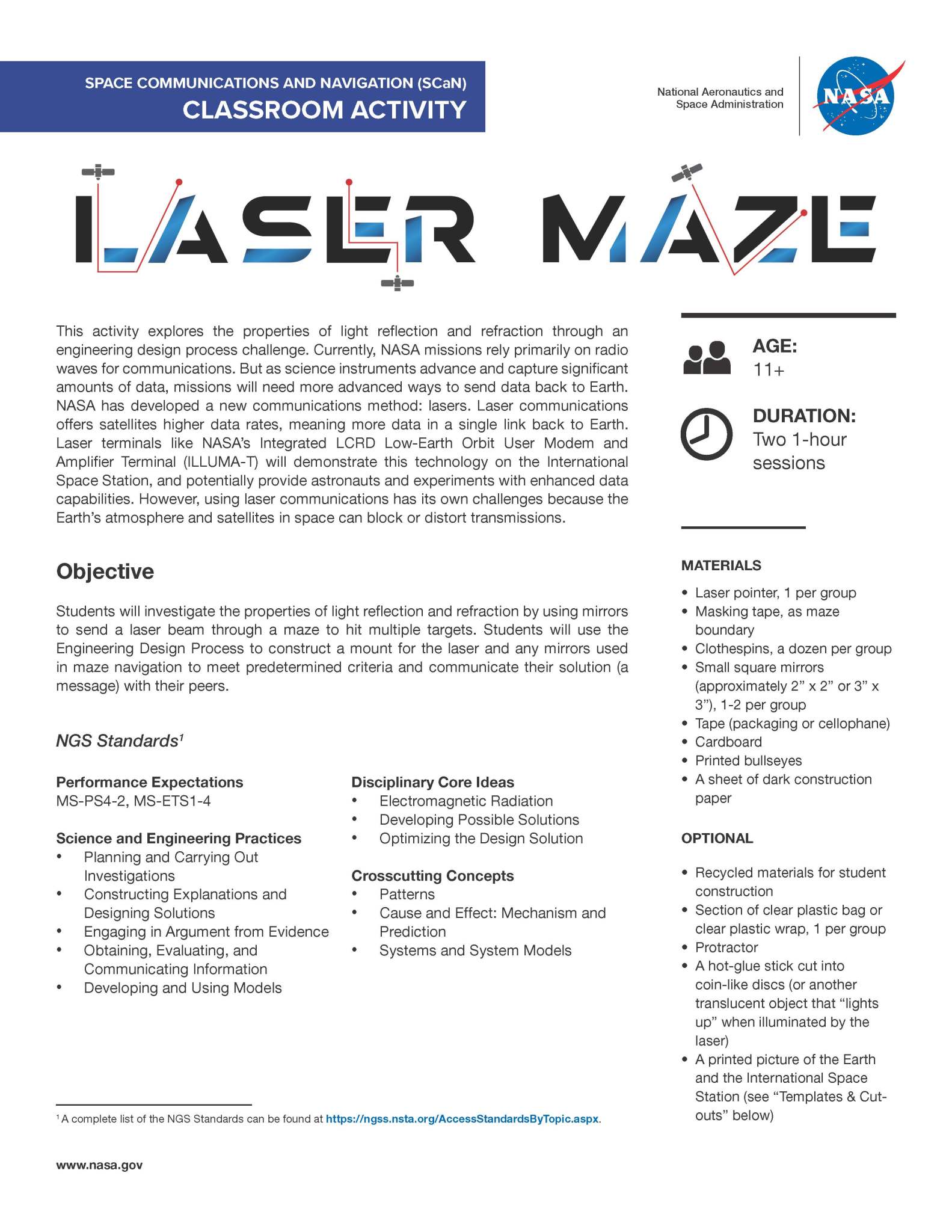
Lazer Maze

Next Generation Science Standards

Waves and their Applications in Technologies for Information Transfer (MS-PS4)

Grades 5-8. Students strengthen their understanding of the electromagnetic spectrum, specifically lasers and their applications, through a series of math, writing, and graphing challenges. This series of activities can be completed together or in parts.

Download

Lazer Maze Activity

Oct 15, 2023

PDF (2.67 MB)


from NASA https://ift.tt/0x1EOlZ

Sunday, 15 October 2023

Failure Analysis

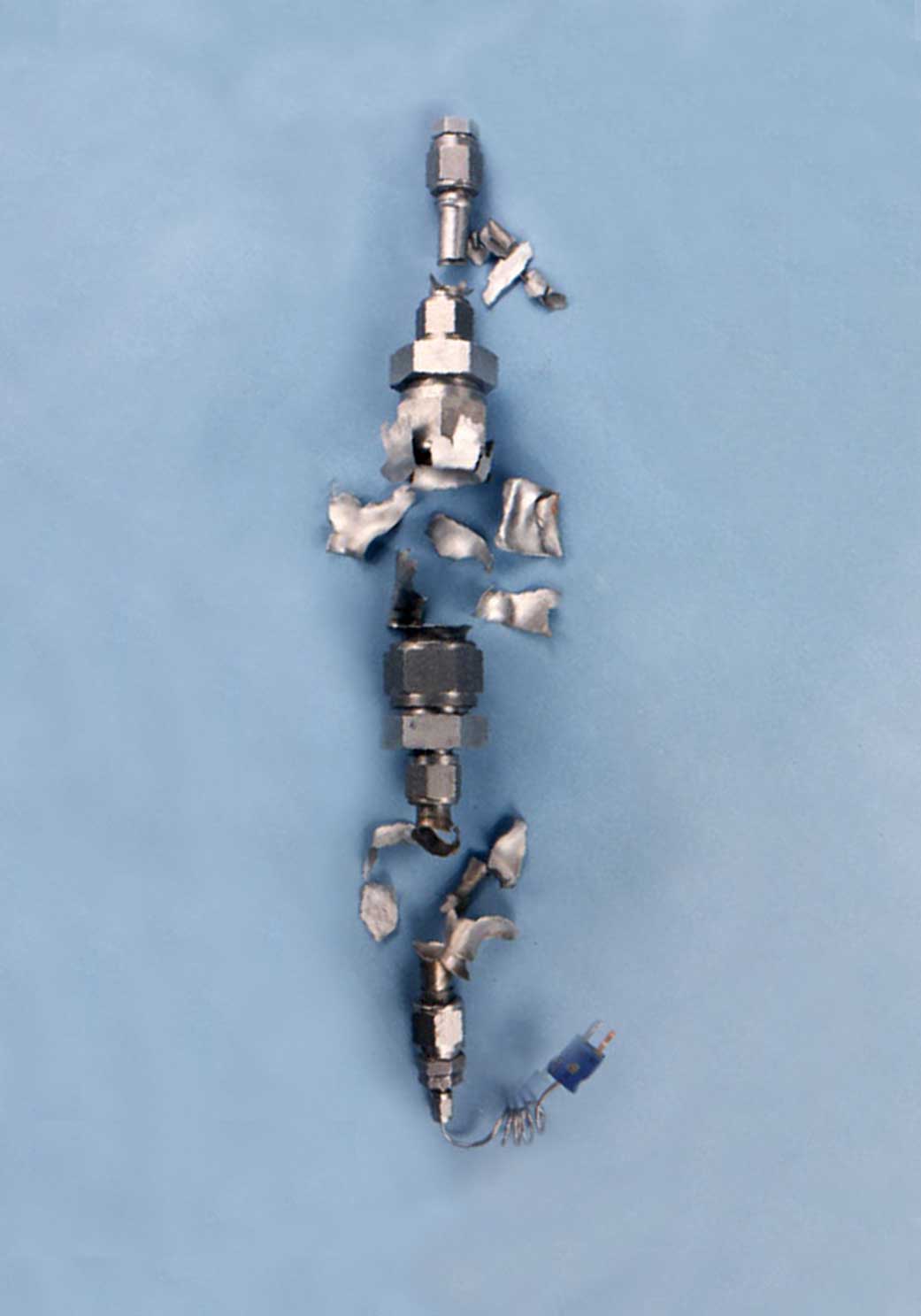
Failure analysis determines what, why and how things went wrong when a component, system, or structure fails and  is a valuable tool in the development of new products and the improvement of existing ones.  

Our multi-disciplined team has the expertise and in-house capabilities to determine the root cause of failures on a wide range of materials including paints and coatings, adhesives and sealants, composites, rubbers, plastics, elastomers, and metals. We routinely apply our expert knowledge of oxygen systems, composite pressure systems, propellants and aerospace fluids, and propulsion systems to root cause analysis and offer expert recommendations for improvements and corrective action.

WSTF Staff


from NASA https://ift.tt/GTPCcbN

Repair, Refurbishment, and Modification

Repair, Refurbishment, and Modification

Components can be refurbished as a cost effective alternative to the cost of new equipment.
WSTF Staff

Components can be refurbished as a cost effective alternative to the cost of new equipment.

Credits: NASA WSTF

Our engineers refurbish, repair, and redesign fluid components such as check valves, relief valves, solenoid valves, and manual valves ensuring relief valves and other components are operating within manufacturer’s specifications and comply with the requirements of

Facilities and Certifications
Component Services is an approved “VR” certified facility holding the National Board Inspection Code (NBIC) Certificate of Authorization and “VR” Symbol Stamp for the repair of pressure relief valves. 
Our team is also certified to manufacture flight hardware by NASA and the International Space Station (ISS) Program.

Repair and Refurbishment
Repair and refurbishment is a cost effective alternative to replacement and our highly skilled team disassembles, inspects, and precision cleans each item received. We ensure the parts being used for repair and replacement are from the original manufacturer, or from a vendor approved by the National Board verifying replacement parts meet original manufacturer specifications. Spares and replacements can be manufactured by our in-house NASA certified Machining and Fabrication workforce to replace parts that are no longer commercially available.

Modification
Equipment can be modified to work safely in your pressure system or in specific media such as oxidizer, oxygen service, fuels, and propellants. Guided by the knowledge gained from 40 years or research and testing by our Oxygen System and Propellants and Aerospace Fluids engineers, our team can modify equipment with recommended parts to operated safely and avoid costly mistakes created by using the wrong components.

Last Updated: Aug 6, 2017

Editor: Judy Corbett


from NASA https://ift.tt/i9LMBSF

Saturday, 14 October 2023

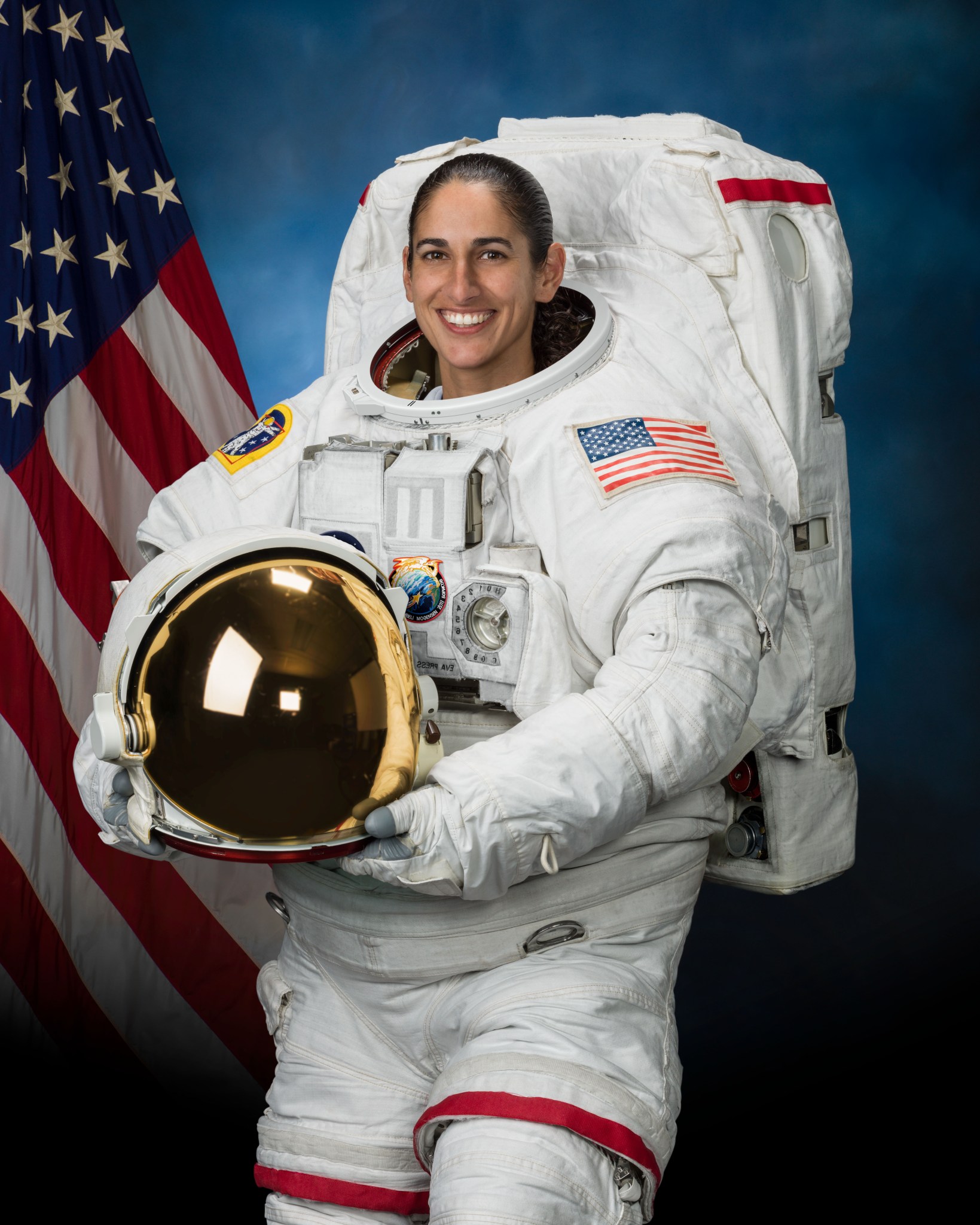
Portrait of NASA astronaut Jasmin Moghbeli

Portrait of NASA astronaut Jasmin Moghbeli in a spacesuit.
jsc2022e068730_alt (Sept. 8, 2023) — Portrait of NASA astronaut Jasmin Moghbeli in a spacesuit. Credit: NASA/Robert Markowitz
NASA


from NASA https://ift.tt/IA1fcjP

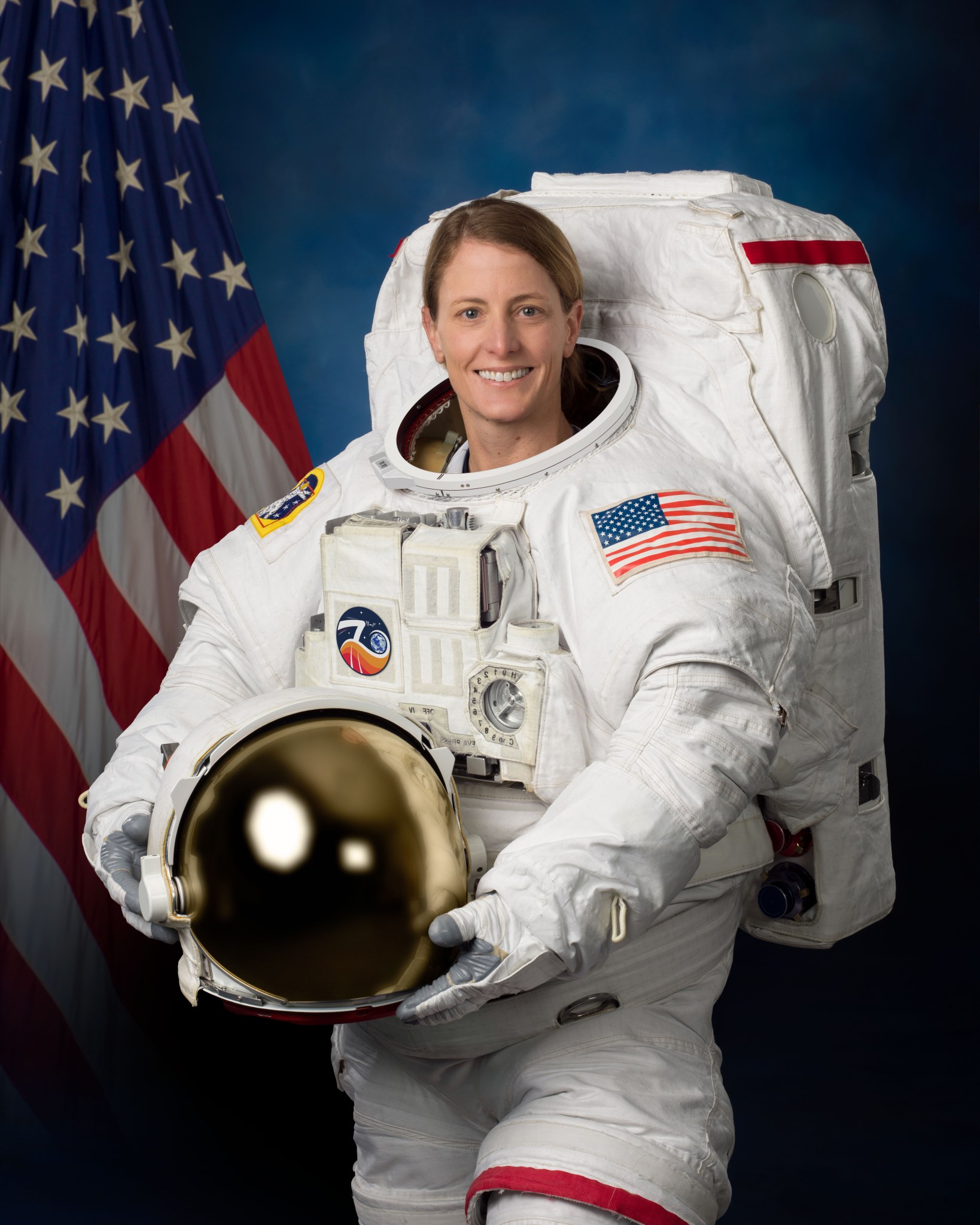
Official portrait of NASA astronaut Loral O’Hara

Official portrait of NASA astronaut and Expedition 70 Flight Engineer Loral O'Hara.
jsc2022e095887_alt (March 24, 2023) — Official portrait of NASA astronaut and Expedition 70 Flight Engineer Loral O’Hara. Credit: NASA/Robert Markowitz
NASA


from NASA https://ift.tt/U8tRreH

Friday, 13 October 2023

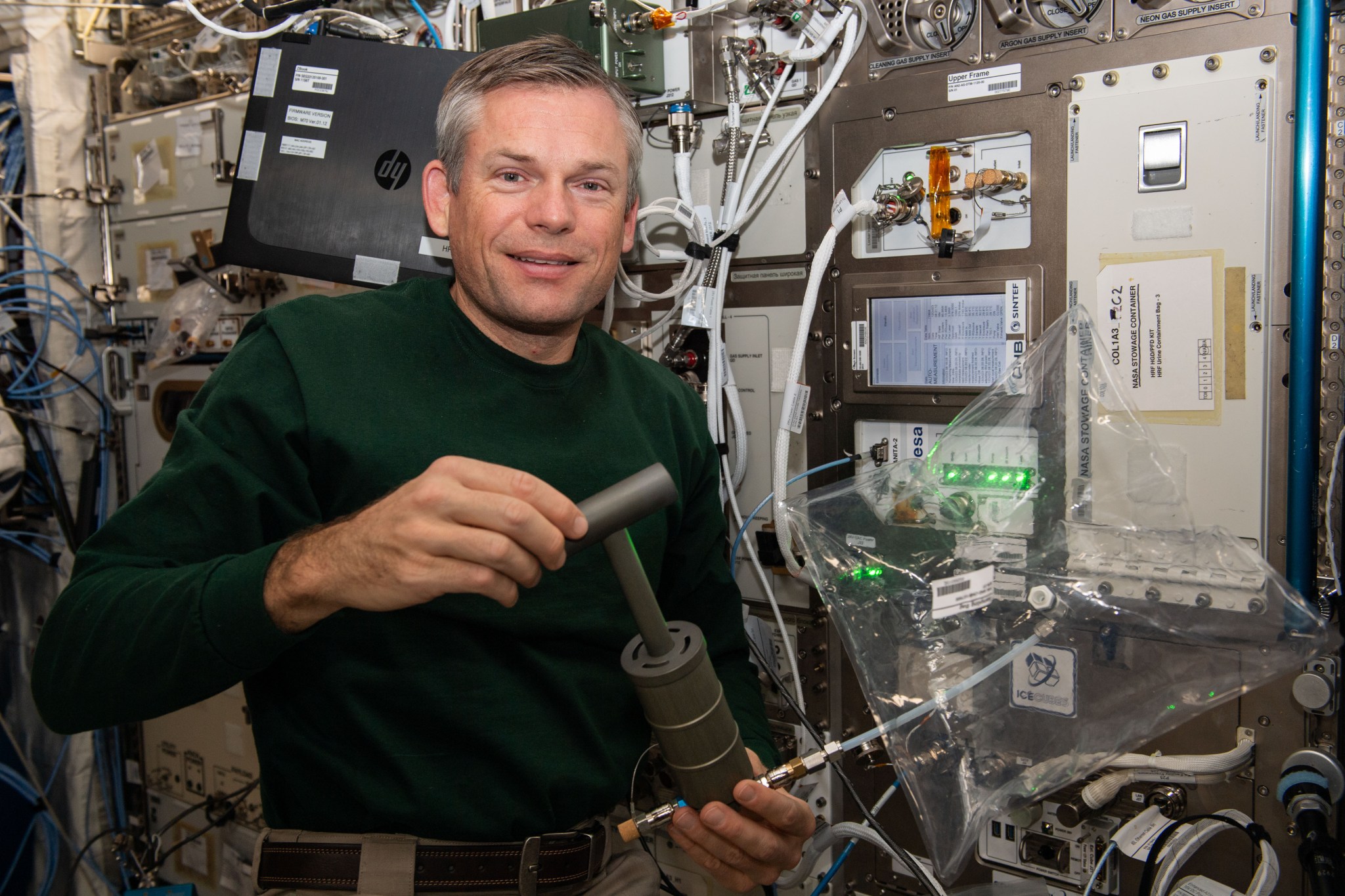
Astronaut Andreas Mogensen demonstrates collecting air samples

Expedition 70 Commander Andreas Mogensen of ESA (European Space Agency) demonstrates collecting air samples to analyze and quantify trace contaminants in the International Space Station's atmosphere. The Analyzing Interferometer for Ambient Air-2, or ANITA-2, serves as a technology demonstration in support of human exploration missions beyond low-Earth orbit.
iss070e003139 (Oct. 12, 2023) — Expedition 70 Commander Andreas Mogensen of ESA (European Space Agency) demonstrates collecting air samples to analyze and quantify trace contaminants in the International Space Station’s atmosphere. The Analyzing Interferometer for Ambient Air-2, or ANITA-2, serves as a technology demonstration in support of human exploration missions beyond low-Earth orbit.
NASA


from NASA https://ift.tt/3aRhytP

NASA Glenn Employees Chosen as Outstanding Hispanic STEM Professionals

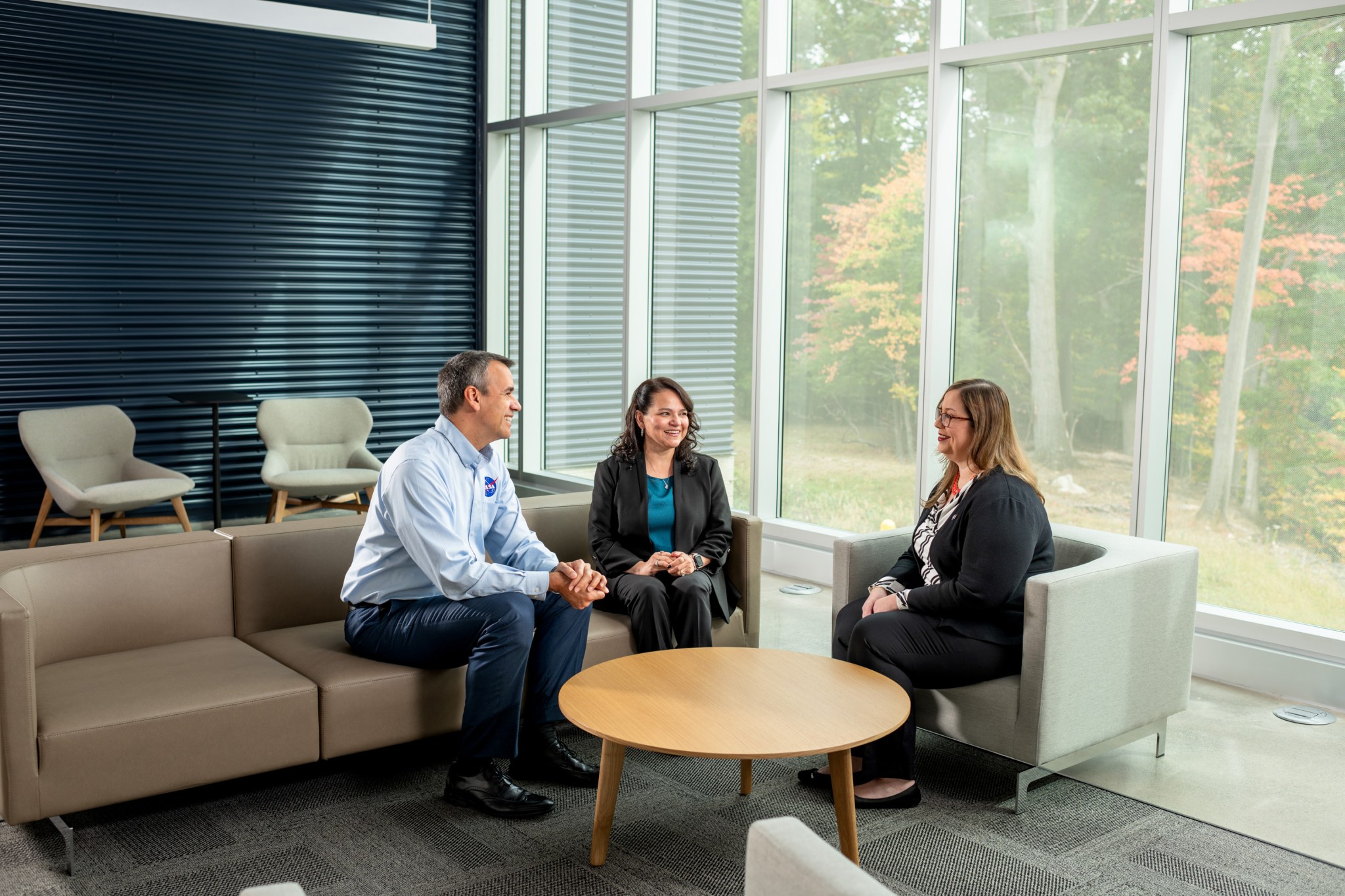
Nelson Morales (left), Janette C. Briones (center), and Azlin Biaggi-Labiosa smile at one another and sit on couches around a circular wooden table inside NASA Glenn Research Center’s Aerospace Communications Facility. Autumn leaves can be seen outside a large glass window in the background.
Nelson Morales (left), Janette C. Briones (center), and Azlin Biaggi-Labiosa at NASA Glenn Research Center’s Aerospace Communications Facility in October 2023.
Credit: NASA/Sara Lowthian-Hanna

Three employees from NASA’s Glenn Research Center in Cleveland have been chosen to receive awards that recognize the achievements of outstanding Hispanic engineers, scientists, and STEM professionals.

Janette C. Briones, Azlin Biaggi-Labiosa, and Nelson Morales will be presented with Hispanic Engineer National Achievement Award Corporation (HENAAC) and Luminary awards during the Great Minds in STEM conference in Pasadena, California, held from Oct. 11 through 14.

Learn more about the NASA Glenn honorees and each of their recognitions:

Nelson Morales

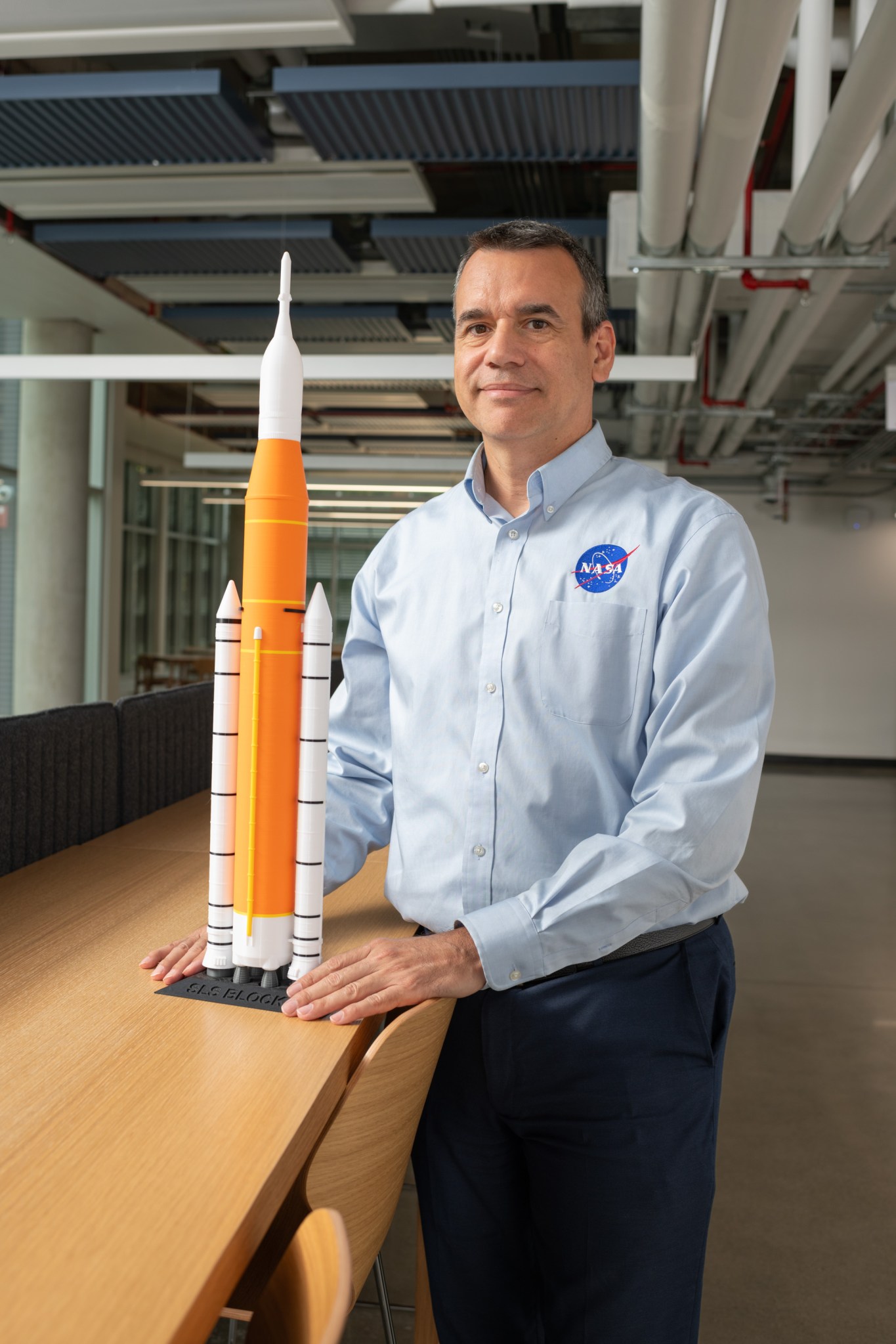
Nelson Morales poses next to a small model of NASA’s Space Launch System. He is wearing a blue collared shirt with a NASA logo.
Nelson Morales, chief of NASA Glenn’s Structural Mechanics Branch, has been chosen as a 2023 Luminary. This award recognizes Hispanic innovators who are engineering the future while lighting the way for the next generation of STEM leaders. Luminaries are chosen for their achievements leading, collaborating, and initiating key programs and research in their respective fields. “It’s an honor to receive this award because we want to be role models for the Hispanic community,” Morales said. “I am thankful for all of the people who have helped and supported me throughout the years and have made this possible.”
Credit: NASA/Sara Lowthian-Hanna

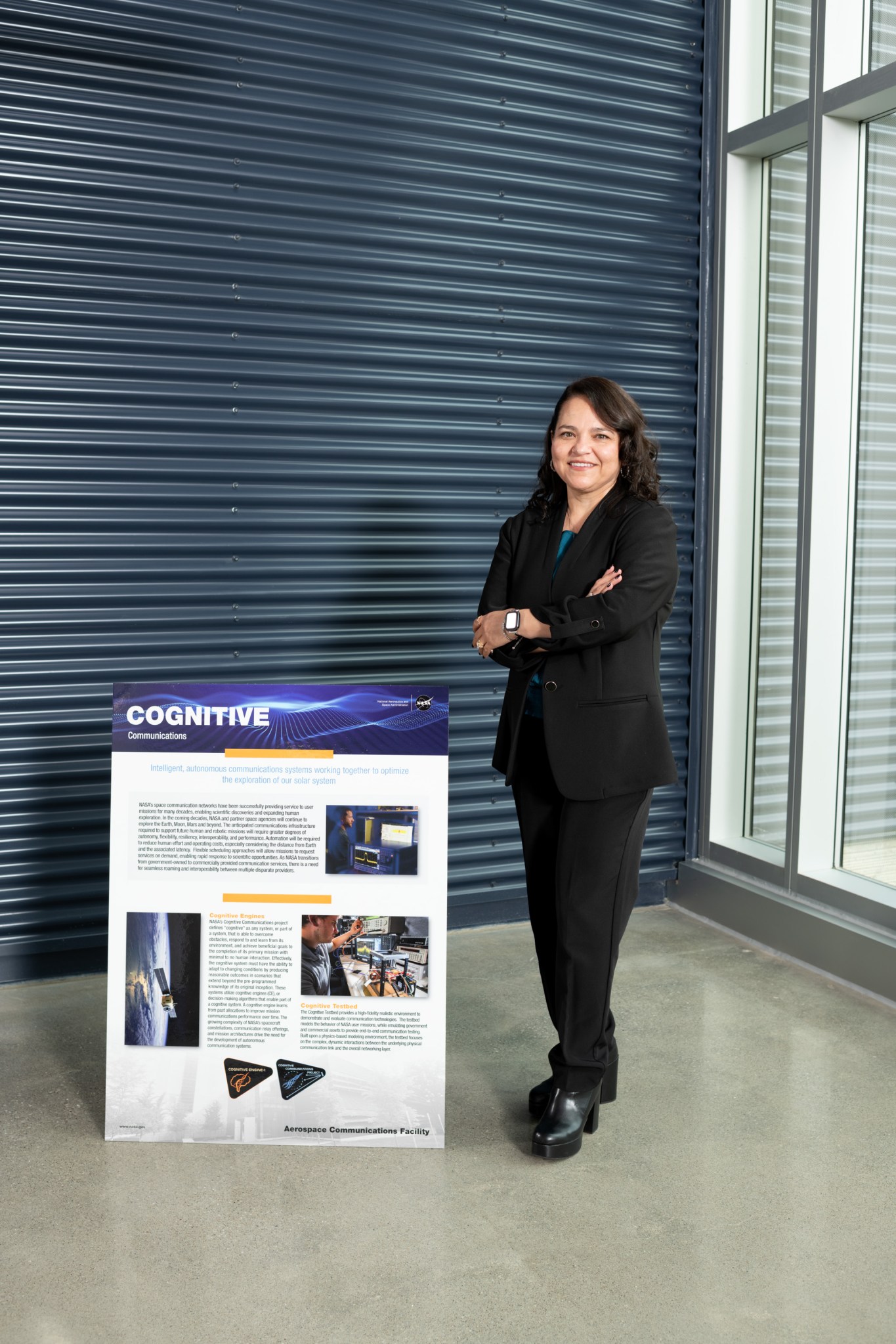
Janette C. Briones

Janette C. Briones stands to the right of a poster about cognitive communications. She is crossing her arms and wearing professional attire. She poses in front of a blue metal wall.
Janette C. Briones, project manager and principal investigator for NASA Glenn’s Cognitive Communications Project, has received the 2023 HENAAC Professional Achievement I (Government) award. The HENAAC award recognizes leaders, innovators, and champions who contribute to the Hispanic community at the highest levels of academia, government, military, and corporate America. “It’s something that I wasn’t expecting; there are so many outstanding engineers,” Briones said of being chosen for the award. “I’m very grateful that I have received it, and I have worked hard for it.”
Credit: NASA/Sara Lowthian-Hanna

Azlin Biaggi-Labiosa

Azlin Biaggi-Labiosa stands with her hand resting on a white couch in front of a large glass window. Trees can be seen through the window, and she is wearing glasses and professional attire.
Azlin Biaggi-Labiosa, NASA Glenn’s manager for the Foundational Electrified Aircraft Propulsion Subproject, has received the 2023 HENAAC Outstanding Technical Achievement (Government) award. The HENAAC award recognizes leaders, innovators, and champions who contribute to the Hispanic community at the highest levels of academia, government, military, and corporate America. “It feels great to be honored and appreciated,” Biaggi-Labiosa said. “It validates all the work that I put in these 14 years [at NASA].”
Credit: NASA/Sara Lowthian-Hanna


from NASA https://ift.tt/ClNmYe0

Dozens of Student Teams Worldwide to Compete in NASA Rover Challenge

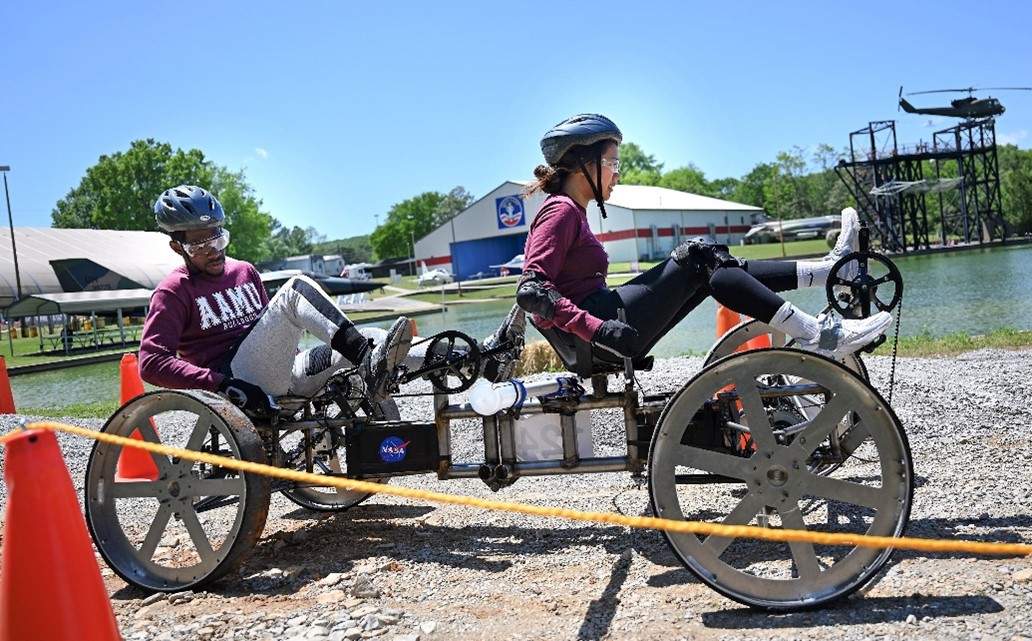
Students from Alabama A&M University near Huntsville, Alabama, pilot their vehicle through the obstacle course at the U.S. Space & Rocket Center during NASA’s Human Exploration Rover Challenge event on April 22, 2023. Credits: NASA
Students from Alabama A&M University near Huntsville, Alabama, pilot their vehicle through the obstacle course at the U.S. Space & Rocket Center during NASA’s Human Exploration Rover Challenge event on April 22, 2023.
Credits: NASA

NASA has selected 72 student teams to begin an engineering design challenge to build human-powered rovers that will compete next April at the U.S. Space & Rocket Center in Huntsville, Alabama, near the agency’s Marshall Space Flight Center.

Celebrating its 30th anniversary in 2024, the Human Exploration Rover Challenge tasks high school, college, and university students to design, build, and test lightweight, human-powered rovers on an obstacle course simulating lunar and Martian terrain, all while completing mission-focused science tasks.

Participating teams represent 42 colleges and universities and 30 high schools from 24 states, the District of Columbia, Puerto Rico, and 13 other nations from around the world. NASA’s handbook has complete proposal guidelines and task challenges.

“Throughout this authentic learning challenge, NASA encourages students to improve their understanding of collaboration, inquiry, and problem-solving strategies,” said Vemitra Alexander, rover challenge activity lead, Office of STEM Engagement at NASA Marshall. “Improving these critical real-world skills will benefit our students throughout their academic and professional careers.”

Throughout the nine-month challenge, students will complete design and safety reviews to mirror the process used by NASA engineers and scientists. The agency also incorporates vehicle weight and size requirements encouraging students to consider lightweight construction materials and stowage efficiency to be replicate similar payload restrictions of NASA launch operations.

Teams earn points throughout the year by successfully completing design reviews and fabricating a rover capable of meeting all criteria while completing course obstacles and mission tasks. The teams with the highest number of points accumulated throughout the project year will win their respective divisions. The challenge will conclude with an event April 19 and April 20, 2024, at the U.S. Rocket and Space Center.

This competition is one of nine Artemis Student Challenges and reflects the goals of NASA’s Artemis program, which includes landing the first woman and first person of color on the Moon. It is managed by NASA’s Southeast Regional Office of STEM Engagement at Marshall. NASA uses challenges and competitions to further the agency’s goal of encouraging students to pursue degrees and careers in science, technology, engineering, and mathematics.

For more information about the challenge, visit:

https://www.nasa.gov/roverchallenge/home/index.html

-end-

Claire O’Shea
Headquarters, Washington
202-358-1600
claire.a.oshea@nasa.gov

Christopher Blair
Marshall Space Flight Center, Huntsville, Ala.
256-544-0034
christopher.e.blair@nasa.gov

Share

Details

Last Updated
Oct 12, 2023


from NASA https://ift.tt/lBn67WG

Preparing Psyche for Launch

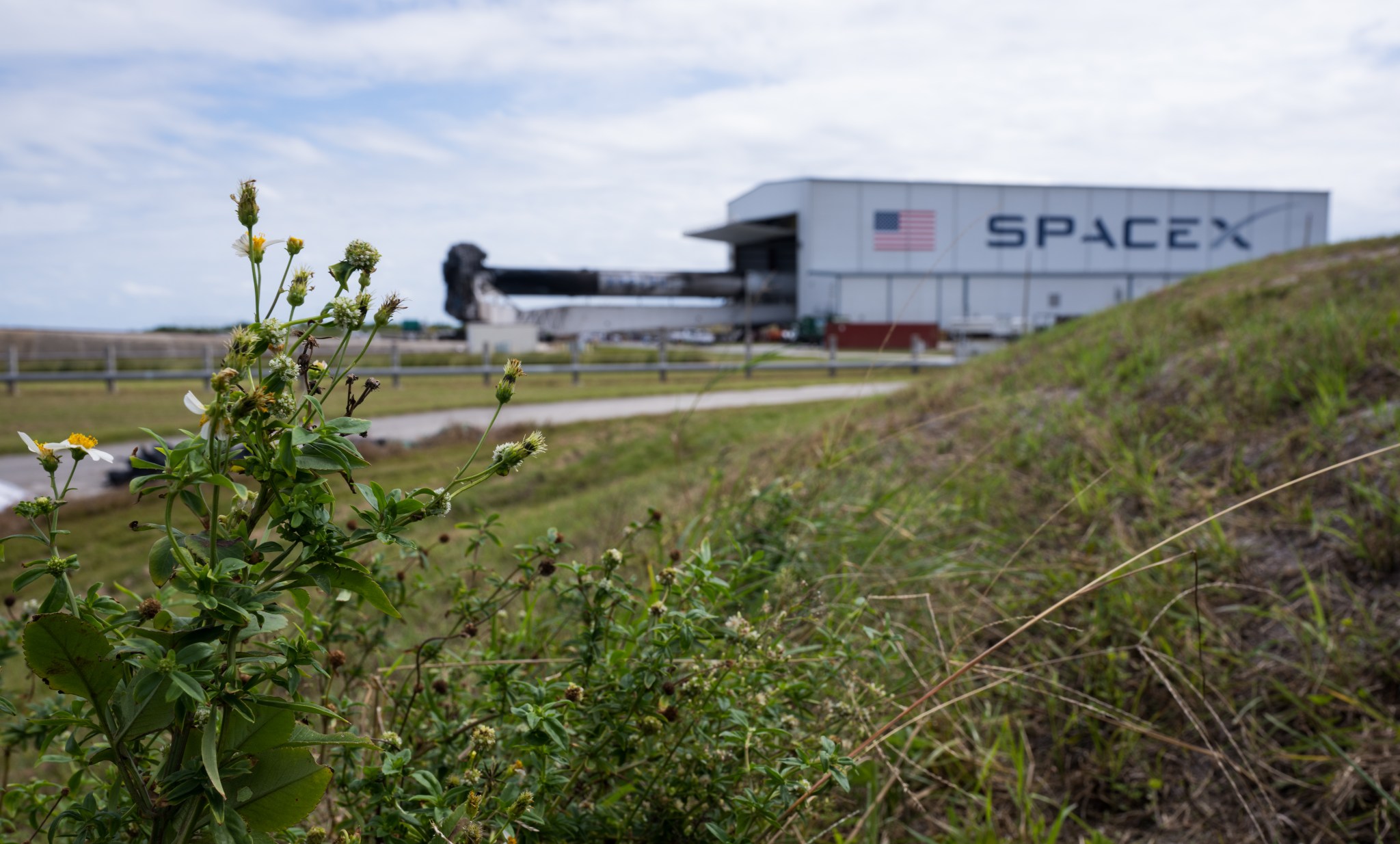
In the foreground, a plant with several small white and yellow flowers is in focus near a grassy hill. In the distance, the SpaceX Falcon Heavy rocket and Psyche spacecraft roll out of a large rectangular building with "SpaceX" and an American flag on the side.
NASA / Aubrey Gemignani

A SpaceX Falcon Heavy rocket with the Psyche spacecraft onboard is seen as it is rolled out of the horizontal integration facility on Oct. 10, 2023, at NASA’s Kennedy Space Center in Florida as preparations continue for the Psyche mission. NASA’s Psyche spacecraft will travel to a metal-rich asteroid by the same name orbiting the Sun between Mars and Jupiter to study its composition. The spacecraft also carries the agency’s Deep Space Optical Communications technology demonstration, which will test laser communications beyond the Moon.

If all goes as planned, asteroid Psyche’s gravity will capture the spacecraft in late July 2029, and Psyche will begin its prime mission in August. It will spend about two years orbiting the asteroid to take pictures, map the surface, and collect data to determine Psyche’s composition.

NASA and SpaceX are targeting Friday, Oct. 13, 2023, at 10:19 a.m. EDT for launch from Kennedy Space Center. Watch the launch on NASA TV.

Image Credit: NASA/Aubrey Gemignani


from NASA https://ift.tt/wKo2FXG

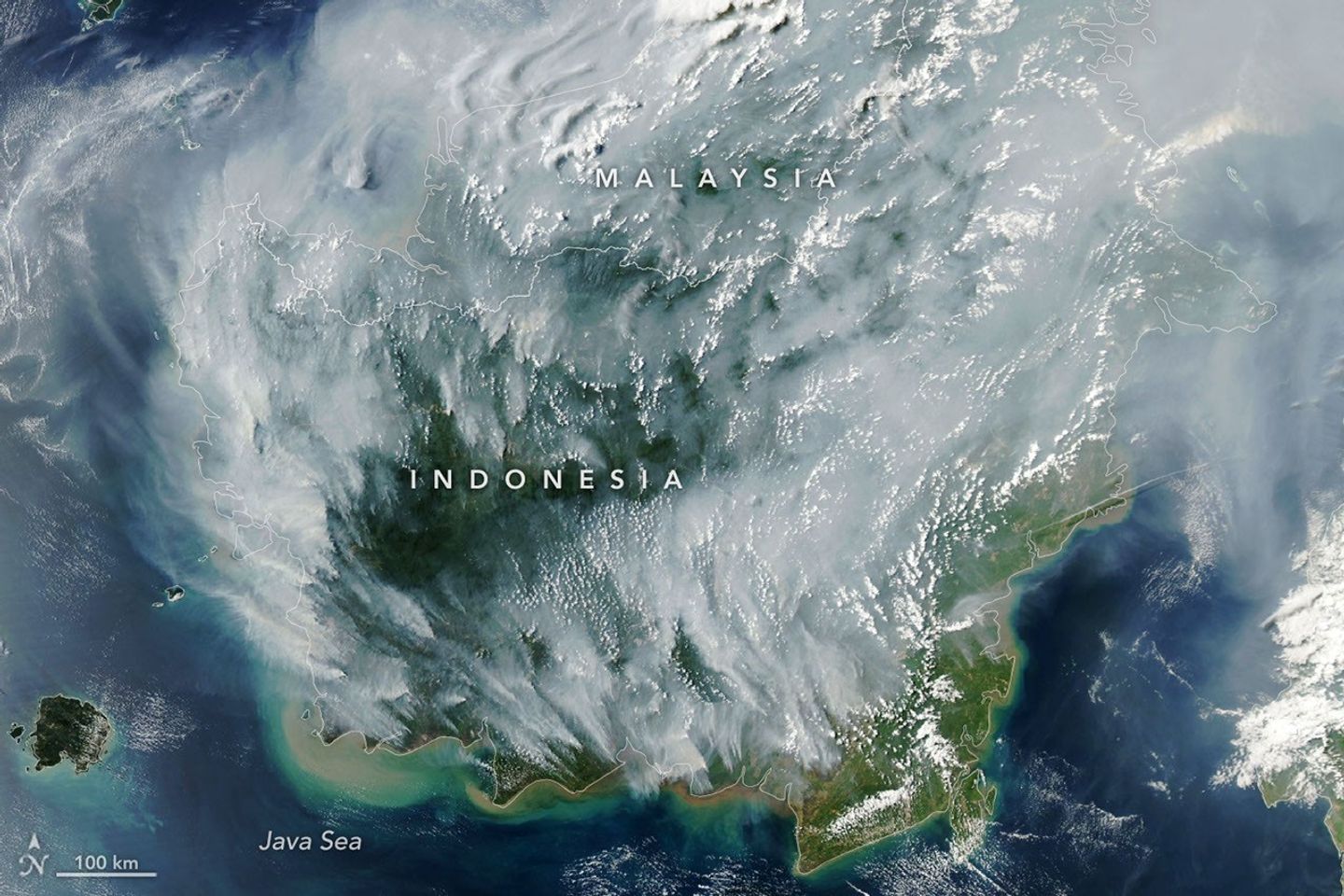
Peatland Fires Darken Skies in Indonesia

Science Aqua Peatland Fires Darken Skies in… Earth Earth Observatory Image of the Day EO Explorer All Topics Atmosphe...