Wednesday, 11 October 2023

NASA Celebrates Hispanic Heritage Month 2023

In honor of Hispanic Heritage Month, we recognize Hispanic astronauts who have flown in space. The table below lists these individuals of various nationalities who have made significant contributions to their space programs. The first Hispanic astronauts completed short flights to a Soviet space station and aboard the space shuttle. In the past 23 years, many more have completed flights to the International Space Station and contributed to its assembly, operations, and research activities.
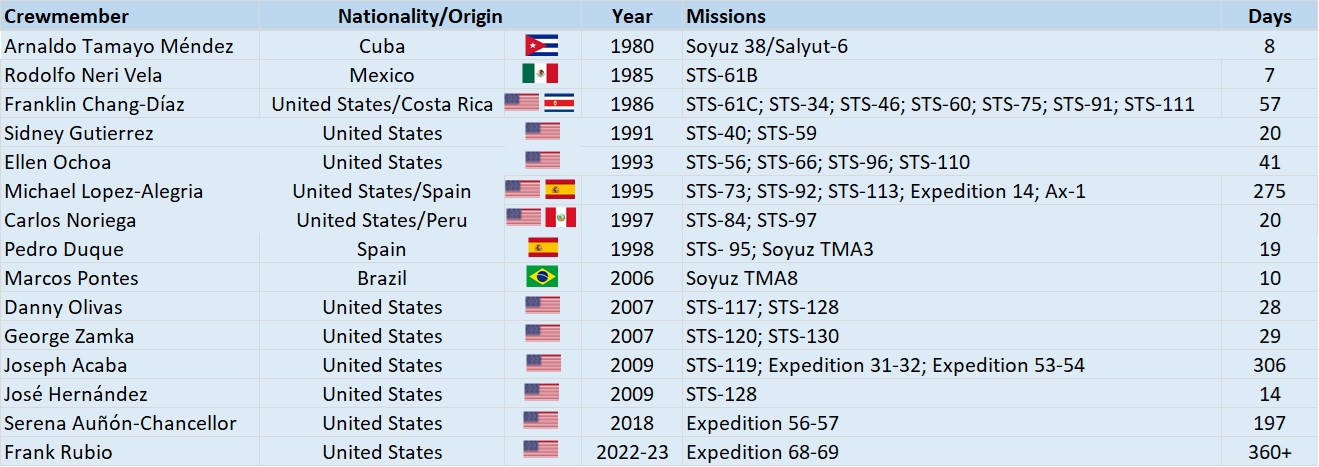
Table of Hispanic astronauts who have flown in space.

Table of Hispanic astronauts who have flown in space.

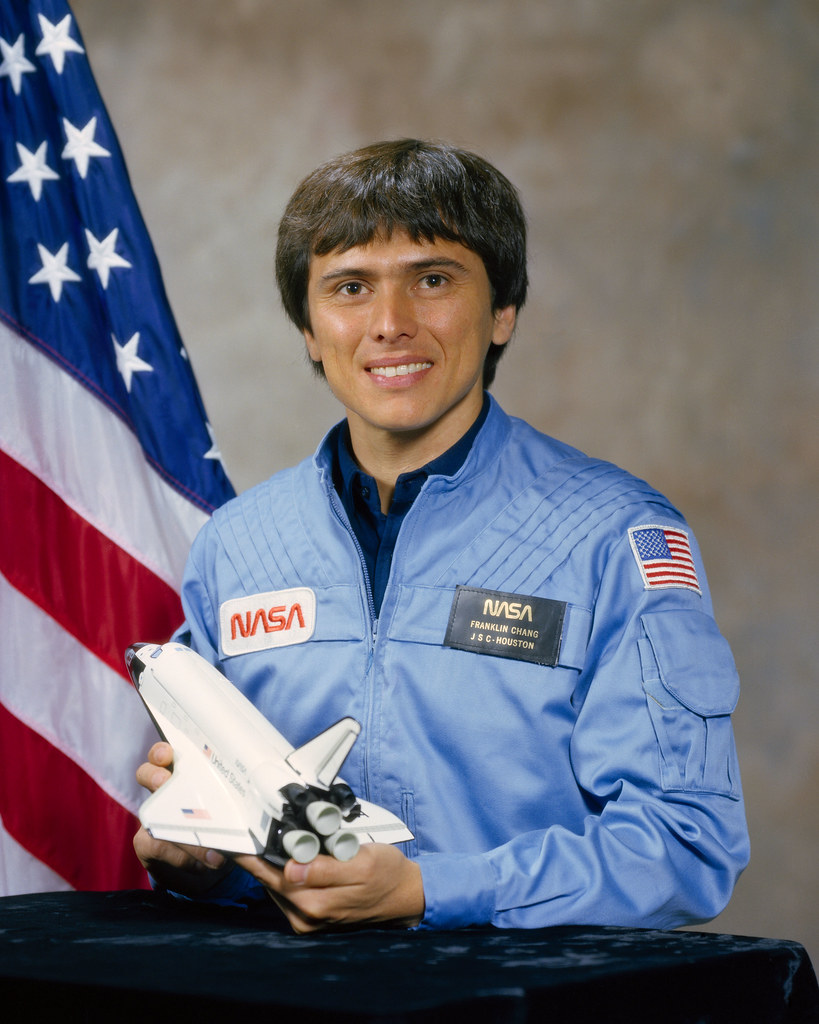
Arnaldo Tamayo Méndez of Cuba holds the title of the first person of Hispanic heritage to fly in space. He spent eight days aboard the Salyut-6 space station in September 1980 as part of the Soviet Union’s Interkosmos program to fly cosmonauts from friendly socialist countries. The first Hispanic to fly on the space shuttle, Payload Specialist Rodolfo Neri Vela of Mexico, also introduced tortillas to astronauts’ on board menus during his flight on STS-61B in November 1985. Tortillas continue to be a staple on the space station today, for everything from breakfast tacos, to burgers, sandwiches, and pizzas. Selected as an astronaut in 1980, Costa Rican-born Franklin R. Chang-Díaz holds the honor as the first Hispanic American in space. He flew in space a record-tying seven times, including one visit to the Russian space station Mir and one to the International Space Station.
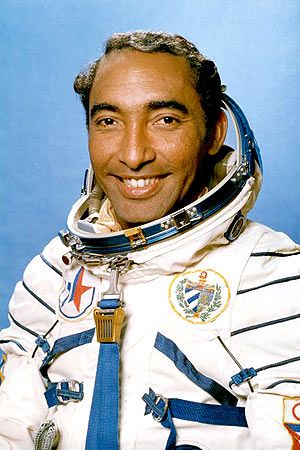
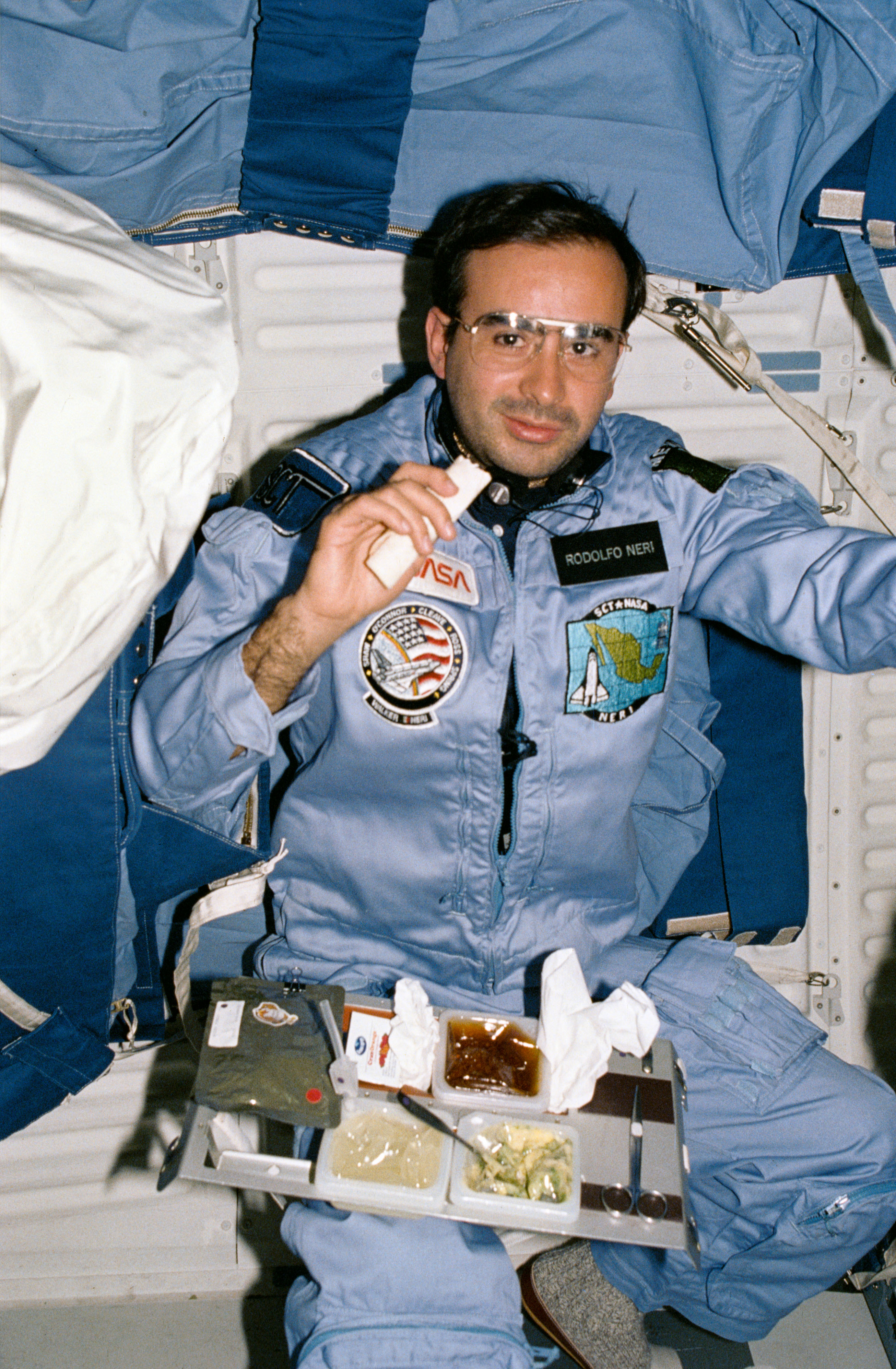
Cuban cosmonaut Arnaldo Tamayo Méndez Rodolfo Neri Vela enjoys a trend-setting tortilla during the STS-61B mission NASA astronaut Franklin R. Chang-Díaz

Left: Portrait of Cuban cosmonaut Arnaldo Tamayo Méndez. Middle: Mexican payload specialist Rodolfo Neri Vela enjoys a trend-setting tortilla during the STS-61B mission. Right: Portrait of NASA astronaut Franklin R. Chang-Díaz.

Franklin R. Chang-Díaz

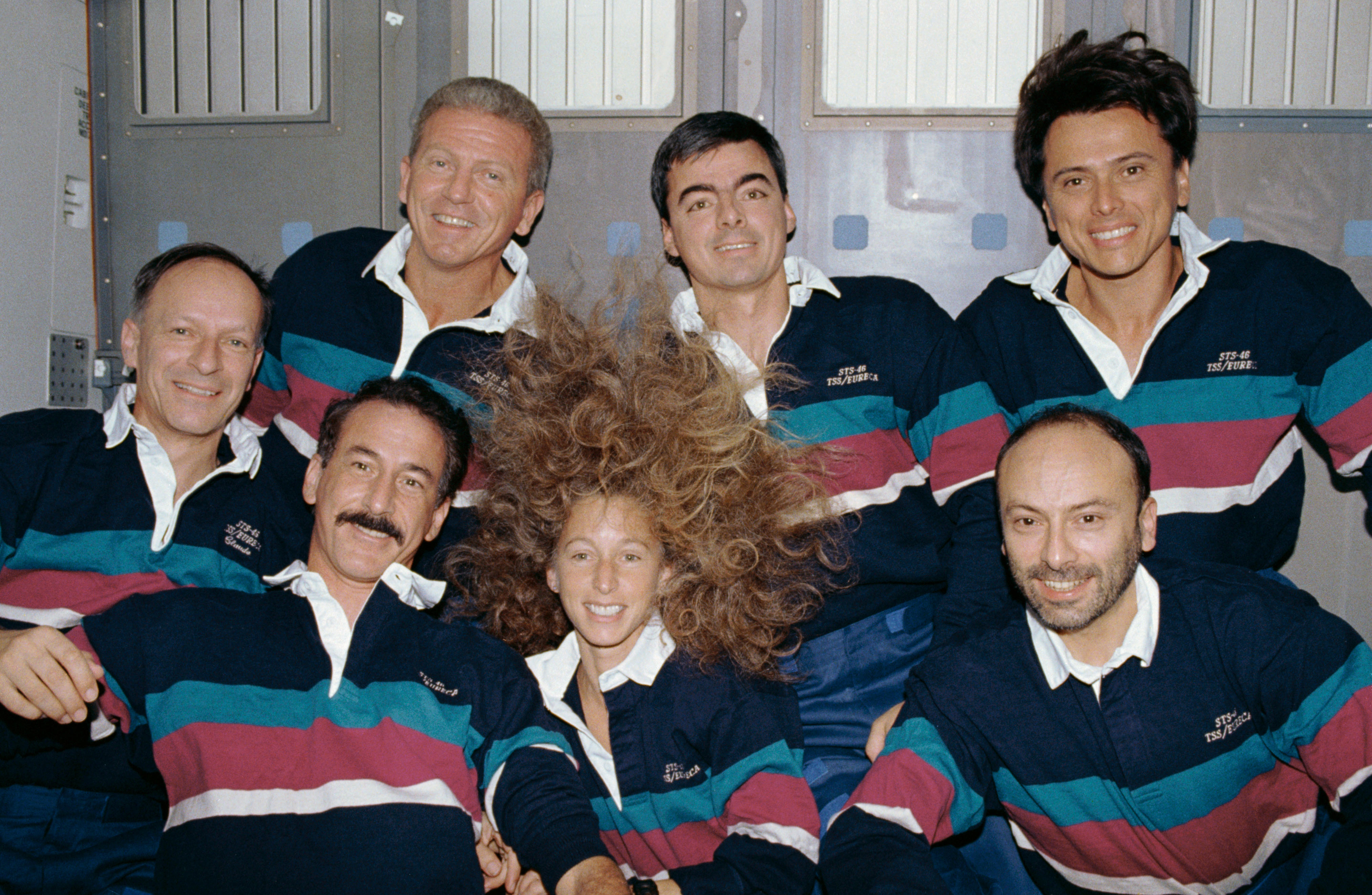
Chang-Díaz’s first flight, STS-61C aboard space shuttle Columbia, took place in January 1986, a six-day flight to deploy a communications satellite and to remotely observe Halley’s comet. The crew included two future NASA administrators, NASA astronauts Charles F. Bolden and U.S. Senator (D-FL) C. William “Bill” Nelson. The flight landed just 10 days before the tragic loss of space shuttle Challenger. His next mission, STS 34 aboard Atlantis, in October 1989 saw the deployment of the Galileo spacecraft to explore Jupiter with an orbiter and an atmospheric probe. Chang-Díaz launched on his third mission, STS 46 in July 1992, an eight-day flight aboard Atlantis to test fly the first Tethered Satellite System (TSS-1).
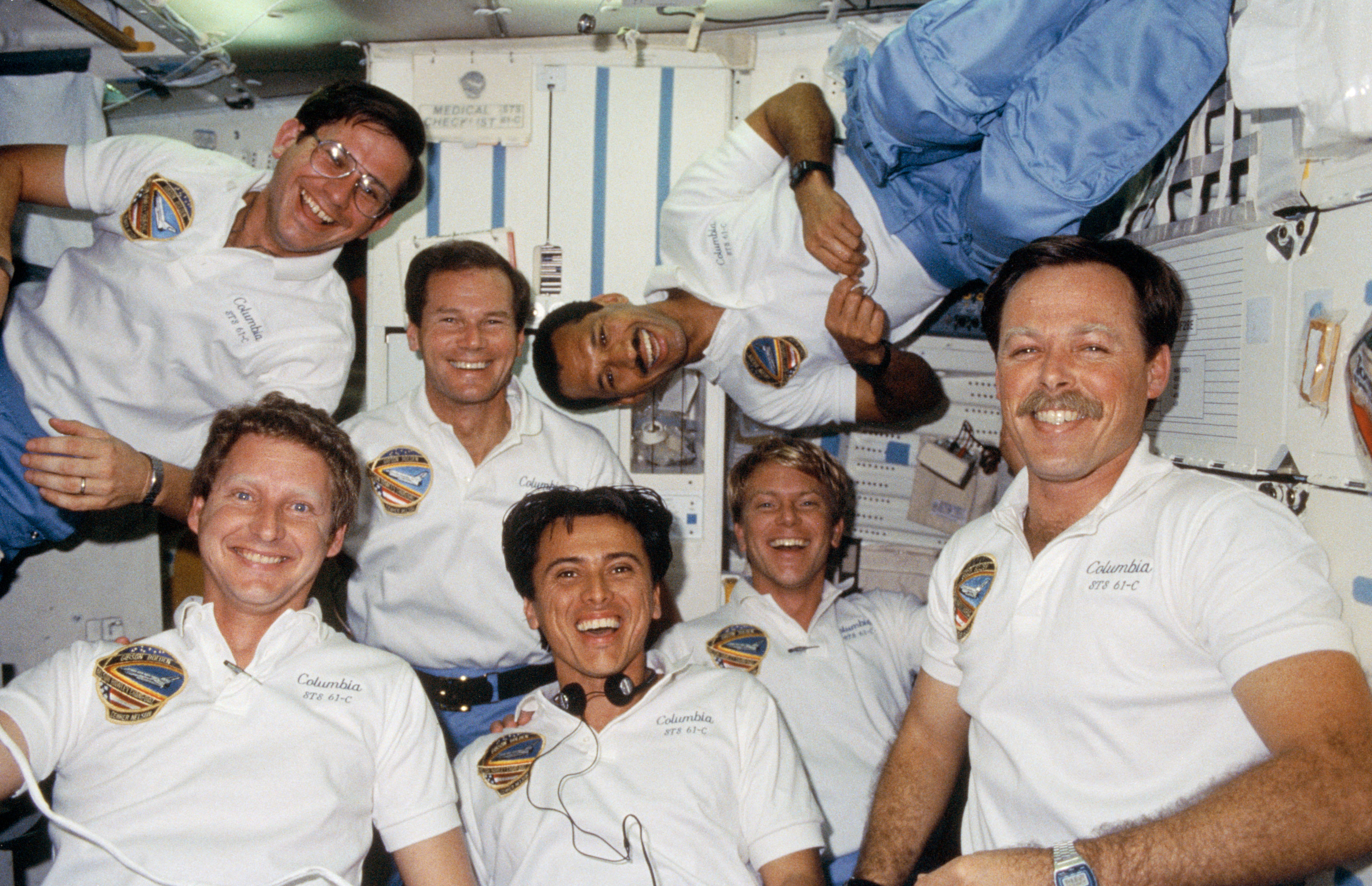
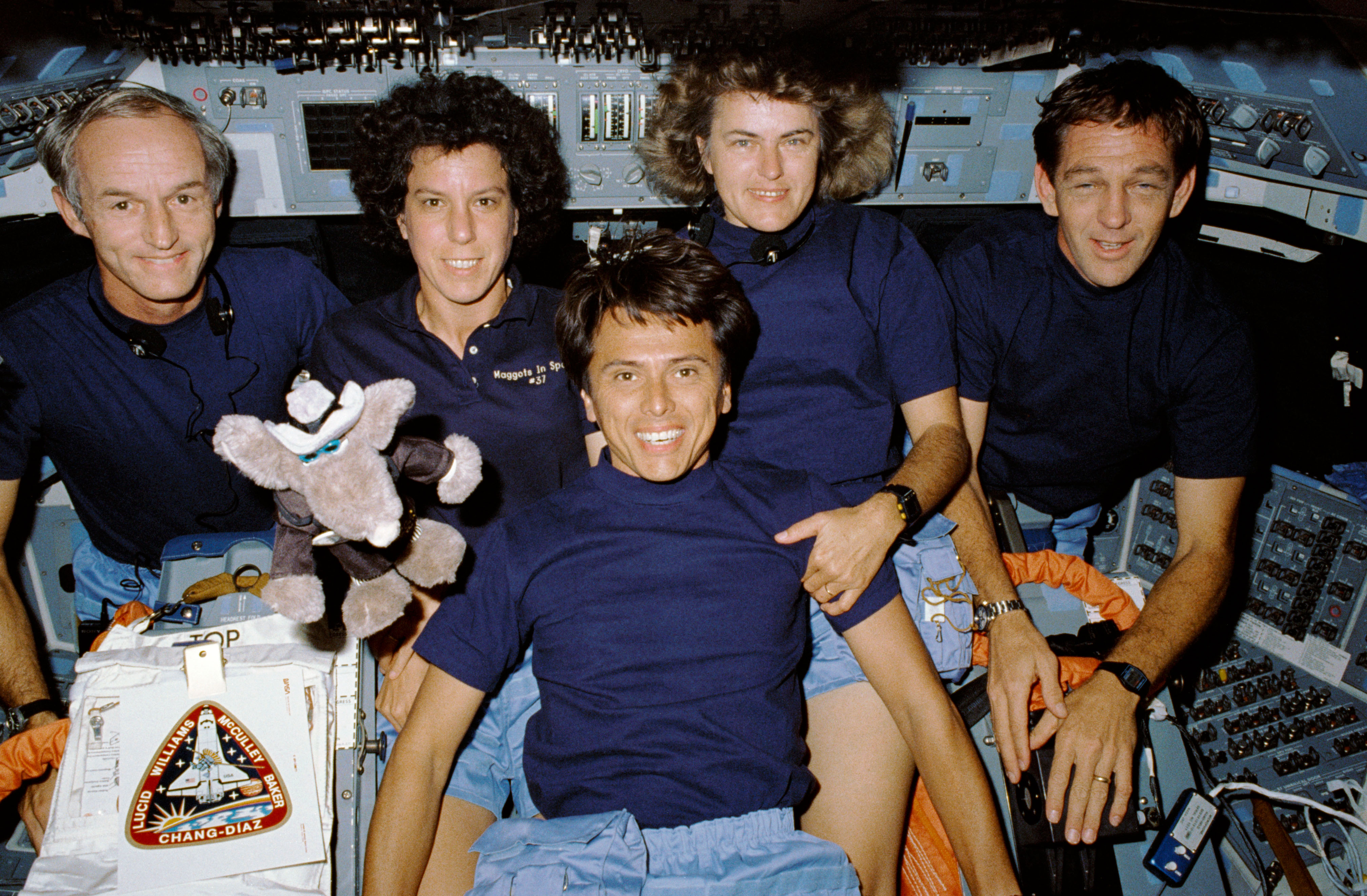
Franklin R. Chang-Díaz, center, the first Hispanic American astronaut, with his fellow STS-61C crew members Chang-Díaz, and the STS-34 crew Chang-Díaz, with the STS-46 crew

Left: Franklin R. Chang-Díaz, center, the first Hispanic American astronaut, with his fellow STS-61C crew members. Middle: Chang-Díaz, center, and the STS-34 crew. Right: Chang-Díaz, upper right, with the STS-46 crew.

Chang-Díaz returned to space for his fourth mission in January 1994 aboard Discovery. The eight-day STS-60 flight comprised the first flight in the Shuttle-Mir program, with Russian cosmonaut Sergey K. Krikalev a member of the crew. Chang-Díaz launched on his fifth flight in February 1996, the 16-day STS-75 mission aboard Columbia to refly the TSS. On his sixth mission in June 1998, the STS-91 crew docked Discovery with the Russian space station Mir and returned astronaut Andrew S.W. Thomas to earth, the final Shuttle-Mir mission.
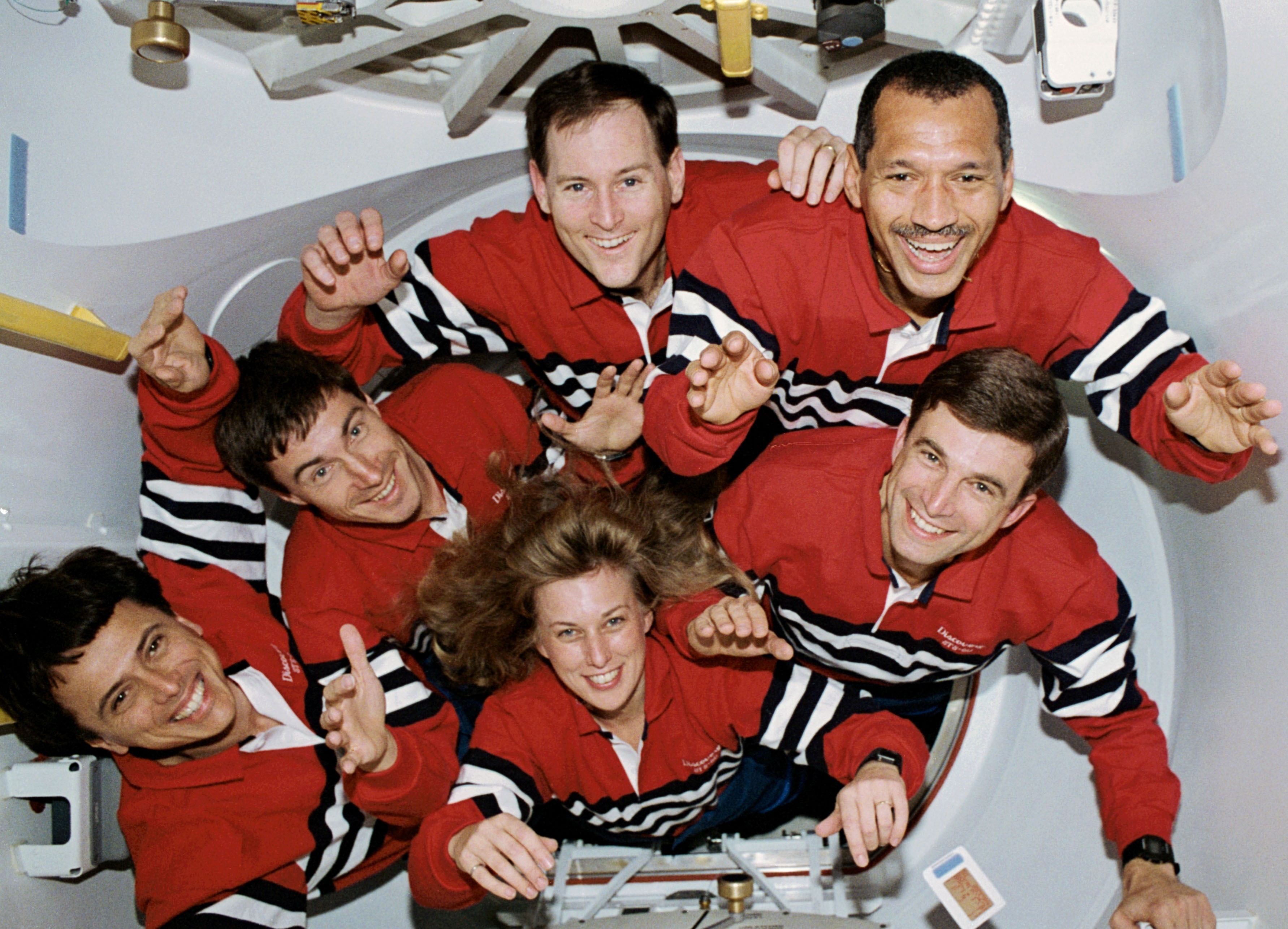
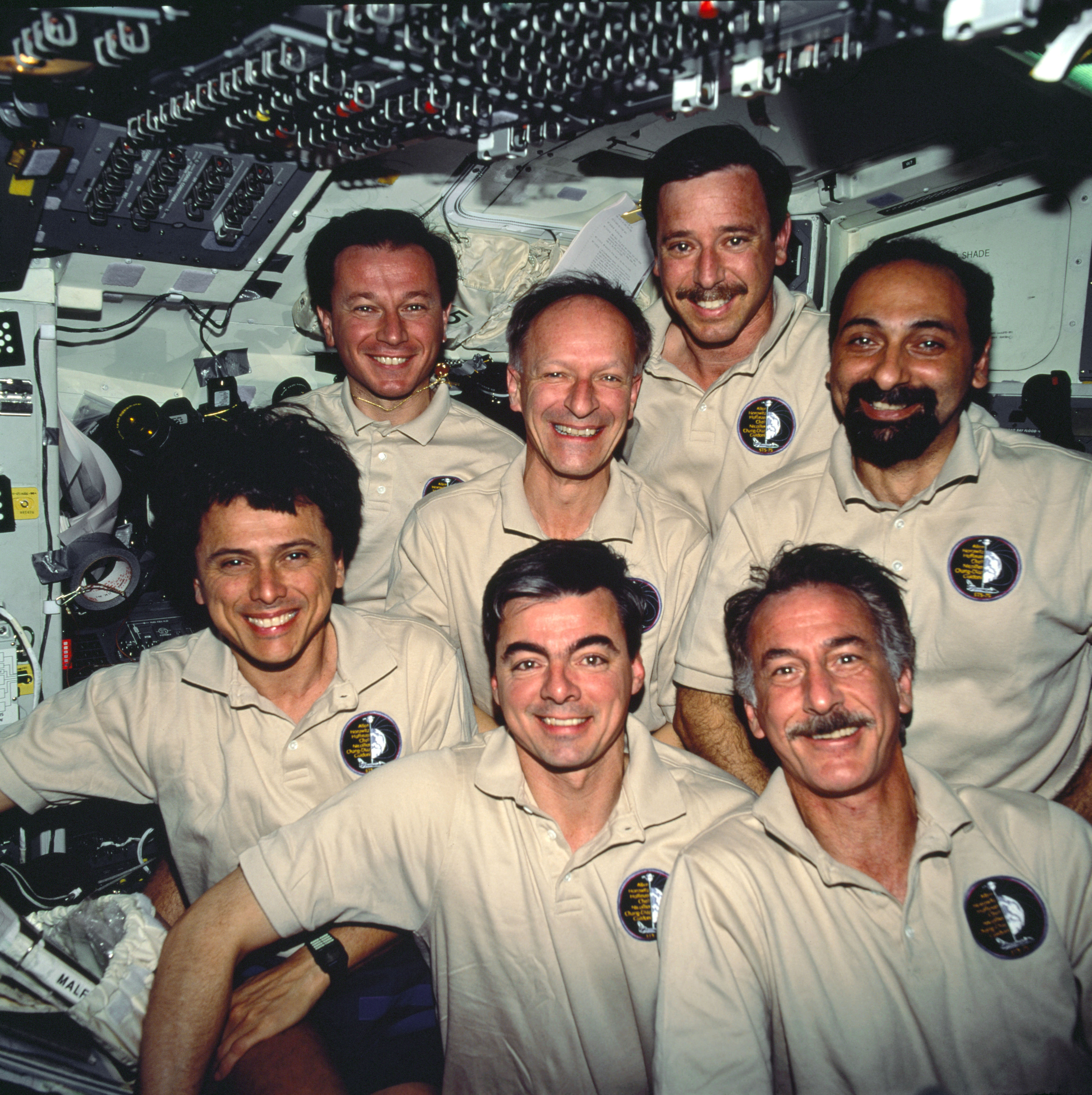
Franklin R. Chang-Díaz, with the STS-60 crew Chang-Díaz with his STS-75 crew mates Chang-Díaz, with the STS-91 and Mir 25 crews

Left: Franklin R. Chang-Díaz, lower left, with the STS-60 crew. Middle: Chang-Díaz, left, with his STS-75 crew mates.
Right: Chang-Díaz, with the STS-91 and Mir 25 crews.

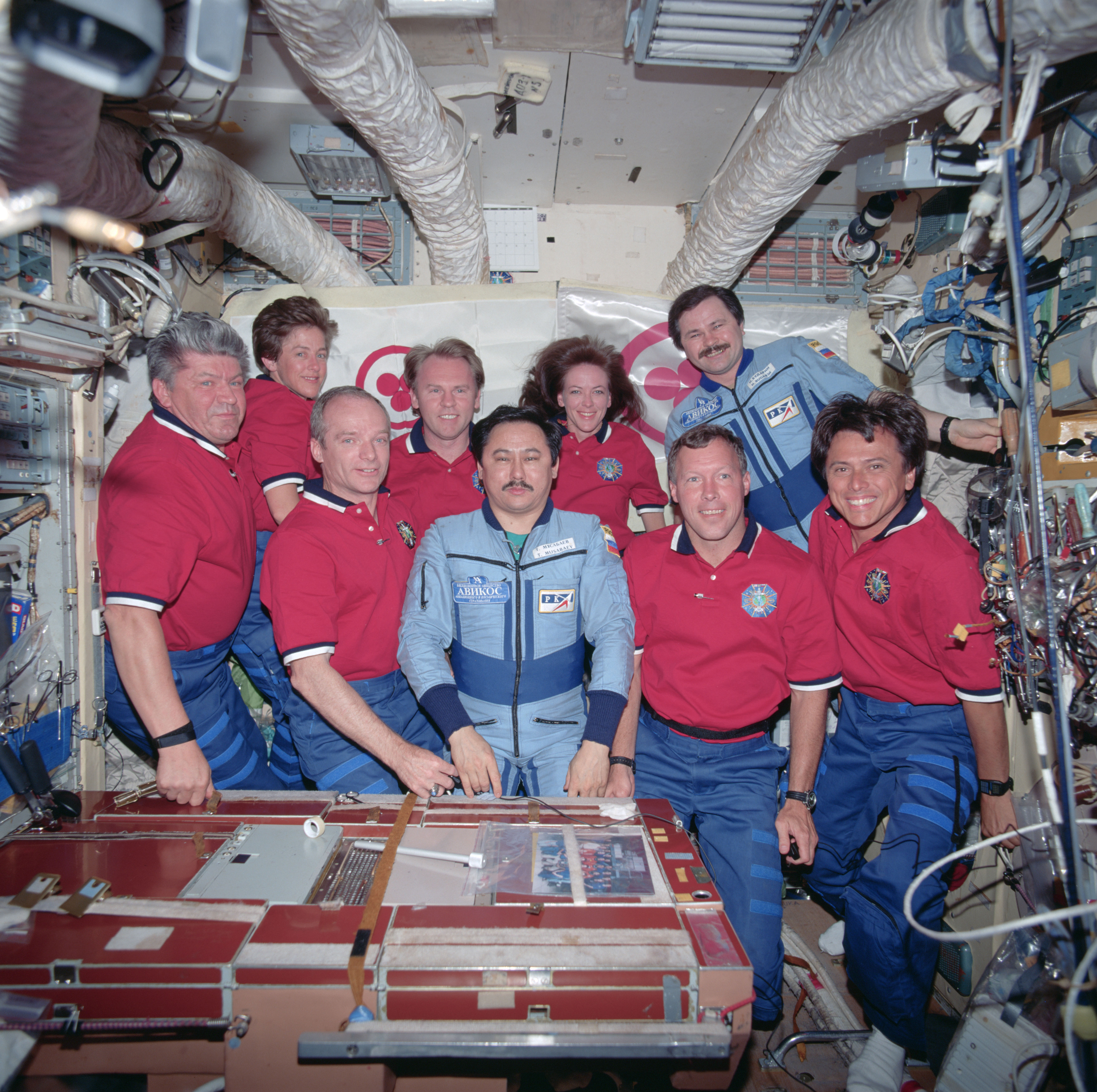
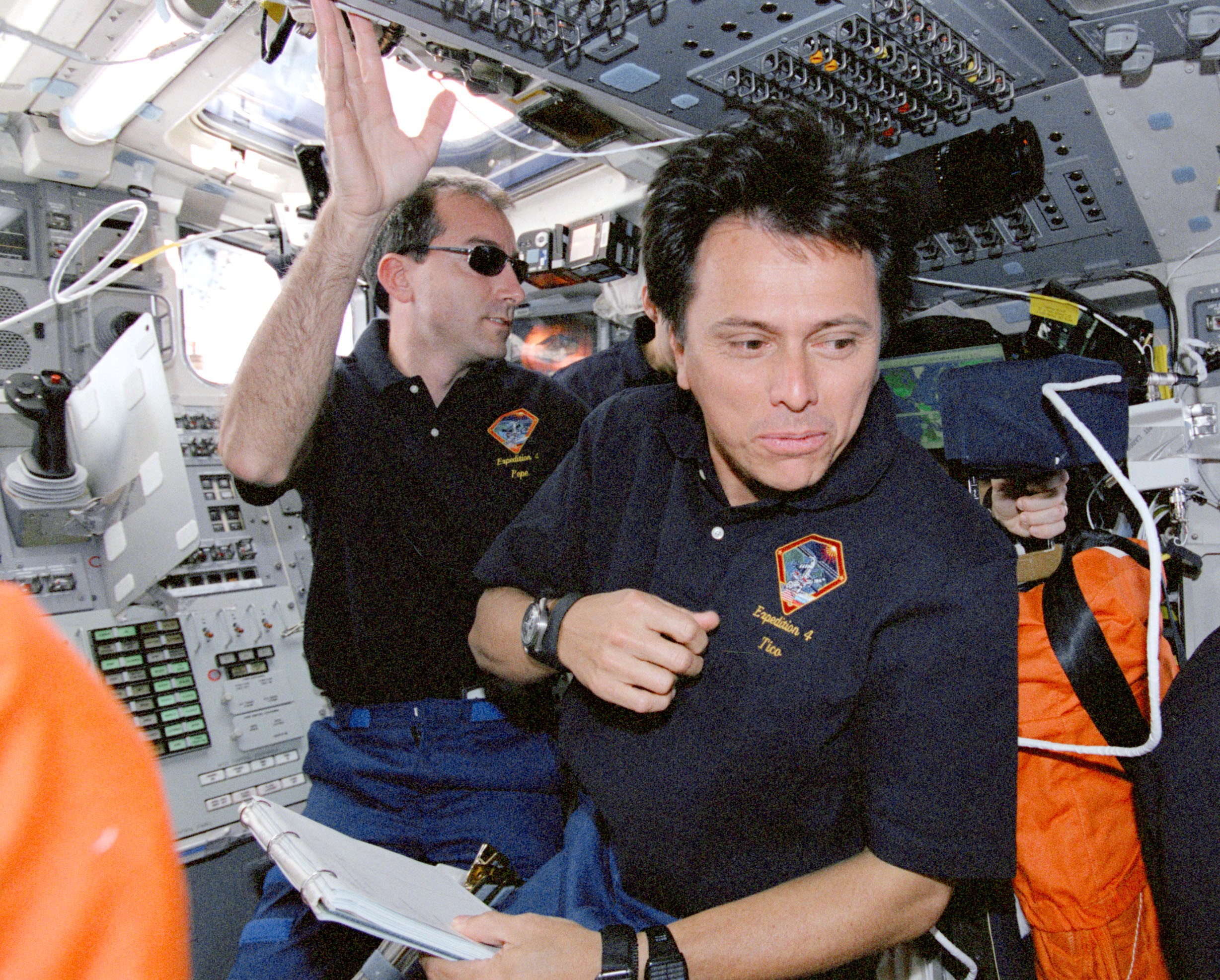
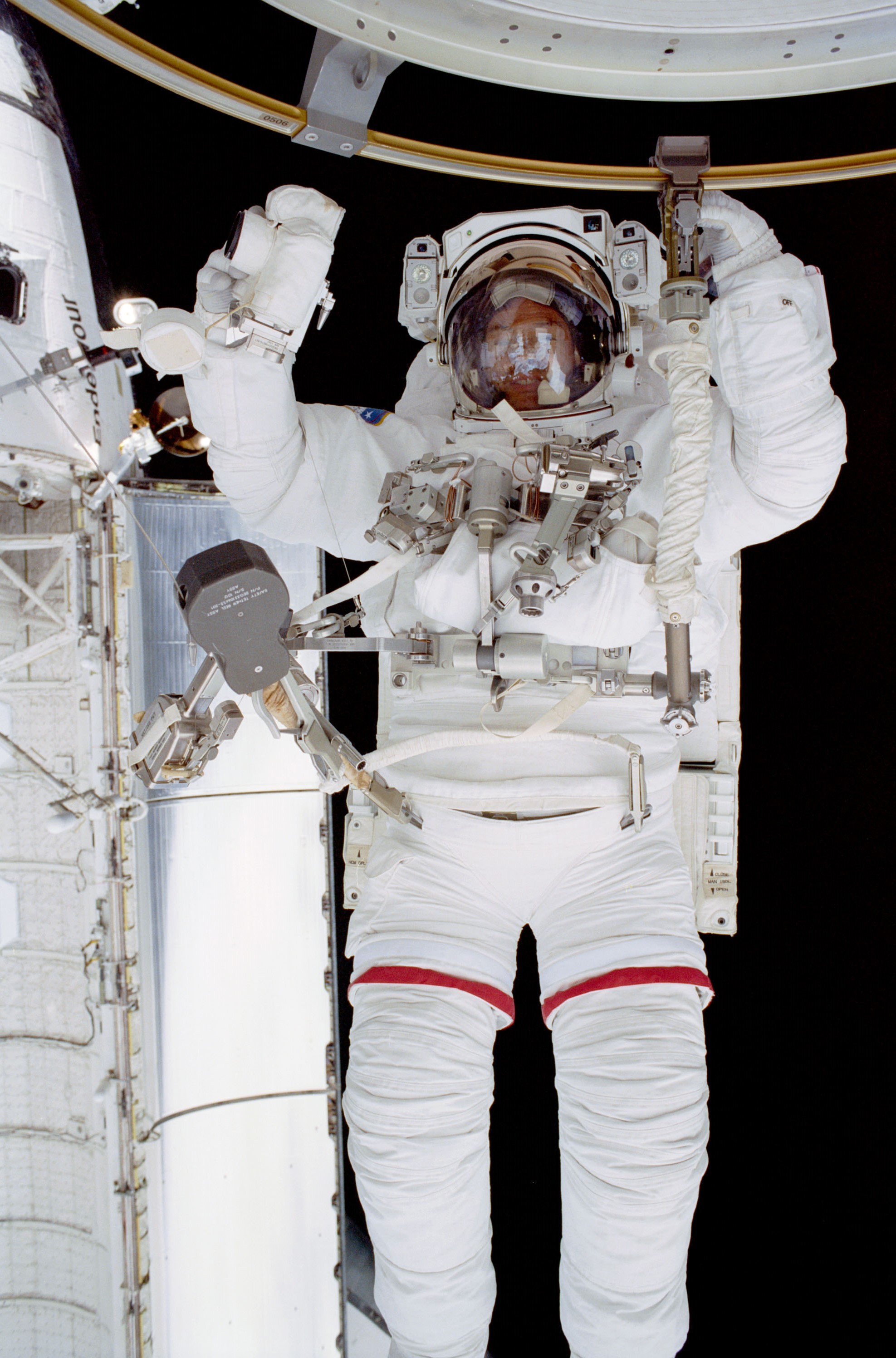
During his record-tying seventh trip into space, Chang-Díaz made his only visit to the space station. The main goals of Endeavour’s STS-111 mission in June 2002, included the exchange of the Expedition 4 and 5 crews and the resupply of the station using the Leonardo Multi-Purpose Logistics Module (MPLM). Two new research facilities rode in the MPLM, the fifth Expedite the Processing of Experiments to the Space Station (EXPRESS) rack and the Microgravity Sciences Glovebox. Chang-Díaz completed three spacewalks with his fellow mission specialist, French astronaut Philippe Perrin, to install the Mobile Base System portion of the Canadarm2’s remote manipulator system and perform maintenance tasks on the station.
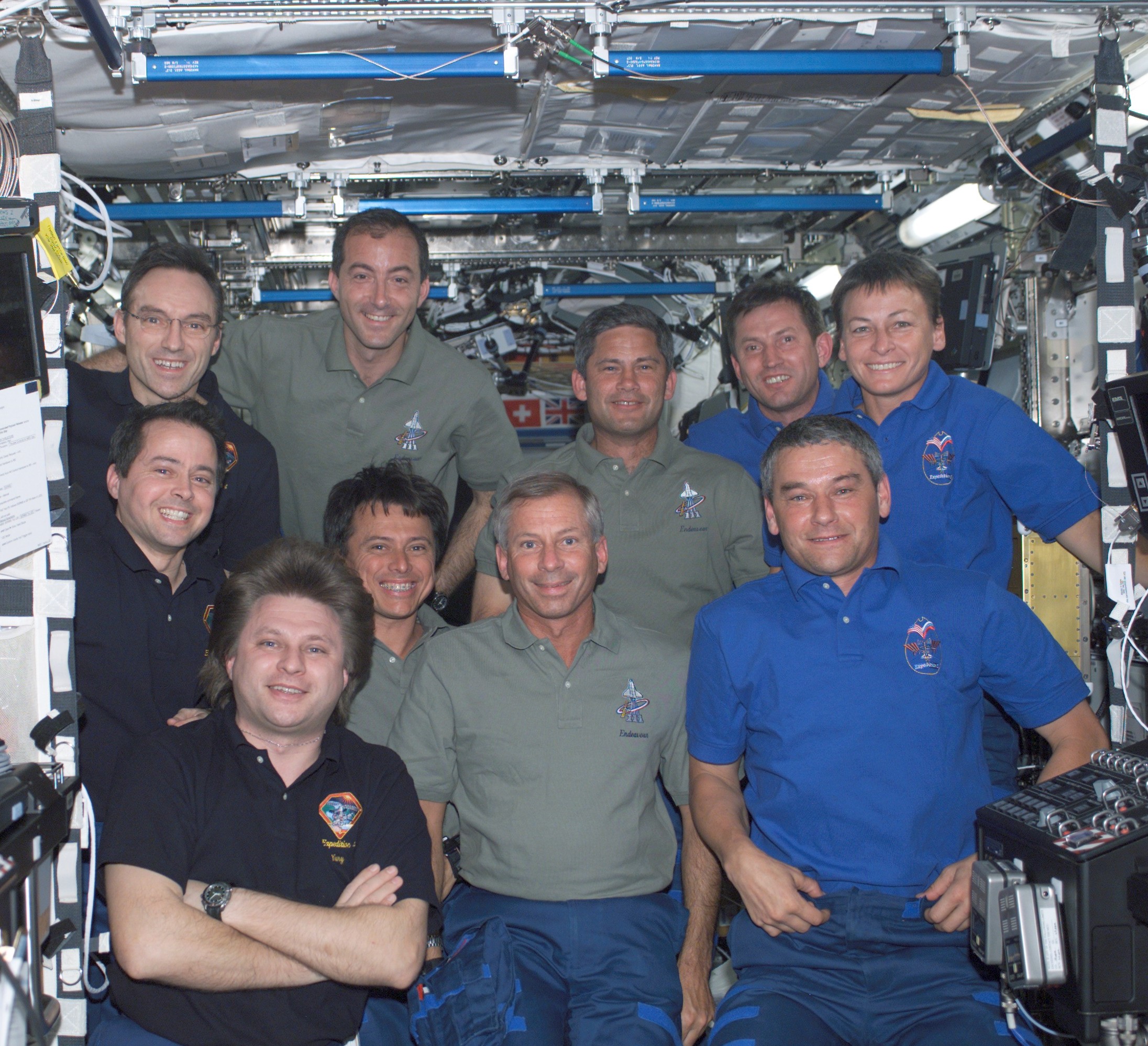
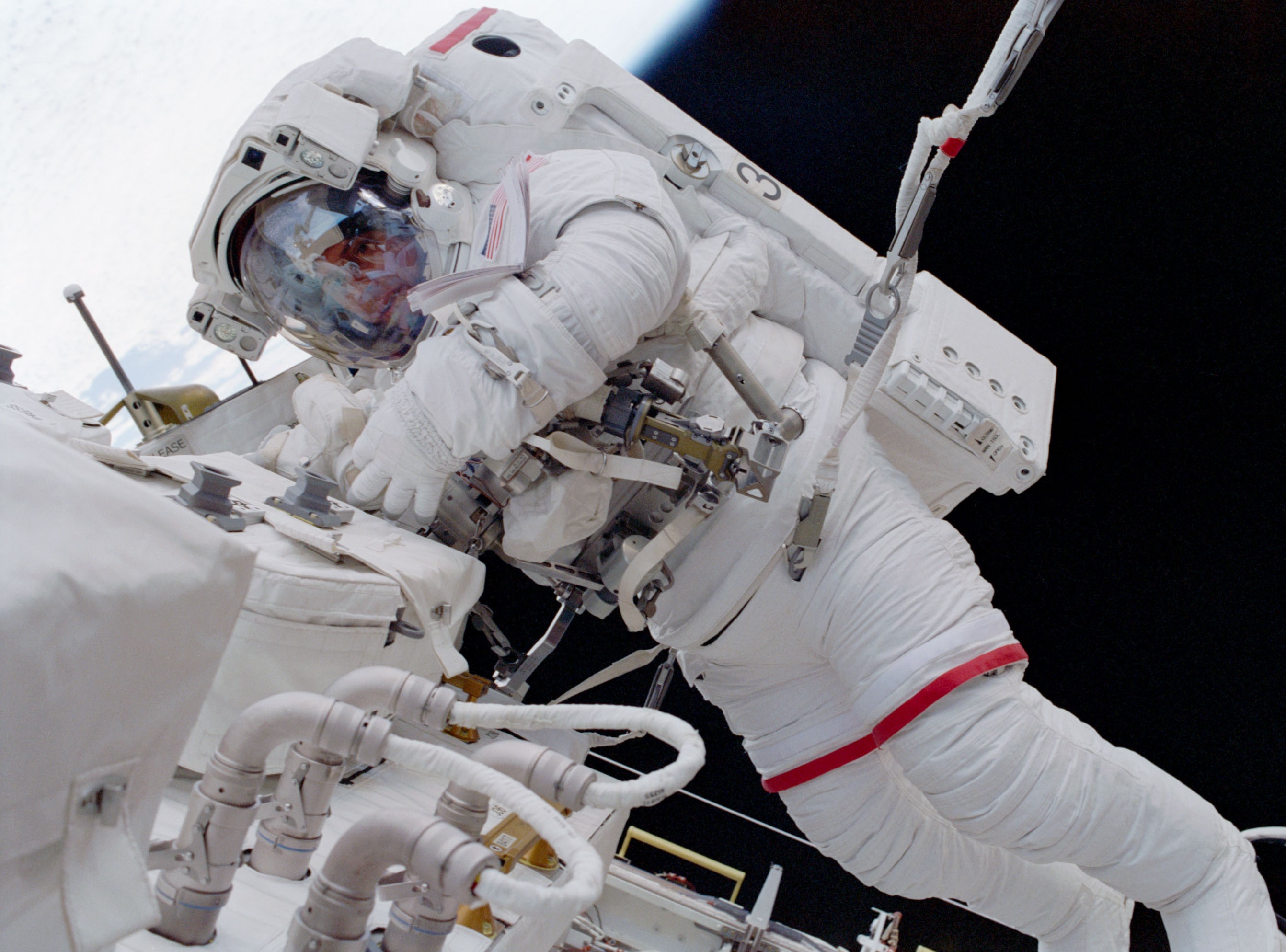
NASA astronaut Franklin R. Chang-Díaz with his STS-111 crewmates and the Expedition 4 and 5 crews Chang-Díaz during the first STS-111 spacewalk Chang-Díaz in Endeavour’s middeck following undocking from the space station

Left: NASA astronaut Franklin R. Chang-Díaz, left of center, with his STS-111 crewmates and the Expedition 4 and 5 crews. Middle: Chang-Díaz during the first STS-111 spacewalk. Right: Chang-Díaz in Endeavour’s middeck following undocking from the space station.

Sidney M. Gutierrez

NASA selected New Mexico native Sidney M. Gutierrez as an astronaut in 1984. On his first mission in June 1991, he served as the pilot of Columbia on the STS-40 Spacelab Life Sciences-1 mission, a nine-day flight dedicated to investigating the responses of the human body to weightlessness. He also served as a test subject for several of the experiments. During his second mission in April 1994, Gutierrez served as the commander of STS-59, the Space Radar Laboratory-1 flight, an 11-day mission aboard Endeavour. The payload included a synthetic aperture imaging radar.
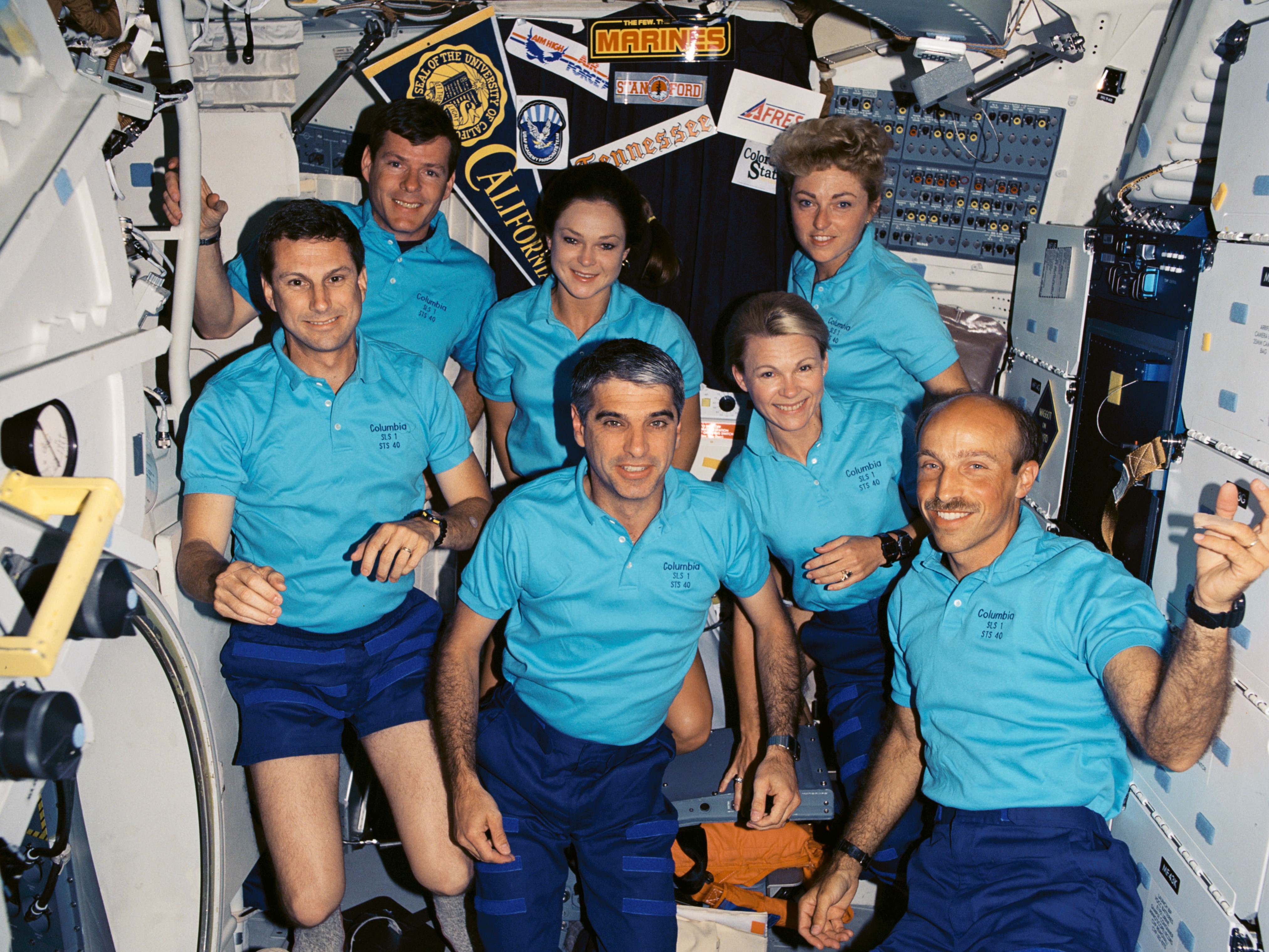
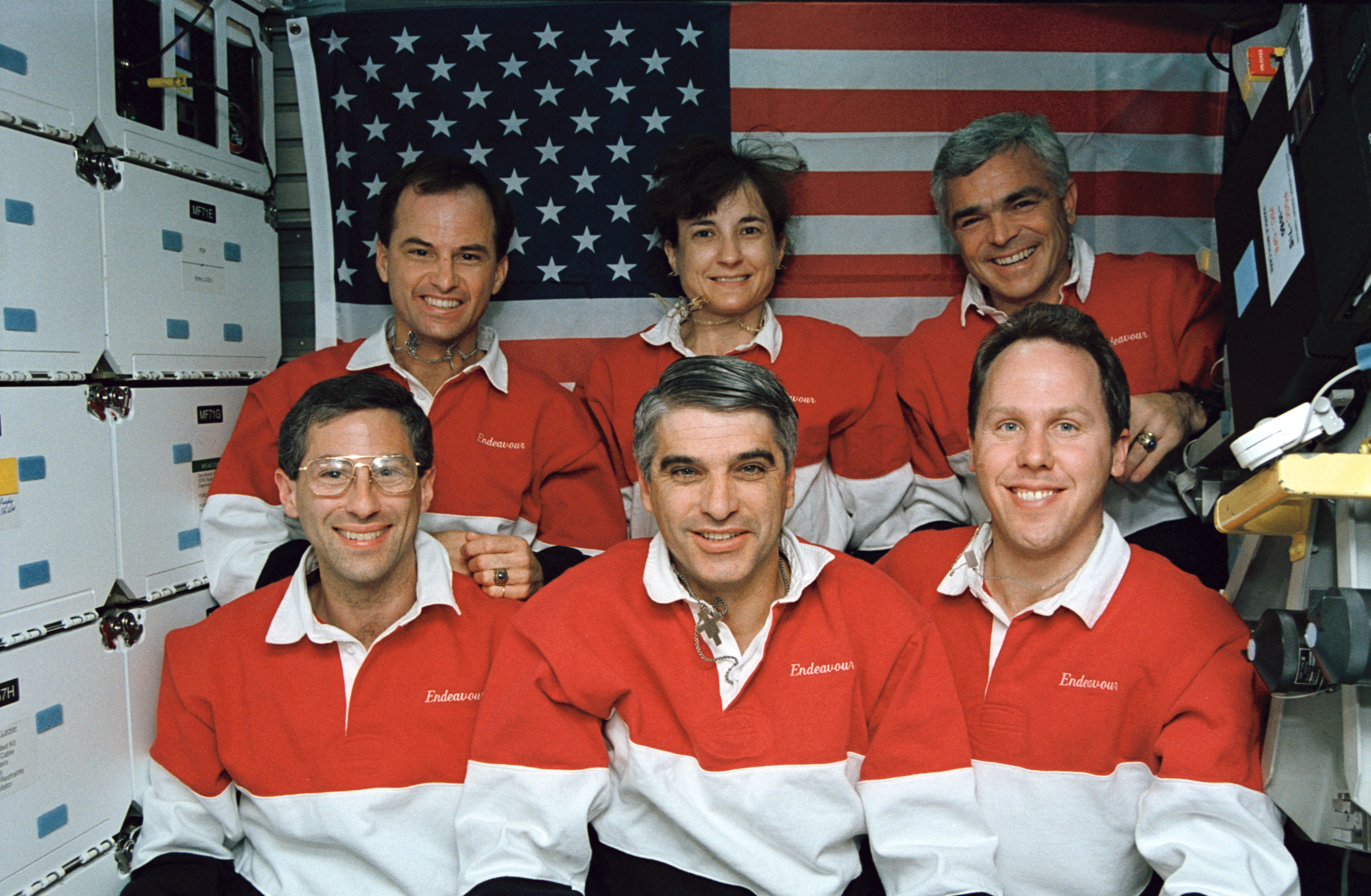
NASA astronaut Sidney M. Gutierrez with his STS-40 crew mates Gutierrez with the STS-59 crew.

Left: NASA astronaut Sidney M. Gutierrez, center, with his STS-40 crew mates. Right: Gutierrez, center, with the STS-59 crew.

Ellen Ochoa

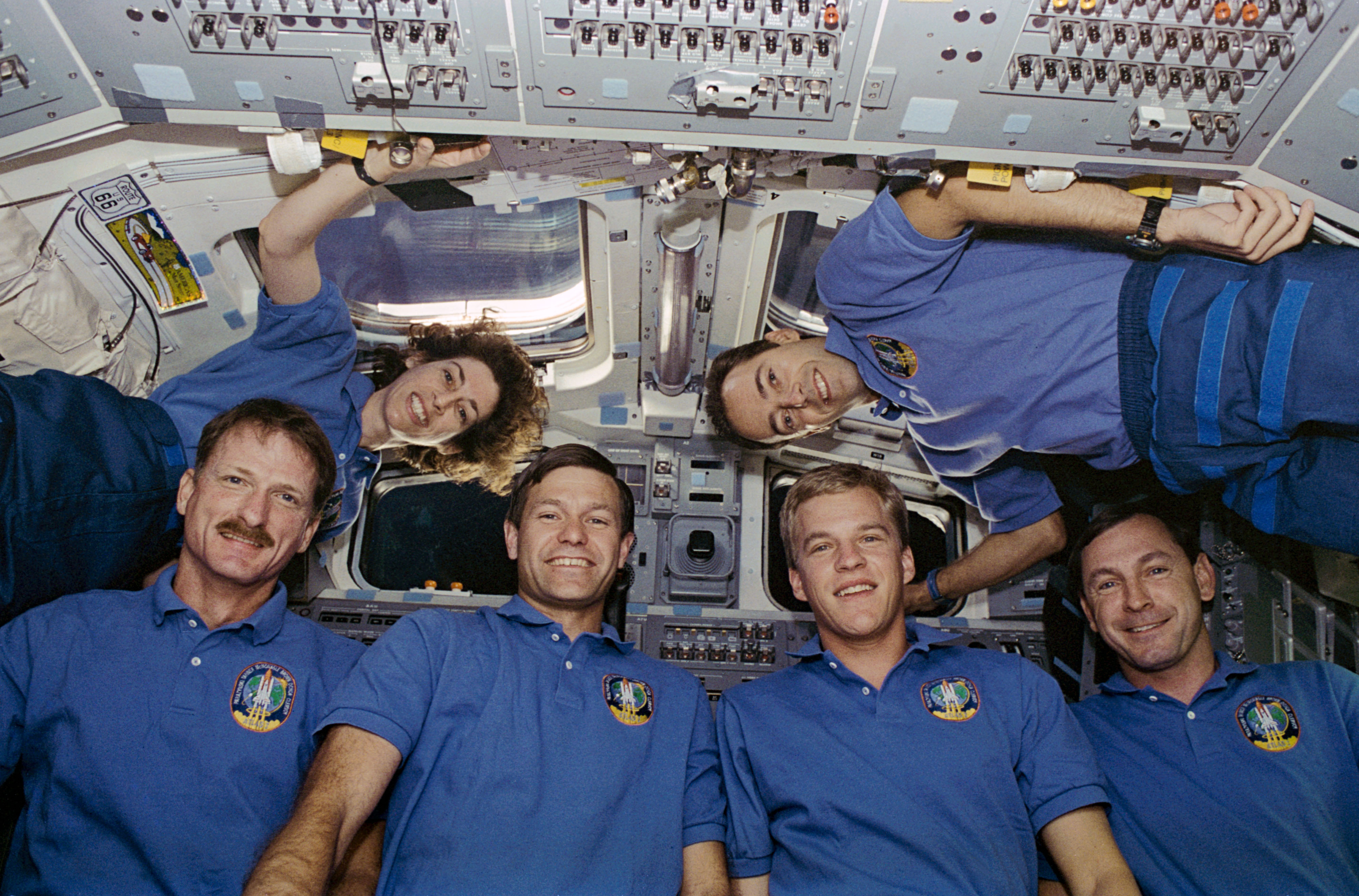
Selected as the first female Hispanic astronaut in 1990, Ellen Ochoa completed four spaceflights and then served as the first Hispanic director of NASA’s Johnson Space Center in Houston. On her first mission in April 1993, she served as a mission specialist on the nine-day STS-56 flight, the second Atmospheric Laboratory for Applications and Science (ATLAS) mission aboard Discovery. An accomplished flautist, she played her flute during the flight. On her second flight, STS-66 in March 1994, Ochoa flew aboard Atlantis and operated the experiments of the ATLAS-3 payload during the 11-day mission.
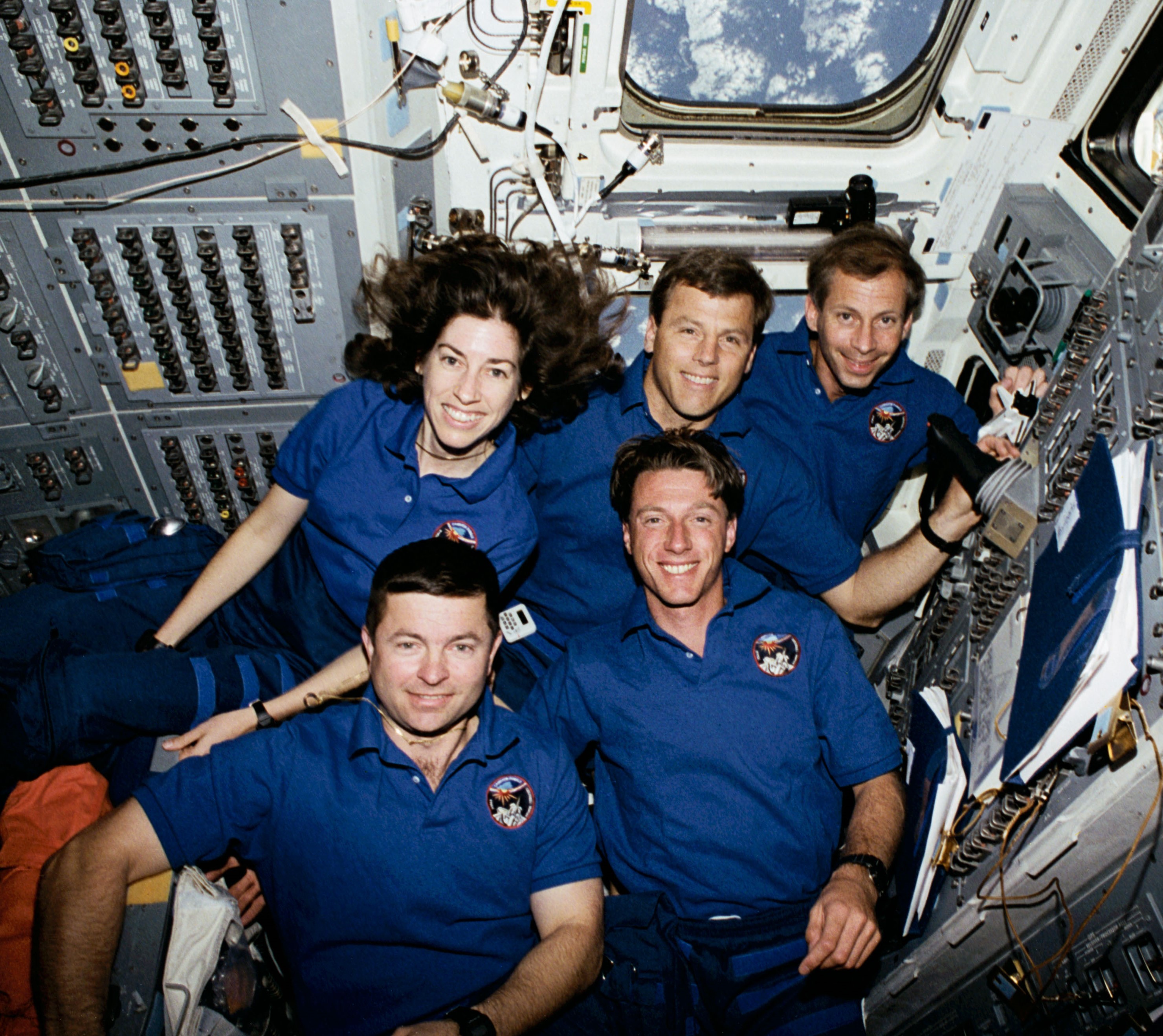
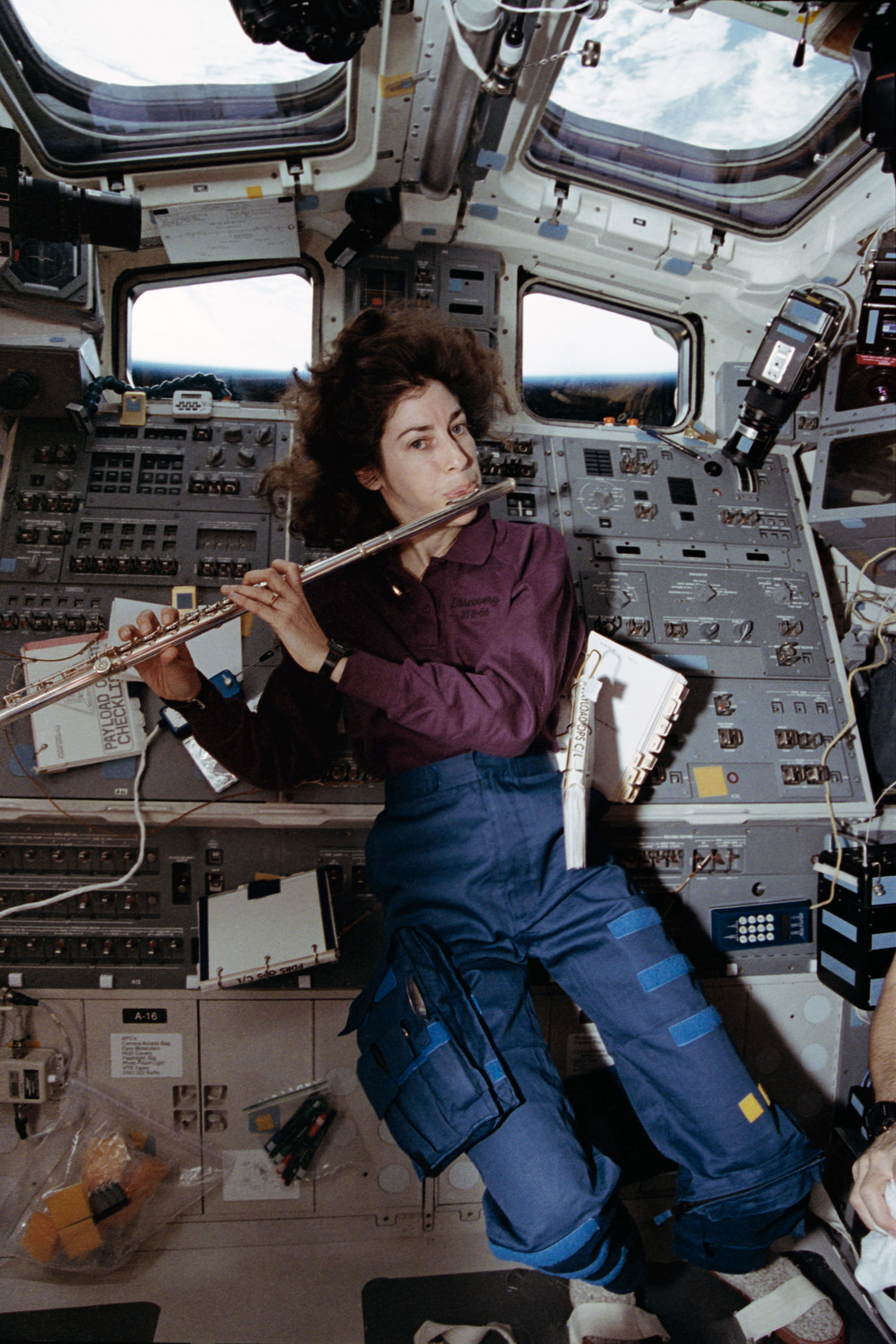
Ellen Ochoa and the rest of the STS-56 crew Ochoa plays the flute on Discovery’s flight deck Ochoa and the rest of the STS-66 crew

Left: Ellen Ochoa, top left, and the rest of the STS-56 crew. Middle: Ochoa plays the flute on Discovery’s flight deck. Right: Ochoa, top left, and the rest of the STS-66 crew.

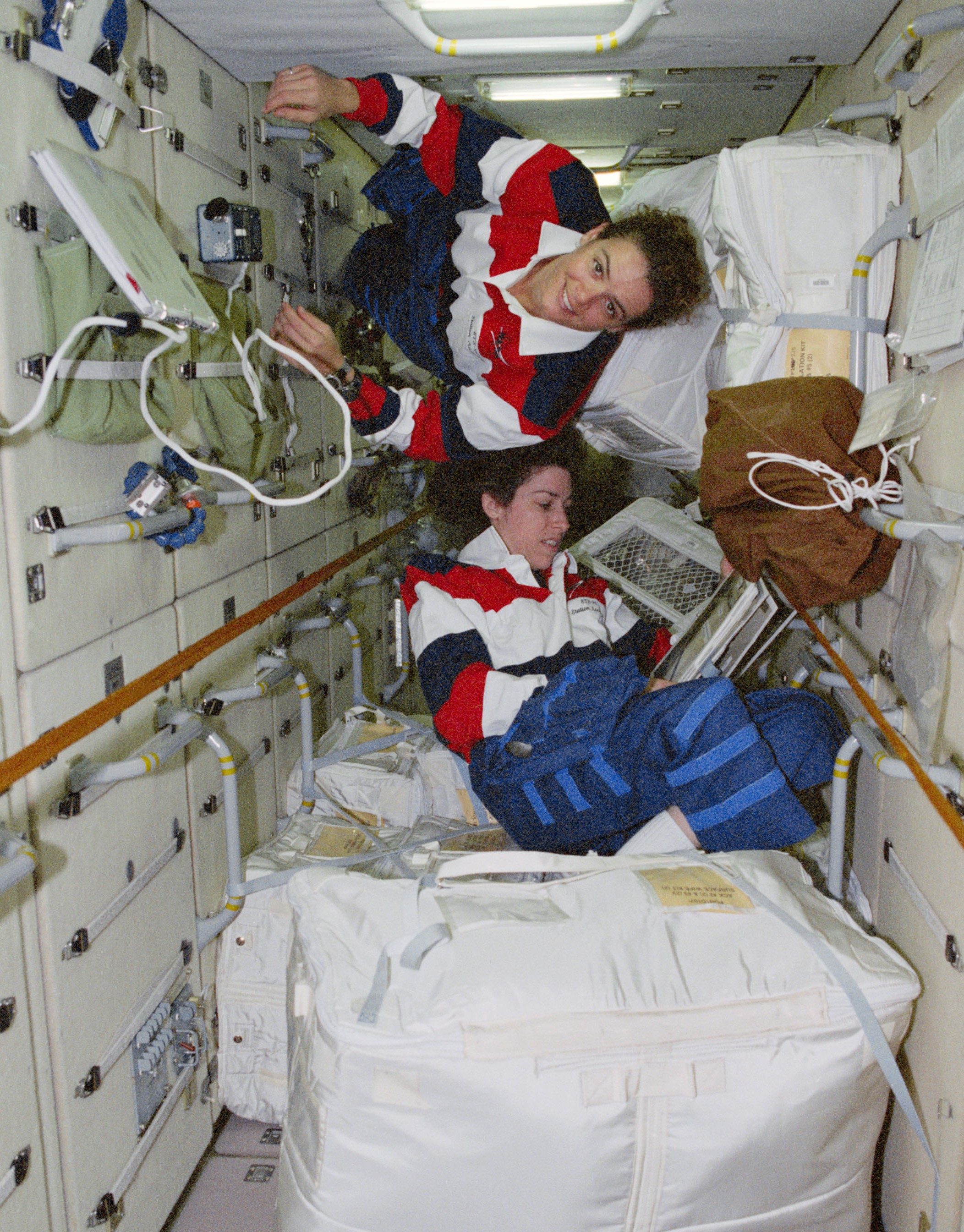
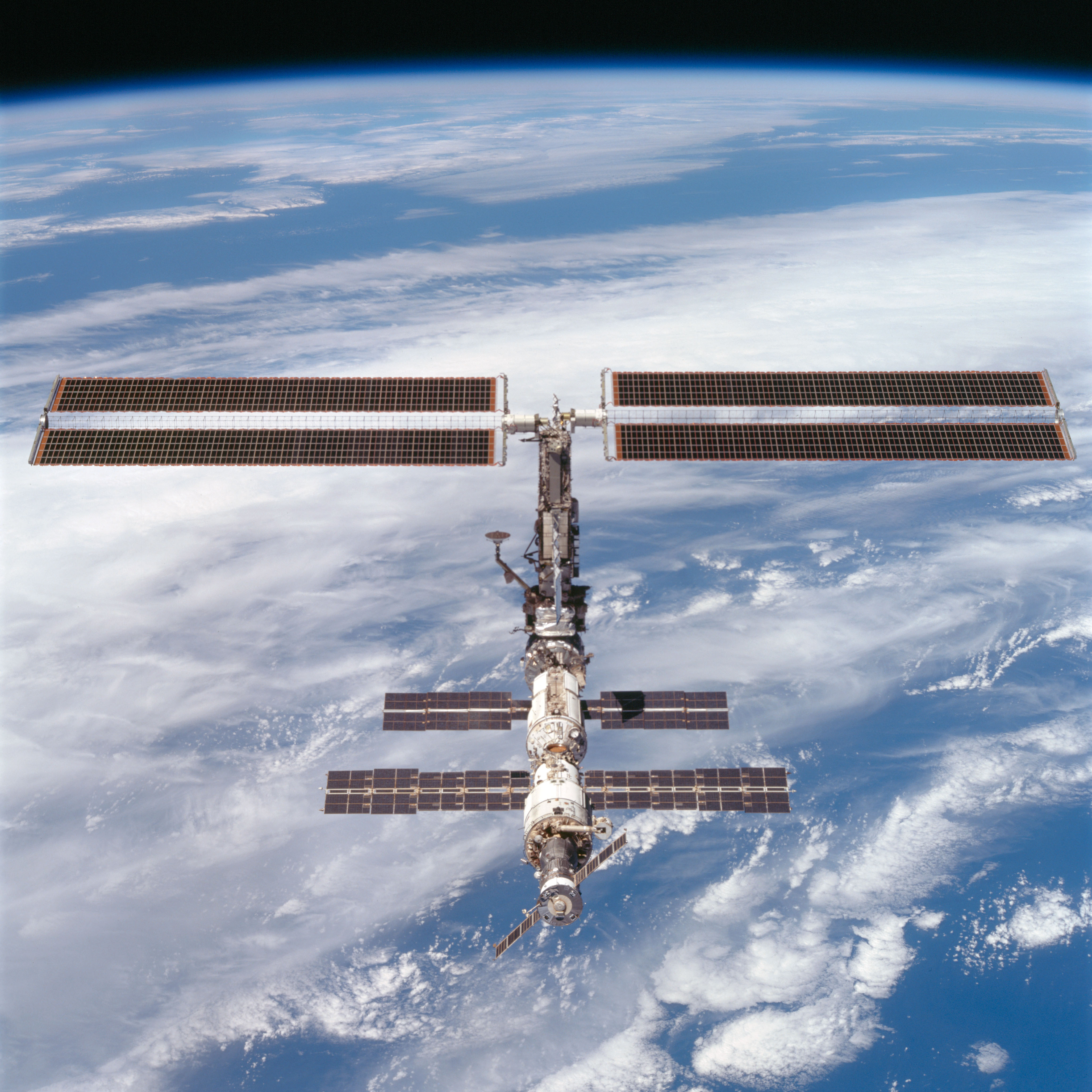
Ochoa holds the distinction as the first Hispanic astronaut to visit the space station, making her first visit in May 1999 as a mission specialist aboard Discovery’s 10-day STS-96 mission. The goals of the mission – only the second shuttle flight to the station that, at the time, comprised only two modules – included the transfer of two tons of logistics to the station, launched inside a Spacehab double module, and the delivery of the Russian Strela cargo crane.
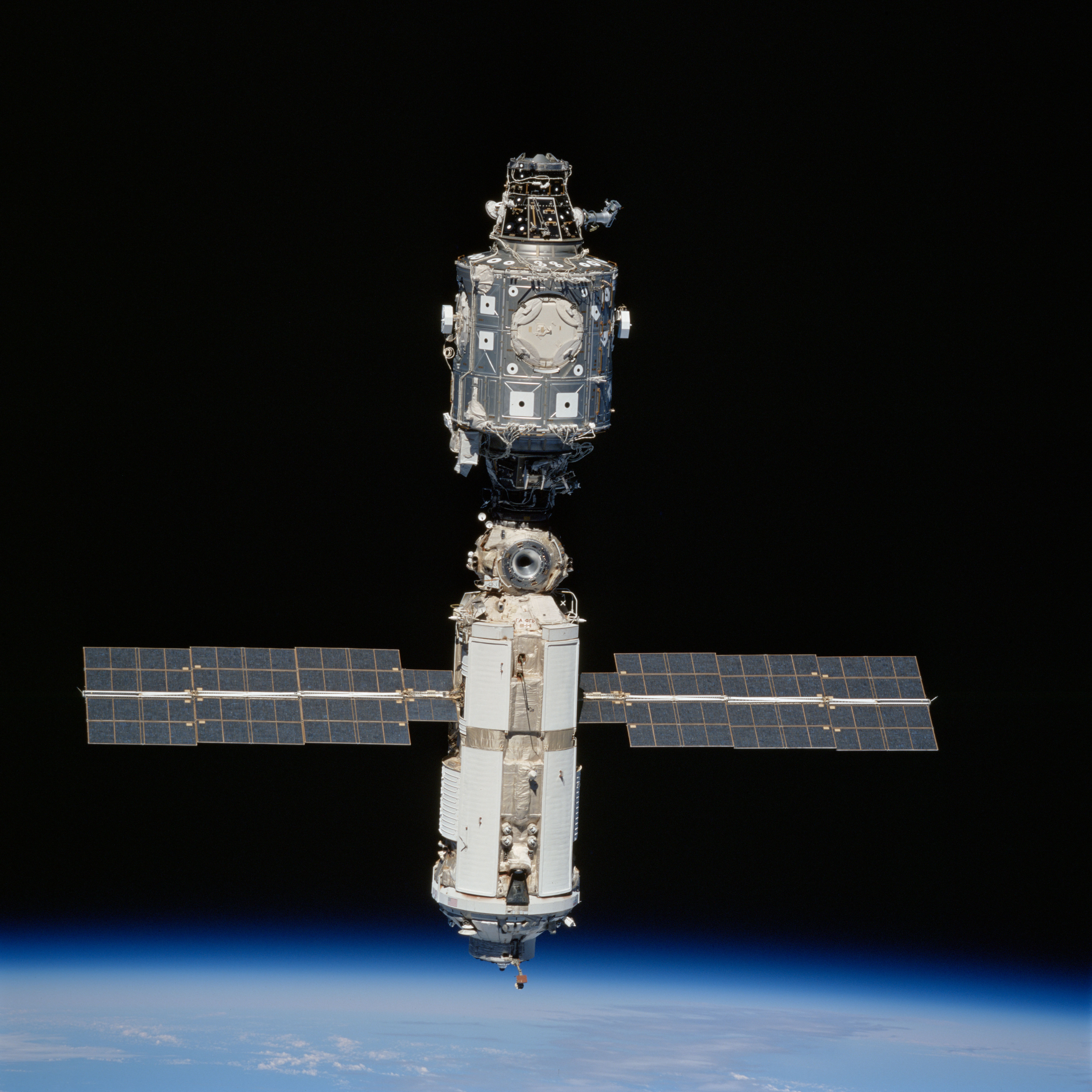
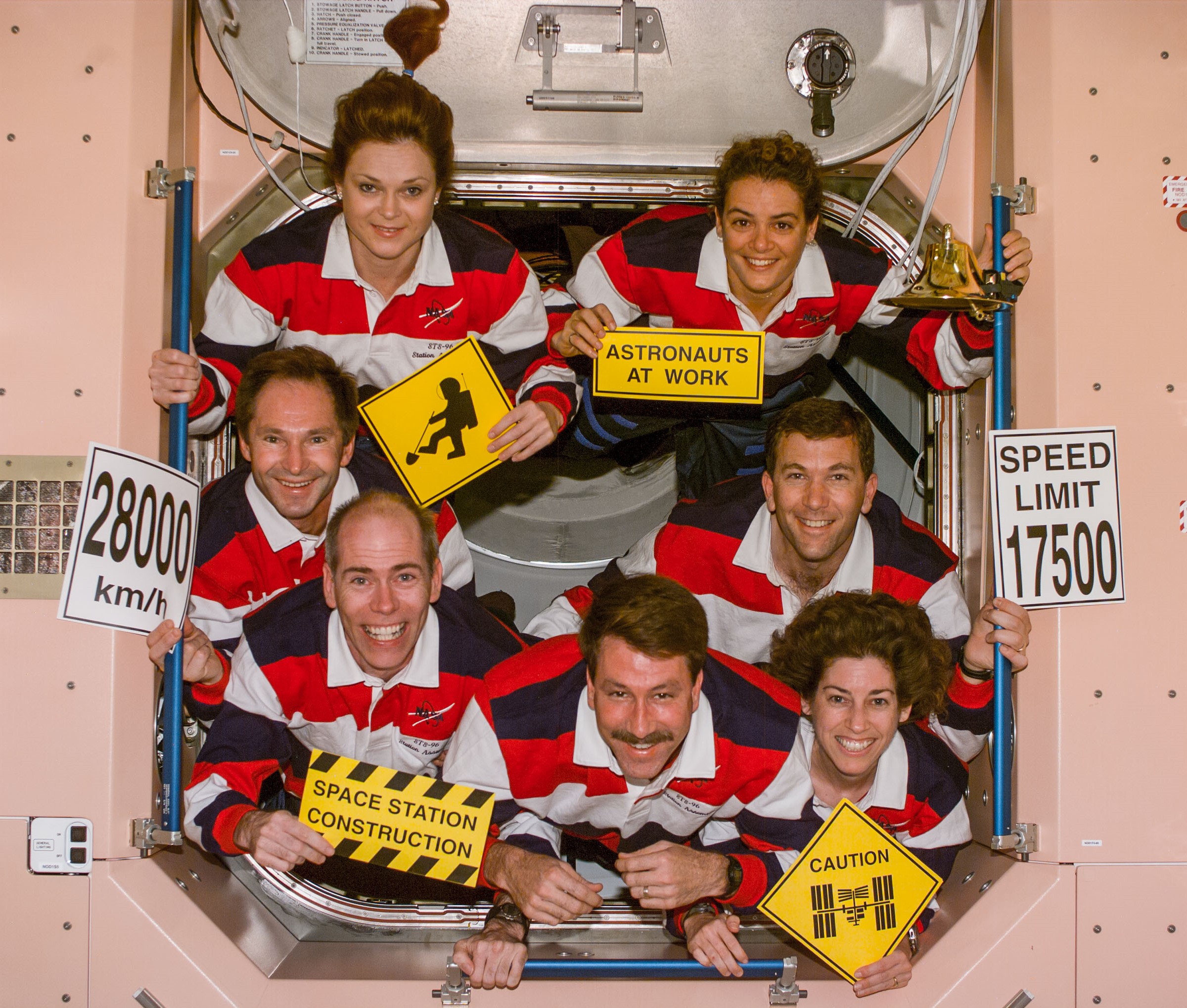
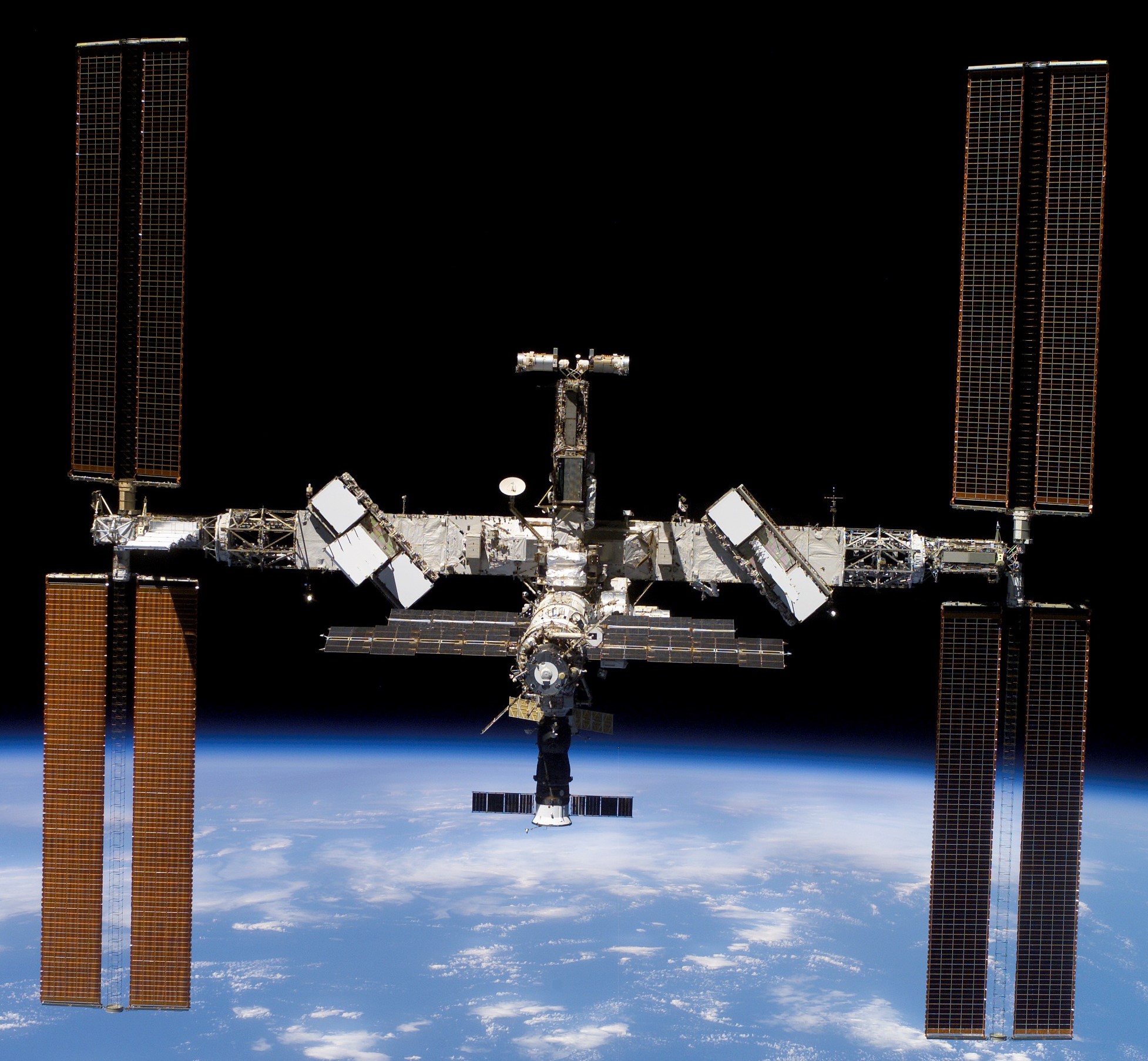
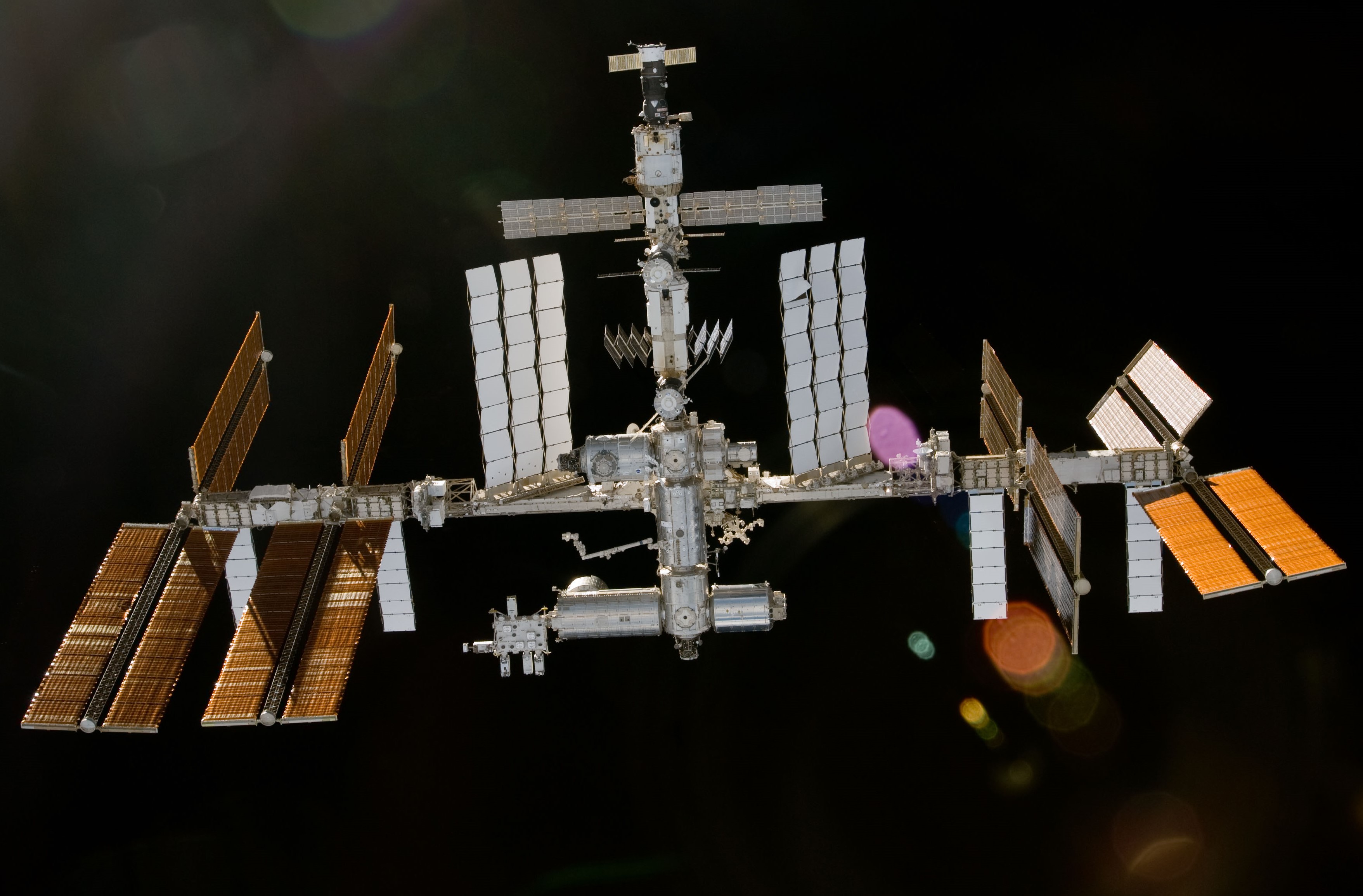
The space station as seen from STS-96 NASA astronaut Ellen Ochoa with the STS-96 crew in the Unity Node 1 Ochoa with fellow STS-96 crewmembers Julie Payette of the Canadian Space Agency in the Zarya module.

Left: The space station as seen from STS-96. Middle: NASA astronaut Ellen Ochoa, lower right, with the STS-96 crew in the Unity Node 1. Right: Ochoa, bottom, with fellow STS-96 crewmembers Julie Payette of the Canadian Space Agency in the Zarya module.

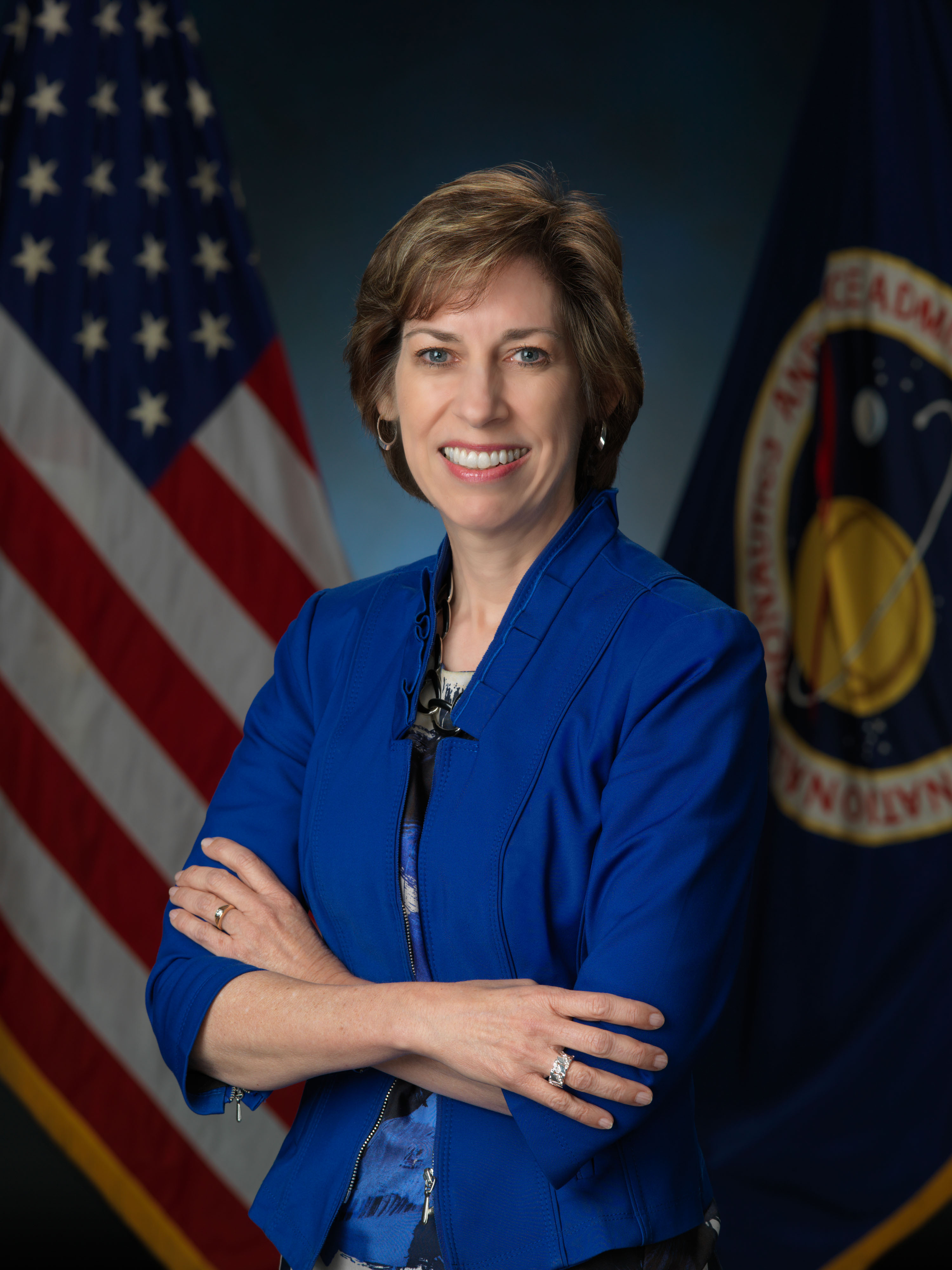
Ochoa returned to a much-enlarged space station aboard space shuttle Atlantis in April 2002 during the STS-110 mission that delivered the 13-ton S0 truss – the center segment section to which future truss segments were later attached. Ochoa operated the Space Station Remote Manipulator System (SSRMS), also known as Canadarm2, to lift the S0 truss from the shuttle’s payload bay and attach it atop the Destiny module. The S0 truss also contained the Mobile Transporter to allow the SSRMS to translate up and down the trusses. Ochoa was named as JSC’s deputy director in 2007, then as JSC’s first Hispanic director in 2013. She served in that position until her retirement from NASA in 2018.
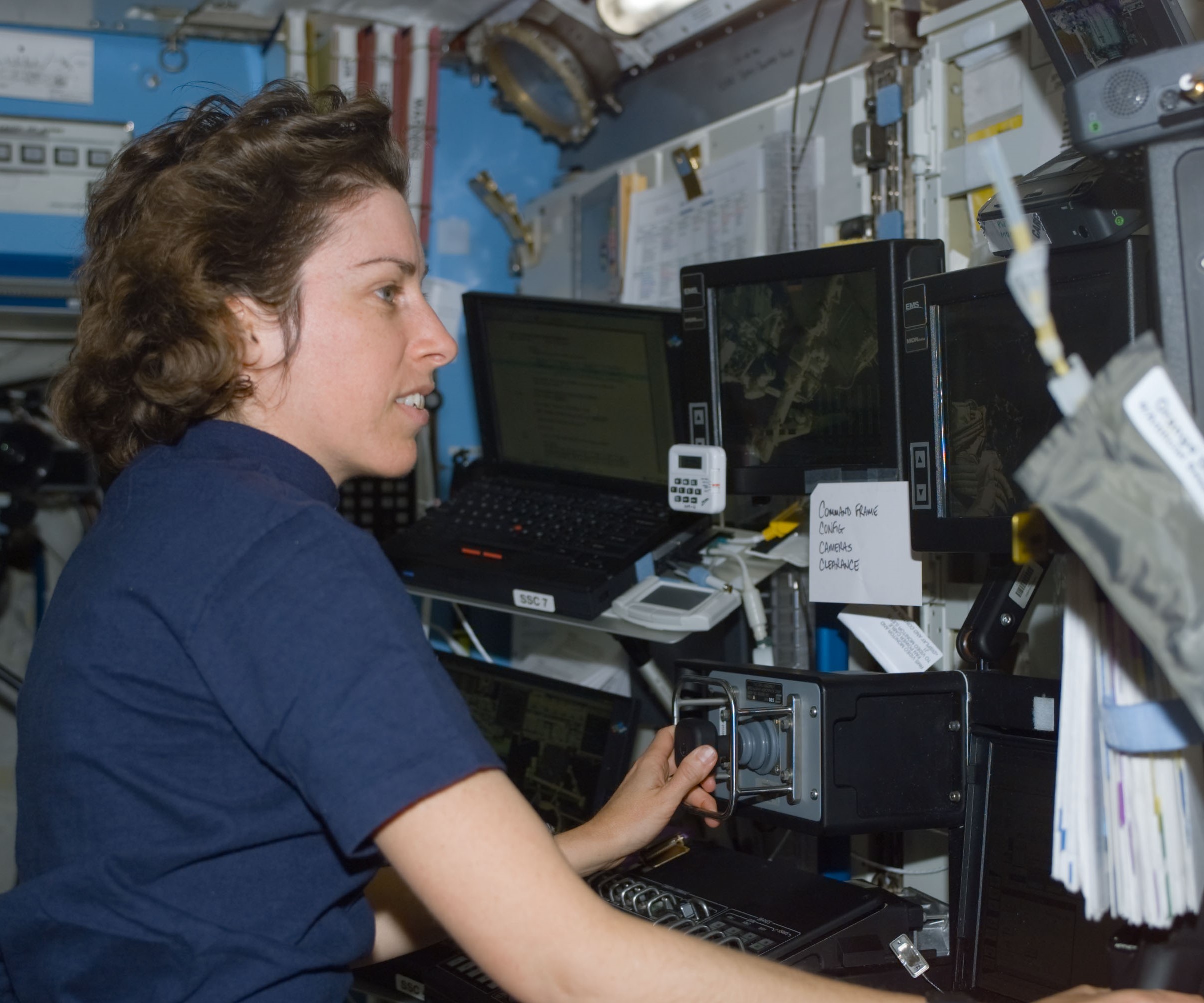
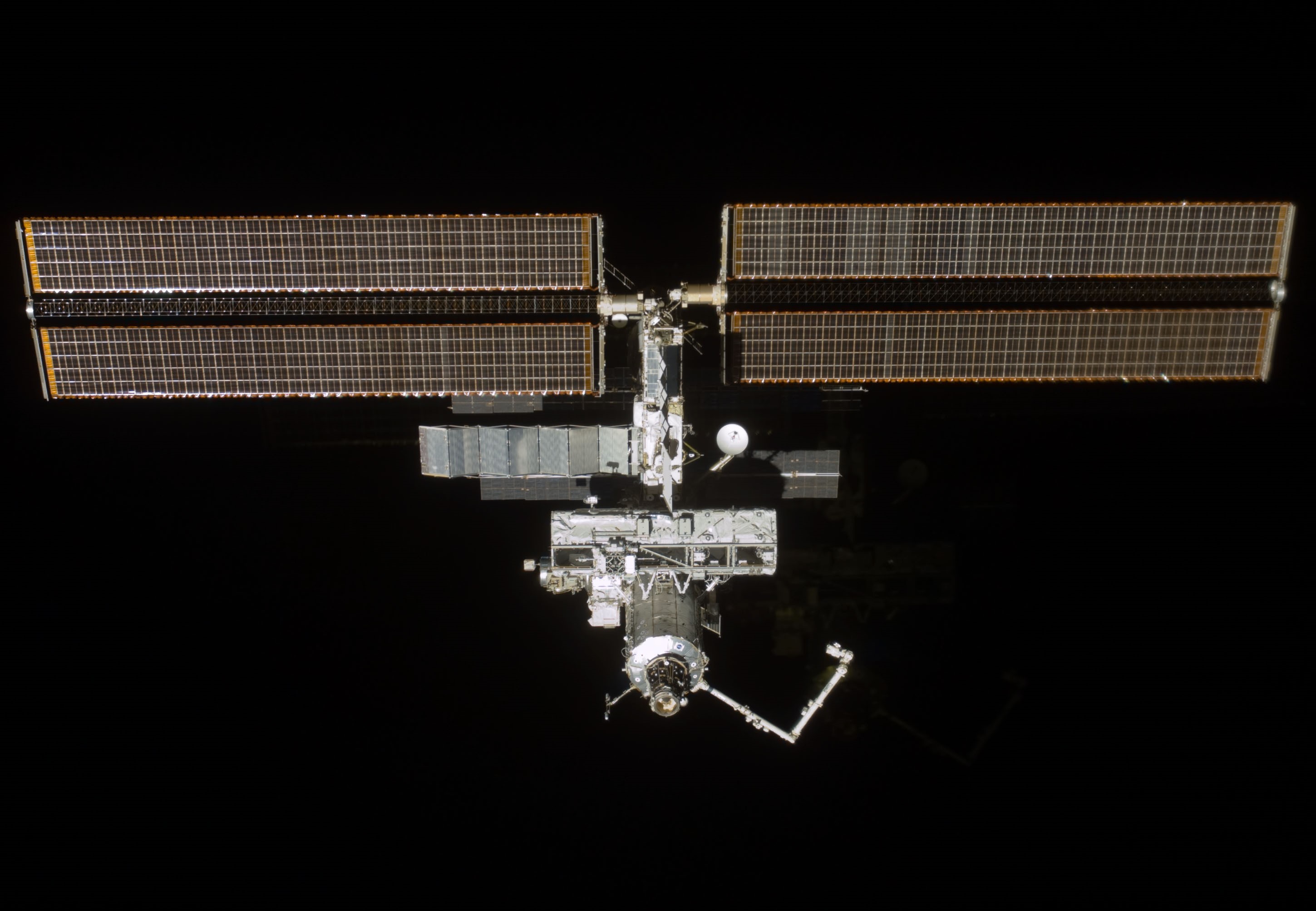
 NASA astronaut Ellen Ochoa operating Canadarm2 The space station as seen from the departing STS-110, showing the S0 truss mounted on Destiny Portrait of Ellen Ochoa as director of NASA’s Johnson Space Center in Houston

Left: NASA astronaut Ellen Ochoa operating Canadarm2 in the Destiny module. Middle: The space station as seen from the departing STS-110, showing the S0 truss mounted on Destiny.  Right: Portrait of Ochoa as director of NASA’s Johnson Space Center in Houston.

Michael E. Lopez-Alegria

NASA selected Michael E. “LA” Lopez-Alegria, born in Madrid, Spain, as an astronaut in 1992. On his first spaceflight, he served as a mission specialist on STS-73, the second flight of the United States Microgravity Laboratory. The 16-day mission aboard Columbia in October 1995 included 37 investigations supported by 11 facilities, with the seven-member crew working around the clock in two shifts in a Spacelab module.
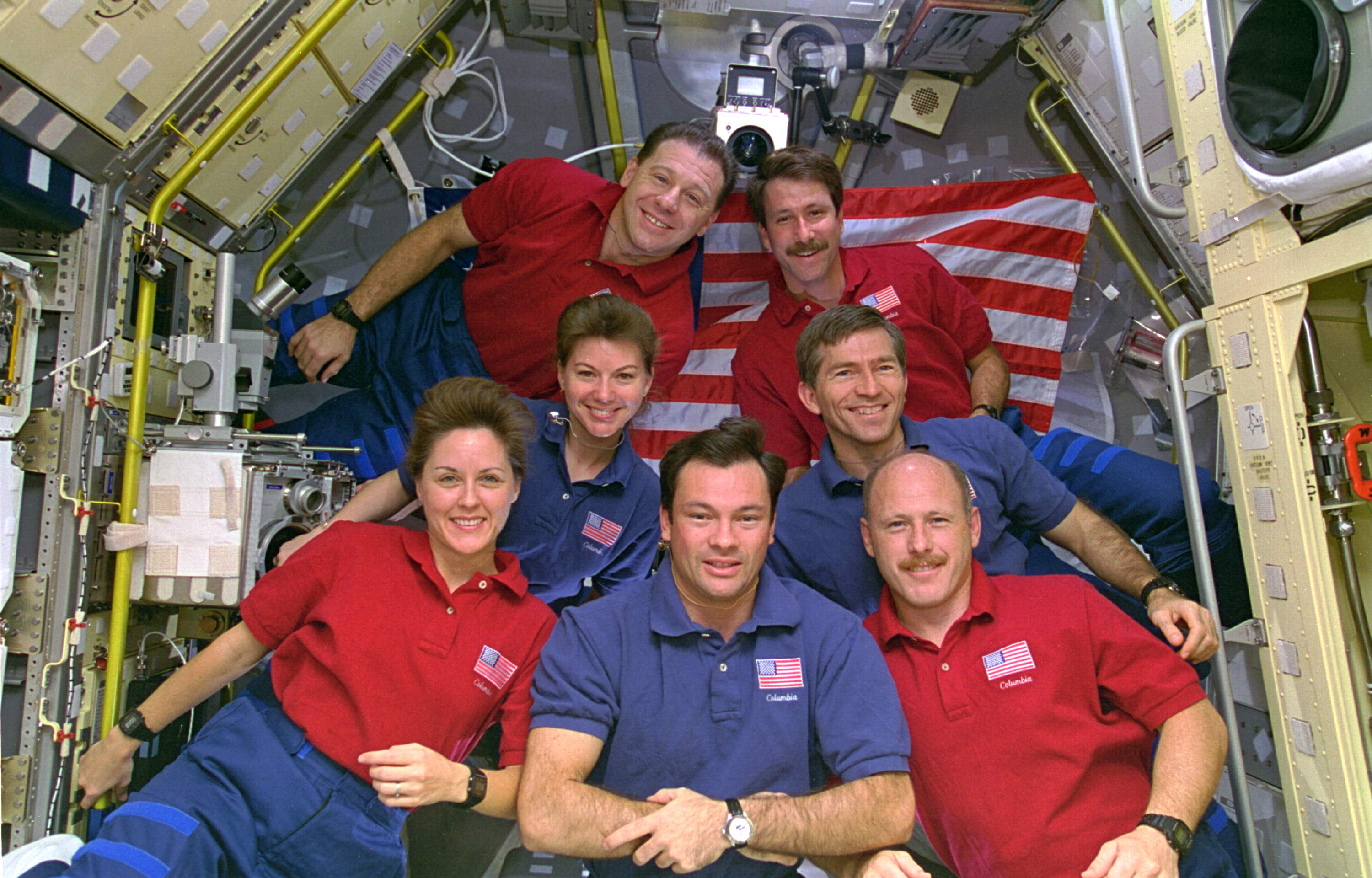
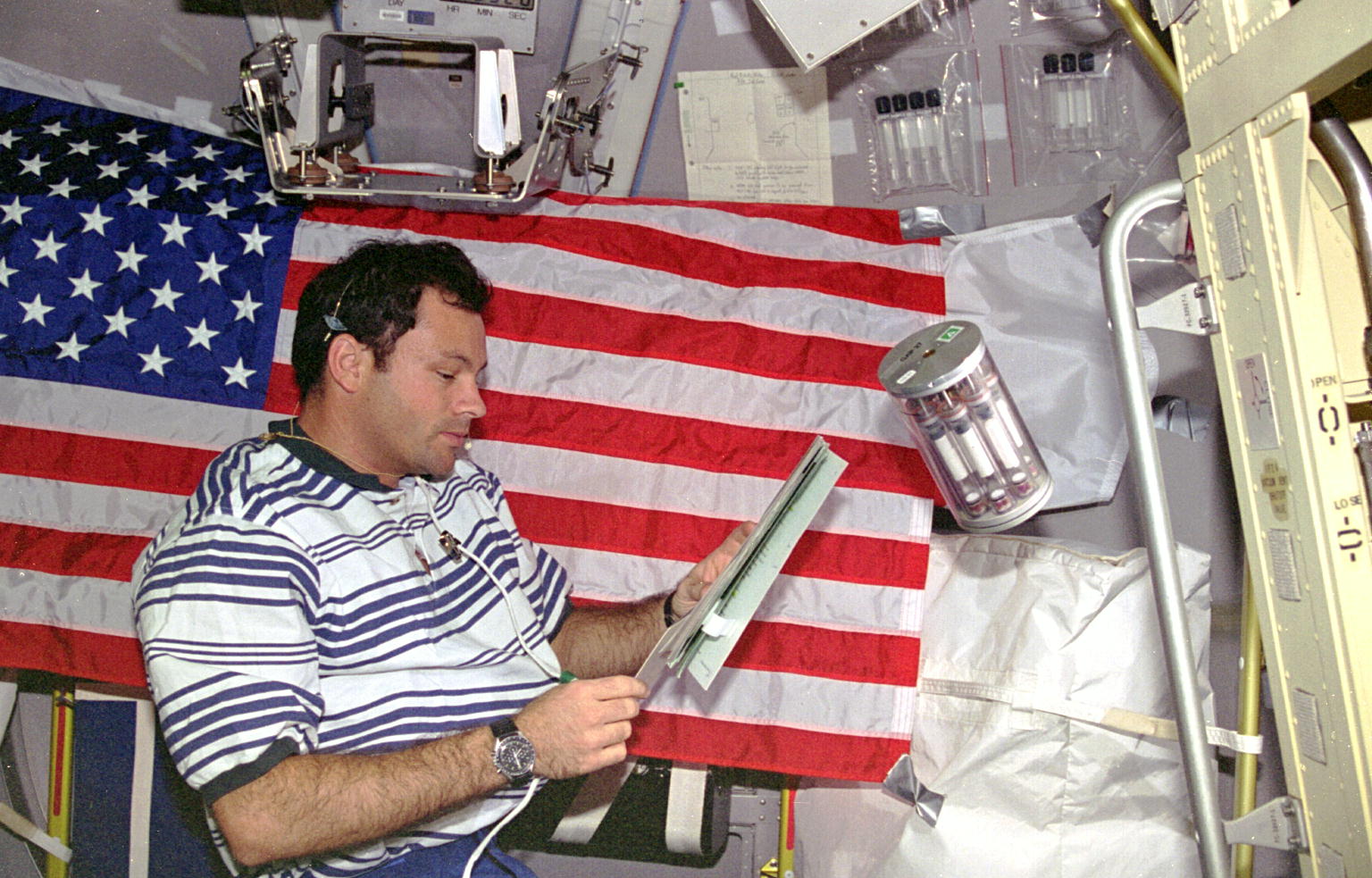
Michael E. Lopez-Alegria with the rest of the STS-73 crew inside the Spacelab module. Lopez-Alegria working on biological experiment in the Spacelab module

Left: Michael E. Lopez-Alegria, center, with the rest of the STS-73 crew inside the Spacelab module. Right: Lopez-Alegria working on biological experiment in the Spacelab module.

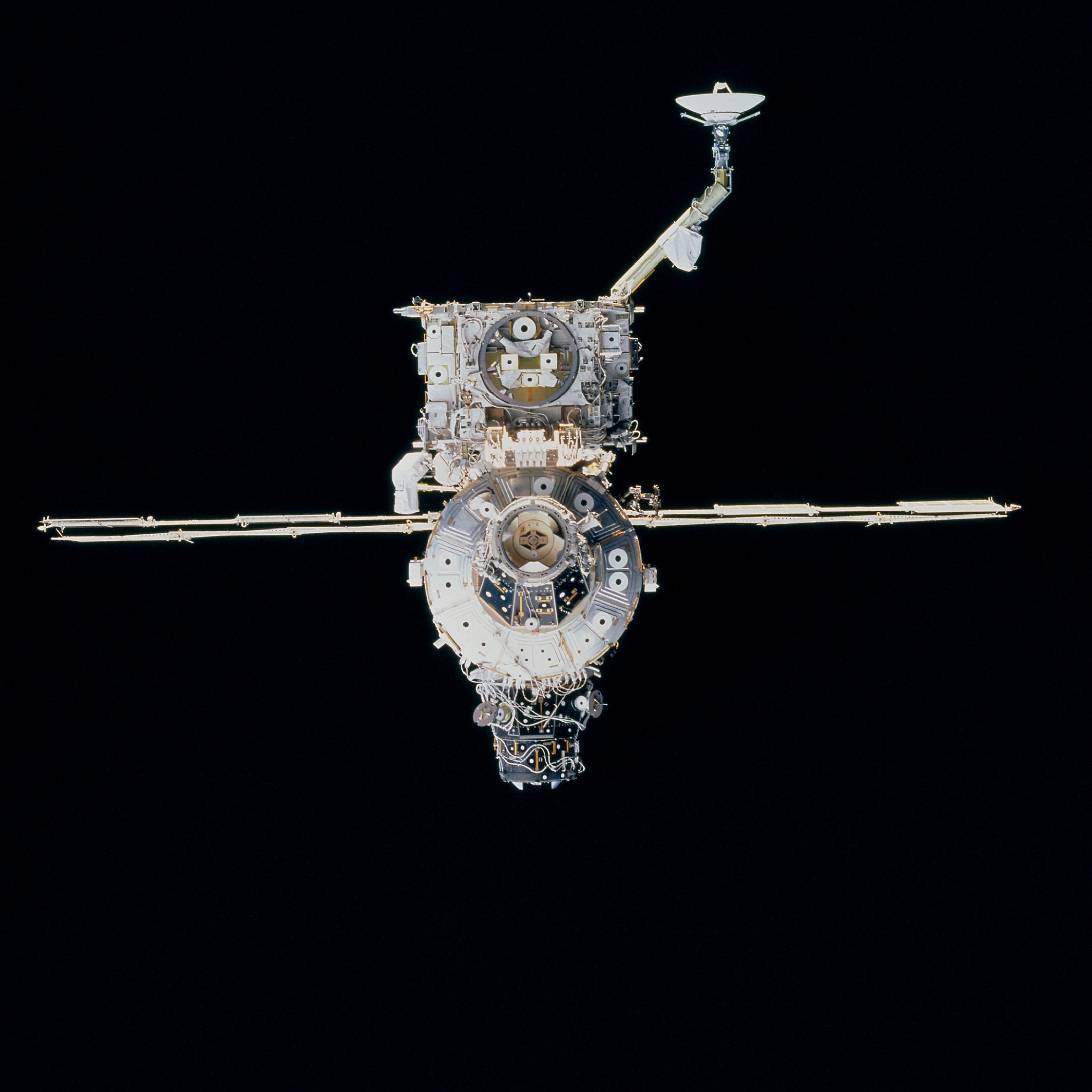
Lopez-Alegria served as a mission specialist on STS-92 during his first visit to the space station. He and his six crewmates launched aboard Discovery in October 2000, the 100th launch of the program and the last to visit an unoccupied station. At the time, the station comprised just three modules. During the mission, the STS-92 crew installed the Z1 truss atop the Unity module, four Control Moment Gyros, and the third Pressurized Mating Adaptor. The Z1 truss enabled the addition of solar arrays and radiators on the subsequent assembly flight and also contained high-rate communications equipment including the first Space-to-Ground antenna. Lopez-Alegria participated in two of the mission’s four spacewalks with Peter J. “Jeff” Wisoff to complete the assembly tasks. During their last spacewalk, the two conducted the first flight evaluation at the station of the Simplified Aid for EVA Rescue (SAFER), a propulsive backpack to be used by astronauts should they become detached from the spacecraft. The STS-92 crew left the station ready for its first inhabitants, and indeed less than two weeks later, the first Expedition crew arrived to begin permanent residency in low Earth orbit.
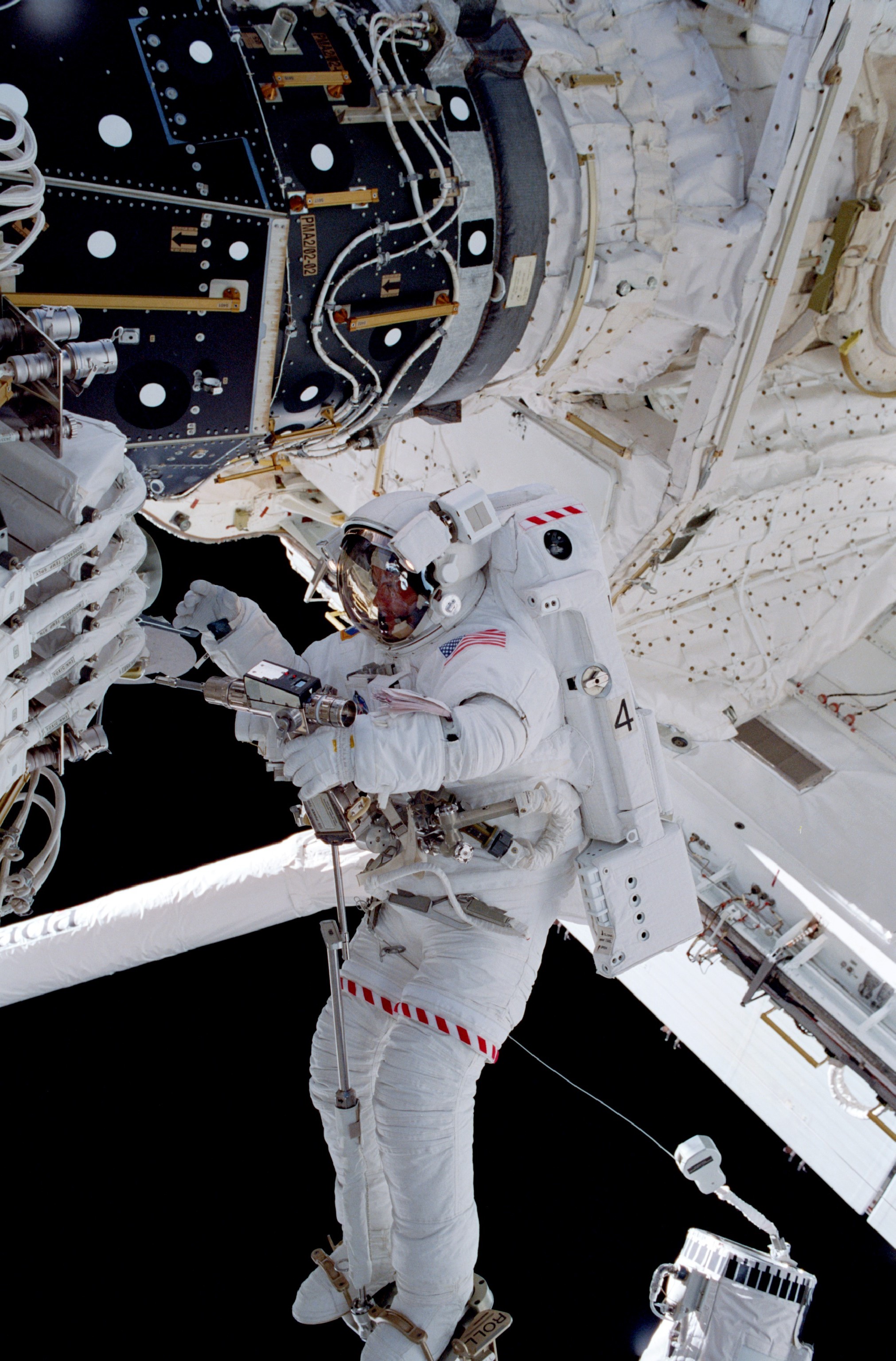
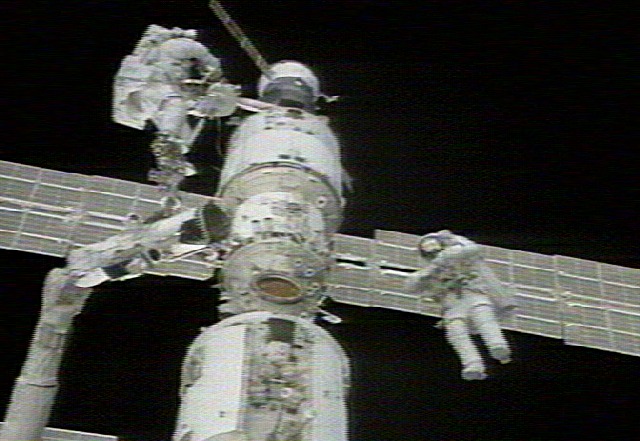
NASA astronaut Michael E. Lopez-Alegria working outside the space station during STS-92 Lopez-Alegria tests the Simplified Aid for EVA Rescue as fellow NASA astronaut Peter J. “Jeff” Wisoff looks on The space station as seen from Discovery shortly after undocking, showing the Z1 Truss with the Space-to-Ground Antenna at top and the third Pressurized Mating Adaptor at bottom.

Left: NASA astronaut Michael E. Lopez-Alegria working outside the space station during STS-92. Middle: Lopez-Alegria, left, tests the Simplified Aid for EVA Rescue as fellow NASA astronaut Peter J. “Jeff” Wisoff looks on. Right: The space station as seen from Discovery shortly after undocking, showing the Z1 Truss with the Space-to-Ground
Antenna at top and
the third Pressurized Mating Adaptor at bottom.

For his third flight into space, Lopez-Alegria returned to the station in November 2002 during the STS-113 mission, the facility now permanently occupied and having grown significantly in the intervening two years. The primary tasks for the STS-113 crew included adding the P1 truss on the station’s port side, installing the Crew Equipment Translation Aid (CETA) cart, and assisting in the exchange between the Expedition 5 and 6 crews. Lopez-Alegria and fellow STS-113 mission specialist John B. Harrington conducted three spacewalks to complete the installation of the P1 truss and the CETA cart. After STS-113, assembly of the station came to a temporary halt following the Feb. 1, 2003, Columbia accident, and the subsequent grounding of the space shuttle fleet. Flights did not resume until September 2006.
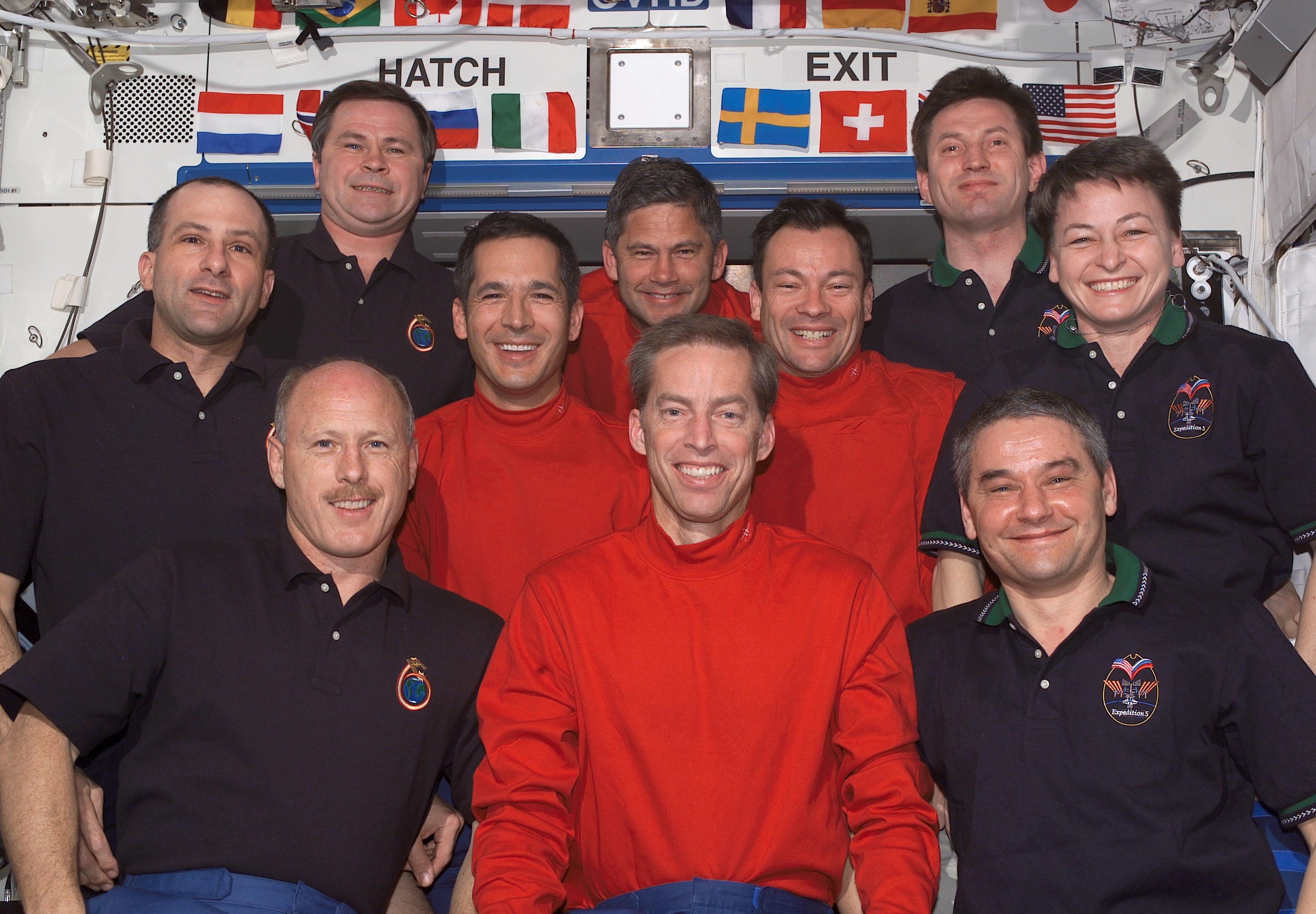
NASA astronaut Michael E. Lopez-Alegria during the first STS-113 spacewalk. Lopez-Alegria, second from right in the middle row, posing in the Destiny module with his STS-113 crewmates, as well as the Expedition 5 and 6 crews The space station as seen by the departing STS-113 crew, with the newly installed P1 truss visible at right

Left: NASA astronaut Michael E. Lopez-Alegria during the first STS-113 spacewalk. Middle: Lopez-Alegria, second from right in the middle row, posing in the Destiny module with his STS-113  crewmates, as well as the Expedition 5 and 6 crews. Right: The space station as seen by the departing STS-113 crew, with the newly installed P1 truss visible at right.

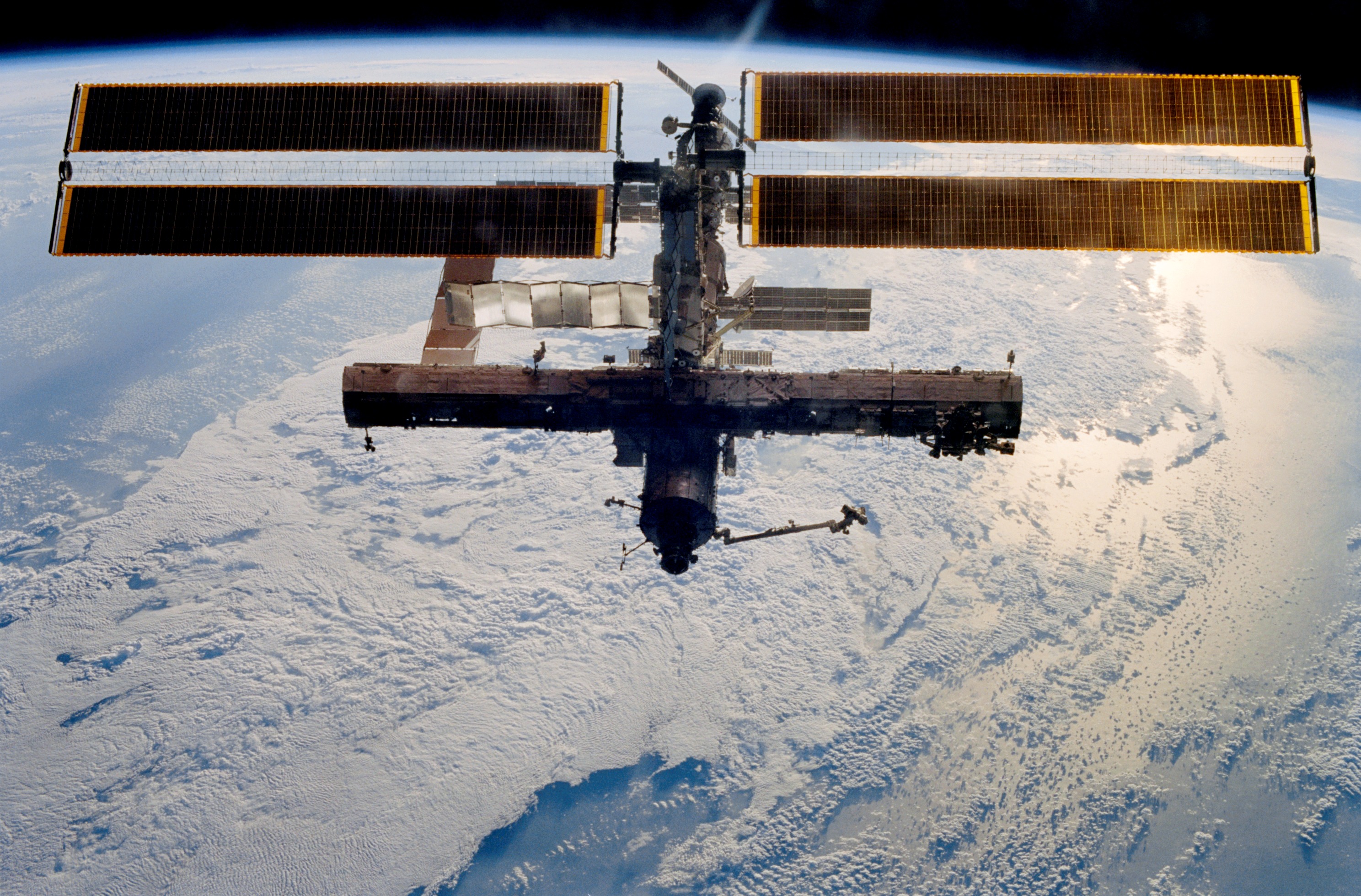
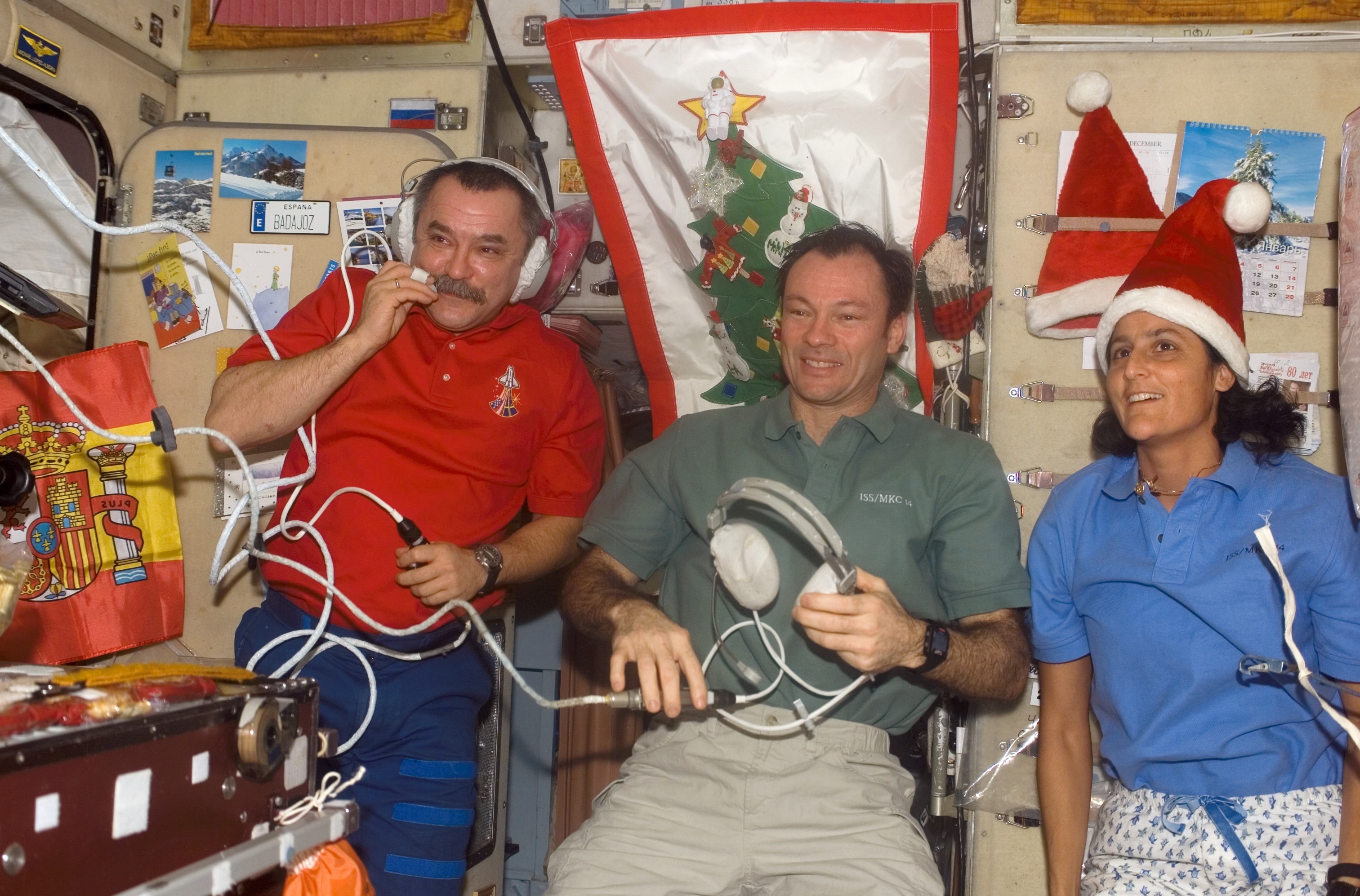
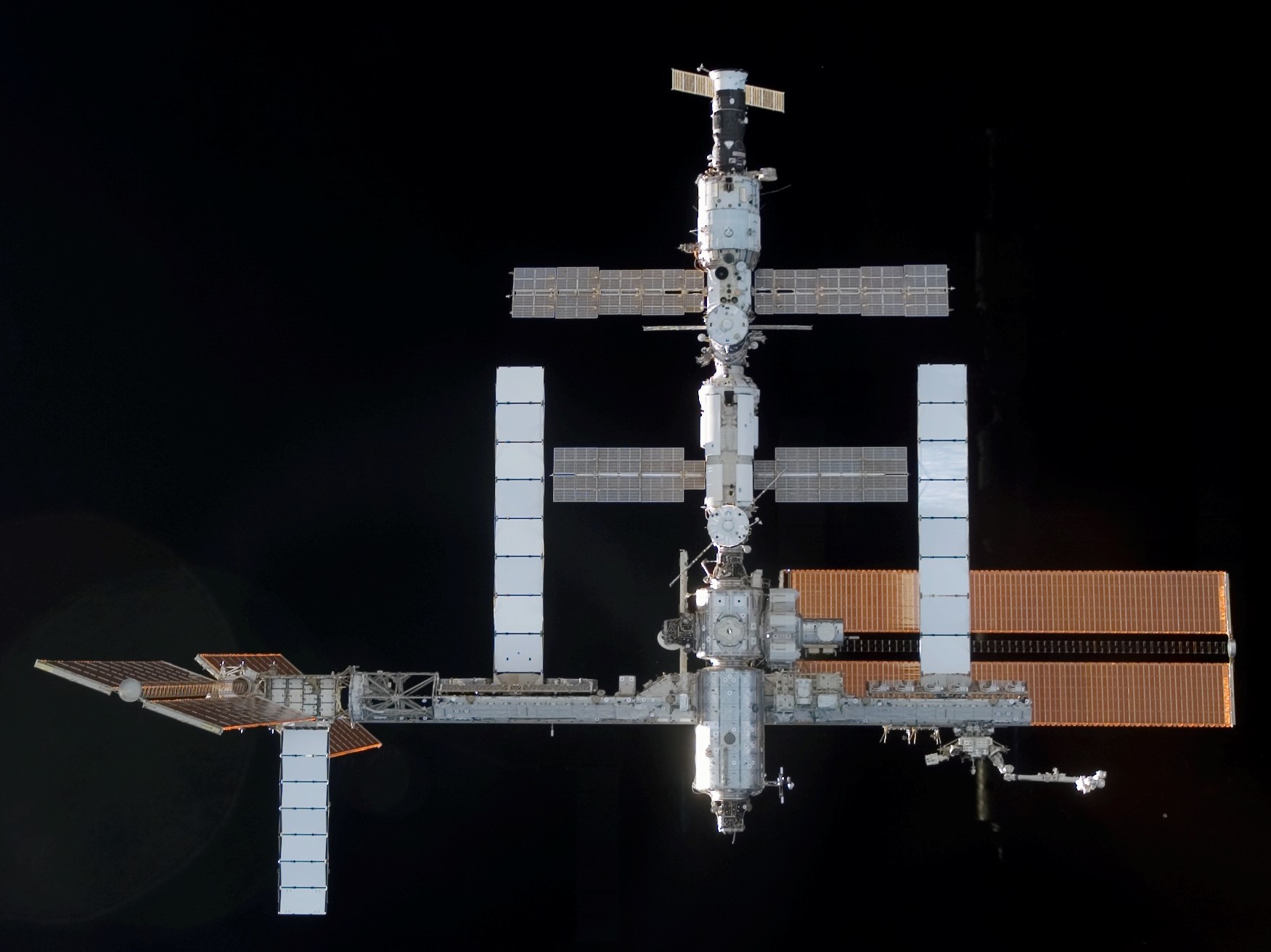
Lopez-Alegria returned to the space station again shortly after assembly resumed. For his fourth spaceflight, he launched aboard Soyuz TMA9 in September 2006, from the Baikonur Cosmodrome in Kazakhstan. Mikhail V. Tyurin of Roscosmos accompanied him during the 215-day mission, to that time the longest space station expedition, was Mikhail V. Tyurin of Roscosmos. European Space Agency (ESA) astronaut Thomas A. Reiter, onboard the station since July 2006, became part of the Expedition 14 crew. As Commander of Expedition 14, Lopez-Alegria oversaw one of the most complex set of activities in the assembly of the station – the reconfiguration of its power and cooling systems. A week before his arrival, the STS-115 mission had delivered the second set of solar arrays to the station as part of the P3/P4 truss segment, positioning them outboard of the P1 segment. As part of the reconfiguration, the port side P6 array mounted atop the Z1 truss needed to be retracted to prevent interference with the rotation of the new arrays, a task that was completed during the visiting STS-116 mission in December that also added the P5 short spacer to the port side truss. That mission brought NASA astronaut Sunita L. “Suni” Williams to the station as a new addition to Expedition 14 and returned Reiter back to Earth. During Expedition 14, Lopez-Alegria took part in five spacewalks, two in Orlan spacesuits with Tyurin to conduct work on the outside of the Russian segment and three in American spacesuits, with Williams to reconfigure the cooling system of the U.S. segment. He accumulated a total of 67 hours and 40 minutes over 10 spacewalks – still the record among American astronauts. Lopez-Alegria also conducted a variety of scientific experiments.
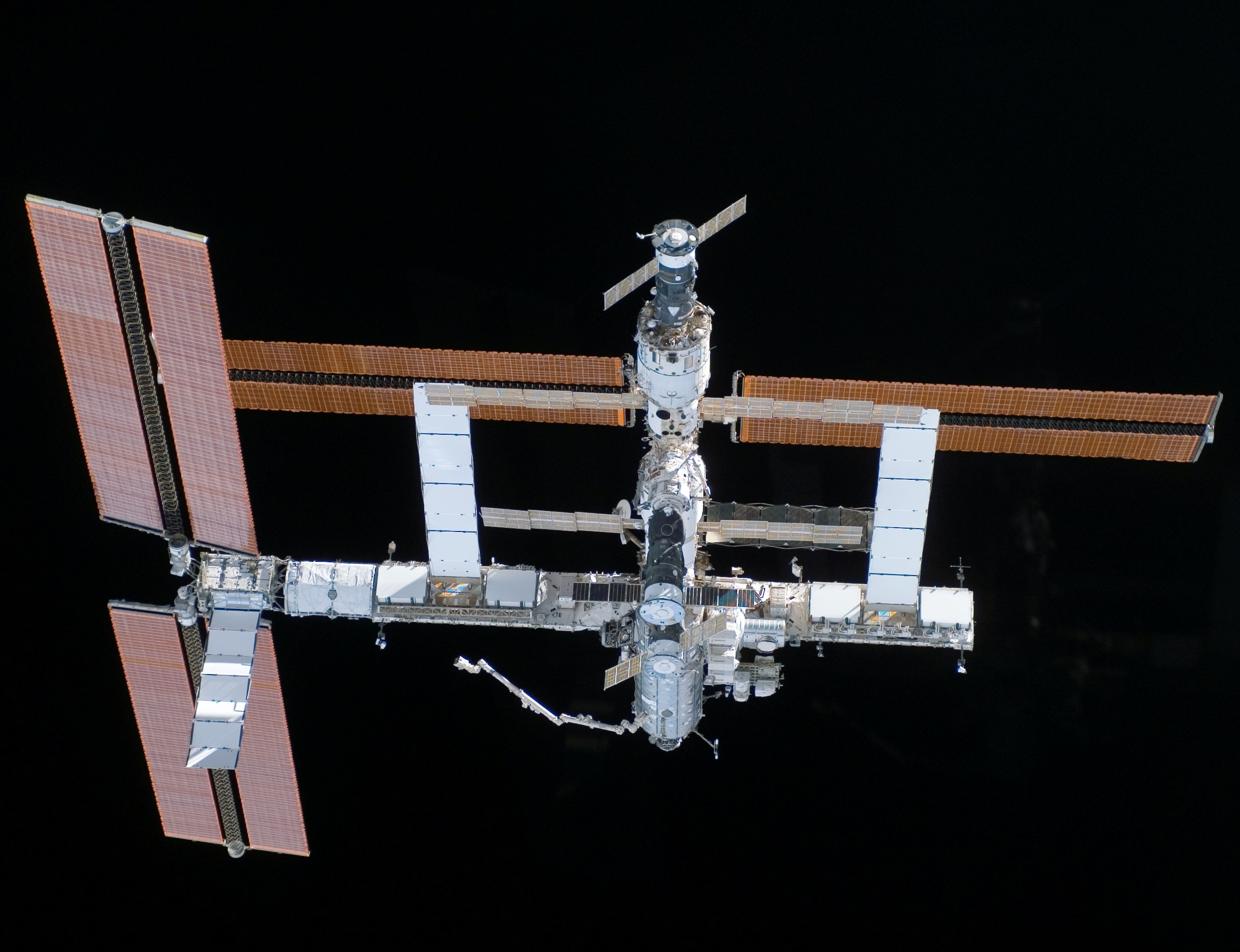
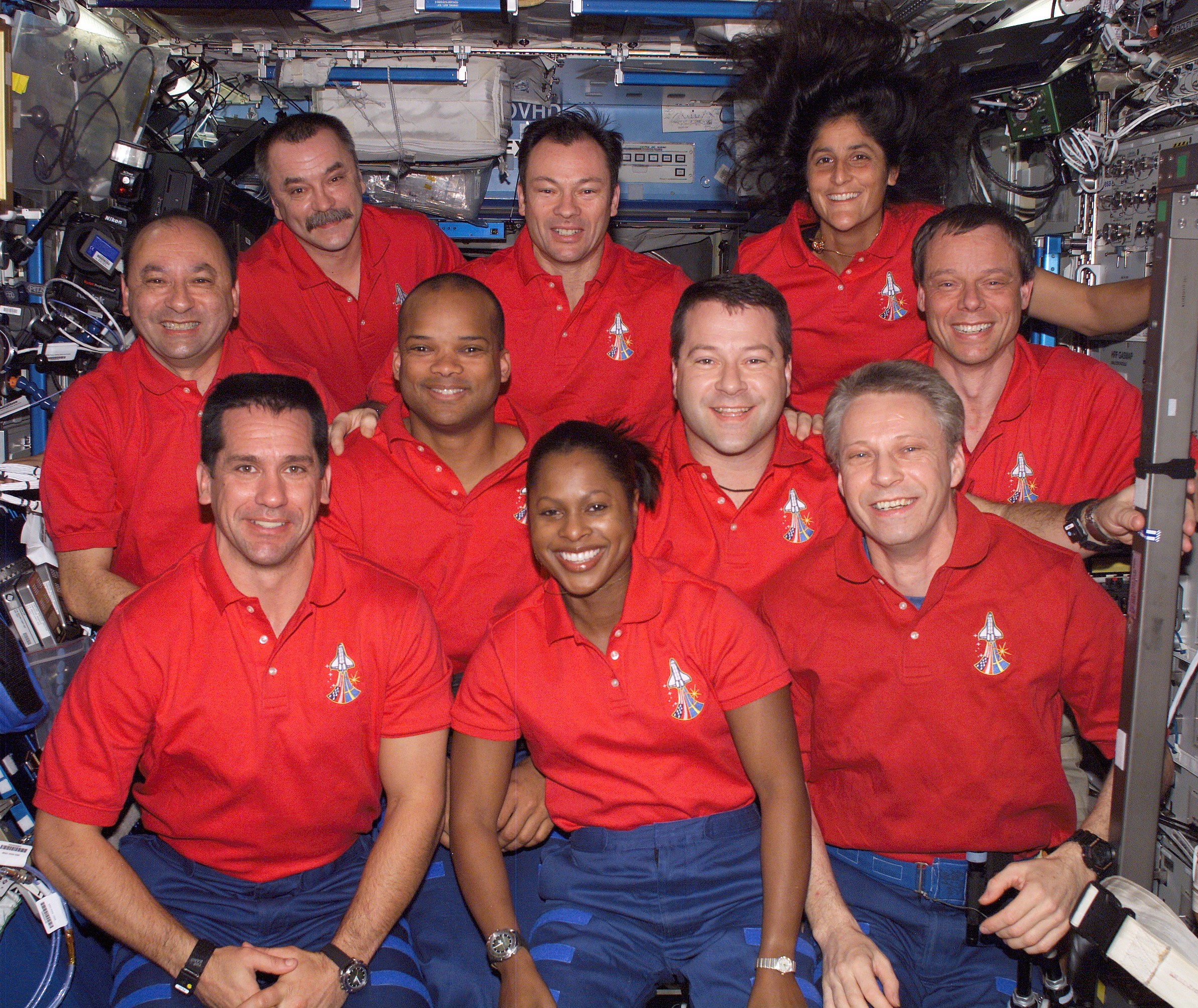
Space station configuration when NASA astronaut Michael E. Lopez-Alegria arrived in September 2006 Lopez-Alegria, back row middle, with STS-116 and Expedition 14 crew members Celebrating the holidays aboard the space station

Left: Space station configuration when NASA astronaut Michael E. Lopez-Alegria arrived in September 2006. Middle: Lopez-Alegria, back row middle, with STS-116 and Expedition 14 crew members. Right: Celebrating the holidays aboard the space station.
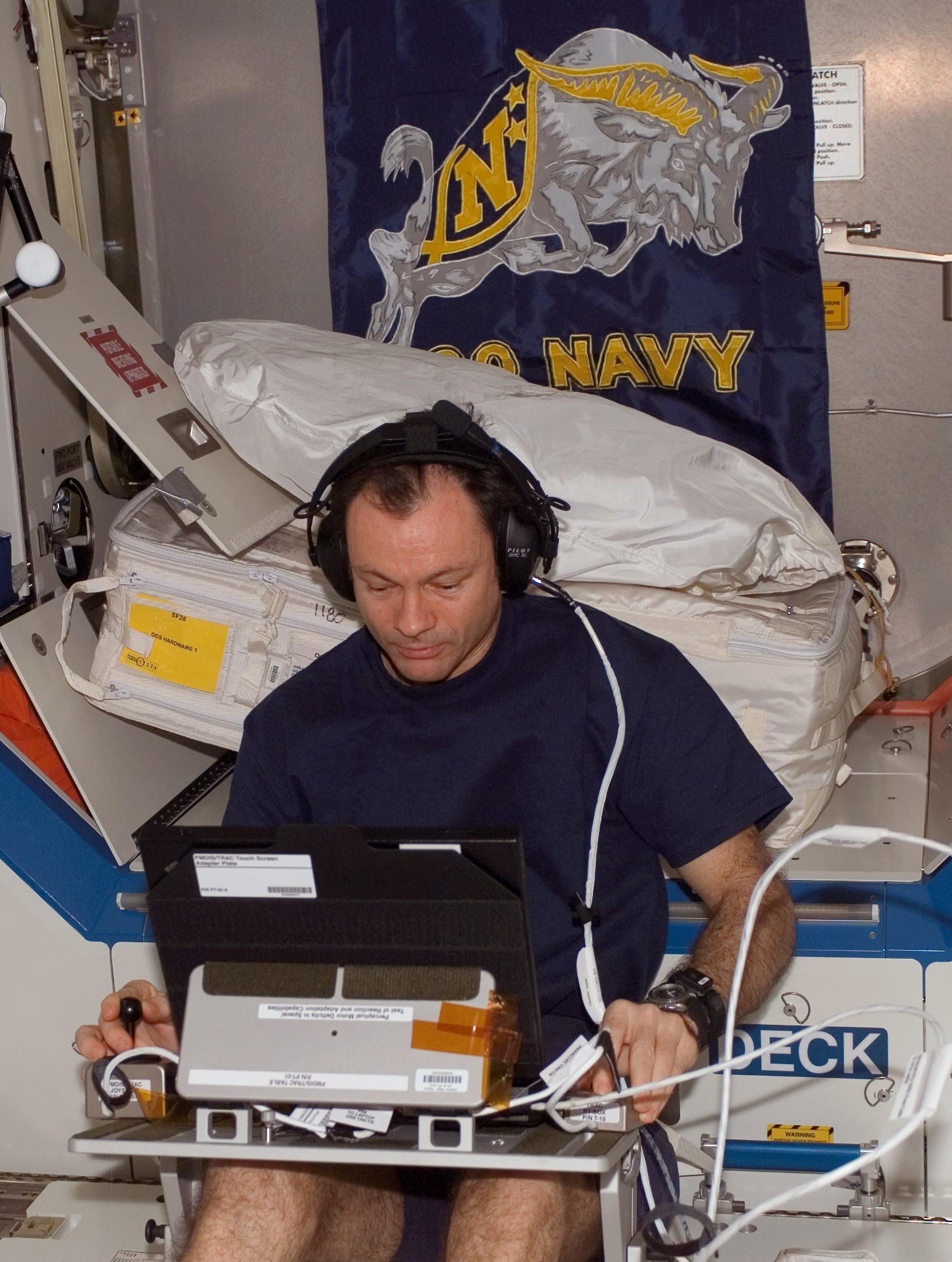
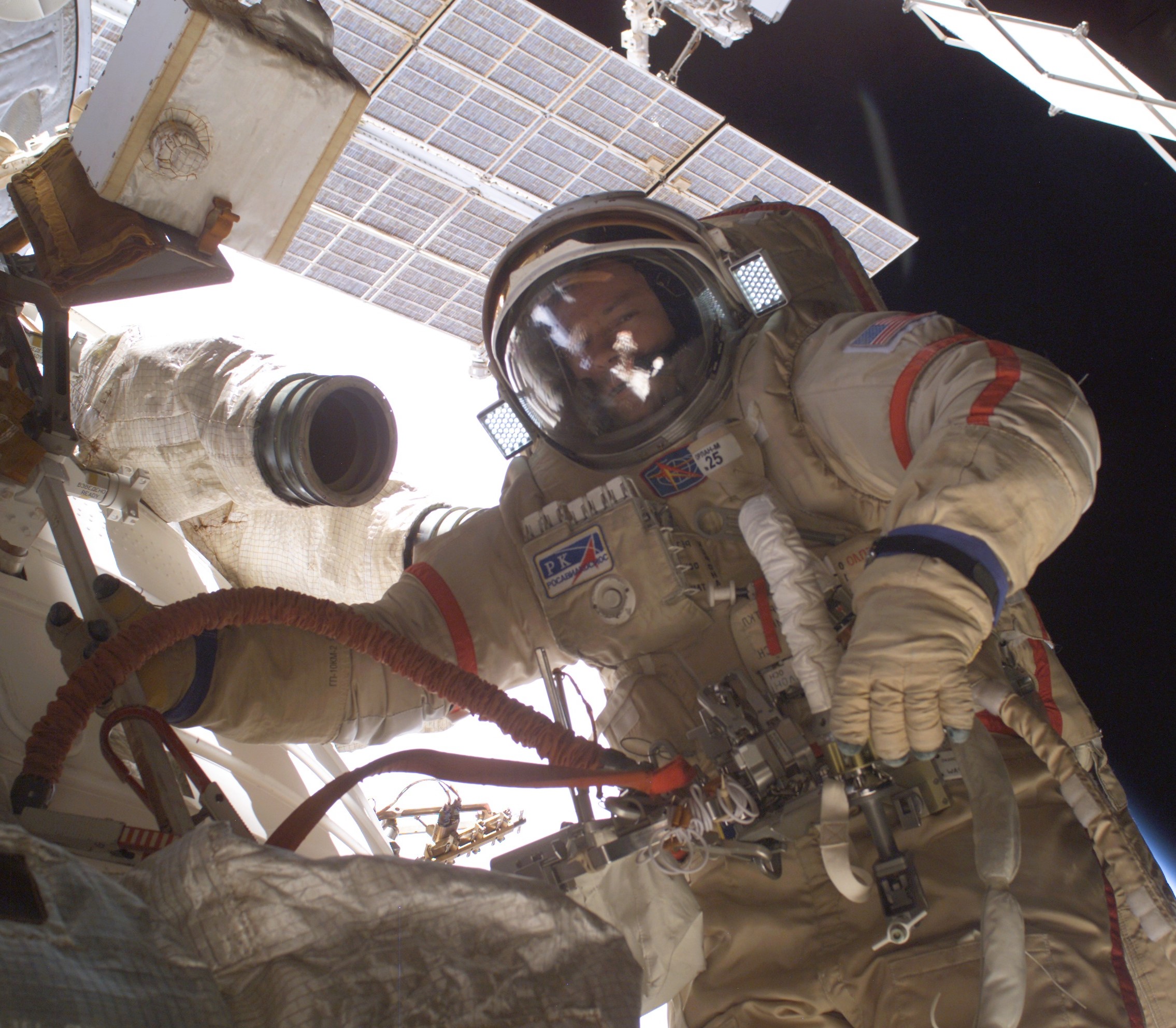
NASA astronaut Michael E. Lopez-Alegria conducting a session of the Canadian TRAC experiment in the Destiny module Michael E. Lopez-Alegria conducts maintenance on the exterior of the Russian segment The space station’s configuration at the end of Lopez-Alegria’s mission

Left: NASA astronaut Michael E. Lopez-Alegria conducting a session of the Canadian TRAC experiment in the Destiny module. Middle: In an Orlan suit, Lopez-Alegria conducts maintenance on the exterior of the Russian segment. Right: The space station’s configuration at the end of Lopez-Alegria’s mission – note the retracted P6 solar array.

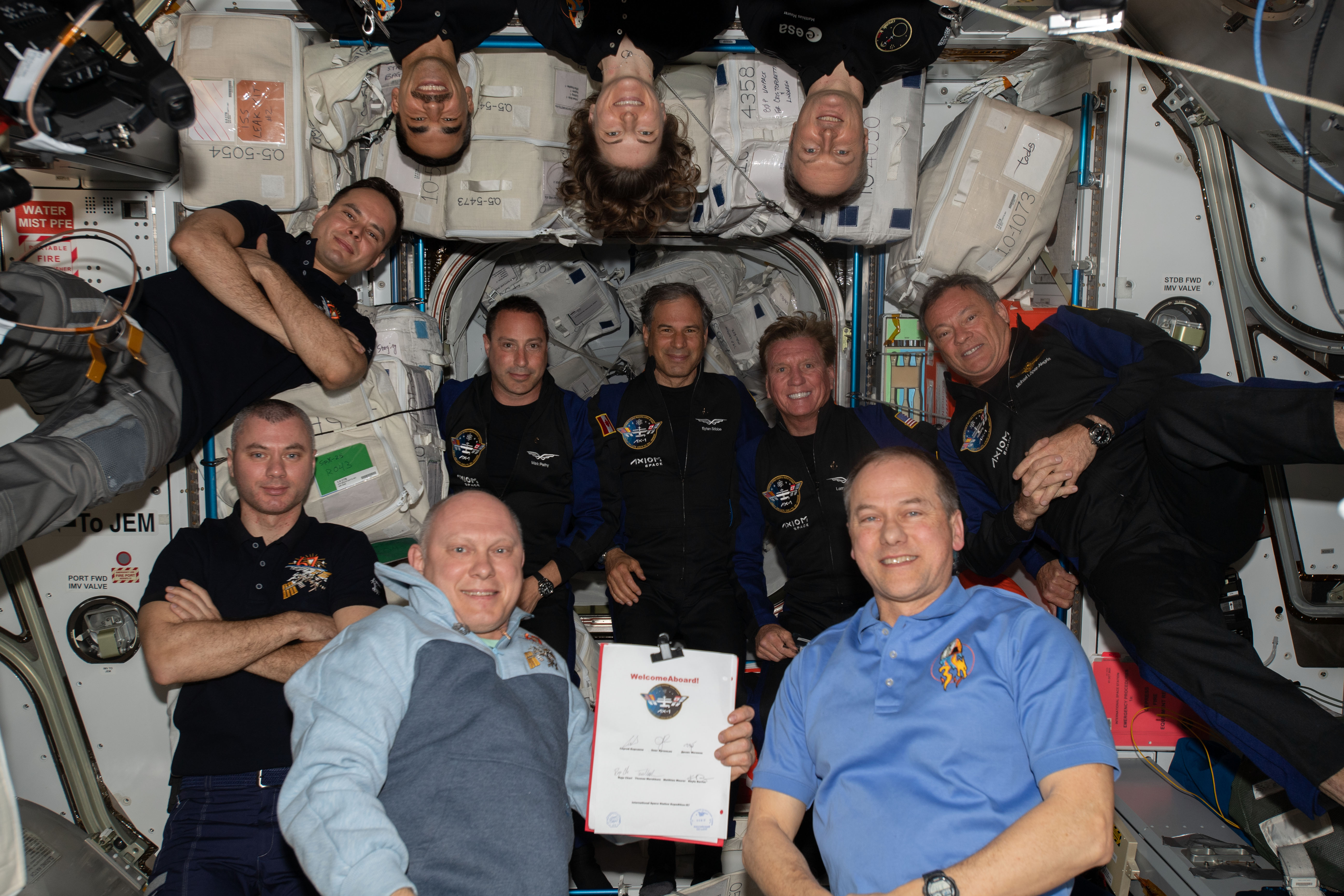
Lopez-Alegria retired from NASA in 2012, joining Axiom Space shortly thereafter. In April 2022, he commanded the Ax-1 mission, the first commercial astronaut mission to the space station. He and his three crewmates spent 17 days aboard, conducting a variety of experiments. Across his five missions, Lopez-Alegria accumulated a total of 275 days in space.
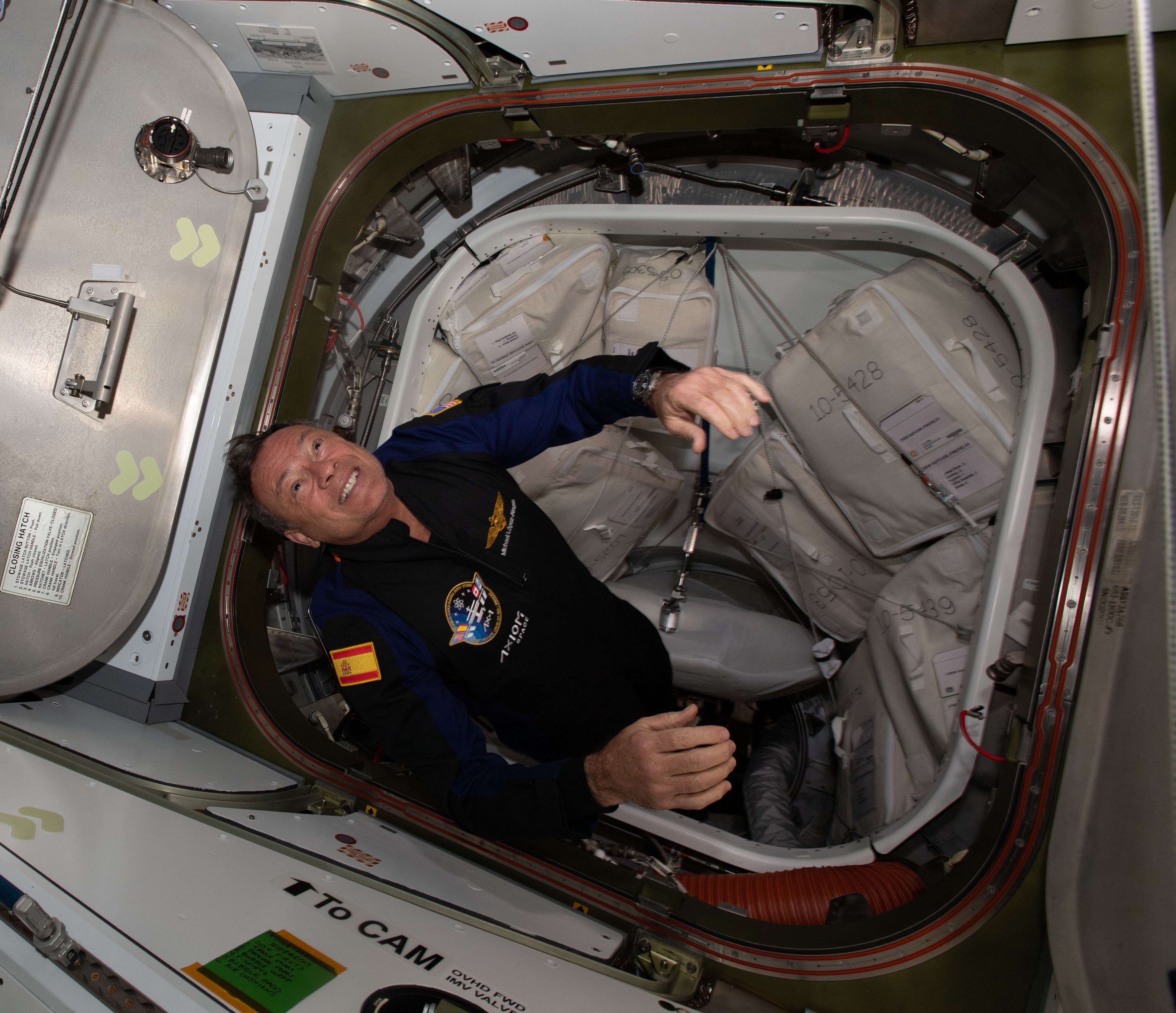
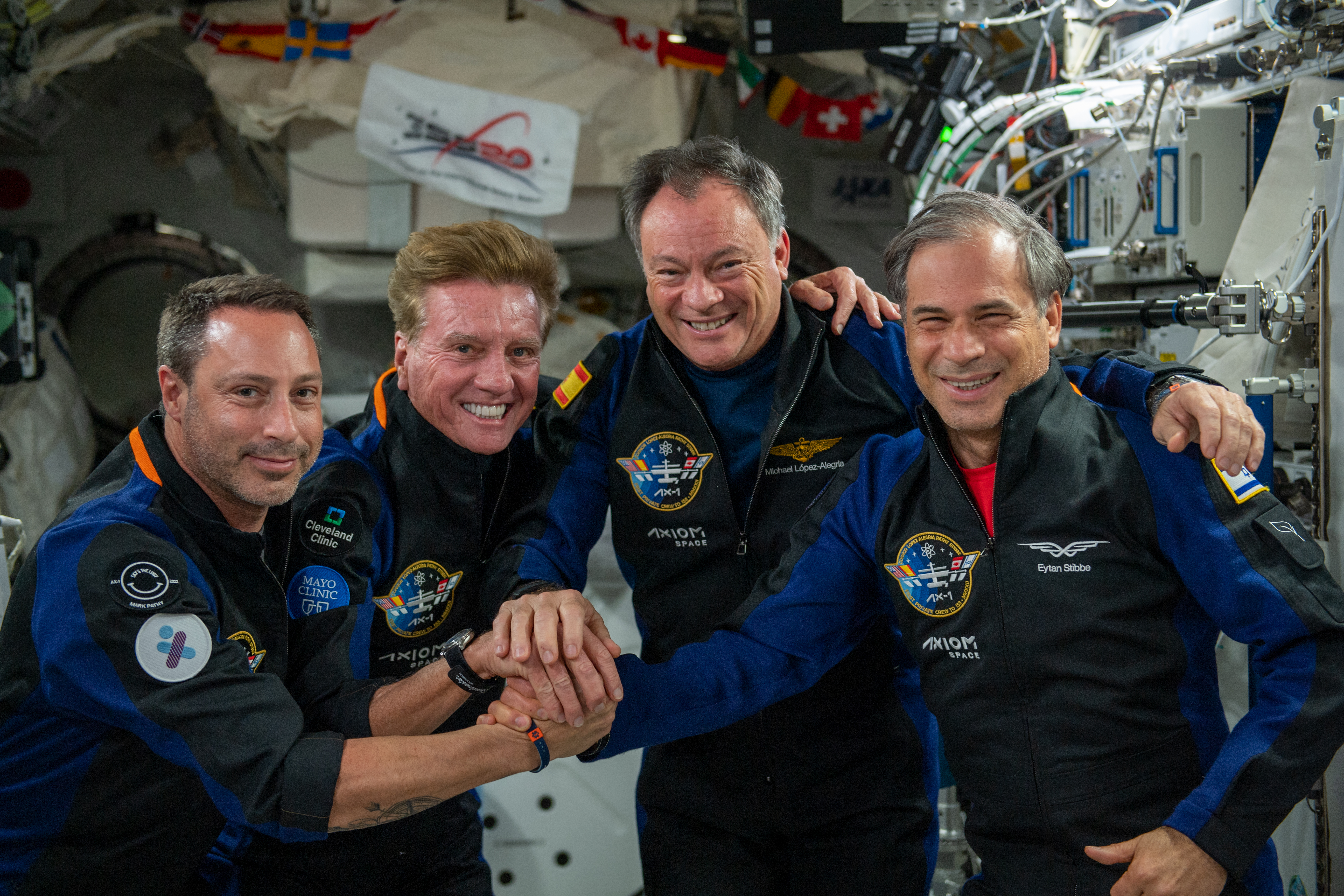
Axiom astronaut Michael E. Lopez-Alegria floats into the space station during the Ax-1 mission Lopez-Alegria and the rest of the Ax-1 crew. The 11 crew members aboard the space station during the Ax-1 mission, with Lopez-Alegria at far right.

Left: Axiom astronaut Michael E. Lopez-Alegria floats into the space station during the Ax-1 mission.
Middle: Lopez-Alegria, second from right, and the rest of the Ax-1 crew. Right: The 11 crew members
aboard the space station during the Ax-1 mission, with Lopez-Alegria at far right.

Carlos I. Noriega

In 1994, NASA selected Carlos I. Noriega as the first Peruvian-born astronaut. On his first spaceflight in May 1997, he served as a mission specialist aboard STS-84, the sixth Shuttle-Mir docking mission. During the nine-day flight, the crew resupplied the Mir space station, brought NASA astronaut C. Michael Foale to the Russian outpost, and returned Jerry M. Linenger to Earth.
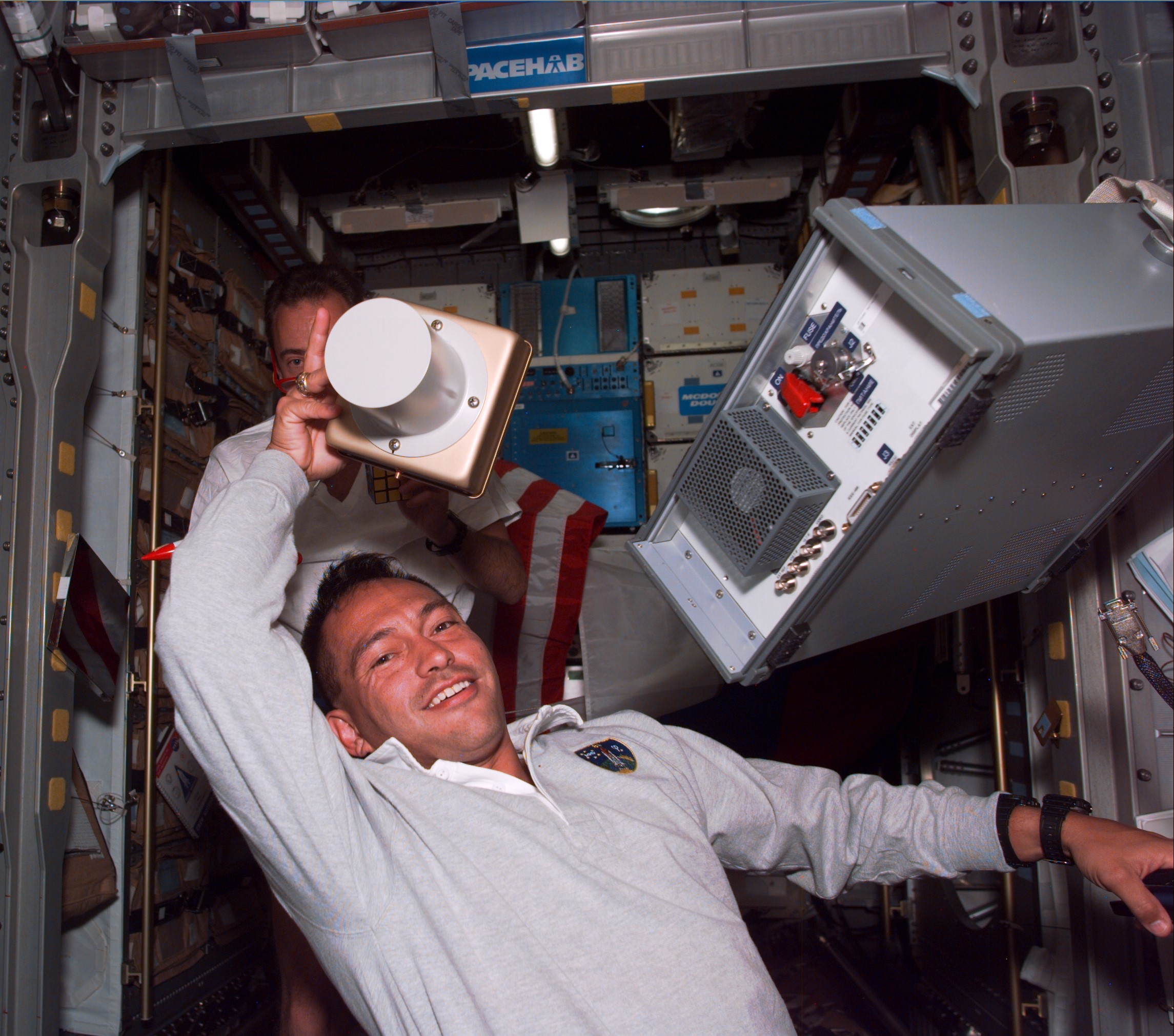
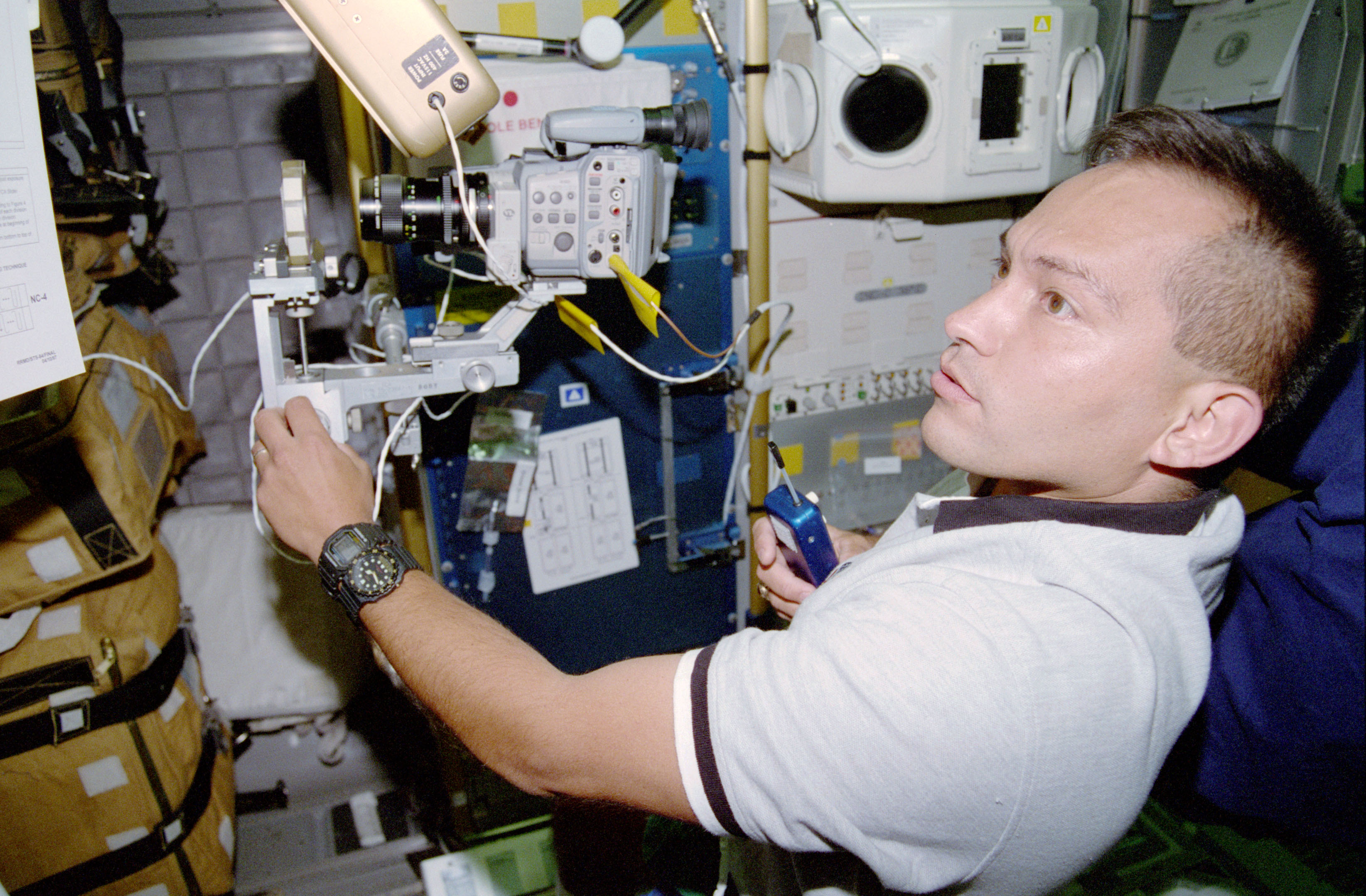
Carlos I. Noriega sets up an experiment during the STS-84 mission Noriega working on an experiment in the Spacehab module The 10 members of the STS-84 and Mir resident crew, with Noriega

Left: Carlos I. Noriega sets up an experiment during the STS-84 mission. Middle: Noriega working
on an experiment in the Spacehab module. Right: The 10 members of the STS-84 and Mir resident crew, with Noriega at upper right.

In December 2000, Noriega launched on his second mission, aboard Endeavour with his four crewmates on STS-97, their primary goal to install the P6 truss segment with the first set of solar arrays and radiators atop the Z1 truss. STS-97 marked the first time a shuttle visited the station after its occupancy began, but given the busy spacewalk schedule, the hatches between the two vehicles were only open for 24 hours. Noriega and fellow mission specialist Joseph R. Tanner conducted three spacewalks to complete the P6 installation and other assembly tasks. The new solar arrays generated enough power for the arrival of the U.S. laboratory module Destiny early in 2001 and the start of intensive research aboard the space station.
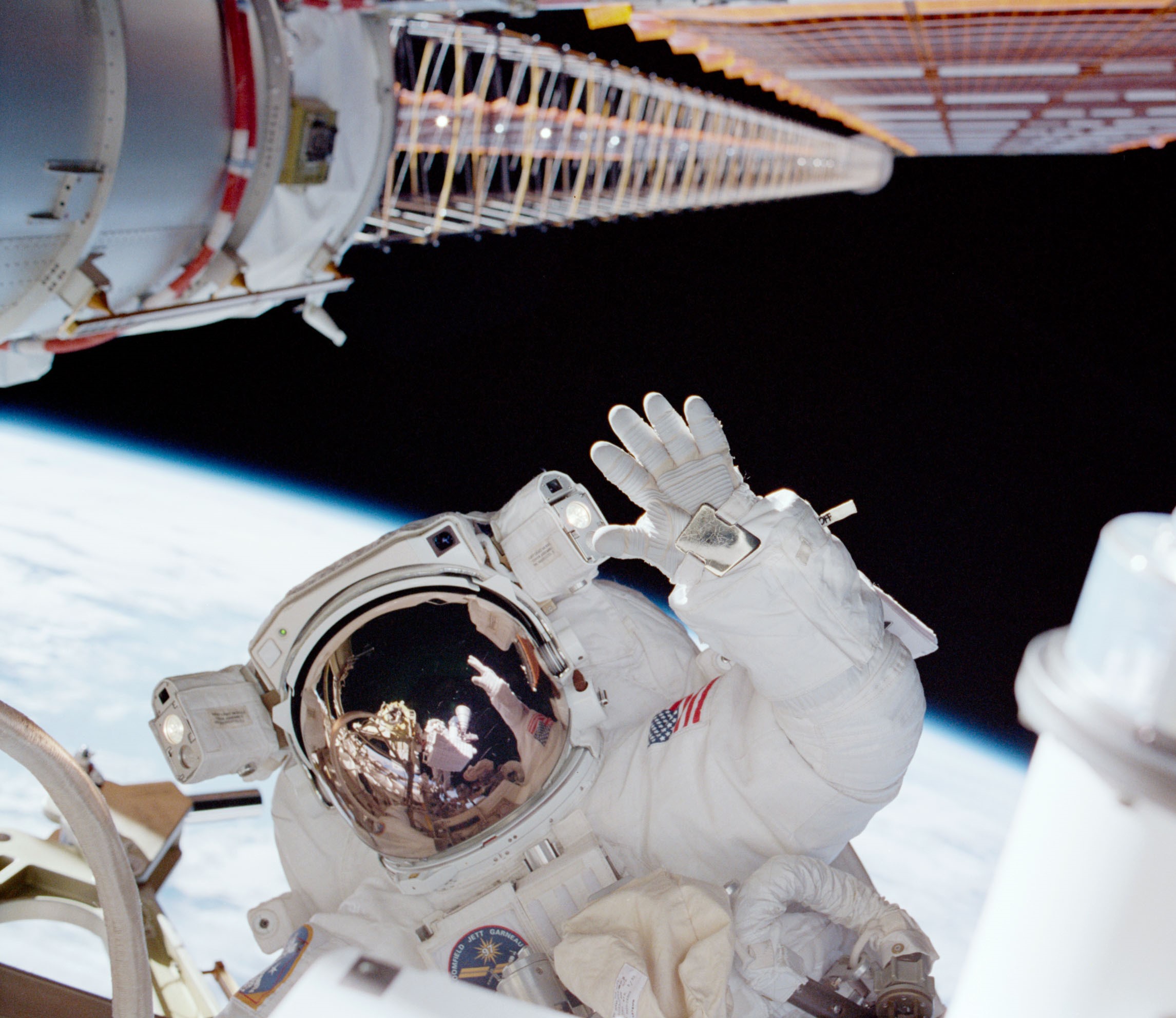
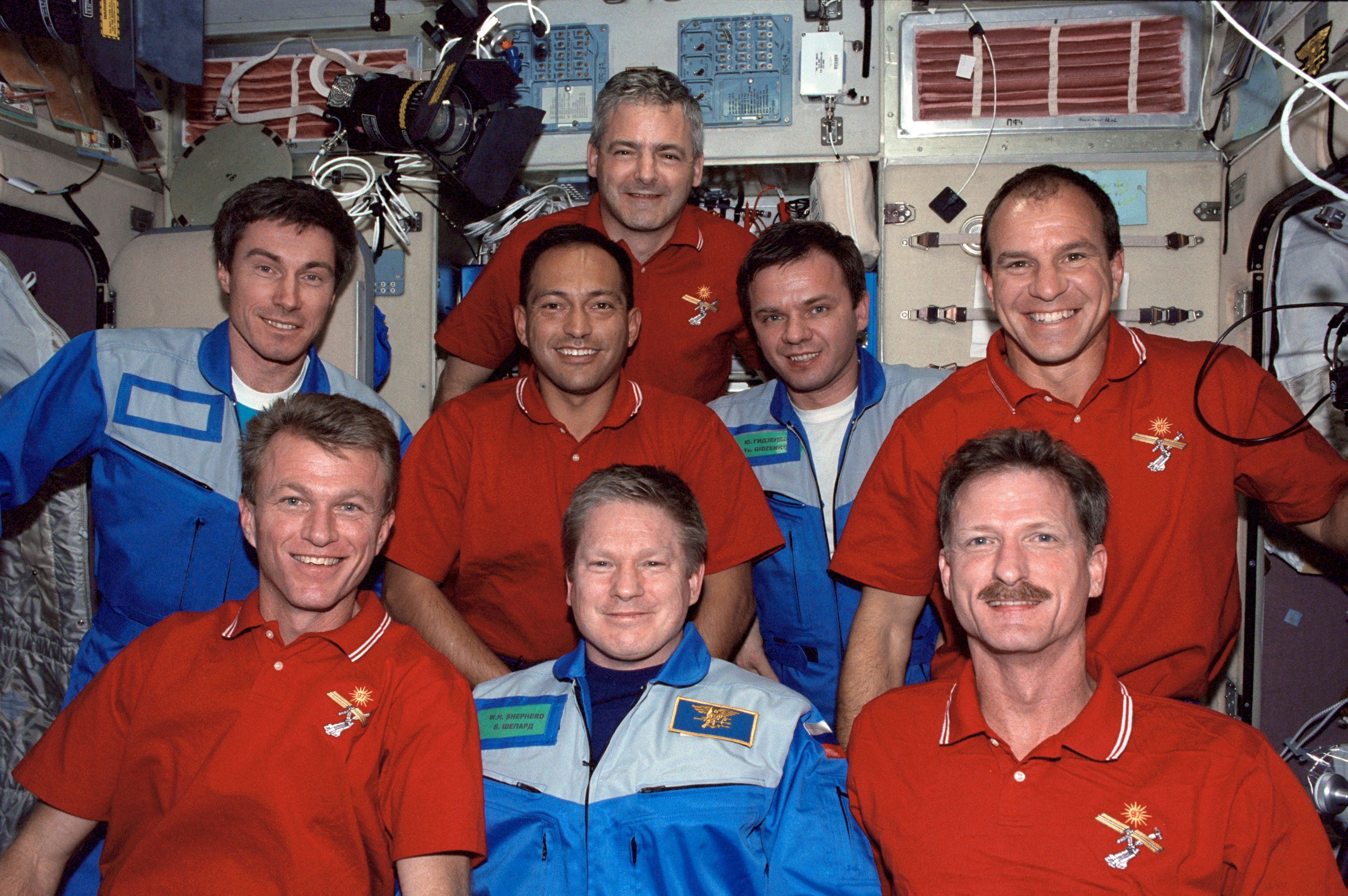
NASA astronaut Carlos I. Noriega waves to the camera as he installs the P6 truss and solar arrays. Noriega with the STS-97 and Expedition 1 crews in the Zarya Service Module. The space station as seen from the departing STS-97 showing the newly deployed P6 solar arrays.

Left: NASA astronaut Carlos I. Noriega waves to the camera as he installs the P6 truss and solar arrays. Middle: Noriega, center, with the STS-97 and Expedition 1 crews in the Zarya Service Module. Right: The space station as seen from the departing STS-97 showing the newly deployed P6 solar arrays.

Pedro Duque

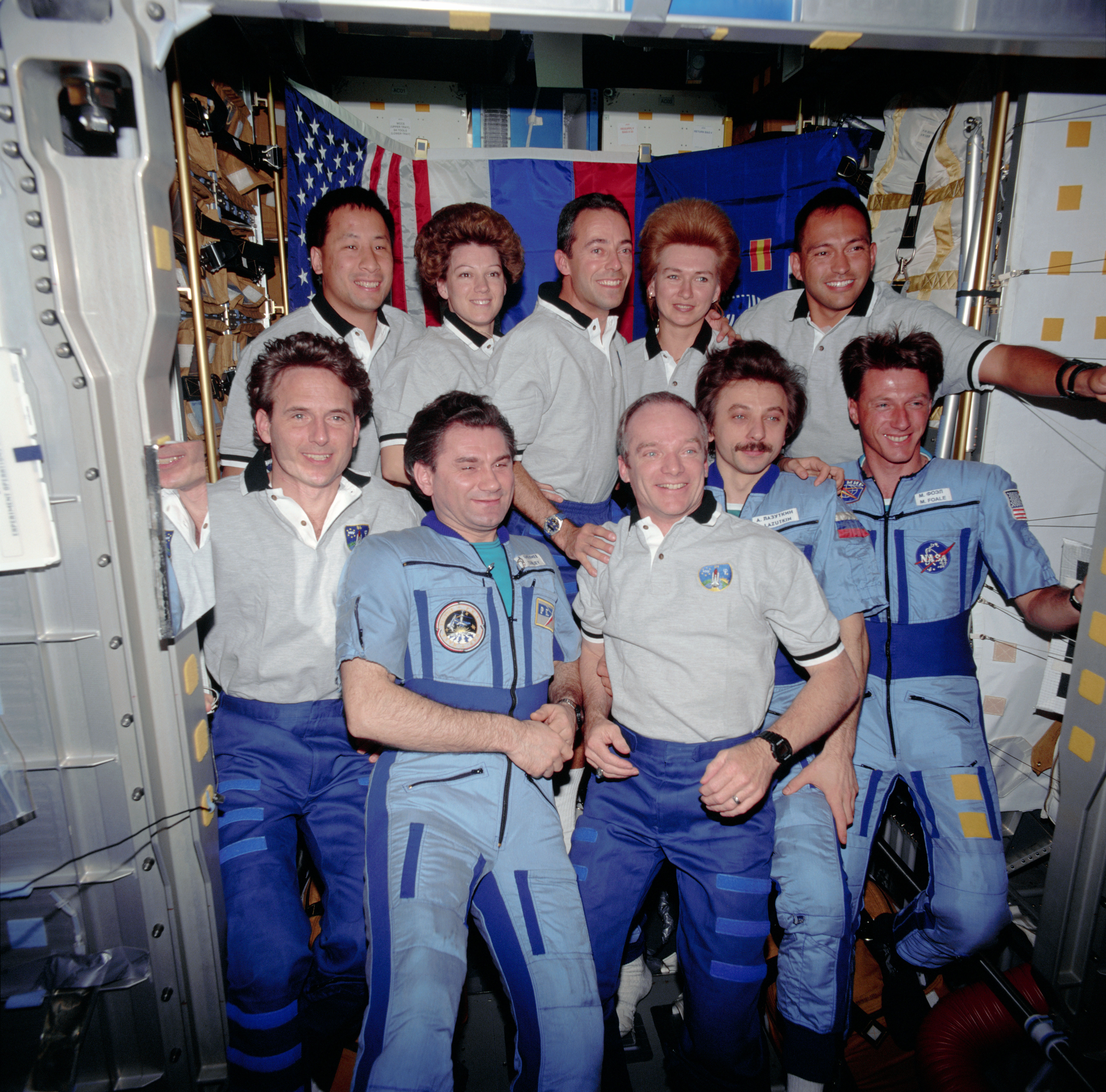
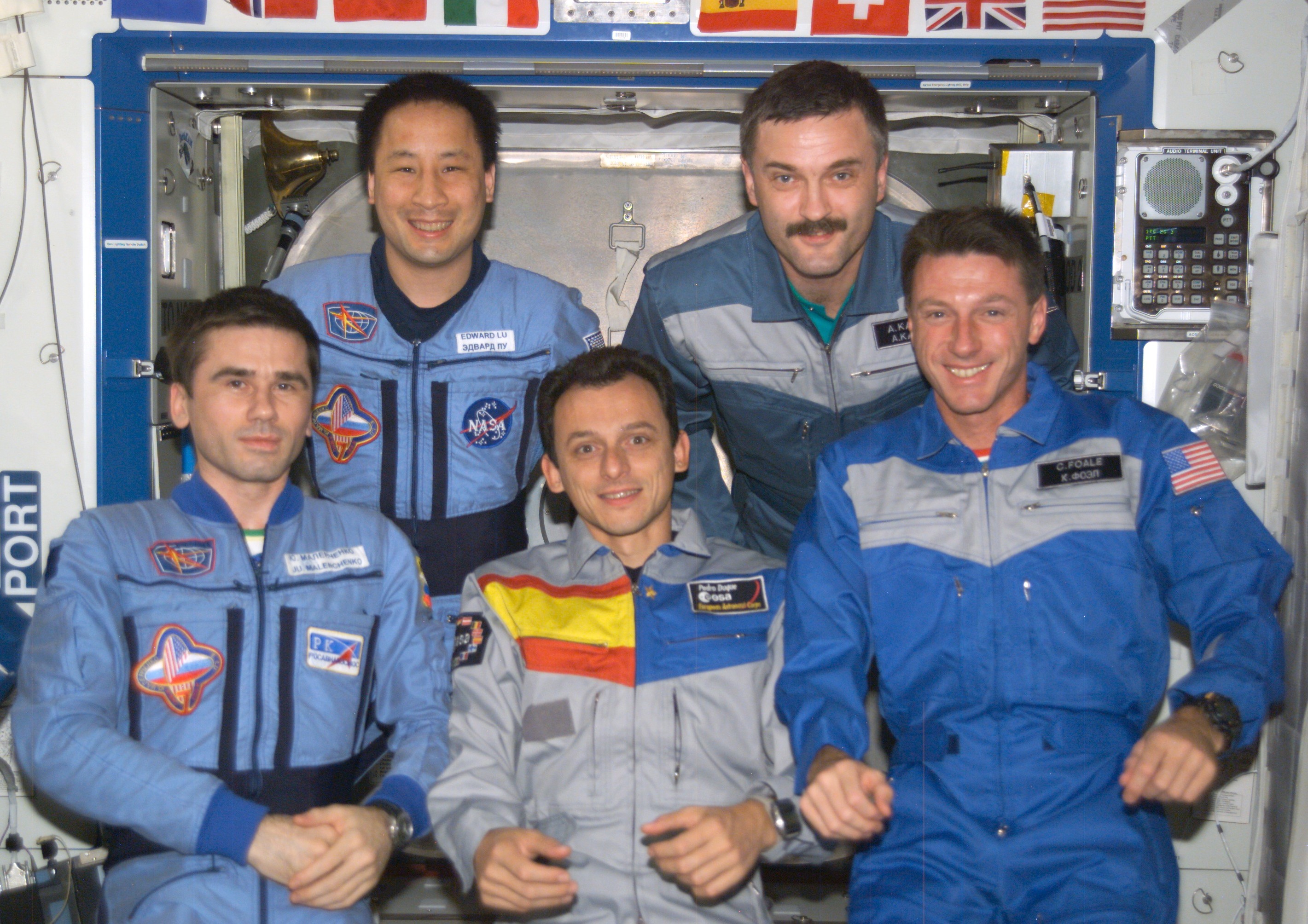
The European Space Agency (ESA) selected Pedro Duque, born in Madrid, Spain, as an astronaut in 1992. Four years later, he joined NASA’s astronaut class of 1996 in training and two years later certified as a mission specialist. His first launch into space took place in October 1998 on Discovery’s STS-95 mission, the nine-day flight that saw astronaut John H. Glenn’s return to space. Duque returned to space in October 2003 aboard Soyuz TMA3, conducting experiments aboard the space station as part of his Cervantes visiting mission. He returned to Earth 10 days later aboard Soyuz TMA2.
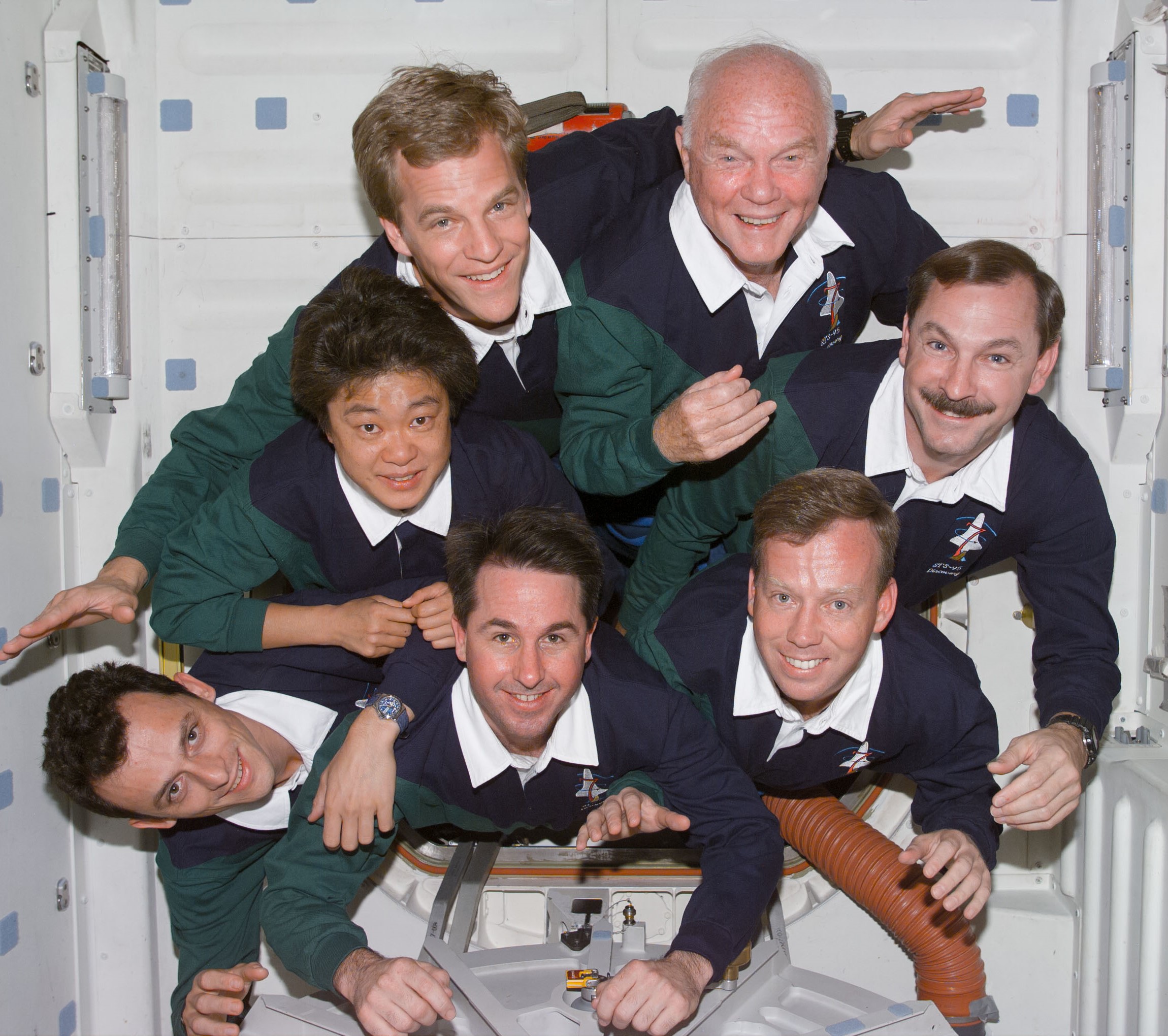
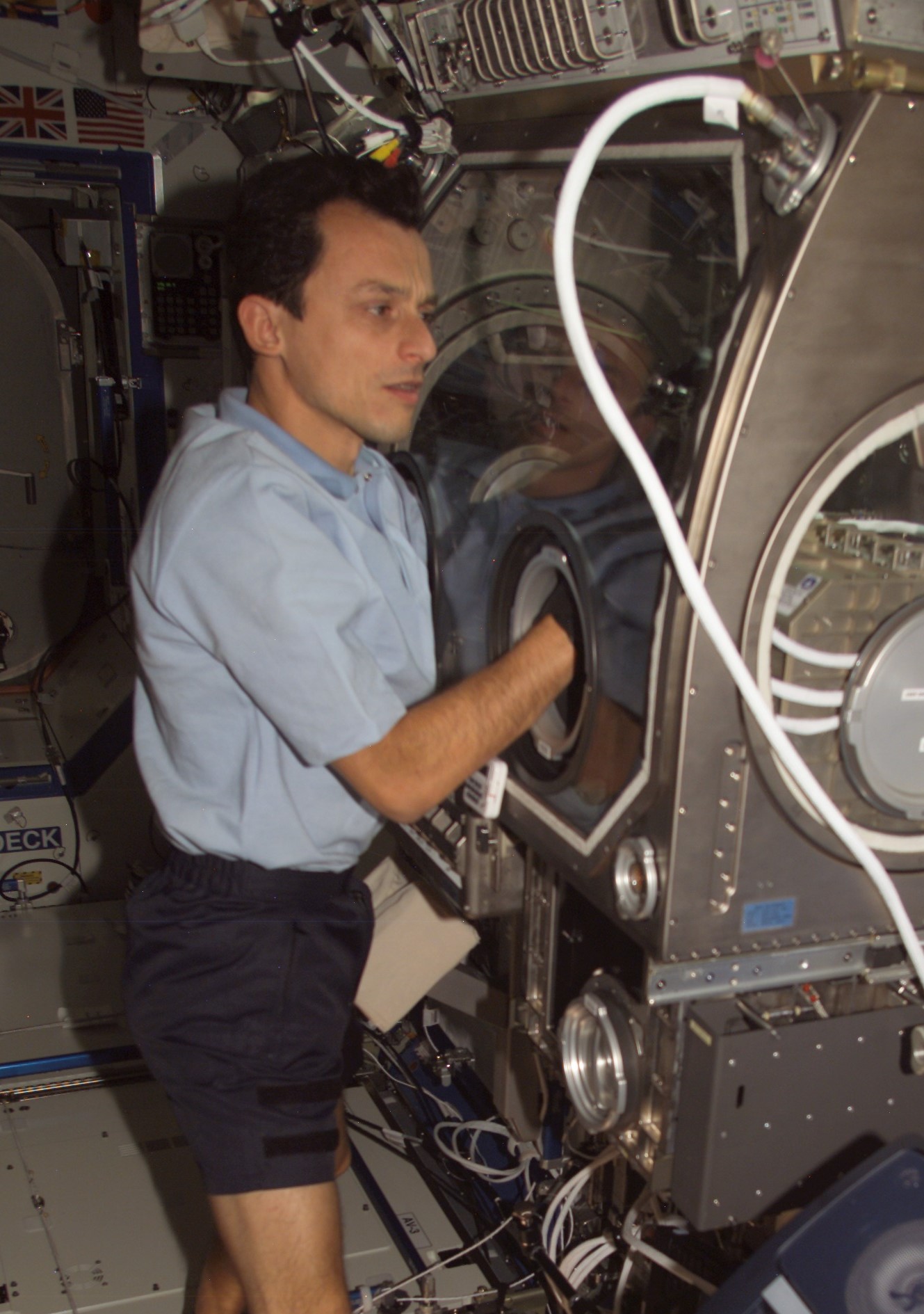
Spanish astronaut Pedro Duque, lower left, representing the European Space Agency, with his STS-95 crewmates Duque conducting an experiment in the Microgravity Science Glovebox aboard the space station Duque with his Expedition 7 and 8 crewmates

Left: Spanish astronaut Pedro Duque, lower left, representing the European Space Agency, with his STS-95 crewmates. Middle: Duque conducting an experiment in the Microgravity Science Glovebox aboard the space station. Right: Duque, center, with his Expedition 7 and 8 crewmates.

Marcos C. Pontes

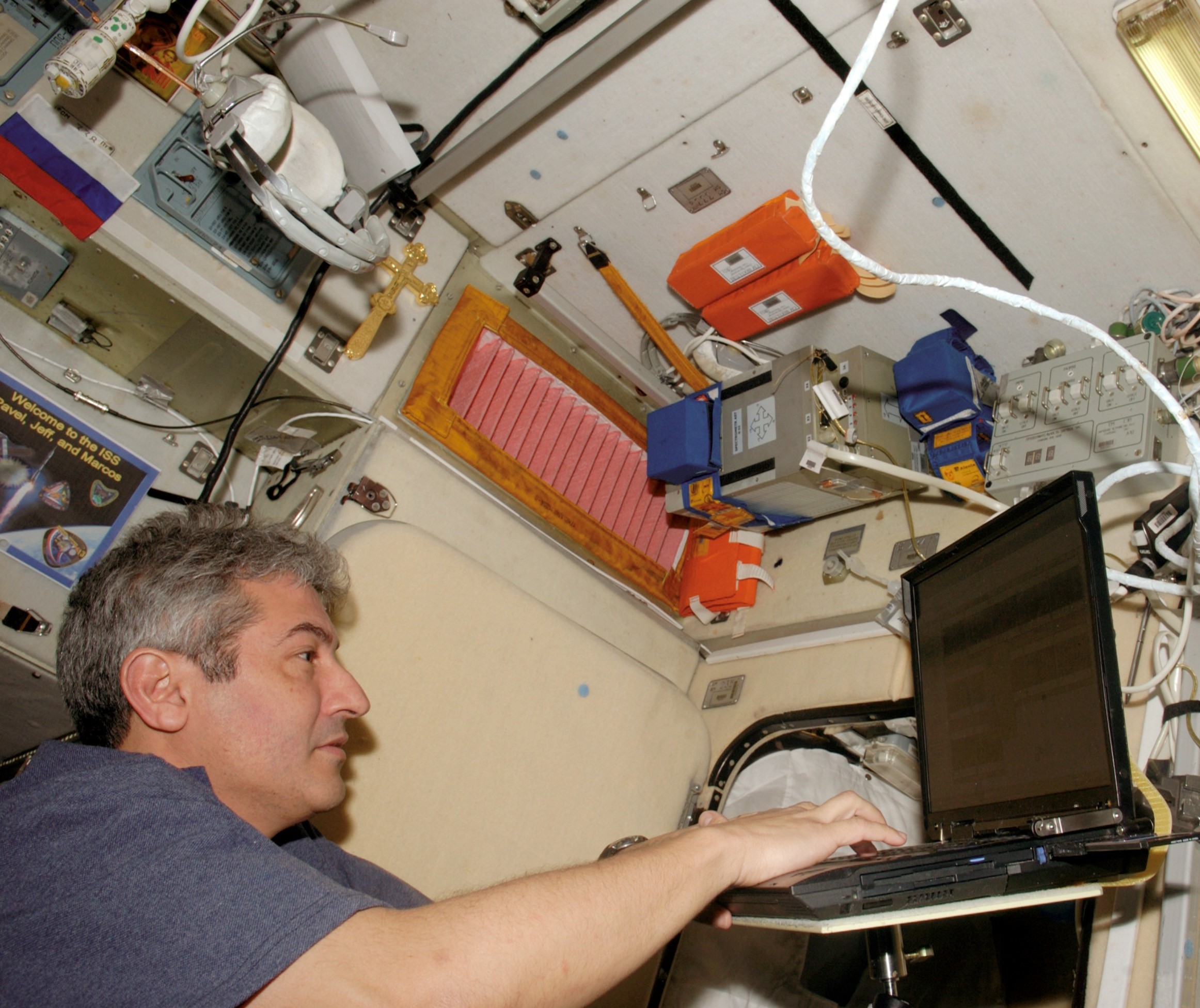
The Brazilian Space Agency selected Marcos C. Pontes as an astronaut in 1998. He trained with NASA’s astronaut class of 1998 and certified as a mission specialist two years later. Pontes made his one and only spaceflight in March 2006 aboard Soyuz TMA8, carrying out eight experiments. He returned to Earth 10 days later aboard Soyuz TMA7.
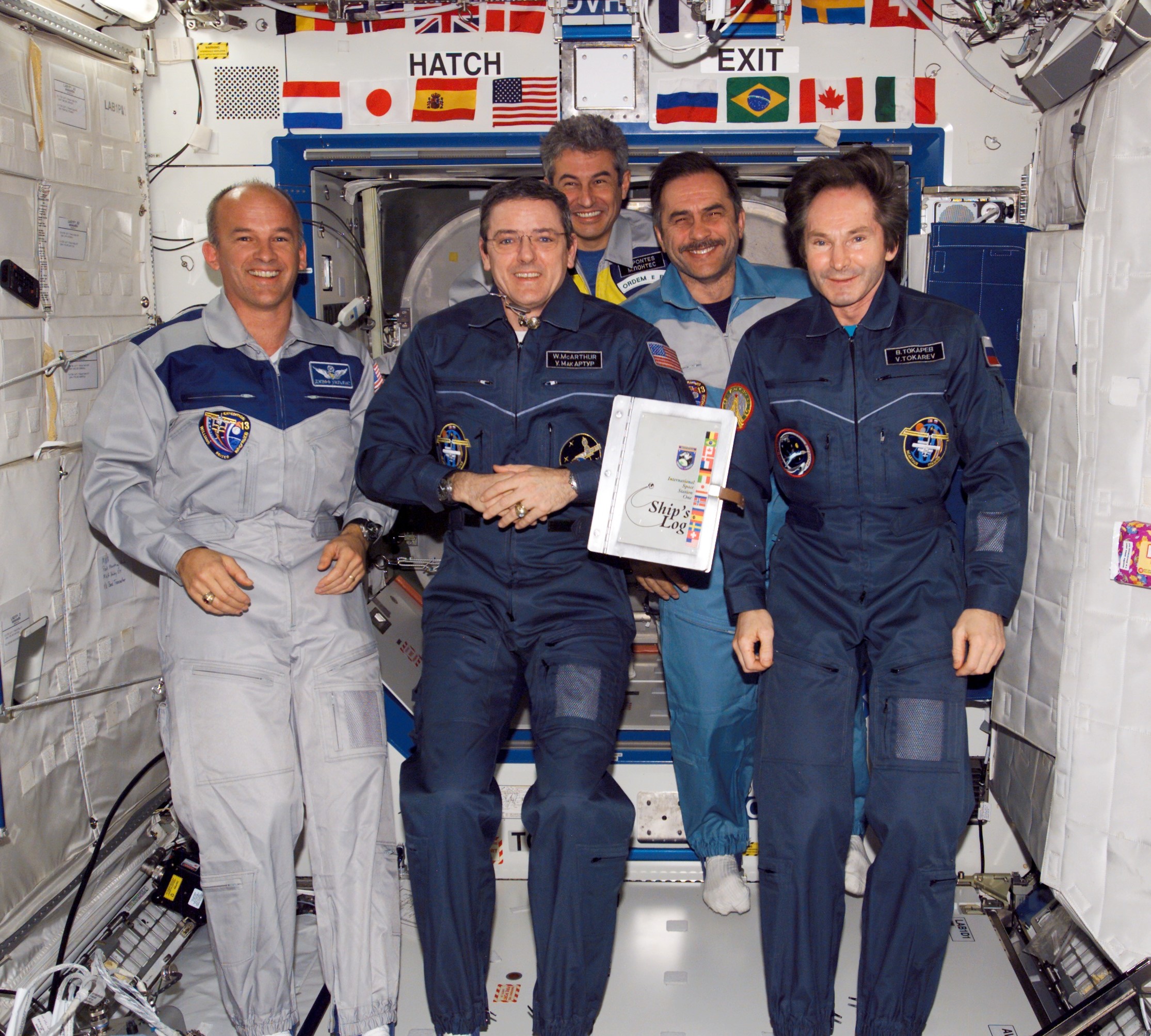
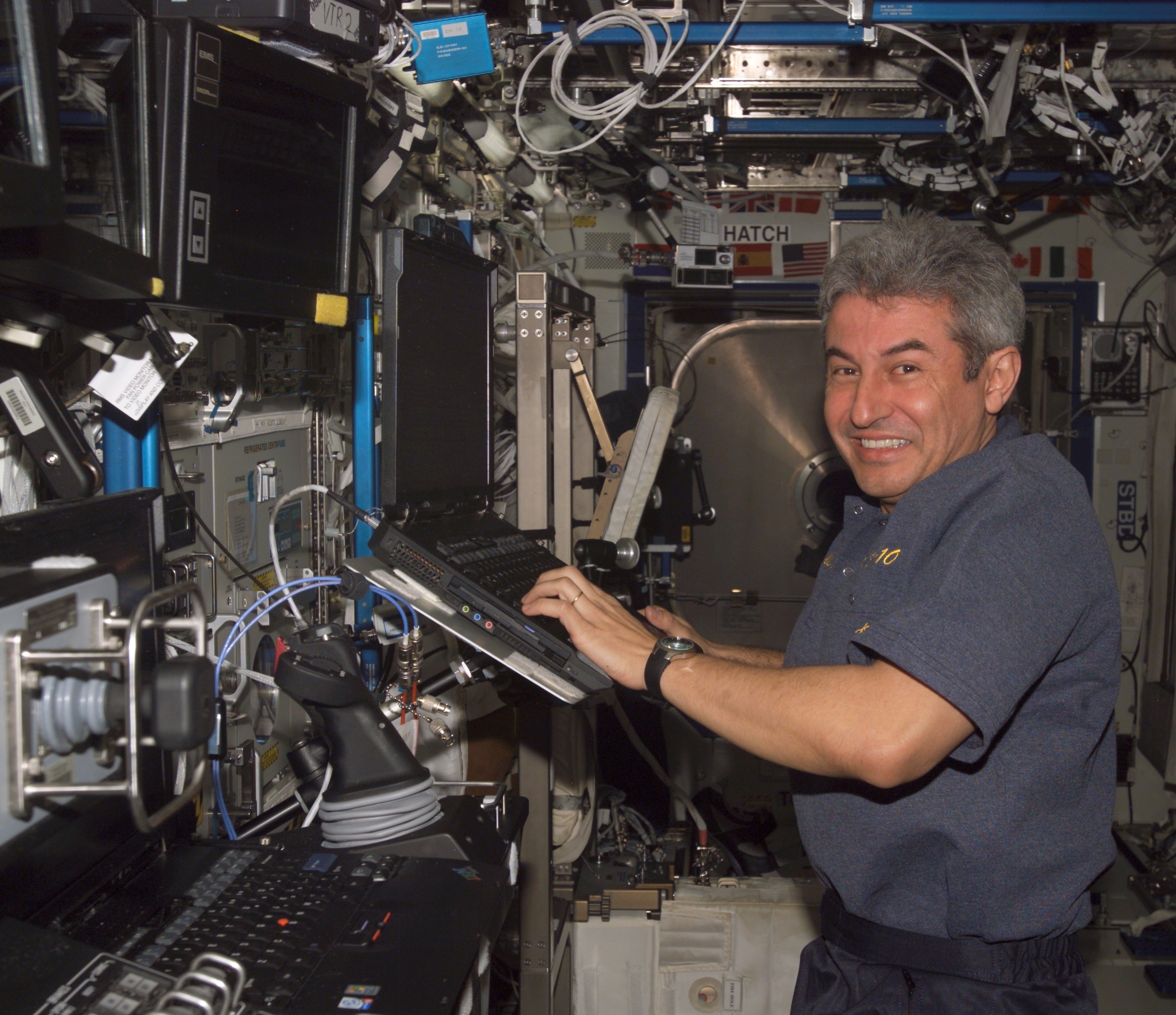
Brazilian astronaut Marcos Pontes, center at rear, with his Expedition 12 and 13 crewmates Pontes works on an experiment in the Destiny Laboratory Module Pontes at work on an experiment in the Russian Zvezda module.

Left: Brazilian astronaut Marcos Pontes, center at rear, with his Expedition 12 and 13 crewmates. Middle: Pontes works on an experiment in the Destiny Laboratory Module. Right: Pontes at work on an experiment in the Russian Zvezda module.

John D. “Danny” Olivas

Selected as a member of NASA’s Astronaut Class of 1998, John D. “Danny” Olivas visited the space station on two occasions as a shuttle mission specialist. His first visit took place aboard Atlantis during the STS-117 mission in June 2007. During the flight, Olivas and fellow mission specialist James F. Reilly conducted two of the four spacewalks to install the S3/S4 truss segment that included the third set of solar arrays. To prevent interfering with the rotation of the new arrays, the crew retracted the starboard P6 array mounted atop the Z1 truss. The STS-117 mission also served as a crew exchange flight, with NASA astronaut Clayton C. Anderson replacing Suni Williams as a member of Expedition 15.
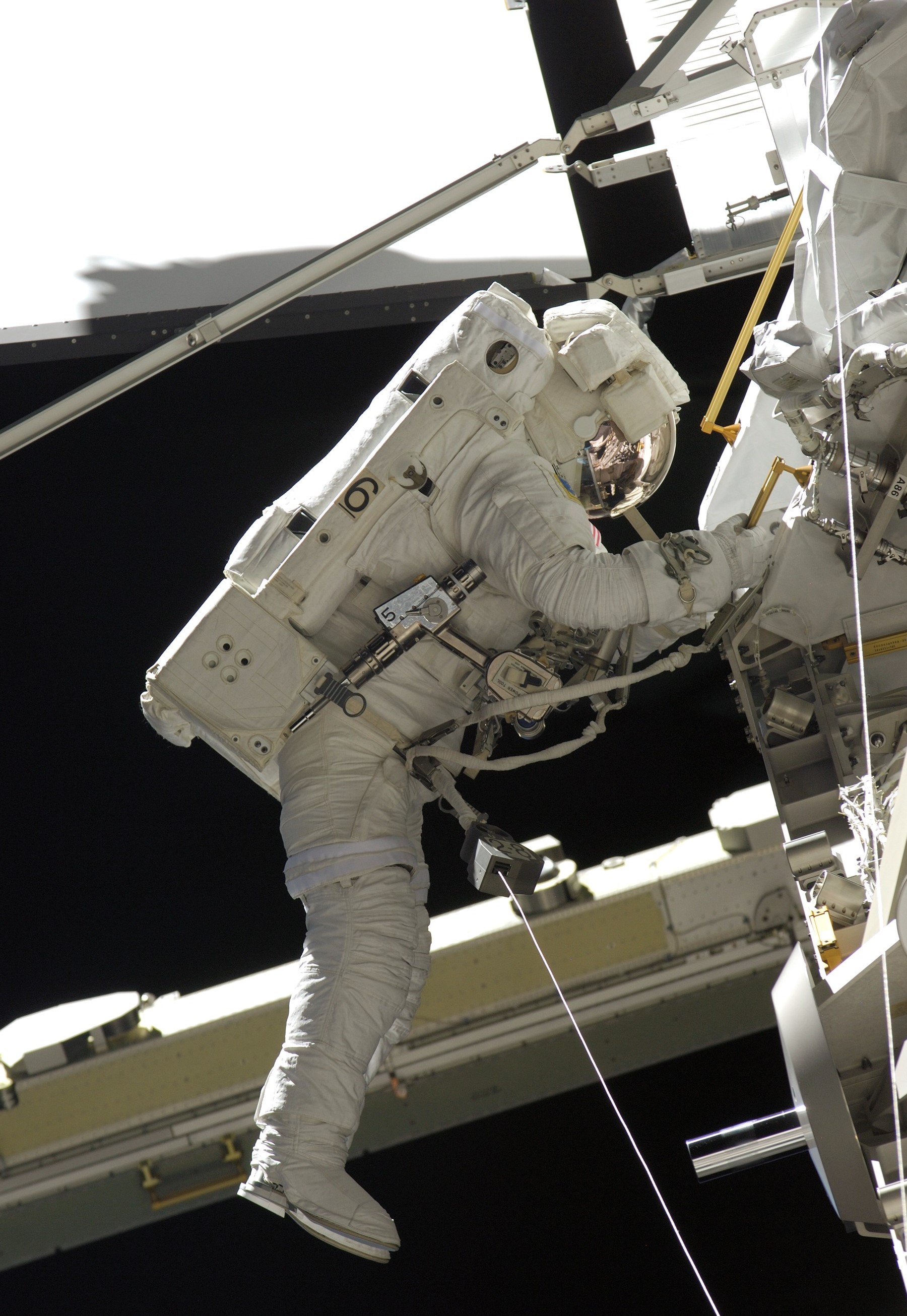
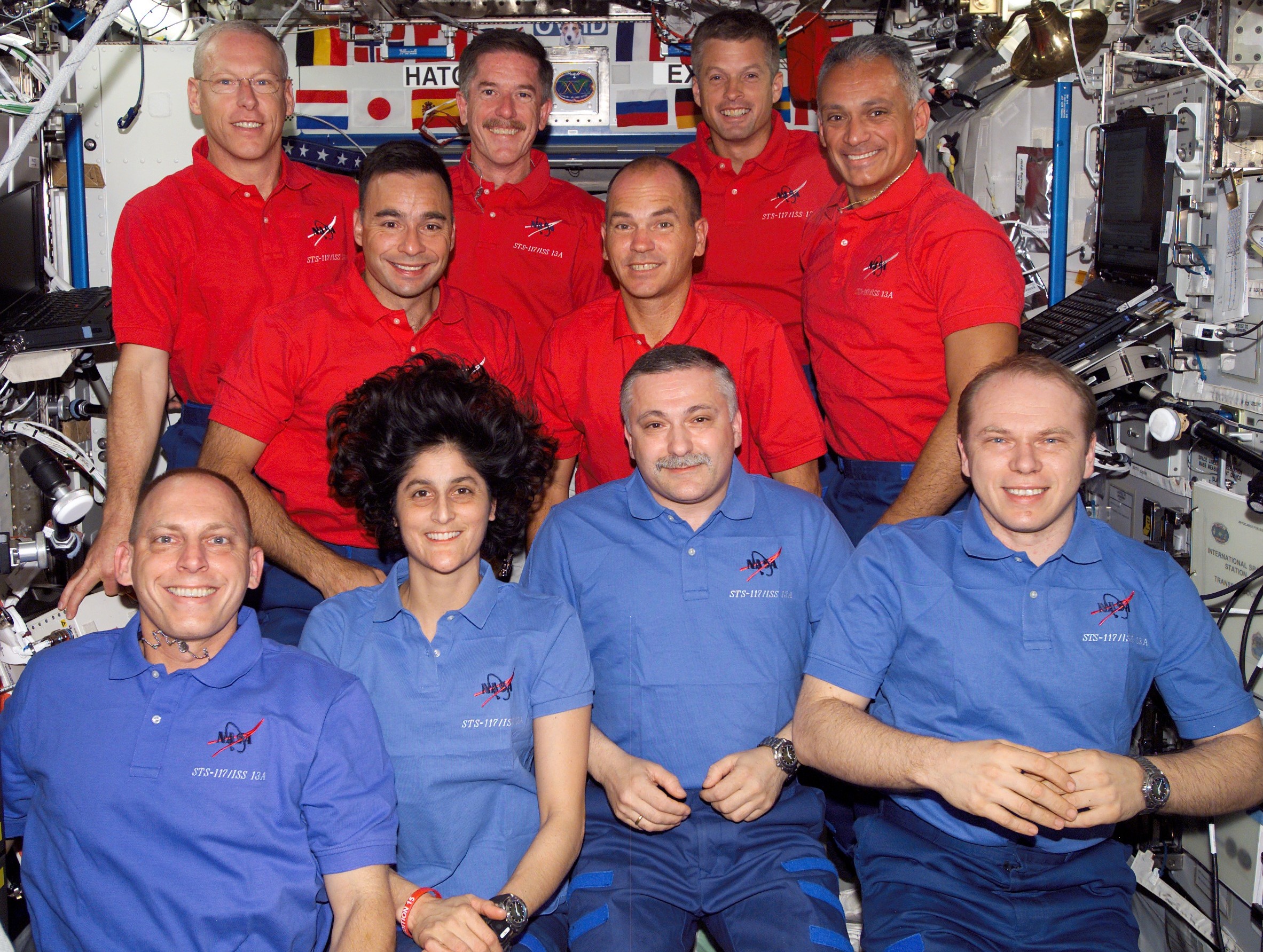
NASA astronaut John D. “Danny” Olivas during an STS-117 spacewalk working on the S3/S4 truss installation. Olivas, back row at right, with the STS-117 and Expedition 15 crews The space station as seen by the departing STS-117 crew, showing the new set of starboard solar arrays at right.

Left: NASA astronaut John D. “Danny” Olivas during an STS-117 spacewalk working on the S3/S4 truss installation. Middle: Olivas, back row at right, with the STS-117 and Expedition 15 crews. Right: The space station as seen by the departing STS-117 crew, showing the new set of starboard solar arrays at right.

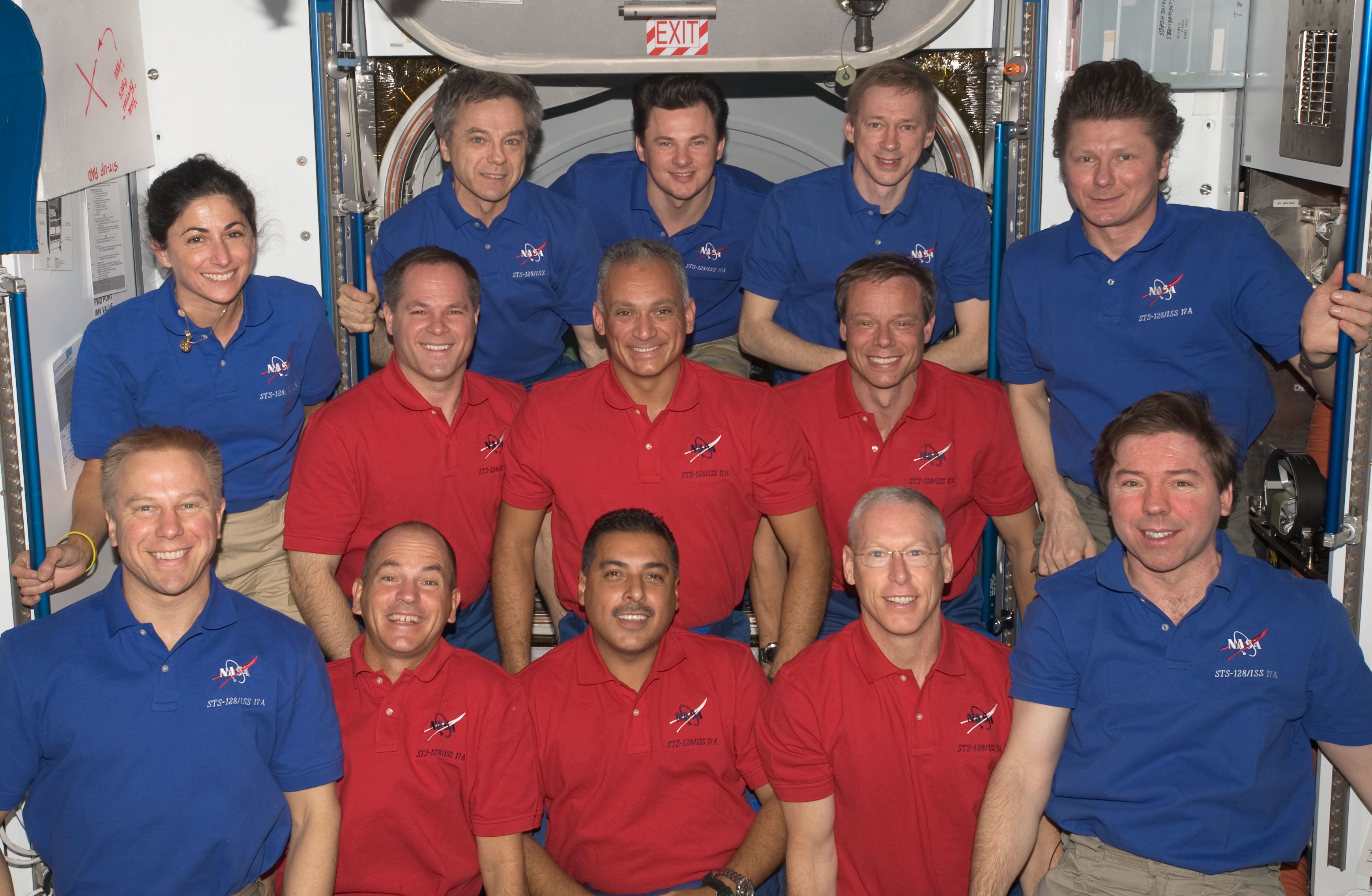
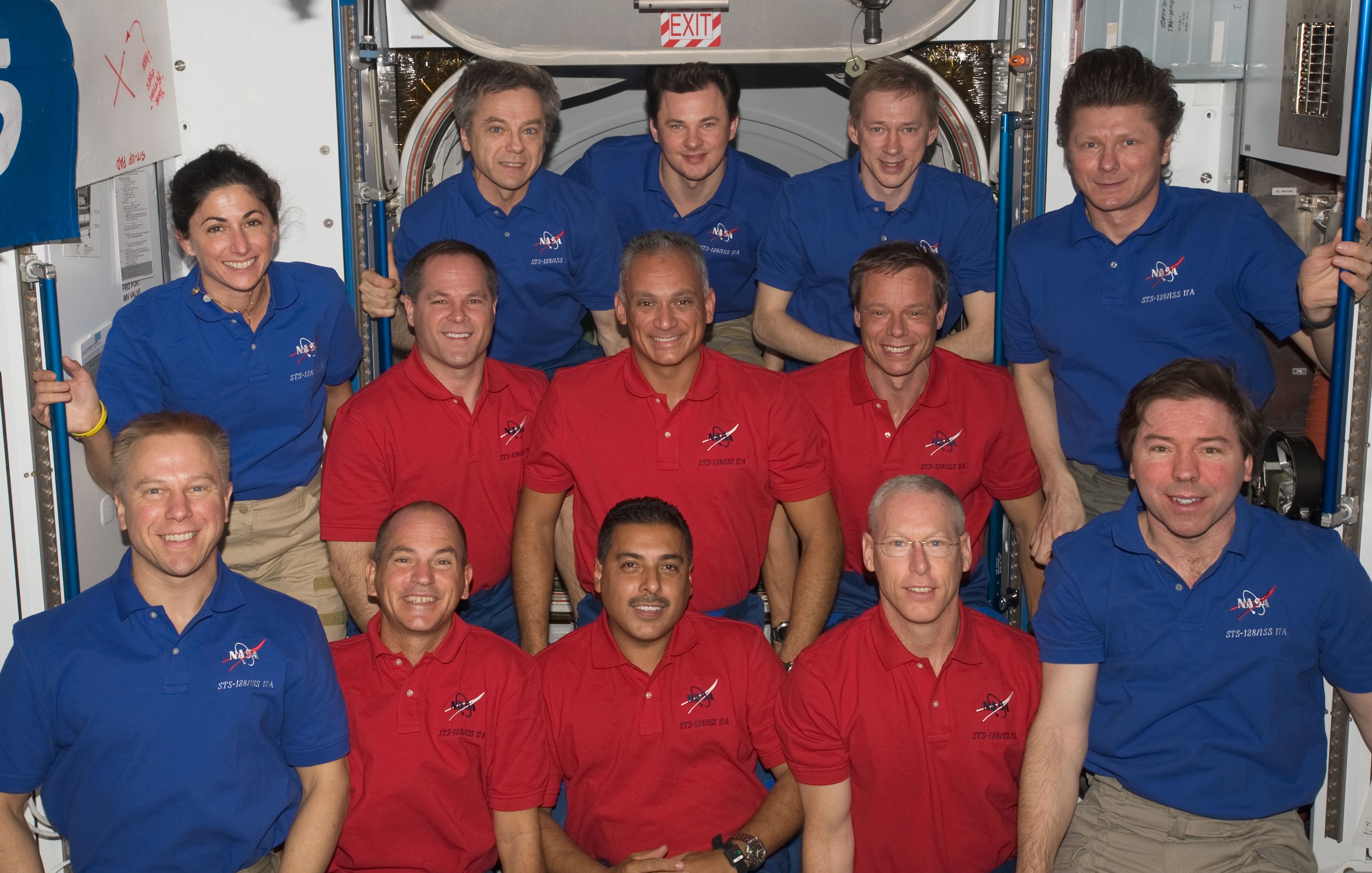
On his return to the station, Olivas found it a bit more crowded – three months earlier, the permanent crew aboard the station had expanded from three to six. He and his crewmates launched aboard Discovery on the STS-128 mission in August 2009. The shuttle’s payload bay contained the Leonardo MPLM bringing supplies to help maintain a 6-person crew on the space station, including three systems racks: a crew quarters, an Air Revitalization System  rack, and the Combined Operational Load Bearing External Resistance Treadmill (COLBERT) for crew exercise – as well as three research racks – the Fluid Integrated Rack , the Materials Science Research Rack, and the second Minus Eighty-degree Laboratory Freezer for ISS (MELFI). Olivas participated in three spacewalks to replace the Ammonia Tank Assembly on the P1 truss and to retrieve two experiments from the European Columbus module’s External Payload Facility. STS-128 also completed the final shuttle-based crew exchange, with NASA astronauts Nicole P. Stott and Timothy L. Kopra exchanging places as Expedition 20 crewmembers.
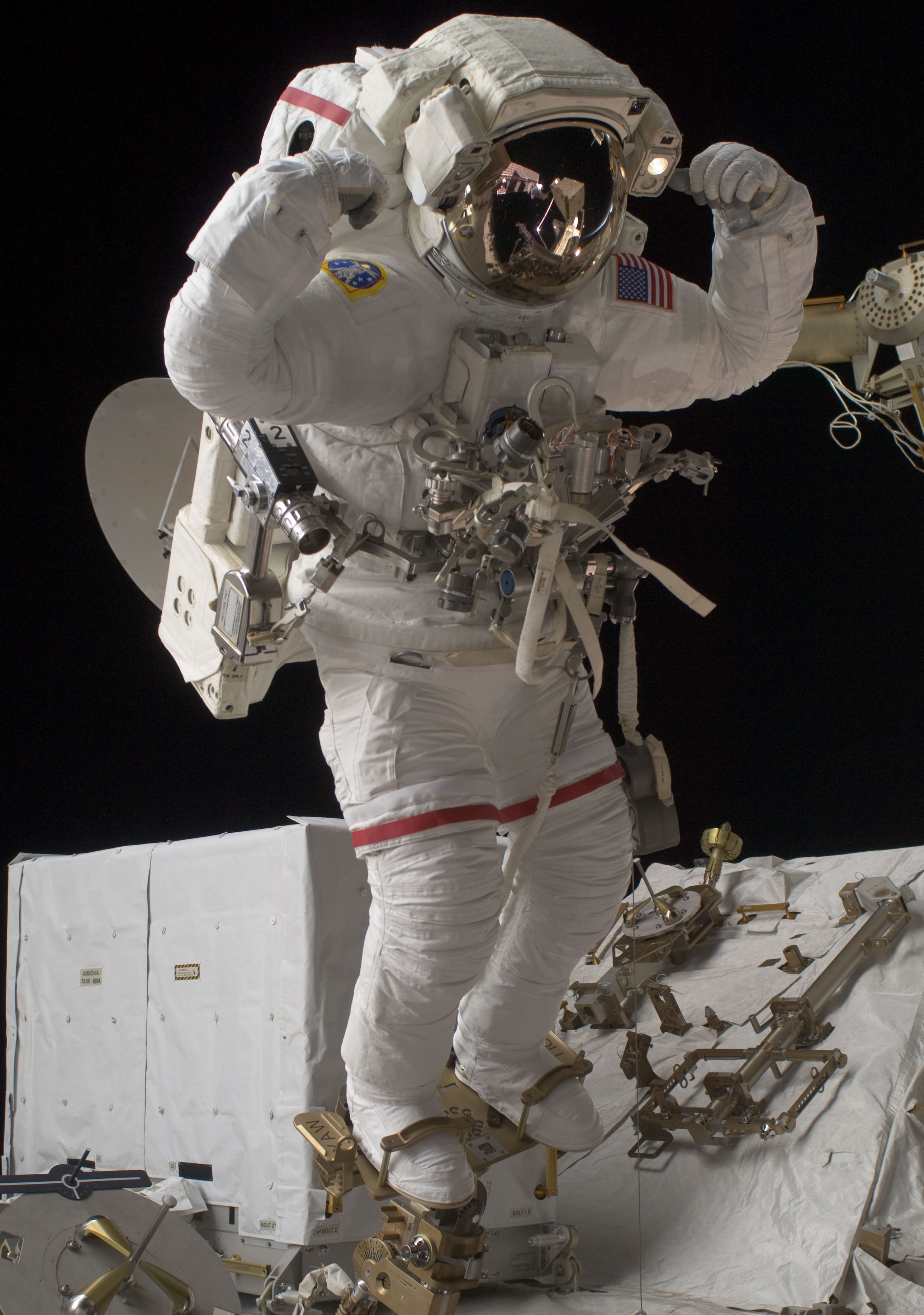
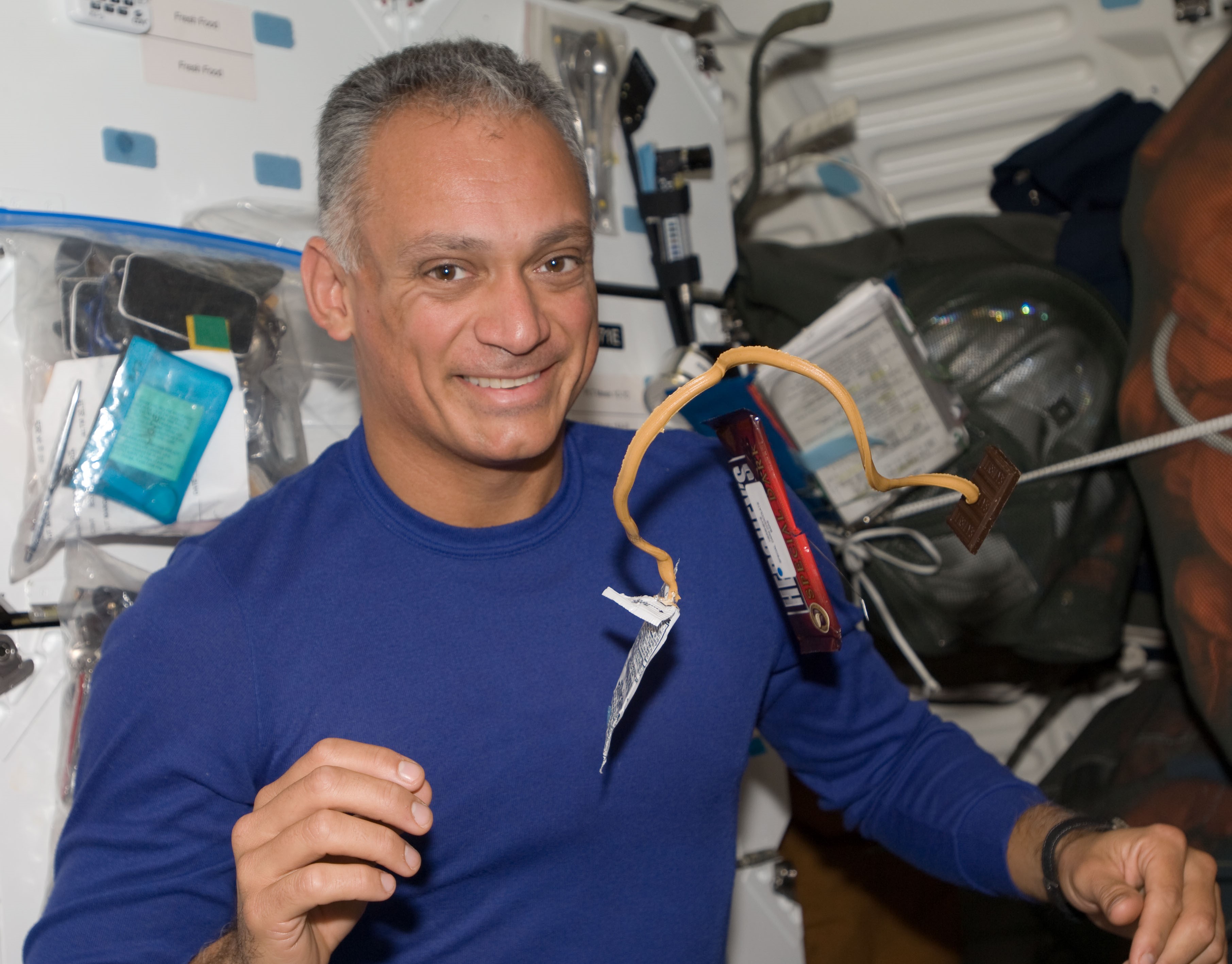
NASA astronaut John D. “Danny” Olivas poses during spacewalk work on the Ammonia Tank Assembly. NASA astronaut John D. “Danny” Olivas eating a chocolate and peanut butter snack NASA astronaut John D. “Danny” Olivas, at center, with the STS-128 and Expedition 20 crews

Left: NASA astronaut John D. “Danny” Olivas poses during spacewalk work on the Ammonia
Tank Assembly. Middle: Olivas eating a chocolate and peanut butter snack. Right: Olivas, at center, with the STS-128 and Expedition 20 crews.

George D. Zamka

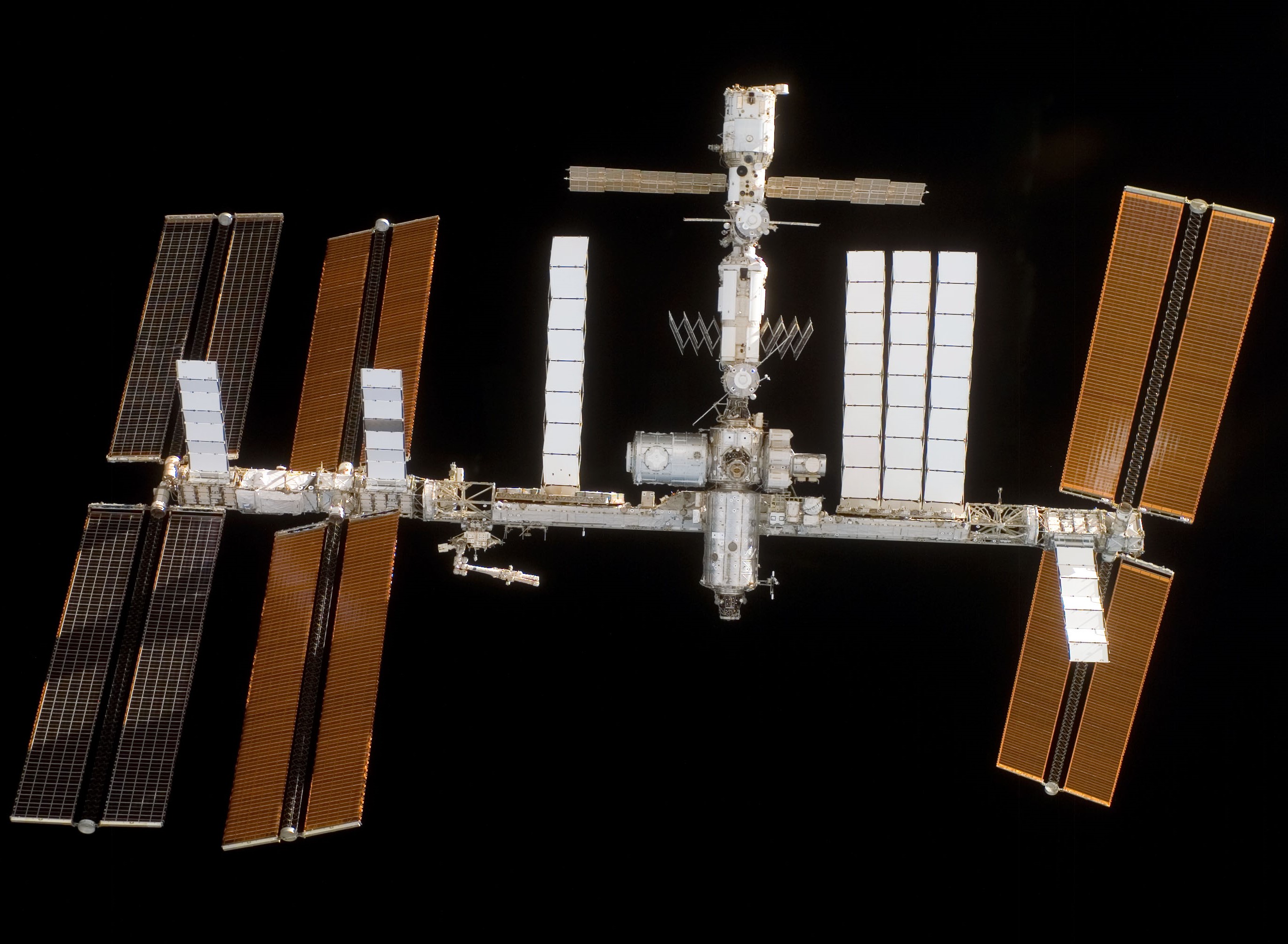
Selected as a NASA astronaut in 1998, George D. Zamka completed his first space flight as pilot on Discovery’s STS-120 mission. Launching in October 2007, Zamka and his crewmates brought the Harmony Node 2 module to the station, temporarily berthing it on the Unity Node 1’s port side until the Expedition 16 crew relocated it to Destiny’s forward hatch. In its final location, Harmony enabled the later installation of the European and Japanese elements. The crew also relocated the P6 truss segment from atop Z1 to the outboard port truss. During the redeployment of the P6 solar arrays, one of the arrays developed a tear that required repair using a cufflink-like device to sew up the gap in the panel. STS-120 also conducted a crew exchange, with NASA astronauts Daniel M. Tani and Clay Anderson exchanging places as members of Expedition 16. As the STS-120 pilot, Zamka completed the undocking from the station and the departure fly-around maneuver.
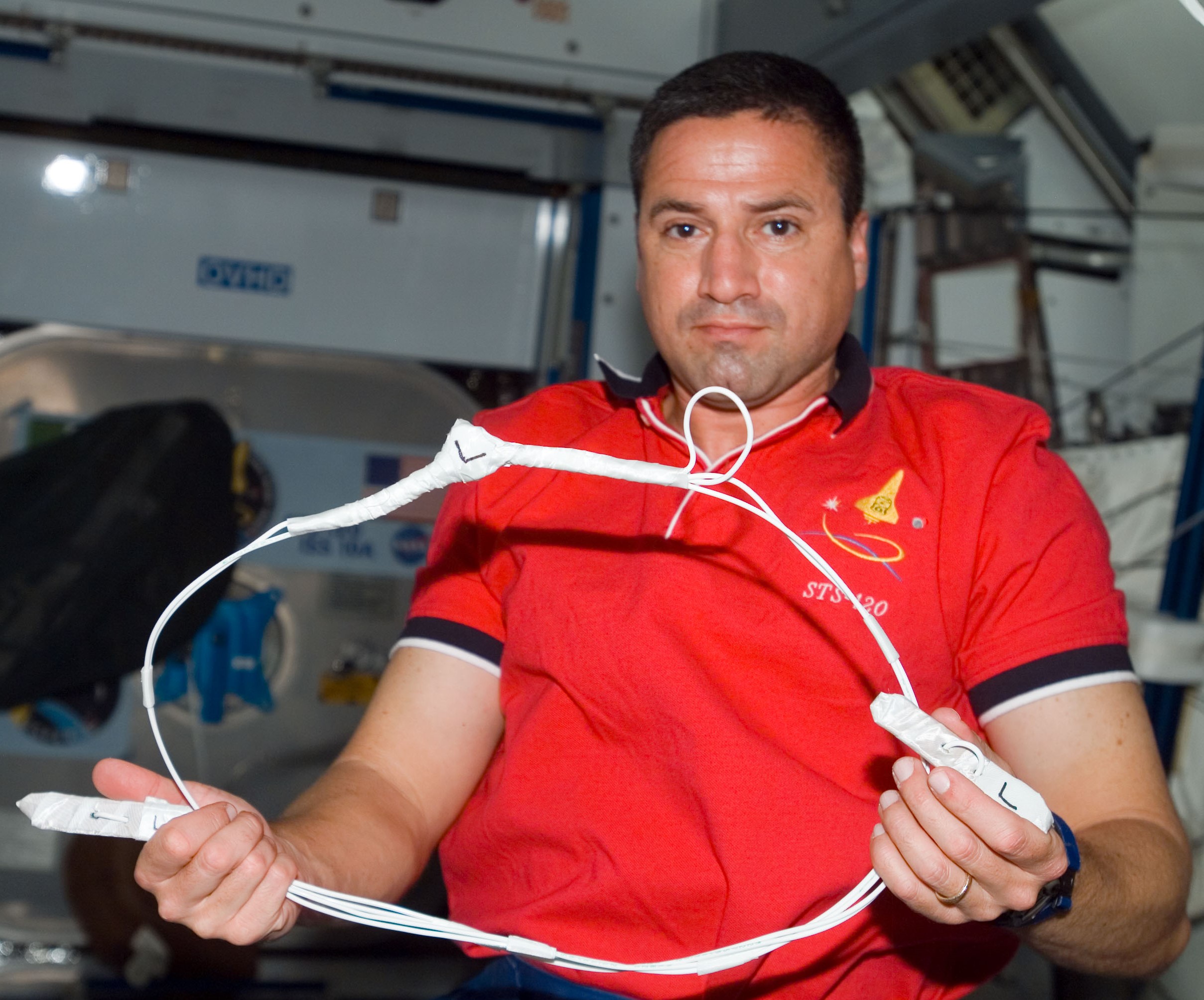
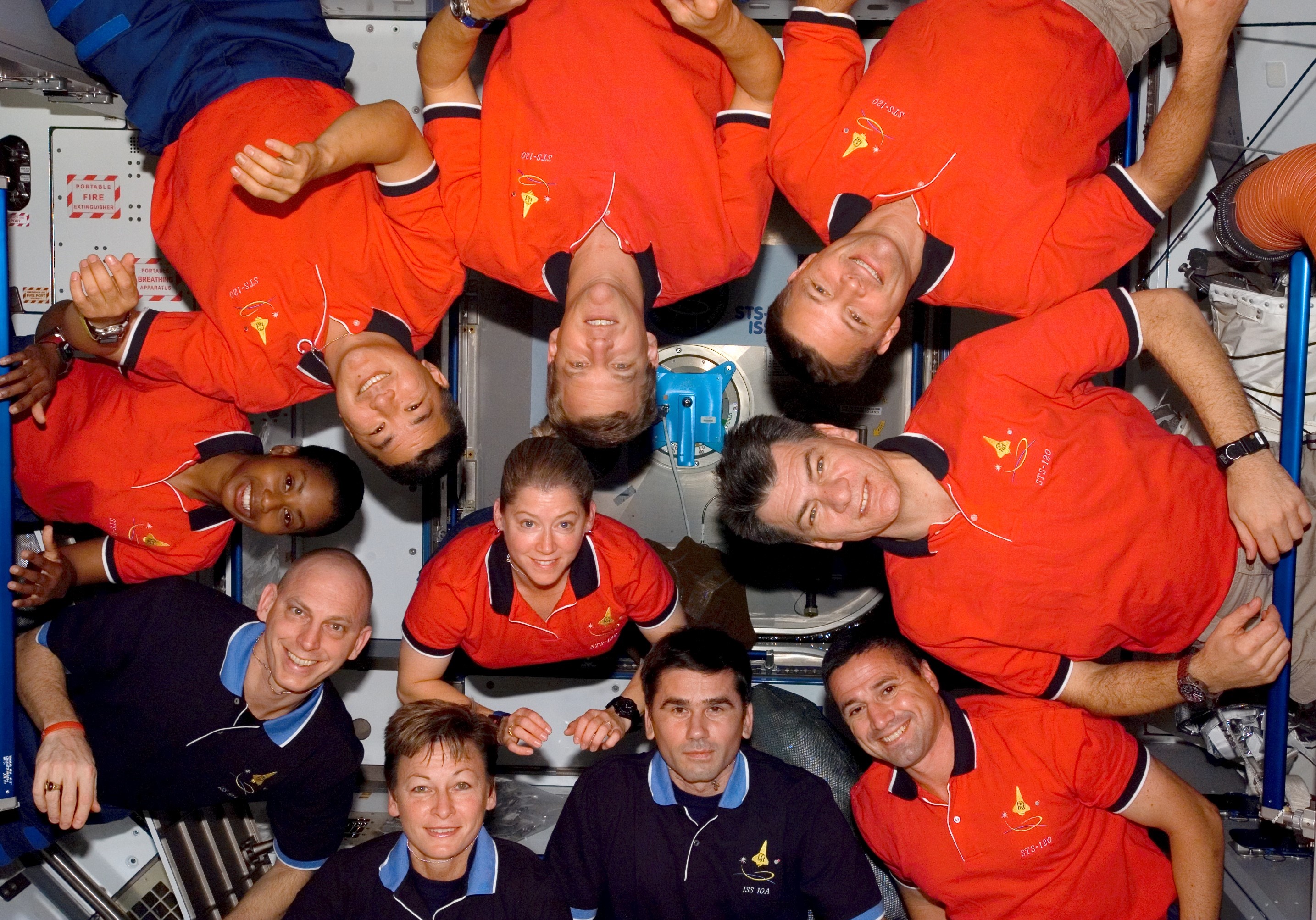
NASA astronaut George D. Zamka holding the cufflink device used to repair the torn solar array Zamka, lower right, with the STS-120 and Expedition 16 crews The space station as seen from STS-120 departing, showing the newly delivered Harmony Node 2 module

Left: NASA astronaut George D. Zamka holding the cufflink device used to repair the torn solar array. Middle: Zamka, lower right, with the STS-120 and Expedition 16 crews. Right: The space station as seen from STS-120 departing, showing the newly delivered Harmony Node 2 module temporarily berthed at the Unity Node 1 and the relocated and redeployed P6 truss segment and solar arrays at left.

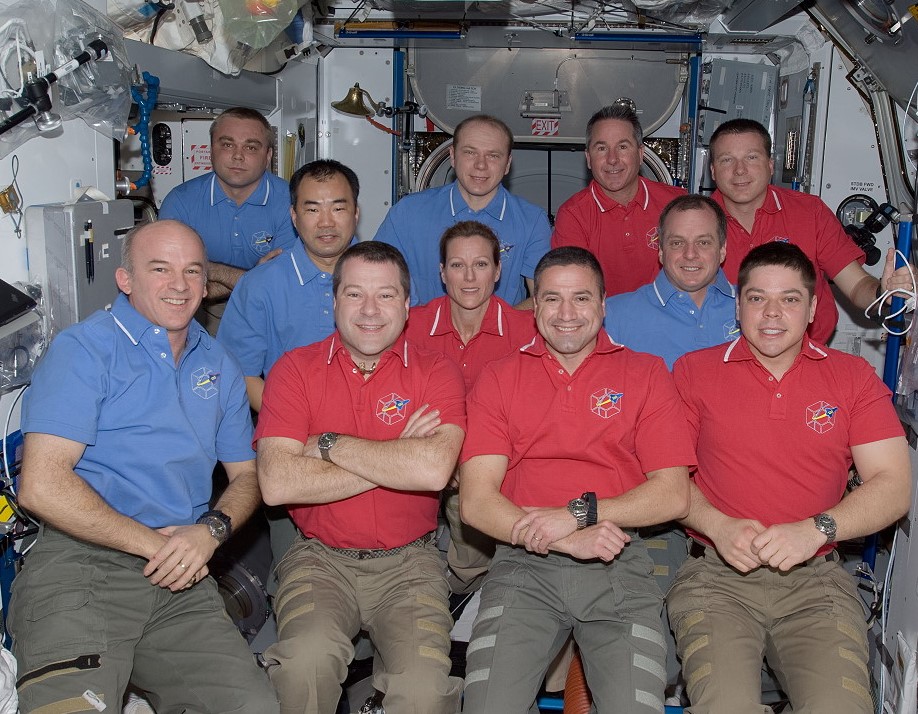
When he returned to the orbiting lab in February 2010, Zamka did so as commander of space shuttle Endeavour’s STS-130 mission. After guiding the shuttle to a successful docking with the station, Zamka and his crewmates, along with the Expedition 22 crew, installed the Tranquility Node 3 module to Unity’s port side and activated the new element. The new module provided accommodations for life support and habitation facilities for the station’s six-person crew. The crew removed the Cupola from its launch position at the end of Tranquility and relocated it to the module’s Earth-facing port. The Cupola’s six trapezoidal and one circular center window provide crews not only visibility for approaching visiting vehicles, but also spectacular views of their home planet passing by below. 
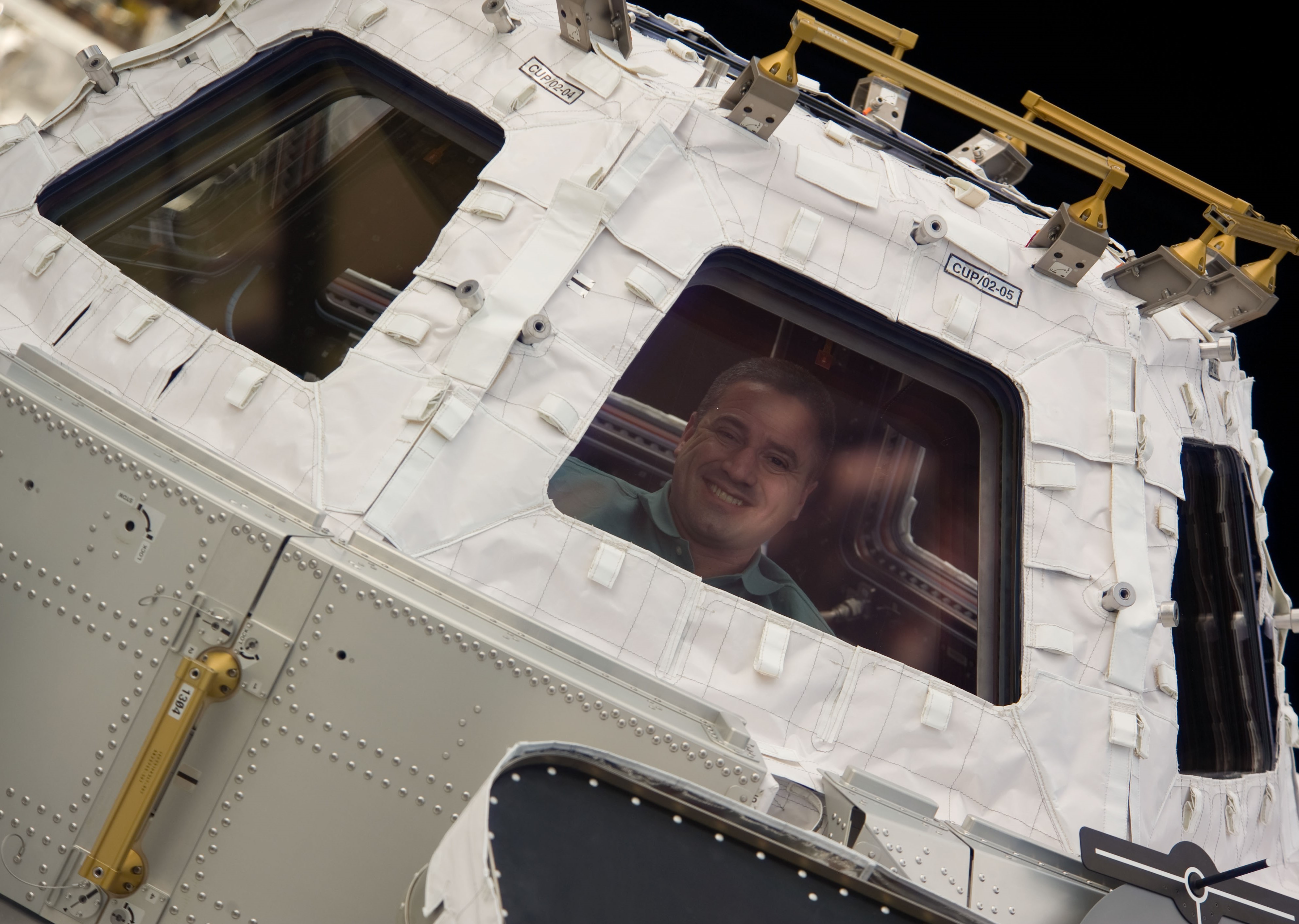
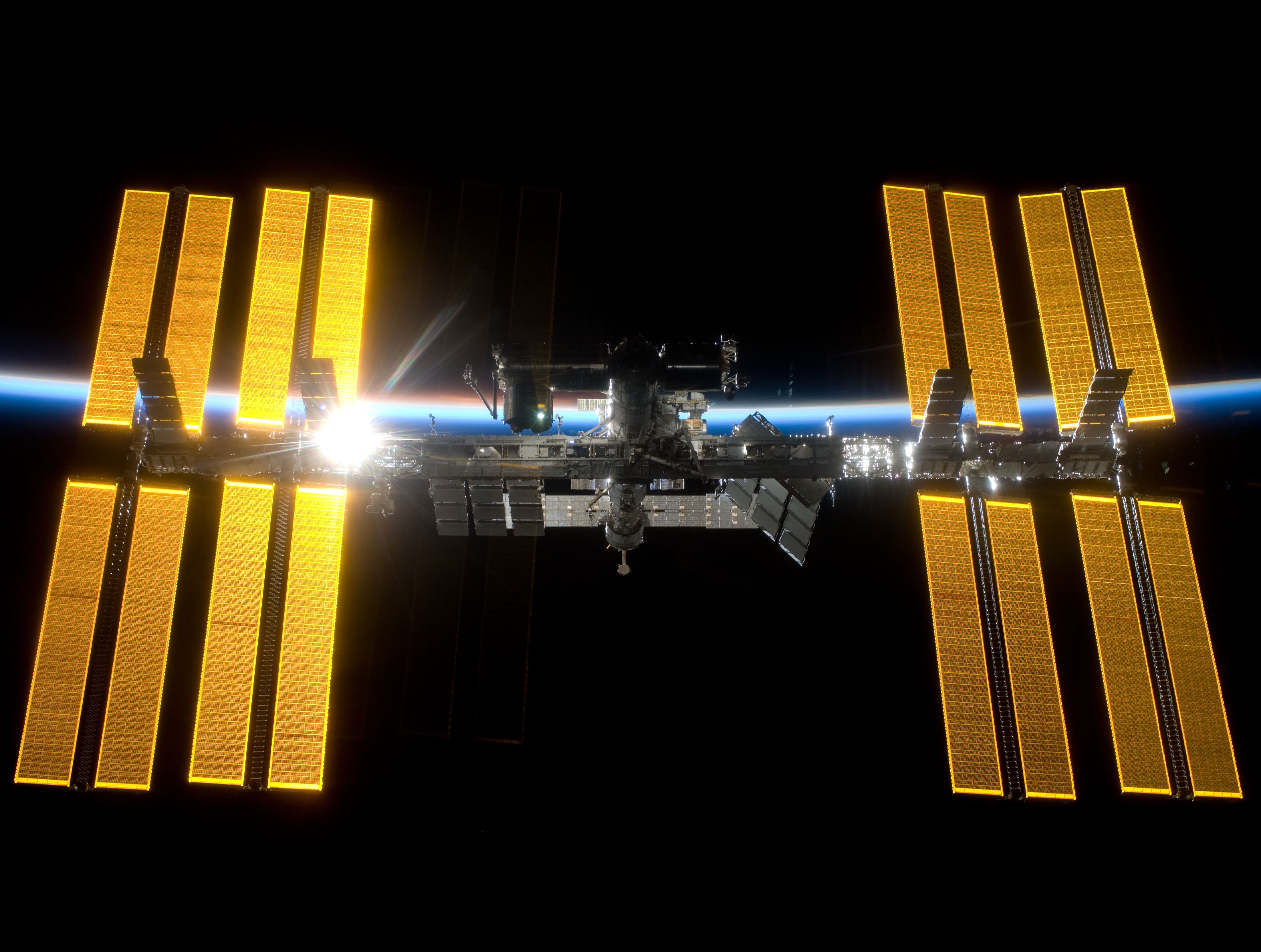
NASA astronaut George D. Zamka peering through one of the Cupola’s windows Zamka with the STS-130 and Expedition 22 crews. The space station as seen from the departing STS-130, showing the Tranquility Node 3 and Cupola berthed at the Unity Node 1, left of center.

Left: NASA astronaut George D. Zamka peering through one of the Cupola’s windows. Middle: Zamka, front row second from right, with the STS-130 and Expedition 22 crews. Right: The space  station as seem from the departing STS-130, showing the Tranquility Node 3 and Cupola berthed at the Unity Node 1, left of center.

Joseph M. “Joe” Acaba

Joseph M. “Joe” Acaba was selected in 2004 as part of NASA’s Educator Astronaut Program and qualified as a mission specialist. His first flight into space was aboard STS-119 in March 2009. Discovery brought up the S6 final truss segment with the fourth and final set of solar arrays, bringing the U.S. segment of the station’s useable power generating capability between 42 and 60 kilowatts. Acaba completed two of the mission’s three spacewalks, one with fellow mission specialist Steven R. Swanson and the other with fellow educator-astronaut and mission specialist Richard R. “Ricky” Arnold. During the STS-119 mission, Koichi Wakata of the Japan Aerospace Exploration Agency (JAXA) replaced NASA astronaut Sandra H. Magnus as a member of the Expedition 18 crew.
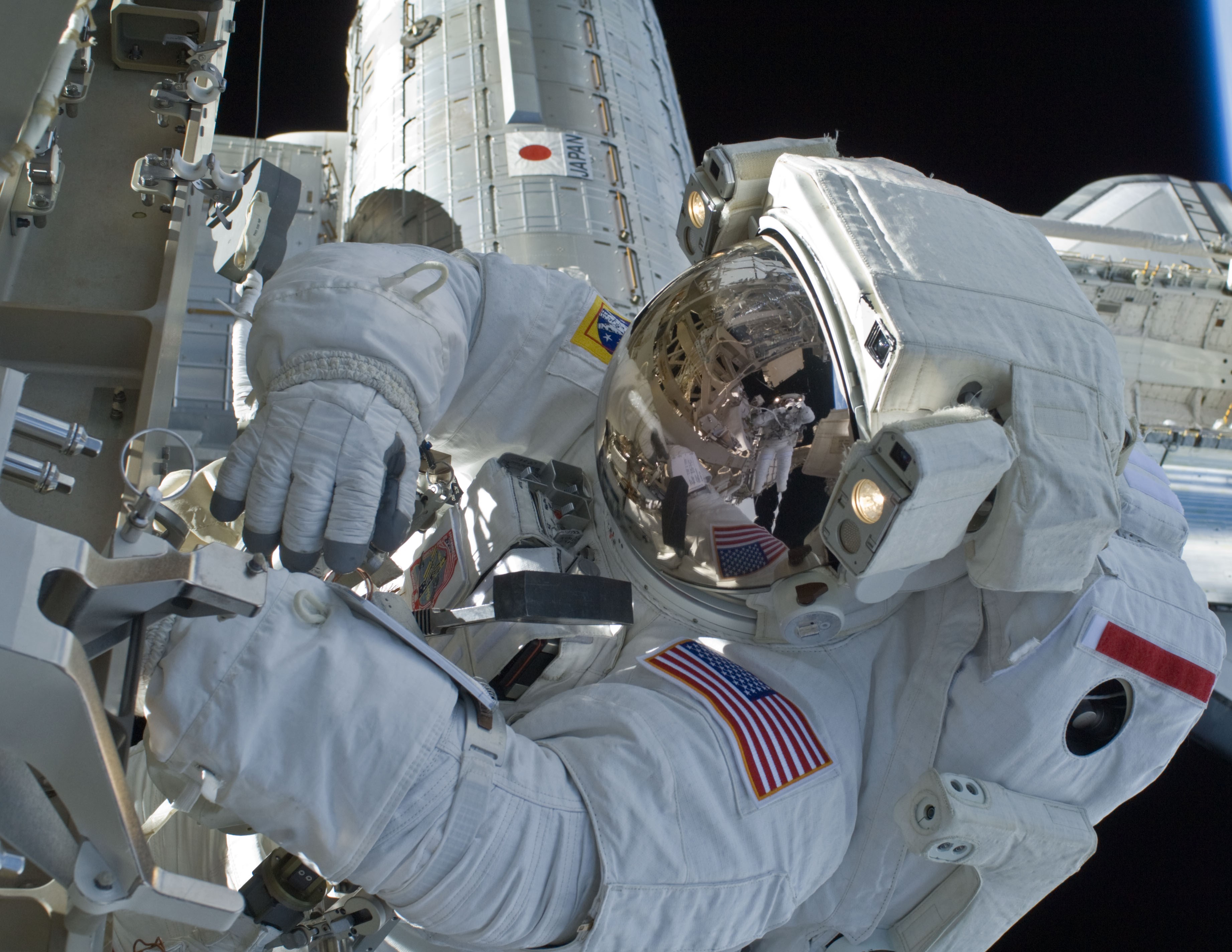
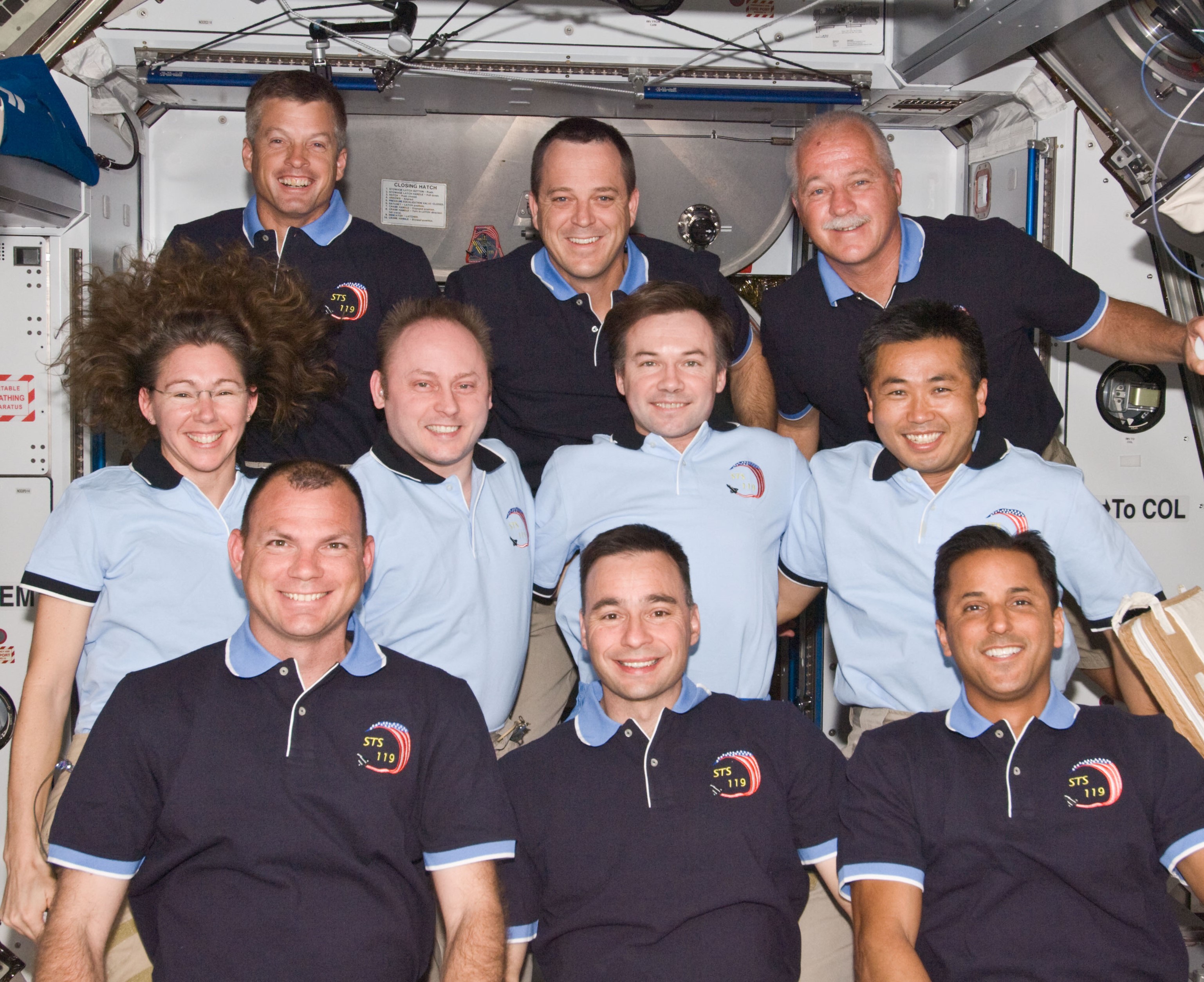
NASA astronaut Joseph M. Acaba during the third STS-119 spacewalk Acaba with the STS-119 and Expedition 18 crews The space station as seen from the departing STS-119, with the newly added S6 truss segment and solar arrays

Left: NASA astronaut Joseph M. Acaba during the third STS-119 spacewalk. Middle: Acaba, front row at right, with the STS-119 and Expedition 18 crews. Right: The space station as seen from the departing STS-119, with the newly added S6 truss segment and solar arrays, at right.

For his second visit to the station, Acaba stayed for 125 days as part of Expeditions 31 and 32, launching in May 2012 from Kazakhstan aboard Soyuz TMA-04M. A week after arriving, Acaba and his crewmates welcomed the first commercial vehicle to dock with the space station, the SpaceX Dragon cargo resupply vehicle on its Demo-2 mission carrying food, water, scientific experiments and other supplies. The Expedition 31 crew loaded the Dragon spacecraft with cargo and experiment samples for return to Earth. The crew observed and photographed a rare celestial event, a transit of Venus across the Sun on June 5. In addition to conducting numerous science experiments, Acaba helped fire prevention icon Smokey the Bear celebrate his 68th birthday.
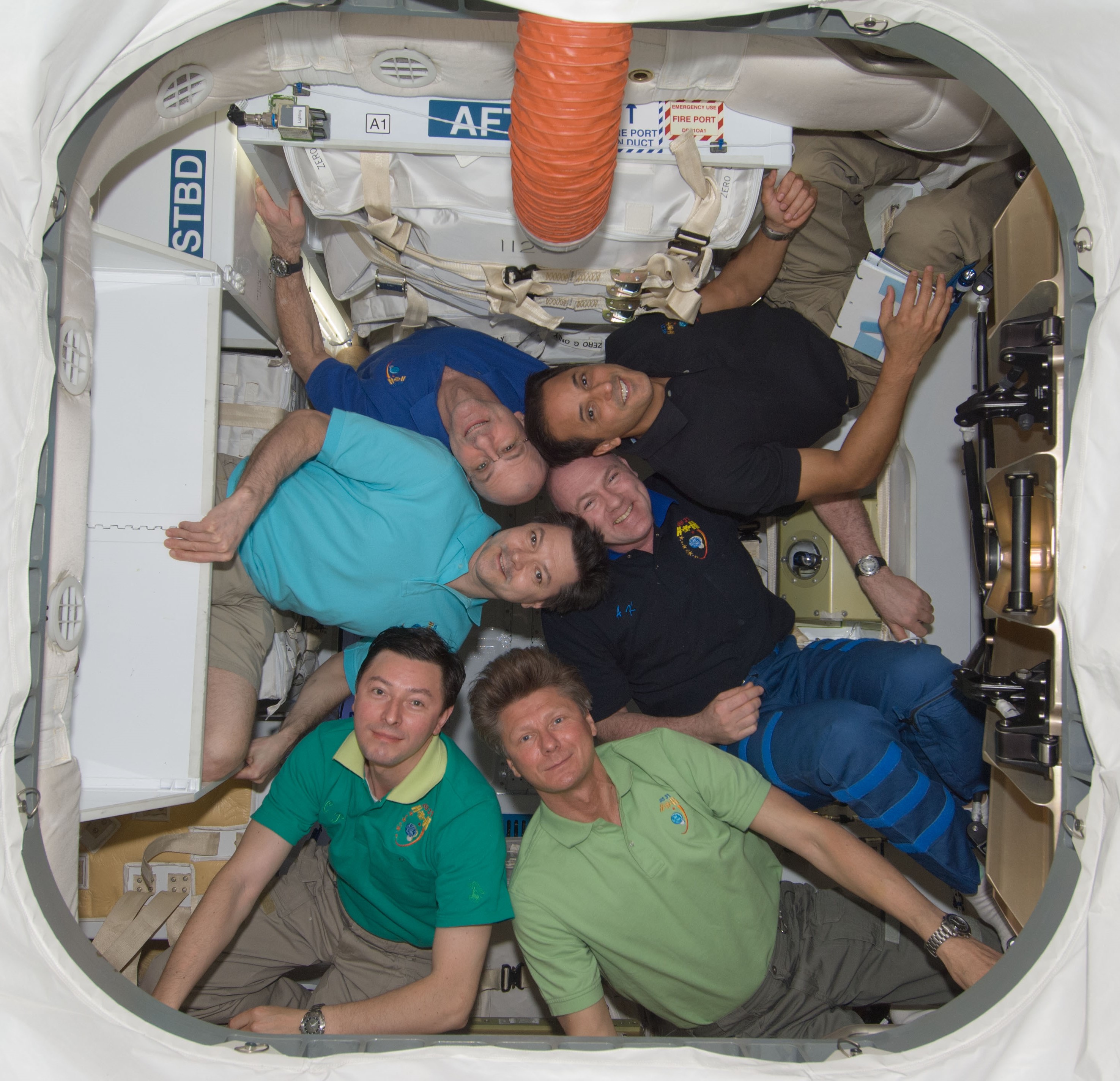
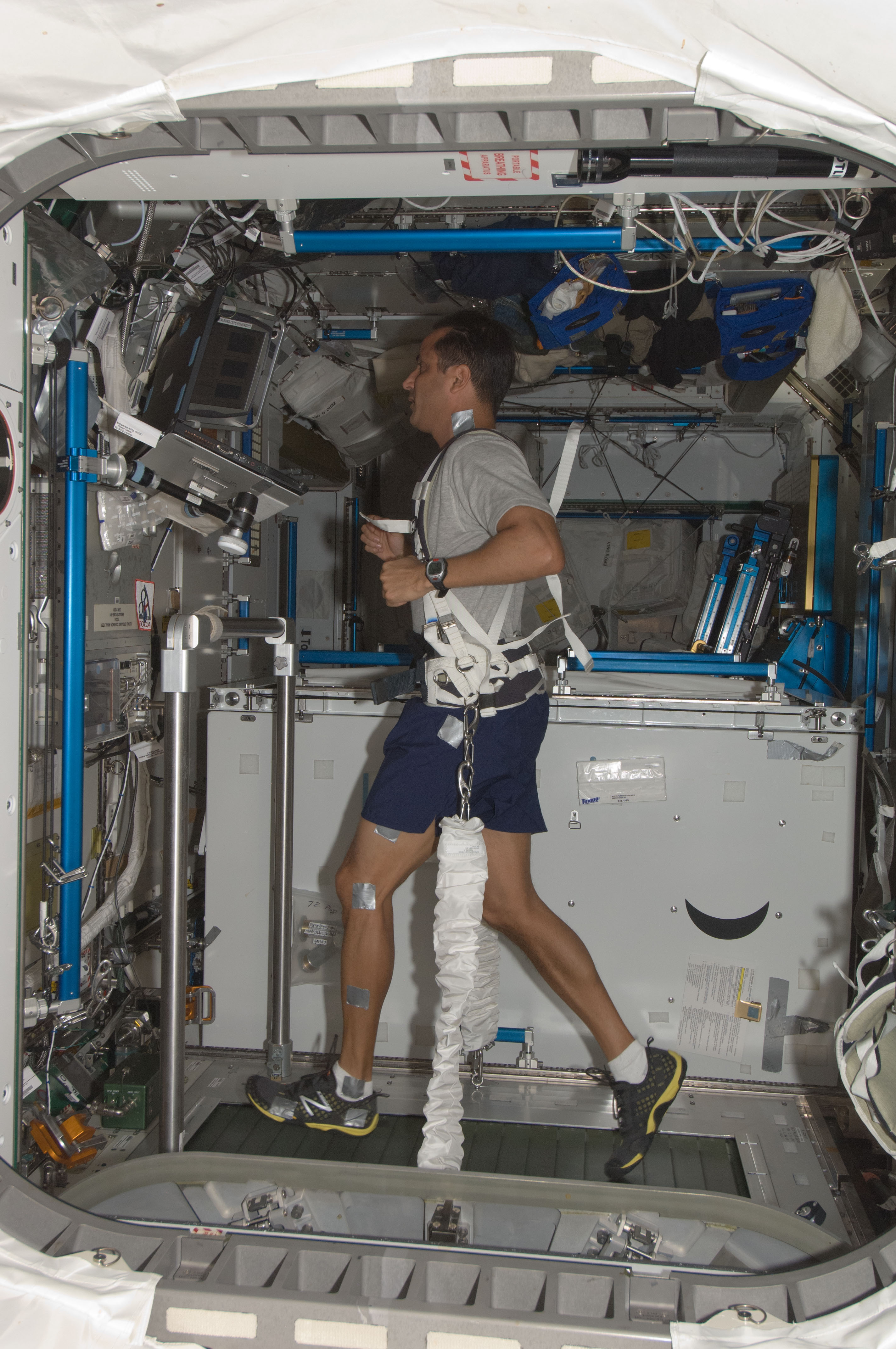
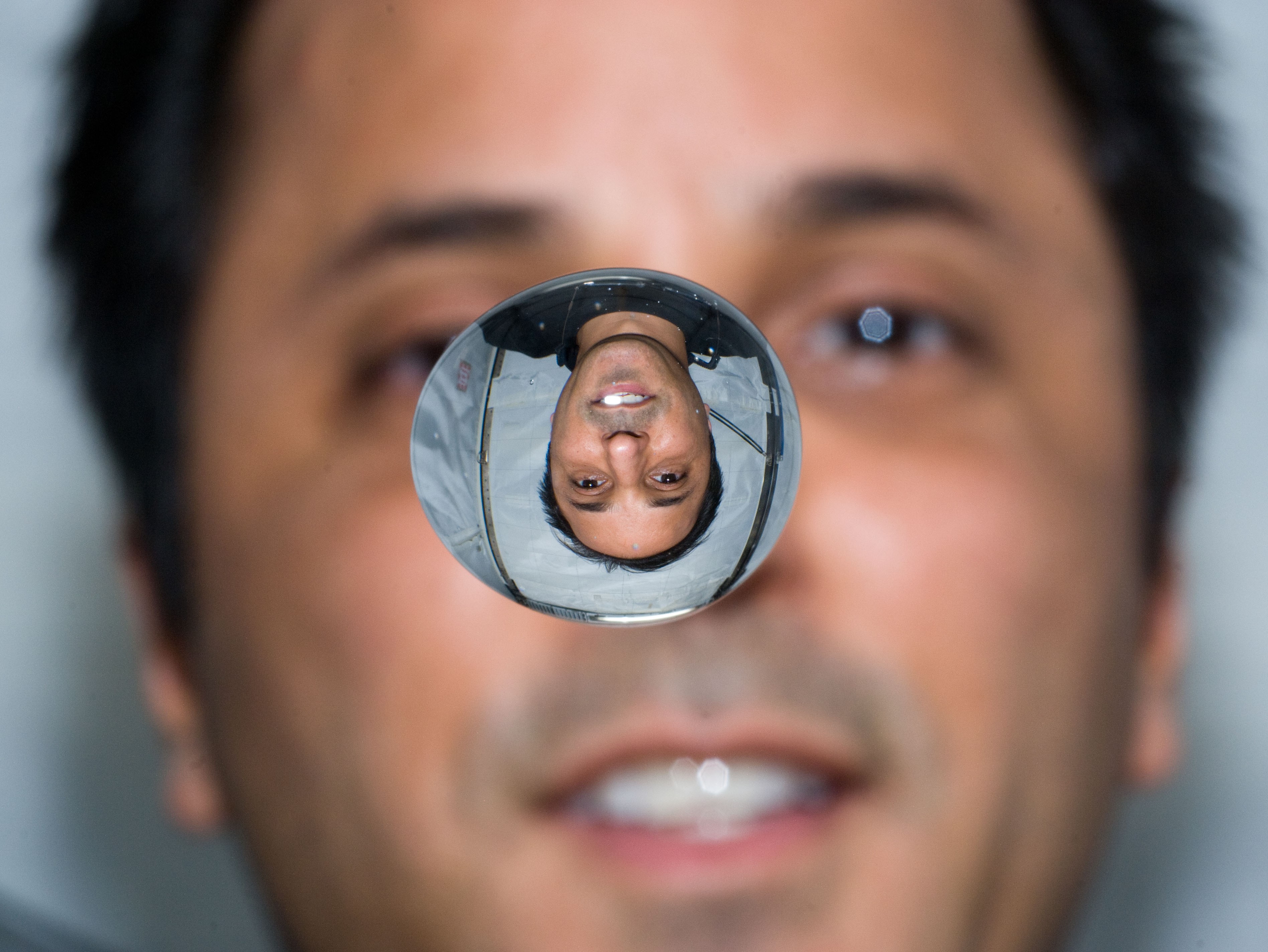
NASA astronaut Joseph M. Acaba with his Expedition 31 crewmates inside the SpaceX Dragon resupply vehicle NASA astronaut Joseph M. Acaba running on the COLBERT treadmill. NASA astronaut Joseph M. Acaba refracted in a globule of water.

Left: NASA astronaut Joseph M. Acaba, top right, with his Expedition 31 crewmates inside the SpaceX Dragon resupply vehicle. Middle: Acaba running on the COLBERT treadmill. Right: Acaba refracted in a globule of water.
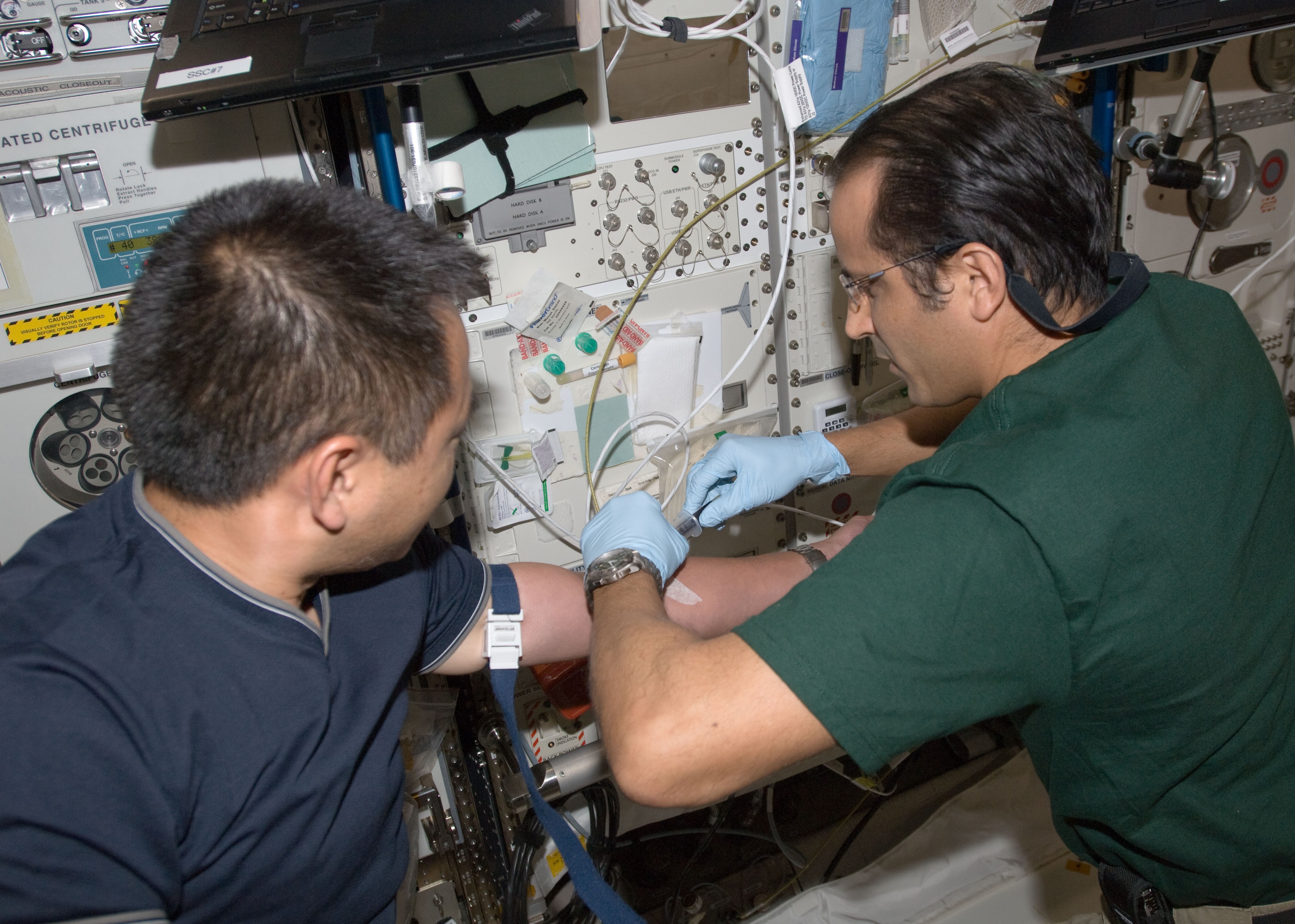
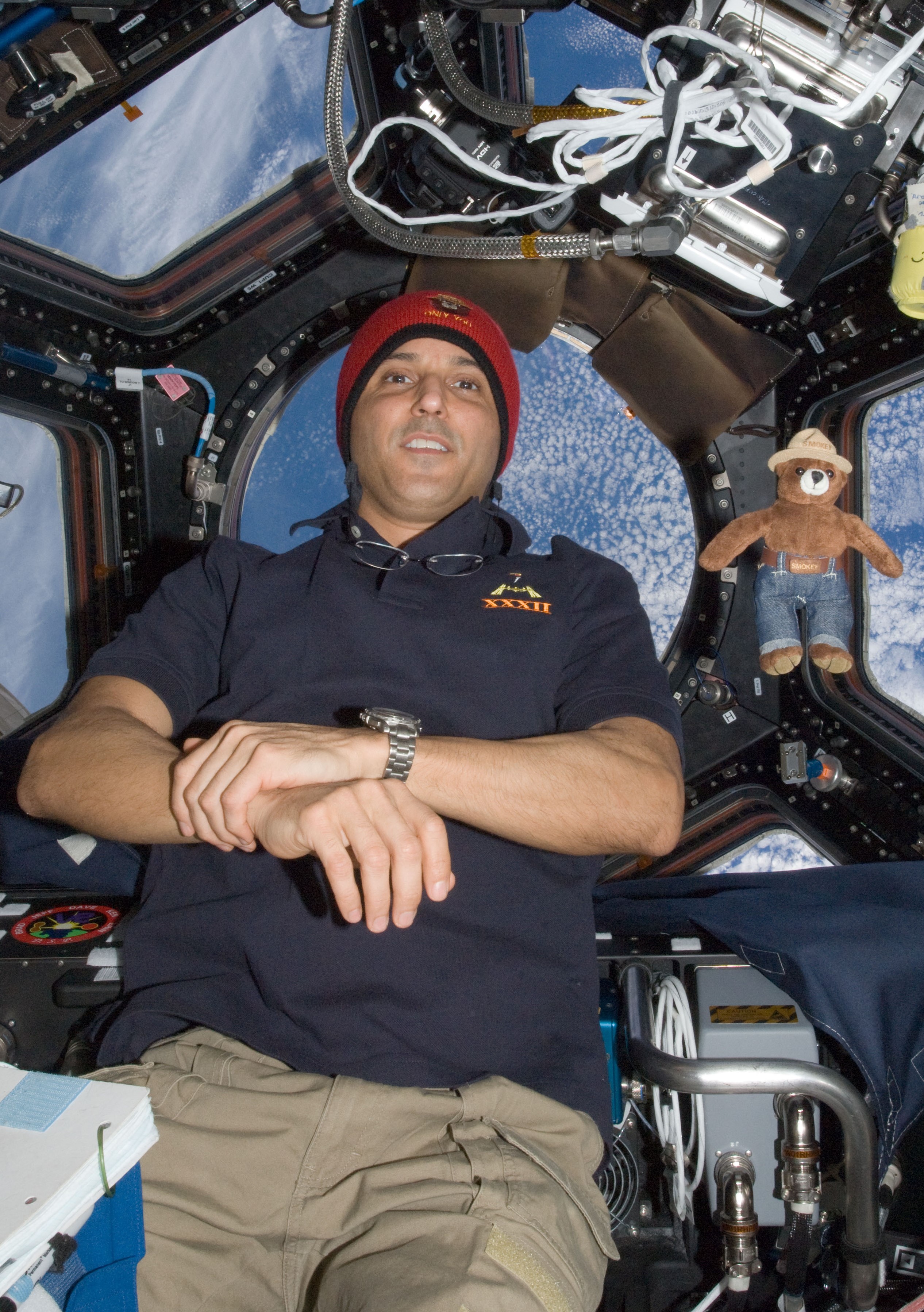
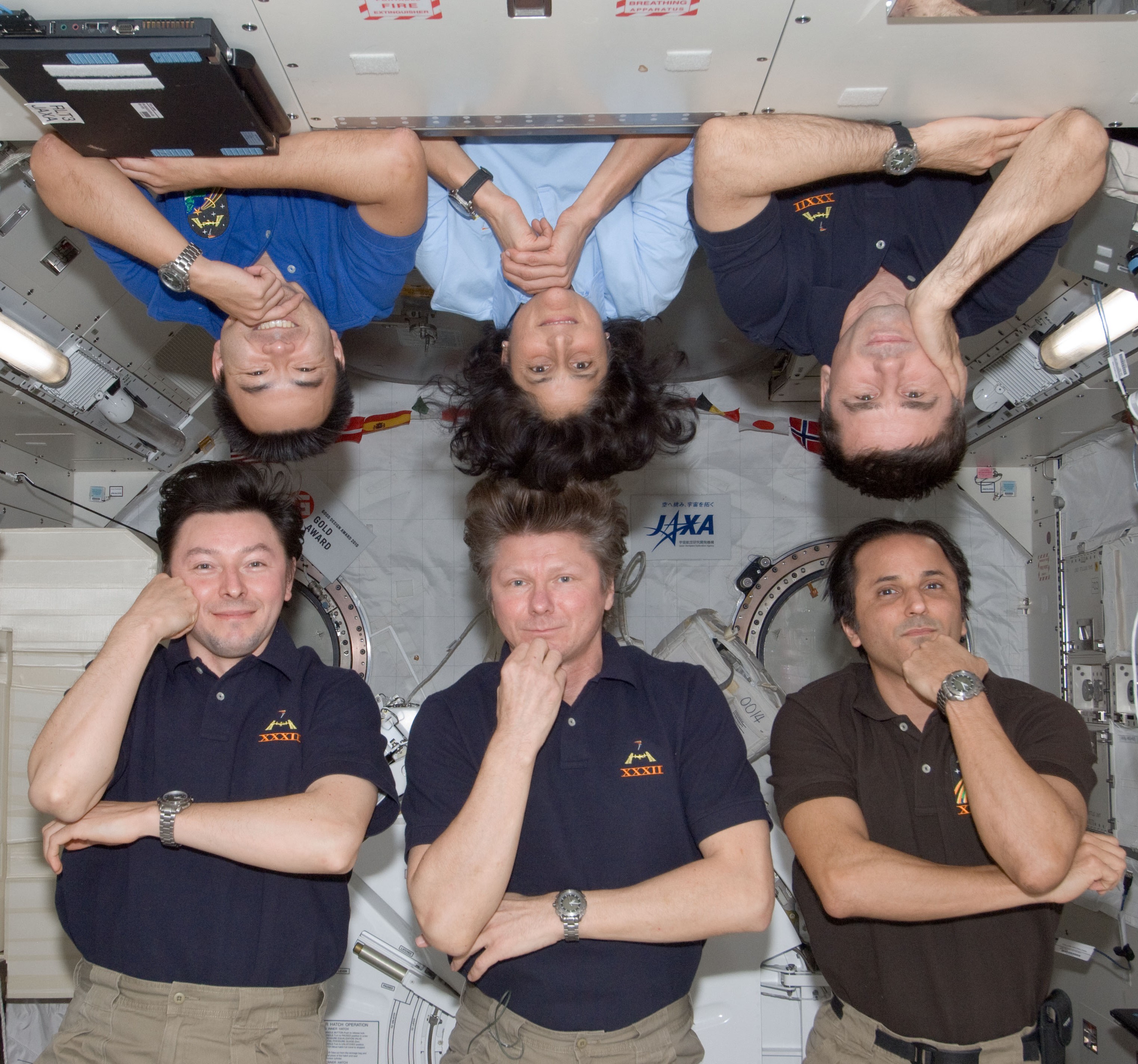
NASA astronaut Joseph M. Acaba drawing a blood sample from Akihiko Hoshide of the Japan Aerospace Exploration Agency NASA astronaut Joseph M. Acaba with a toy Smokey the Bear in the Cupola to help celebrate the forest fire prevention icon’s 68th birthday NASA astronaut Joseph M. Acaba, lower right, with this Expedition 32 crewmates.

Left: NASA astronaut Joseph M. Acaba, right, drawing a blood sample from Akihiko Hoshide of the Japan Aerospace Exploration Agency. Middle: Acaba with a toy Smokey the Bear in the Cupola to help celebrate the forest fire prevention icon’s 68th birthday. Right: Acaba, lower right, with this Expedition 32 crewmates.

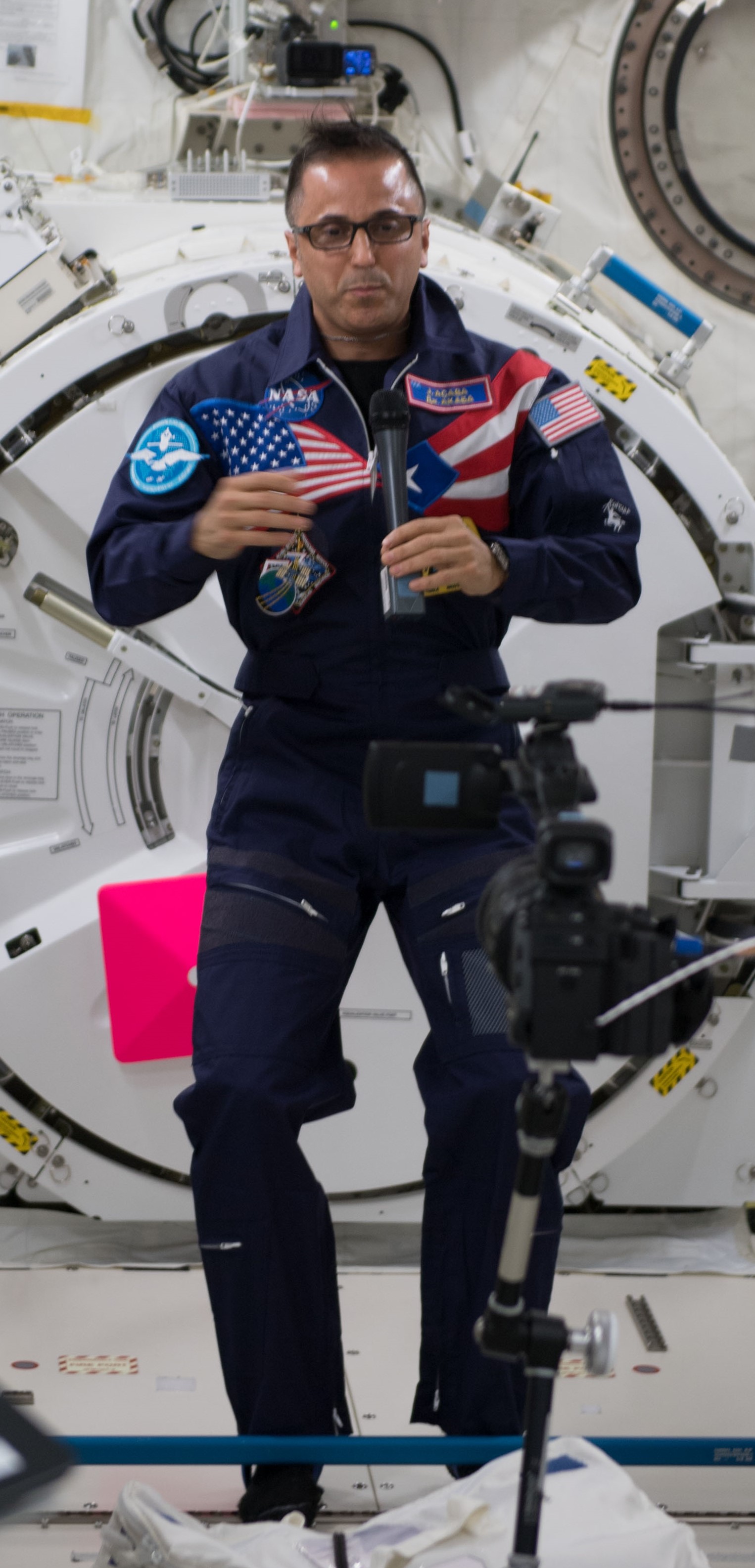
Acaba returned to the space station five years later as a member of Expedition 53 and 54, launching in September 2017, aboard Soyuz MS-06 Acaba joined NASA astronaut Randolph J. “Randy” Bresnik for a nearly seven-hour spacewalk to lubricate the newly installed replacement Latching End Effector on the SSRMS. Acaba continued with the research program and celebrated his Puerto Rican heritage with several events. He returned to Earth after a 168-day flight. Over his three missions, Acaba accumulated 306 days in space and nearly 20 hours in spacewalk time.
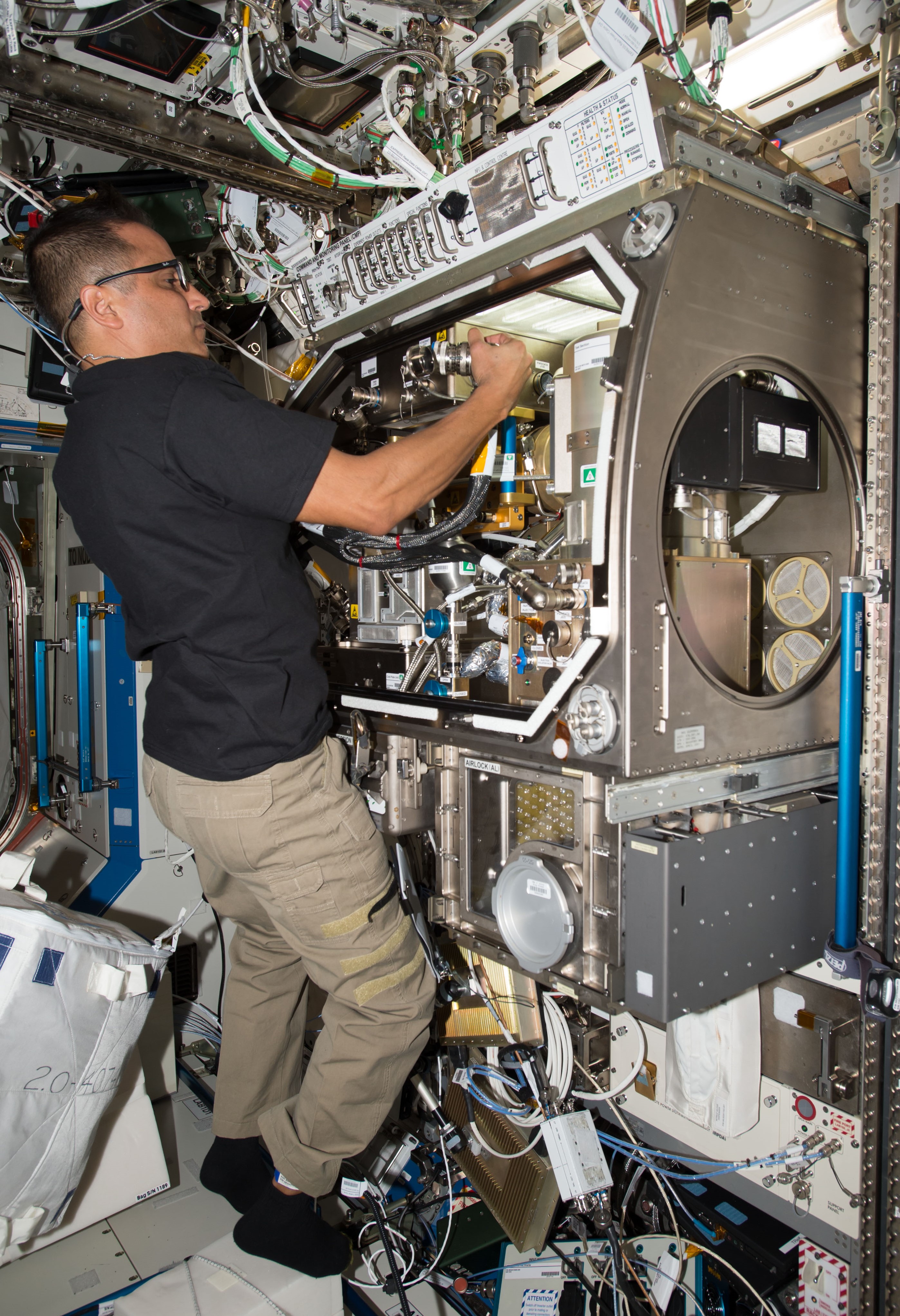
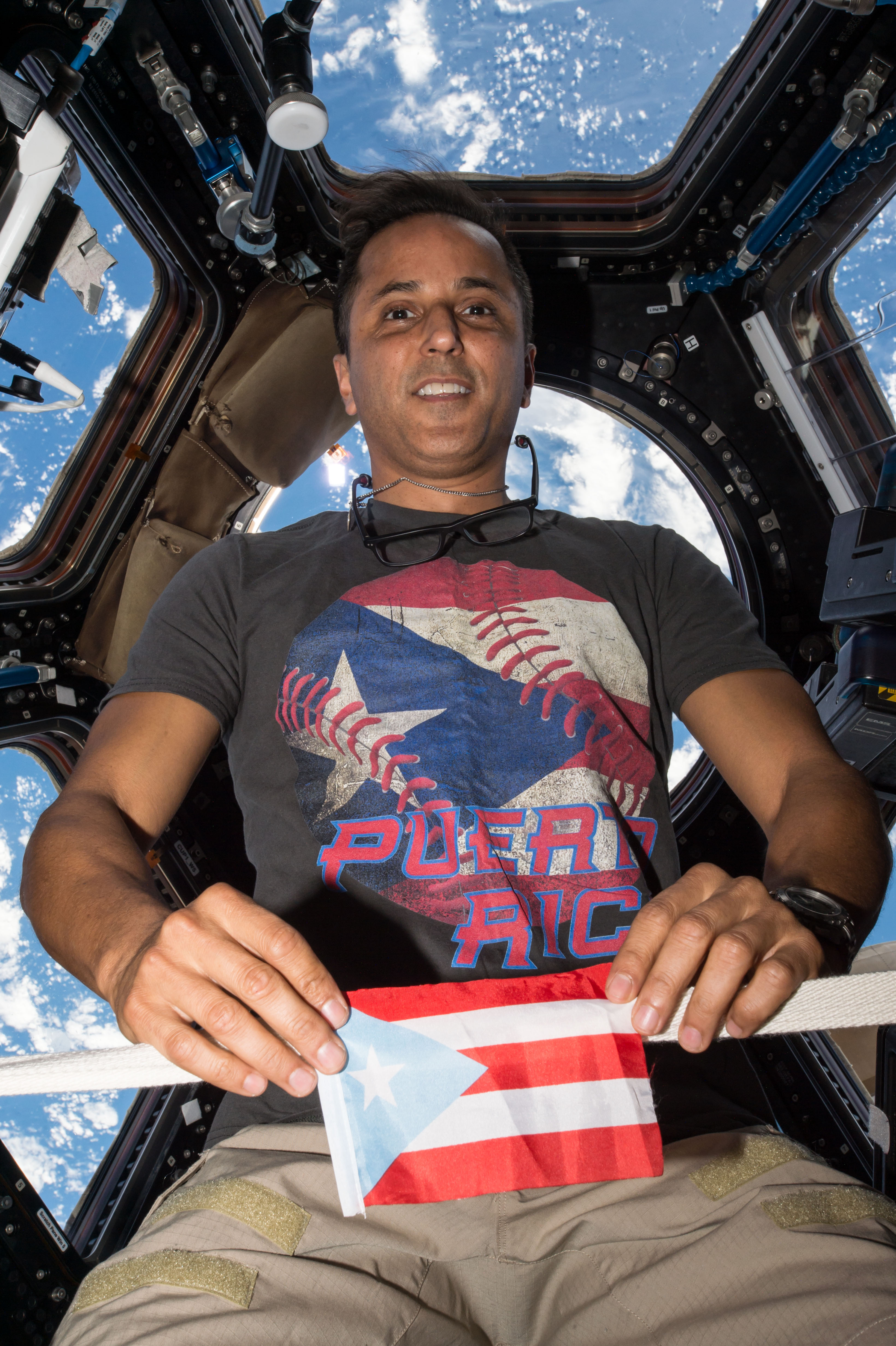
NASA astronaut Joseph M. Acaba conducting an experiment in the Microgravity Sciences Glovebox. Acaba showing Puerto Rico pride During a spacewalk, Acaba is lubricating the Candarm2 Latching End Effector Acaba with his Expedition 53 crewmates.

Left: NASA astronaut Joseph M. Acaba conducting an experiment in the Microgravity Sciences Glovebox. Middle left: In the Cupola, Acaba showing Puerto Rico pride. Middle right: During a spacewalk, Acaba is lubricating the Candarm2 Latching End Effector. Right: Acaba, left, with his Expedition 53 crewmates.
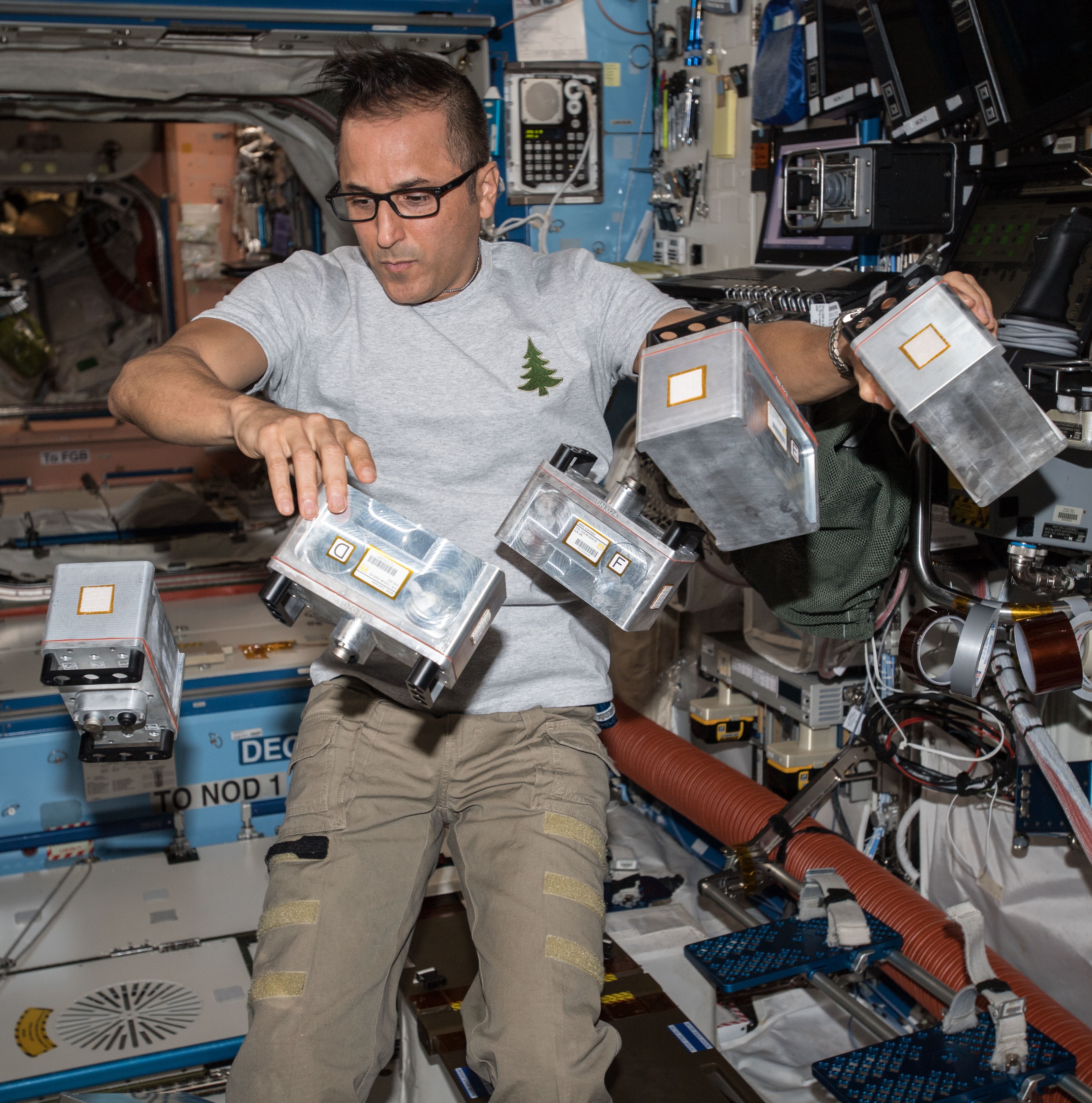
NASA astronaut Joseph M. Acaba working with the Biological Research in Canisters experiment. Acaba speaking with the Puerto Rico Institute of Robotics. During the holidays, Acaba participating in a parranda by video

Left: NASA astronaut Joseph M. Acaba working with the Biological Research in Canisters experiment. Middle left: Acaba speaking with the Puerto Rico Institute of Robotics. Middle right: During the holidays, Acaba participating in a parranda by video. Right: Acaba, upper left, with his Expedition 54 crewmates.

José M. Hernández

Selected in 2004 as a NASA astronaut, José M. Hernández made his single visit to the space station during the STS-128 mission. Launched aboard space shuttle Discovery in August 2009, Hernández operated both the shuttle and station robotic arms to move the Leonardo MPLM back and forth and translate astronauts during the mission’s three spacewalks. He participated in the transfer and installation of the three systems racks and the three research racks aboard the orbiting laboratory. STS-128 also completed the final shuttle-based crew exchange, with Stott replacing Kopra as an Expedition 20 crew member. In collaboration with Amazon Studios, NASA is helping chronicle Hernández’ life and career through the film “A Million Miles Away,” telling the story of his journey from migrant farmer to NASA space explorer.
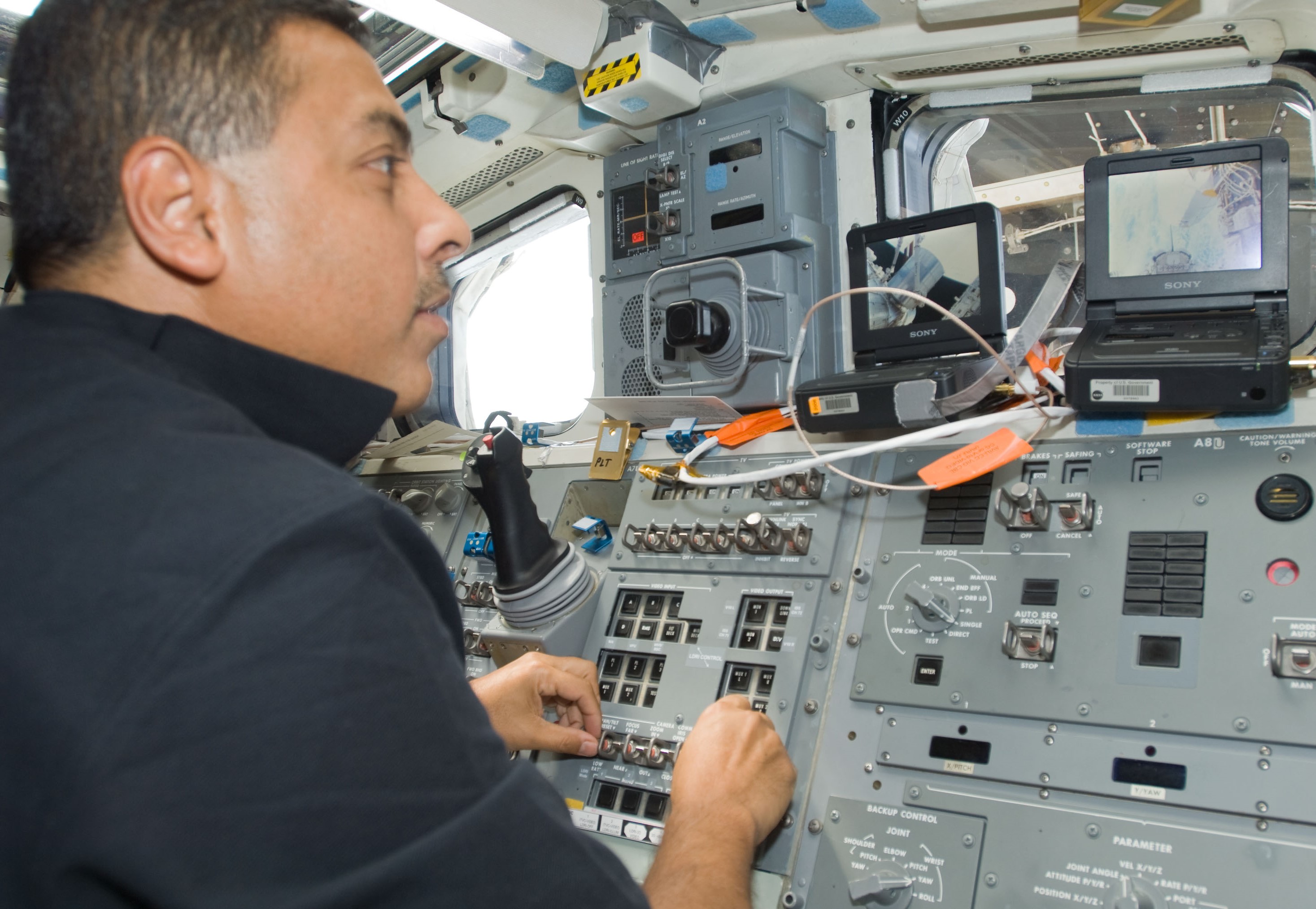
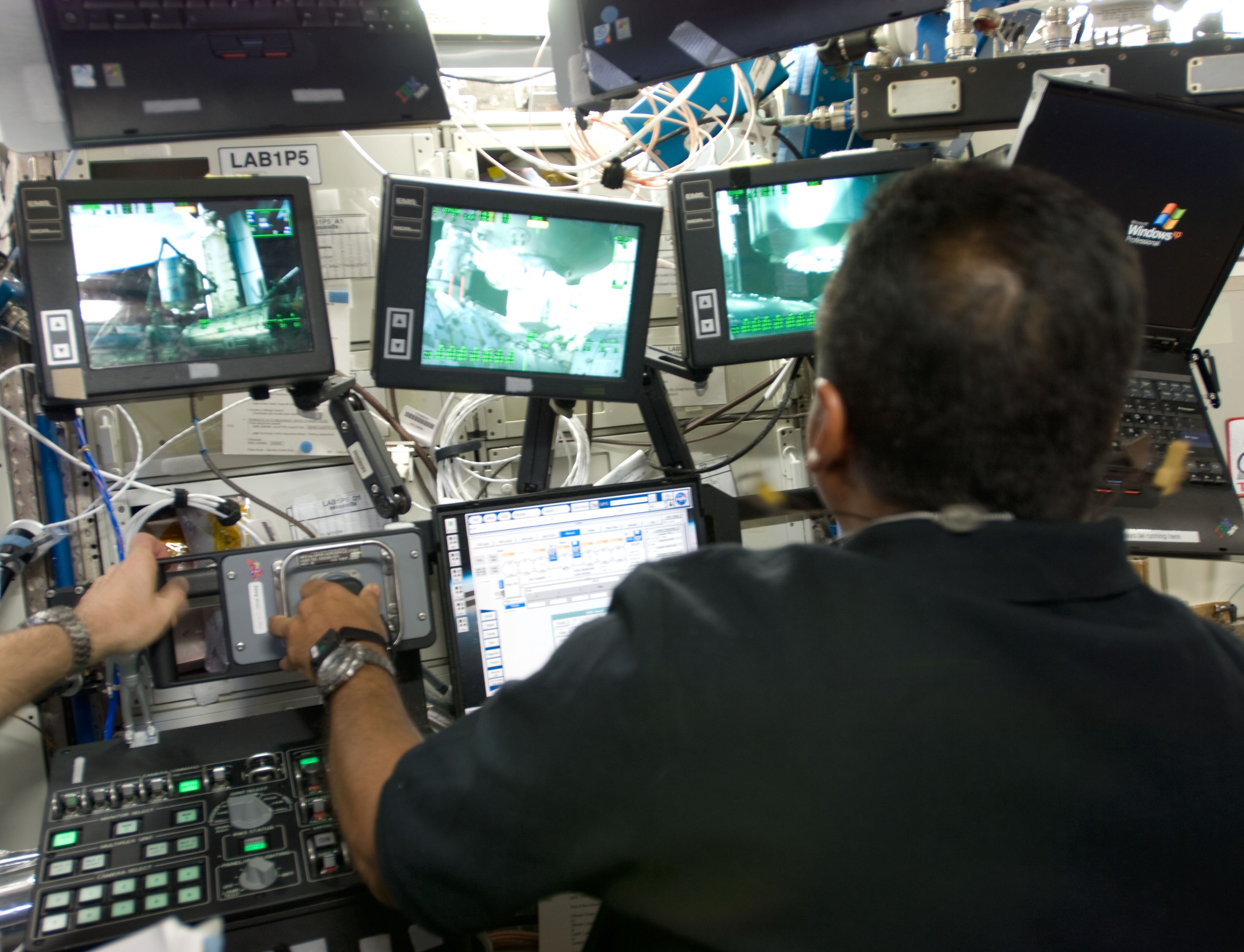
NASA astronaut José M. Hernández operating the shuttle’s robotic arm to transfer the Leonardo Multipurpose Logistics Module (MPLM) to the station. NASA astronaut José M. Hernández operating the station’s robotic arm to return the MPLM to the shuttle’s payload bay. NASA astronaut José M. Hernández with the STS-128 and Expedition 20 crews

Left: NASA astronaut José M. Hernández operating the shuttle’s robotic arm to transfer the Leonardo Multipurpose Logistics Module (MPLM) to the station. Middle: Hernández operating the station’s robotic arm to return the MPLM to the shuttle’s payload bay. Right: Hernández, front row center, with the STS-128 and Expedition 20 crews.

Serena M. Auñón-Chancellor

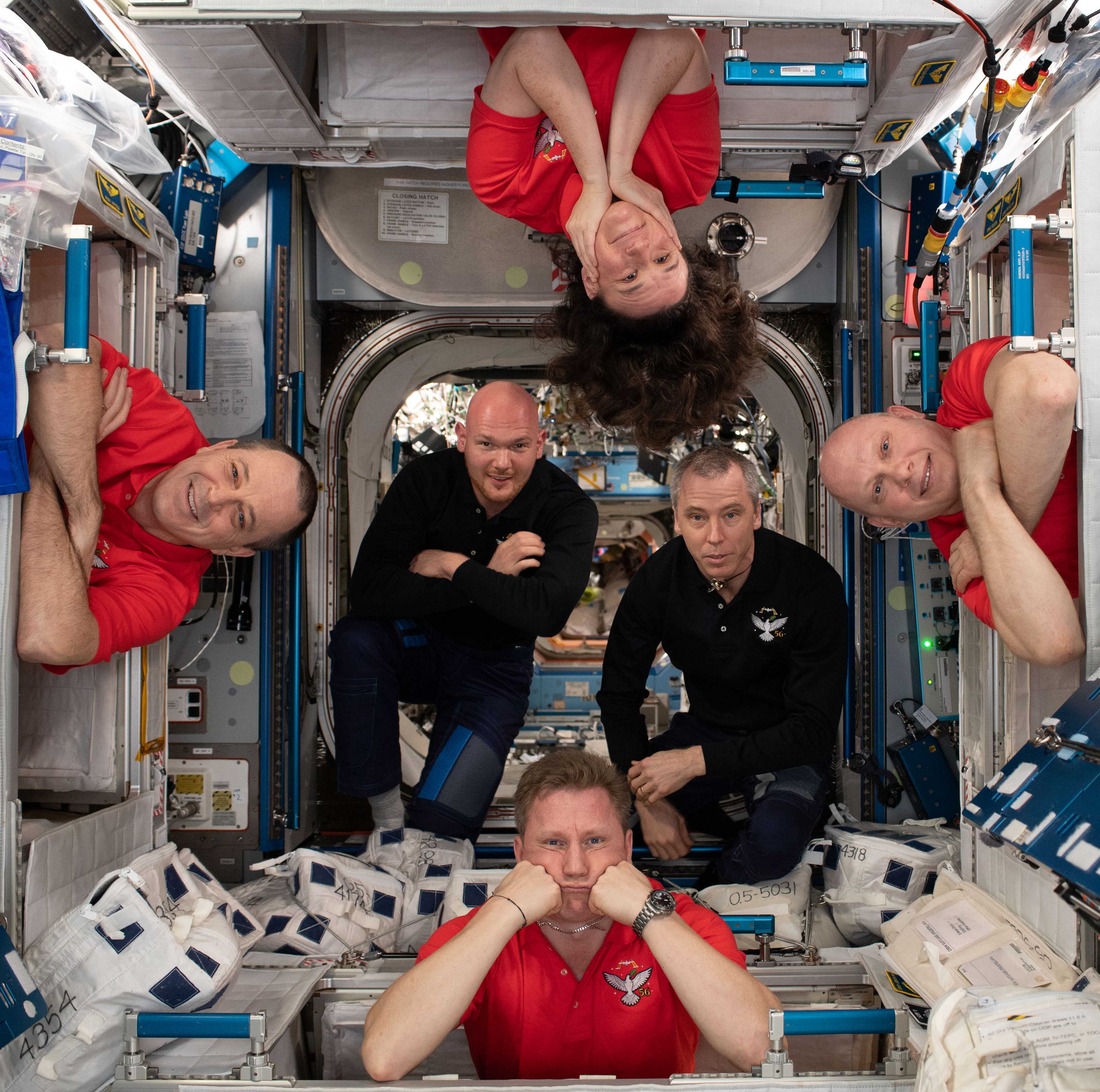
Serena M. Auñón-Chancellor was selected as a member of NASA’s Astronaut Class of 2009 and made her first spaceflight nine years later. She launched aboard Soyuz MS-09 in June 2018and began work on the more than 300 research investigations she carried out during her stay aboard the orbiting laboratory. Auñón-Chancellor returned to Earth after completing a 197-day flight.
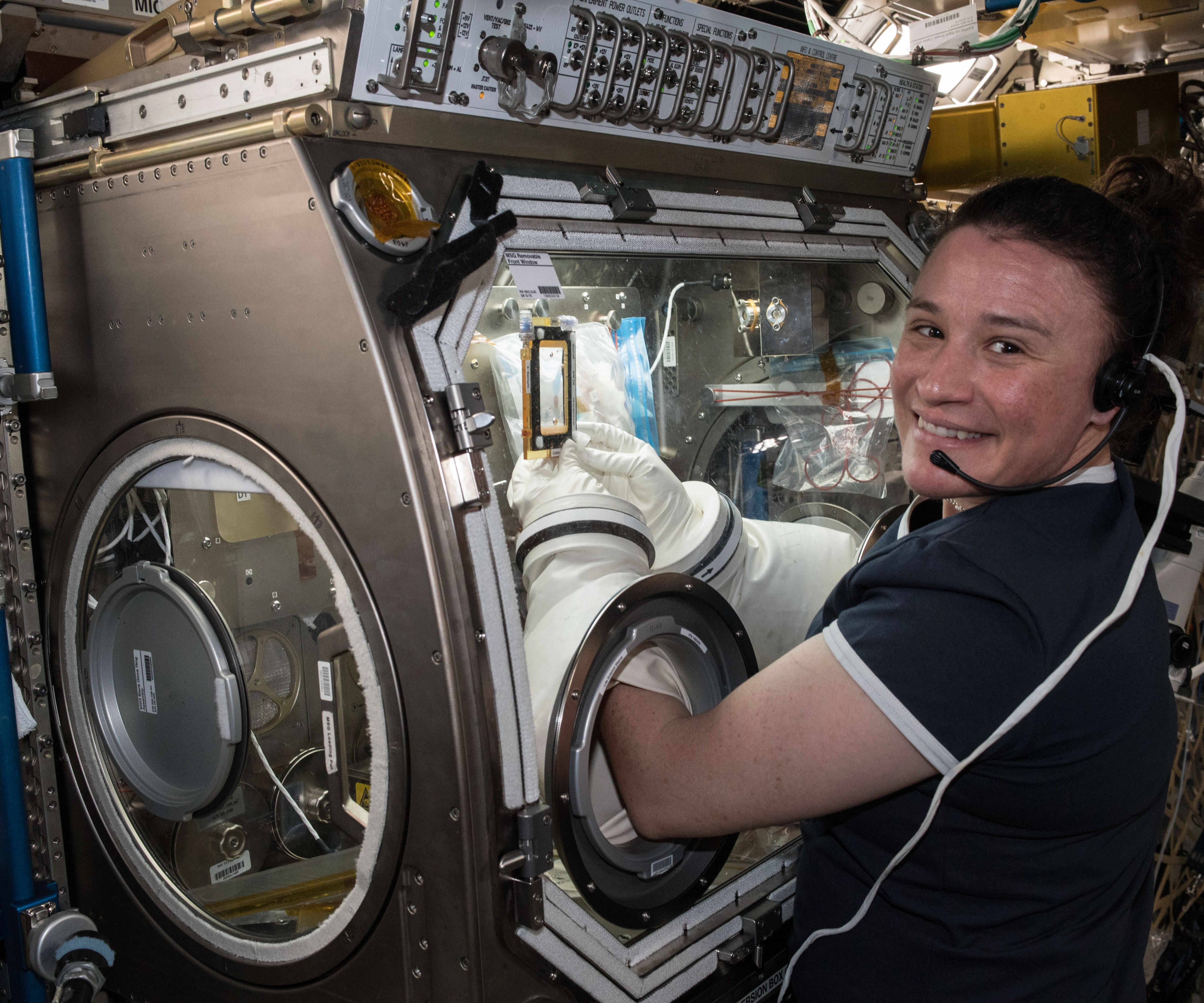
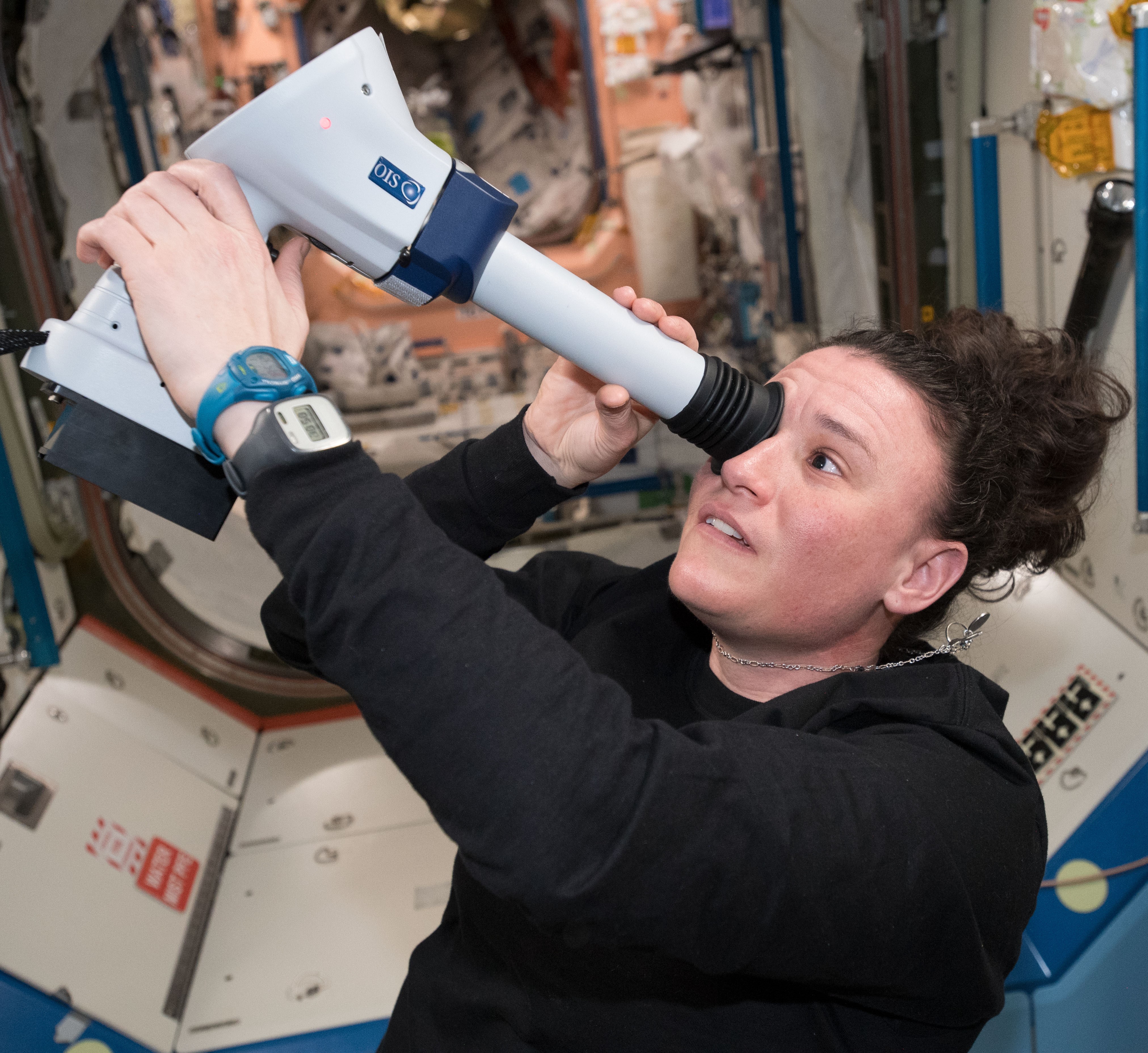
NASA astronaut Serena M. Auñón-Chancellor conducting the AngieX Cancer Therapy experiment in the Microgravity Sciences Glovebox. NASA astronaut Serena M. Auñón-Chancellor completing a session of the Eye Exam NASA astronaut Serena M. Auñón-Chancellor posing with her Expedition 56 crewmates in the Harmony Node 2 module.

Left: NASA astronaut Serena M. Auñón-Chancellor conducting the AngieX Cancer Therapy experiment in the Microgravity Sciences Glovebox. Middle: Auñón-Chancellor completing a session of the Eye Exam – Fundoscope experiment to help understand vision changes in microgravity. Right: Auñón-Chancellor, top, posing with her Expedition 56 crewmates in the Harmony Node 2 module.
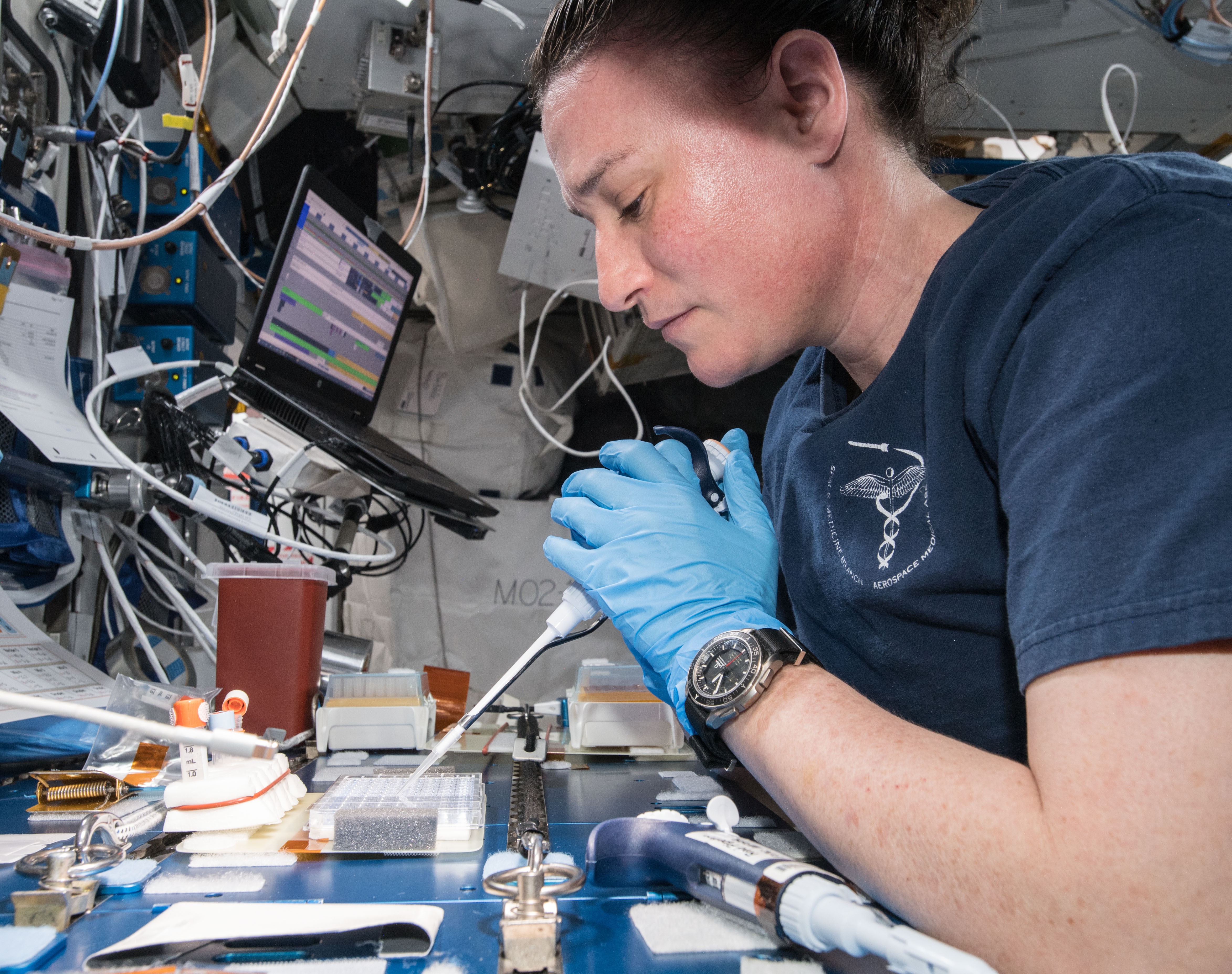
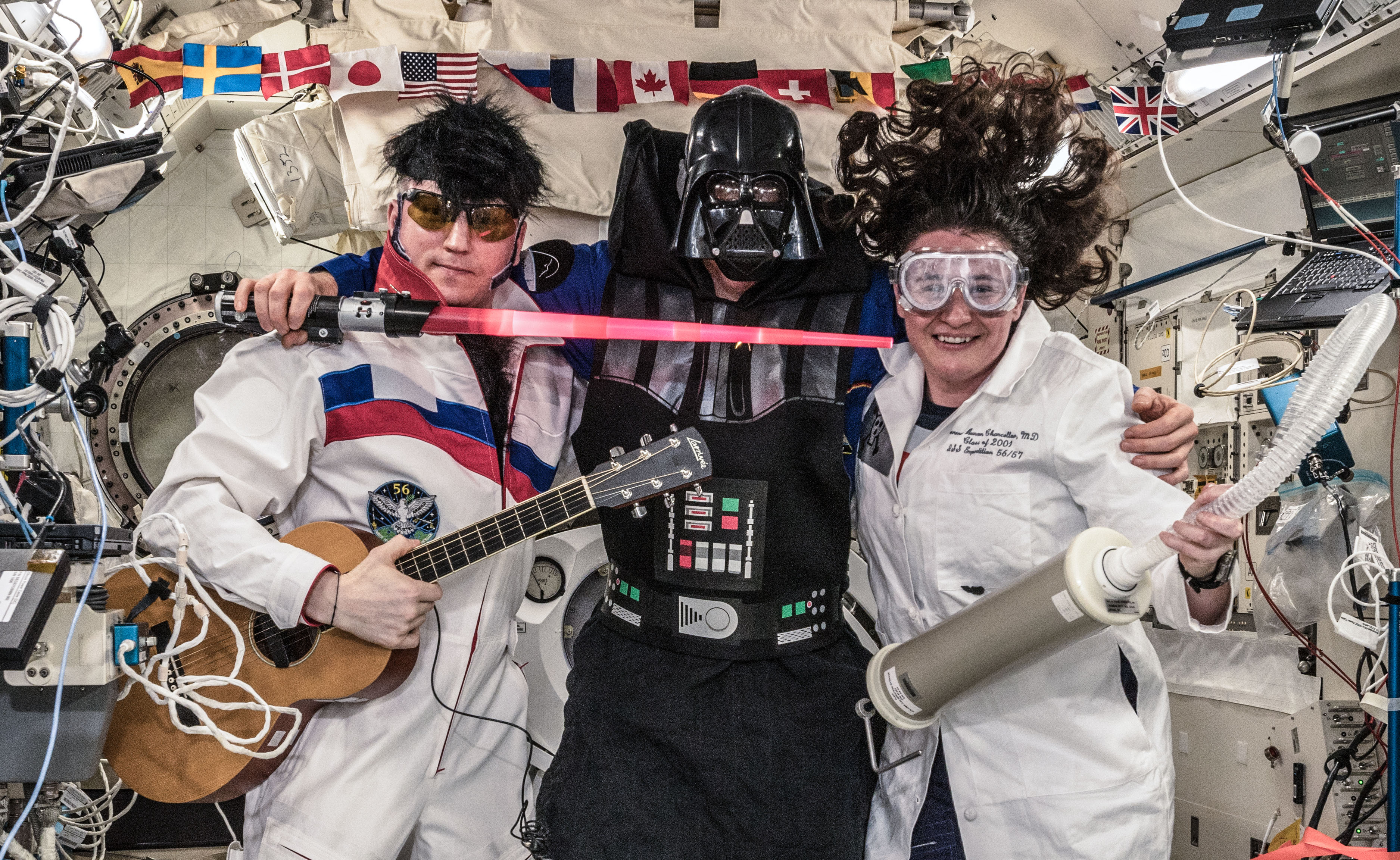
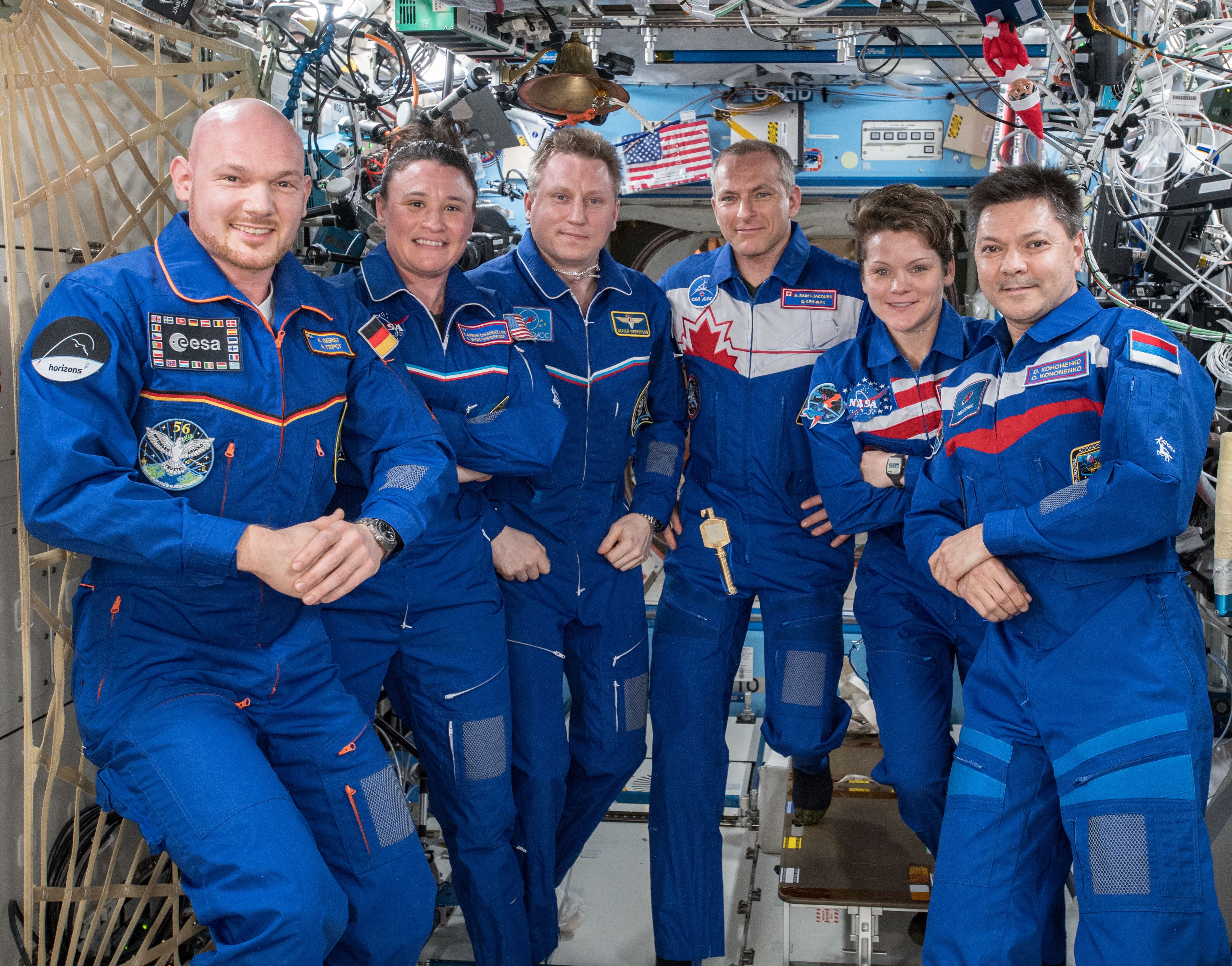
NASA astronaut Serena M. Auñón-Chancellor working on the BioServe Protein Crystalography-1 experiment Expedition 57 crew members in their best Halloween outfits NASA astronaut Serena M. Auñón-Chancellor and her Expedition 57 crewmates in the Destiny module

Left: NASA astronaut Serena M. Auñón-Chancellor working on the BioServe Protein Crystalography-1 experiment. Middle: Expedition 57 crew members in their best Halloween outfits – Sergei V. Prokopiev of Roscosmos, left, as Elvis, ESA astronaut Alexander Gerst as Darth Vader, and Auñón-Chancellor as a mad scientist. Right: Auñón-Chancellor and her Expedition 57 crewmates in the Destiny module.

Francisco “Frank” C. Rubio

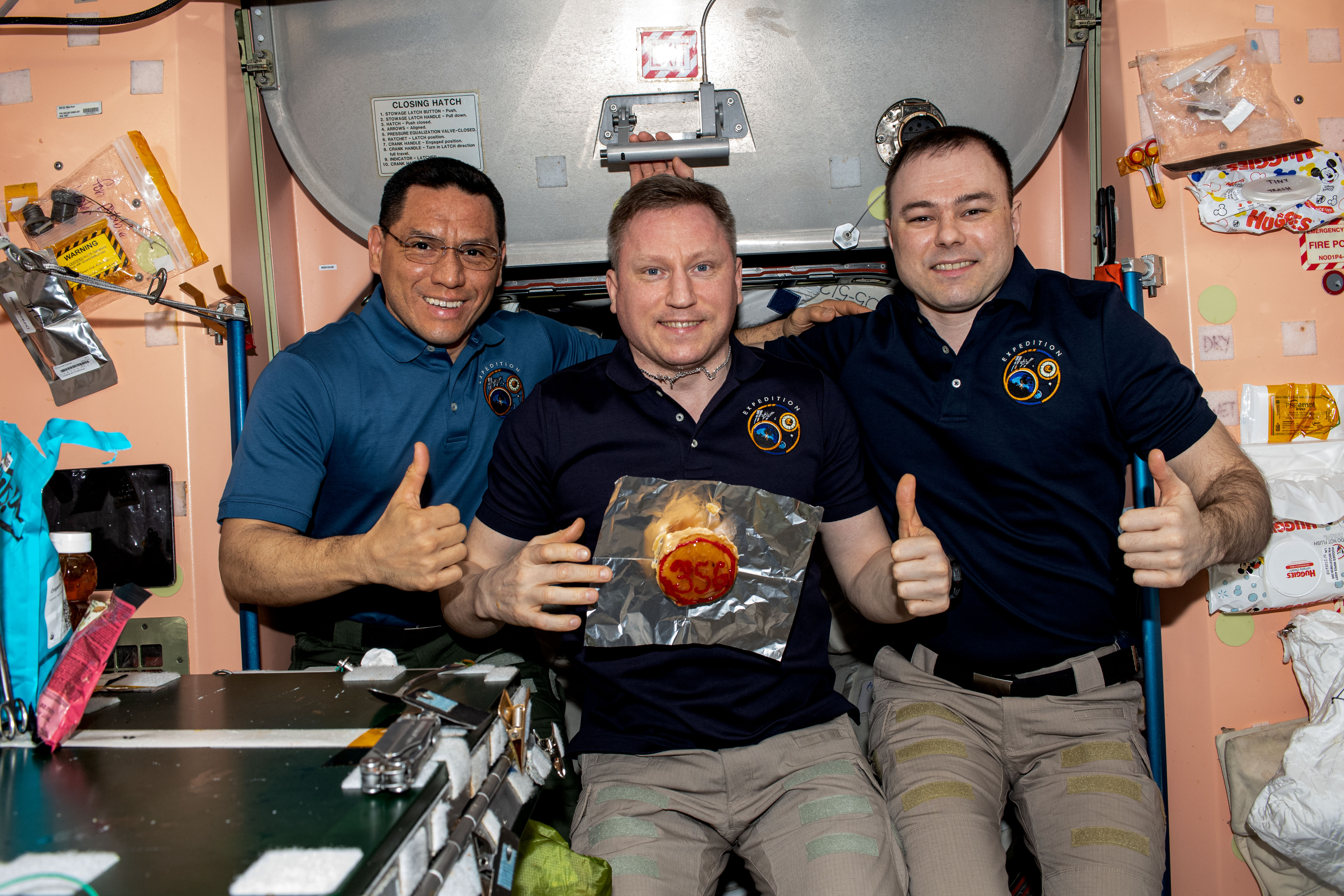
Selected as an astronaut by NASA in 2017, Dr. Francisco “Frank” C. Rubio began his first trip to space in September 2022, with Russian cosmonauts Sergei V. Prokopyev and Dmitri A. Petelin aboard Soyuz MS-22, for a planned six-month stay aboard the space station. A leak aboard their Soyuz MS-22 spacecraft in December resulted in the loss of its coolant, and they could no longer rely on it to return to Earth. Roscosmos sent the replacement Soyuz MS-23 to the station in February 2023. The incident extended their mission to over one year. On Sept. 11, Rubio broke the record of 355 days for the longest single flight by an American astronaut, set by Mark T. Vande Hei in March 2022. Prokopyev, Petelin, and Rubio landed on Sept. 27 after a 371-day flight, the longest aboard the space station.
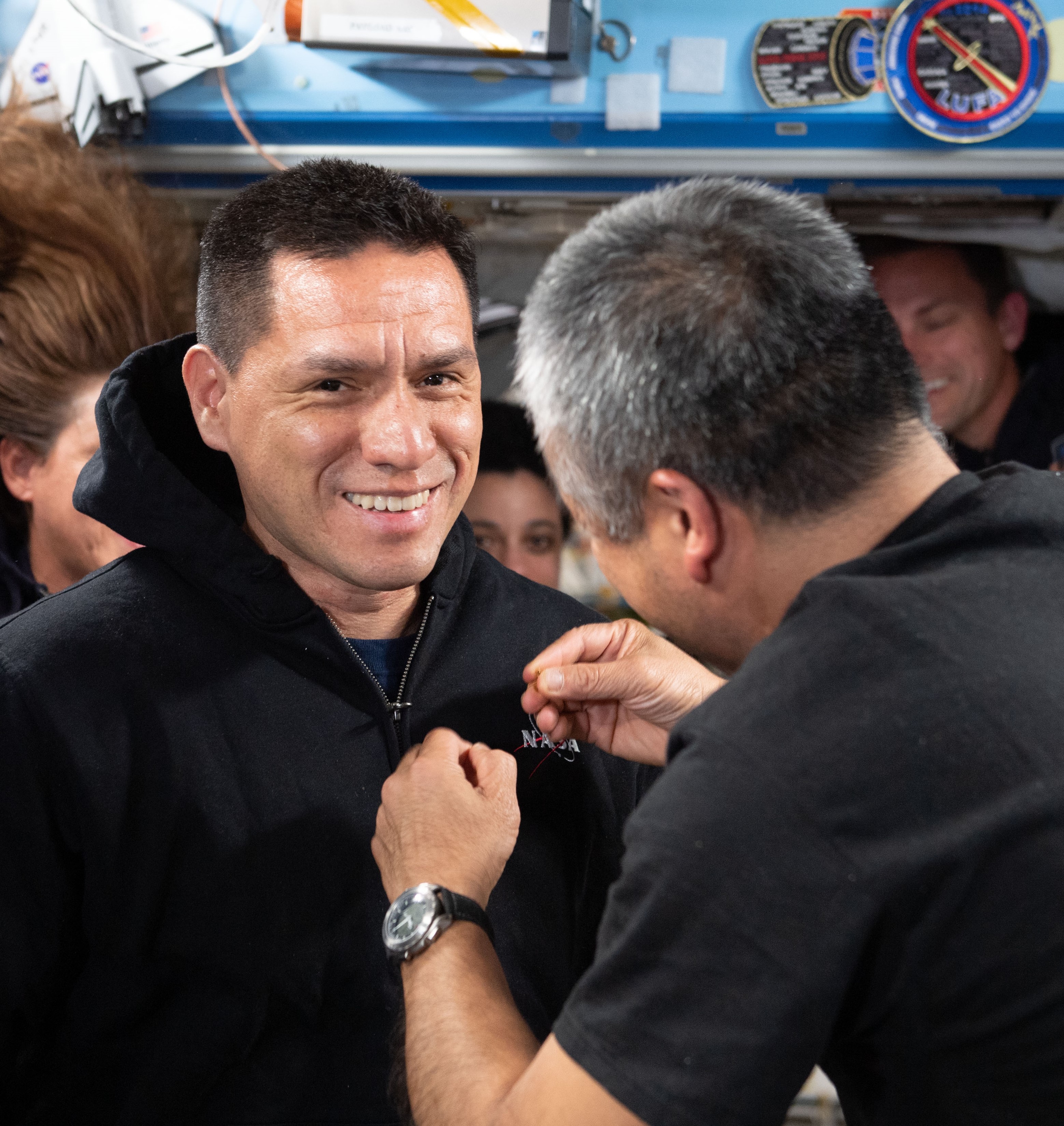
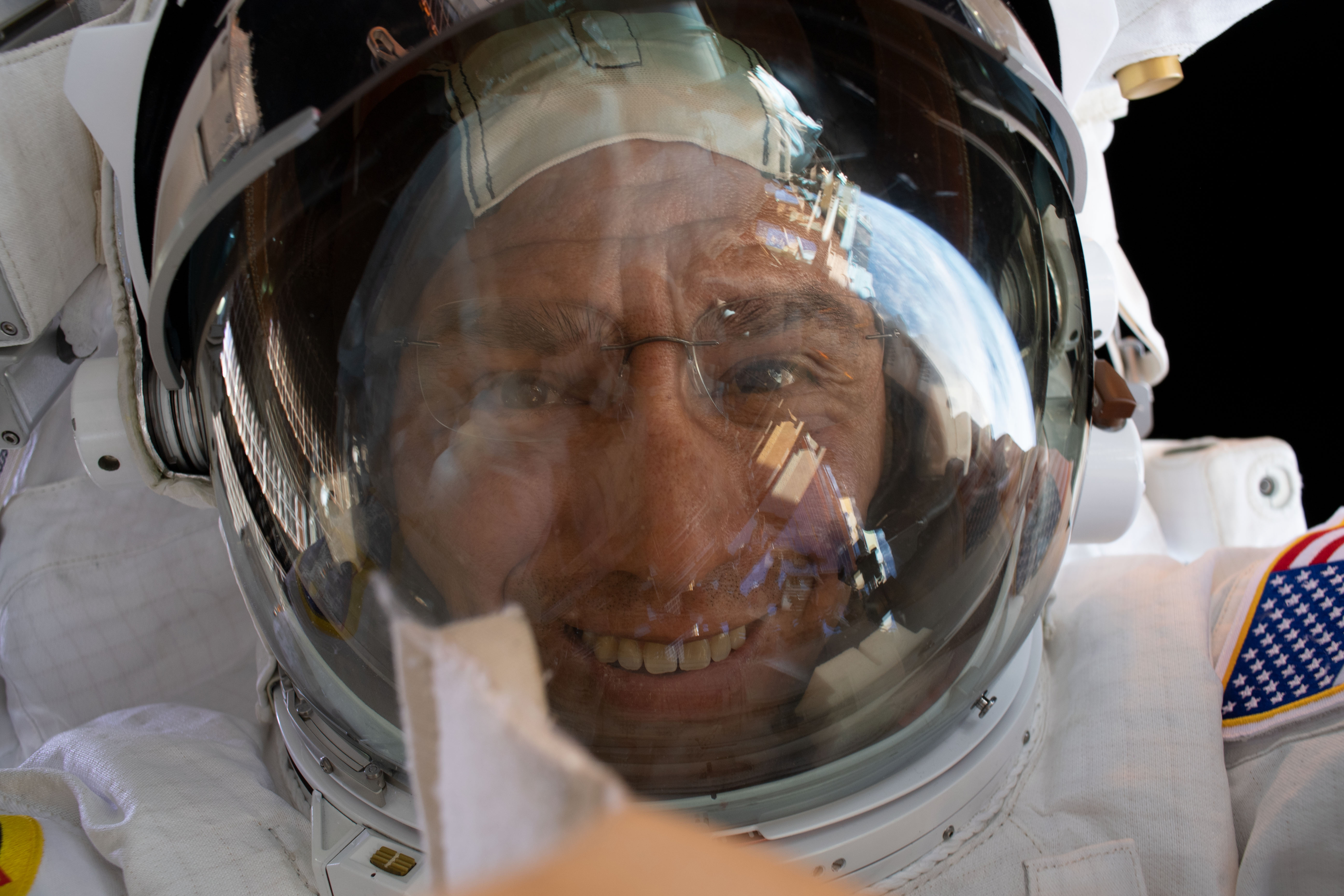
NASA astronaut Francisco “Frank” C. Rubio receives his gold astronaut pin from Japan Aerospace Exploration Agency astronaut and fellow Expedition 68 crew member Koichi Wakata NASA astronaut Francisco “Frank” C. Rubio with Russian cosmonauts Sergey V. Prokopyev and Dmitri A. Petelin with a cake with “356” written on it to signify they surpassed the previous record of 355 days as the longest flight aboard the space station.

Left: Shortly after arriving at the space station, NASA astronaut Francisco “Frank” C. Rubio receives his gold astronaut pin from Japan Aerospace Exploration Agency astronaut and fellow Expedition 68 crew member Koichi Wakata. Middle: Rubio during one of his two spacewalks. Right: Rubio, left, with Russian cosmonauts Sergey V. Prokopyev and Dmitri A. Petelin with a cake with “356” written on it to signify they surpassed the previous record
of 355 days as the longest flight aboard the space station.

To be continued…


from NASA https://ift.tt/lr0VFg4
NASA’s Modern History Makers: Carlos Garcia-Galan

4 min read

NASA’s Modern History Makers: Carlos Garcia-Galan

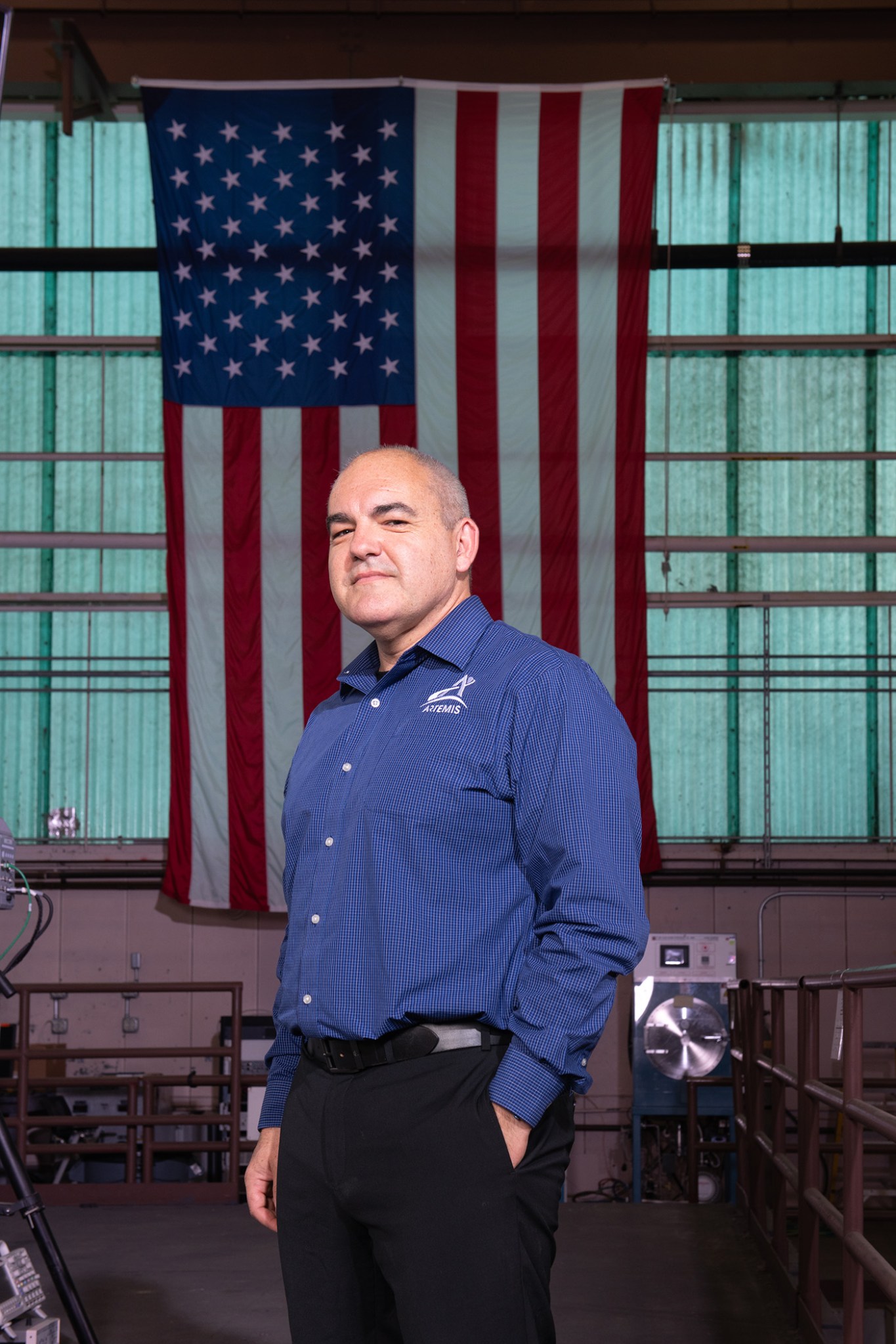
Carlos Garcia-Galan poses in front of the American flag in the Electric Propulsion and Power Laboratory at NASA’s Glenn Research Center. He has a serious expression is wearing a blue long-sleeve shirt with the Artemis program logo and black pants.
Carlos Garcia-Galan poses in front of the American flag in the Electric Propulsion and Power Laboratory at NASA’s Glenn Research Center.
Credit: NASA/Bridget Caswell

<back to gallery

As a little boy in Málaga, Spain, Carlos Garcia-Galan had his sights set on the Moon, Mars, and beyond.

“It’s something that called to me from the very beginning. I remember listening to the space shuttle countdowns and watching the launches on television,” said Garcia-Galan, European Service Module (ESM) Integration Office manager for NASA’s Orion program. “The entire sky would light up at night.”

Garcia-Galan wanted to be part of the team working behind the scenes to send astronauts on challenging missions to distant destinations. But there were few opportunities to work in space exploration from his home country, he said. To pursue his dreams, he’d first have to cross the Atlantic Ocean.

“Working for NASA was my only objective,” Garcia-Galan said. “My dad was a pilot, and my mom was a flight attendant. So, I had this adventure thing already, and I traveled a lot growing up because of them.”

Garcia-Galan came to America his senior year of high school as an exchange student in New Jersey, later attending the Florida Institute of Technology’s space science program. He graduated with degrees in space science and electrical engineering.

“As I was graduating with my second degree, all of my friends from the space science program had already graduated and started working in Mission Operations at NASA’s Johnson Space Center,” Garcia-Galan said. “NASA was just about to fly the first module of the International Space Station, so I was able to get a job before I finished my degree. It was great timing.”

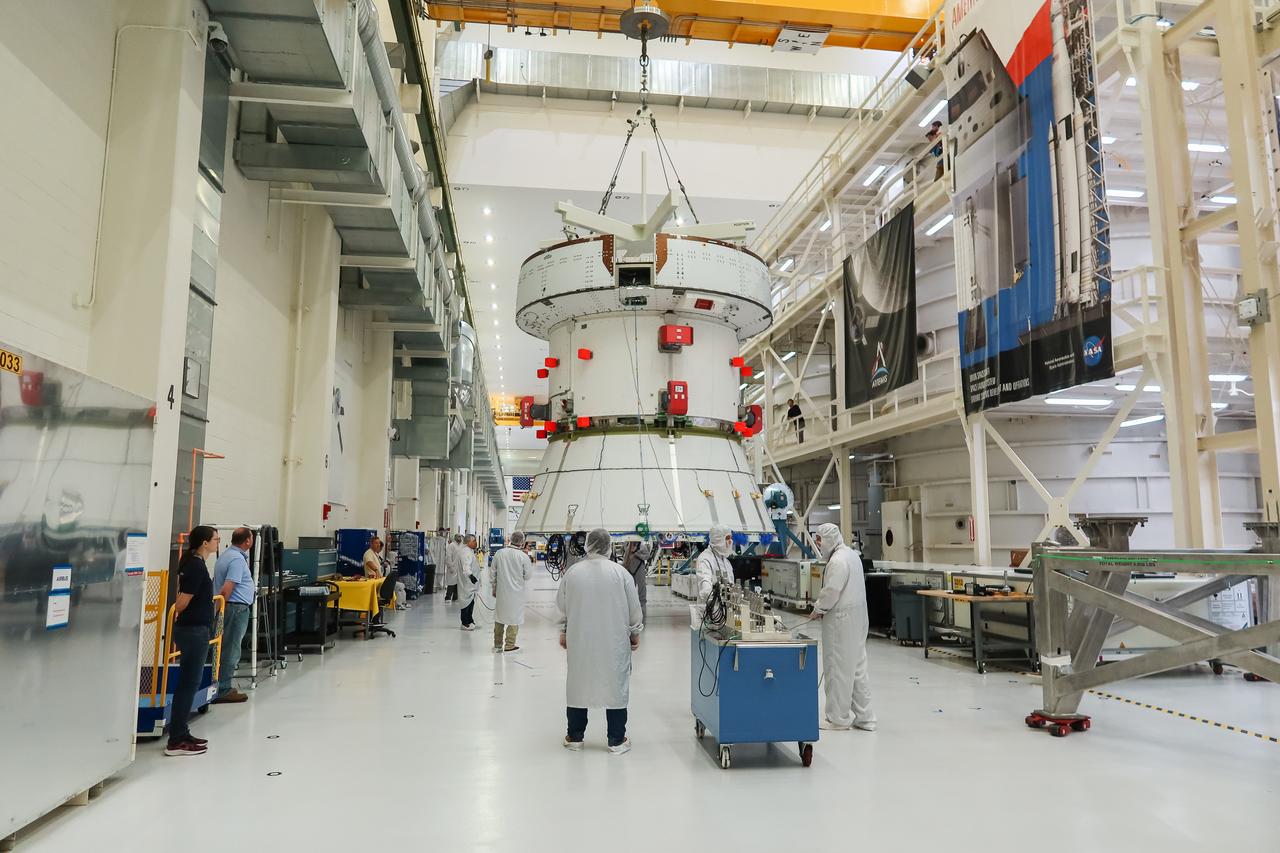
At Johnson, Garcia-Galan worked as a flight controller for the space station, managing electrical power systems. He left NASA to broaden his knowledge by working in industry but eventually returned. Now, he works on the European Service Module — the powerhouse that provides electricity, water, oxygen, nitrogen, and propulsion to the Orion spacecraft. Proven during Artemis I, Orion will carry astronauts to the Moon and back during future Artemis missions.

The Orion crew module’s European Service Module is the spacecraft’s powerhouse, supplying it with electricity, propulsion, thermal control, air, and water in space.
Credit: NASA/Amanda Stevenson

Garcia-Galan manages the ESM and the team working with European counterparts to design, build, and fully integrate the mission-specific modules with their Orion spacecraft.

“It’s hard enough to build spacecraft across the United States with all the contractors; imagine doing this across different continents,” he said. “I want to make sure we’re one team.”

When the modules arrive from Europe, his team ensures that they are ready for pre-flight tests and, ultimately, the mission.

“On my team, I have engineers who represent different disciplines,” Garcia-Galan said. “The ESM is like its own spacecraft, so we have everything from propulsion to mechanisms to thermal systems. I keep the whole team synchronized and working to our full potential.”

Garcia-Galan encourages others interested in space exploration to pursue their interests, no matter where they are from.

“If you want to be part of something bigger than yourself — something that takes an entire team of people across different countries — space exploration is a great place to exercise that,” Garcia-Galan said. “We have engineers, communicators, teachers, and astronauts, and everybody is working toward the same goal. You can be part of that. Just be persistent, have a goal in mind, don’t get turned away by adversities, and you may end up here at NASA.”

NASA is in a Golden Era of aeronautics and space exploration. In partnership with commercial and private businesses, NASA is currently making history with significant missions such as Artemis, Quesst, and electrified aviation. The NASA’s Modern History Makers series highlights members of NASA Glenn’s workforce who make these remarkable missions possible.

Jacqueline Minerd
NASA’s Glenn Research Center


from NASA https://ift.tt/RewSlZn

Tuesday, 10 October 2023

Five Tips for Photographing the Annular Solar Eclipse on Oct. 14

3 min read

Five Tips for Photographing the Annular Solar Eclipse on Oct. 14

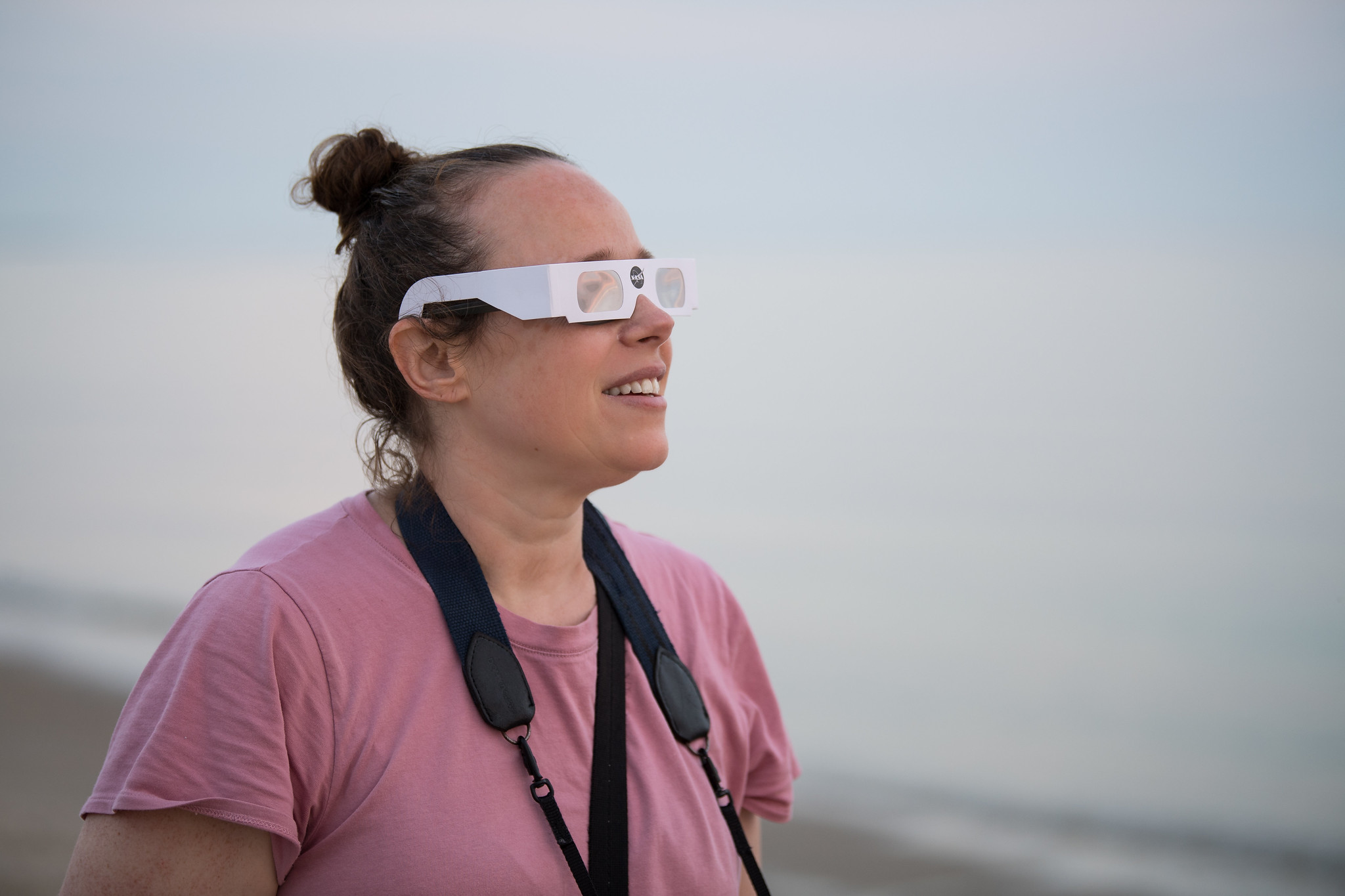
A woman, seen from the torso up, stands on a beach. She is wearing white solar viewing glasses and has a camera strap around her neck.
Sarah Baker views the partial solar eclipse as the sun rises, Thursday, June 10, 2021, at Lewes Beach in Delaware.
NASA/Aubrey Gemignani

An annular solar eclipse is crossing the Americas on Oct. 14, 2023. This astronomical event is a perfect opportunity to capture unforgettable images of the Moon “taking a bite” out of the Sun or creating a “ring of fire” effect in the sky. Whether you’re an amateur photographer or a selfie master, try out these tips for photographing the eclipse. 

#1 – Safety First

To take images as the Sun is being eclipsed, you’ll need to use a special solar filter to protect your camera, just as you’ll need a pair of eclipse glasses to protect your own eyes. 

Having a few other pieces of equipment can also come in handy during the eclipse. Using a tripod can help you stabilize the camera and avoid taking blurry images during the low lighting. Additionally, using a delayed shutter release timer will allow you to snap shots without jiggling the camera.

#2 – Any Camera Is a Good Camera

Taking a stunning photo has more to do with the photographer than the camera. Whether you have a high-end DSLR, or a camera phone, you can take great photos during the eclipse; after all, the best piece of equipment you can have is a good eye and a vision for the image you want to create. If you don’t have a telephoto zoom lens, focus on taking landscape shots, which capture the changing environment.

Trees line the landscape. On the right, a camera sits on a tripod. Two hands hold either side of the camera.
A safe solar filter must be used in front of a camera lens whenever photographing an annular solar eclipse or a partial solar eclipse. Putting the camera on a tripod will help stabilize the view and produce clearer photos.
Danny B. Thomas

#3 – Look Up, Down, All Around

While the Sun is the most commanding element of an eclipse, remember to look around you. As the Moon slips in front of the Sun, the landscape will be bathed in long shadows, creating eerie lighting across the landscape. Light filtering through the overlapping leaves of trees create natural pinholes, which will also create mini eclipse replicas on the ground. Everywhere you can point your camera can yield exceptional imagery, so be sure to compose some wide-angle photos that can capture your eclipse experience.

NASA photographer Bill Ingalls recommends focusing on the human experience of watching the eclipse. “The real pictures are going to be of the people around you pointing, gawking, and watching it,” Ingalls noted. “Those are going to be some great moments to capture to show the emotion of the whole thing.”

#4 – Practice

Be sure you know the capabilities of your camera before eclipse day. Most cameras, and even many camera phones, have adjustable exposures, which can help you darken or lighten your image during the tricky eclipse lighting. Make sure you know how to manually focus the camera for crisp shots.

For DSLR cameras, the best way to determine the correct exposure is to test settings on the uneclipsed Sun beforehand. Using a fixed aperture of f/8 to f/16, try shutter speeds between 1/1000 to 1/4 second to find the optimal setting, which you can then use to take images during the partial or annular stages of the eclipse.

#5 – Share!

Share your eclipse experience with friends and family afterwards. Tag @NASA to connect your photos on social media to those taken around the country and share them with NASA. 

While you’re out perfecting your perfect eclipse shot, don’t forget to stop and look at the eclipse with your own eyes. Just remember to wear your solar viewing glasses (or “eclipse glasses”) throughout the entire eclipse!

Share

Details

Last Updated
Oct 10, 2023


from NASA https://science.nasa.gov/solar-system/skywatching/five-tips-for-photographing-the-annular-solar-eclipse-on-oct-14/

NASA’s Webb Captures an Ethereal View of NGC 346

3 min read

NASA’s Webb Captures an Ethereal View of NGC 346

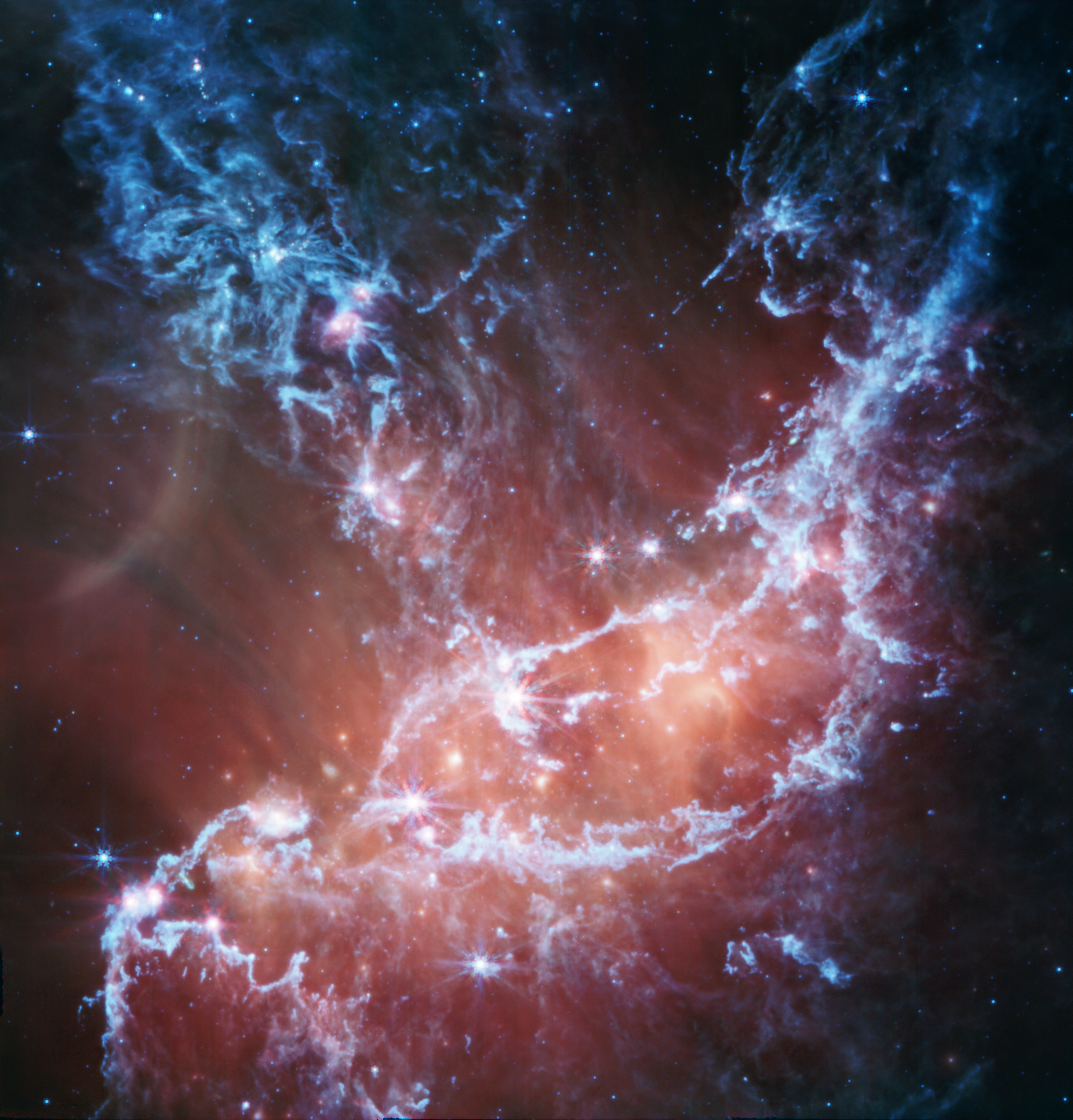
This new infrared image of NGC 346 from NASA’s James Webb Space Telescope’s Mid-Infrared Instrument (MIRI) traces emission from cool gas and dust. In this image blue represents silicates and sooty chemical molecules known as polycyclic aromatic hydrocarbons, or PAHs. More diffuse red emission shines from warm dust heated by the brightest and most massive stars in the heart of the region. Bright patches and filaments mark areas with abundant numbers of protostars. This image includes 7.7-micron light shown in blue, 10 microns in cyan, 11.3 microns in green, 15 microns in yellow, and 21 microns in red (770W, 1000W, 1130W, 1500W, and 2100W filters, respectively).
Credit: NASA, ESA, CSA, STScI, N. Habel (JPL). Image Processing: P. Kavanagh (Maynooth University).

Download the full-resolution version from the Space Telescope Science Institute.

Filaments of dust and gas festoon this star-forming region in a new infrared image from MIRI.

One of the greatest strengths of NASA’s James Webb Space Telescope is its ability to give astronomers detailed views of areas where new stars are being born. The latest example, showcased here in a new image from Webb’s Mid-Infrared Instrument (MIRI), is NGC 346 – the brightest and largest star-forming region in the Small Magellanic Cloud.

The Small Magellanic Cloud (SMC) is a satellite galaxy of the Milky Way, visible to the unaided eye in the southern constellation Tucana. This small companion galaxy is more primeval than the Milky Way in that it possesses fewer heavy elements, which are forged in stars through nuclear fusion and supernova explosions, compared to our own galaxy.

Since cosmic dust is formed from heavy elements like silicon and oxygen, scientists expected the SMC to lack significant amounts of dust. However the new MIRI image, as well as a previous image of NGC 346 from Webb’s Near-Infrared Camera released in January, show ample dust within this region.

In this representative-color image, blue tendrils trace emission from material that includes dusty silicates and sooty chemical molecules known as polycyclic aromatic hydrocarbons, or PAHs. More diffuse red emission shines from warm dust heated by the brightest and most massive stars in the heart of the region. An arc at the center left may be a reflection of light from the star near the arc’s center. (Similar, fainter arcs appear associated with stars at lower left and upper right.) Lastly, bright patches and filaments mark areas with abundant numbers of protostars. The research team looked for the reddest stars, and found 1,001 pinpoint sources of light, most of them young stars still embedded in their dusty cocoons.

By combining Webb data in both the near-infrared and mid-infrared, astronomers are able to take a fuller census of the stars and protostars within this dynamic region. The results have implications for our understanding of galaxies that existed billions of years ago, during an era in the universe known as “cosmic noon,” when star formation was at its peak and heavy element concentrations were lower, as seen in the SMC.The James Webb Space Telescope is the world’s premier space science observatory.

Webb is solving mysteries in our solar system, looking beyond to distant worlds around other stars, and probing the mysterious structures and origins of our universe and our place in it. Webb is an international program led by NASA with its partners, ESA (European Space Agency) and the Canadian Space Agency.

Media Contacts:

Laura Betz
NASA’s Goddard Space Flight Center, Greenbelt, Md.
laura.e.betz@nasa.gov

Christine Pulliam
Space Telescope Science Institute, Baltimore, Md.
cpulliam@stsci.edu

About the Author

NASA Webb Telescope Team

Webb Team

Share

Details

Last Updated
Oct 10, 2023


from NASA https://ift.tt/O1vL26y

NASA’s Roman Mission Gears Up for a Torrent of Future Data

NASA’s Nancy Grace Roman Space Telescope team is exploring ways to support community efforts that will prepare for the deluge of data the mission will return. Recently selected infrastructure teams will serve a vital role in the preliminary work by creating simulations, scouting the skies with other telescopes, calibrating Roman’s components, and much more.

Their work will complement additional efforts by other teams and individuals around the world, who will join forces to maximize Roman’s scientific potential. The goal is to ensure that, when the mission launches by May 2027, scientists will already have the tools they need to uncover billions of cosmic objects and help untangle mysteries like dark energy.

“We’re harnessing the science community at large to lay a foundation, so when we get to launch we’ll be able to do powerful science right out of the gate,” said Julie McEnery, Roman’s senior project scientist at NASA’s Goddard Space Flight Center in Greenbelt, Maryland. “There’s a lot of exciting work to do, and many different ways for scientists to get involved.”

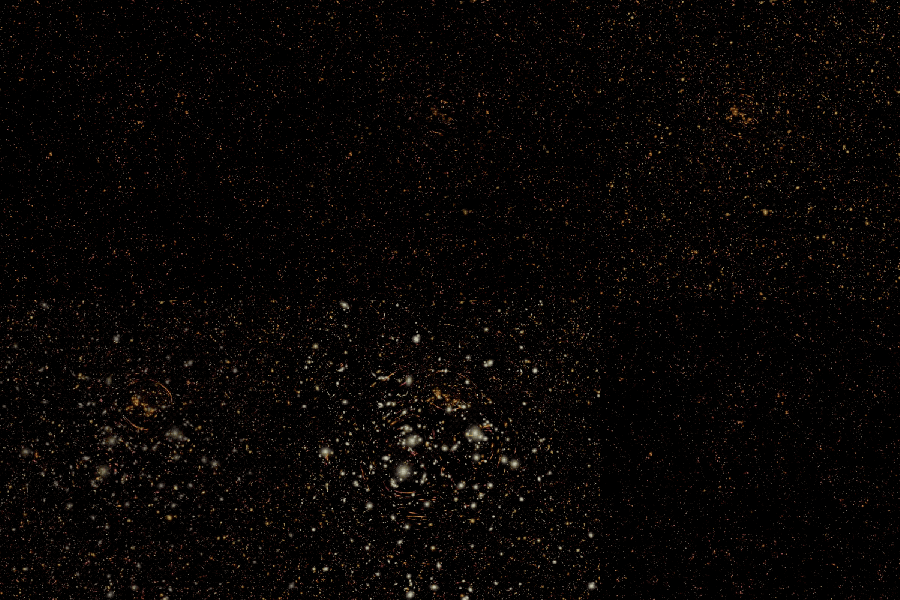
Thousands of tiny red dots speckle a black background like spilled salt. Additional yellow blobs that are slightly larger and appear more like galaxies, are overlaid on top and a few areas appear to bloom outward and slightly warp. Then even more galaxies, this time yellow and white, are overlaid over that, and the other areas "bloom" with even more exaggerated effects, the edges of the circular areas appearing to be smeared into arcs and streaks while the inside of the areas are magnified.
This animation shows a simulation of the type of science that astronomers will be able to do with future deep field observations from NASA’s Nancy Grace Roman Space Telescope. The gravity of intervening galaxy clusters and dark matter can lens the light from farther objects, warping their appearance as shown in the animation. By studying the distorted light, astronomers can study elusive dark matter, which can only be measured indirectly through its gravitational effects on visible matter. As a bonus, this lensing also makes it easier to see the most distant galaxies whose light they magnify. Simulations like this one help astronomers understand what Roman’s future observations could tell us about the universe, and provide useful data to validate data analysis techniques.
Credit: Caltech-IPAC/R. Hurt

Simulations lie at the heart of the preparatory efforts. They enable scientists to test algorithms, estimate Roman’s scientific return, and fine-tune observing strategies so that we’ll learn as much as possible about the universe.

Teams will be able to sprinkle different cosmic phenomena through a simulated dataset and then run machine learning algorithms to see how well they can automatically find the phenomena. Developing fast and efficient ways to identify underlying patterns will be vital given Roman’s enormous data collection rate. The mission is expected to amass 20,000 terabytes (20 petabytes) of observations containing trillions of individual measurements of stars and galaxies over the course of its five-year primary mission.

“The preparatory work is complex, partly because everything Roman will do is quite interconnected,” McEnery said. “Each observation is going to be used by multiple teams for very different science cases, so we’re creating an environment that makes it as easy as possible for scientists to collaborate.”

Some scientists will conduct precursor observations using other telescopes, including NASA’s Hubble Space Telescope, the Keck Observatory in Hawaii, and Japan’s PRIME (Prime-focus Infrared Microlensing Experiment) located in the South African Astronomical Observatory in Sutherland. These observations will help astronomers optimize Roman’s observing plan by identifying the best individual targets and regions of space for Roman and better understand the data the mission is expected to deliver.

Some teams will explore how they might combine data from different observatories and use multiple telescopes in tandem. For example, using PRIME and Roman together would help astronomers learn more about objects found via warped space-time. And Roman scientists will be able to lean on archived Hubble data to look back in time and see where cosmic objects were and how they were behaving, building a more complete history of the objects astronomers will use Roman to study. Roman will also identify interesting targets that observatories such as NASA’s James Webb Space Telescope can zoom in on for more detailed studies.

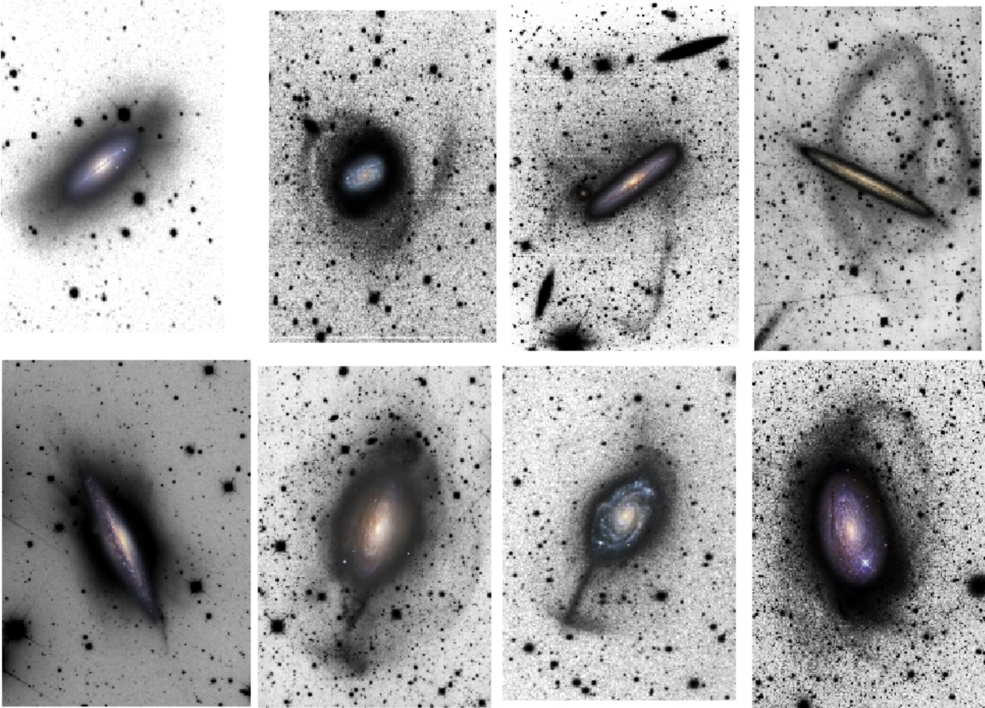
A series of images showing wispy stellar streams surrounding eight individual galaxies. Light and dark are reversed so that the background is gray-white and the galaxies appear as black blobs. Extending out from each like tentacles are streams of stars.
This series of images shows how astronomers find stellar streams by reversing the light and dark, similar to negative images, but stretched to highlight the faint streams. Color images of each of the nearby galaxies featured are superposed to scale to highlight the easily visible disk. Galaxies are surrounded by enormous halos of hot gas sprinkled with sporadic stars, seen as the shadowy regions that encase each galaxy here. NASA’s upcoming Nancy Grace Roman Space Telescope is expected to improve on these observations by resolving individual stars to understand each stream’s stellar populations and see stellar streams of various sizes in even more galaxies.
Credit: Carlin et al. (2016), based on images from Martínez-Delgado et al. (2008, 2010)

It will take many teams working in parallel to plan for each Roman science case. “Scientists can take something Roman will explore, like wispy streams of stars that extend far beyond the apparent edges of many galaxies, and consider all of the things needed to study them really well,” said Dominic Benford, Roman’s program scientist at NASA Headquarters in Washington, D.C. “That could include algorithms for dim objects, developing ways to measure star positions very precisely, understanding how detector effects could influence the observations and knowing how to correct for them, coming up with the most effective strategy to image stellar streams, and much more.”

One group is developing processing and analysis software for Roman’s Coronagraph Instrument. This instrument will demonstrate several cutting-edge technologies that could help astronomers directly image planets beyond our solar system. This team will also simulate different objects and planetary systems the Coronagraph could unveil, from dusty disks surrounding stars to old, cold worlds similar to Jupiter.

The mission’s science centers are gearing up to manage Roman’s data pipeline and archive and establishing systems to plan and execute observations. As part of a separate, upcoming effort, they will convene a survey definition team that will take in all of the preparatory information scientists are generating now and all the interests from the broader astronomical community to determine Roman’s optimal observation plans in detail.

“The team is looking forward to coordinating and funneling all the preliminary work,” McEnery said. “It’s a challenging but also exciting opportunity to set the stage for Roman and ensure each of its future observations will contribute to a wealth of scientific discoveries.”

The Nancy Grace Roman Space Telescope is managed at NASA’s Goddard Space Flight Center in Greenbelt, Maryland, with participation by NASA’s Jet Propulsion Laboratory and Caltech/IPAC in Southern California, the Space Telescope Science Institute in Baltimore, and a science team comprising scientists from various research institutions. The primary industrial partners are Ball Aerospace and Technologies Corporation in Boulder, Colorado; L3Harris Technologies in Melbourne, Florida; and Teledyne Scientific & Imaging in Thousand Oaks, California.

By Ashley Balzer
NASA’s Goddard Space Flight Center, Greenbelt, Md.

Media contact:

Claire Andreoli
NASA’s Goddard Space Flight Center, Greenbelt, Md.
301-286-1940


from NASA https://ift.tt/TJSFX6O

Evolution Space to Produce and Test Solid Rocket Motors at NASA Stennis

3 min read

Evolution Space to Produce and Test Solid Rocket Motors at NASA Stennis

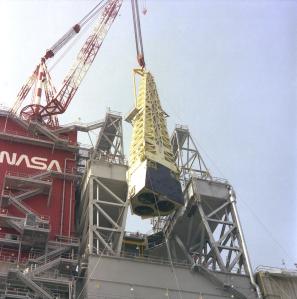
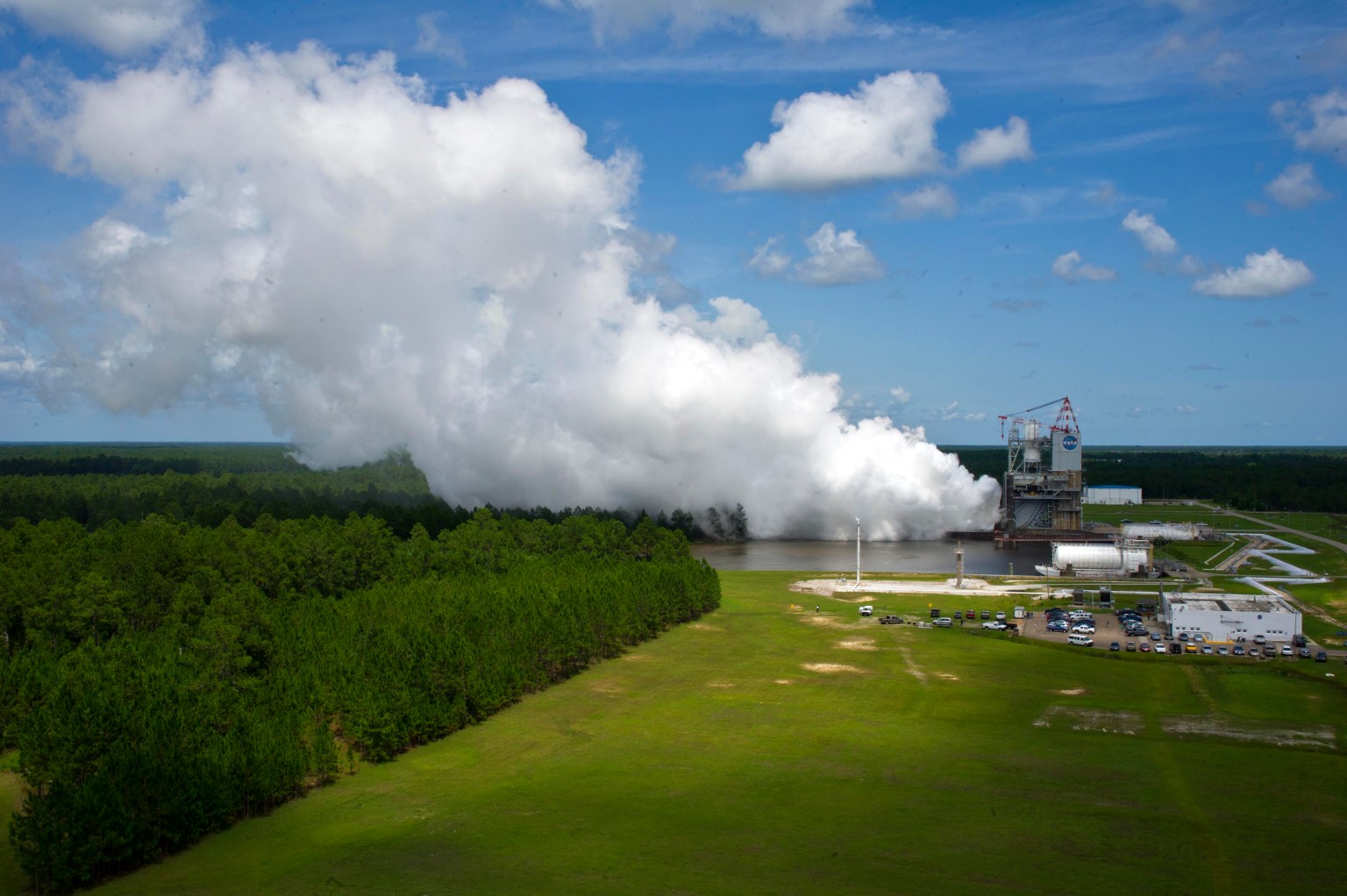
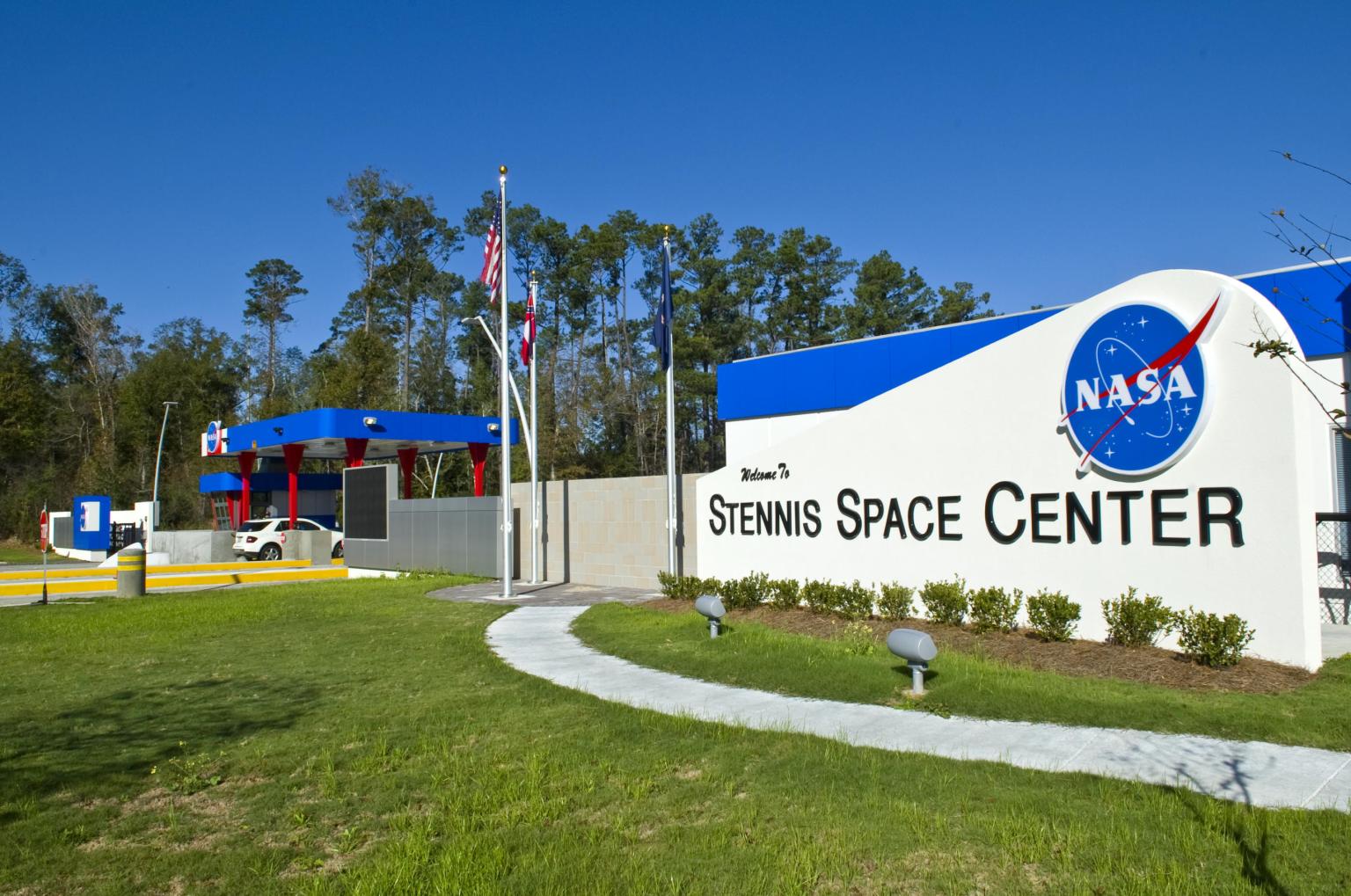
NASA’s Stennis Space Center near Bay St. Louis, Mississippi, joined with Evolution Space on Oct. 10 to announce plans for the aerospace company to establish production and testing operations for solid rocket motors onsite.

“This is another great addition to south Mississippi’s commercial space engagement,” Center Director Dr. Rick Gilbrech said. “Evolution Space gains access to critical NASA Stennis infrastructure and expertise as it continues to build its propulsion capabilities. In turn, we continue frontline work with commercial companies as we support NASA’s commitment to increase access to space and grow our federal city. We look forward to working with Evolution Space.”

The announcement grants access for Evolution Space to establish its Minor Scale Propulsion Center, while also opening the door to a larger future presence at the center. It also marks the first time in NASA Stennis’ 62-year history to support production and testing of solid rocket motors, and continues the center’s efforts to maximize use of its unique location, operating model, and propulsion infrastructure and capabilities by commercial aerospace companies and others.

“By partnering with NASA, we are able to rapidly stand up a facility which will add considerable capability to the US solid rocket motor industrial base,” said Manny Ballestero, a U.S. Army veteran and Evolution Space vice president of production and development. “We look forward to the future of our partnership as we continue to expand our presence at Stennis.”

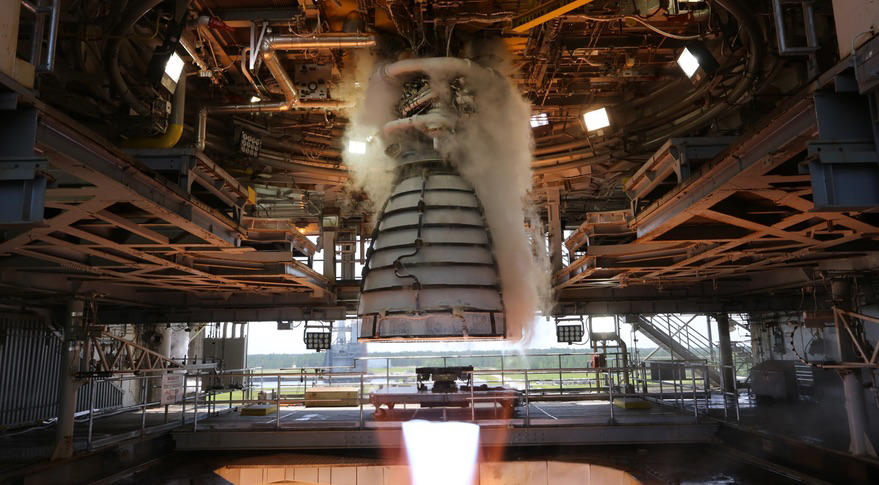
Under the arrangement, Evolution Space gains access to previously vacant NASA Stennis facilities to mix, cast, and store propellants. The company’s production facility is expected to be operational by spring 2024. It also will use the E-3 Test Complex at NASA Stennis to conduct solid rocket motor hot fires onsite for the first time. Evolution Space will provide all equipment, components, and electrical systems needed for a blended team of company and NASA personnel to test the motors.

“Evolution Space is moving fast and scaling with purpose,” added Josh Marino, U.S. Navy veteran and vice president of operations at Evolution Space. “We see our collaboration with the NASA Stennis propulsion center as a strategic expansion to help meet the growing demands of both the commercial and defense sectors.”

The news represents the latest collaboration between NASA Stennis and a commercial aerospace company. The nation’s largest propulsion test site, NASA Stennis features a secure setting and 125,000-acre acoustical buffer zone that enables 365/24/7 operations and testing. Historically, the site has supported propulsion projects that use liquid fuels and oxidizers as propellants. For solid rocket motors, fuel and oxidizer are mixed together into a solid propellant.

“This is an exciting agreement for NASA Stennis,” said Duane Armstrong, manager of the NASA Stennis Strategic Business Development Office. “It is yet another demonstration of the value of the center and its ability to support a range of commercial aerospace companies.”


For information about Stennis Space Center, visit: www.nasa.gov/centers/stennis/.

C. Lacy Thompson
Stennis Space Center, Bay St. Louis, Mississippi
228-363-5499
calvin.l.thompson@nasa.gov

Share

Details

Last Updated
Oct 10, 2023
Editor
Contact
Location
Stennis Space Center

Related Terms


from NASA https://ift.tt/DzsYS5f

Saturday, 7 October 2023

Hubble Examines Entrancing Galaxy in Eridanus

2 min read

Hubble Examines Entrancing Galaxy in Eridanus

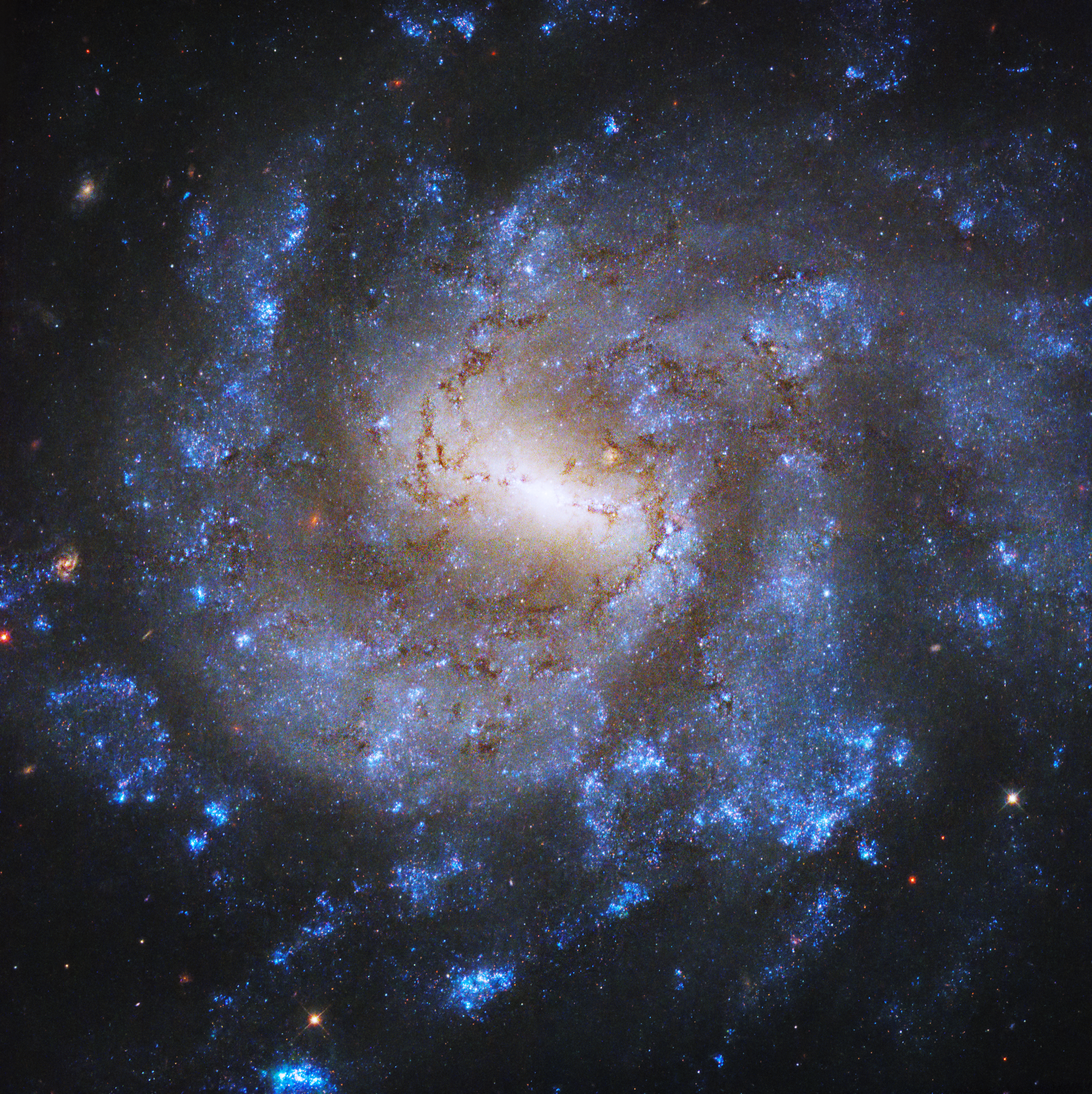
A face-on spiral galaxy with bright, blue-white spiral arms and dark, reddish-brown dust lanes. A bright-white bar of stars extends through the center of the galaxy. Small, more distant, reddish galaxies are visible in the background.
NASA’s Hubble Space Telescope’s view of NGC 685 in the constellation Eridanus, the River.
NASA, ESA, and J. Lee (Space Telescope Science Institute); Processing: Gladys Kober (NASA/Catholic University of America)

Hubble is sharing a brand new galaxy image every day through October 7, 2023!
Visit our website daily, or follow along on X, Facebook, and Instagram.

NGC 685 takes center stage amid faintly twinkling stars on an inky black background. This galaxy is clearly a barred spiral galaxy with its bright center bar and patchy, curving arms. It is about 58 million light-years away in the constellation Eridanus. NGC 685 lies south of the celestial equator and is visible from the southern hemisphere at certain times of the year.

British astronomer John Herschel discovered NGC 685 in 1834, and early observers noted its apparent roundness. The whole galaxy is about 60,000 light-years across – a little more than half the size of our Milky Way. The patches of bright blue along the galaxy’s arms are star clusters, groups of stars held together by their mutual gravitational attraction. Wisps of dark red near the central bar depict interstellar gas and dust, the matter from which stars form. About two-thirds of all spiral galaxies have a central bar like NGC 685. Its intense glow comes from many stars concentrated in a relatively small area.

NASA’s Hubble Space Telescope took this image as part of a scientific effort to study star cluster formation and evolution. Hubble’s ultraviolet capabilities are well-suited to this task, since young stars shine brightly at ultraviolet wavelengths. An average-sized galaxy like NGC 685 can have around 100 million stars, which is on the low end.

Media Contact:

Claire Andreoli
NASA’s Goddard Space Flight CenterGreenbelt, MD
claire.andreoli@nasa.gov

Keep Exploring

Discover More Topics From NASA


from NASA https://ift.tt/w47Q56z

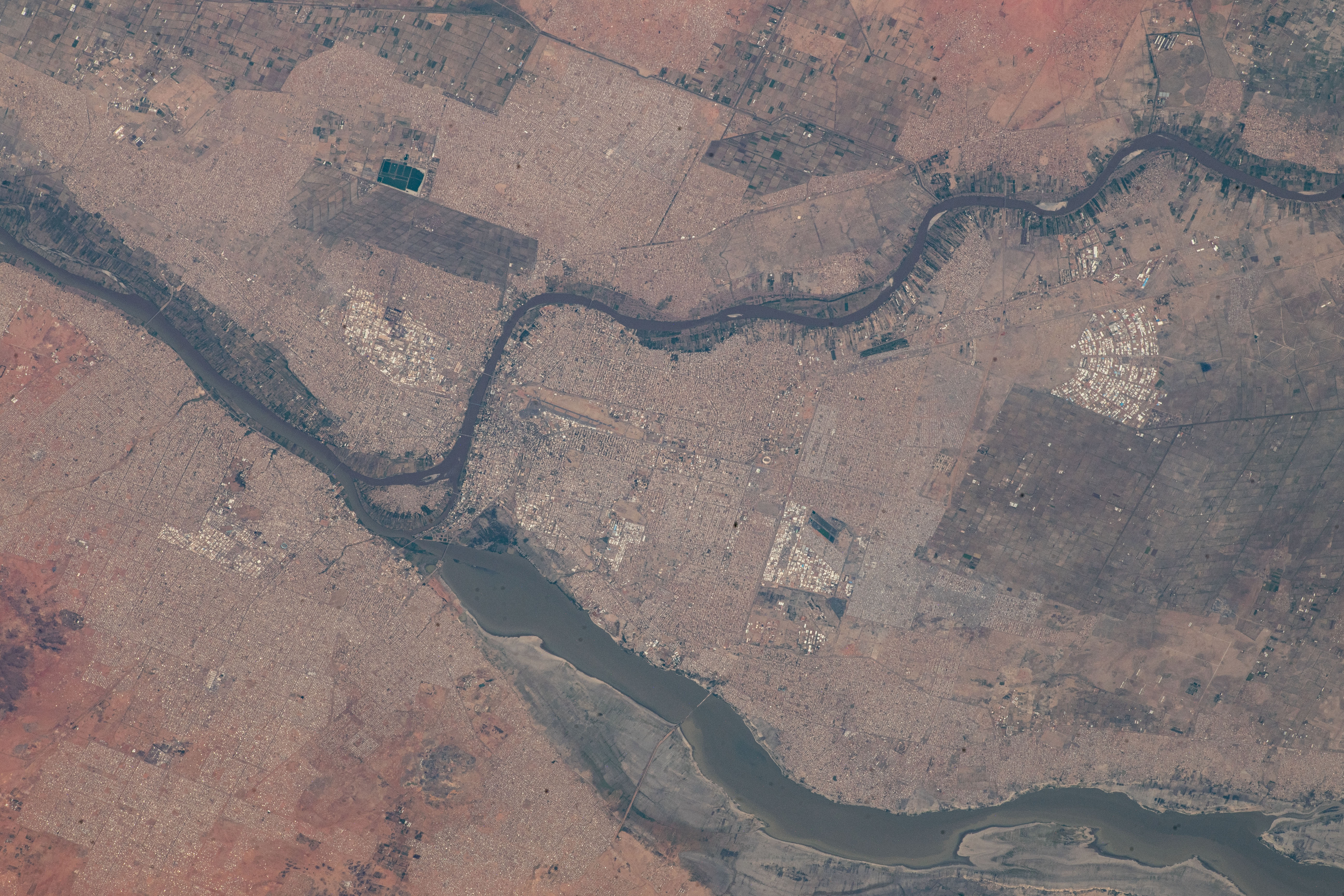
The cities of Khartoum and Omdurman in Sudan

The cities of Khartoum and Omdurman in Sudan are pictured from the International Space Station as it orbited 258 miles above the African nation.
iss070e002191 (Oct. 6, 2023) — The cities of Khartoum and Omdurman in Sudan are pictured from the International Space Station as it orbited 258 miles above the African nation.
NASA


from NASA https://ift.tt/buXHYgz

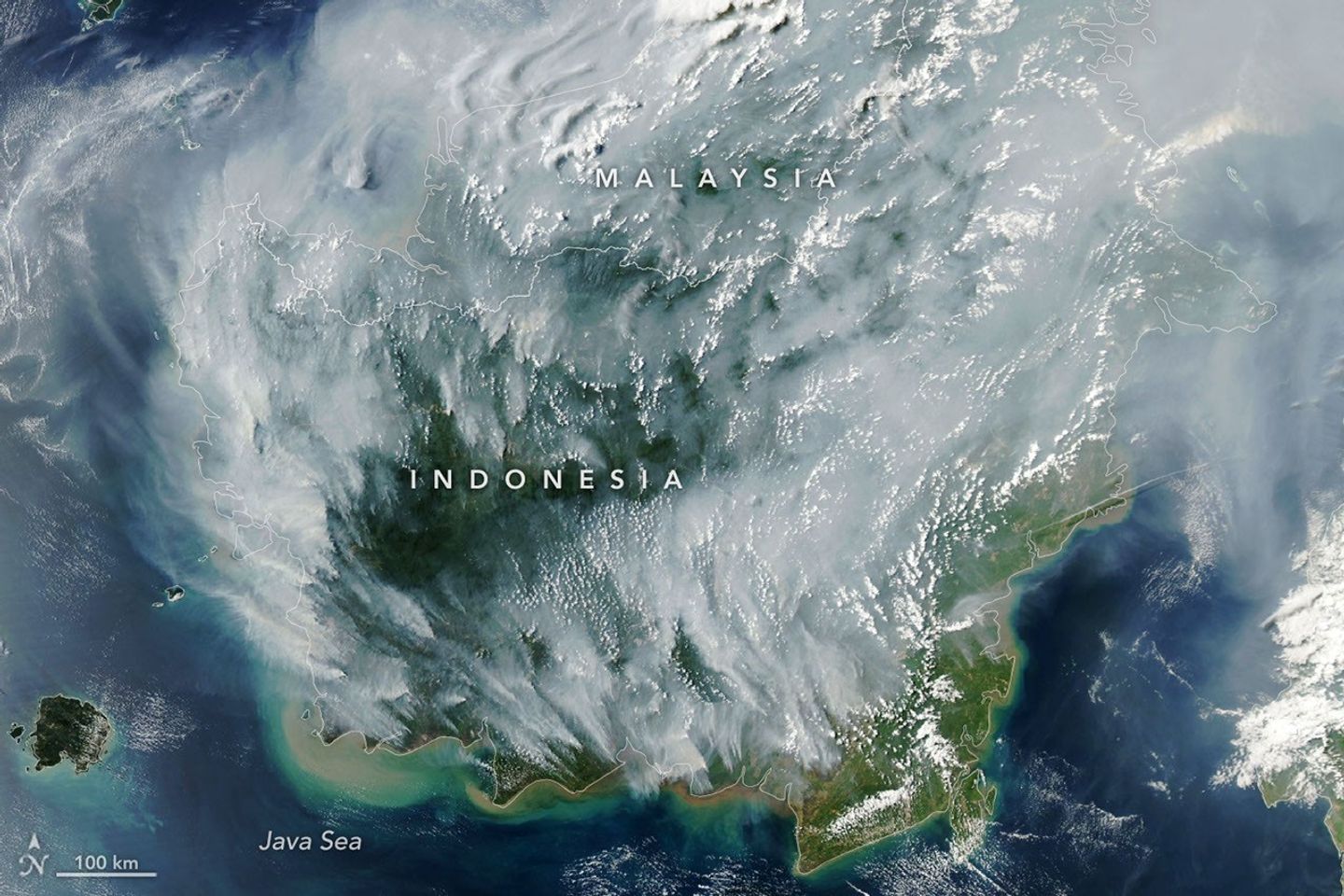
Peatland Fires Darken Skies in Indonesia

Science Aqua Peatland Fires Darken Skies in… Earth Earth Observatory Image of the Day EO Explorer All Topics Atmosphe...