Tuesday, 10 October 2023

NASA’s Roman Mission Gears Up for a Torrent of Future Data

NASA’s Nancy Grace Roman Space Telescope team is exploring ways to support community efforts that will prepare for the deluge of data the mission will return. Recently selected infrastructure teams will serve a vital role in the preliminary work by creating simulations, scouting the skies with other telescopes, calibrating Roman’s components, and much more.

Their work will complement additional efforts by other teams and individuals around the world, who will join forces to maximize Roman’s scientific potential. The goal is to ensure that, when the mission launches by May 2027, scientists will already have the tools they need to uncover billions of cosmic objects and help untangle mysteries like dark energy.

“We’re harnessing the science community at large to lay a foundation, so when we get to launch we’ll be able to do powerful science right out of the gate,” said Julie McEnery, Roman’s senior project scientist at NASA’s Goddard Space Flight Center in Greenbelt, Maryland. “There’s a lot of exciting work to do, and many different ways for scientists to get involved.”

Thousands of tiny red dots speckle a black background like spilled salt. Additional yellow blobs that are slightly larger and appear more like galaxies, are overlaid on top and a few areas appear to bloom outward and slightly warp. Then even more galaxies, this time yellow and white, are overlaid over that, and the other areas "bloom" with even more exaggerated effects, the edges of the circular areas appearing to be smeared into arcs and streaks while the inside of the areas are magnified.
This animation shows a simulation of the type of science that astronomers will be able to do with future deep field observations from NASA’s Nancy Grace Roman Space Telescope. The gravity of intervening galaxy clusters and dark matter can lens the light from farther objects, warping their appearance as shown in the animation. By studying the distorted light, astronomers can study elusive dark matter, which can only be measured indirectly through its gravitational effects on visible matter. As a bonus, this lensing also makes it easier to see the most distant galaxies whose light they magnify. Simulations like this one help astronomers understand what Roman’s future observations could tell us about the universe, and provide useful data to validate data analysis techniques.
Credit: Caltech-IPAC/R. Hurt

Simulations lie at the heart of the preparatory efforts. They enable scientists to test algorithms, estimate Roman’s scientific return, and fine-tune observing strategies so that we’ll learn as much as possible about the universe.

Teams will be able to sprinkle different cosmic phenomena through a simulated dataset and then run machine learning algorithms to see how well they can automatically find the phenomena. Developing fast and efficient ways to identify underlying patterns will be vital given Roman’s enormous data collection rate. The mission is expected to amass 20,000 terabytes (20 petabytes) of observations containing trillions of individual measurements of stars and galaxies over the course of its five-year primary mission.

“The preparatory work is complex, partly because everything Roman will do is quite interconnected,” McEnery said. “Each observation is going to be used by multiple teams for very different science cases, so we’re creating an environment that makes it as easy as possible for scientists to collaborate.”

Some scientists will conduct precursor observations using other telescopes, including NASA’s Hubble Space Telescope, the Keck Observatory in Hawaii, and Japan’s PRIME (Prime-focus Infrared Microlensing Experiment) located in the South African Astronomical Observatory in Sutherland. These observations will help astronomers optimize Roman’s observing plan by identifying the best individual targets and regions of space for Roman and better understand the data the mission is expected to deliver.

Some teams will explore how they might combine data from different observatories and use multiple telescopes in tandem. For example, using PRIME and Roman together would help astronomers learn more about objects found via warped space-time. And Roman scientists will be able to lean on archived Hubble data to look back in time and see where cosmic objects were and how they were behaving, building a more complete history of the objects astronomers will use Roman to study. Roman will also identify interesting targets that observatories such as NASA’s James Webb Space Telescope can zoom in on for more detailed studies.
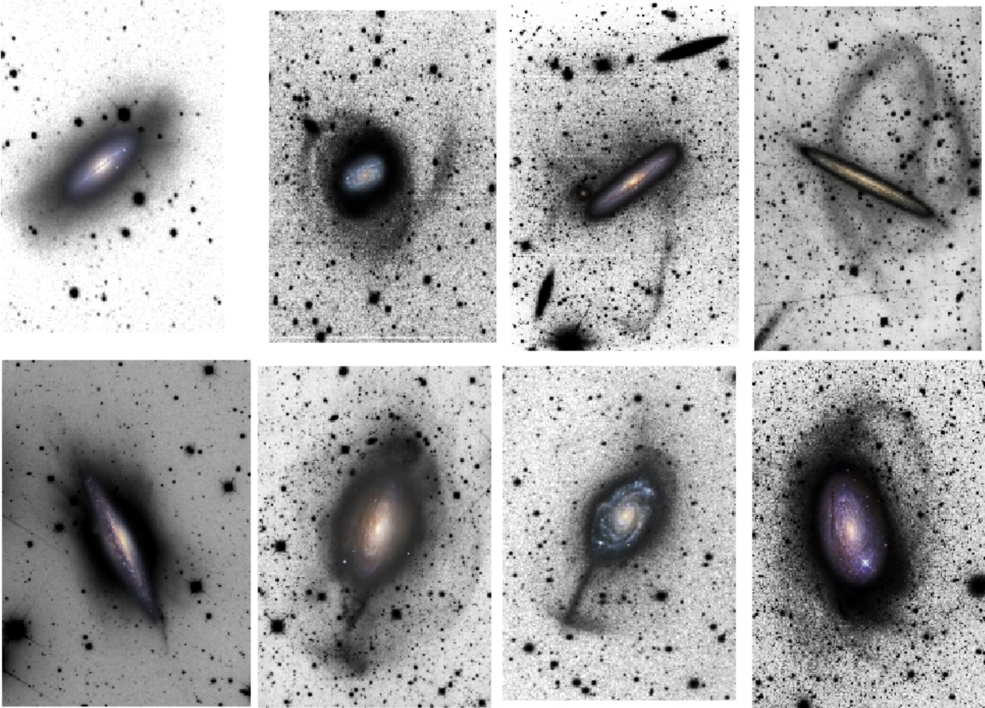
A series of images showing wispy stellar streams surrounding eight individual galaxies. Light and dark are reversed so that the background is gray-white and the galaxies appear as black blobs. Extending out from each like tentacles are streams of stars.
This series of images shows how astronomers find stellar streams by reversing the light and dark, similar to negative images, but stretched to highlight the faint streams. Color images of each of the nearby galaxies featured are superposed to scale to highlight the easily visible disk. Galaxies are surrounded by enormous halos of hot gas sprinkled with sporadic stars, seen as the shadowy regions that encase each galaxy here. NASA’s upcoming Nancy Grace Roman Space Telescope is expected to improve on these observations by resolving individual stars to understand each stream’s stellar populations and see stellar streams of various sizes in even more galaxies.
Credit: Carlin et al. (2016), based on images from Martínez-Delgado et al. (2008, 2010)

It will take many teams working in parallel to plan for each Roman science case. “Scientists can take something Roman will explore, like wispy streams of stars that extend far beyond the apparent edges of many galaxies, and consider all of the things needed to study them really well,” said Dominic Benford, Roman’s program scientist at NASA Headquarters in Washington, D.C. “That could include algorithms for dim objects, developing ways to measure star positions very precisely, understanding how detector effects could influence the observations and knowing how to correct for them, coming up with the most effective strategy to image stellar streams, and much more.”

One group is developing processing and analysis software for Roman’s Coronagraph Instrument. This instrument will demonstrate several cutting-edge technologies that could help astronomers directly image planets beyond our solar system. This team will also simulate different objects and planetary systems the Coronagraph could unveil, from dusty disks surrounding stars to old, cold worlds similar to Jupiter.

The mission’s science centers are gearing up to manage Roman’s data pipeline and archive and establishing systems to plan and execute observations. As part of a separate, upcoming effort, they will convene a survey definition team that will take in all of the preparatory information scientists are generating now and all the interests from the broader astronomical community to determine Roman’s optimal observation plans in detail.

“The team is looking forward to coordinating and funneling all the preliminary work,” McEnery said. “It’s a challenging but also exciting opportunity to set the stage for Roman and ensure each of its future observations will contribute to a wealth of scientific discoveries.”

The Nancy Grace Roman Space Telescope is managed at NASA’s Goddard Space Flight Center in Greenbelt, Maryland, with participation by NASA’s Jet Propulsion Laboratory and Caltech/IPAC in Southern California, the Space Telescope Science Institute in Baltimore, and a science team comprising scientists from various research institutions. The primary industrial partners are Ball Aerospace and Technologies Corporation in Boulder, Colorado; L3Harris Technologies in Melbourne, Florida; and Teledyne Scientific & Imaging in Thousand Oaks, California.

By Ashley Balzer
NASA’s Goddard Space Flight Center, Greenbelt, Md.

Media contact:

Claire Andreoli
NASA’s Goddard Space Flight Center, Greenbelt, Md.
301-286-1940


from NASA https://ift.tt/TJSFX6O
Evolution Space to Produce and Test Solid Rocket Motors at NASA Stennis

3 min read

Evolution Space to Produce and Test Solid Rocket Motors at NASA Stennis

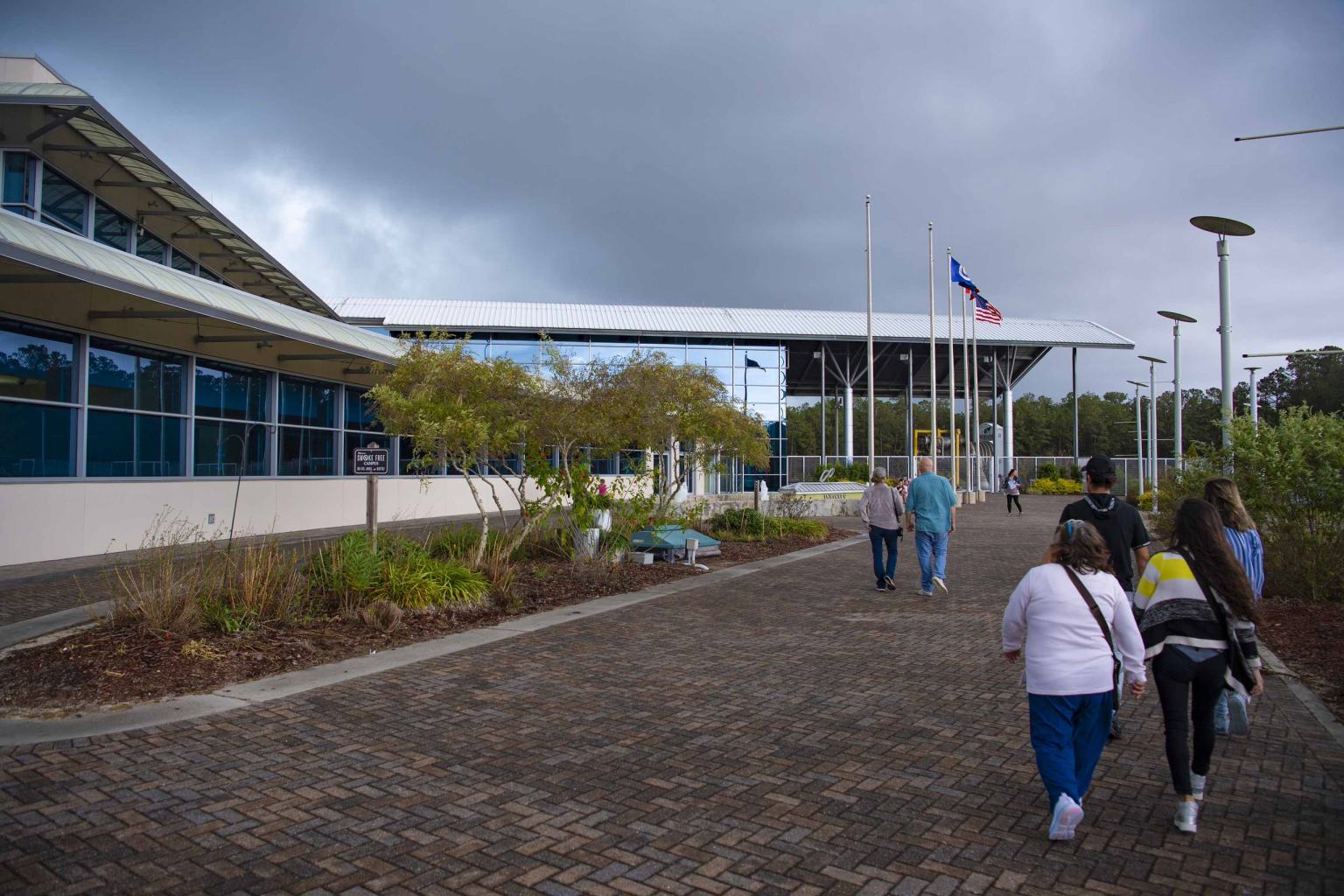
NASA’s Stennis Space Center near Bay St. Louis, Mississippi, joined with Evolution Space on Oct. 10 to announce plans for the aerospace company to establish production and testing operations for solid rocket motors onsite.

“This is another great addition to south Mississippi’s commercial space engagement,” Center Director Dr. Rick Gilbrech said. “Evolution Space gains access to critical NASA Stennis infrastructure and expertise as it continues to build its propulsion capabilities. In turn, we continue frontline work with commercial companies as we support NASA’s commitment to increase access to space and grow our federal city. We look forward to working with Evolution Space.”

The announcement grants access for Evolution Space to establish its Minor Scale Propulsion Center, while also opening the door to a larger future presence at the center. It also marks the first time in NASA Stennis’ 62-year history to support production and testing of solid rocket motors, and continues the center’s efforts to maximize use of its unique location, operating model, and propulsion infrastructure and capabilities by commercial aerospace companies and others.

“By partnering with NASA, we are able to rapidly stand up a facility which will add considerable capability to the US solid rocket motor industrial base,” said Manny Ballestero, a U.S. Army veteran and Evolution Space vice president of production and development. “We look forward to the future of our partnership as we continue to expand our presence at Stennis.”

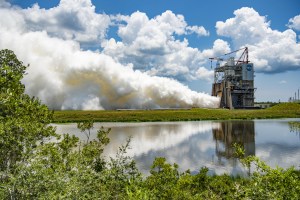
Under the arrangement, Evolution Space gains access to previously vacant NASA Stennis facilities to mix, cast, and store propellants. The company’s production facility is expected to be operational by spring 2024. It also will use the E-3 Test Complex at NASA Stennis to conduct solid rocket motor hot fires onsite for the first time. Evolution Space will provide all equipment, components, and electrical systems needed for a blended team of company and NASA personnel to test the motors.

“Evolution Space is moving fast and scaling with purpose,” added Josh Marino, U.S. Navy veteran and vice president of operations at Evolution Space. “We see our collaboration with the NASA Stennis propulsion center as a strategic expansion to help meet the growing demands of both the commercial and defense sectors.”

The news represents the latest collaboration between NASA Stennis and a commercial aerospace company. The nation’s largest propulsion test site, NASA Stennis features a secure setting and 125,000-acre acoustical buffer zone that enables 365/24/7 operations and testing. Historically, the site has supported propulsion projects that use liquid fuels and oxidizers as propellants. For solid rocket motors, fuel and oxidizer are mixed together into a solid propellant.

“This is an exciting agreement for NASA Stennis,” said Duane Armstrong, manager of the NASA Stennis Strategic Business Development Office. “It is yet another demonstration of the value of the center and its ability to support a range of commercial aerospace companies.”


For information about Stennis Space Center, visit: www.nasa.gov/centers/stennis/.

C. Lacy Thompson
Stennis Space Center, Bay St. Louis, Mississippi
228-363-5499
calvin.l.thompson@nasa.gov

Share

Details

Last Updated
Oct 10, 2023
Editor
Contact
Location
Stennis Space Center

Related Terms


from NASA https://ift.tt/DzsYS5f

Saturday, 7 October 2023

Hubble Examines Entrancing Galaxy in Eridanus

2 min read

Hubble Examines Entrancing Galaxy in Eridanus

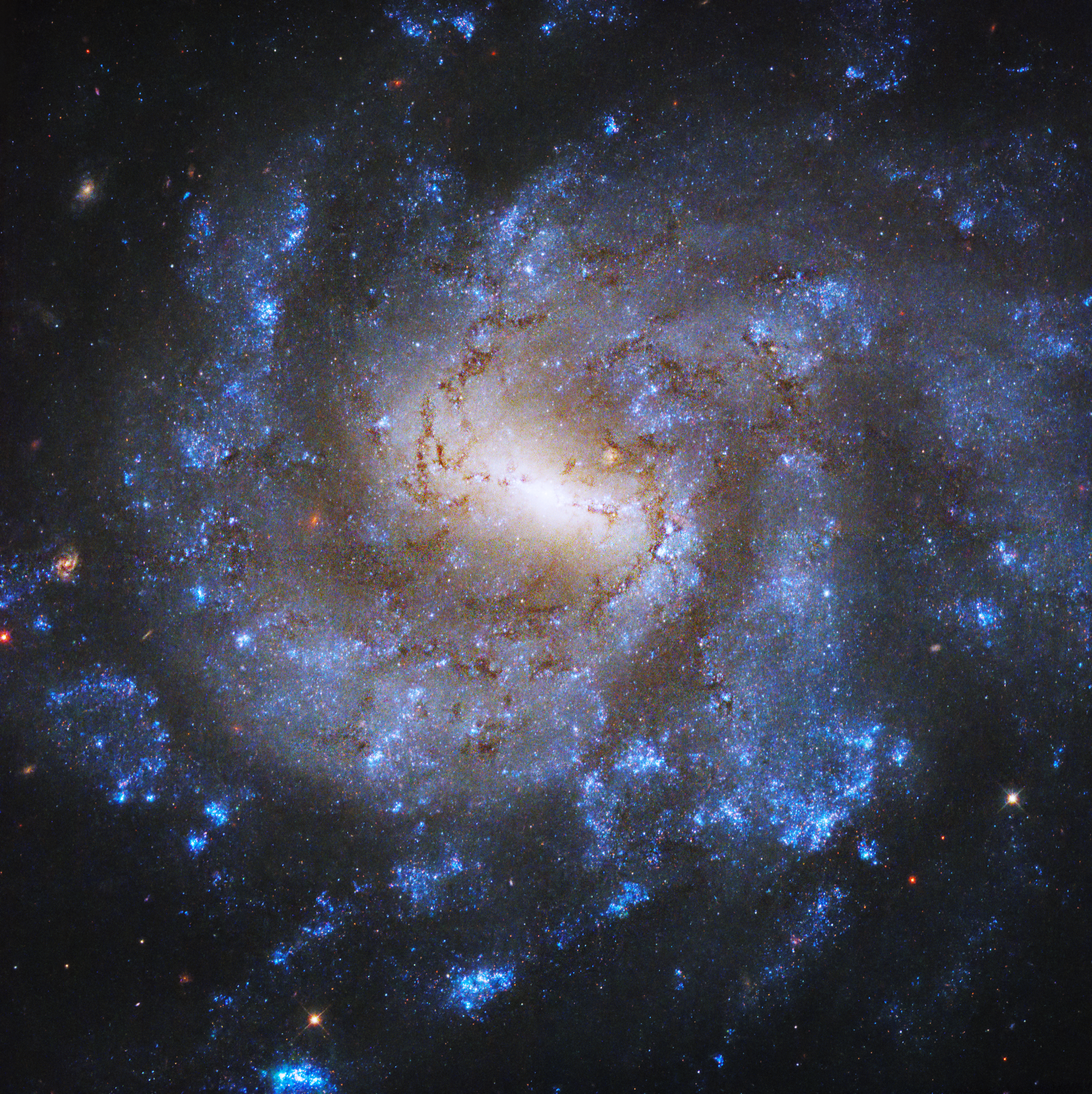
A face-on spiral galaxy with bright, blue-white spiral arms and dark, reddish-brown dust lanes. A bright-white bar of stars extends through the center of the galaxy. Small, more distant, reddish galaxies are visible in the background.
NASA’s Hubble Space Telescope’s view of NGC 685 in the constellation Eridanus, the River.
NASA, ESA, and J. Lee (Space Telescope Science Institute); Processing: Gladys Kober (NASA/Catholic University of America)

Hubble is sharing a brand new galaxy image every day through October 7, 2023!
Visit our website daily, or follow along on X, Facebook, and Instagram.

NGC 685 takes center stage amid faintly twinkling stars on an inky black background. This galaxy is clearly a barred spiral galaxy with its bright center bar and patchy, curving arms. It is about 58 million light-years away in the constellation Eridanus. NGC 685 lies south of the celestial equator and is visible from the southern hemisphere at certain times of the year.

British astronomer John Herschel discovered NGC 685 in 1834, and early observers noted its apparent roundness. The whole galaxy is about 60,000 light-years across – a little more than half the size of our Milky Way. The patches of bright blue along the galaxy’s arms are star clusters, groups of stars held together by their mutual gravitational attraction. Wisps of dark red near the central bar depict interstellar gas and dust, the matter from which stars form. About two-thirds of all spiral galaxies have a central bar like NGC 685. Its intense glow comes from many stars concentrated in a relatively small area.

NASA’s Hubble Space Telescope took this image as part of a scientific effort to study star cluster formation and evolution. Hubble’s ultraviolet capabilities are well-suited to this task, since young stars shine brightly at ultraviolet wavelengths. An average-sized galaxy like NGC 685 can have around 100 million stars, which is on the low end.

Media Contact:

Claire Andreoli
NASA’s Goddard Space Flight CenterGreenbelt, MD
claire.andreoli@nasa.gov

Keep Exploring

Discover More Topics From NASA


from NASA https://ift.tt/w47Q56z

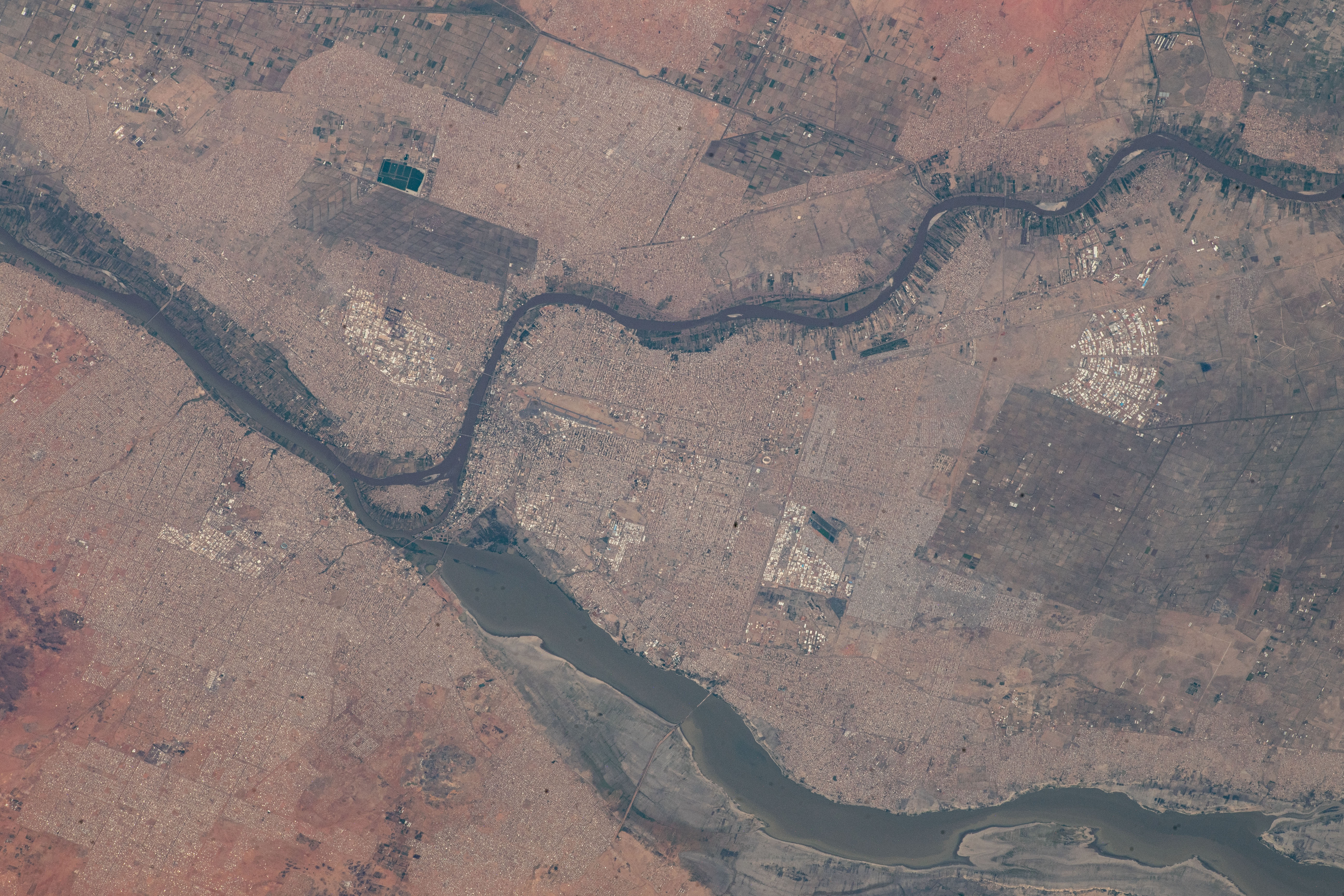
The cities of Khartoum and Omdurman in Sudan

The cities of Khartoum and Omdurman in Sudan are pictured from the International Space Station as it orbited 258 miles above the African nation.
iss070e002191 (Oct. 6, 2023) — The cities of Khartoum and Omdurman in Sudan are pictured from the International Space Station as it orbited 258 miles above the African nation.
NASA


from NASA https://ift.tt/buXHYgz

NASA’s Global Science Hackathon Attracts Thousands of Participants

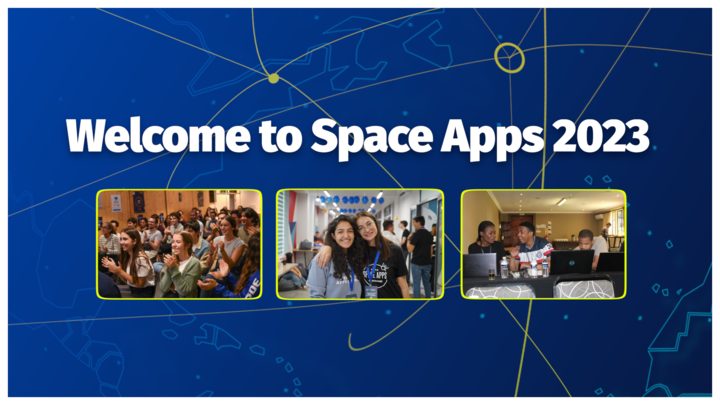
NASA's 2023 Space Apps Challenge
NASA

More than 50,000 participants have registered for the 2023 NASA Space Apps Challenge Saturday, Oct. 7, to Sunday, Oct. 8, which is the largest annual worldwide hackathon.

During the two-day event, participants form teams and use software development, engineering, art, storytelling, science, and other skills to solve science-related challenges written by NASA personnel. Teams can be in-person at local events held around the world, or participate virtually.

This year’s theme celebrates the benefits and successes created through sharing open data: Explore Open Science Together.

“NASA has a 60-year legacy of pushing the limits of how science is used to understand our universe,” said Nicola Fox, associate administrator for science at NASA Headquarters in Washington. “This year’s Space Apps challenge supports one of our key goals to expand those limits: Spark a culture that ensures and insists our data is easily accessible for everyone. Open science produces research that is transparent, reproducible, and replicable – while increasing diversity and inclusion.”  

The Space Apps Challenge experience provides a platform to network locally and globally, develop new skills, and identify pathways to pursue academic and professional opportunities.

Here is a list of hackathon activities online:

  • Follow activities on Space Apps X, Space Apps Facebook, and Space Apps Instagram accounts. Use #SpaceApps on social posts.
  • 5 p.m. EDT on Friday: “Welcome to Space Apps” kick-off video premieres on the Space Apps YouTube page
  • 2:30 a.m. EDT on Sunday: Instagram Live on the Space Apps account featuring four local events from around the world (Italy, Australia, and two from across the United States)

Once the hackathon concludes, projects are submitted for judging to NASA and other space agency experts. Participants compete for one of 10 global awards. Winners are expected to be announced in January 2024, followed by a winners’ celebration in June.

Thirteen space agencies, as well as community partners and volunteers from around the world, collaborate with NASA to host a successful hackathon. Since its inception in 2021, the challenge has engaged more than 260,000 registrants from nearly 200 countries/territories around the world to build innovative solutions to challenges faced on Earth and in space. There is no cost to participate.

Learn more about NASA’s Space Apps Challenge online:

https://www.spaceappschallenge.org/2023/challenges/


from NASA https://ift.tt/N7Mw0Qt

Friday, 6 October 2023

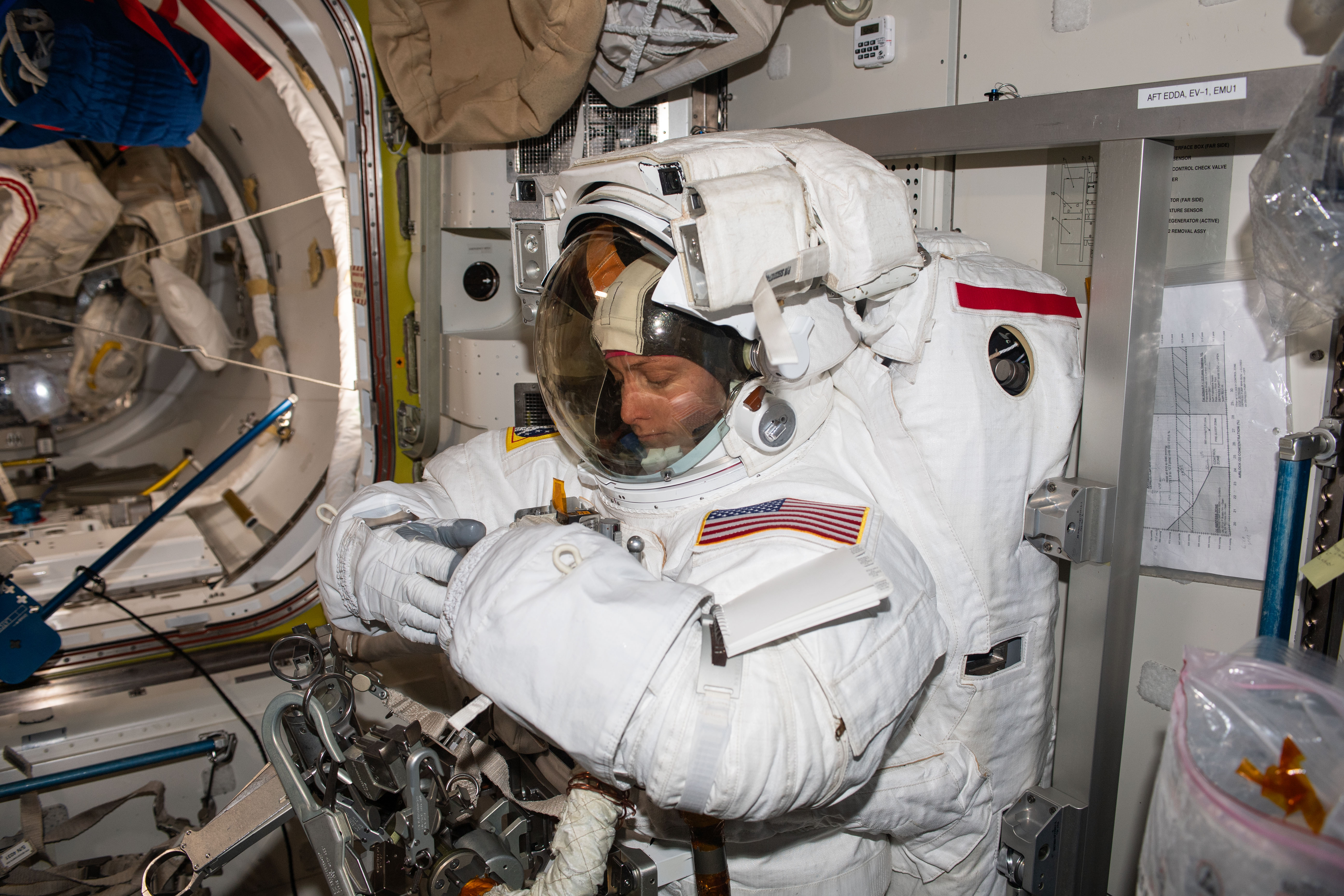
Astronaut Loral O’Hara tries on her spacesuit

NASA astronaut and Expedition 70 Flight Engineer Loral O'Hara is pictured trying on her spacesuit and testing its components aboard the International Space Station's Quest airlock in preparation for an upcoming spacewalk.
iss070e002032 (Oct. 4, 2023) — NASA astronaut and Expedition 70 Flight Engineer Loral O’Hara is pictured trying on her spacesuit and testing its components aboard the International Space Station’s Quest airlock in preparation for an upcoming spacewalk.
NASA


from NASA https://ift.tt/lWnZ1ta

NASA to Host Asteroid Sample Media Call; Provide Experts for Interviews

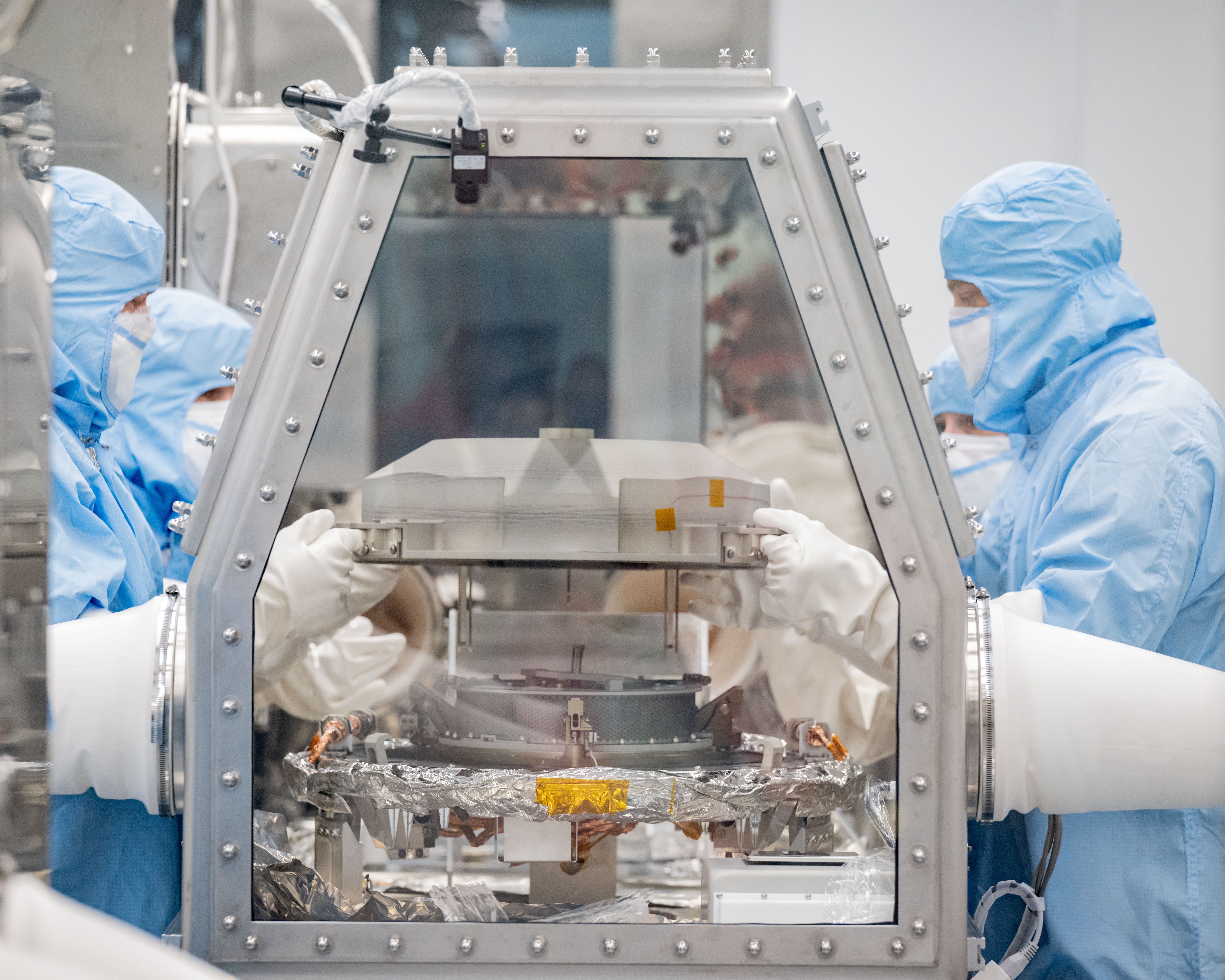
Photographic coverage of OSIRIS REx Asteroid Sample Return lid opening at Building 31 Astromaterials Curation Facility.
OSIRIS-REx Asteroid Sample Return lid opening at Building 31 Astromaterials Curation Facility.
NASA

Following a public unveiling of the United States’ first asteroid sample at 11 a.m. EDT Wednesday, Oct. 11, NASA will host a media teleconference and separate in-person interviews in English and Spanish with experts from the agency and the University of Arizona.

The OSIRIS-REx (Origins, Spectral Interpretation, Resource Identification and Security – Regolith Explorer) spacecraft capped its seven-year mission on Sunday, Sept. 24, with the delivery of a pristine sample of surface material from asteroid Bennu.

The unveiling event at NASA’s Johnson Space Center in Houston will air live on NASA TV, the NASA app, and the agency’s website.

The media teleconference will begin at 2:30 pm EDT and include members of the OSIRIS-REx science team. Audio of the call will stream live at:

https://www.nasa.gov/nasatv


In addition, subject matter experts are available for interviews beginning at 2:30 p.m. CDT (3:30 p.m. EDT), Oct. 11, in-person and remotely:

  • Maritza Montoya, OSIRIS-REx sample processor, NASA Johnson (Spanish speaker) 
  • Ann Nguyen, OSIRIS-REx scientist, NASA Johnson
  • Kimberly Allums, OSIRIS-REx Jacobs Engineering project lead, NASA Johnson 
  • Salvador Martinez III, OSIRIS-REx lead technology development engineer, NASA Johnson (Spanish speaker) 
  • Daniel Glavin, senior scientist, NASA’s Goddard Space Flight Center
  • Dante Lauretta, OSIRIS-REx principal investigator, University of Arizona 

The following morning, subject matter experts also will be available for interviews beginning at 5:30 a.m. CDT (6:30 a.m. EDT) Oct. 12:

  • Lindsay Keller, OSIRIS-REx scientist, NASA Johnson
  • Maritza Montoya, OSIRIS-REx sample processor, NASA Johnson (Spanish speaker) 
  • Daniel Glavin, senior scientist, NASA Goddard
  • Salvador Martinez III, OSIRIS-REx lead technology development engineer, NASA Johnson (Spanish speaker) 
  • Kathleen Vander Kaaden, NASA’s Science Mission Directorate chief scientist for astromaterials curation, NASA Headquarters

Please contact the NASA Johnson newsroom for any of these opportunities at 281-483-5111 or jsccommu@mail.nasa.gov. Media interested in participating in the call must request participation no later than two hours prior to the start time, and are asked to dial-in 15 minutes early as well. The deadline to request in-person or remote one-on-one interviews is Friday, Oct. 6.

In between the OSIRIS-REx media events on Oct. 11, the agency also will host a prelaunch news conference at 1 p.m. to discuss its upcoming Psyche mission to a metal-rich asteroid. That event will air live on NASA TV, the NASA app, and the agency’s website.

NASA Johnson houses the world’s largest collection of astromaterials from the solar system under one roof, including samples from asteroids, comets, Mars, the Moon, Sun, and dust from other stars. Scientists use world-class laboratories to perform research on planetary materials and the space environment to investigate the origin and evolution of our solar system and beyond.

Learn more about the OSIRIS-REx mission at:

https://www.nasa.gov/osiris-rex

-end-

Karen Fox / Alana Johnson
Headquarters, Washington
202-358-1257 / 202-358-1501
karen.c.fox@nasa.gov / alana.r.johnson@nasa.gov

Shaneequa Vereen
Johnson Space Center, Houston
281-483-5111
shaneequa.y.vereen@nasa.gov


from NASA https://ift.tt/yolFh6R

Thursday, 5 October 2023

NASA Partners Combine Efforts for Low Earth Orbit Commercial Station

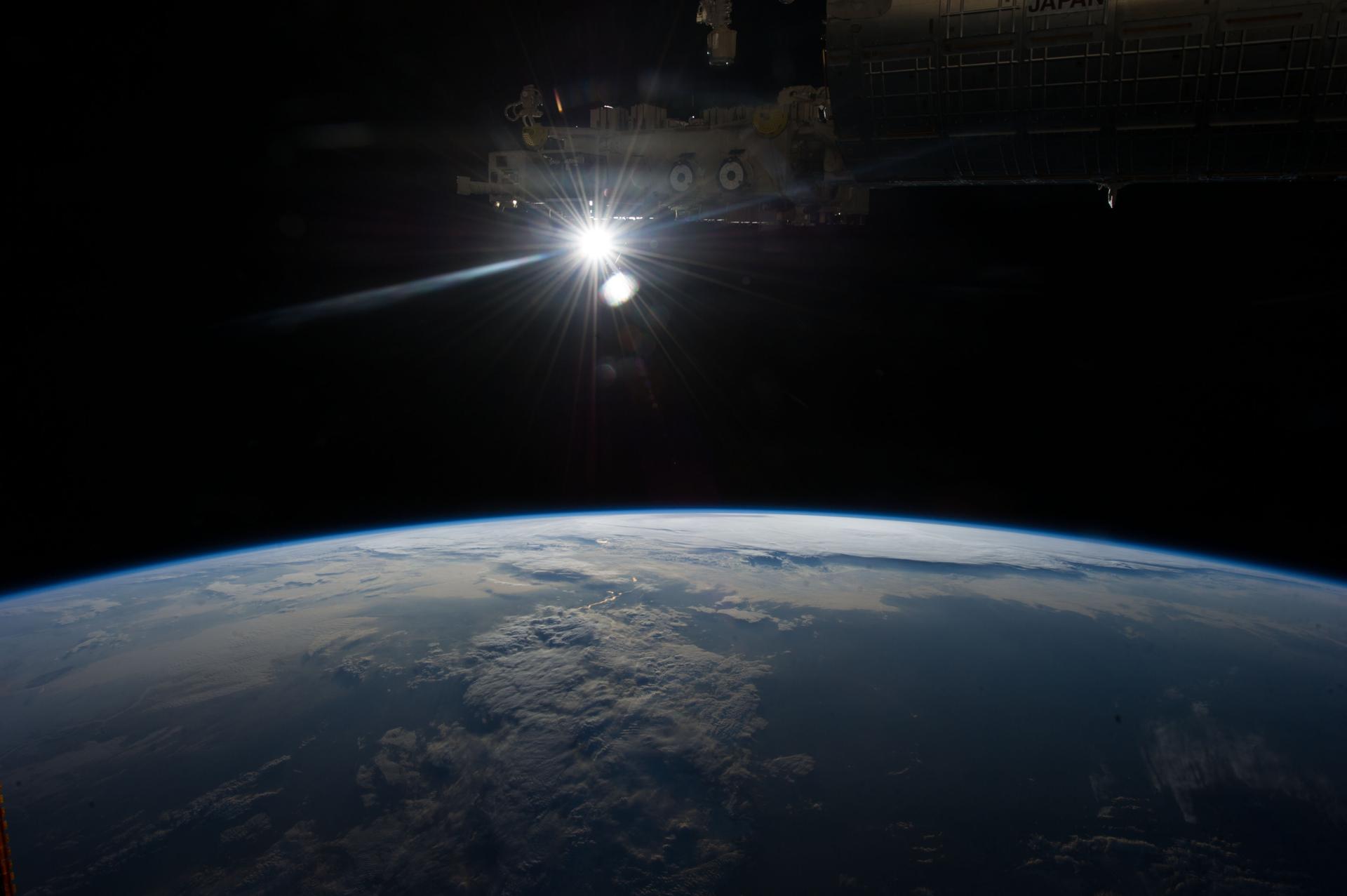
Earth observation taken by the Expedition 35 crew aboard the ISS. The Sun and portions of the forward of the International Space Station are in view.
Earth observation taken by the Expedition 35 crew aboard the International Space Station. The Sun and portions of the forward of the space station are in view.
NASA

As part of NASA’s efforts to foster commercially owned and operated low Earth orbit destinations, Nanoracks, part of Voyager Space’s Exploration Segment, and Northrop Grumman are teaming up to support Nanoracks’ development of the Starlab commercial space station.

Rather than developing its own destination as planned under a separate Space Act Agreement (SAA) with NASA, the agency and Northrop Grumman agreed to withdraw from its agreement so the company can join Voyager Space and Nanoracks in providing cargo logistics services and engineering services to support the Starlab station.

“This is a positive development for the commercial low Earth orbit destinations effort,” says Phil McAlister, director of commercial space at NASA Headquarters in Washington. “Northrop Grumman has determined that its best strategy is to join the Nanoracks team, and NASA respects and supports that decision. We continue to see a strong competitive landscape for future commercial destinations, and I am pleased that Northrop is staying with the program.”

Northrop Grumman was originally awarded a milestone-based agreement in 2021 to develop their station, totaling $125.6 million. To date, $36.6 million has been paid to Northrop Grumman for the successful completion of milestones.

NASA plans to take the remaining funding associated with Northrop Grumman’s withdrawal and other program funding to add milestones to the agency’s existing agreements with the other currently funded destination partners including Voyager Space/Nanoracks, Blue Origin, and Axiom Space, assuming NASA and the companies can agree on the additional milestones and value.

“Commercial destinations are a critical capability for NASA as we transition low Earth orbit operations to private industry and open access to space. Refining strategies and evolving partnerships are part of the process as we build a robust low Earth orbit economy where NASA is one of many customers,” says Angela Hart, manager of commercial low Earth orbit development program at NASA’s Johnson Space Center in Houston. “This opportunity provides us the ability to reduce risks and have more insight into our partners’ technical designs.”

Negotiations are ongoing to determine additional milestones for the existing partners and NASA will share more on those negotiations once they have been completed.

This additional content and funding will allow the partners to accelerate development efforts and help address schedule risk in reaching operational readiness prior to the International Space Station retirement in 2030.

NASA is supporting the design and development of multiple commercial space stations with the three funded partners listed above, as well as several other partners with unfunded agreements through NASA’s Collaborations for Commercial Space Capabilities-2 project.

The design and development phase will be followed by the procurement of services from one or more companies, where NASA aims to be one of many customers for low Earth orbit destinations after the retirement of the International Space Station. The agency recently issued a request for information for industry to provide input on the agency’s requirements for end-to-end low Earth orbit space station services.

NASA’s commercial strategy for low Earth orbit will provide the government with reliable and safe services at a lower cost and enable the agency to focus on Artemis missions to the Moon in preparation for Mars, while also continuing to use low Earth orbit as a training and proving ground for those deep space missions.

For more information about NASA’s commercial space strategy, visit:

https://www.nasa.gov/humans-in-space/commercial-space/

-end-

Joshua Finch
Headquarters, Washington
202-358-1100
joshua.a.finch@nasa.gov


Rebecca Turkington
Johnson Space Center, Houston
281-483-5111
rebecca.turkington@nasa.gov


from NASA https://ift.tt/Tw8XG1f

NASA to Host News Conference in Houston for Record-Breaking Astronaut

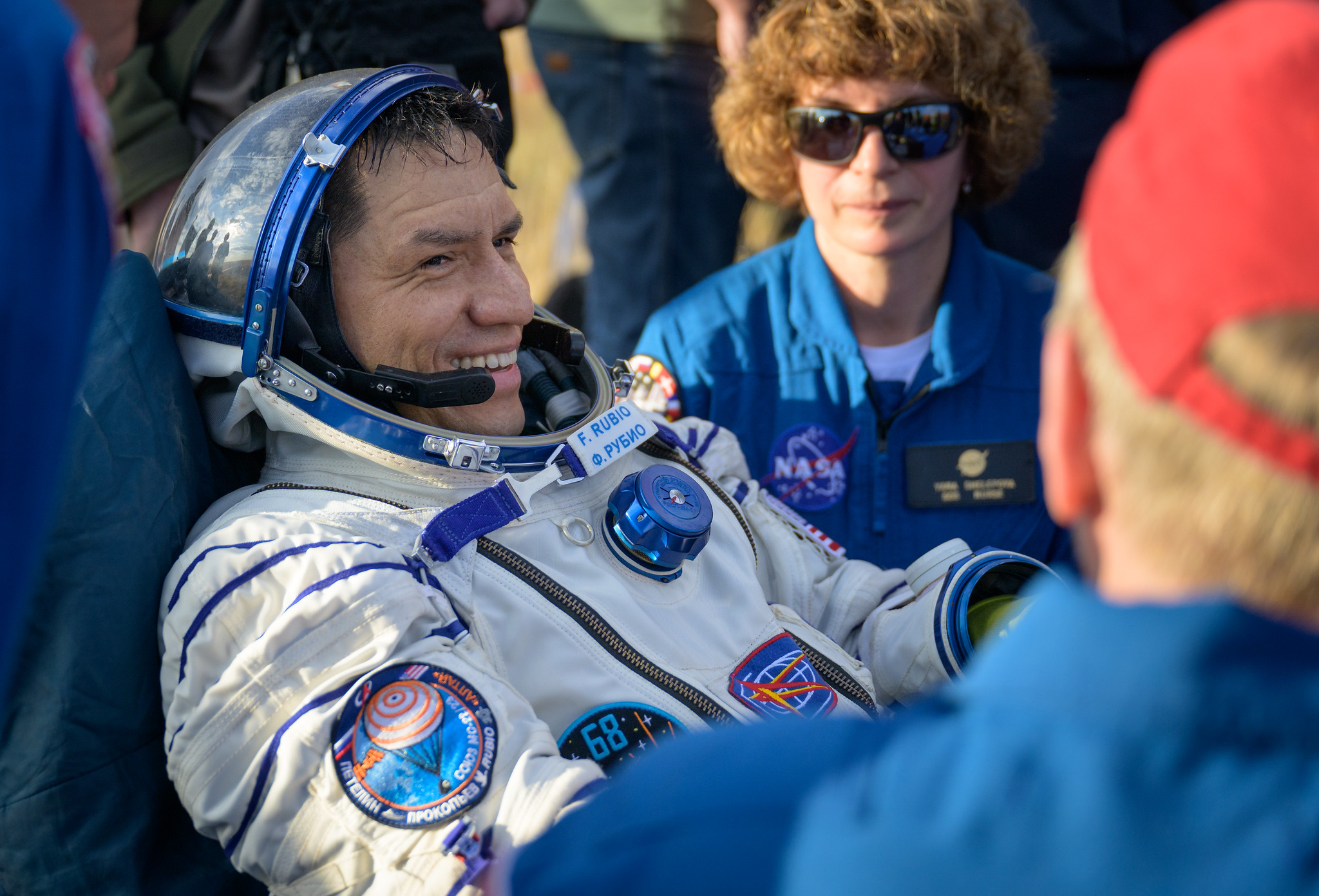
Expedition 69 NASA astronaut Frank Rubio is seen outside the Soyuz MS-23 spacecraft after he landed with Roscosmos cosmonauts Sergey Prokopyev and Dmitri Petelin in a remote area near the town of Zhezkazgan, Kazakhstan on Wednesday, Sept. 27, 2023.
Expedition 69 NASA astronaut Frank Rubio is seen outside the Soyuz MS-23 spacecraft after he landed with Roscosmos cosmonauts Sergey Prokopyev and Dmitri Petelin in a remote area near the town of Zhezkazgan, Kazakhstan on Wednesday, Sept. 27, 2023. The trio are returning to Earth after logging 371 days in space as members of Expeditions 68-69 aboard the International Space Station. For Rubio, his mission is the longest single spaceflight by a U.S. astronaut in history.
NASA/Bill Ingalls

NASA astronaut Frank Rubio, back on Earth after breaking the record for the longest single spaceflight in history by an American, will participate in a news conference at 2 p.m. EDT Friday, Oct. 13, at the agency’s Johnson Space Center in Houston.

The news conference will air live on NASA Television, the NASA app, and the agency’s website. Watch online at:

https://www.nasa.gov/nasatv

Rubio’s extended mission aboard the International Space Station led to a total of 371 days in space. Extended missions provide researchers the opportunity to better observe the effects of long-duration spaceflight on astronauts as the agency returns to the Moon with the Artemis missions and prepares for human exploration of Mars.

Media interested in participating in person must contact the NASA Johnson newsroom no later than 5 p.m. Thursday, Oct. 12, by calling 281-483-5111 or emailing: jsccommu@mail.nasa.gov. Media wishing to participate virtually must contact the newsroom no later than two hours before the start of the event. NASA’s media accreditation policy is available online. Questions may also be submitted on social media by using #AskNASA.

Rubio launched Sept. 21, 2022, alongside Roscosmos cosmonauts Sergey Prokopyev and Dmitri Petelin. The trio returned to Earth Sept. 27. The 371 day-mission is the longest single spaceflight by a U.S. astronaut, a record previously held by NASA astronaut Mark Vande Hei with 355 days.

Rubio completed approximately 5,936 orbits of the Earth and a journey of more than 157 million miles during his first spaceflight, roughly the equivalent of 328 trips to the Moon and back. He witnessed the arrival of 15 visiting spacecraft and the departure of 14 visiting spacecraft, including both crewed and cargo missions.

During his record-breaking mission, Rubio spent many hours contributing to scientific activities aboard the orbiting laboratory, conducting everything from human health studies to plant research. One study evaluated the command of multiple autonomous robots from space and what challenges might exist for orbit-to-ground remote operation of robots. He also tended to space tomatoes to test hydroponic (water-based) and aeroponic (air-based) growth techniques rather than soil or other traditional growth media to help identify ways to produce crops on a larger scale for future space missions.

Get the latest NASA space station news, images and features on Instagram, Facebook, and X.

Keep up with the International Space Station, its research, and crew at:

https://www.nasa.gov/station

-end-

Lora Bleacher / Julian Coltre
Headquarters, Washington
202-358-1100
lora.v.bleacher@nasa.gov / julian.n.coltre@nasa.gov

Courtney Beasley
Johnson Space Center, Houston
281-483-5111
courtney.m.beasley@nasa.gov


from NASA https://ift.tt/Twy0k19

Research Scientist Alfonso Davila

“I think the experience of putting yourself in an uncomfortable environment and coming at the other end with lessons learned is always positive. Trying to expand the windows of where you feel comfortable gives you a chance to know yourself better.” — Alfonso Davila, Research Scientist, Exobiology Branch, NASA’s Ames Research Center

“I think the experience of putting yourself in an uncomfortable environment and coming at the other end with lessons learned is always positive. Trying to expand the windows of where you feel comfortable gives you a chance to know yourself better.

“[Studying life in extreme deserts] is about exploring things that we don’t know about. And a lot of what we don’t know happens in environments that are remote, just because it’s very hard to get there and not a lot of people go to those environments.

“…It’s about those two things: exploring the unknown and also, in a way, exploring yourself and what you’re capable of.

“…[My interest in exobiology] started as a means to understand whether life can exist in environments that are very Mars-like. We know that life is robust and can adapt to many extreme conditions, but deserts are very different from other extreme environments. Nobody loves being in the desert, not even microbes.

“Over time, our understanding of the diversity of worlds in the solar system has expanded greatly. And in the past few years, there has been a revolution driven by the discovery of what we now call ocean worlds, like Europa, or Titan. It’s the polar opposite: It’s going from the extreme deserts where there is barely any water for life to environments where there is a lot of water.

“…And so my interest started to shift slightly over the years to not just trying to understand the limits of life, but then also to understand environments where life can actually exist and how go about searching for evidence of it. To me, it’s the ultimate question on how to understand life in the larger scale.

“That’s what’s driven me to explore those extreme environments, understand the limits of life, and then think about how we search for forms of life outside of the Earth.”

—Alfonso Davila, Research Scientist, Ames Research Center

Image Credit: NASA / Brandon Torres
Interviewer: NASA / Thalia Patrinos

Check out some of our other Faces of NASA.


from NASA https://ift.tt/GdqHbBg

Wednesday, 4 October 2023

OpenET Launches a New API

5 min read

OpenET Launches a New API

NASA / Ames

On Tuesday, October 3, NASA Ames’ OpenET program launched an application programming interface (API) for its widely-used Data Explorer tool.

OpenET is a program providing satellite-based information on evapotranspiration (ET) and agricultural water use, currently deployed across the 23 westernmost continental states. Data is provided at a scale of individual fields, or a quarter acre per pixel, and available at daily, monthly, and annual time scales.

The current Data Explorer is freely available online, with the intent that anyone with an internet connection can easily access, download, retrieve and review data on water management. The October 3 launch of the API comes as the second piece of a three-part initiative to achieve this goal: stage one was the creation of the Data Explorer itself. Stage two, the new API, is designed to allow data to be more easily retrieved and integrated with a variety of water management applications on local, state, or federal levels.

The program’s manager, Forrest Melton, saw many applications of the new API, “for on-farm water management, for irrigation scheduling, for use in irrigation design, or for use in development of water balances for an individual irrigation district or watershed. The API is the piece that will allow partners in the water resources management and agricultural sectors to begin to much more easily and automatically integrate data from OpenET into other applications and tools.”

The API is the piece that will allow partners in the water resources management and agricultural sectors to begin to much more easily and automatically integrate data from OpenET into other applications and tools.”

Forrest melton

Forrest melton

OpenET Program Manager

There are currently 10 states retrieving and incorporating information from OpenET into various state water data information systems; the API will now make it easier to formalize and automate the data retrievals, and hopefully enable more states to integrate satellite data into their water management platforms in the future.  

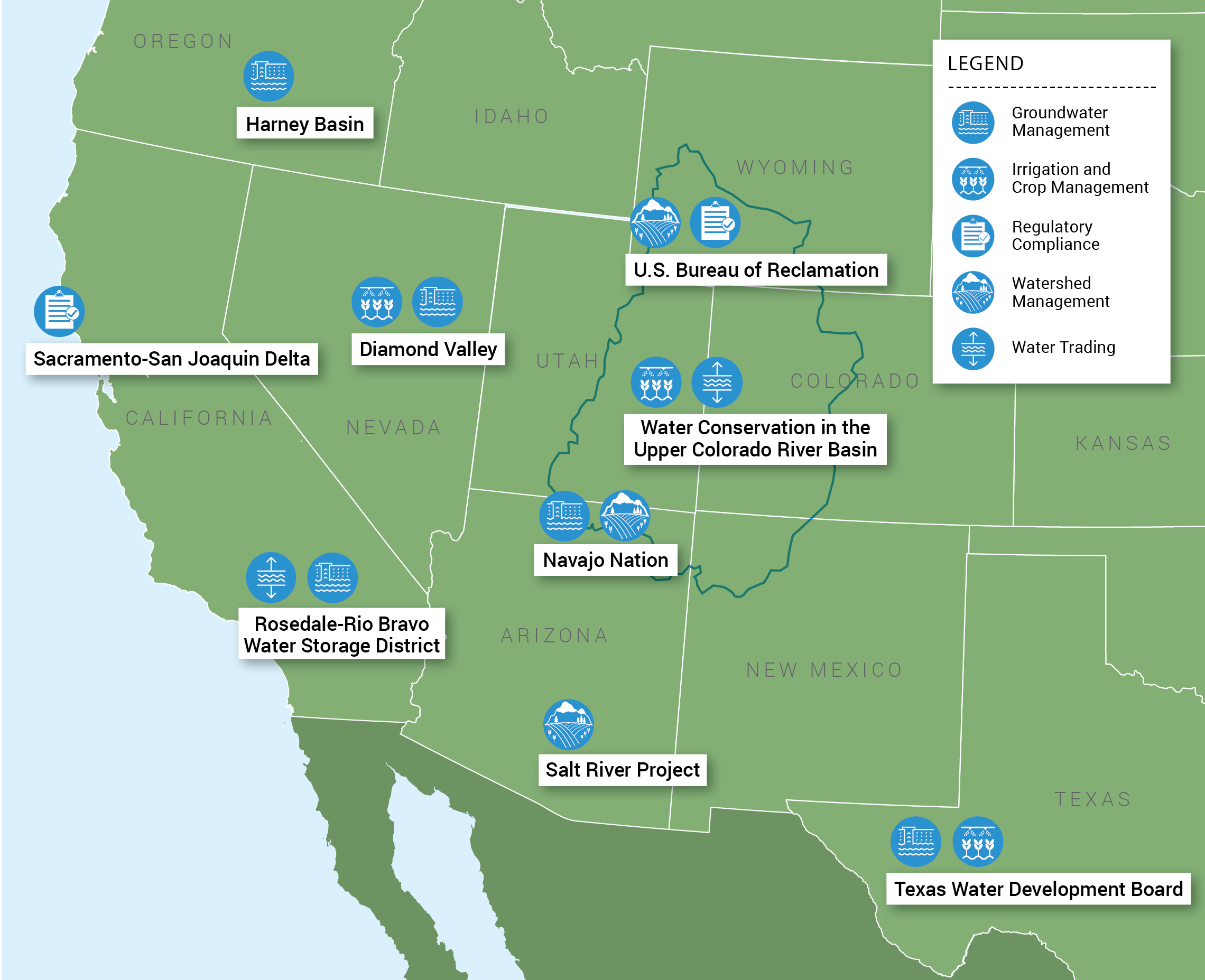
Map of OpenET use cases
This map showcases five different uses of OpenET data across the westernmost United States.

In an example of the need and efficacy of OpenET’s data systems, the new API is already being used as part of the Delta Alternative Compliance Plan. California passed a law at the end of 2021 requiring the monitoring and reporting of specific elements of water usage, affecting nearly every farm in the Delta: an expensive, complex, and time-consuming ask. Farmers worked with the Delta Water Master to propose the use of OpenET, facilitating the automatic integration of data from the data explorer with California’s State Water Resources Control Board report management system. Melton remarked on the significant impact the integration had on the farmers’ workloads:

“The process for reporting water use in the Delta that used to take farmers half a day to a day, they can now complete in about ten minutes. [It also] saves them thousands of dollars per year in cost for deploying and maintaining flow meters.”

The process for reporting water use in the Delta that used to take farmers half a day to a day, they can now complete in about ten minutes. [It also] saves them thousands of dollars per year in cost for deploying and maintaining flow meters.

Forrest melton

Forrest melton

OpenET Program Manager

Water resource management has historically been a controversial subject for California, and Melton said it is gratifying to help create a “win-win” opportunity that is mutually beneficial for both parties;

“They’ve had record levels of reporting this last year. We know it’s saved farmers money [and] time, and given the state more consistent data across the Delta, which is a critical nexus for water management in the state. […] It’s a bit in the weeds, I think, for the general audience. But for folks that work in water and understand how challenging some of these things have been, it’s a huge, huge win.”


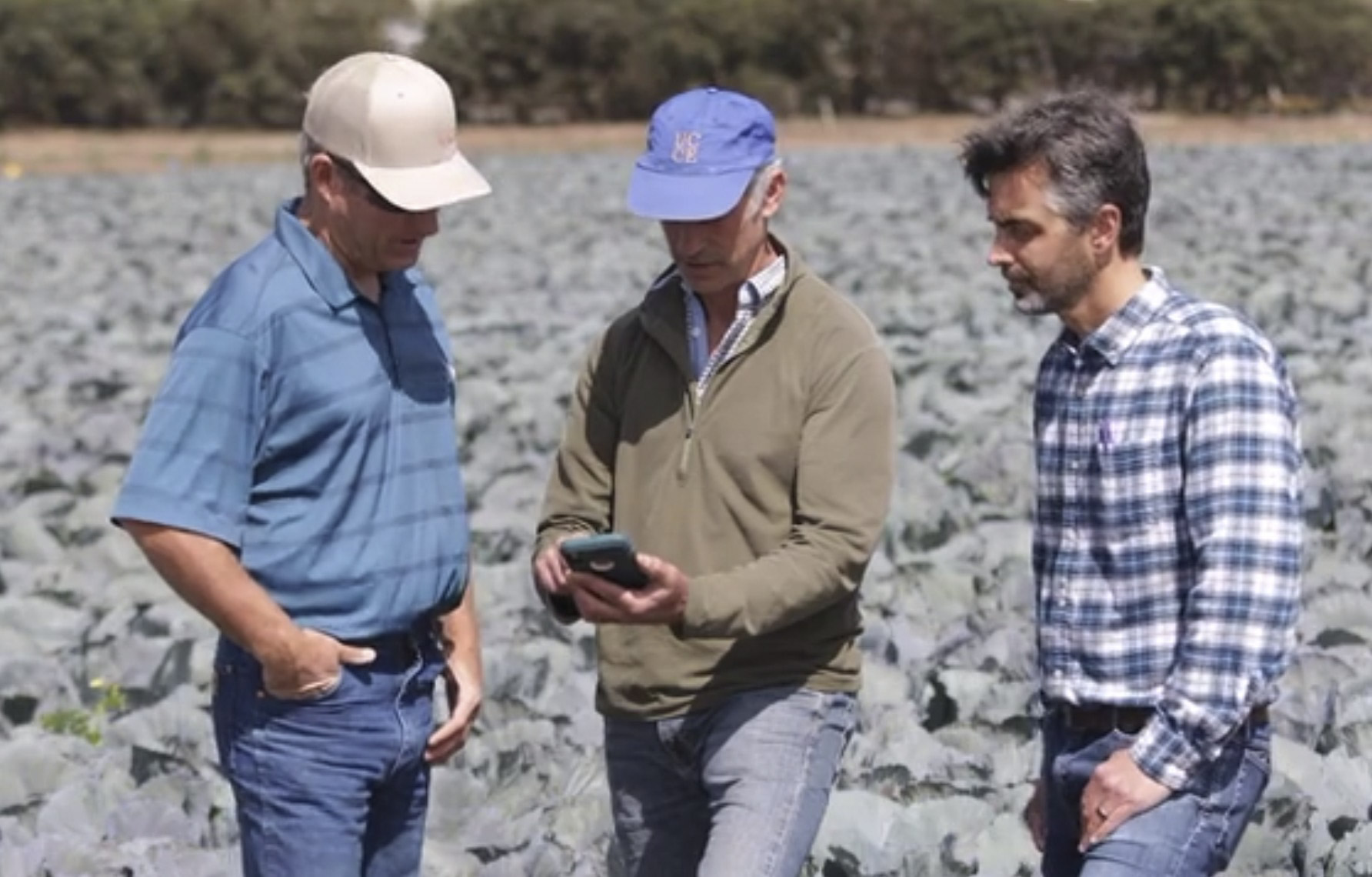
OpenET Program Manager Forrest Melton stands in field with two farmers, checking satellite data on a handheld device.
OpenET Program Manager Forrest Melton stands in field with two California farmers, checking satellite data about water usage.

The OpenET team is also talking to the Western States Water Council about integrating satellite data into Upper Colorado River Basin demand management programs; an initiative the new API will be a critical piece of. Unlike the Delta, operating within this watershed would focus less on water use reporting and more on supporting the development of incentive-based water conservation. In short, such a program would allow farmers, ranchers, and other agricultural water rights holders to apply for funding to conserve water in the Colorado River Basin.

Developing a water conservation incentive program, however, is just one of the intended outcomes of the new API. Other goals stretch across the nation, and include:

  • Implementing the Sustainable Groundwater Management Act in California
  • Provisioning engineering firms and consultants to support multiple groundwater sustainability agencies
  • Supporting the USGS National Water Census and National Hydrologic Model
  • Supporting the Columbia River Basin evapotranspiration mapping tool; a multi-state initiative co- developed by the Oregon Water Resources Department, Idaho Department of Water Resources and Washington Department of Ecology
  • Providing low latency data and forecasted information to support irrigation scheduling, thereby aiding individual farmers and ranchers

Creating the API has taken Melton and his teams years of work, partnering closely with end-user agencies and organizations to test and refine the platform before its official release. This initial launch will go out to roughly 10,000 registered users, with the intent for wider promotion once the initial wave of usage is passed and the platform is performing smoothly.  

Looking at what is next for OpenET, Melton stated that the third stage of the open data architecture will be geared towards individual farmers and ranchers, creating custom reporting tools for farm and ranch management support. This final iteration will focus on providing a user-friendly interface to engage with those that may be interested in the technology but not have the programming background to synthesize the data sets in a way they can use. The graphical user interface, formally titled the OpenET Farm and Ranch Management Support (FARMS) tool, will sit on top of the API and guide users through the basics of setting up queries and running recurring reports. Melton was optimistic that a prototype of FARMS could be ready in early 2024.

About the Author

Milan Loiacono

Milan Loiacono

Science Communication Specialist

Milan Loiacono is a science communication specialist for the Earth Science Division at NASA Ames Research Center.

Share

Details

Last Updated
Oct 03, 2023

Related Terms

Keep Exploring

Discover More Topics From NASA


from NASA https://ift.tt/BPIJ7Cb

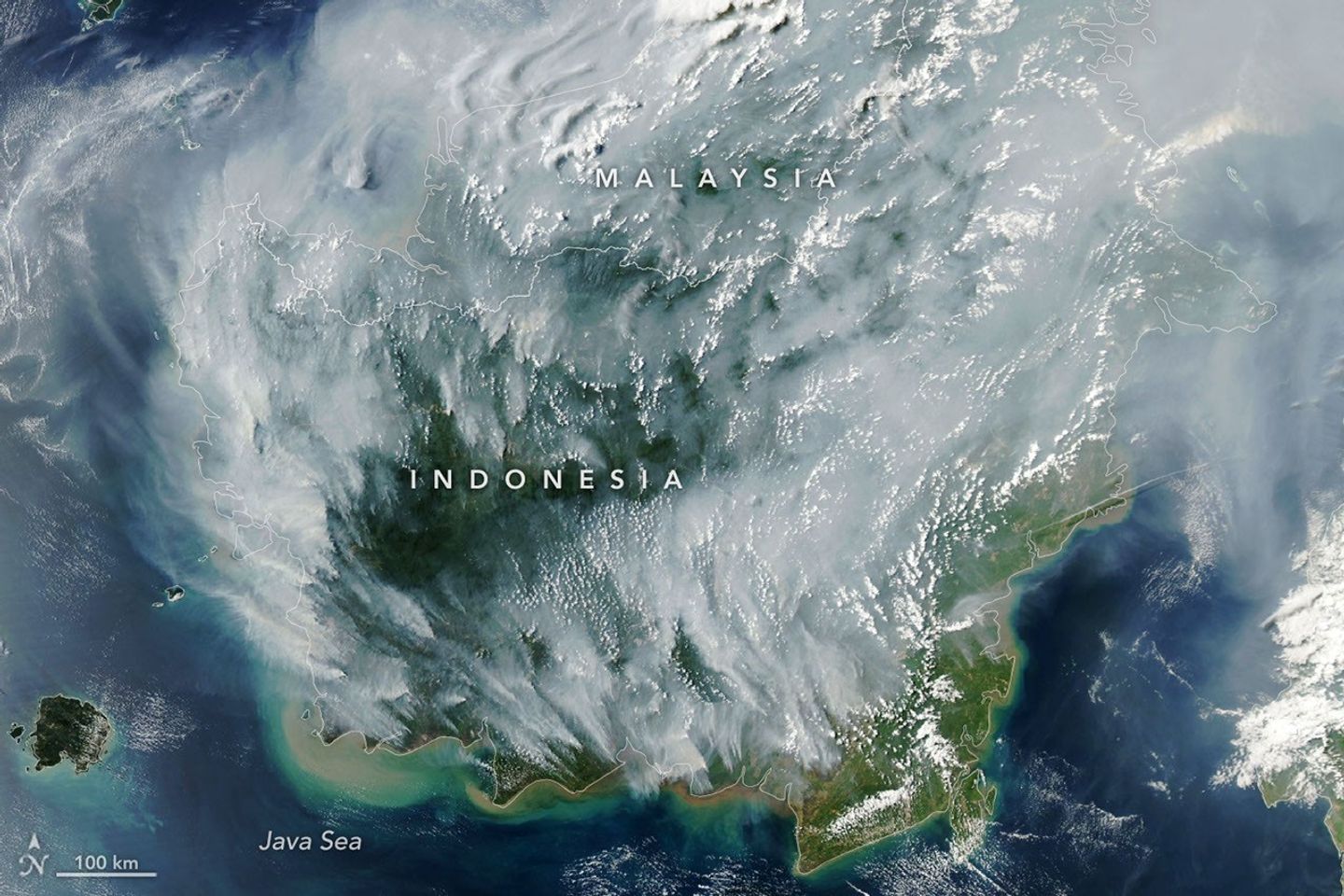
Peatland Fires Darken Skies in Indonesia

Science Aqua Peatland Fires Darken Skies in… Earth Earth Observatory Image of the Day EO Explorer All Topics Atmosphe...