A Russian cargo ship loaded with almost three tons of food, fuel and supplies is set to launch to the International Space Station Monday, July 9. Live coverage of the spacecraft’s launch and docking will air on NASA Television and the agency’s website.
from NASA Breaking News https://ift.tt/2IVkFzP
via IFTTT

Saturday, 7 July 2018

Friday, 6 July 2018
Students from Ohio, Virginia, Maryland, Massachusetts to Call Space Station
Next week astronauts aboard the International Space Station will host several downlinks as part of NASA’s Year of Education on Station.
from NASA Breaking News https://ift.tt/2KV0u6X
via IFTTT
from NASA Breaking News https://ift.tt/2KV0u6X
via IFTTT
NASA Invites Media to Visit with Spacecraft That Will “Touch” Sun
Media are invited to view NASA’s Parker Solar Probe at 1:30 p.m. EDT Friday, July 13, at the Astrotech Space Operations payload processing facility in Titusville, Florida.
from NASA Breaking News https://ift.tt/2u7DvhH
via IFTTT
from NASA Breaking News https://ift.tt/2u7DvhH
via IFTTT
JPL Shares in Cosmology Prize for Planck Mission

The team of scientists behind the European Space Agency's Planck mission has been awarded the prestigious 2018 Gruber Cosmology Prize. NASA's Jet Propulsion Laboratory in Pasadena, California, played a key role in the design and construction of the Planck instrument, and in the scientific analysis of the mission's data.
The Gruber International Prize Program is sponsored by the Gruber Foundation, based at Yale University. The Cosmology Prize "honors a leading cosmologist, astronomer, astrophysicist or scientific philosopher for theoretical, analytical, conceptual or observational discoveries leading to fundamental advances in our understanding of the universe."
Launched in 2009, the Planck satellite spent 4 years making a high-resolution map of the oldest light in the universe, the cosmic microwave background (CMB), emitted 13.8 billion years ago when the universe was only 470,000 years old, giving us a "baby picture" of the cosmos.
This map allows researchers to learn about the entire 13.8-billion-year history of the universe, including its age, rate of expansion, and the distribution of mass and energy throughout. While Planck is not the first mission to map the microwave background, it did so with unprecedented angular resolution, sensitivity, and frequency coverage, producing the most accurate and detailed CMB map ever made.
JPL is managed by Caltech, also in Pasadena. Caltech's science and data center for astronomy, IPAC, hosted the U.S. Data Center for Planck.
"The scientific goals of Planck were highly ambitious and have been realized completely," said Charles Lawrence of JPL, project scientist for the U.S. Planck Project."Well over 100 people from JPL and IPAC worked on Planck over the years and contributed enabling hardware, software and analysis to the mission. We can be proud of this mission's legacy, and the recognition of its importance by the Gruber Cosmology Prize."
Mapping the CMB
Maps of the cosmic microwave background show the sky covered in seemingly random freckles of color. Those colors represent variations in the CMB's temperature, which the Planck satellite could measure down to one millionth of a degree. Those incredibly subtle variations arise from quantum fluctuations in the very early universe, which develop into the large-scale distribution of matter in the universe that we see today. In addition, the light from the CMB that reaches Earth has traveled through the entire visible universe, and very massive objects, like clusters of galaxies, act like obstacles that can also change the patterns that scientists observe in the Planck data.
NASA's Planck Project Office -- which led the US contribution to the mission -- was based at JPL, where scientists and engineers developed the overall thermal design concept for the mission; built the 20-K hydrogen sorption cooler system, which cooled the Low Frequency Instrument (LFI) to its operating temperature and provided precooling for the High Frequency Instrument (HFI); built the detectors for the HFI; and developed the amplifier technology for the LFI.
Engineers and scientists at IPAC are responsible for retrieving mission data from the Planck Data Processing Centers (in Paris, France and Trieste, Italy), staging data for usage by Planck team members, and for archival research by the astronomical community. The U.S. team at IPAC also generated the Early Release Compact Source Catalog (ERCSC), the first public data product from the mission.
The Planck data have provided a wealth of results for the field of cosmology, including: a refined measurement of the age of the universe, its rate of expansion and other cosmological properties; a refined estimate of when the first stars appeared; a catalog of more than 1,500 galaxy clusters (collections of multiple galaxies held together by gravity); unprecedented observations of the microwave and infrared light coming from the Milky Way galaxy; and studies of the galaxy's magnetic fields. The results tested the most widely accepted cosmological model of the universe to high precision, and opened up new areas of study both inside and outside the Milky Way.
Planck also helped researchers take a census of the three components that make up matter and energy in the universe: "regular matter," the kind we are made of, makes up just 4.9 percent; dark matter, detected only by the effects of its gravitational pull, makes up 26.2 percent; and dark energy, the name we give to whatever is causing the universe's accelerated expansion, makes up 68.9 percent.
JPL scientists also played essential roles in turning the Planck measurements into all-sky CMB maps of unprecedented quality, and in the scientific analysis that led to the cosmological results recognized by the Gruber Prize.
"Planck was by far the very best instrument of its kind, like a high-performance race," said Krsysztof Gorski, a senior research scientist at JPL. Gorski joined the Planck mission on the European side in 1996 before transferring to JPL and then joining the U.S. Planck Project in 2003.
"As it was designed to do, Planck provided complete closure on CMB temperature measurements and answered many important questions about the universe," he said. "But it also gave us hints about even bigger questions in cosmology that we can't fully answer yet -- so it left us wondering. All of that is a priceless legacy of the Planck mission."
The $500,000 prize will be divided between Planck's principal investigators, Nazzareno Mandolesi and Jean-Loup Puget, and "the Planck team." Hundreds of scientists have contributed to various aspects of the mission; a smaller group will represent the Planck team and accept the prize money. More than 300 scientists and engineers from the Planck mission, including many from JPL and IPAC, will accept the Gruber Prize at the 30th General Assembly of the International Astronomical Union in Vienna, Austria, this August.
The Gruber Prize wasalso awarded to two previous NASA missions that mapped the CMB: the Cosmic Background Explorer (COBE), launched in 1989, and the Wilkinson Microwave Anisotropy Probe (WMAP), launched in 2001.
News Media Contact
Calla Cofield
Jet Propulsion Laboratory, Pasadena, California
818-393-1821
Calla.e.cofield@jpl.nasa.gov
2018-161
from News and Features https://ift.tt/2Nuvoom
via IFTTT
Wednesday, 4 July 2018
NASA's NuSTAR Mission Proves Superstar Eta Carinae Shoots Cosmic Rays

A new study using data from NASA's NuSTAR space telescope suggests that Eta Carinae, the most luminous and massive stellar system within 10,000 light-years of Earth, is accelerating particles to high energies - some of which may reach our planet as cosmic rays.
"We know the blast waves of exploded stars can accelerate cosmic ray particles to speeds comparable to that of light, an incredible energy boost," said Kenji Hamaguchi, an astrophysicist at NASA's Goddard Space Flight Center in Greenbelt, Maryland, and the lead author of the study. "Similar processes must occur in other extreme environments. Our analysis indicates Eta Carinae is one of them."
A new study using data from NASA's NuSTAR space telescope suggests that the most luminous and massive stellar system within 10,000 light-years, Eta Carinae, is accelerating particles to high energies -- some of which may reach Earth as cosmic rays.
Astronomers know that cosmic rays with energies greater than 1 billion electron volts come to us from beyond our solar system. But because these particles -- electrons, protons and atomic nuclei -- all carry an electrical charge, they veer off course whenever they encounter magnetic fields. This scrambles their paths and masks their origins.
Eta Carinae, located about 7,500 light-years away in the southern constellation of Carina, is famous for a 19th century outburst that briefly made it the second-brightest star in the sky. This event also ejected a massive hourglass-shaped nebula, but the cause of the eruption remains poorly understood.
The system contains a pair of massive stars whose eccentric orbits bring them unusually close every 5.5 years. The stars contain 90 and 30 times the mass of our Sun and pass 140 million miles (225 million kilometers) apart at their closest approach - about the average distance separating Mars and the Sun.
"Both of Eta Carinae's stars drive powerful outflows called stellar winds," said team member Michael Corcoran, also at Goddard. "[The location] where these winds clash changes during the orbital cycle, which produces a periodic signal in low-energy X-rays we've been tracking for more than two decades."
NASA's Fermi Gamma-ray Space Telescope also observes a change in gamma rays -- light packing far more energy than X-rays -- from a source in the direction of Eta Carinae. But Fermi's vision isn't as sharp as that of X-ray telescopes, so astronomers couldn't confirm the connection.
To bridge the gap between low-energy X-ray monitoring and Fermi observations, Hamaguchi and his colleagues turned to NuSTAR. Launched in 2012, NuSTAR can focus X-rays of much greater energy than any previous telescope. Using both newly taken and archival data, the team examined NuSTAR observations acquired between March 2014 and June 2016, along with lower-energy X-ray observations from the European Space Agency's XMM-Newton satellite over the same period.
Eta Carinae's low-energy, or soft, X-rays come from gas at the interface of the colliding stellar winds, where temperatures exceed 70 million degrees Fahrenheit (40 million degrees Celsius). But NuSTAR detects a source emitting X-rays above 30,000 electron volts, some three times higher than can be explained by shock waves in the colliding winds. For comparison, the energy of visible light ranges from about 2 to 3 electron volts.
The team's analysis, presented in a paper published July 2 in Nature Astronomy, shows that these "hard" X-rays vary with the binary orbital period and show a similar pattern of energy output to the gamma rays observed by Fermi.
The researchers say that the best explanation for both the hard X-ray and the gamma-ray emission is electrons accelerated in violent shock waves along the boundary of the colliding stellar winds. The X-rays detected by NuSTAR and the gamma rays detected by Fermi arise from starlight given a huge energy boost by interactions with these electrons.
Some of the superfast electrons, as well as other accelerated particles, must escape the system, and perhaps some eventually wander to Earth, where they may be detected as cosmic rays.
"We've known for some time that the region around Eta Carinae is the source of energetic emission in high-energy X-rays and gamma rays," said Fiona Harrison, the principal investigator of NuSTAR and a professor of astronomy at Caltech in Pasadena, California. "But until NuSTAR was able to pinpoint the radiation, show it comes from the binary and study its properties in detail, the origin was mysterious."
NuSTAR is a Small Explorer mission led by Caltech and managed by JPL for NASA's Science Mission Directorate in Washington. NuSTAR was developed in partnership with the Danish Technical University and the Italian Space Agency (ASI). The spacecraft was built by Orbital Sciences Corp., Dulles, Virginia. NuSTAR's mission operations center is at UC Berkeley, and the official data archive is at NASA's High Energy Astrophysics Science Archive Research Center. ASI provides the mission's ground station and a mirror archive. Caltech manages JPL for NASA.
For more information on NuSTAR, visit:
https://www.nustar.caltech.edu
News Media Contact
Calla Cofield
Jet Propulsion Laboratory, Pasadena, California
818-393-1821
Calla.e.cofield@jpl.nasa.gov
Written by Francis Reddy
NASA's Goddard Space Flight Center, Greenbelt, Md.
2018-160
from News and Features https://ift.tt/2KxTtN5
via IFTTT
Tuesday, 3 July 2018
Tiny Cameras Snap Pictures of Great Lake

These two images of Lake Superior and surrounding area show the first data downlinked from the CubeSat Multispectral Observation System (CUMULOS) cameras. The image on the left, taken by a short-wavelength infrared camera, captures a larger area of the lake and shows strong contrast between land and water features. The narrower field of view image on the right taken by the payload's long-wavelength infrared camera indicates a difference in water temperature between the lake's center and the water in the bays and inlets.
CUMULOS is testing the performance of commercial sensors for weather and environmental monitoring missions. The cameras are designed for point-and-stare imaging and allow nearly simultaneous coverage of Earth regions from an orbital altitude of 280 miles (452 kilometers).
CUMULOS is hosted as a demonstration of an experimental payload on NASA's Integrated Solar Array and Reflectarray Antenna (ISARA), which is managed by NASA's Jet Propulsion Laboratory in Pasadena, California, and operated by The Aerospace Corporation.
News Media Contact
Calla Cofield
Jet Propulsion Laboratory, Pasadena, California
818-393-1821
calla.e.cofield@jpl.nasa.gov
2018-159
from News and Features https://ift.tt/2IPlkTi
via IFTTT
First Laser Light for GRACE Follow-On

The laser ranging interferometer (LRI) instrument has been successfully switched on aboard the recently launched twin U.S./German Gravity Recovery and Climate Experiment Follow-On (GRACE-FO) satellites. The LRI, which is being flown as a technology demonstration, has made its first measurements in parallel with GRACE-FO's main microwave ranging instrument, and initial comparisons of the data from the two types of instruments show that they agree as expected.
"The LRI is a breakthrough for precision distance measurements in space," said LRI Instrument Manager Kirk McKenzie of NASA's Jet Propulsion Laboratory in Pasadena, California, which manages NASA's contribution to the instrument. "It's the first inter-spacecraft laser interferometer and the culmination of about a decade of NASA- and German-funded research and development."
The GRACE-FO mission, launched on May 22, continues the work of the original GRACE mission of monitoring phenomena such as the melting of ice sheets and changes in groundwater levels by tracking the changing pull of gravity on the GRACE-FO satellites. The microwave ranging interferometer records these changes in gravity by measuring how they change the distance between the twin spacecraft. By accurately measuring these minute changes as the two spacecraft orbit the planet, scientists are able to calculate month-to-month variations in Earth's gravity field. The LRI is an enabling technology for future GRACE-FO-like missions with potential to significantly improve the accuracy of those missions. The instrument is jointly managed by JPL and the Max Planck Institute for Gravitational Physics (Albert Einstein Institute) in Hanover, Germany.
Seeing the light
The LRI's "first light" operation took place over two days. On June 13, the two GRACE-FO satellites began sweeping their lasers in spiral patterns in search of each other. Gerhard Heinzel, leader of the space interferometry research group at the Albert Einstein Institute and manager of the German contribution to the LRI, explained the challenge: "There are coin-sized holes on each satellite through which the laser has to be precisely pointed towards the holes in the other satellite over a distance of more than 200 kilometers [137 miles], while both spacecraft race around Earth at 27,000 kilometers an hour [16,000 miles per hour]. It is truly mind-boggling." (Here is a fuller explanation of how the LRI operates.)
In the data that were downlinked the next day, it was clear that each spacecraft had seen several flashes of light during the spiral scans, indicating both LRI instruments received light from the opposite spacecraft and were working as expected. The settings needed to establish a continuous laser link were calculated and uploaded to the satellites, and the LRI delivered its first intersatellite range data at a later downlink that day.
"The plan for establishing the laser link worked exactly as designed. In fact, the laser link locked in on the first attempt," said Christopher Woodruff, the LRI mission operations lead at JPL.
In the coming weeks and months, the GRACE-FO research team will work on fine-tuning the operation of this novel instrument and completing their understanding of the data it delivers.
The fine print
GRACE-FO is a partnership between NASA and German Research Centre for Geosciences in Potsdam, Germany. JPL manages the mission for NASA's Science Mission Directorate. Additional contributors to the laser ranging interferometer include SpaceTech in Immenstaad, Germany; Tesat-Spacecom in Backnang, Germany; Ball Aerospace in Boulder, Colorado; iXblue in Saint-Germain-en-Laye, France; the German Aerospace Center (DLR) Institute of Robotics and Mechatronics in Adlershof and Institute of Space Systems in Bremen; Hensoldt Optronics in Oberkochen; Apcon AeroSpace and Defence in Neubiberg/Munich; Diamond USA, Inc., and Diamond SA in Losone, Switzerland; and Airbus Defence and Space in Friedrichshafen.
For more information on the LRI, see:
http://www.aei.mpg.de/2277280/first-light-for-grace-follow-on-laser-interferometer
For more information about GRACE-FO, see:
News Media Contact
Alan Buis / Esprit Smith
Jet Propulsion Laboratory, Pasadena, California
818-354-0474 / 818-354-4269
Alan.Buis@jpl.nasa.gov / Esprit.Smith@jpl.nasa.gov
2018-158
from News and Features https://ift.tt/2lLJRQ2
via IFTTT
NASA Invites Media to View Launch of Mission to “Touch” Sun
Media accreditation is open for the launch of NASA’s Parker Solar Probe, a historic mission that will revolutionize our understanding of the Sun.
from NASA Breaking News https://ift.tt/2tZXIG7
via IFTTT
from NASA Breaking News https://ift.tt/2tZXIG7
via IFTTT
Monday, 2 July 2018
Dawn's Latest Orbit Reveals Dramatic New Views of Occator Crater

NASA's Dawn spacecraft reached its lowest-ever and final orbit around dwarf planet Ceres on June 6 and has been returning thousands of stunning images and other data.
The flight team maneuvered the spacecraft into an orbit that dives 22 miles (35 kilometers) above the surface of Ceres and viewed Occator Crater, site of the famous bright deposits, and other intriguing regions. In more than three years of orbiting Ceres, Dawn's lowest altitude before this month was 240 miles (385 kilometers), so the data from this current orbit bring the dwarf planet into much sharper focus.
These low orbits have revealed unprecedented details of the relationships between bright and dark materials in the region of Vinalia Faculae. Dawn's visible and infrared mapping spectrometer had previously found the bright deposits to be made of sodium carbonate, a material commonly found in evaporite deposits on Earth. Last week Dawn fired its ion engine, possibly for the final time, to fly nearer Cerealia Facula, the large deposit of sodium carbonate in the center of Occator Crater.
"Acquiring these spectacular pictures has been one of the greatest challenges in Dawn's extraordinary extraterrestrial expedition, and the results are better than we had ever hoped," said Dawn's chief engineer and project manager, Marc Rayman, of NASA's Jet Propulsion Laboratory, Pasadena, California. "Dawn is like a master artist, adding rich details to the otherworldly beauty in its intimate portrait of Ceres."
The wealth of information contained in these images, and more that are planned in the coming weeks, will help address key, open questions about the origin of the faculae, the largest deposits of carbonates observed thus far outside Earth, and possibly Mars. In particular, scientists have been wondering how that material was exposed, either from a shallow, sub-surface reservoir of mineral-laden water, or from a deeper source of brines (liquid water enriched in salts) percolating upward through fractures.
And the low-altitude observations obtained with Dawn's other instruments, a gamma ray and neutron detector and a visible and infrared mapping spectrometer, will reveal the composition of Ceres at finer scale, shedding new light on the origin of the materials found across Ceres' surface. New gravity measurements also may reveal details of the subsurface.
"The first views of Ceres obtained by Dawn beckoned us with a single, blinding bright spot," said Carol Raymond of JPL, Dawn's principal investigator. "Unraveling the nature and history of this fascinating dwarf planet during the course of Dawn's extended stay at Ceres has been thrilling, and it is especially fitting that Dawn's last act will provide rich new data sets to test those theories."
See more images from Dawn's low orbits here.
Read more details about Dawn's recent orbits in Rayman's Dawn Journal.
The Dawn mission is managed by JPL for NASA's Science Mission Directorate in Washington. Dawn is a project of the directorate's Discovery Program, managed by NASA's Marshall Space Flight Center in Huntsville, Alabama. JPL is responsible for overall Dawn mission science. Orbital ATK Inc., in Dulles, Virginia, designed and built the spacecraft. The German Aerospace Center, Max Planck Institute for Solar System Research, Italian Space Agency and Italian National Astrophysical Institute are international partners on the mission team.
For a complete list of mission participants, visit:
https://dawn.jpl.nasa.gov/mission
More information about Dawn is available at the following sites:
News Media Contact
Gretchen McCartney
Jet Propulsion Laboratory, Pasadena, Calif.
818-393-6215
gretchen.p.mccartney@jpl.nasa.gov
Dwayne Brown / JoAnna Wendel
NASA Headquarters, Washington
202-358-1726 / 202-358-1003
dwayne.c.brown@nasa.gov / joanna.r.wendel@nasa.gov
2018-157
from News and Features https://ift.tt/2ILlqLC
via IFTTT
NASA Awards Contract to Continue Operations of JPL

NASA has awarded a contract to Caltech in Pasadena, California, to extend operations of the agency's Jet Propulsion Laboratory, also in Pasadena, for five years, with options for five one-year extensions.
The contract extends the agreement between Caltech and NASA for management of JPL beyond its current expiration date of Sept. 30, 2018, and has a value of $15 billion for five years. The contract begins Oct. 1, 2018, and runs through September 30, 2023, with a potential extension through Sept. 30, 2028, for a total value of $30 billion.
The purpose of this contract is to develop and sustain core competencies in support of NASA-sponsored work in the areas of Earth and planetary sciences, heliophysics, astrophysics, and aeronautics and space activities, to include the development of spacecraft and instruments.
Caltech also will manage NASA-sponsored programs that carry out competed and peer-reviewed research, NASA partnerships with other government agencies, academia and the private sector, and the operation, research, and management of NASA's Deep Space Network.
For information about NASA and agency programs, visit:
For information about JPL and its history supporting NASA, visit:
https://ift.tt/2uN9zWk
News Media Contact
Veronica McGregor
Jet Propulsion Laboratory, Pasadena, Calif.
818-354-9452
Veronica.C.Mcgregor@jpl.nasa.gov
Dwayne Brown
NASA Headquarters, Washington
202-358-1726
Dwayne.c.brown@nasa.gov
2018-156
from News and Features https://ift.tt/2KCJPrD
via IFTTT
ECOSTRESS Launches to Space Station on SpaceX Mission

An Earth science instrument built by NASA's Jet Propulsion Laboratory in Pasadena, California, and experiments investigating cellular biology and artificial intelligence, are among the research heading to the International Space Station following Friday's launch of a NASA-contracted SpaceX Dragon spacecraft at 5:42 a.m. EDT.
Dragon lifted off on a Falcon 9 rocket from Space Launch Complex 40 at Cape Canaveral Air Force Station in Florida with more than 5,900 pounds of research, equipment, cargo and supplies that will support dozens of investigations aboard the space station.
NASA astronauts Ricky Arnold and Drew Feustel will use the space station's Canadarm2 robotic arm to capture Dragon when it arrives at the station. Live coverage of the rendezvous and capture will air on NASA Television and the agency's website beginning at 2:30 a.m. PDT (5:30 a.m. EDT) Monday, July 2. Installation coverage is set to begin at 6 a.m. PDT (9 a.m. EDT).
JPL's ECOsystem Spaceborne Thermal Radiometer Experiment on Space Station (ECOSTRESS) will provide a new space-based measurement of how plants respond to changes in water availability. This data can help society better manage agricultural water use.
"ECOSTRESS' unique orbital perch aboard the space station will allow it to observe the same spot on Earth every few days at different times of day for at least a year, giving scientists the ability to track changes in plant water use over the course of a typical day," said ECOSTRESS Principal Investigator Simon Hook of JPL. "Current polar-orbiting satellites can only provide a single snapshot of evapotranspiration each day, at the same time of day. The team is ready to receive our first science data, expected in early July."
Research materials flying inside Dragon's pressurized cargo area include a cellular biology investigation (Micro-12) to understand how microgravity affects the growth, gene expression and ability of a model bacterium to transfer electrons through its cell membrane along the bacterial nanowires it produces. Such bacteria could be used in microbial fuel cells to make electricity from waste organic material.
An observational pilot study with the Crew Interactive MObile companioN (CIMON), aims to get first insights into the effects of crew support by an artificial intelligence (AI) in terms of efficiency and acceptance during long-term missions in space.
Among the hundreds of pounds of hardware flying to the space station is a spare Canadian-built Latching End Effector (LEE). Each end of the Canadarm2 robotic arm has an identical LEE, and they are used as the "hands" that grapple payloads and visiting cargo spaceships. They also enable Canadarm2 to "walk" to different locations on the orbiting outpost.
This is SpaceX's 15th cargo flight to the space station under NASA's Commercial Resupply Services contract. Dragon is scheduled to depart the station in August and return to Earth with more than 3,800 pounds of research, hardware and crew supplies.
For more than 17 years, humans have lived and worked continuously aboard the International Space Station, advancing scientific knowledge and demonstrating new technologies, making research breakthroughs not possible on Earth that will enable long-duration human and robotic exploration into deep space. A global endeavor, 230 people from 18 countries have visited the unique microgravity laboratory that has hosted more than 2,400 research investigations from researchers in 103 countries.
JPL built and manages the ECOSTRESS mission for NASA's Earth Science Division in the Science Mission Directorate in Washington. ECOSTRESS is one of NASA's Earth Venture-Instrument series of missions - small, targeted science investigations that complement NASA's larger missions. It is sponsored by NASA's Earth System Science Pathfinder program, managed by NASA's Langley Research Center in Hampton, Virginia.
For more information about ECOSTRESS, visit:
https://www.nasa.gov/ecostress
and
https://ecostress.jpl.nasa.gov
Get breaking news, images and features from the space station on social media at:
https://www.twitter.com/Space_Station
and
http://www.twitter.com/ISS_Research
News Media Contact
Alan Buis
Jet Propulsion Laboratory, Pasadena, Calif.
818-354-0474
alan.buis@jpl.nasa.gov
Stephanie Schierholz
NASA Headquarters, Washington
202-358-1100
stephanie.schierholz@nasa.gov
Gary Jordan
NASA Johnson Space Center, Houston
281-483-5111
gary.j.jordan@nasa.gov
2018-155
from News and Features https://ift.tt/2KDeVwk
via IFTTT
Subscribe to:
Posts (Atom)
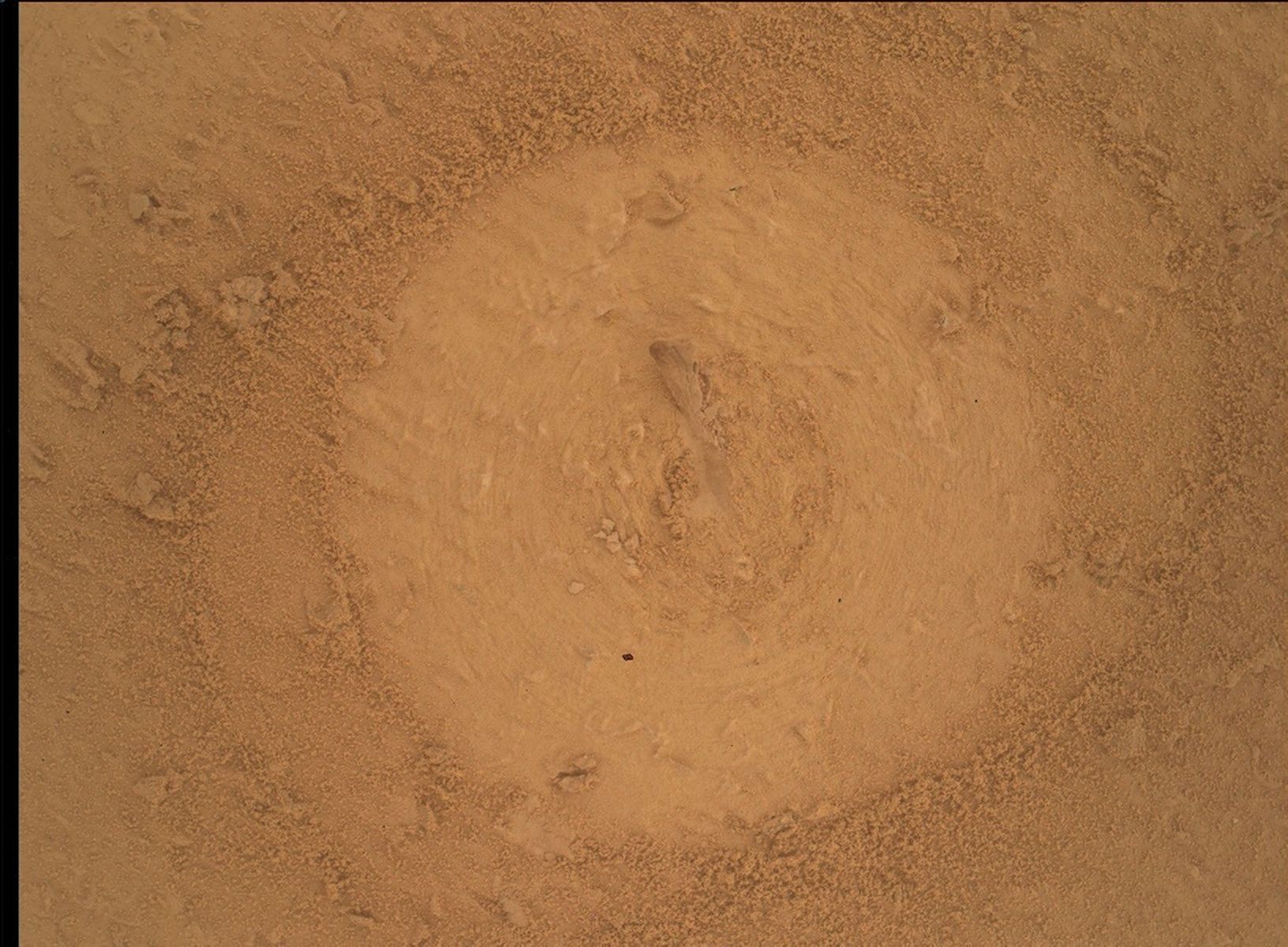
Curiosity Blog, Sols 5022-5028: Cashing in at Cache Creek
Mission Overview Where is Curiosity? Mission Updates Overview Instruments Highlights Exploration Goals News and Featu...
-
NASA has exercised the second option of its Information Technology and Multimedia Services (ITAMS) contract with DB Consulting Group, Inc., ...
-
Science Earth Observatory A Subtle Return of La Niña Earth Earth Observatory Image of the Day EO Explorer All Topics ...
