NASA has established a new advisory group on behalf of the National Space Council that will represent the expertise, interests and perspectives of non-federal aerospace organizations to the National Space Council.
from NASA Breaking News http://ift.tt/2BX2tCN
via IFTTT

Tuesday, 12 December 2017

Washington Students to Speak with NASA Astronaut on Space Station Today
Students from nine school districts in Port Orchard, Washington, will speak with a NASA astronaut living, working and doing research aboard the International Space Station at 1:10 p.m. EST today.
from NASA Breaking News http://ift.tt/2z3KnAj
via IFTTT
from NASA Breaking News http://ift.tt/2z3KnAj
via IFTTT
New Space Policy Directive Calls for Human Expansion Across Solar System
President Donald Trump is sending astronauts back to the Moon.
from NASA Breaking News http://ift.tt/2yg7tjE
via IFTTT
from NASA Breaking News http://ift.tt/2yg7tjE
via IFTTT
NASA's Juno Probes the Depths of Jupiter's Great Red Spot

Data collected by NASA's Juno spacecraft during its first pass over Jupiter's Great Red Spot in July 2017 indicate that this iconic feature penetrates well below the clouds. Other revelations from the mission include that Jupiter has two previously uncharted radiation zones. The findings were announced Monday at the annual American Geophysical Union meeting in New Orleans.
"One of the most basic questions about Jupiter's Great Red Spot is: how deep are the roots?" said Scott Bolton, Juno's principal investigator from the Southwest Research Institute in San Antonio. "Juno data indicate that the solar system's most famous storm is almost one-and-a-half Earths wide, and has roots that penetrate about 200 miles (300 kilometers) into the planet's atmosphere."
This animation takes the viewer on a simulated flight into, and then out of, Jupiter's upper atmosphere at the location of the Great Red Spot. It was created by combining an image from the JunoCam imager on NASA's Juno spacecraft with a computer-generated animation.
The science instrument responsible for this in-depth revelation was Juno's Microwave Radiometer (MWR). "Juno's Microwave Radiometer has the unique capability to peer deep below Jupiter's clouds," said Michael Janssen, Juno co-investigator from NASA's Jet Propulsion Laboratory in Pasadena, California. "It is proving to be an excellent instrument to help us get to the bottom of what makes the Great Red Spot so great."
Jupiter's Great Red Spot is a giant oval of crimson-colored clouds in Jupiter's southern hemisphere that race counterclockwise around the oval's perimeter with wind speeds greater than any storm on Earth. Measuring 10,000 miles (16,000 kilometers) in width as of April 3, 2017, the Great Red Spot is 1.3 times as wide as Earth.
"Juno found that the Great Red Spot's roots go 50 to 100 times deeper than Earth's oceans and are warmer at the base than they are at the top," said Andy Ingersoll, professor of planetary science at Caltech and a Juno co-investigator. "Winds are associated with differences in temperature, and the warmth of the spot's base explains the ferocious winds we see at the top of the atmosphere."
The future of the Great Red Spot is still very much up for debate. While the storm has been monitored since 1830, it has possibly existed for more than 350 years. In the 19th century, the Great Red Spot was well over two Earths wide. But in modern times, the Great Red Spot appears to be diminishing in size, as measured by Earth-based telescopes and spacecraft. At the time NASA's Voyagers 1 and 2 sped by Jupiter on their way to Saturn and beyond, in 1979, the Great Red Spot was twice Earth's diameter. Today, measurements by Earth-based telescopes indicate the oval that Juno flew over has diminished in width by one-third and height by one-eighth since Voyager times.
Juno also has detected a new radiation zone, just above the gas giant's atmosphere, near the equator. The zone includes energetic hydrogen, oxygen and sulfur ions moving at almost light speed.
"The closer you get to Jupiter, the weirder it gets," said Heidi Becker, Juno's radiation monitoring investigation lead at JPL. "We knew the radiation would probably surprise us, but we didn't think we'd find a new radiation zone that close to the planet. We only found it because Juno's unique orbit around Jupiter allows it to get really close to the cloud tops during science collection flybys, and we literally flew through it."
The new zone was identified by the Jupiter Energetic Particle Detector Instrument (JEDI) investigation. The particles are believed to be derived from energetic neutral atoms (fast-moving ions with no electric charge) created in the gas around the Jupiter moons Io and Europa. The neutral atoms then become ions as their electrons are stripped away by interaction with the upper atmosphere of Jupiter.
Juno also found signatures of a high-energy heavy ion population within the inner edges of Jupiter's relativistic electron radiation belt -- a region dominated by electrons moving close to the speed of light. The signatures are observed during Juno's high-latitude encounters with the electron belt, in regions never explored by prior spacecraft. The origin and exact species of these particles is not yet understood. Juno's Stellar Reference Unit (SRU-1) star camera detects the signatures of this population as extremely high noise signatures in images collected by the mission's radiation monitoring investigation.
To date, Juno has completed eight science passes over Jupiter. Juno's ninth science pass will be on Dec. 16.
Juno launched on Aug. 5, 2011, from Cape Canaveral, Florida, and arrived in orbit around Jupiter on July 4, 2016. During its mission of exploration, Juno soars low over the planet's cloud tops -- as close as about 2,100 miles (3,400 kilometers). During these flybys, Juno is probing beneath the obscuring cloud cover of Jupiter and studying its auroras to learn more about the planet's origins, structure, atmosphere and magnetosphere.
JPL manages the Juno mission for the principal investigator, Scott Bolton, of Southwest Research Institute in San Antonio. The Juno mission is part of the New Frontiers Program managed by NASA's Marshall Space Flight Center in Huntsville, Alabama, for the Science Mission Directorate. Lockheed Martin Space Systems, Denver, built the spacecraft. JPL is a division of Caltech in Pasadena, California.
More information on the Juno mission is available at:
The public can follow the mission on Facebook and Twitter at:
http://www.twitter.com/NASAJuno
News Media Contact
DC Agle
Jet Propulsion Laboratory, Pasadena, Calif.
818-393-9011
agle@jpl.nasa.gov
Dwayne Brown / Laurie Cantillo
NASA Headquarters, Washington
202-358-1726 / 202-358-1077
dwayne.c.brown@nasa.gov / laura.l.cantillo@nasa.gov
2017-316
from News and Features http://ift.tt/2jNgVGY
via IFTTT
NASA Provides Coverage of Today’s Space Policy Directive Signing
NASA Television and the agency’s website will provide live coverage of the Space Policy Directive – 1 signing ceremony at the White House at 3 p.m. EST today.
from NASA Breaking News http://ift.tt/2B4n8Yh
via IFTTT
from NASA Breaking News http://ift.tt/2B4n8Yh
via IFTTT
Saturday, 9 December 2017
The Moon Shines Brightly Among NASA’s 2017 Highlights
The Moon became a key focus point for NASA in 2017, whether it was blocking out the Sun during one of the most-viewed events in U.S. history, or reinvigorating the agency’s human space exploration plans.
from NASA Breaking News http://ift.tt/2nETuUq
via IFTTT
from NASA Breaking News http://ift.tt/2nETuUq
via IFTTT
NASA Airborne Science Team Surveys California Fires

A team of NASA scientists is using a high-altitude aircraft and a sophisticated imaging spectrometer built by NASA's Jet Propulsion Laboratory in Pasadena, California, to study environmental impacts caused by the devastating Southern California wildfires. NASA's ER-2, based at Armstrong Flight Research Center in Palmdale, California, flies as high as 70,000 feet (21,300 meters), almost twice as high as a commercial airliner.
NASA uses the unique perspective of the ER-2 for science research missions over much of the world. This month, the aircraft has been flying locally over California, testing early versions of science instruments that may one day be launched into space aboard a satellite to observe our home planet Earth.
During these engineering test flights, the aircraft carried several science instruments aboard. One of them - a JPL spectrometer called AVIRIS - was in the right place at the right time when fires broke out in Los Angeles and Ventura Counties on Tuesday, December 4.
AVIRIS (Airborne Visible/Infrared Imaging Spectrometer), is a modern instrument with an extensive heritage that can peer through smoke and dust to see information about the ground surface below. This includes observations of trees and other foliage that end up being fuel for wildfires.
During a fire, the instrument can see aerosols, or particle matter, produced from the smoke, as well as the combustion process as fuel burns, and can accurately measure fire temperatures.
AVIRIS can also observe fine details of vegetation, such as the water content in leaves and what types of species of plants are growing prior to a fire burning in a region. Scientists can use the instrument to fly over regions before a fire to get a base measurement of a certain area, fly over the same area again after a fire, and then compare the before-and-after images to determine the fire's severity.
"The vision is that these types of measurements could be available from space in the next decade. The resulting information would then be used to develop fuel maps in advance that could be used to make better predictions about where you could mitigate risk by clearing brush and trees," said JPL's Rob Green, principal investigator of the AVIRIS instrument.
Green continued, "Additionally, if a fire starts and authorities know exactly how much fuel is present in a region, the data will enable authorities to react quicker and provide a better assessment of how to approach extinguishing the fire and protect surrounding areas."
NASA has funded this effort as part of its ongoing research, but is sharing the data with universities and government agencies like the U.S. Geological Survey, the University of California, and the University of Utah. Scientists at these organizations are working together to achieve a better understanding of response to fires, fire behavior, impacts to forest carbon dynamics, total area burned and smoke aerosols -- all of which have impacts to disaster preparedness, prevention, human health and safety.
AVIRIS flew over the regions affected by the current fires during summer 2017 and will compare those observations with current measurements of fire temperatures and burn area to explore the relationship between fuel sources and the areas now burning. Flying these areas again in the coming months could help determine how severely the wildfires impacted the region and help quantify how plant life rejuvenates and repopulates in these areas.
For more information on AVIRIS, visit:
http://ift.tt/2A9lsJCNews Media Contact
Alan Buis
Jet Propulsion Laboratory, Pasadena, Calif.
818-354-0474
Alan.buis@jpl.nasa.gov
Kate Squires
NASA Armstrong Flight Research Center, Edwards, Calif.
661-276-2020
kate.k.squires@nasa.gov
2017-315
from News and Features http://ift.tt/2AIND5y
via IFTTT
NASA Hosts Media Teleconference to Announce Latest Kepler Discovery
NASA will host a media teleconference at 1 p.m. EST Thursday, Dec. 14, to announce the latest discovery made by its planet-hunting Kepler space telescope.
from NASA Breaking News http://ift.tt/2AZcIK7
via IFTTT
from NASA Breaking News http://ift.tt/2AZcIK7
via IFTTT
Friday, 8 December 2017
NASA Selects Three Companies to Develop 'FabLab' Prototypes
NASA is taking the next step in the development of a space-based, on-demand fabrication capability by partnering with three U.S. companies, under NASA’s Next Space Technologies for Exploration Partnerships (NextSTEP) program, to create prototypes.
from NASA Breaking News http://ift.tt/2j3G7eU
via IFTTT
from NASA Breaking News http://ift.tt/2j3G7eU
via IFTTT
NASA Highlights Jupiter, Search for Life at American Geophysical Union
NASA researchers will present new findings on a wide range of Earth and space science topics at the annual meeting of the American Geophysical Union, Dec. 11-15 in New Orleans. NASA-related briefings will stream live on the agency’s website.
from NASA Breaking News http://ift.tt/2BTLh1A
via IFTTT
from NASA Breaking News http://ift.tt/2BTLh1A
via IFTTT
JPL Deploys a CubeSat for Astronomy

Tiny satellites called CubeSats have attracted a lot of attention in recent years. Besides allowing researchers to test new technologies, their relative simplicity also offers hands-on training to early-career engineers.
A CubeSat recently deployed from the International Space Station is a key example of their potential, experimenting with CubeSats applied to astronomy.
For the next few months, a technology demonstration called ASTERIA (Arcsecond Space Telescope Enabling Research in Astrophysics) will test whether a CubeSat can perform precise measurements of change in a star's light. This fluctuation is useful for a number of commercial and astrophysics applications, including the discovery and study of planets outside of our solar system, known as exoplanets.
ASTERIA was developed under the Phaeton Program at NASA's Jet Propulsion Laboratory in Pasadena, California. Phaeton was developed to provide early-career hires, under the guidance of experienced mentors, with the challenges of a flight project. ASTERIA is a collaboration with the Massachusetts Institute of Technology in Cambridge; MIT's Sara Seager is principal investigator on the project.
A New Space Telescope Model
ASTERIA relies on precision photometry, a field that measures the flux, or intensity, of an object's light. To be useful to any scientist, a space telescope has to correct for internal sources of error while making these measurements.
Engineers have learned to correct for "noise" in much larger space telescopes. If they were able to do the same for CubeSats, it could open an entirely new class of astronomy tools.
"CubeSats offer a relatively inexpensive means to test new technologies," said Amanda Donner of JPL, mission assurance manager for ASTERIA. "The modular design of CubeSats also makes them customizable, giving even a small group of researchers and students access to space."
She said it's even possible for constellations of these CubeSats to work in concert, covering more of the cosmos at one time.
A Steady Astronomy Camera
Its small size requires ASTERIA to have unique engineering characteristics.
- A steady astronomy camera will keep the telescope locked on a specific star for up to 20 minutes continuously as the spacecraft orbits Earth.
- An active thermal control system will stabilize temperatures within the tiny telescope while in Earth's shadow. This helps to minimize "noise" caused by shifting temperatures - essential when the measurement is trying to detect slight variations in the target star's light.
Both technologies proved challenging to miniaturize.
"One of the biggest engineering challenges has been fitting the pointing and thermal control electronics into such a small package," said JPL's Matthew Smith, ASTERIA's lead systems engineer and mission manager. "Typically, those components alone are larger than our entire spacecraft. Now that we've miniaturized the technology for ASTERIA, it can be applied to other CubeSats or small instruments."
Though it's only a technology demonstration, ASTERIA might point the way to future CubeSats useful to astronomy.
That's impressive, especially considering it was effectively a training project: many team members only graduated from college within the last five years, Donner said.
"We designed, built, tested and delivered ASTERIA, and now we're flying it," she said. "JPL takes the training approach of learning-by-doing seriously."
Caltech in Pasadena, California, manages JPL for NASA.
For more information about ASTERIA, visit:
News Media Contact
Andrew Good
Jet Propulsion Laboratory, Pasadena, Calif.
818-393-2433
andrew.c.good@jpl.nasa.gov
2017-314
from News and Features http://ift.tt/2k82exf
via IFTTT
Subscribe to:
Posts (Atom)
NASA Announces $1 Million to Students for Moon Base Challenge
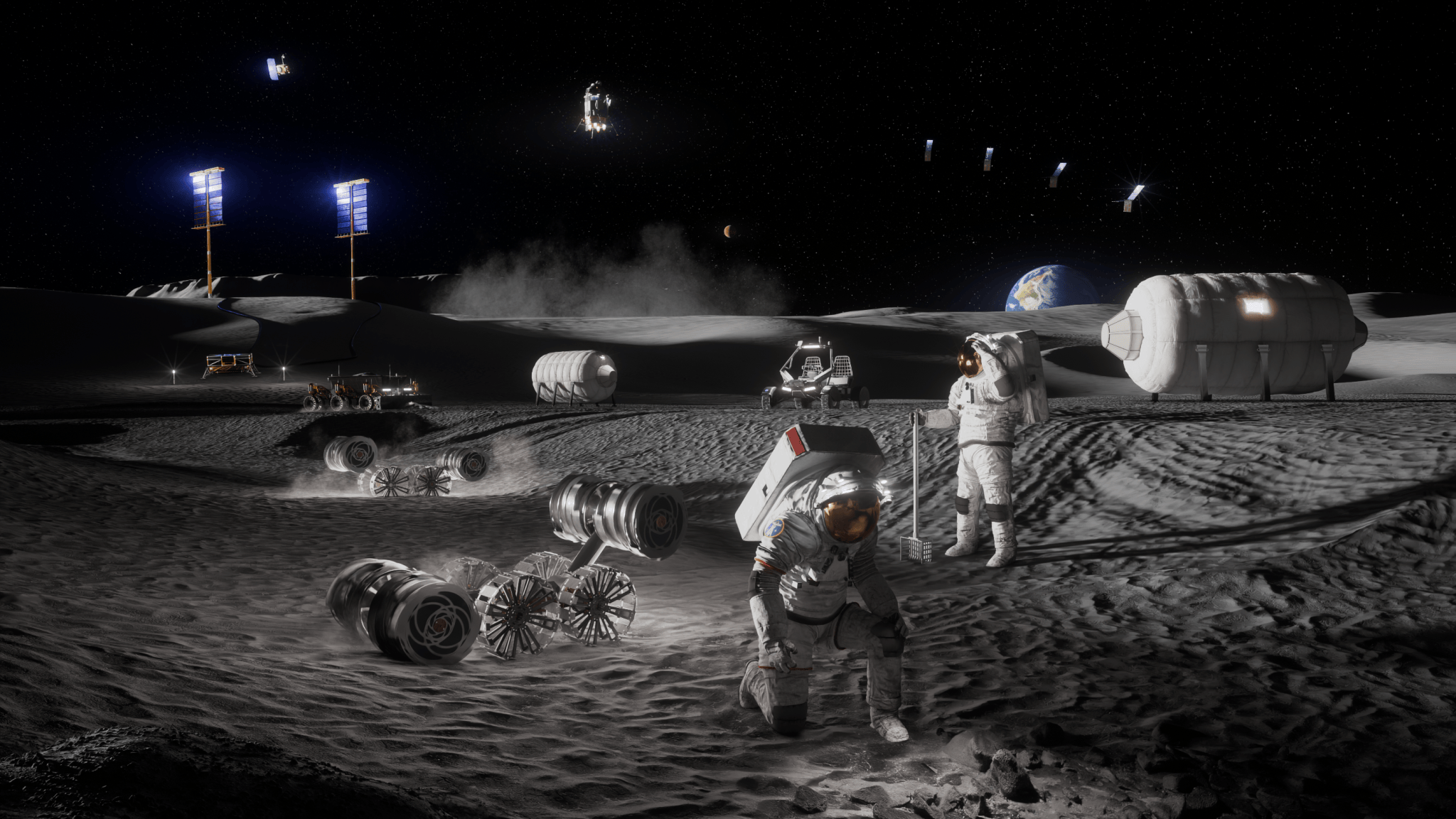
Artist’s concept depicting astronauts, habitats, rovers, power systems, and cargo operations supporting sustained human activities at the Mo...
-
NASA has exercised the second option of its Information Technology and Multimedia Services (ITAMS) contract with DB Consulting Group, Inc., ...
-
Science Earth Observatory A Subtle Return of La Niña Earth Earth Observatory Image of the Day EO Explorer All Topics ...
