


January 19
January 20
‘Tis the season for long and ruler-straight cracks in McMurdo Sound’s sea ice. Though natural breaks in sea ice are called leads, the better term for the human-made fracture seen in these satellite images is a ship channel.
In the austral summer, usually in January, an icebreaker rams a path through the fast ice—a type of sea ice that is anchored to the shore—that often covers McMurdo Sound. This annual effort allows cargo ships to reach McMurdo Station, a research base operated by the United States Antarctic Program. The U.S. Coast Guard Cutter Polar Star completed the task in January 2026, arriving after breaking a path through several miles of ice between the Ross Sea and an ice pier at McMurdo. Most of the channel was cut between January 19 and 20.
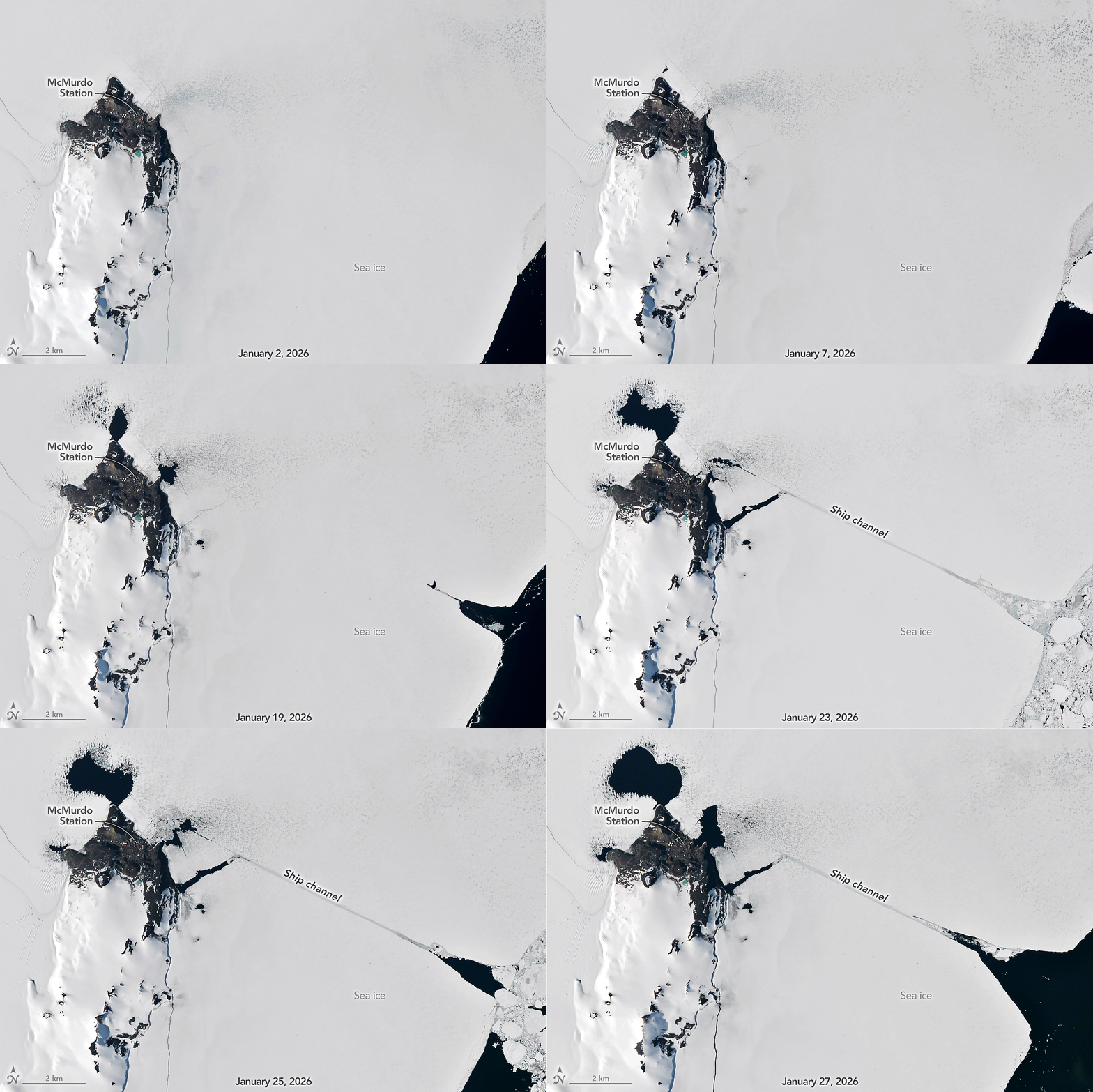
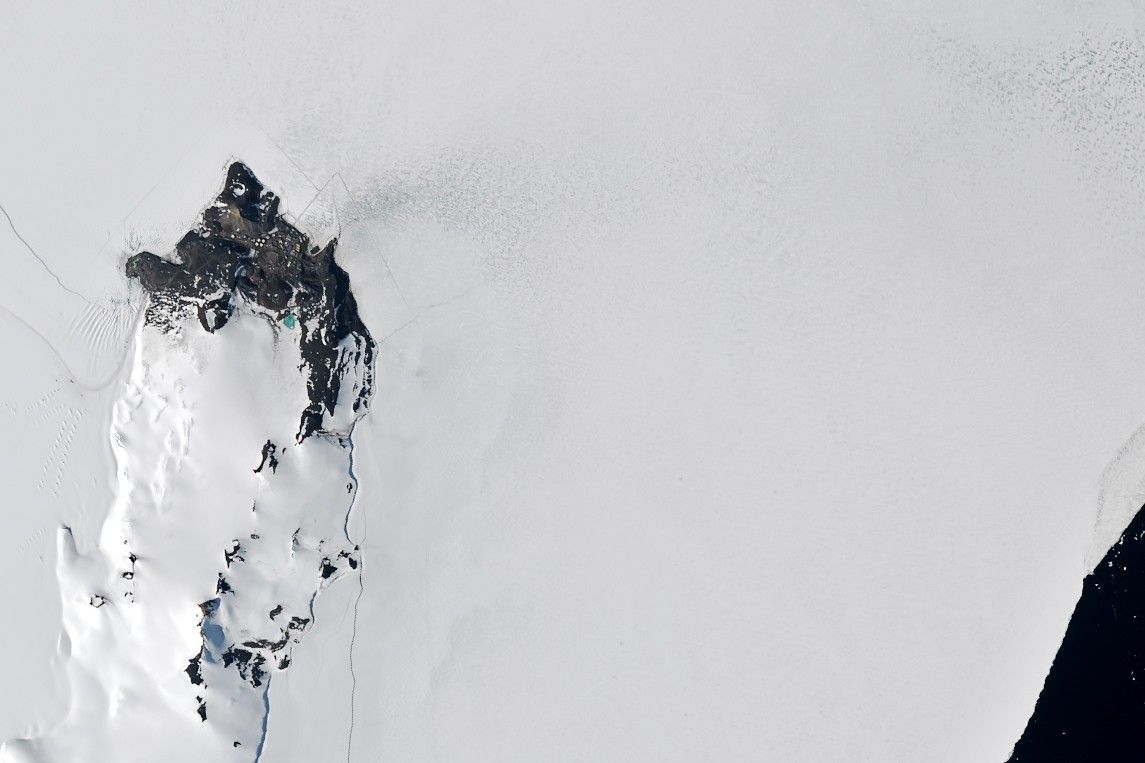
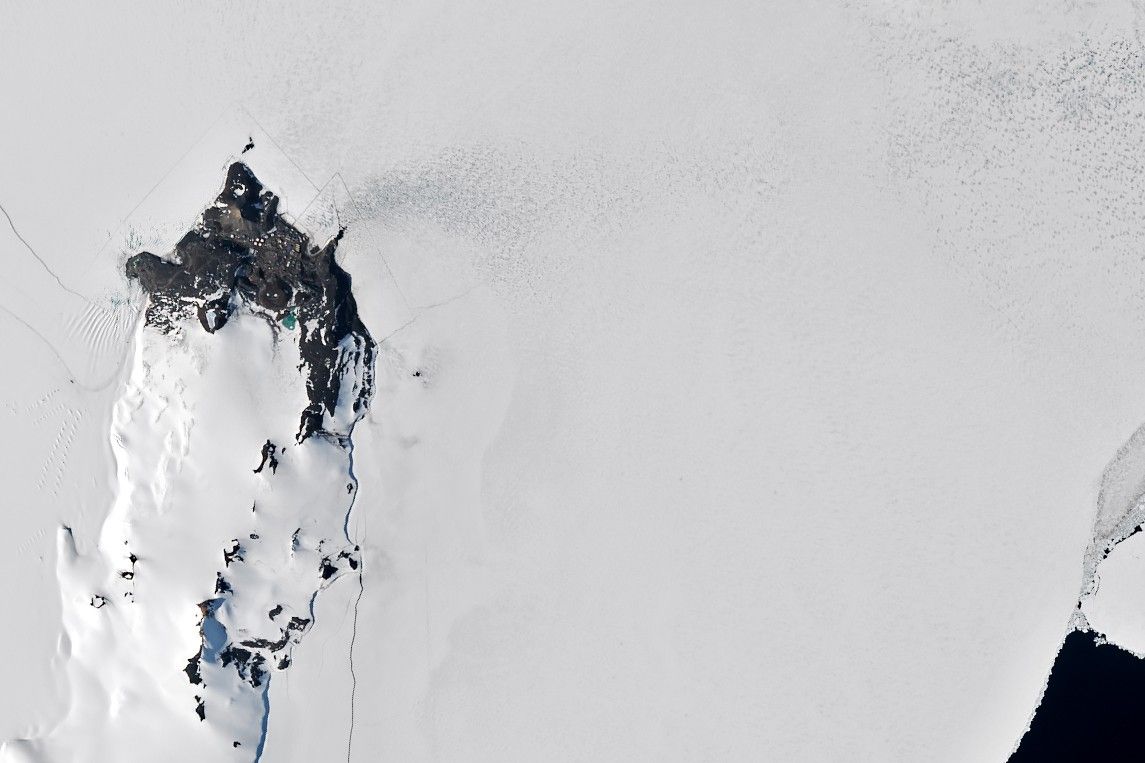
The animation above, made of images captured by the OLI (Operational Land Imager) on Landsat 8 and 9, offers satellite views of the icebreaker’s work. Images were captured on January 2, 7, 19, 20, 23, 25, and 27. The nearly 120-meter (400-foot) vessel weighs 13,500 tons and has thick steel-plated hulls. With 75,000 shaft horsepower, it’s the world’s most powerful non-nuclear icebreaker.
The ship sometimes conducts search-and-rescue missions as well. On January 17, the day marking its 50th year of service, the Polar Star responded to a call from an Australian cruise ship in the Ross Sea hampered by thick, pack ice—a type of sea ice unattached to the shoreline that drifts. After making two close passes to break up the ice and clear a path, the Polar Star escorted the cruise ship 4 nautical miles (7 kilometers) to open water in the Ross Sea, according to the U.S. Coast Guard.
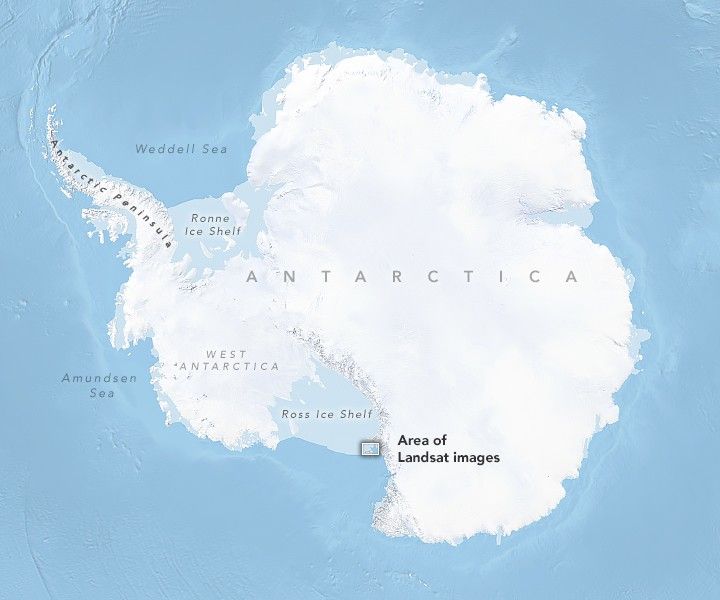
Established in 1955, McMurdo Station is the southernmost point on Earth accessible by ship. With a population that swells to 1,200 in the summer, it is the largest research station in Antarctica, hosting a harbor, two airfields, and a helicopter pad. Though once powered by a portable nuclear reactor known as “Nukey Poo,” the base now runs on energy from diesel electric generators and a wind farm on Crater Hill.
With the ship passage open, McMurdo Station is slated to receive two large deliveries this summer. The Stena Polaris, a tanker, arrived on January 20 with 5 million gallons of diesel fuel. Plantijngracht, a cargo ship, will arrive later with food, supplies, and parts of a new floating pier that will replace the traditional ice pier that military engineers have constructed each winter to give ships somewhere to unload cargo.
The U.S. National Science Foundation manages McMurdo Station and much of the science conducted there. NASA has also been involved in several projects at the base over the years. For instance, NASA’s McMurdo Ground Station, a Near Space Network facility, is used to download data from polar-orbiting satellites such as Landsat 9 and SMAP. The agency also flew its Operation Ice Bridge airborne campaign from McMurdo in 2013 and regularly launches research balloons from the station as part of its scientific ballooning program.
The Polar Star typically remains at McMurdo through March to keep the ship passage clear and returns to its home port of Seattle in April.
NASA Earth Observatory images by Michala Garrison, using Landsat data from the U.S. Geological Survey. Story by Adam Voiland.




References & Resources
- Atlas Obscura (2024, March 20) McMurdo Ice Pier. Accessed February 2, 2026.
- Cruise Industry News (2026, January 24) Scenic Statement Regarding Scenic Eclipse II Ross Sea Operations. Accessed February 2, 2026.
- Defense Visual Information Distribution Service (2026, January 30) MSC Chartered Ship Completes Fuel Delivery for Operation Deep Freeze 2026. Accessed February 2, 2026.
- Defense Visual Information Distribution Service (2026, January 21) USCGC Polar Star (WAGB 10) escorts motor vessel Stena Polaris through the ice-covered Ross Sea to McMurdo Station during Operation Deep Freeze 2026. Accessed February 2, 2026.
- Defense Visual Information Distribution Service (2026, January 21) First MSC Chartered Ship Arrives at McMurdo Station Antarctica in Support of Operation Deep Freeze 2026. Accessed February 2, 2026.
- Defense Visual Information Distribution Service (2026, January 7) MSC Completes Southern California Cargo Operations in Support of Operation Deep Freeze 2026. Accessed February 2, 2026.
- The Maritime Executive (2026, January 15) U.S. Antarctic Resupply Mission Underway with Chartered Dutch Ship. Accessed February 2, 2026.
- NASA Earth Observatory (2025) World of Change: Antarctic Sea Ice. Accessed February 2, 2026.
- U.S. Antarctic Program (2025, April 29) Preparations Underway for a new Barge Pier at NSF McMurdo Station. Accessed February 2, 2026.
- U.S. Coast Guard (2026, January 23) U.S. Coast Guard Cutter Polar Star marks 50 years of service, begins Operation Deep Freeze 2026. Accessed February 2, 2026.
- U.S. Department of War Navy (2026, January 6) Reservists Support Operation Deep Freeze 2026.
- The Washington Post (2026, January 27) Coast Guard called to help luxury cruise stuck in Antarctica. Accessed February 2, 2026.
You may also be interested in:
Stay up-to-date with the latest content from NASA as we explore the universe and discover more about our home planet.

Sea ice around the southernmost continent hit one of its lowest seasonal highs since the start of the satellite record.
Satellite data show that Arctic sea ice likely reached its annual minimum extent on September 10, 2025.

A moderately intense season of surface melting left part of the ice sheet dirty gray in summer 2025, but snowfall…
Discover More from NASA Earth Science




from NASA https://ift.tt/VuL6S1X



No comments:
Post a Comment