The following is a statement from acting NASA Administrator Robert Lightfoot about the results from the first meeting of the National Space Council on Thursday:
from NASA Breaking News http://ift.tt/2hNZPKP
via IFTTT

Thursday, 5 October 2017

Michigan Students to Speak with NASA Astronauts on Space Station
Students at St. Mary Cathedral School in Gaylord, Michigan, will speak with NASA astronauts living, working and doing research aboard the International Space Station at 11 a.m. EDT Friday, Oct. 6.
from NASA Breaking News http://ift.tt/2yK6qsR
via IFTTT
from NASA Breaking News http://ift.tt/2yK6qsR
via IFTTT
Examining Mars' Moon Phobos in a Different Light

NASA's longest-lived mission to Mars has gained its first look at the Martian moon Phobos, pursuing a deeper understanding by examining it in infrared wavelengths.
The Thermal Emission Imaging System (THEMIS) camera on NASA's Mars Odyssey orbiter observed Phobos on Sept. 29, 2017. Researchers have combined visible-wavelength and infrared data to produce an image color-coded for surface temperatures of this moon, which has been considered for a potential future human-mission outpost.
"Part of the observed face of Phobos was in pre-dawn darkness, part in morning daylight," said THEMIS Deputy Principal Investigator Victoria Hamilton of the Southwest Research Institute, headquartered in San Antonio.
Looking across the image from left to right presents a sequence of times of day on the Martian moon, from before dawn, to sunrise, to increasing amounts of time after dawn. This provides information about how quickly the ground warms, which is related to the texture of the surface. As barefoot beach walks can confirm, sand warms or cools quicker than rocks or pavement.
"Including a predawn area in the observation is useful because all the heating from the previous day's sunshine has reached its minimum there," Hamilton said. "As you go from predawn area to morning area you get to watch the heating behavior. If it heats up very quickly, it's likely not very rocky but dusty instead."
Phobos has an oblong shape with an average diameter of about 14 miles (22 kilometers). Cameras on other Mars orbiters have previously taken higher-resolution images of Phobos, but none with the infrared information available from THEMIS. Observations in multiple bands of thermal-infrared wavelengths can yield information about the mineral composition of the surface, as well as the surface texture.
One major question about Phobos and Mars' even smaller moon, Deimos, is whether they are captured asteroids or bits of Mars knocked into the sky by impacts. Compositional information from THEMIS might help pin down their origin.
Since Odyssey began orbiting the Red Planet in 2001, THEMIS has provided compositional and thermal-properties information from all over Mars, but never before imaged either Martian moon. The Sept. 29 observation was completed to validate that the spacecraft could safely do so, as the start of a possible series of observations of Phobos and Deimos in coming months.
In normal operating mode, Odyssey keeps the THEMIS camera pointed straight down as the spacecraft orbits Mars. In 2014, the spacecraft team at Lockheed Martin Space Systems, Denver; and NASA's Jet Propulsion Laboratory, Pasadena, California; and the THEMIS team at Arizona State University, Tempe, developed procedures to rotate the spacecraft for upward-looking imaging of a comet passing near Mars. The teams have adapted those procedures for imaging the Martian moons.
"We now have the capability of rotating the spacecraft for THEMIS observations," said Odyssey Project Scientist Jeffrey Plaut of JPL. "There is heightened interest in Phobos because of the possibility that future astronauts could perhaps use it as an outpost."
With the first observation now in hand, plans are advancing for additional opportunities at different illumination phases of Phobos and Deimos.
"We want to get observations under all types of lighting -- fully daylit, a small crescent, during eclipse," Hamilton said. "We hope this is the first of several observations that will help us understand Phobos and Deimos."
News Media Contact
Guy Webster
Jet Propulsion Laboratory, Pasadena, Calif.
818-354-6278
guy.webster@jpl.nasa.gov
Karin Valentine / Robert Burnham
Arizona State University, Tempe
480-965-9345 / 480-458-8207
karin.valentine@asu.edu / rburnham@mars.asu.edu
Deb Schmid
Southwest Research Institute, San Antonio
210-522-2254
deb.schmid@swri.org
Laurie Cantillo / Dwayne Brown
NASA Headquarters, Washington
202-358-1077 / 202-358-1726
laura.l.cantillo@nasa.gov / dwayne.c.brown@nasa.gov
2017-260
from News and Features http://ift.tt/2hNvHzb
via IFTTT
NASA Provides Coverage for First Meeting of the National Space Council
NASA Television and the agency’s website will provide live coverage of the first meeting of the National Space Council starting at 10 a.m. EDT Thursday, Oct. 5.
from NASA Breaking News http://ift.tt/2xU65qC
via IFTTT
from NASA Breaking News http://ift.tt/2xU65qC
via IFTTT
The Super-Earth that Came Home for Dinner

It might be lingering bashfully on the icy outer edges of our solar system, hiding in the dark, but subtly pulling strings behind the scenes: stretching out the orbits of distant bodies, perhaps even tilting the entire solar system to one side.
If a planet is there, it's extremely distant and will stay that way (with no chance -- in case you're wondering -- of ever colliding with Earth, or bringing "days of darkness").It is a possible "Planet Nine" -- a world perhaps 10 times the mass of Earth and 20 times farther from the sun than Neptune. The signs so far are indirect, mainly its gravitational footprints, but that adds up to a compelling case nonetheless.
One of its most dedicated trackers, in fact, says it is now harder to imagine our solar system without a Planet Nine than with one.
"There are now five different lines of observational evidence pointing to the existence of Planet Nine," said Konstantin Batygin, a planetary astrophysicist at Caltech in Pasadena, California, whose team may be closing in. "If you were to remove this explanation and imagine Planet Nine does not exist, then you generate more problems than you solve. All of a sudden, you have five different puzzles, and you must come up with five different theories to explain them."
Batygin and his co-author, Caltech astronomer Mike Brown, described the first three breadcrumbs on Planet Nine's trail in a January 2016 paper, published in the Astronomical Journal. Six known objects in the distant Kuiper Belt, a region of icy bodies stretching from Neptune outward toward interstellar space, all have elliptical orbits pointing in the same direction. That would be unlikely -- and suspicious -- enough. But these orbits also are tilted the same way, about 30 degrees "downward" compared to the pancake-like plane within which the planets orbit the sun.
Breadcrumb number three: Computer simulations of the solar system with Planet Nine included show there should be more objects tilted with respect to the solar plane. In fact, the tilt would be on the order of 90 degrees, as if the plane of the solar system and these objects formed an "X" when viewed edge-on. Sure enough, Brown realized that five such objects already known to astronomers fill the bill.
Two more clues emerged after the original paper. A second article from the team, this time led by Batygin's graduate student, Elizabeth Bailey, showed that Planet Nine could have tilted the planets of our solar system during the last 4.5 billion years. This could explain a longstanding mystery: Why is the plane in which the planets orbit tilted about 6 degrees compared to the sun's equator?
"Over long periods of time, Planet Nine will make the entire solar-system plane precess or wobble, just like a top on a table," Batygin said.
The last telltale sign of Planet Nine's presence involves the solar system's contrarians: objects from the Kuiper Belt that orbit in the opposite direction from everything else in the solar system. Planet Nine's orbital influence would explain why these bodies from the distant Kuiper Belt end up "polluting" the inner Kuiper Belt.
"No other model can explain the weirdness of these high-inclination orbits," Batygin said. "It turns out that Planet Nine provides a natural avenue for their generation. These things have been twisted out of the solar system plane with help from Planet Nine and then scattered inward by Neptune."
The remaining step is to find Planet Nine itself. Batygin and Brown are using the Subaru Telescope at Mauna Kea Observatory in Hawaii to try to do just that. The instrument is the "best tool" for picking out dim, extremely distant objects lost in huge swaths of sky, Batygin said.
But where did Planet Nine come from? Batygin says he spends little time ruminating on its origin -- whether it is a fugitive from our own solar system or, just maybe, a wandering rogue planet captured by the sun's gravity.
"I think Planet Nine's detection will tell us something about its origin," he said.
Other scientists offer a different possible explanation for the Planet Nine evidence cited by Batygin. A recent analysis based on a sky mapping project called the Outer Solar System Origins Survey, which discovered more than 800 new "trans-Neptunian objects," suggests that the evidence also could be consistent with a random distribution of such objects. Still, the analysis, from a team led by Cory Shankman of the University of Victoria, could not rule out Planet Nine.
If Planet Nine is found, it will be a homecoming of sorts, or at least a family reunion. Over the past 20 years, surveys of planets around other stars in our galaxy have found the most common types to be "super Earths" and their somewhat larger cousins -- bigger than Earth but smaller than Neptune.
Yet these common, garden-variety planets are conspicuously absent from our solar system. Weighing in at roughly 10 times Earth's mass, the proposed Planet Nine would make a good fit.
Planet Nine could turn out to be our missing super Earth.
News Media Contact
Written by Pat Brennan
Elizabeth Landau
Jet Propulsion Laboratory, Pasadena, Calif.
818-354-6425
elizabeth.landau@jpl.nasa.gov
2017-259
from News and Features http://ift.tt/2xhgAzX
via IFTTT
Wednesday, 4 October 2017
Mysterious Dimming of Tabby's Star May Be Caused by Dust

One of the most mysterious stellar objects may be revealing some of its secrets at last.
Called KIC 8462852, also known as Boyajian's Star, or Tabby's Star, the object has experienced unusual dips in brightness -- NASA's Kepler space telescope even observed dimming of up to 20 percent over a matter of days. In addition, the star has had much subtler but longer-term enigmatic dimming trends, with one continuing today. None of this behavior is expected for normal stars slightly more massive than the Sun. Speculations have included the idea that the star swallowed a planet that it is unstable, and a more imaginative theory involves a giant contraption or "megastructure" built by an advanced civilization, which could be harvesting energy from the star and causing its brightness to decrease.
A new study using NASA's Spitzer and Swift missions, as well as the Belgian AstroLAB IRIS observatory, suggests that the cause of the dimming over long periods is likely an uneven dust cloud moving around the star. This flies in the face of the "alien megastructure" idea and the other more exotic speculations.
The smoking gun: Researchers found less dimming in the infrared light from the star than in its ultraviolet light. Any object larger than dust particles would dim all wavelengths of light equally when passing in front of Tabby's Star.
"This pretty much rules out the alien megastructure theory, as that could not explain the wavelength-dependent dimming," said Huan Meng, at the University of Arizona, Tucson, who is lead author of the new study published in The Astrophysical Journal. "We suspect, instead, there is a cloud of dust orbiting the star with a roughly 700-day orbital period."
Why Dust is Likely
We experience the uniform dimming of light often in everyday life: If you go to the beach on a bright, sunny day and sit under an umbrella, the umbrella reduces the amount of sunlight hitting your eyes in all wavelengths. But if you wait for the sunset, the sun looks red because the blue and ultraviolet light is scattered away by tiny particles.The new study suggests the objects causing the long-period dimming of Tabby's Star can be no more than a few micrometers in diameter (about one ten-thousandth of an inch).
From January to December 2016, the researchers observed Tabby's Star in ultraviolet using Swift, and in infrared using Spitzer. Supplementing the space telescopes, researchers also observed the star in visible light during the same period using AstroLAB IRIS, a public observatory with a 27-inch-wide (68 centimeter) reflecting telescope located near the Belgian village of Zillebeke.
Based on the strong ultraviolet dip, the researchers determined the blocking particles must be bigger than interstellar dust, small grains that could be located anywhere between Earth and the star. Such small particles could not remain in orbit around the star because pressure from its starlight would drive them farther into space. Dust that orbits a star, called circumstellar dust, is not so small it would fly away, but also not big enough to uniformly block light in all wavelengths. This is currently considered the best explanation, although others are possible.
Collaboration with Amateur Astronomers
Citizen scientists have had an integral part in exploring Tabby's Star since its discovery. Light from this object was first identified as "bizarre" and "interesting" by participants in the Planet Hunters project, which allows anyone to search for planets in the Kepler data. That led to a 2016 study formally introducing the object, which is nicknamed for Tabetha Boyajian, now at Louisiana State University, Baton Rouge, who was the lead author of the original paper and is a co-author of the new study. The recent work on long-period dimming involves amateur astronomers who provide technical and software support to AstroLAB.
Several AstroLAB team members who volunteer at the observatory have no formal astronomy education. Franky Dubois, who operated the telescope during the Tabby's Star observations, was the foreman at a seat belt factory until his retirement. Ludwig Logie, who helps with technical issues on the telescope, is a security coordinator in the construction industry. Steve Rau, who processes observations of star brightness, is a trainer at a Belgian railway company.
Siegfried Vanaverbeke, an AstroLAB volunteer who holds a Ph.D. in physics, became interested in Tabby's Star after reading the 2016 study, and persuaded Dubois, Logie and Rau to use Astrolab to observe it.
"I said to my colleagues: 'This would be an interesting object to follow,'" Vanaverbeke recalled. "We decided to join in."
University of Arizona astronomer George Rieke, a co-author on the new study, contacted the AstroLAB group when he saw their data on Tabby's Star posted in a public astronomy archive. The U.S. and Belgium groups teamed up to combine and analyze their results.
Future Exploration
While study authors have a good idea why Tabby's Star dims on a long-term basis, they did not address the shorter-term dimming events that happened in three-day spurts in 2017. They also did not confront the mystery of the major 20-percent dips in brightness that Kepler observed while studying the Cygnus field of its primary mission. Previous research with Spitzer and NASA's Wide-field Infrared Survey Explorer suggested a swarm of comets may be to blame for the short-period dimming. Comets are also one of the most common sources of dust that orbits stars, and so could also be related to the long-period dimming studied by Meng and colleagues.
Now that Kepler is exploring other patches of sky in its current mission, called K2, it can no longer follow up on Tabby's Star, but future telescopes may help unveil more secrets of this mysterious object.
"Tabby's Star could have something like a solar activity cycle. This is something that needs further investigation and will continue to interest scientists for many years to come," Vanaverbeke said.
NASA's Goddard Space Flight Center in Greenbelt, Maryland, manages the Swift mission in collaboration with Pennsylvania State University in University Park, the Los Alamos National Laboratory in New Mexico, and Orbital Sciences Corp. in Dulles, Virginia. Other partners include the University of Leicester and Mullard Space Science Laboratory in the United Kingdom, Brera Observatory and the Italian Space Agency in Italy, with additional collaborators in Germany and Japan.
NASA's Jet Propulsion Laboratory, Pasadena, California, manages the Spitzer Space Telescope mission for NASA's Science Mission Directorate, Washington. Science operations are conducted at the Spitzer Science Center at Caltech in Pasadena, California. Spacecraft operations are based at Lockheed Martin Space Systems Company, Littleton, Colorado. Data are archived at the Infrared Science Archive housed at the Infrared Processing and Analysis Center at Caltech. Caltech manages JPL for NASA. For more information about Spitzer, visit:
News Media Contact
Elizabeth Landau
Jet Propulsion Laboratory, Pasadena, Calif.
818-354-6425
elizabeth.landau@jpl.nasa.gov
2017-258
from News and Features http://ift.tt/2kokEgM
via IFTTT
Another Chance to Put Your Name on Mars

When it lands on Mars in November of 2018, NASA's InSight lander will be carrying several science instruments -- along with hundreds of thousands of names from members of the public.
In 2015, nearly 827,000 people signed up to add their names to a silicon microchip onboard the robotic spacecraft. NASA is now adding a second microchip, giving the public another chance to send their names to Mars.
New submissions will be accepted through Nov. 1, 2017, at the following link:
"Mars continues to excite space enthusiasts of all ages," said Bruce Banerdt, the InSight mission's principal investigator at NASA's Jet Propulsion Laboratory in Pasadena, California. "This opportunity lets them become a part of the spacecraft that will study the inside of the Red Planet."
This fly-your-name opportunity comes with "frequent flier" points reflecting an individual's personal participation in NASA's exploration of Mars. These points span multiple missions and multiple decades. Participants who sent their names on the previous InSight opportunity in 2015 can download a "boarding pass" and see their "frequent flier" miles.
As part of this frequent flier program, a chip carrying the names of 1.38 million people also flew aboard the first flight of NASA's Orion spacecraft in 2014. NASA is building Orion to carry astronauts to deep space destinations that will enable future missions to Mars.
After InSight, the next opportunity to earn frequent flier points will be NASA's Exploration Mission-1, the first flight bringing together the Space Launch System rocket and Orion spacecraft to travel thousands of miles beyond the Moon in preparation for human missions to Mars and beyond.
InSight will be the first mission to explore Mars' deep interior. The spacecraft will set down a seismometer to detect marsquakes and meteor strikes, using the seismic energy of these phenomena to study material far below the Martian surface. It also will deploy a self-hammering heat probe that will burrow deeper into the ground than any previous device on the Red Planet. These and other InSight investigations will improve our understanding about the formation and evolution of all rocky planets, including Earth.
InSight is scheduled to launch from Vandenberg Air Force Base, California, in May of 2018.
For more information on InSight, visit:
News Media Contact
Andrew Good
Jet Propulsion Laboratory, Pasadena, Calif.
818-393-2433
andrew.c.good@jpl.nasa.gov
2017-255
from News and Features http://ift.tt/2hJPkYO
via IFTTT
Next International Space Station Crew Available for News Conference, Interviews
NASA astronaut Scott Tingle and crewmates Anton Shkaplerov of the Russian space agency Roscosmos and Norishege Kanai of the Japan Aerospace Exploration Agency (JAXA) will discuss their upcoming mission to the International Space Station in a news conference at 2 p.m. EDT on Wednesday, Oct. 11 at NASA’s Johnson Space Center in Houston.
from NASA Breaking News http://ift.tt/2xQwBPf
via IFTTT
from NASA Breaking News http://ift.tt/2xQwBPf
via IFTTT
Satellites See Silicon Valley's Quick Drought Recovery

NASA/university study finds aggressive conservation helped region's aquifer rebound quickly from one of the worst droughts in California history
Underground water reserves in California's Silicon Valley rebounded quickly from the state's recent severe drought, demonstrating the success of aggressive conservation measures, according to a new space-based study by NASA and university scientists.
Using satellite data from COSMO-SkyMed, a constellation of four Italian Space Agency (Agenzia Spaziale Italiana, or ASI) satellites, a research team led by Estelle Chaussard at the University at Buffalo in New York, and including scientists from NASA's Jet Propulsion Laboratory in Pasadena, California, used a technique called synthetic aperture radar interferometry to monitor the entire Santa Clara Valley aquifer near San Jose from 2011 to 2017. This type of radar can capture the subtle up-and-down movements of Earth's surface of just minute fractions of an inch (a few millimeters) that occur when water levels rise or fall underground. The scientists used hundreds of radar images obtained under a license from ASI to calculate how much the land surface elevation changed over time. The measurements show the aquifer began to rebound in late 2014, when the drought was still going strong, and that groundwater levels had returned to pre-drought levels by 2017, thanks to conservation measures that intensified in 2014, and heavy winter rains in 2016.
During the 2012-15 drought, the Santa Clara Valley Water District employed an array of conservation measures. These included restricting sprinkler use and asking customers to take shorter showers and convert lawns and pools into less-thirsty landscapes. The district also imported water from outside the region.
Chaussard says the actions may have helped stave off irreversible damage to the aquifer, which measures about 212 square miles (550 square kilometers) and lies beneath a highly urbanized area. She explains when groundwater levels reach a record low, the porous sands and clays in which the reserves reside can dry up so much that the clays don't retain water anymore. The new study shows that thanks to the intensive water management efforts, this did not happen in the Santa Clara Valley.
Chaussard says the aquifer monitoring method her team used can work anywhere where there are soft-rock aquifer systems and where synthetic aperture radar satellite data are available, including in developing nations with few resources for monitoring.
"We wanted to see if we could use a remote sensing method that doesn't require ground monitoring to understand how our aquifers are responding to a changing climate and human activity," she says. "Our study further demonstrates the utility of synthetic aperture radar interferometry, which scientists also use to measure surface deformation related to volcanoes and earthquakes, for tracking ground deformation associated with changes in groundwater levels."
"This study further demonstrates a complementary method, in addition to traditional ground-based measurements, for water management districts to monitor ground deformation," added JPL co-author Pietro Milillo. "The technique marks an improvement over traditional methods because it allows scientists to gauge changes in ground deformation across a large region with unprecedented frequency." He said the COSMO-SkyMed satellites provided information for the aquifer as often as once a day.
Underground stockpiles of water -- housed in layers of porous rock called aquifers -- are one of the world's most important sources of drinking water. Some 2.5 billion people across the globe rely on aquifers for water, and many of these repositories are being drained more quickly than they can be refilled, according to the United Nations Educational, Scientific and Cultural Organization.
Yet keeping tabs on these precious reserves is expensive, says Chaussard.
"To monitor aquifers, you need a lot of measurements in both space and time," she says. "Sampling water levels at wells may give you a continuous time series, but only if they are constantly monitored, and automated monitoring may not be common. Also, even a high density of wells may not adequately capture basin-wide spatial patterns of water storage, which is key to understanding processes at stake."
The methods employed in this study provide a more complete picture of how an aquifer responds during a drought and how water conservation methods can have a real and positive impact on sustaining the health and viability of pumped groundwater aquifers. The satellite radar imagery not only fills in data gaps between wells, but provides valuable insights into how aquifers are responding beyond the edges of monitoring well networks so that water agencies can more effectively manage their precious resources.
The upcoming NASA-ISRO (Indian Space Research Organisation) Synthetic Aperture Radar (NISAR) satellite mission, planned for launch in 2021, will systematically collect radar imagery over nearly every aquifer in the world, improving our understanding of valuable groundwater resources and our ability to better manage them. In addition to tracking groundwater use in urban settings, NISAR will be able to measure surface motion associated with groundwater pumping and natural recharge in rural communities, in areas with extensive agriculture, and in regions with extensive vegetation, conditions that are typically more challenging.
The research was published Sept. 25 in the Journal of Geophysical Research - Solid Earth. Other participating institutions include the University of California, Berkeley; Purdue University, West Lafayette, Indiana; and the Santa Clara Valley Water District.
News Media Contact
Alan Buis
Jet Propulsion Laboratory, Pasadena, Calif.
818-354-0474
Alan.buis@jpl.nasa.gov
Charlotte Hsu
University at Buffalo, Buffalo, NY
716-645-4655
chsu22@buffalo.edu
2017-257
from News and Features http://ift.tt/2fIwJZ6
via IFTTT
Tuesday, 3 October 2017
Congratulations to LIGO Scientists For Nobel Prize in Physics

The first direct observations of gravitational waves have earned the Nobel Prize in Physics for three key players in the Laser Interferometer Gravitational-Wave Observatory (LIGO) collaboration. Caltech professors emeritus Kip S. Thorne and Barry C. Barish, along with MIT professor emeritus Rainer Weiss, have been named winners of the prize.
Gravitational waves are ripples in space-time originally predicted by Albert Einstein more than 100 years ago, but confirmed for the first time in a 2016 announcement from LIGO. To date, LIGO has made four detections of gravitational waves emanating from the mergers of black holes. The most recent event was also detected by the European Virgo gravitational-wave detector.
LIGO is funded by the NSF, and operated by MIT and Caltech, which conceived and built the project. Financial support for the Advanced LIGO project was led by NSF with Germany (Max Planck Society), the U.K. (Science and Technology Facilities Council) and Australia (Australian Research Council) making significant commitments and contributions to the project. More than 1,000 scientists from around the world participate in the effort through the LIGO Scientific Collaboration. Caltech manages JPL for NASA.
Read more from Caltech: http://ift.tt/2hKqwjv
News Media Contact
Deborah Williams-Hedges
Senior Media Relations Manager
626-395-3227 office
debwms@caltech.edu
Elizabeth Landau
Jet Propulsion Laboratory, Pasadena, Calif.
818-354-6425
Elizabeth.landau@jpl.nasa.gov
2017-256
from News and Features http://ift.tt/2hJkMq7
via IFTTT
Saturday, 30 September 2017
NASA Invites Media to 'Rocket Day' for Space Launch System
Media are invited to learn about NASA’s deep space exploration plans and view hardware for the world’s most powerful rocket, NASA’s Space Launch System (SLS), at the agency’s Rocket Day, Wednesday, Oct. 11, at NASA locations in Mississippi and Louisiana.
from NASA Breaking News http://ift.tt/2fywZK4
via IFTTT
from NASA Breaking News http://ift.tt/2fywZK4
via IFTTT
Subscribe to:
Posts (Atom)
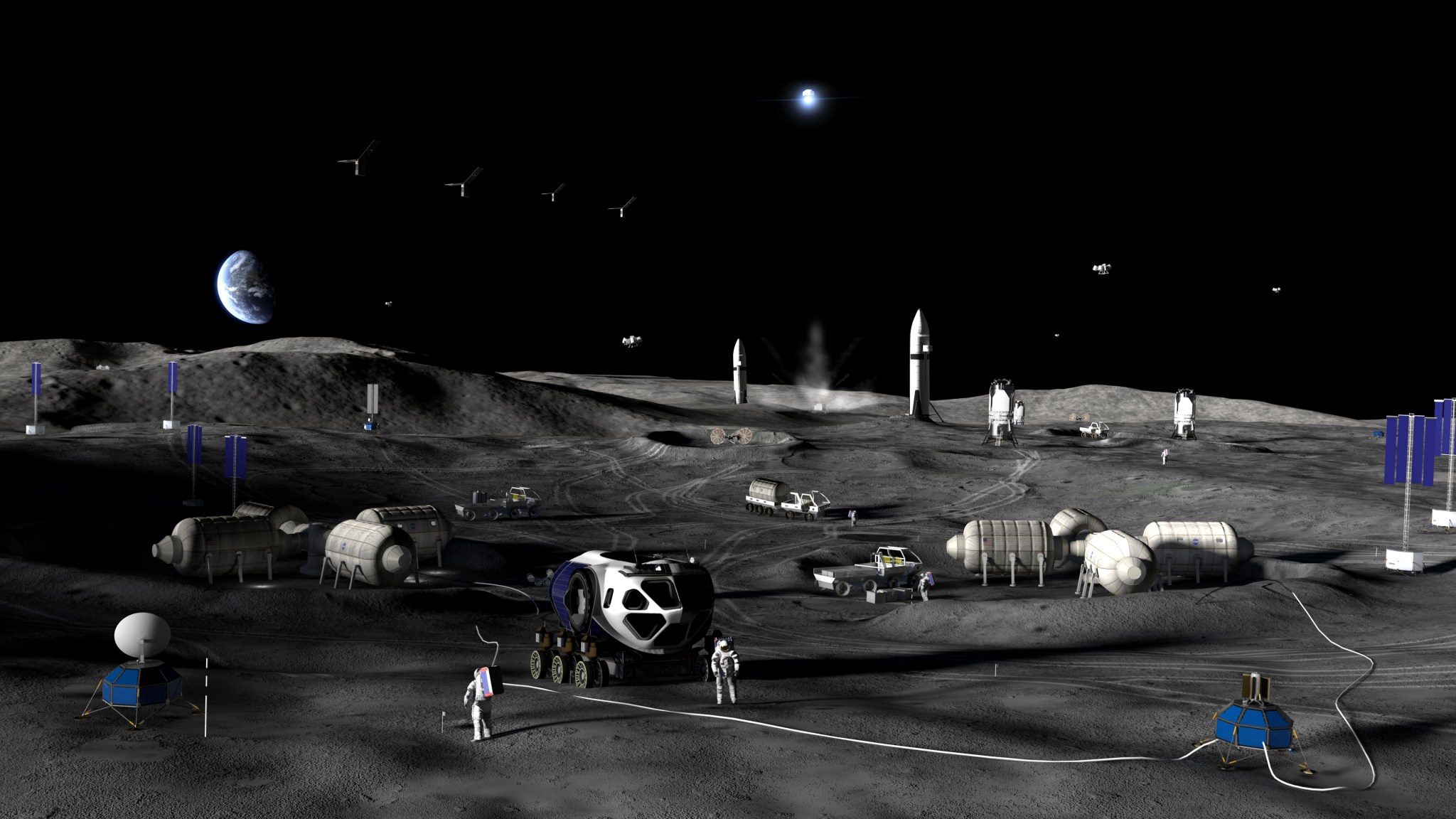
NASA Provides Update on Moon Base Rovers, Landers, Missions
Artist’s concept of Phase 3 of NASA’s Moon Base. Credit: NASA During a Moon Base event Tuesday at NASA’s Headquarters in Washington, the ag...
-
NASA has exercised the second option of its Information Technology and Multimedia Services (ITAMS) contract with DB Consulting Group, Inc., ...
-
Science Earth Observatory A Subtle Return of La Niña Earth Earth Observatory Image of the Day EO Explorer All Topics ...
