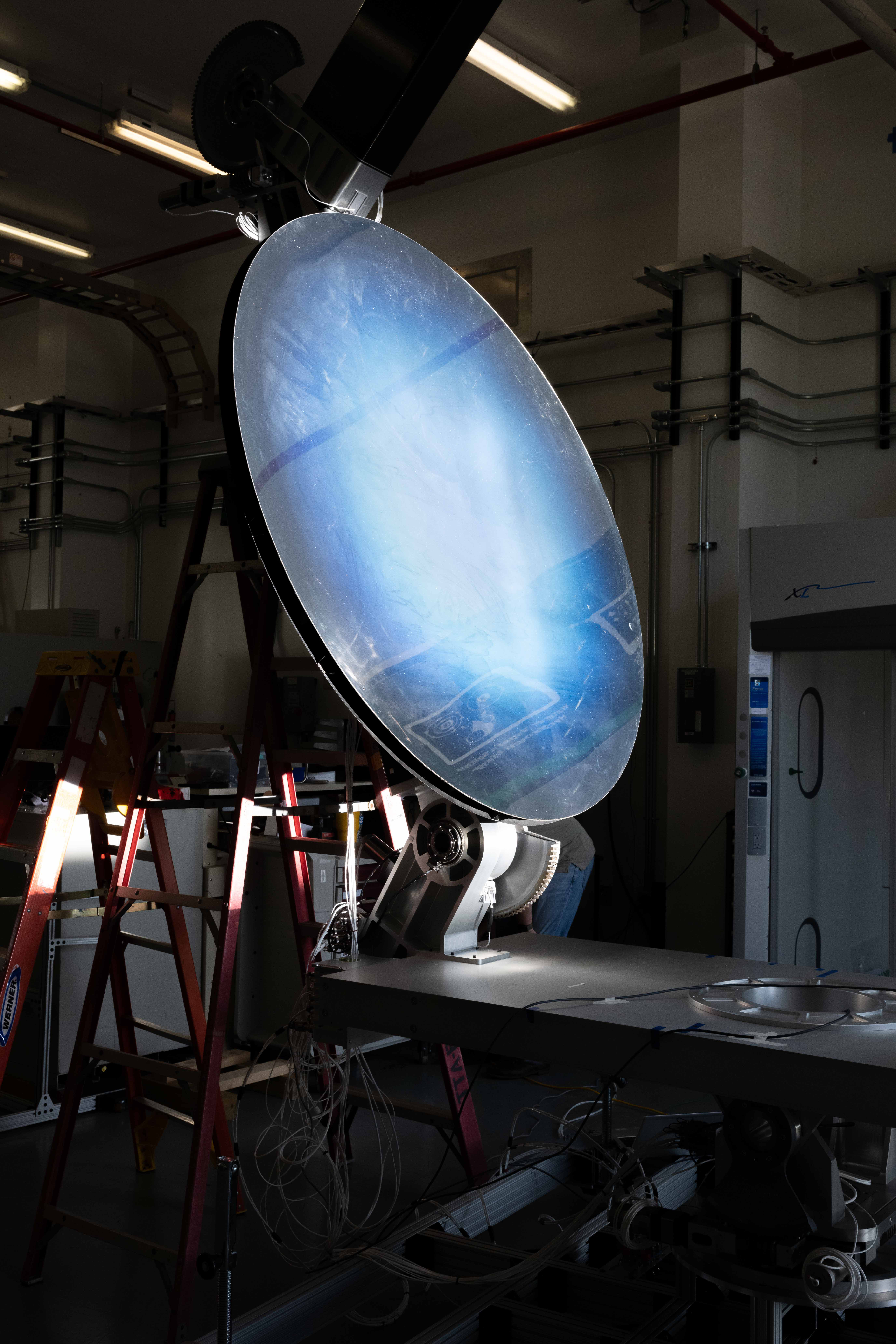
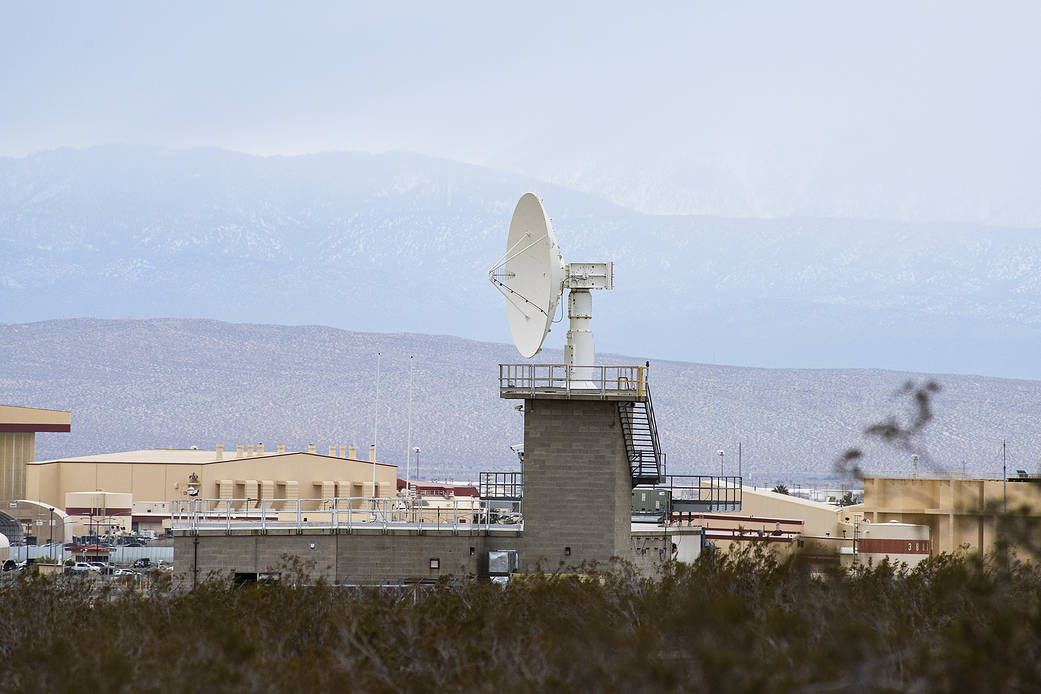
Light shines onto a solar concentrator being tested in this Aug. 7, 2025, photo. The concentrator is part of the Carbothermal Reduction Demonstration (CaRD) project, which aims to produce oxygen from simulated lunar regolith for use at the Moon’s south pole. For this test, the team integrated the solar concentrator, mirrors, and software and confirmed the production of carbon monoxide.
If deployed on the Moon, this technology could enable the production of propellant using only lunar materials and sunlight, significantly reducing the cost and complexity of sustaining a long-term human presence on the lunar surface. The same downstream systems used to convert carbon monoxide into oxygen can also be adapted to convert carbon dioxide into oxygen and methane on Mars.
The CaRD project was funded by NASA’s Game Changing Development Program, which advances technologies for the agency’s future space missions and solutions to significant national needs.
NASA’s Home for Experimental Flight Advances Aeronautics Mission
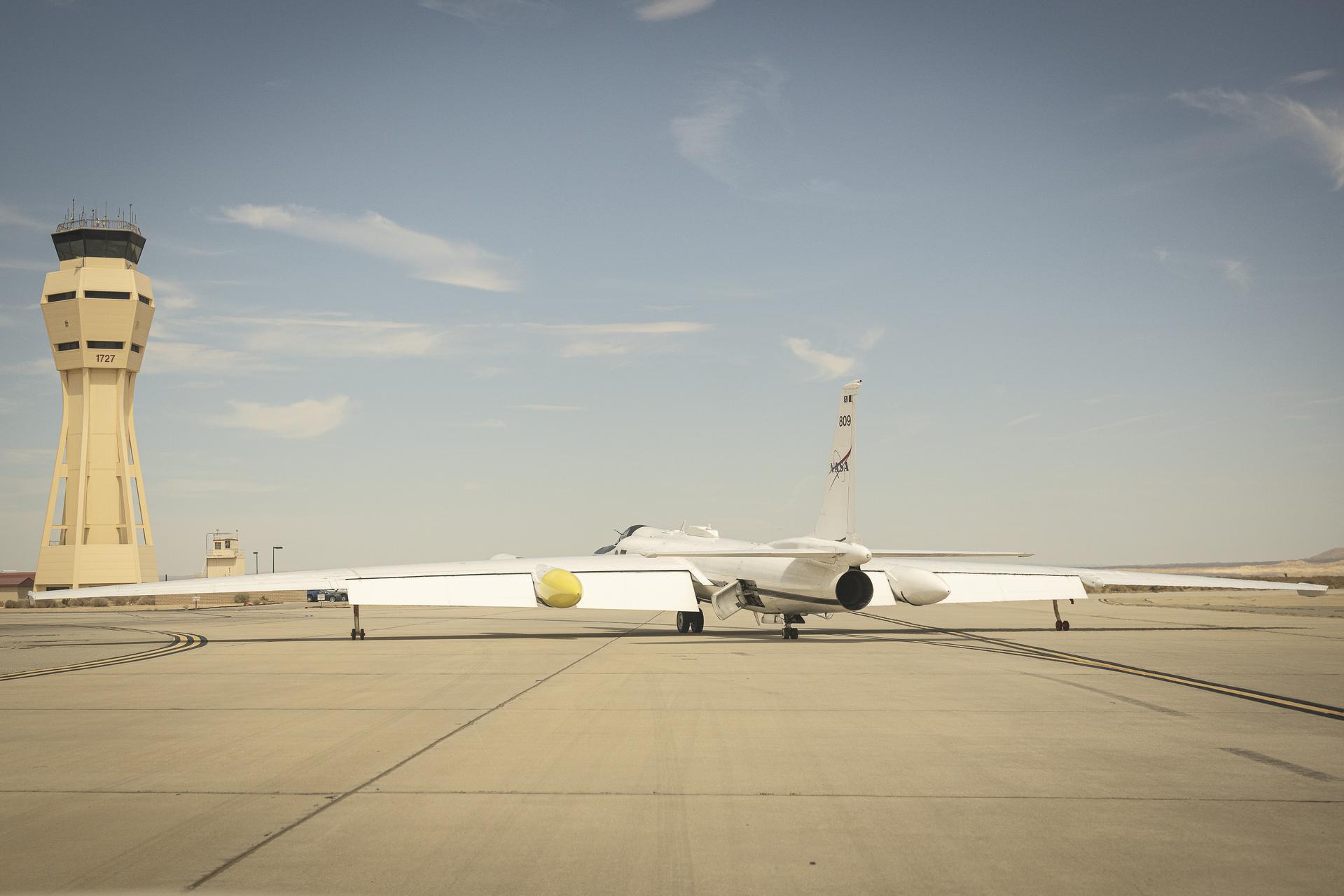
NASA Armstrong Flight Research Center’s ER-2 aircraft taxis at Edwards, California, on Thursday, Aug. 21, 2025, ahead of a high-altitude mission supporting the Geological Earth Mapping Experiment (GEMx), which requires flights of up to eight hours at approximately 65,000 feet altitude.
Credits:NASA/Christopher LC Clark
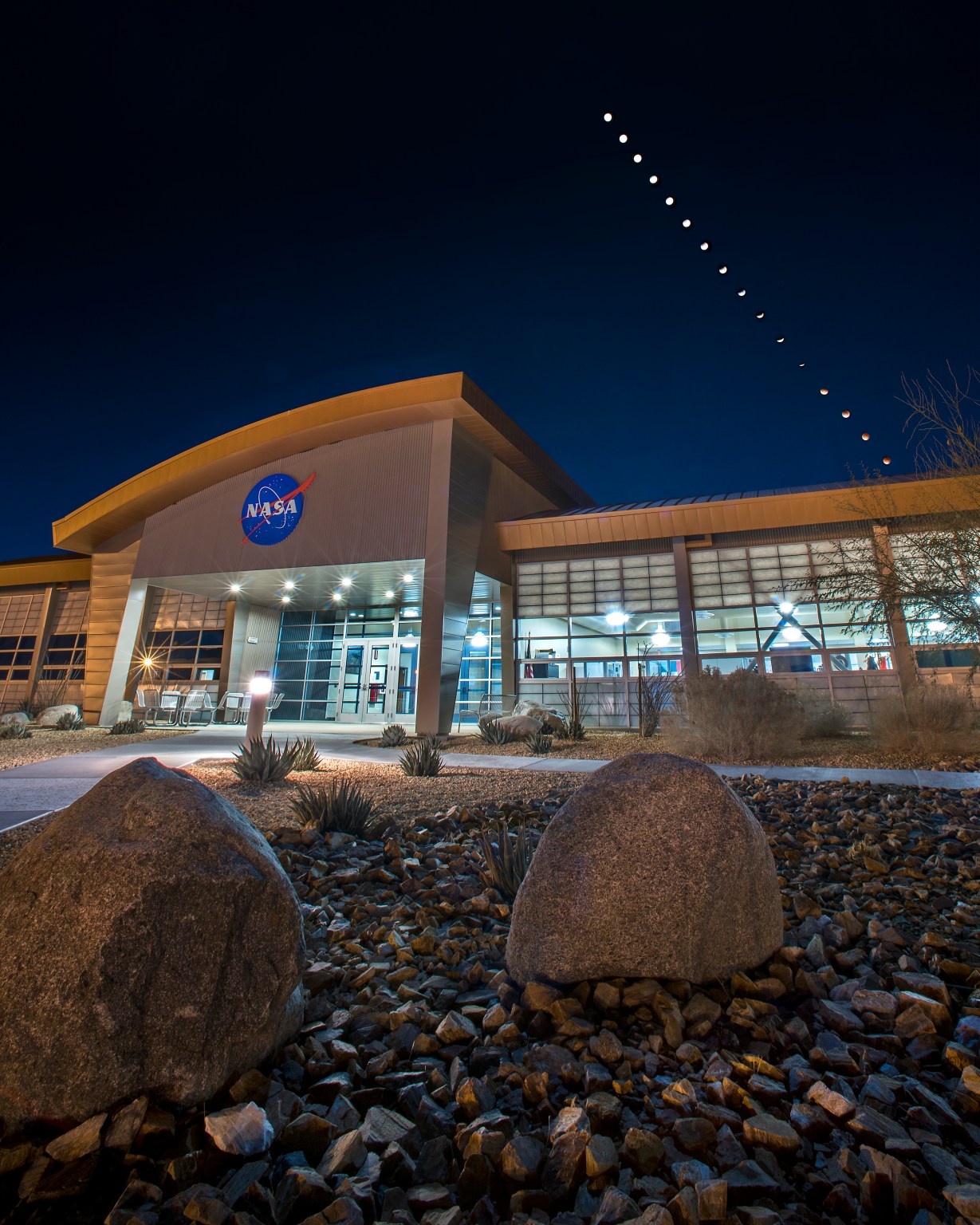
Nestled in the Mojave Desert, NASA’s Armstrong Flight Research Center in Edwards, California, pushes the boundaries of flight to advance the agency’s aeronautics mission. This is where Chuck Yeager broke the sound barrier and engineers are now pioneering the future of high-speed, autonomous, and electrified aircraft. Armstrong contributes to NASA’s broader mission of innovation and collaboration, leveraging its uniquely capable location.
The story begins in 1947, when 13 engineers and technicians from NASA’s predecessor, the National Advisory Committee for Aeronautics, arrived at Muroc Army Airfield – now Edwards Air Force Base – in Southern California’s high desert to establish the Station for High-Speed Research. Their mission was to prepare for the first supersonic research flights of the X-1 rocket plane. The Bell X-1 became the first aircraft to fly faster than the speed of sound in level flight, a historic milestone that marked the dawn of a new era in aviation and helped cement Edwards Air Force Base as a cornerstone of NASA’s flight research enterprise.
Today, NASA’s mission continues that tradition, supporting cutting-edge projects in aeronautics like the X-59 quiet supersonic technology aircraft, hypersonic research, and emerging technologies in advanced air mobility, with flight testing led at NASA Armstrong in collaboration with other NASA centers and industry partners.
Why Edwards?
NASA Armstrong’s location at Edwards Air Force Base supports NASA’s flight research that would be difficult or impossible elsewhere, offering unmatched access to the largest secure flight test range in the nation equipped with specialized testing instrumentation. The base spans roughly 470 square miles of mission-critical terrain, including Rogers Dry Lake’s 44-square-mile surface. This range provides extensive restricted airspace enabling safe, complex flight-testing scenarios for NASA teams across multiple programs.
Almost from the start of aeronautical advancements, the region’s natural geography played a critical role. In 1937, nearly all the U.S. Army Air Corp’s fleet conducted maneuvers above Rogers Dry Lake – then known as Muroc Dry Lake – a vast, flat expanse formed by ancient geological processes that serves as a unique emergency landing site. Its hard-packed surface and wide-open area provide a natural safety net for experimental aircraft, offering a margin of safety that’s critical during high-risk missions.
With the U.S. involvement in World War II, the area’s importance grew, bringing additional resources, new facilities, and a focus on research, and experimentation with new aircraft designs. Today, the airspace above the region includes the Bell X-1 Supersonic Corridor, a designated section of restricted airspace within the Edwards test range. This corridor provides a safe, controlled environment for supersonic and transonic flight testing, enabling precision maneuvers at high speeds over the Mojave Desert. Combined with nearly year-round flying weather and low population density, this unique airspace supports uninterrupted flight operations for NASA’s aeronautics programs.
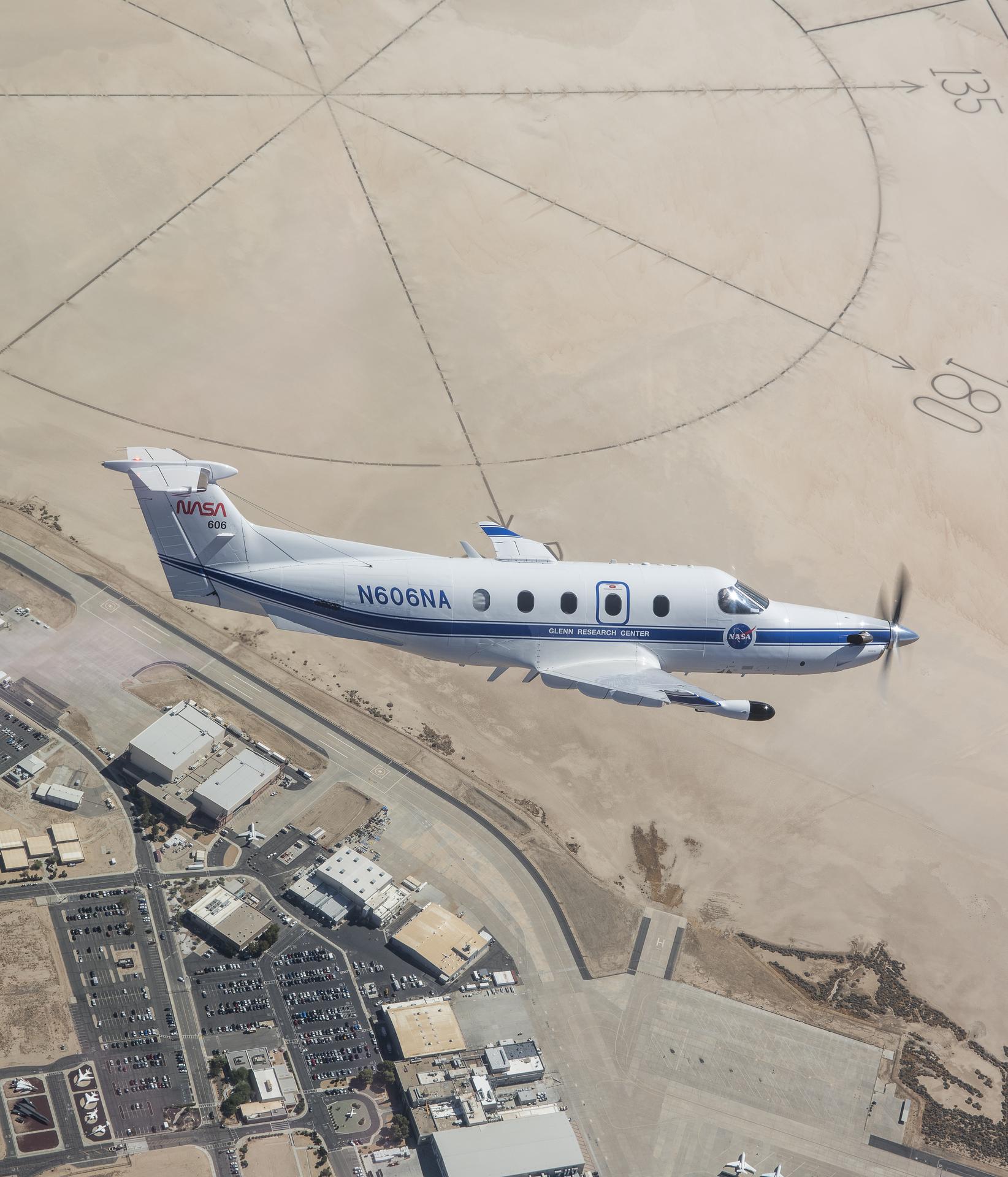
Used as a directional indicator the compass rose guides pilots flying test and experimental aircraft like the Pilatus PC-12 in the vast airspace over NASA’s Armstrong Flight Research Center in Edwards, California. This Pilatus PC-12 based out of NASA’s Glenn Research Center in Cleveland is being flown for a series of familiarization flights for NASA’s Armstrong pilots and crew. These familiarization flights supported communication, navigation and surveillance evaluations for Advanced Air Mobility research.
NASA/Jim Ross
A culture of innovation
NASA’s X-plane legacy is deeply rooted in its history. From the X-1 to the X-59, NASA has developed dozens of X-planes – many flight-tested at Edwards with contributions by Armstrong and other NASA centers. These experimental aircraft were designed to push the boundaries of flight and test new technologies. At Edwards, NASA teams have tested everything from lifting body designs – critical for spacecraft and reentry research – to digital fly-by-wire systems, which have become standard in commercial aviation.
This culture of innovation continues today as NASA’s aeronautics team – leveraging Armstrong’s flight research expertise – advances advanced air mobility, electrified propulsion, and autonomous flight systems. The center’s location and infrastructure enable rapid prototyping and testing, accelerating NASA’s ability to mature next generation aviation technologies.
Partnerships with the U.S. Air Force further strengthen NASA’s capabilities. Shared resources, coordinated airspace management, and joint operations allow NASA researchers to conduct complex missions with support and safety protocols, while collaborating across NASA centers and industry.
Supporting a broad mission portfolio
While Armstrong is best known for experimental aircraft, NASA’s work at Edwards supports a diverse mission portfolio. The center supports Earth science missions, airborne sensor testing, and planetary exploration. Its aircraft – including ER-2 and Gulfstream – carry instruments that study climate, weather, and atmospheric composition, contributing vital data to NASA’s science goals in partnership with agency science teams.
Edwards’ location and infrastructure enable these missions by providing access to high-altitude corridors, stable flying conditions, and the ability to integrate new technologies quickly. Whether it’s testing sensors for Mars exploration or flying over hurricanes to collect data, NASA’s airborne science, supported by Armstrong’s flight operations, advance agency priorities.
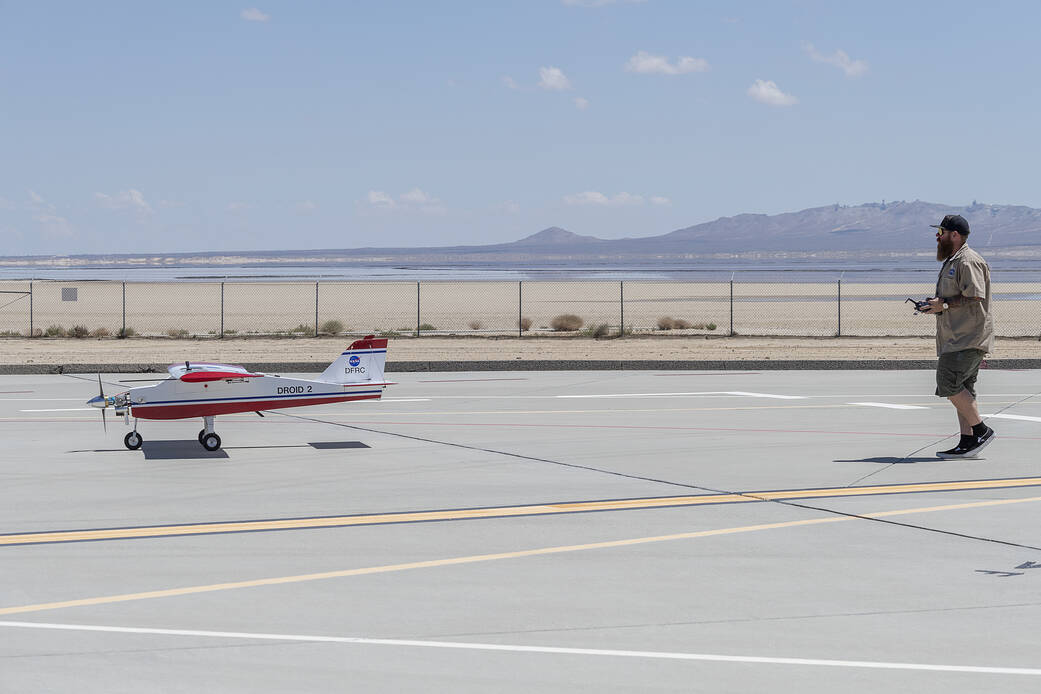
Justin Hall lands the Dryden Remotely Operated Integrated Drone 2 (DROID 2) aircraft at NASA’s Armstrong Flight Research Center in Edwards, California, on Aug. 22, 2023.
Milestones that matter
NASA’s flight research heritage at Edwards includes milestones that have shaped aviation history:
1960s-70s: Lifting body aircraft tested at Edwards lay the groundwork for the space shuttle. NASA tested the Lunar Landing Research Vehicle at Edwards in the mid-1960s to develop techniques later used by Apollo astronauts.
1980s: Digital fly-by-wire systems validated at NASA Armstrong become standard in commercial aviation.
2000s and beyond: Two successful flights of a scramjet-powered airplane, the X-43A, at hypersonic speeds – greater than Mach 5, or five times the speed of sound. Autonomous aircraft and drones tested for Earth science and defense applications. The X-59 prepares to demonstrate quiet supersonic flight over land, potentially reshaping commercial aviation.
Each of these achievements reflects NASA collaboration, drawing on location, infrastructure, and culture to deliver agency impact. As aviation enters a new era of fuel savings, autonomy, and accessibility, NASA’s aeronautics team – through flight research at Armstrong and elsewhere – remains steady to test the technologies that will define the future of flight.
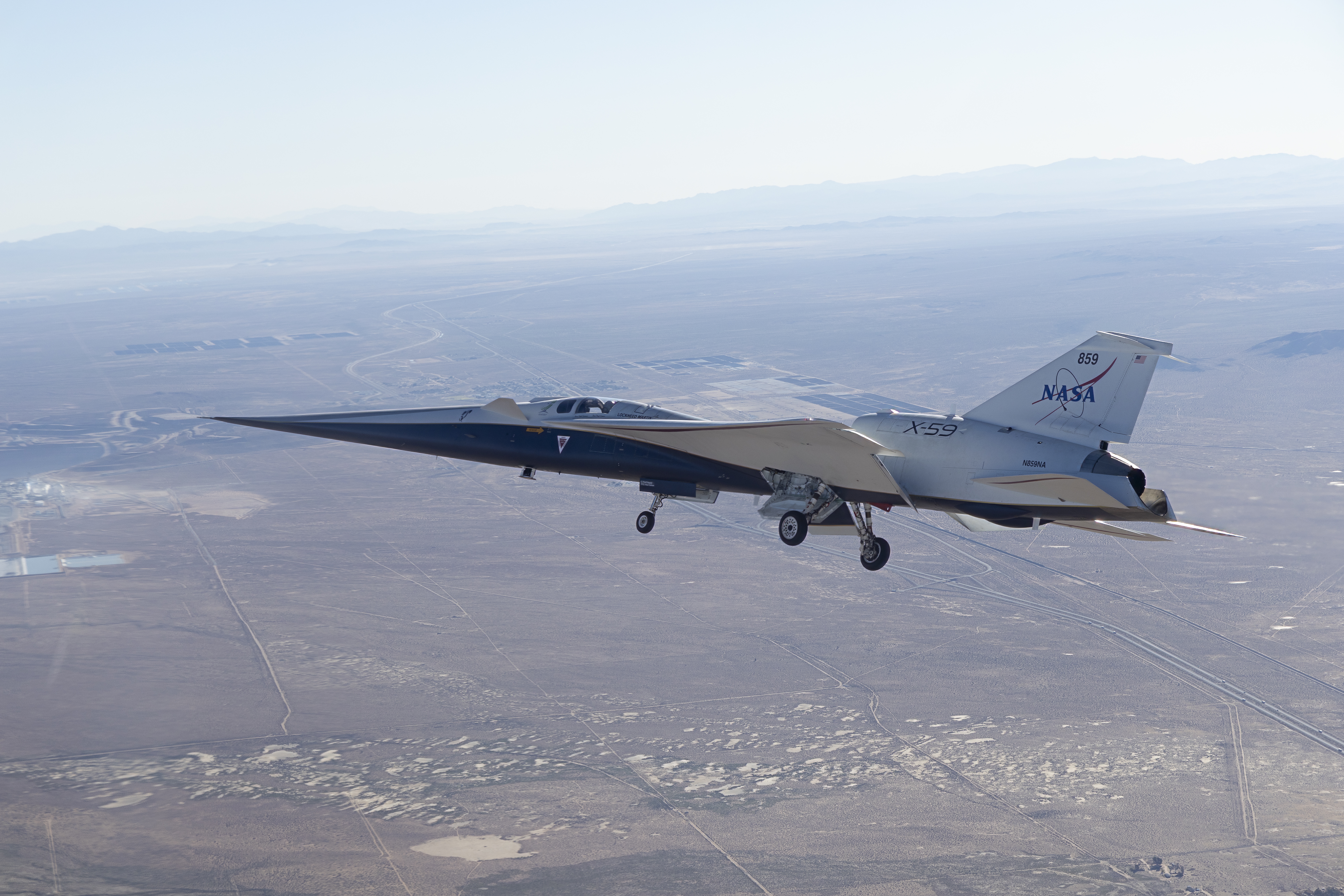
NASA’s X-59 quiet supersonic research aircraft cruises above Palmdale and Edwards, California, during its first flight, Tuesday, Oct. 28, 2025. The aircraft traveled to NASA’s Armstrong Flight Research Center in Edwards, California.
NASA/Lori Losey
Looking ahead
With growing interest in advanced air mobility, high-speed flight research, and new aircraft technologies, NASA’s integrated approach is more critical than ever. NASA Armstrong’s flight test discipline and safety frameworks contribute to agency-wide risk management and systems engineering, supporting NASA’s top priorities – from commercial supersonic technologies to the safety practices that underpin human spaceflight.
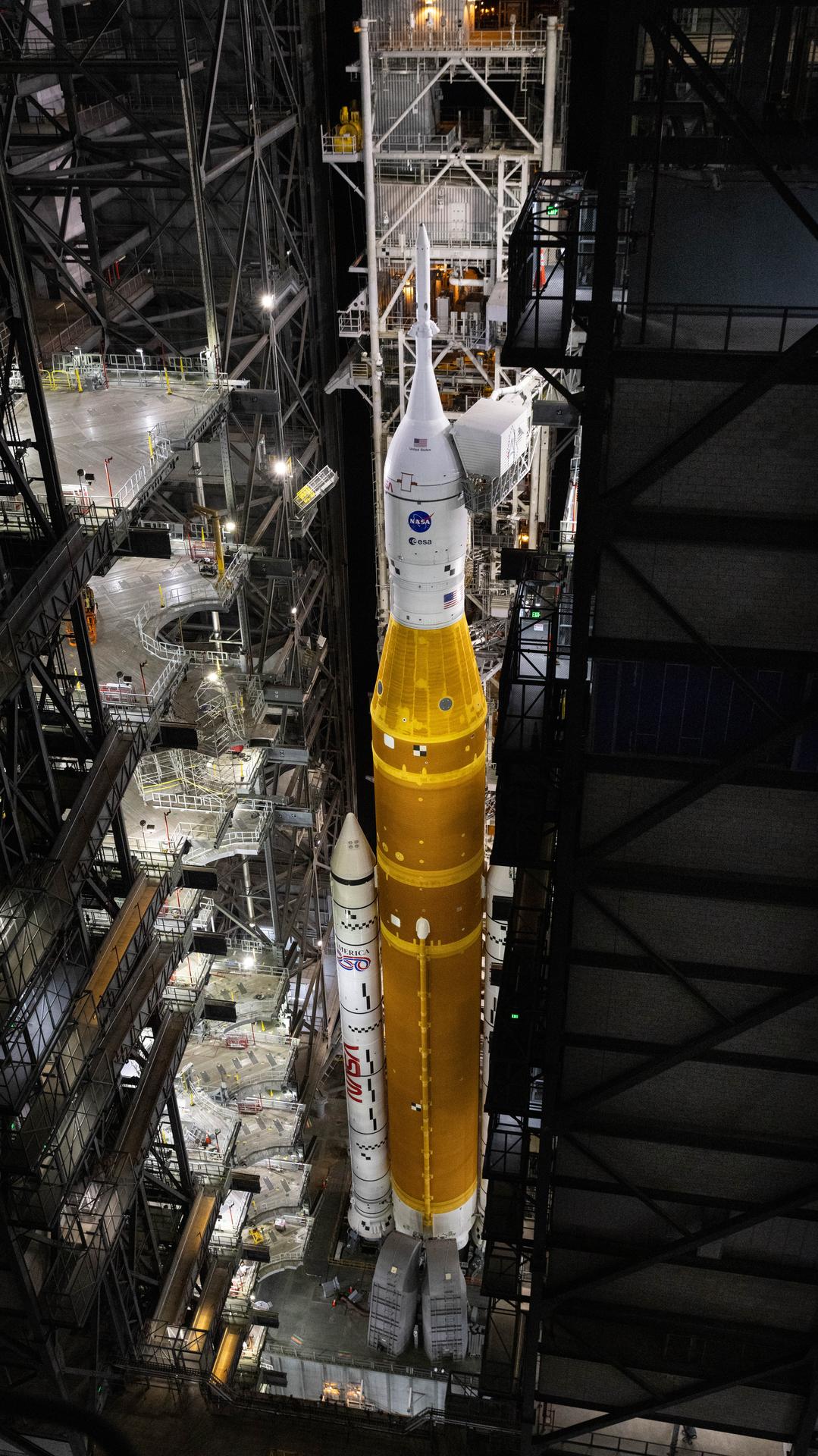
NASA’s crawler-transporter 2, carrying the agency’s Artemis II SLS (Space Launch System) rocket with the Orion spacecraft, arrives Feb. 25, 2026, inside the Vehicle Assembly Building at NASA’s Kennedy Space Center in Florida to troubleshoot the flow of helium to the rocket’s upper stage, the interim cryogenic propulsion stage. Once complete, the SLS rocket will roll back to Launch Complex 39B to prepare to launch four astronauts around the Moon and back for the Artemis II test flight.
Credit: NASA/Cory Huston
As part of a Golden Age of exploration and discovery, NASA announced Friday the agency is increasing its cadence of missions under the Artemis program to achieve the national objective of returning American astronauts to the Moon and establishing an enduring presence. This includes standardizing vehicle configuration, adding an additional mission in 2027, and undertaking at least one surface landing every year thereafter.
As teams prepare to launch Artemis II in the weeks ahead, the Artemis III mission, now in 2027, will be designed to test out systems and operational capabilities in low Earth orbit to prepare for an Artemis IV landing in 2028. This new mission will endeavor to include a rendezvous and docking with one or both commercial landers from SpaceX and Blue Origin, in-space tests of the docked vehicles, integrated checkout of life support, communications, and propulsion systems, as well as tests of the new Extravehicular Activity (xEVA) suits. NASA will further define this test flight after completing detailed reviews between NASA and our industry partners. The agency will share the specific objectives for the updated Artemis III mission in the near future.
NASA’s recently announced workforce directive is a key factor in enabling this acceleration. NASA will rebuild core competencies in the civil servant workforce including more in-house and side-by-side development work with our Artemis partners, enabling a safer, more reliable, and faster launch cadence.
“NASA must standardize its approach, increase flight rate safely, and execute on the President’s national space policy. With credible competition from our greatest geopolitical adversary increasing by the day, we need to move faster, eliminate delays, and achieve our objectives,” said NASA Administrator Jared Isaacman. “Standardizing vehicle configuration, increasing flight rate and progressing through objectives in a logical, phased approach, is how we achieved the near-impossible in 1969 and it is how we will do it again.”
“After successful completion of the Artemis I flight test, the upcoming Artemis II flight test, and the new, more robust test approach to Artemis III, it is needlessly complicated to alter the configuration of the SLS and Orion stack to undertake subsequent Artemis missions,” said NASA Associate Administrator Amit Kshatriya. “There is too much learning left on the table and too much development and production risk in front of us. Instead, we want to keep testing like we fly and have flown. We are looking back to the wisdom of the folks that designed Apollo. The entire sequence of Artemis flights needs to represent a step-by-step build-up of capability, with each step bringing us closer to our ability to perform the landing missions. Each step needs to be big enough to make progress, but not so big that we take unnecessary risk given previous learnings. Therefore, we want to fly the landing missions in as close to the same Earth ascent configuration as possible – this means using an upper stage and pad systems in as close to the ‘Block 1’ configuration as possible. We will work with our partners that have been developing the evolved block configuration of these systems to take proper actions to align their efforts towards this goal and announce the details of those changes once they are finalized. We will take a similar approach to in-space, landing, and surface EVA operations as well, as we evolve the mission sequence in the spirit of the Apollo mindset, which was obsessed with system reliability and crew safety as the keys to mission success.”
“Boeing is a proud partner to the Artemis mission and our team is honored to contribute to NASA’s vision for American space leadership,” said Steve Parker, Boeing Defense, Space & Security president and CEO. “The SLS core stage remains the world’s most powerful rocket stage, and the only one that can carry American astronauts directly to the moon and beyond in a single launch. As NASA lays out an accelerated launch schedule, our workforce and supply chain are prepared to meet the increased production needs. With a rocket designed at NASA’s Marshall Space Flight Center in Huntsville, Alabama, built at America’s rocket factory at NASA’s Michoud Assembly Facility in New Orleans, and integrated at NASA’s Kennedy Space Center in Florida, we are ready to meet the increased demand.”
The announcement came during a news conference at NASA Kennedy where leaders also discussed the status of the Artemis II mission. NASA rolled the SLS and Orion spacecraft to the Vehicle Assembly Building (VAB) on Feb. 25 for repairs ahead of the next launch opportunities for the test flight in April.
Once the Artemis II hardware was back in the VAB, teams immediately began work on the helium issue discovered on the Interim Cryogenic Propulsion Stage and prepared for several actions including replacing batteries in the flight termination system, end-to-end testing for range safety requirements, and more.
“I’m grateful to Administrator Isaacman for taking this bold step and moving quickly to assure we have the support and resources needed to launch Artemis astronauts to the Moon every year,” said Lori Glaze, acting associate administrator for Exploration Systems Development Mission Directorate at NASA Headquarters in Washington. “Our team is up to the challenge of a successful Artemis II mission, and soon thereafter, enabling a more frequent cadence of Moon missions.”
Residents of the U.S. Mid-Atlantic endured a formidable winter in 2025-2026, marked by several high-impact storms and prolonged stretches of cold temperatures that left parts of the Chesapeake Bay frozen over. Longtime residents may recall a winter nearly 50 years ago when the region saw even more widespread ice cover.
The MSS (Multispectral Scanner System) on Landsat 1 captured this image during the exceptionally cold winter of 1976-1977. The mosaic combines two Landsat scenes acquired on February 7 with a third captured on February 8. The landscape is shown in false color (MSS bands 6-5-4), in which ice appears in shades of blue, green, and white. On land, snow appears white, vegetation is red, and urban areas take on brown-gray tones.
A NASA analysis published in 1980 drew on these and other Landsat images to examine the anomalous ice conditions. Images indicate that ice began forming in the Chesapeake Bay’s upper tributaries in late December 1976 and spread to the middle of the upper bay by mid-January 1977. It reached its maximum extent around the time of this image, one week into February, when ice spanned 85 percent of the bay.
Persistent westerly winds at the start of February pushed ice toward the eastern shores of the Chesapeake and Delaware bays, contributing to fractures visible across the ice’s surface. As winds subsided, calmer conditions allowed new ice to form in areas of previously open water, visible in the image as thinner, darker blue patches. Reports from icebreaking operations indicated ice thicknesses reached up to 30 centimeters (12 inches) in the upper bay and up to 20 centimeters (8 inches) in the lower bay, with some tributaries seeing twice that amount.
Articles describing the event often show photos of people ice skating off Kent Island in front of the Bay Bridge and people driving cars and tractors across the ice. But the deep freeze strained the region, too. The ice and cold water caused high mortality in the area’s shellfish. And the crushing weight of the ice shifting with the tides damaged numerous piers, marinas, and lighthouses.
In winter 2025-2026, ice on the Chesapeake and Delaware bays appeared less extensive, with U.S. National Ice Center ice charts showing around 38 percent coverage on February 9 and 10. Still, concentrations in the upper bay and its tributaries this season were substantial enough to allow uncommon winter activities, including ice boaters racing across the frozen Claiborne Cove of Maryland’s Eastern Shore. At the same time, it created challenges for local watermen, according to news reports, trapping boats and limiting access to the bay.
NASA Earth Observatory image by Mike Taylor, Ginger Butcher, and Michala Garrison, using Landsat data from the U.S. Geological Survey. Story by Kathryn Hansen.
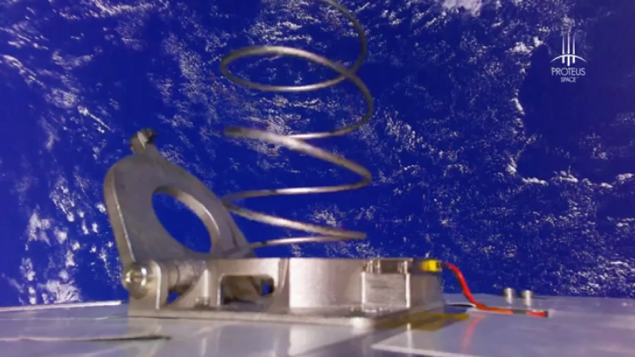
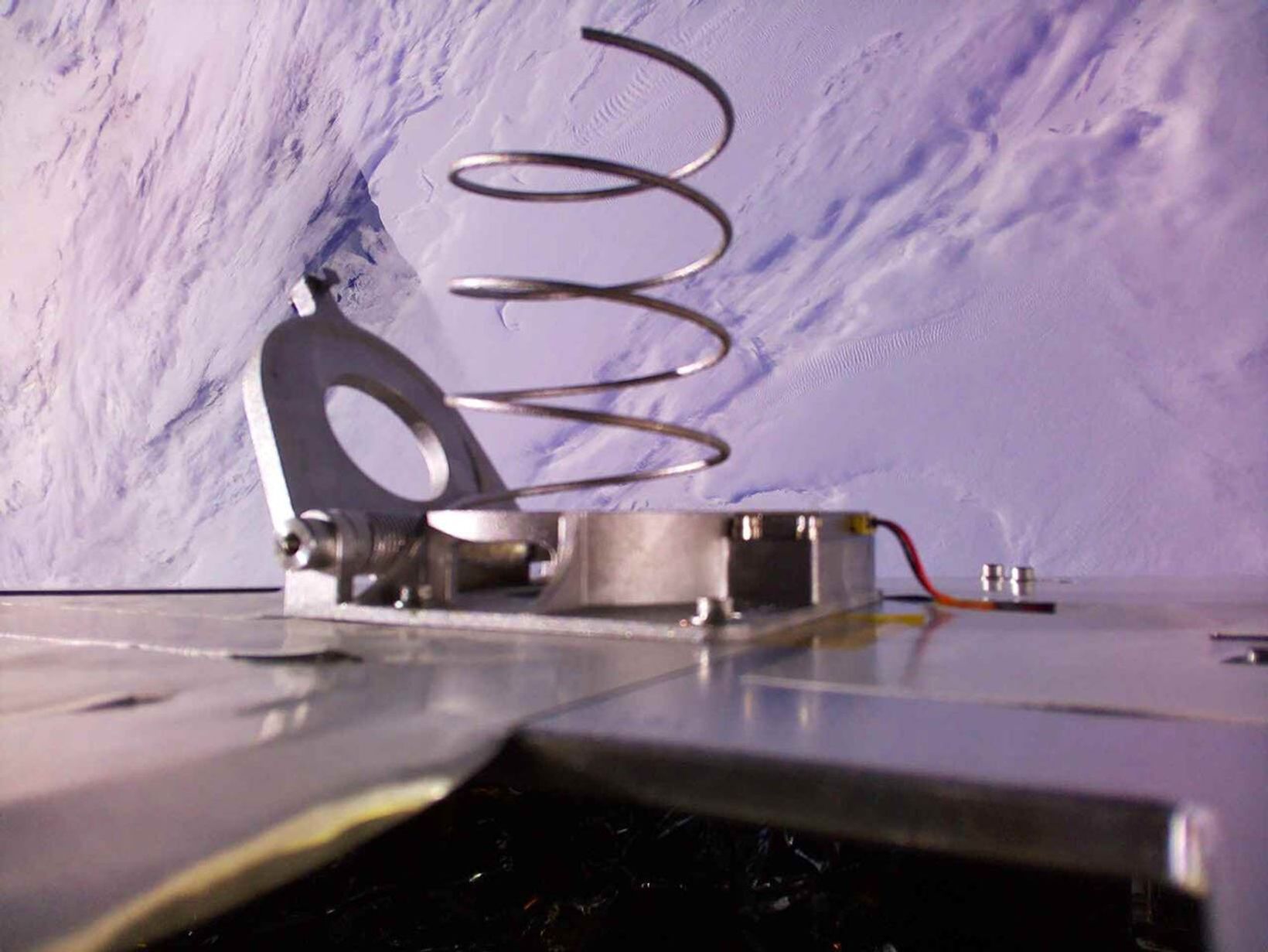
With a simple motion, a jack-in-the-box-like spring designed at NASA’s Jet Propulsion Laboratory showed the potential of additive manufacturing, also known as 3D printing, to cut costs and complexity for futuristic space antennas. Called JPL Additive Compliant Canister (JACC), the spring deployed on the small commercial spacecraft Proteus Space’s Mercury One on Feb. 3, 2026. An onboard camera captured this video of the spring popping out of its container as the spacecraft passed over the Pacific Ocean in low Earth orbit.
Figure A
Figure A is a still image of JACC after deployment, taken above Antarctica.
JACC is one of two JPL payloads on the spacecraft that are demonstrating new technologies designed to take up reduced volume while precisely deploying antennas on future orbiters. JACC’s success demonstrates that 3D-printed mechanisms can be built faster, cheaper, and with less complexity than traditionally fabricated space hardware.
Printed out of titanium, JACC uses three times fewer parts than similar structures: Combined into a single part is a hinge, panel, compression spring, and two torsion springs. Weighing just over 1 pound (498 grams), it is about 4 inches (10 centimeters) on each side. The spring, which extends from a packed height of just over 1 inch to about 6 inches (3 centimeters to 15 centimeters), is modeled after communication antennas commonly used on satellites.
The second demonstration payload aboard Mercury One is the Solid Underconstrained Multi-Frequency (SUM) Deployable Antenna for Earth Science. Together with JACC, the two payloads go by the name Prototype Actuated Nonlinear Deployables Offering Repeatable Accuracy Stowed on a Box (PANDORASBox). They were both conceived, built, tested, and delivered for flight by JPL in less than one year on minimal budgets.
Mercury One launched from Vandenberg Space Force Base in California on Nov. 28, 2025, as part of SpaceX’s Transporter-15 mission.
JPL internal research development funds supported JACC, as did NASA’s Earth Science Technology Office (ESTO).
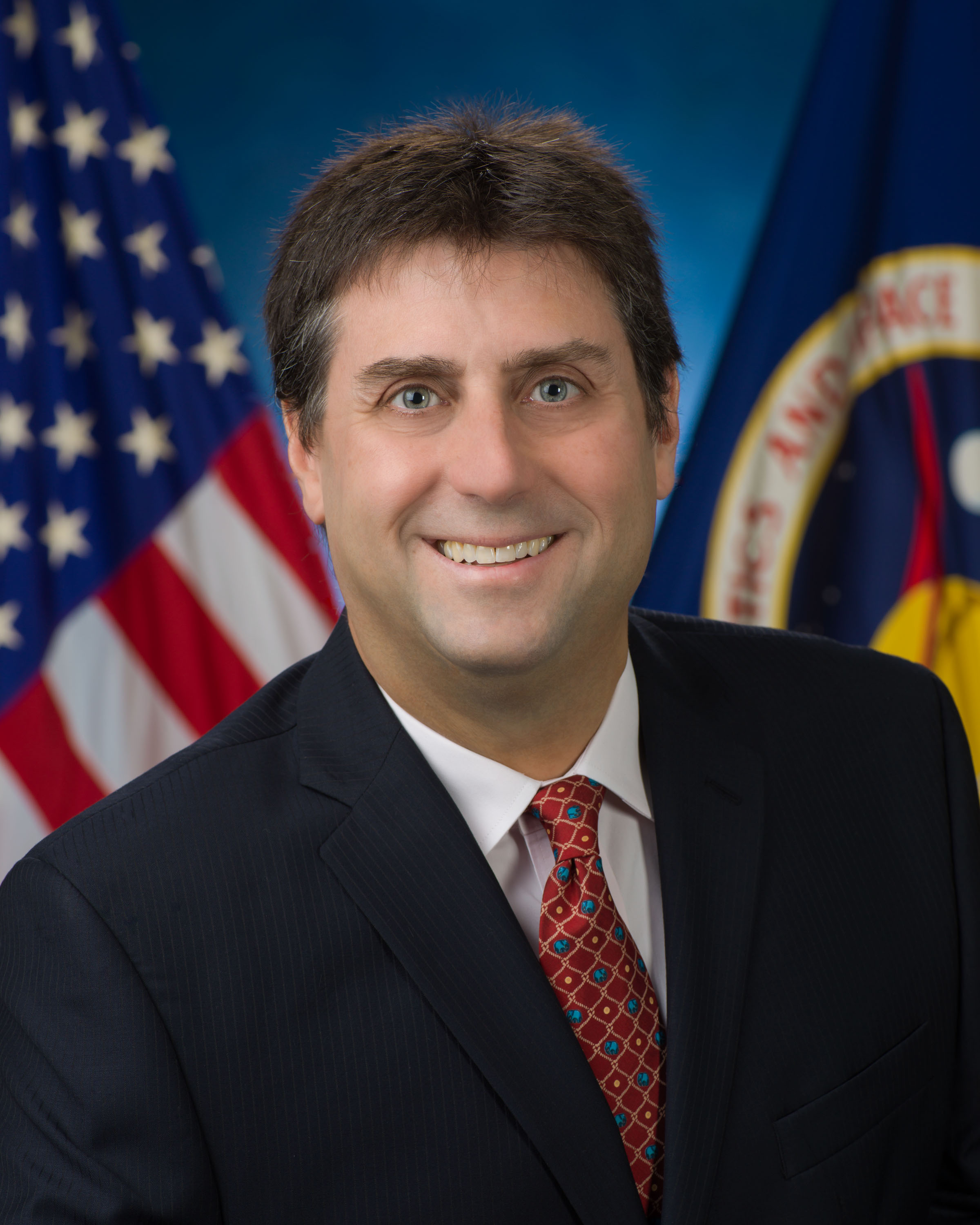
Joel Montalbano, acting associate administrator for NASA’s Space Operations Mission Directorate
NASA
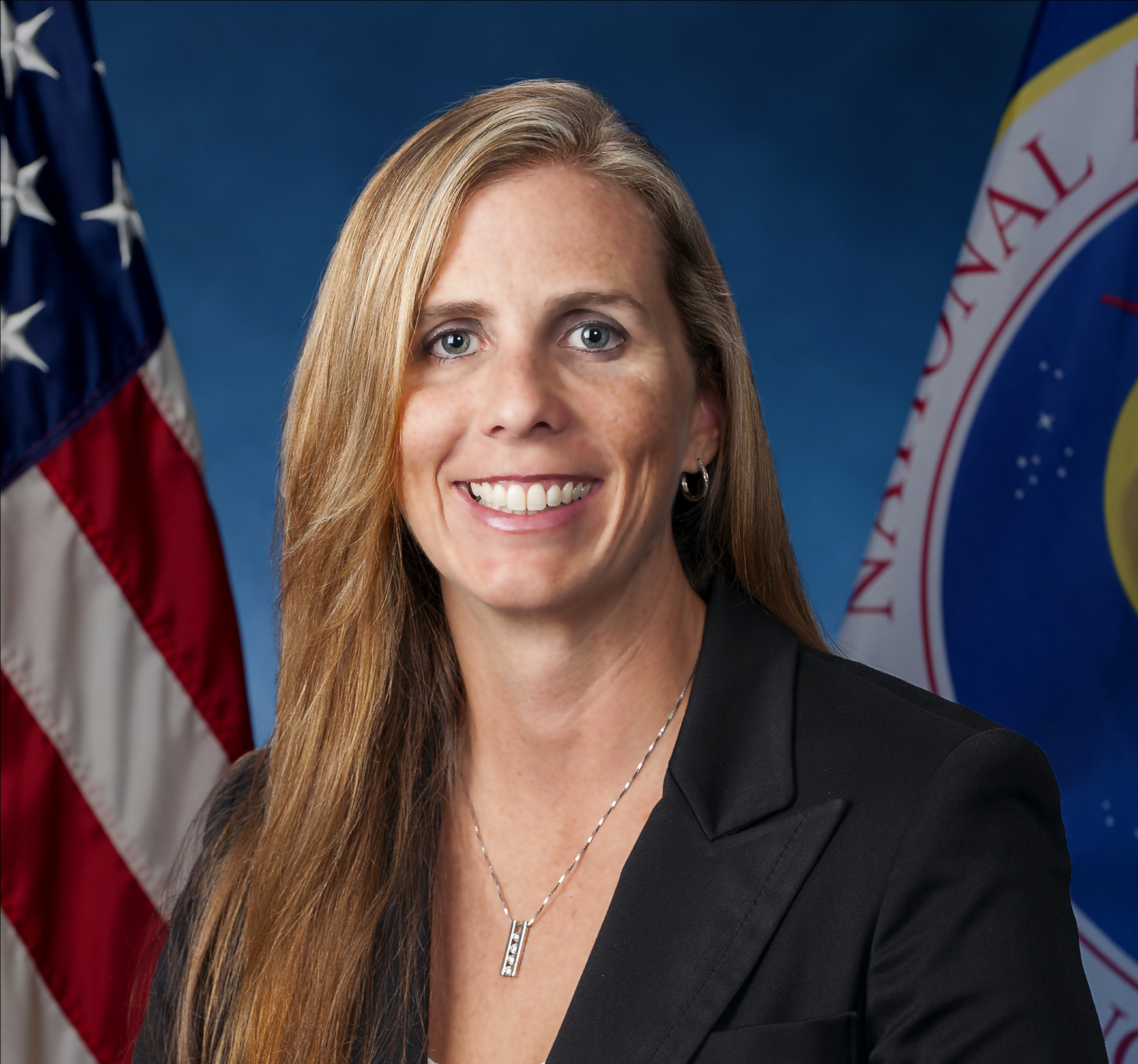
On Thursday, NASA announced Joel Montalbano will serve as the acting associate administrator for the Space Operations Mission Directorate (SOMD) at NASA Headquarters in Washington, and Dana Hutcherson will serve as the acting program manager of the Commercial Crew Program.
SOMD’s programs and activities include the Commercial Crew Program, the Commercial Low Earth Orbit Program, the Human Research Program, the International Space Station Program, the Launch Services Program, the Rocket Propulsion Test Program, the Space Communications and Navigation Program, Space Sustainability, and Human Spaceflight Capabilities.
Both leaders were previously serving as deputies in their respective roles.
“Strong leadership is essential to advancing NASA’s mission, and Joel Montalbano and Dana Hutcherson are exceptionally well-qualified to serve in these acting roles,” said NASA Administrator Jared Isaacman. “Their experience and commitment will help ensure we deliver on the President’s National Space Policy, maintain American leadership in low Earth orbit, and build the capabilities required to achieve the near-impossible beyond it.”
Kenneth Bowersox previously announced his retirement, effective Friday, March 6, after which Montalbano will assume the role as acting head of SOMD. Key priorities for Montalbano will include establishing a low Earth orbit economy ahead of retiring the International Space Station and maintaining America’s superiority in space.
Prior to his positions at headquarters, Montalbano served as program manager of the International Space Station at NASA’s Johnson Space Center in Houston, where he was responsible for the overall management, development, integration, and operation of the orbiting laboratory. He also has served as a variety of other roles, including deputy program manager for the International Space Station Program Office; director of NASA’s Human Space Flight Program in Russia; and a NASA flight director. He started his career at Rockwell in 1988 and became a NASA civil servant that same year.
Over the course of his career, he has received many honors, including the NASA Distinguished Service Medal, Johnson Space Center Directors Commendation, Rank of Meritorious Executive, conferred by the President of the United States, NASA Exceptional Service Medal (twice), the Superior Accomplishment Award, NASA Outstanding Leadership Medal, Rotary Space Award Nominee, and more.
Montalbano received a bachelor’s degree in aerospace, aeronautical, and astronautical engineering from Iowa State University.
Through CCP, Hutcherson will continue her work with the American aerospace industry to develop safe, reliable and cost-effective crew transportation systems for low-Earth orbit destinations, including the International Space Station. She is responsible for the facilitation of spacecraft development, certification, and operations to enable the safe transportation of NASA astronauts for the Commercial Crew Program.
Hutcherson previously served as deputy manager of the CCP Systems Engineering and Integration Office, and as deputy manager of the program’s Launch Vehicle Systems Office. She also has served as a NASA flow director within the Launch Vehicle Processing Directorate at Kennedy, and other roles at NASA. Prior to NASA, she began her career with United Space Alliance as an airframe engineer.
Hutcherson has received numerous prestigious honors including Meritorious Presidential Rank Award, NASA’s Space Flight Awareness Leadership Award, and Outstanding Leadership Medal.
She holds a bachelor of science in mechanical engineering from the Georgia Institute of Technology in Atlanta, and a master of science in industrial engineering of engineering management from the University of Central Florida in Orlando.
Dana Hutcherson, acting program manager for NASA’s Commercial Crew Program
February is one of the driest months of the year in northern Colombia’s Córdoba department, a major farming and cattle region. It’s the time of year when farmers normally prepare fields for planting and ranchers move livestock to graze in drying floodplains. In 2026, however, unusually heavy rains in early February upended seasonal rhythms and submerged much of the department under floodwaters.
The OLI (Operational Land Imager) on Landsat 9 captured this false-color image (bands 7-5-4) of flooding along the Sinú River on February 9, 2026 (right). Dark floodwaters cover farmland, pastureland, and several communities, particularly to the west of the river. To the east, water levels at a complex of wetlands are unseasonably high. Lorica, a city of roughly 90,000 people, is visible in the upper part of the image. The OLI image on the left shows the same area on January 23, before floodwaters arrived.
After an already wet January, rainfall intensified in early February when an unusual cold front in the Caribbean pushed south on February 1 and 2, forcing moisture-laden air into northern Colombia and over the Andes. This led to several days of intense downpours in Córdoba, with some areas receiving more than 4 to 7 centimeters (2 to 3 inches) of rain per day, according to one analysis of the event.
NASA’s IMERG (Integrated Multi-satellite Retrievals for Global Precipitation Measurement) estimated rain rates of 1.7 centimeters per hour near Lorica on February 1, the day of the heaviest rains. In the following weeks, storms continued to drench the region. On February 25, imagery from NASA’s Terra satellite indicated that flooding remained widespread.
The floods have been far-reaching and destructive. More than 80 percent of Córdoba flooded, according to the UN Office for the Coordination of Humanitarian Affairs. Preliminary estimates cited by news and government sources suggest that thousands of homes were destroyed, more than 11,000 families displaced, and more than 150,000 hectares of farmland inundated.
NASA Earth Observatory images by Michala Garrison, using Landsat data from the U.S. Geological Survey.Story by Adam Voiland.