The Moon readies for Artemis II, Orion shines bright, and a planetary parade marches across the night sky
NASA’s Artemis II mission has its first opportunity to launch to the moon, Orion the Hunter takes center stage, and a planetary parade marches across the night sky.
Skywatching Highlights
Feb: Artemis II launch window opens.
Feb: Orion the Hunter ideal viewing
Mid-Late Feb: Planetary Parade
Transcript
The Moon could have human visitors for the first time since 1972, the constellation Orion will be clear to see, and a planetary parade will sparkle across the skies.
That’s What’s Up, this February.
The Moon could have some visitors soon!
NASA’s Artemis II mission will send astronauts to fly around the Moon. The first opportunities for launch are this February.
This mission will pave the way for Artemis III, which will be the first time we’ve sent humans to the lunar surface since the final Apollo mission, Apollo 17, in 1972.
So this month, look up to the Moon shining bright in the night sky and there might be somebody looking back down at you.
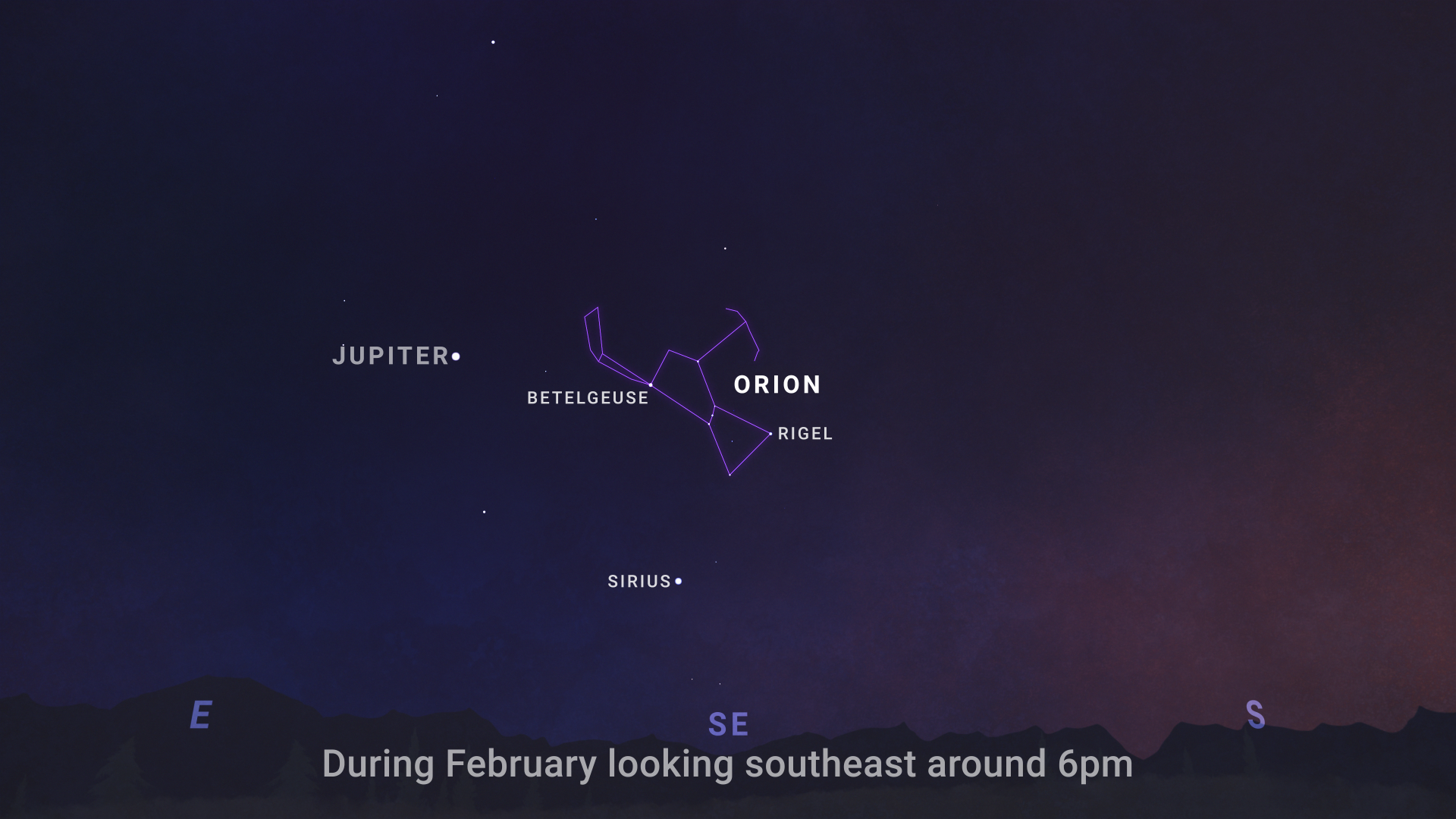
Can you spot Orion the Hunter in the night sky?
NASA/JPL-Caltech
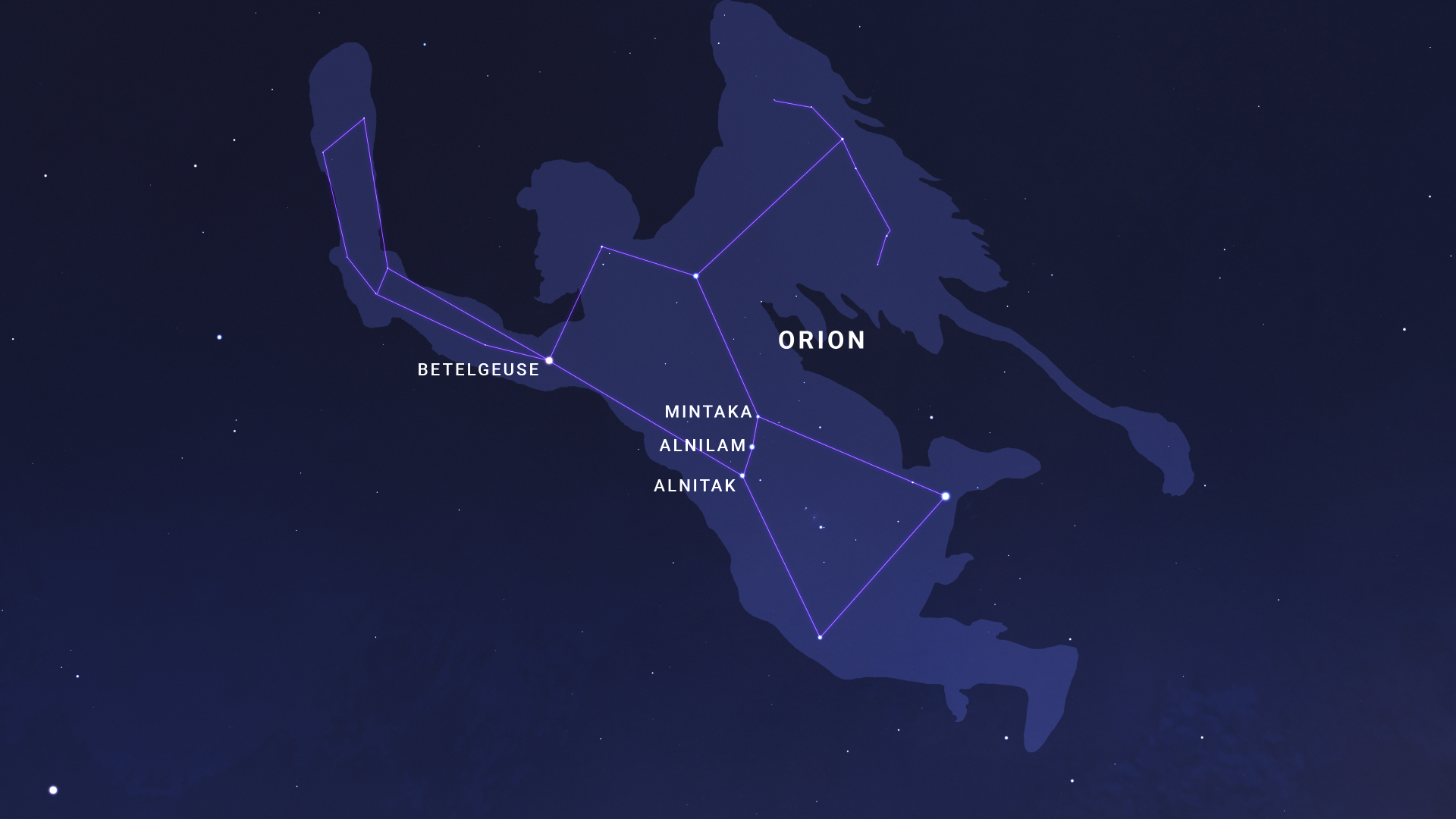
You might be able to see the line of three stars that make up Orion’s Belt, but that belt is a part of a larger constellation called Orion, named for the hunter in Greek mythology.
Above Orion’s belt, the hunter’s right shoulder is actually Betelgeuse (or Alpha Orionis), one of the brightest stars in the night sky!
NASA/JPL-Caltech
Most visible in the winter, February is one of the clearest times to see Orion in the sky.
From dusk through the night, look to the southern sky and try and spot the hunter for yourself.
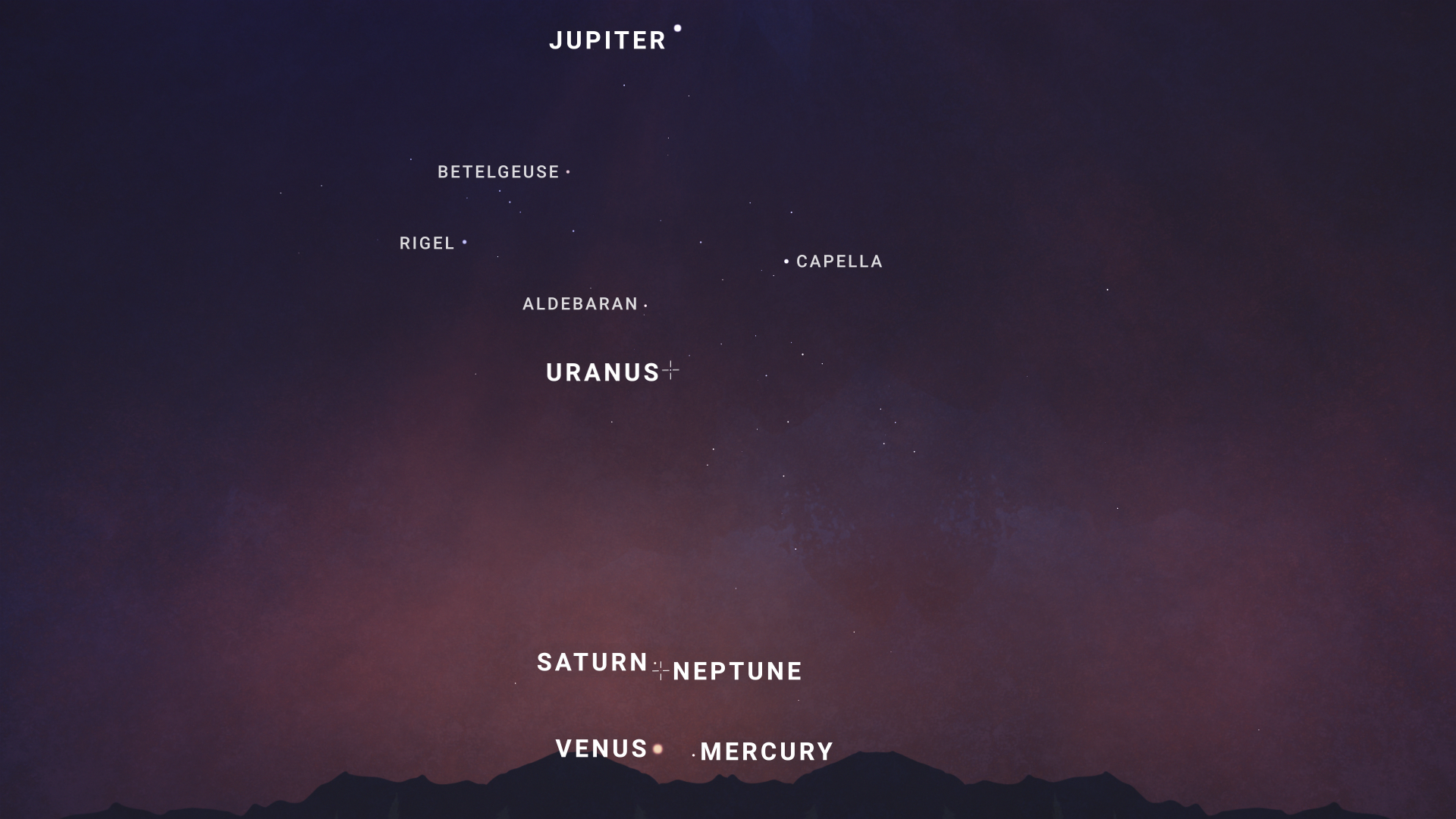
A planetary parade will march across the sky this month!
NASA/JPL-Caltech
Mid-February, Saturn will drop down toward the horizon as Venus and Mercury climb upward in the sky, meeting together in the west to southwestern sky.
Jupiter will find itself high in the sky.
And even Uranus, found in the southern sky, and Neptune, found nearby Saturn, will join the parade—though you’ll need binoculars or a telescope to spot these two far-off planets.
The planets will be visible soon after sunset throughout the month of February, but they’ll be lined up best toward the end of the month.
So, go outside and see how many planets you can find!
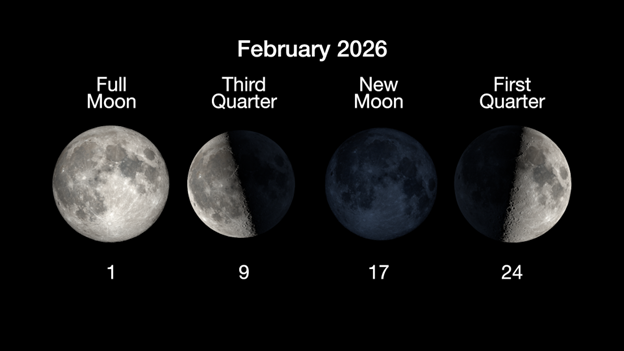
Here are the phases of the Moon for February.
NASA/JPL-Caltech
You can stay up to date on all of NASA’s missions exploring the solar system and beyond at science.nasa.gov.
I’m Chelsea Gohd from NASA’s Jet Propulsion Laboratory, and that’s What’s Up for this month.
Preparing for Artemis II: Training for a Mission Around the Moon
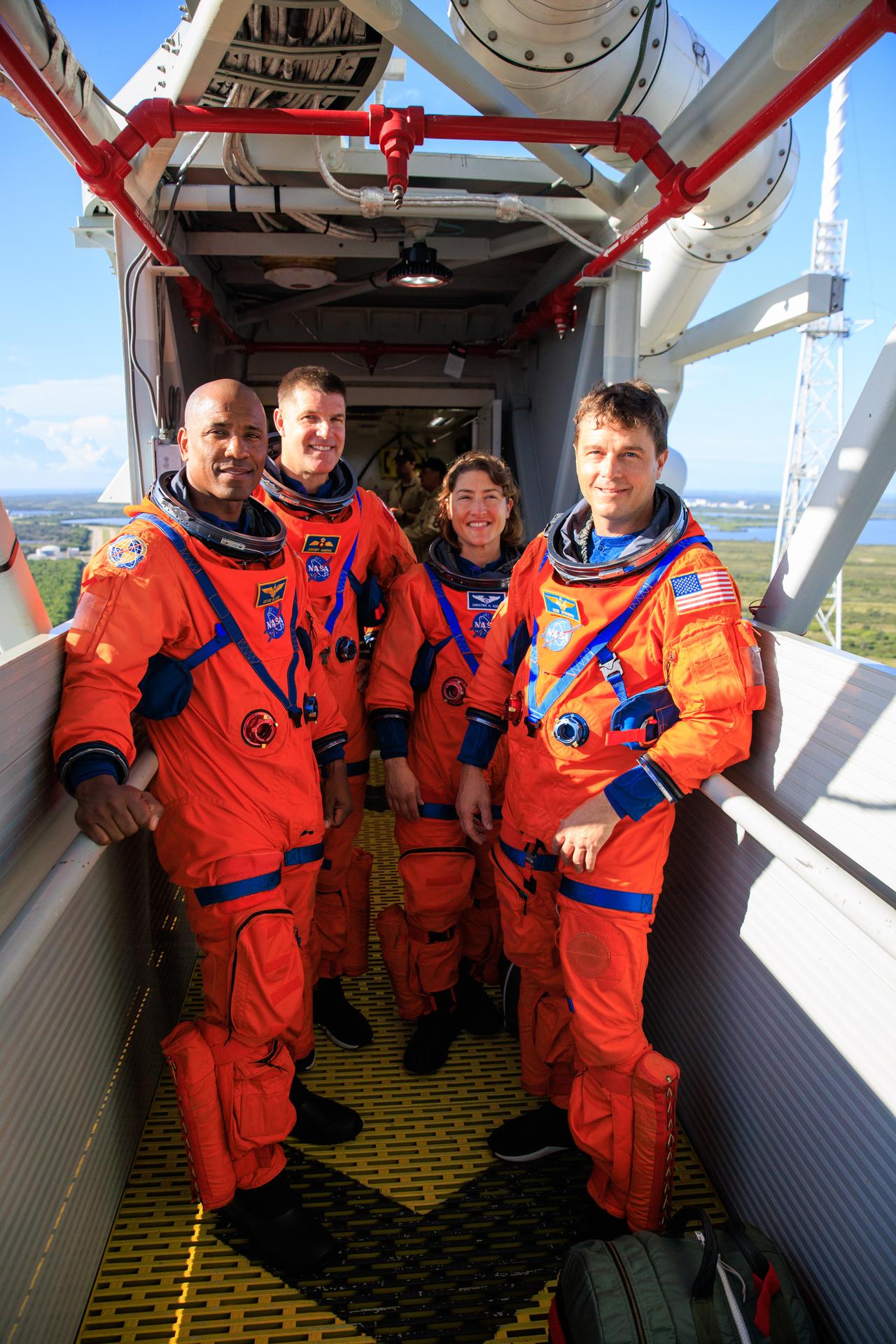
Artemis II astronauts, from left, NASA astronaut Victor Glover, CSA (Canadian Space Agency) astronaut Jeremy Hansen, and NASA astronauts Christina Koch and Reid Wiseman stand on the crew access arm of the mobile launcher as part of an integrated ground systems test at NASA’s Kennedy Space Center in Florida.
Credits:NASA/Frank Michaux
Four astronauts will soon travel beyond low Earth orbit and fly around the Moon on Artemis II, a mission that will test NASA’s systems and hardware for human exploration of deep space.
Since June 2023, NASA astronauts Reid Wiseman, Victor Glover, Christina Koch, and CSA (Canadian Space Agency) astronaut Jeremy Hansen have been preparing for their lunar journey. The approximately 10-day mission will test the SLS (Space Launch System) rocket and Orion spacecraft, named Integrity by the crew, while requiring the quartet to operate with greater autonomy and make critical decisions far from Earth.
Training for Artemis II is all risk mitigation. By preparing the astronauts and flight controllers for what they might encounter, we enable mission success.
Artemis II Chief Training Officer
Jacki Mahaffey
Unlike missions to the International Space Station, Artemis II offers no nearby safe harbor and no option to be back on Earth within hours of a problem. Training reflects that reality. Crews are prepared not just to follow procedures, but to understand spacecraft systems well enough to adapt when conditions change.
Training began with mission fundamentals, including how Orion and SLS systems function individually and together. From there, the crew progressed through phases of training that moved from routine on-orbit operations to more complex mission segments such as ascent, entry, and landing. Each phase builds on the last as the crew moves closer to flight.
In parallel, astronauts trained in medical operations, exercise systems, spacesuits, and daily life aboard Orion. Together, these elements form a single, integrated mission timeline.
Observing the Moon Through the Lens
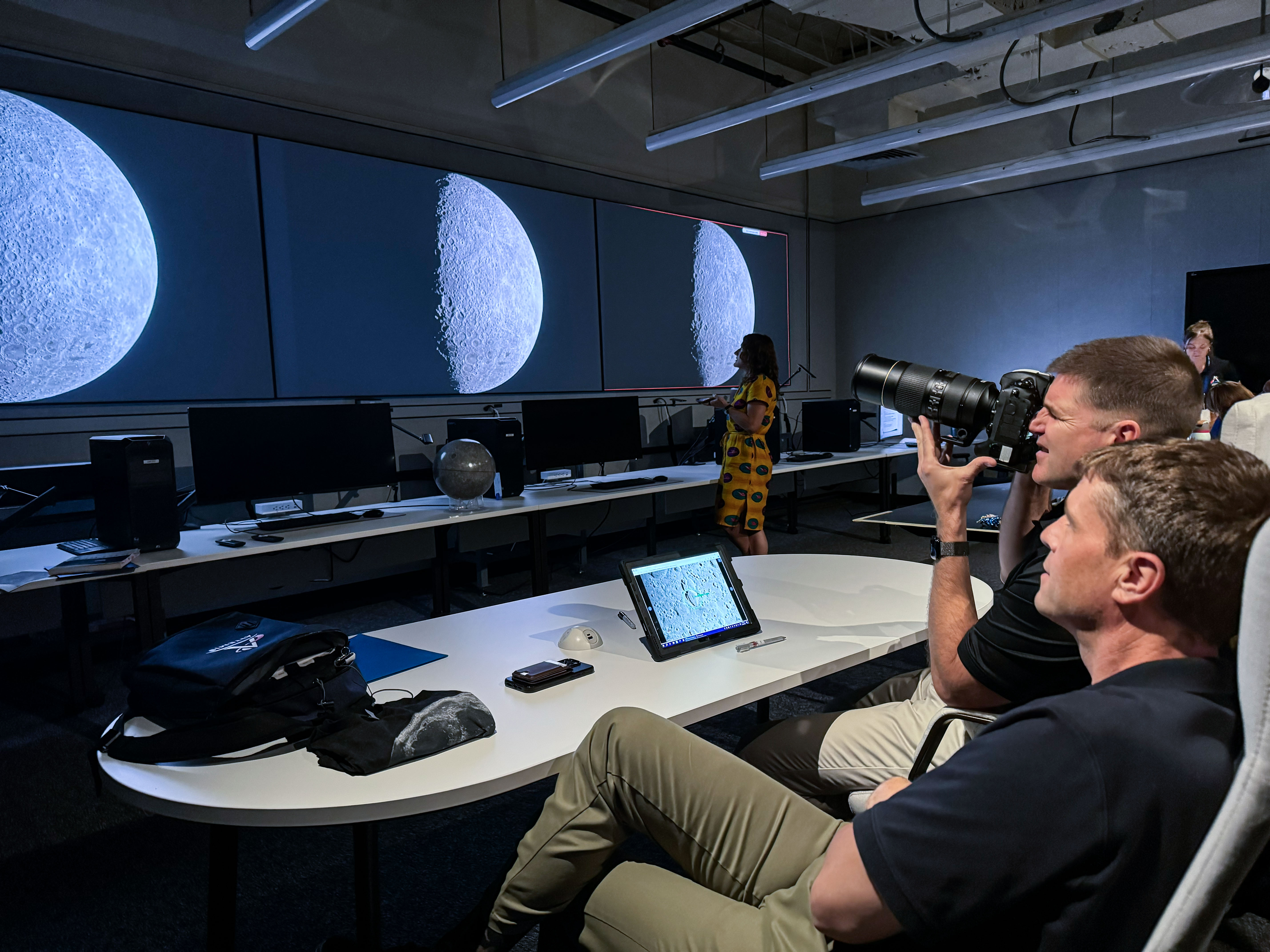
The Artemis II crew practices lunar photography at NASA’s Johnson Space Center in Houston.
NASA/Kelsey Young
A key part of Artemis II training includes lunar observation and photography. At NASA’s Johnson Space Center in Houston, astronauts studied the Moon’s far side, learning to identify crater shapes, surface textures, color variations, and reflectivity.
Although Artemis II will not land on the Moon, the crew will conduct detailed observations from lunar orbit to prepare for future Artemis missions.
Flight Training at Ellington Field
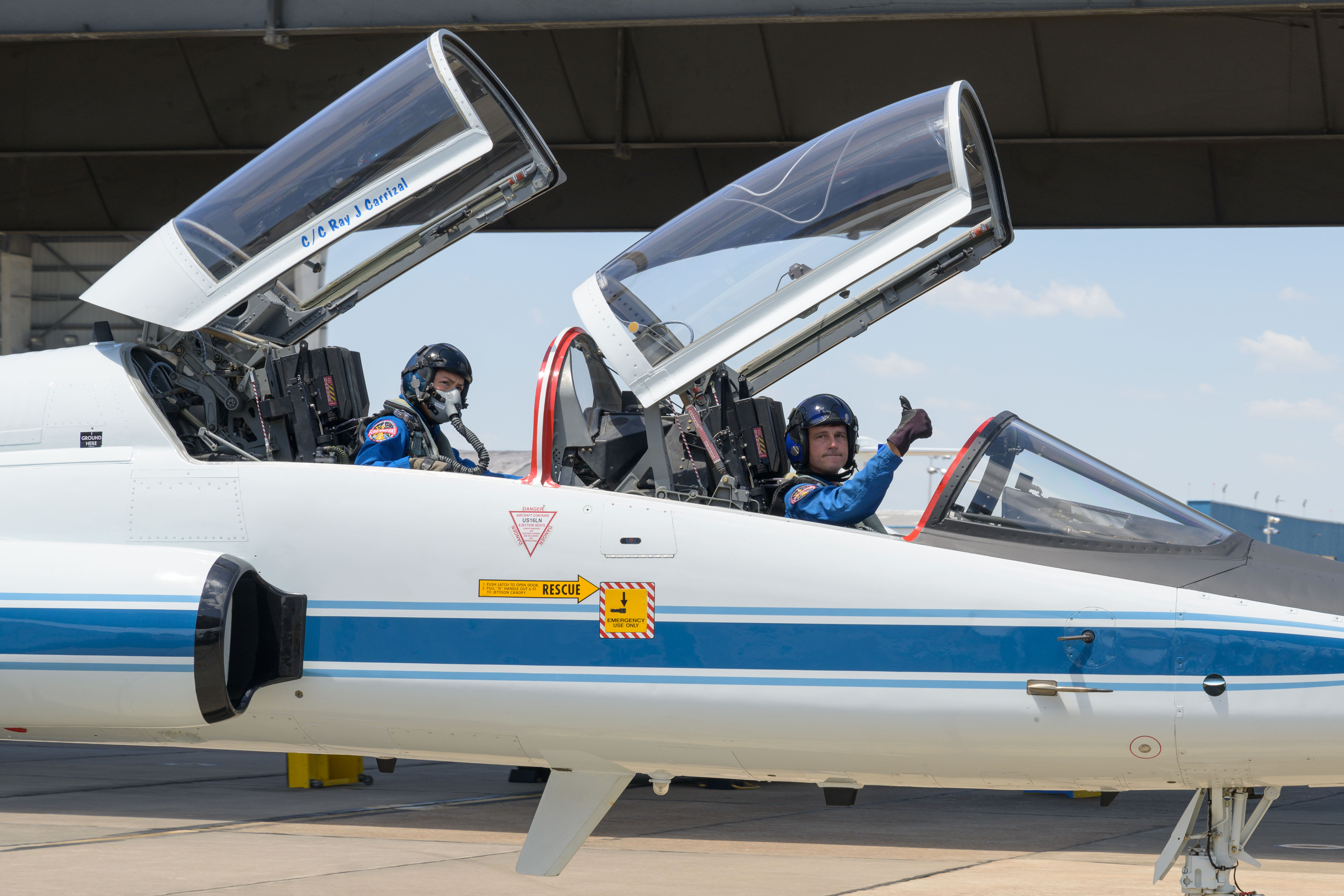
Artemis II crew members Reid Wiseman and Christina Koch during T-38F flight training at Ellington Field.
NASA/Josh Valcarcel
In addition to classroom instruction and simulations, the Artemis II crew trains in T-38 jet aircraft at Johnson’s Ellington Field. The T-38 exposes astronauts to high-workload, dynamic flight conditions that build spatial awareness and adaptability, skills that translate directly to decision-making under pressure in spaceflight.
Protecting Crew Health in Deep Space
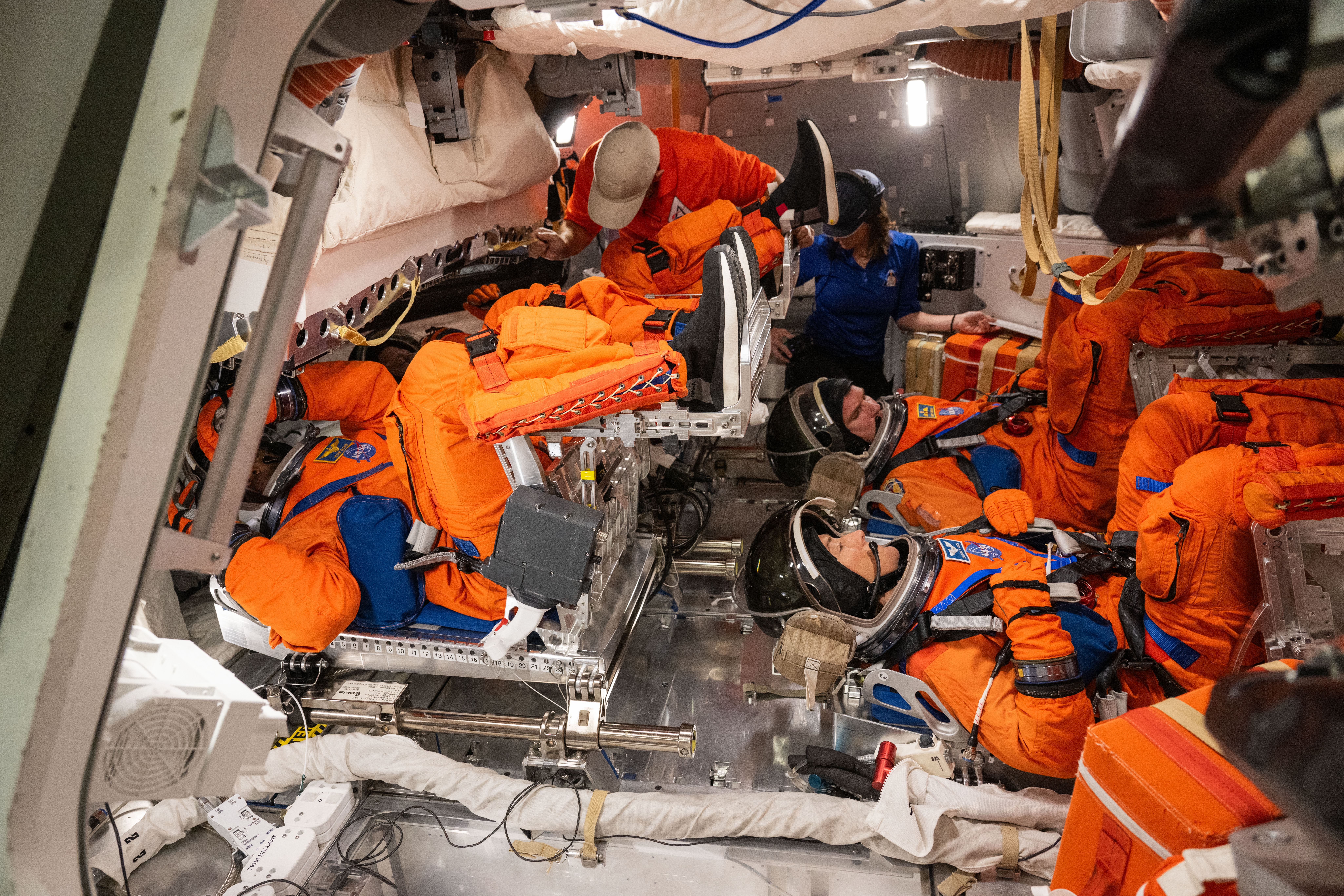
The Artemis II crew don their Orion Crew Survival System spacesuits for post landing emergency egress inside the Orion Mockup at Johnson’s Space Vehicle Mockup Facility.
NASA/James Blair
The crew donned their Orion Crew Survival System spacesuits during training to support testing of Orion’s environmental control and life support systems. The suit provides pressure, oxygen, and thermal protection during launch, entry, and contingency scenarios while Orion’s life support systems manage cabin oxygen, water, temperature, and overall crew health throughout the mission.
Mastering Orion Systems and Simulations
Artemis II Commander Reid Wiseman (front) and Pilot Victor Glover participate in an Artemis II entry simulation at Johnson Space Center.
NASA/Bill Stafford
Inside the Orion Mission Simulator at Johnson, the crew rehearsed every phase of the mission, from routine operations to emergency response. Simulations are designed to teach astronauts how to diagnose failures, manage competing priorities, and make decisions with delayed communication from Earth.
Through this process, the quartet learned every aspect of the Orion crew module’s interior, including how to navigate onboard displays and execute the procedures used to fly and monitor the spacecraft.
Science Preparation and Geology Training
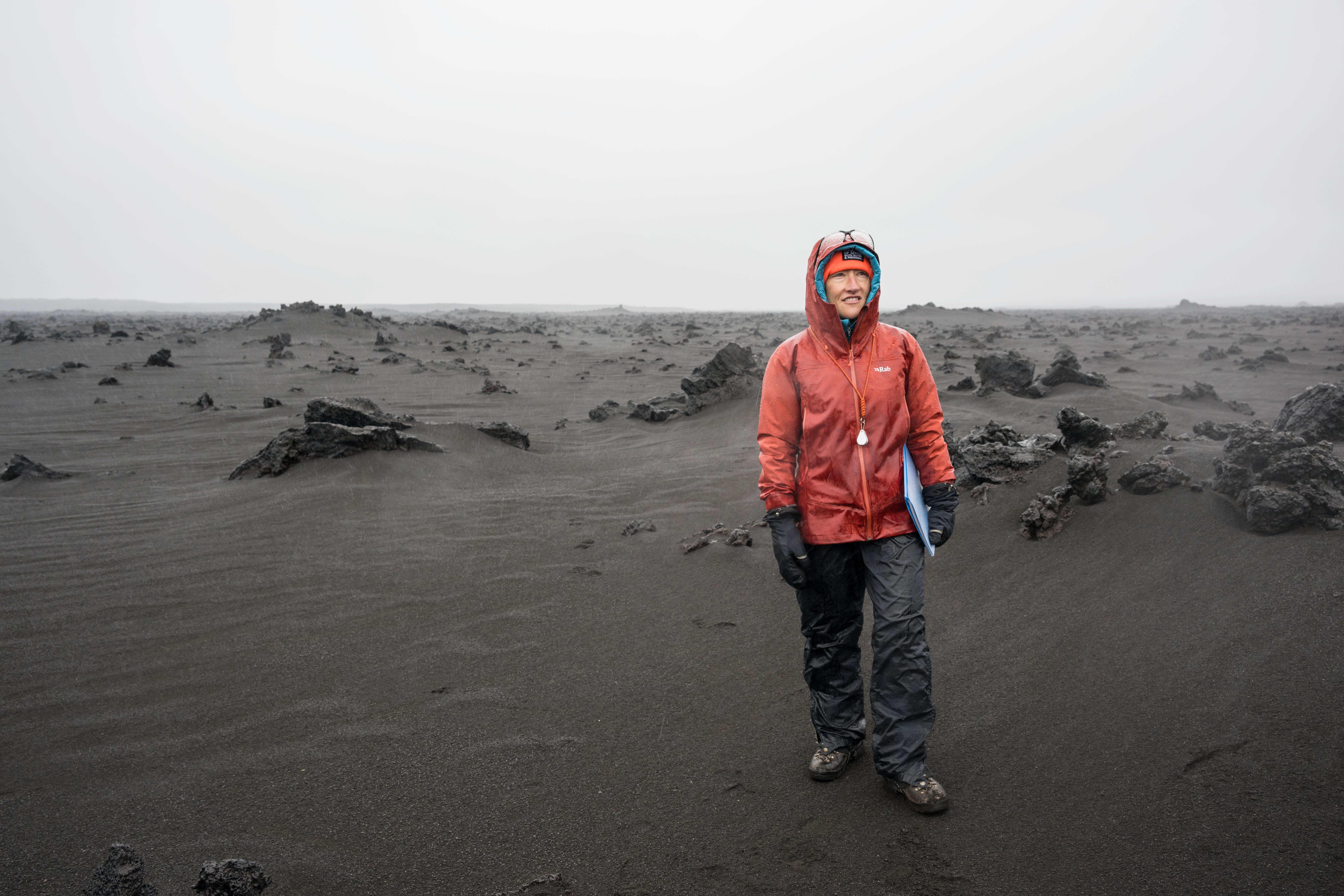
Artemis II Mission Specialist Christina Koch stands in a windswept volcanic field during geology training in Iceland, where volcanic terrain serves as an analog for lunar landscapes.
NASA/Robert Markowitz
While Artemis II astronauts will not land on the Moon, the geology fundamentals they develop during field training in remote environments are critical to meeting the mission’s science objectives.
During the mission, the crew will examine a targeted set of surface features, including craters and regolith, from orbit. Astronauts will document variations in color, reflectivity, and texture to help scientists interpret geologic history.
Preparing for Splashdown and Recovery
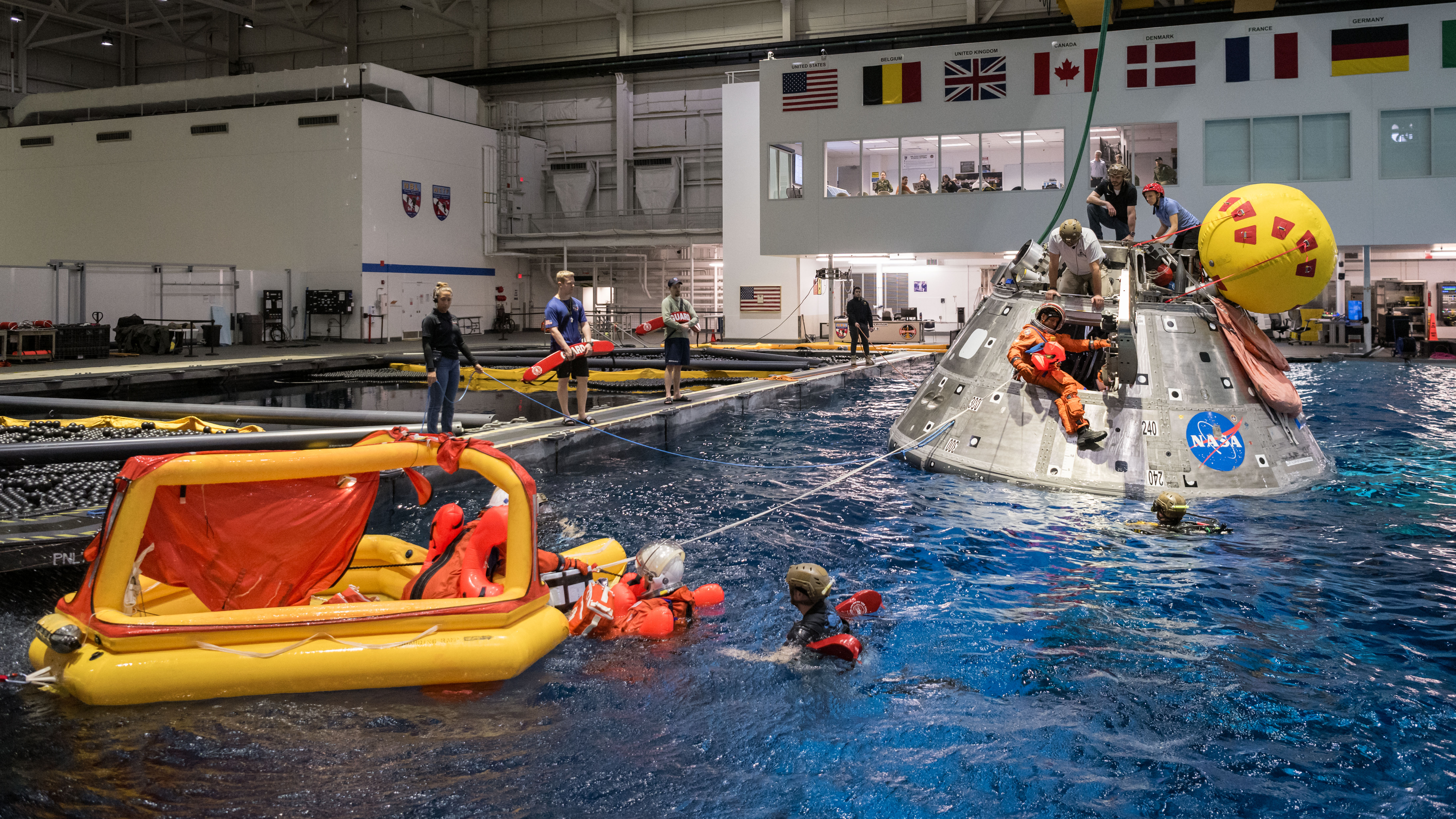
The Artemis II astronauts during water survival recovery training at NASA’s Neutral Buoyancy Laboratory.
NASA/Josh Valcarcel
The mission will conclude when the Artemis II mission splashes down.
The crew worked through splashdown and recovery operations at the agency’s Neutral Buoyancy Laboratory. They rehearsed how to exit the Orion spacecraft safely in different scenarios, stabilize the spacecraft, and board a raft – skills they will rely on after returning from their mission around the Moon.
The Crew is Go for Launch
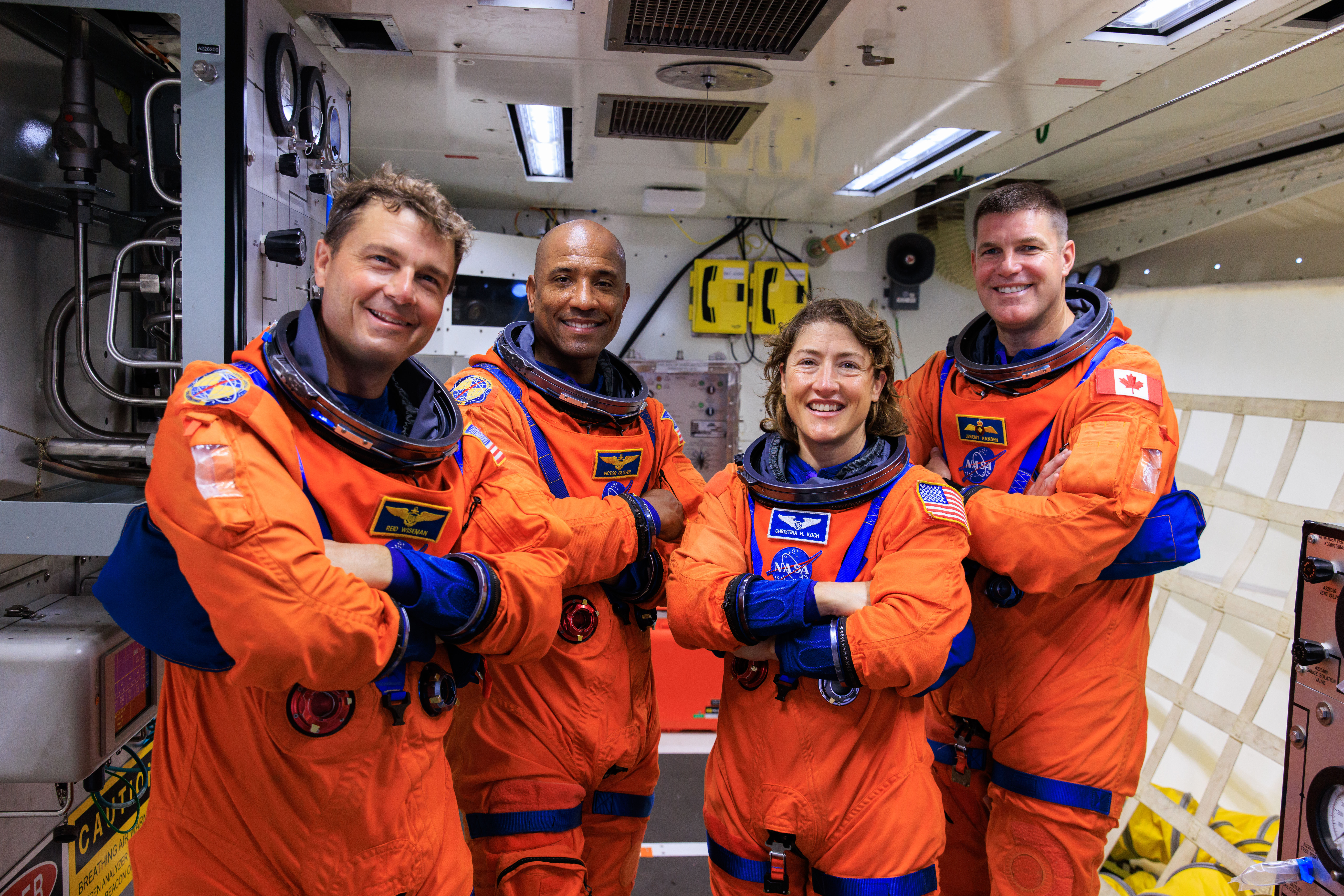
Artemis II crew members (left to right) Reid Wiseman, Victor Glover, Christina Koch, and Jeremy Hansen stand in the white room on the crew access arm of the mobile launcher at Launch Pad 39B at NASA’s Kennedy Space Center in Florida.
NASA/Frank Michaux
The Artemis II crew also completed integrated ground systems tests at NASA’s Kennedy Space Center in Florida. These included suited tests, full mission rehearsals, and launch-day dry runs that walked astronauts through every step, from traveling to the launch pad to entering Orion at Launch Pad 39B.
As Artemis II moves closer to launch, the focus shifts from preparation to readiness as the crew enters the next era of exploration beyond low Earth orbit.
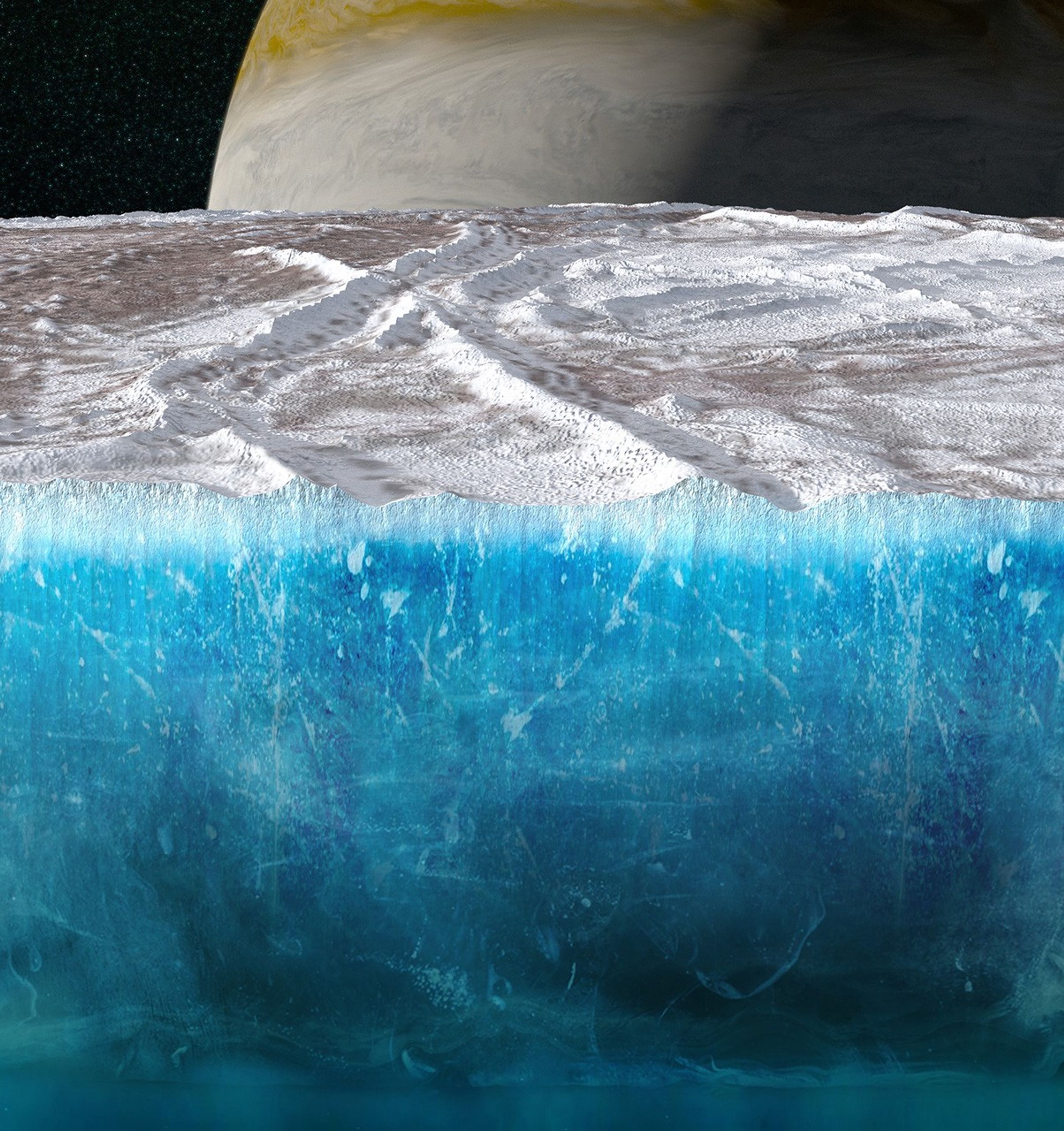
This artist’s concept depicts a cutaway view showing Europa’s ice shell. It contains a shallow layer of small imperfections (cracks, pores, and voids) that extend down from the surface hundreds of feet. The icy moon of Jupiter is thought to harbor an ocean below its frozen exterior.
Data used to generate a new result on the ice thickness and structure was collected by the microwave radiometer instrument on NASA’s Juno spacecraft during a close flyby of the icy moon on Sept. 29, 2022.
Preparations for Next Moonwalk Simulations Underway (and Underwater)
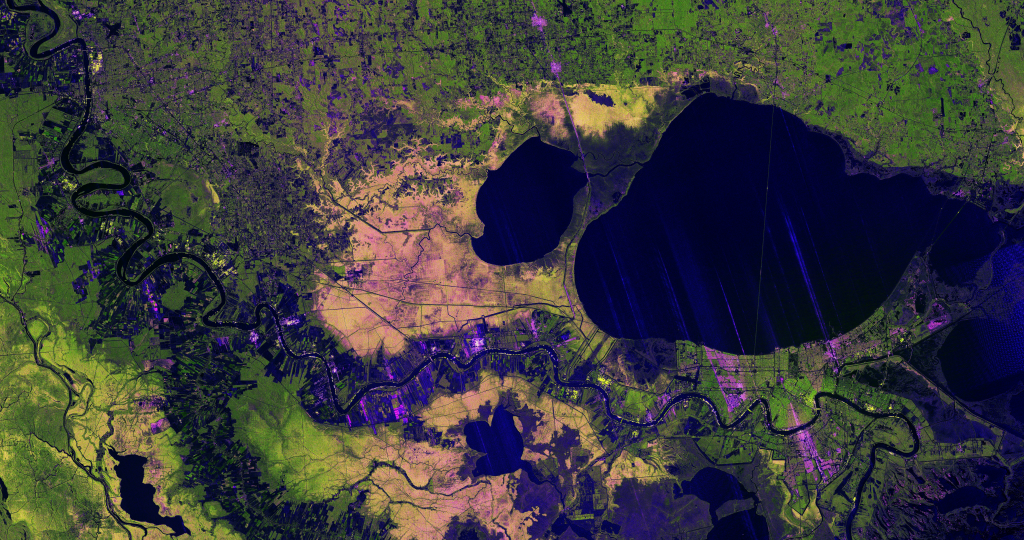
This image captured by NISAR’s L-band SAR instrument on Nov. 29, 2025, shows the cities of New Orleans and Baton Rouge, the Mississippi River, Lake Pontchartrain, and a range of wetlands, farmlands, and populated areas. The colors indicate different types of land cover.
NASA/JPL-Caltech
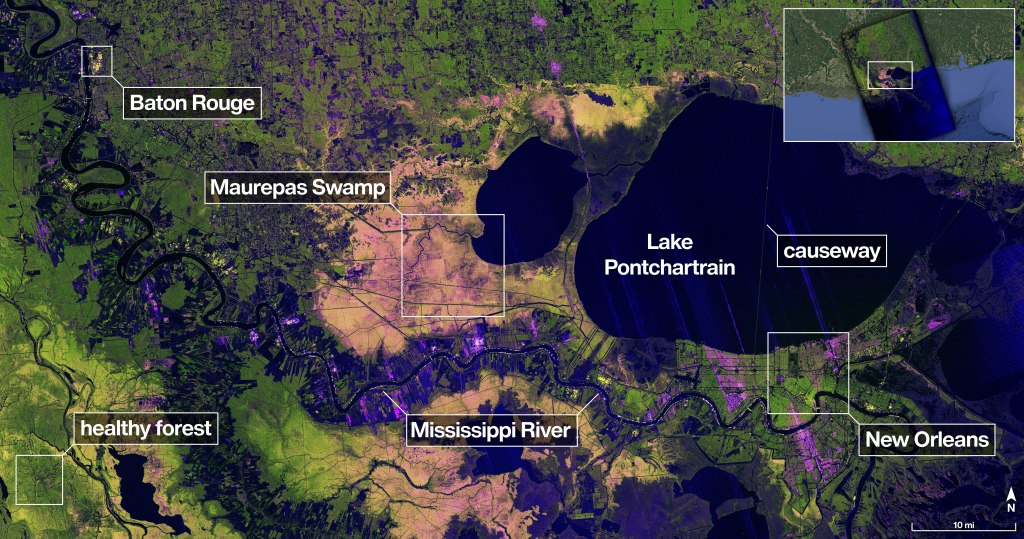
This same Nov. 29, 2025, image from NISAR’s L-band SAR instrument features labels noting cities and geographic features of the Mississippi River Delta region. Colors indicate types of land cover, such as healthy forests (bright green), thinned tree populations (yellow-and-magenta hues), and tall crops (bright magenta).
NASA/JPL-Caltech
A new image from the NISAR mission shows off the satellite’s ability to reveal details of Earth’s surfaces. The science team also released new sample data.
A U.S.-Indian Earth satellite’s ability to see through clouds, revealing insights and characteristics of our planet’s surface, is on display in a colorful, newly released image showing the Mississippi River Delta region in southeastern Louisiana.
Created with data collected by the NISAR (NASA-ISRO Synthetic Aperture Radar) satellite in late fall, the image shows the cities of New Orleans and Baton Rouge, the Mississippi River, Lake Pontchartrain, and a diversity of wetlands, farmland, forests, and communities. It also highlights the key difference between radar, which scans surfaces with microwaves, and technologies that sense visible light: Optical imagery from other instruments taken the same day showed the region largely obscured by clouds.
This image comes as the NISAR project prepares to make thousands of mission data files available for download in late February. The mission also recently released a smaller set of sample files to help data users prepare to utilize the broader dataset.
While the Earth-observing satellite went through checks to verify the health of all its systems after launching in July, the mission’s NASA science team — researchers and data scientists from a range of disciplines spread around the U.S. — pulled preliminary measurements from its L-band synthetic aperture radar (SAR) instrument to generate maps such as this one that demonstrate the instrument’s capabilities.
Built by NASA’s Jet Propulsion Laboratory in Southern California, the L-band radar employs microwaves that, due to their 9-inch (24-centimeter) wavelength, can pass uninterrupted through clouds and image the surface below clearly.
What’s revealed
Captured Nov. 29, the image demonstrates how the L-band SAR can discern what type of land cover — low-lying vegetation, trees, and human structures — is present in each area. This capability is vital both for monitoring the gain and loss of forest and wetland ecosystems, as well as for tracking the progress of crops through growing seasons around the world.
The colors seen here represent varying types of cover, which tend to reflect microwaves back to the satellite differently. Portions of New Orleans appear green, a sign that the radar’s signals may be scattering from buildings that are oriented at different angles relative to the satellite’s orbit. Parts of the city appear magenta where streets that run parallel to the satellite’s flight track cause the signals to bounce strongly and brightly off buildings and back to the instrument.
The resolution of the image is fine enough to make clear, right of center, the Lake Pontchartrain Causeway — twin bridges that, at nearly 24 miles (39 kilometers) in length, make up the world’s longest continuous bridge over water.
The bright green areas to the west of the Mississippi River, which snakes from Baton Rouge in the upper left to New Orleans in the lower right, are healthy forests. There, tree canopies and other vegetation caused NISAR’s microwaves to bounce in many directions before returning to the satellite. Meanwhile, the yellow-and-magenta-speckled hues of Maurepas Swamp, directly west of Lake Pontchartrain and the smaller Lake Maurepas, indicate that the tree populations in that wetland forest ecosystem have thinned.
On either bank of the Mississippi, the image shows parcels of varying shapes, sizes, and cover. Darker areas suggest fallow farm plots, while bright magenta indicates that tall plants, such as crops, may be present.
Insights from NISAR can protect communities by providing unique, actionable information to decision-makers in a diverse range of areas, including disaster response, infrastructure monitoring, and agricultural management.
More about NISAR
A joint mission developed by NASA and the Indian Space Research Organisation (ISRO), NISAR launched on July 30 from Satish Dhawan Space Centre on India’s southeastern coast. Managed by Caltech, JPL leads the U.S. component of the project and provided the satellite’s L-band SAR and antenna reflector. ISRO provided NISAR’s spacecraft bus and its S-band SAR, which operates at a wavelength of 4 inches (10 centimeters.)
The NISAR satellite is the first to carry two SAR instruments at different wavelengths and will monitor Earth’s land and ice surfaces twice every 12 days, collecting data using the spacecraft’s giant drum-shaped reflector, which measures 39 feet (12 meters) wide — the largest radar antenna reflector NASA has ever sent into space.
Andrew Wang / Andrew Good
Jet Propulsion Laboratory, Pasadena, Calif.
626-379-6874 / 818-393-2433
andrew.wang@jpl.nasa.gov / andrew.c.good@jpl.nasa.gov
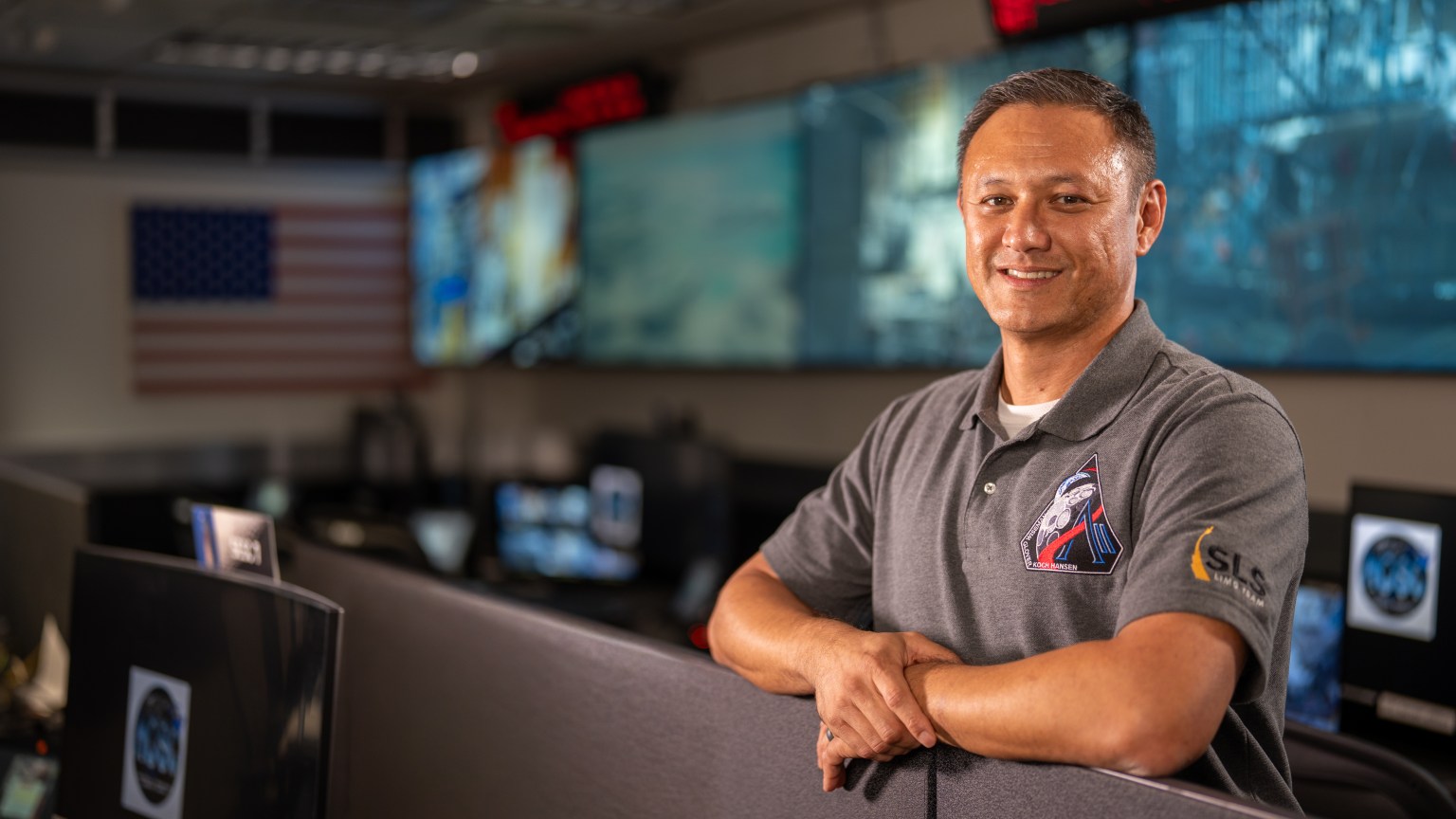
NASA’s Doug Parkinson is the Launch Integration and Mission Operations lead for the SLS (Space Launch System) Program.
Credits:NASA
Doug Parkinson’s face lights up as he starts telling his story, how someone from Wisconsin now plays a part in the team that will help land the first Artemis astronauts on to the Moon.
Parkinson serves as NASA’s SLS (Space Launch System) rocket lead for Launch Integration and Mission Operations, guiding engineers responsible for monitoring the rocket during testing, pre-launch, and launch activities.
Following his father’s footsteps, Parkinson became a mechanical engineer, studying at the University of Alabama in Huntsville. He had planned on working in computer technologies or on cars in his future. Then the opportunity appeared to work with higher-powered engines.
NASA’s Doug Parkinson is the Launch Integration and Mission Operations lead for the SLS (Space Launch System) Program.
NASA
“I came across an opportunity to work at the Propulsion Research Center at the university. I studied new propulsion technologies. That intrigued me because, as an undergrad, it was a chance to put into practical use what I was learning in the books and in theory,” said Parkinson. “It ended up being a lot of fun and very educational. It was in cutting edge technologies that really inspired me.”
Joining NASA at Marshall Space Flight Center in Huntsville, Alabama, in 1999, he began helping develop advanced liquid rocket engines, including the Fastrac and J-2X engines. The J-2X was an advanced development of the upper stage engine used on the Saturn V.
“In 2012, I moved to SLS. One of the things I learned in the propulsion area with all the engine testing was test operations. That translated well into my new role as operations lead for the stages element,” said Parkinson.
Now, he also serves as one of the SLS Engineering Support Center managers, helping oversee and train the SLS Engineering Support Team responsible for monitoring the rocket’s systems. The team operates at NASA Marshall and is critical to verifying the rocket is performing well.
Parkinson is the first person to hold the Launch Integration and Mission Operations leadership position in the SLS Program.
“I love all aspects of the operations. I like getting my hands dirty. I like seeing the erector set go together,” said Parkinson.
When the Artemis II astronauts fly by the Moon, soaring within just a few thousand miles of the lunar surface, they will do so having been launched on a rocket Parkinson helped develop.
I have goosebumps just thinking about it,” he said. “I’ll be on console for part of that time, listening to what they have to say. It’s amazing to think we’re going to go do that.
Doug Parkinson
Launch Integration and Mission Operations Lead for the SLS (Space Launch System) Program
“I have goosebumps just thinking about it,” he said. “I’ll be on console for part of that time, listening to what they have to say. It’s amazing to think we’re going to go do that.”
The SLS rocket will launch NASA’s Orion spacecraft to carry four astronauts around the Moon for scientific discovery, economic benefits, and to lay the groundwork for the first human mission to Mars.
NASA Researchers Probe Tangled Magnetospheres of Merging Neutron Stars
New simulations performed on a NASA supercomputer are providing scientists with the most comprehensive look yet into the maelstrom of interacting magnetic structures around city-sized neutron stars in the moments before they crash. The team identified potential signals emitted during the stars’ final moments that may be detectable by future observatories.
“Just before neutron stars crash, the highly magnetized, plasma-filled regions around them, called magnetospheres, start to interact strongly. We studied the last several orbits before the merger, when the entwined magnetic fields undergo rapid and dramatic changes, and modeled potentially observable high-energy signals,” said lead scientist Dimitrios Skiathas, a graduate student at the University of Patras, Greece, who is conducting research for the Southeastern Universities Research Association in Washington at NASA’s Goddard Space Flight Center in Greenbelt, Maryland.
New supercomputer simulations explore the tangled magnetic structures around merging neutron stars. Called magnetospheres, the highly magnetized, plasma-filled regions start to interact as the city-sized stars close on each other toward their final orbits. Magnetic field lines can connect both stars, break, and reconnect, while currents surge through surrounding plasma moving at nearly the speed of light. The simulations show that as these systems merge to produce one kind of gamma-ray burst — the universe’s most powerful class of explosions — they emit tell-tale X-rays and gamma rays that future observatories should be able to detect. NASA’s Goddard Space Flight Center
A paper describing the findings published Nov. 20, 2025, in the The Astrophysical Journal.
Neutron star mergers produce a particular type of GRB (gamma-ray burst), the most powerful class of explosions in the cosmos.
Most investigations have naturally concentrated on the spectacular mergers and their aftermaths, which produce near-light-speed jets that emit gamma rays, ripples in space-time called gravitational waves, and a so-called kilonova explosion that forges heavy elements like gold and platinum. A merger observed in 2017 dramatically confirmed the long-predicted connections between these phenomena — and remains the only event seen so far to exhibit all three.
Neutron stars pack more mass than our Sun into a ball about 15 miles (24 kilometers) across, roughly the length of Manhattan Island in New York City. They form when the core of a massive star runs out of fuel and collapses, crushing the core and triggering a supernova explosion that blasts away the rest of the star. The collapse also revs up the core’s rotation and amplifies its magnetic field.
In our simulations, the magnetosphere behaves like a magnetic circuit that continually rewires itself as the stars orbit.
Constantinos Kalapotharakos
Newborn neutron stars can spin dozens of times a second and wield some of the strongest magnetic fields known, up to 10 trillion times stronger than a refrigerator magnet. That’s strong enough to directly transform gamma-rays into electrons and positrons and rapidly accelerate them to energies far beyond anything achievable in particle accelerators on Earth.
“In our simulations, the magnetosphere behaves like a magnetic circuit that continually rewires itself as the stars orbit. Field lines connect, break, and reconnect while currents surge through plasma moving at nearly the speed of light, and the rapidly varying fields can accelerate particles,” said co-author Constantinos Kalapotharakos at NASA Goddard. “Following that nonlinear evolution at high resolution is exactly why we need a supercomputer!”
Using the Pleiades supercomputer at NASA’s Ames Research Center in California’s Silicon Valley, the team ran more than 100 simulations of a system of two orbiting neutron stars, each with 1.4 solar masses. The goal was to explore how different magnetic field configurations affected the way electromagnetic energy — light in all of its forms — left the binary system. Most of the simulations describe the last 7.7 milliseconds before the merger, enabling a detailed study of the final orbits.
“Our work shows that the light emitted by these systems varies greatly in brightness and is not distributed evenly, so a far-away observer’s perspective on the merger matters a great deal,” said co-author Zorawar Wadiasingh at the University of Maryland, College Park and NASA Goddard. “The signals also get much stronger as the stars get closer and closer in a way that depends on the relative magnetic orientations of the neutron stars.”
Magnetic field lines anchored to the surfaces of each star sweep behind them as the stars orbit. Field lines may directly connect one star to the other as the orbits shrink, while lines already linking the stars may break and reconfigure.
One value of studies like this is to help us figure out what future observatories might be able to see and should be looking for in both gravitational waves and light.
Demosthenes Kazanas
Using the simulations, the team also computed electromagnetic forces acting on the stars’ surfaces. While the effects of gravity dominate, these magnetic stresses could accumulate in strongly magnetized systems. Future models may help reveal how magnetic interactions influence the last moments of the merger.
“Such behavior could be imprinted on gravitational wave signals that would be detectable in next-generation facilities. One value of studies like this is to help us figure out what future observatories might be able to see and should be looking for in both gravitational waves and light,” said Goddard’s Demosthenes Kazanas.
The team, which includes Alice Harding at the Los Alamos National Laboratory in New Mexico and Paul Kolbeck at the University of Washington in Seattle, then used the simulated fields to identify where the highest-energy emission would be produced and how it would propagate.
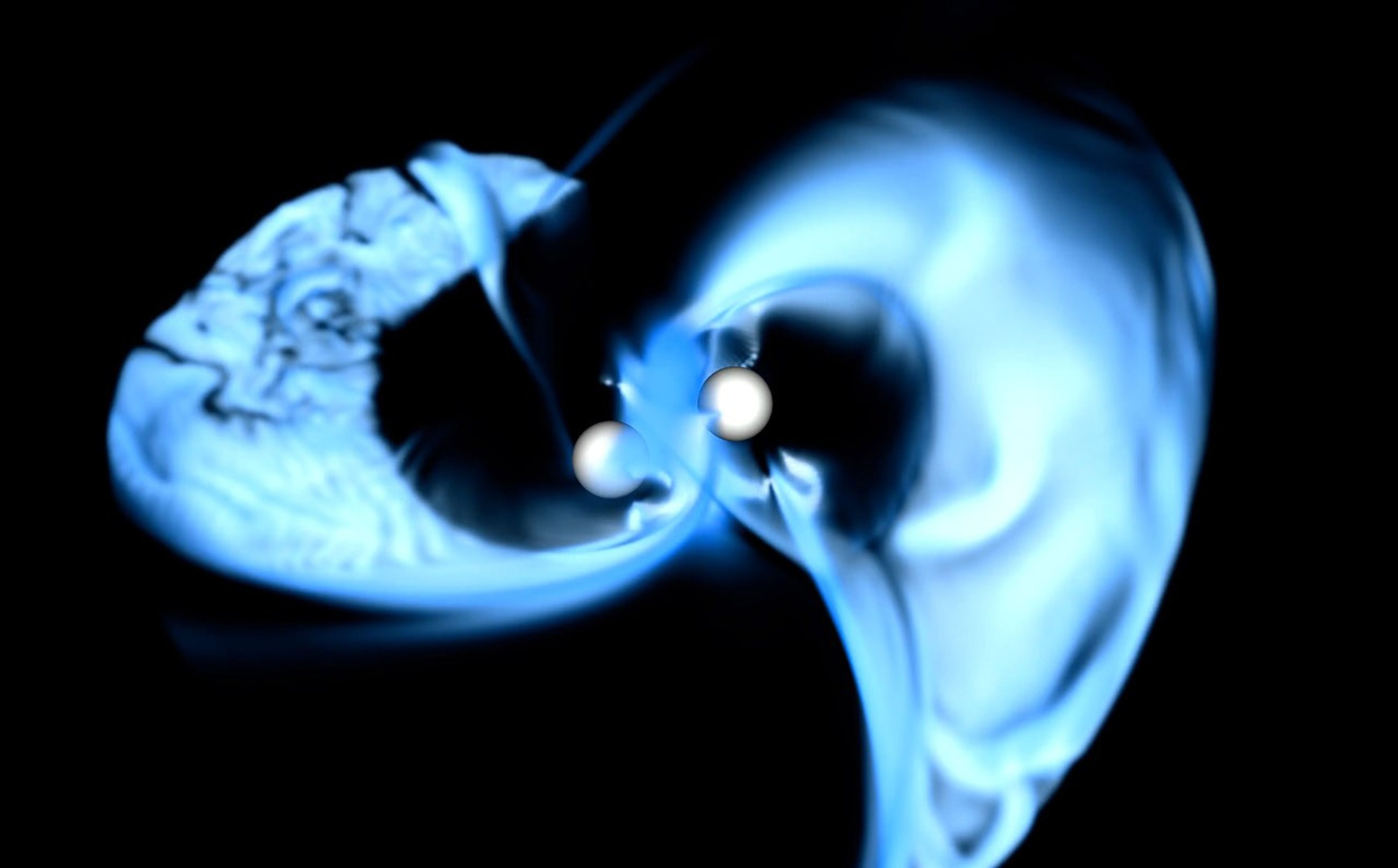
This view of a supercomputer simulation of merging, magnetized neutron stars highlights regions producing the highest-energy light. Brighter colors indicate stronger emission. These regions produce gamma rays with energies trillions of times greater than that of visible light, but likely none of it could escape. That’s because the highest-energy gamma rays quickly convert to particles in the presence of the stars’ powerful magnetic fields. However, gamma rays at lower energies, with millions of times the energy of visible light, can exit the merging system, and the resulting particles may also radiate at still lower energies, including X-rays. The emission varies rapidly and is highly directional, but it could potentially be detected by future facilities.
NASA’s Goddard Space Flight Center/D. Skiathas et al. 2025
In the chaotic plasma surrounding the neutron stars, particles transform into radiation and vice versa. Speedy electrons emit gamma rays, the highest-energy form of light, through a process called curvature radiation. A gamma-ray photon can interact with a strong magnetic field in a way that transforms it into a pair of particles, an electron and a positron.
The study found regions producing gamma rays with energies trillions of times greater than that of visible light, but likely none of it could escape. The highest-energy gamma rays quickly converted to particles in the presence of powerful magnetic fields. However, gamma rays at lower energies, with millions of times the energy of visible light, can exit the merging system, and the resulting particles may also radiate at still lower energies, including X-rays.
The finding suggests that future medium-energy gamma-ray space telescopes, especially those with wide fields of view, may detect signals originating in the runup to the merger if gravitational-wave observatories can provide timely alerts and sky localization. Today, ground-based gravitational-wave observatories, such as LIGO (Laser Interferometer Gravitational-Wave Observatory) in Louisiana and Washington, and Virgo in Italy, detect neutron star mergers with frequencies between 10 and 1,000 hertz and can enable rapid electromagnetic follow-up.
ESA (European Space Agency) and NASA are collaborating on a space-based gravitational-wave observatory named LISA (Laser Interferometer Space Antenna), planned for launch in the 2030s. LISA will observe neutron-star binaries much earlier in their evolution at far lower gravitational-wave frequencies than ground-based observatories, typically long before they merge.
Future gravitational-wave observatories will be able to alert astronomers to systems on the verge of merging. Once such systems are found, wide-field gamma-ray and X-ray observatories could begin searching for the pre-merger emission highlighted by these simulations.
Routine observation of events like these using two different “messengers” — light and gravitational waves — will provide a major leap forward in understanding this class of GRBs, and NASA researchers are helping to lead the way.