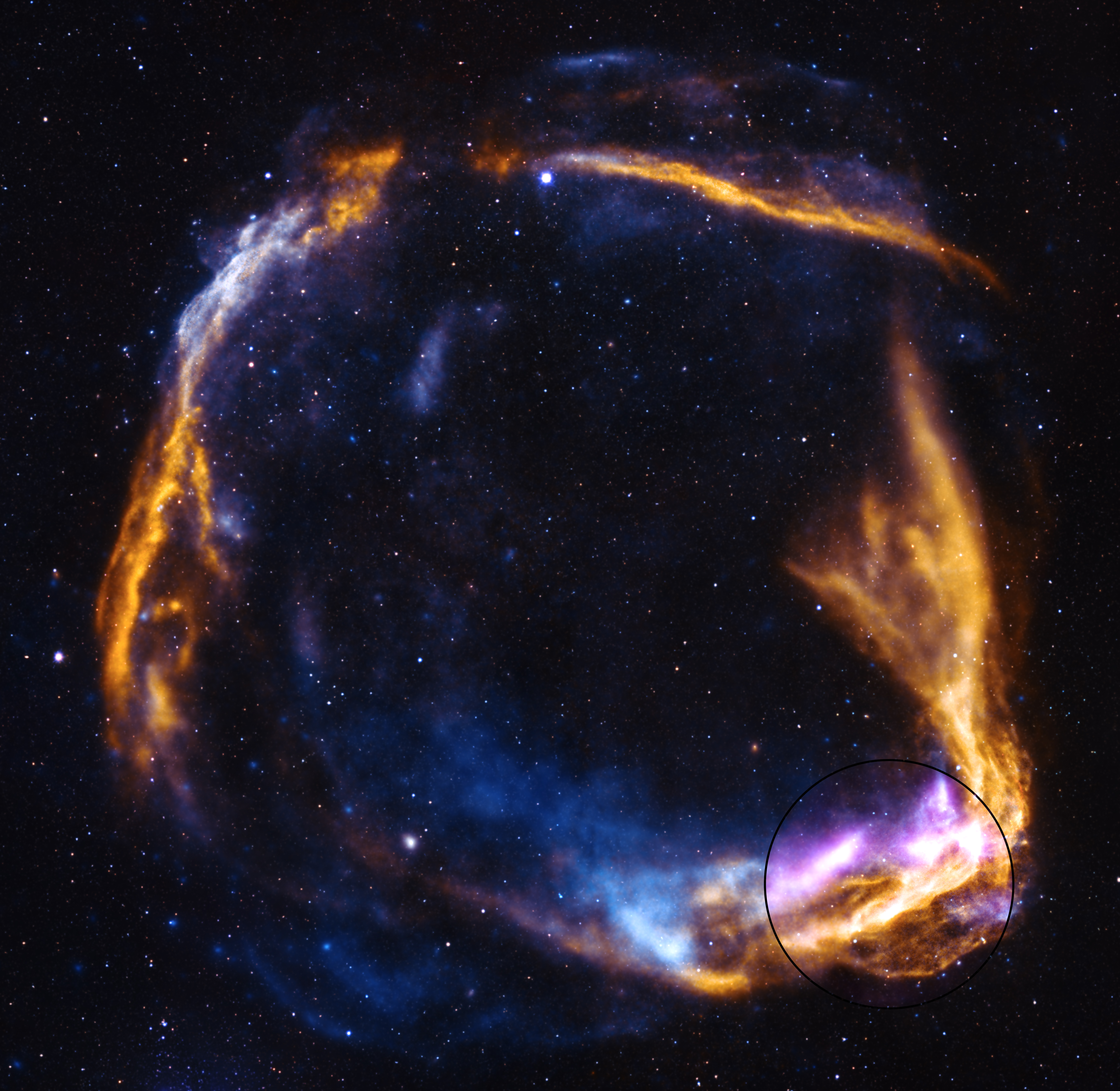
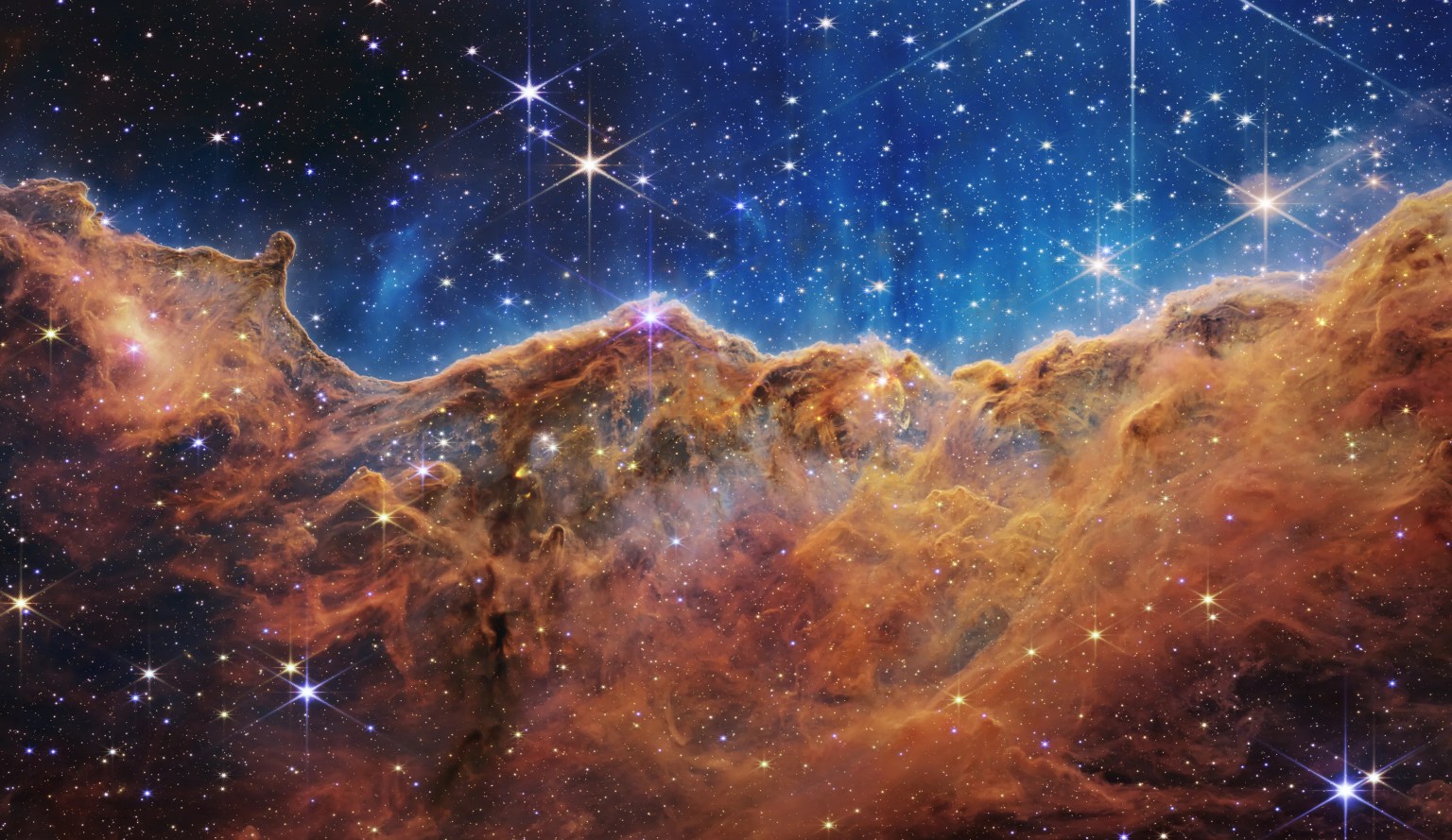
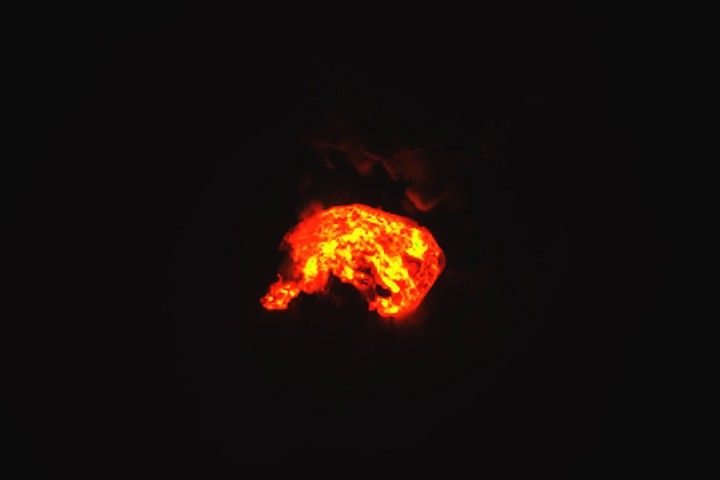
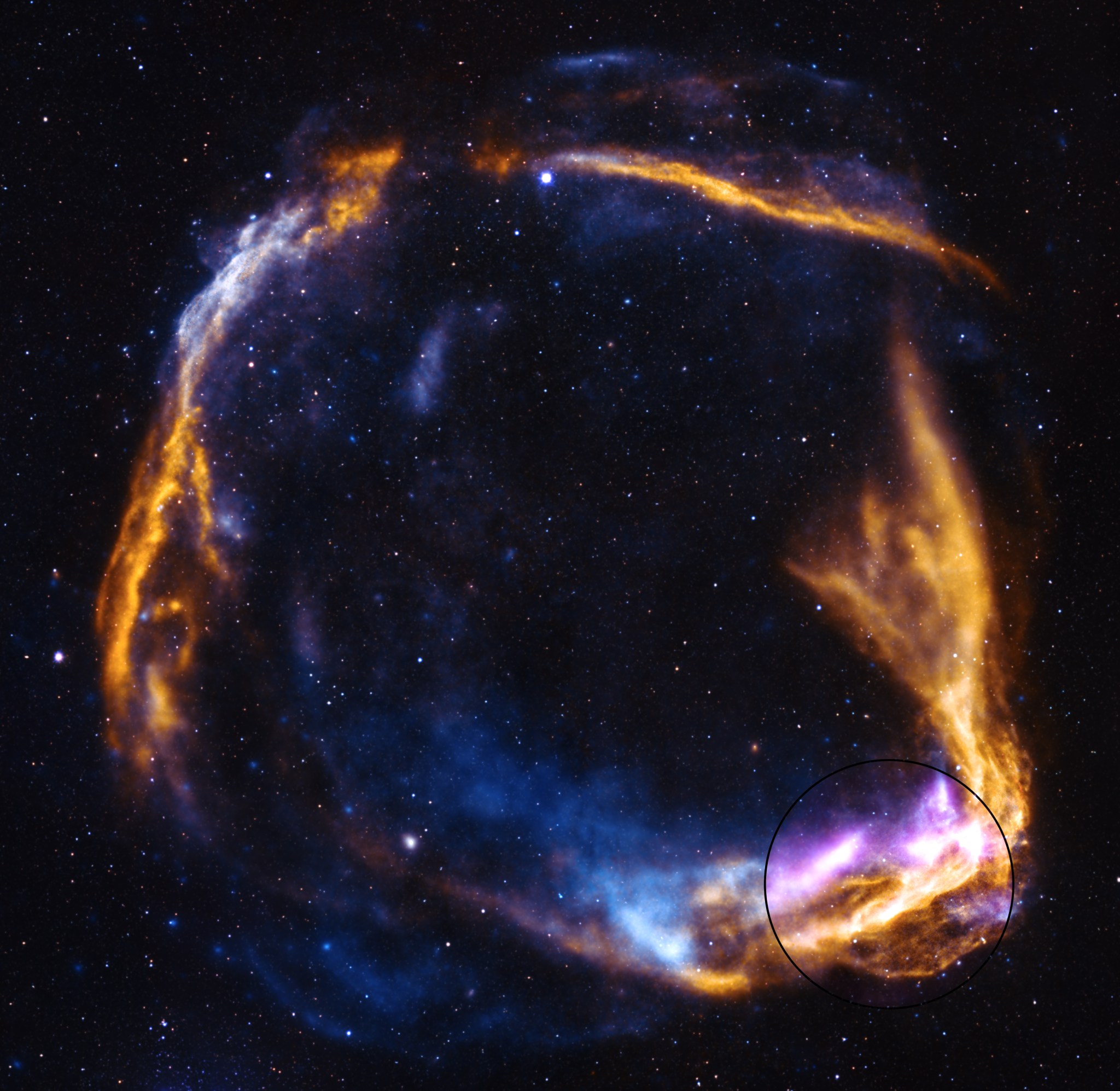
NASA’s IXPE observed the outer rim of the supernova remnant highlighted in purple in the inset. Data from IXPE is combined with data from NASA’s Chandra X-ray Observatory and ESA’s XMM-Newton. The yellow represents low-energy X-rays, while blue shows high-energy X-rays detected by Chandra and XMM-Newton. The starfield in the image comes from the National Science Foundation’s National Optical-Infrared Astronomy Research Laboratory (NOILab).
NASA’s IXPE (Imaging X-ray Polarimetry Explorer) mission has taken a new observation of a supernova, RCW 86, helping fill in a fuller picture of what other telescopes have observed.
When astronomers using NASA’s Chandra X-ray Observatory previously targeted RCW 86, they discovered that a large “cavity” region around the system led the supernova to expand more rapidly than expected. The low-density cavity region could have led to RCW 86’s unique shape as well. Now, IXPE has observed the outer rim of this supernova, where its expansion is suspected to have halted at the edge of the “cavity,” creating the reflected shock effect highlighted in purple.
The full image combines IXPE’s data with legacy observations from two other X-ray telescopes: NASA’s Chandra and the ESA (European Space Agency) XMM-Newton telescope. The yellow represents low-energy X-rays, while blue shows high-energy X-rays detected by Chandra and XMM-Newton. The starfield in the image comes from the National Science Foundation’s National Optical-Infrared Astronomy Research Laboratory (NOIRLab).
More about IXPE
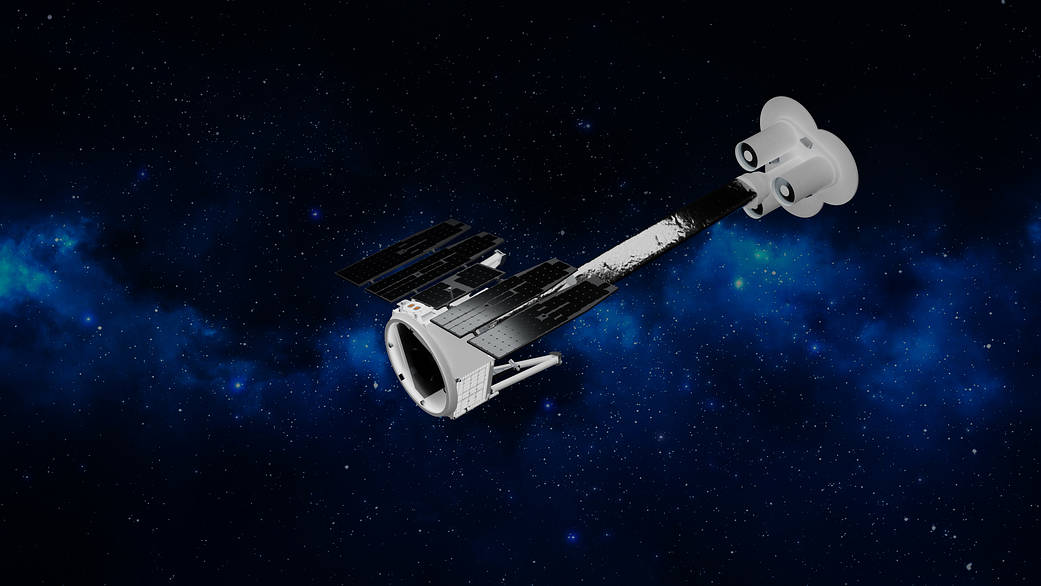
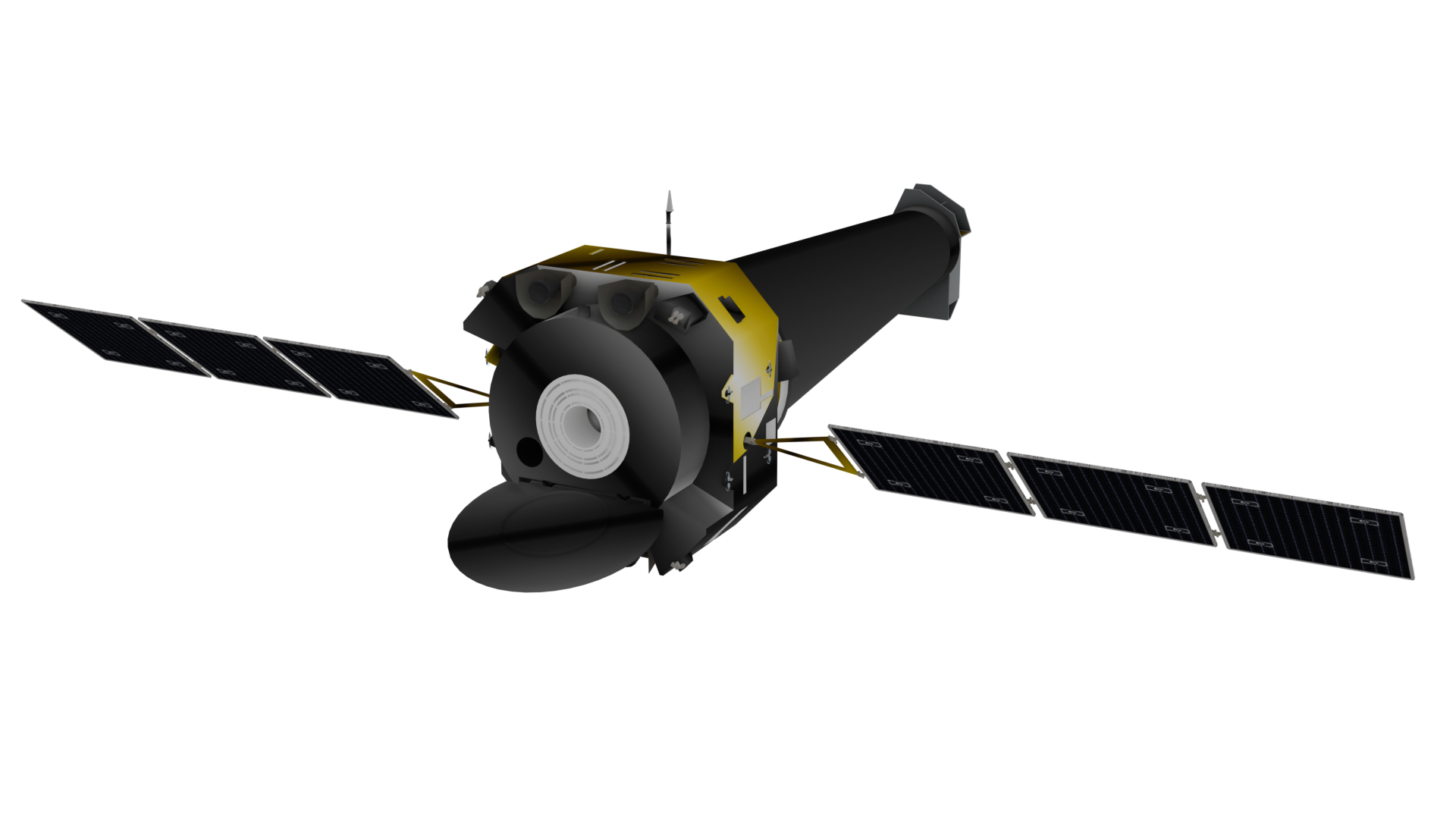
The IXPE mission, which continues to provide unprecedented data enabling groundbreaking discoveries about celestial objects across the universe, is a joint NASA and Italian Space Agency mission with partners and science collaborators in 12 countries. It is led by NASA’s Marshall Space Flight Center in Huntsville, Alabama. BAE Systems, Inc., headquartered in Falls Church, Virginia, manages spacecraft operations together with the University of Colorado’s Laboratory for Atmospheric and Space Physics in Boulder. Learn more about IXPE’s ongoing mission here:
A team of NASA researchers is developing new types of optical masks that could help enable the many orders of magnitude of starlight suppression needed for future space observatories to pick out very faint habitable exoplanets from the far brighter glare of their stellar hosts.
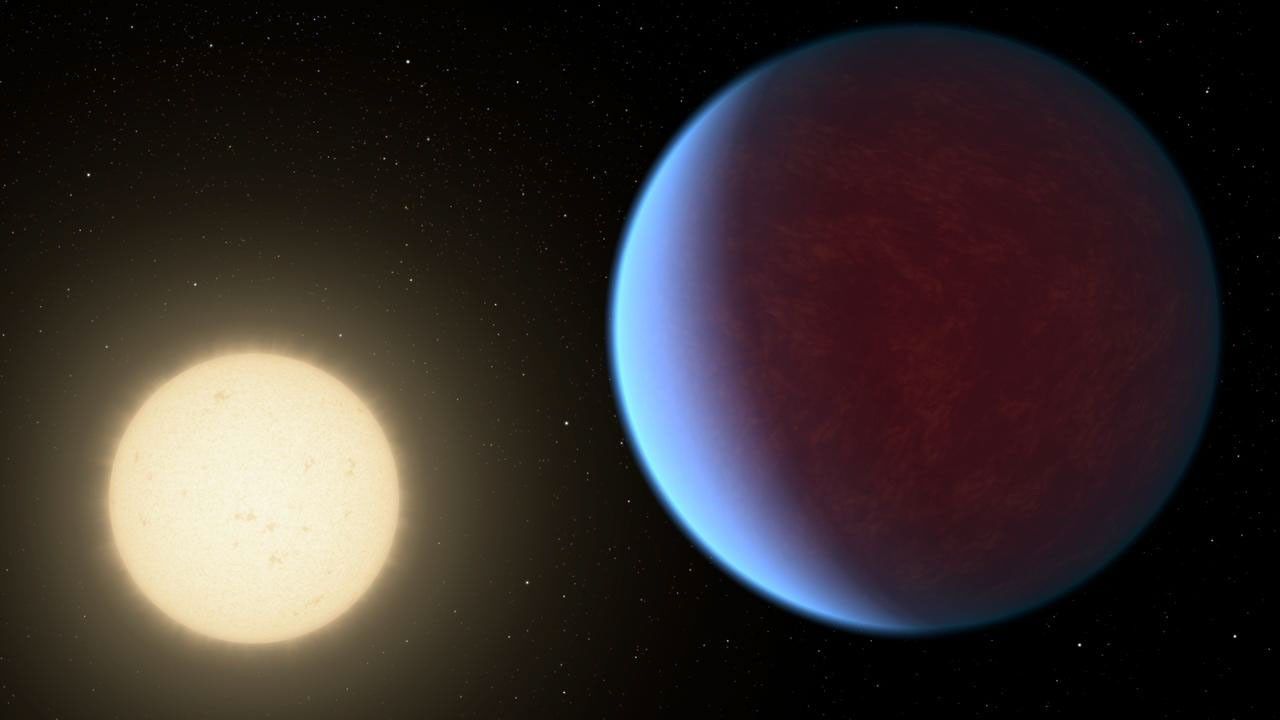
Artist’s conception of an exoplanet reflecting the light from its nearby star.
NASA
One of the goals of NASA’s Astrophysics Division is to carry out a census of nearby solar systems to search for habitable worlds around nearby stars, and ultimately, to determine whether life might be present outside our own solar system. Because other stars are so far away, we must rely on remote observations of these systems, and in particular, on the spectroscopy of any planets present (i.e., on the examination of their color characteristics to determine their atmospheric characteristics). NASA’s future Habitable Worlds Observatory (HWO) mission will be the first telescope designed specifically to search for signs of life on planets orbiting other stars.
Significant progress has been made over the past couple of decades in observing the brightest and often largest exoplanets, especially those that happen to pass in front of their stars, allowing us to see the planet’s atmospheric constituents that absorb particular colors of the host star’s light. However, most exoplanets are not so favorably aligned; to detect them, HWO must be able to distinguish the very small bit of light coming from an exoplanet from the overwhelming glare of the very bright nearby host star. For example, an Earth-like planet orbiting a star similar to our Sun would be only about 1 ten billionth as bright as its host star. An apt analogy is the light from a firefly flying right next to a lighthouse!
To see faint potentially habitable worlds in nearby solar systems, we must remove the incoming starlight to such an extent that the much smaller bit of light arriving from the exoplanet can be distinguished. Unfortunately, telescopes don’t produce perfect point-like images of stars. Two contributing factors–scattering and diffraction—blur and spread the starlight across the region of the image where exoplanets are likely to be found.
Scattering of starlight is caused by surface irregularities in the mirrors that make up the telescope’s optical system. These irregularities can be mitigated by using a high-performance adaptive optics system to correct the wavefront errors. But even with a perfectly corrected optical system, diffraction must also be mitigated.
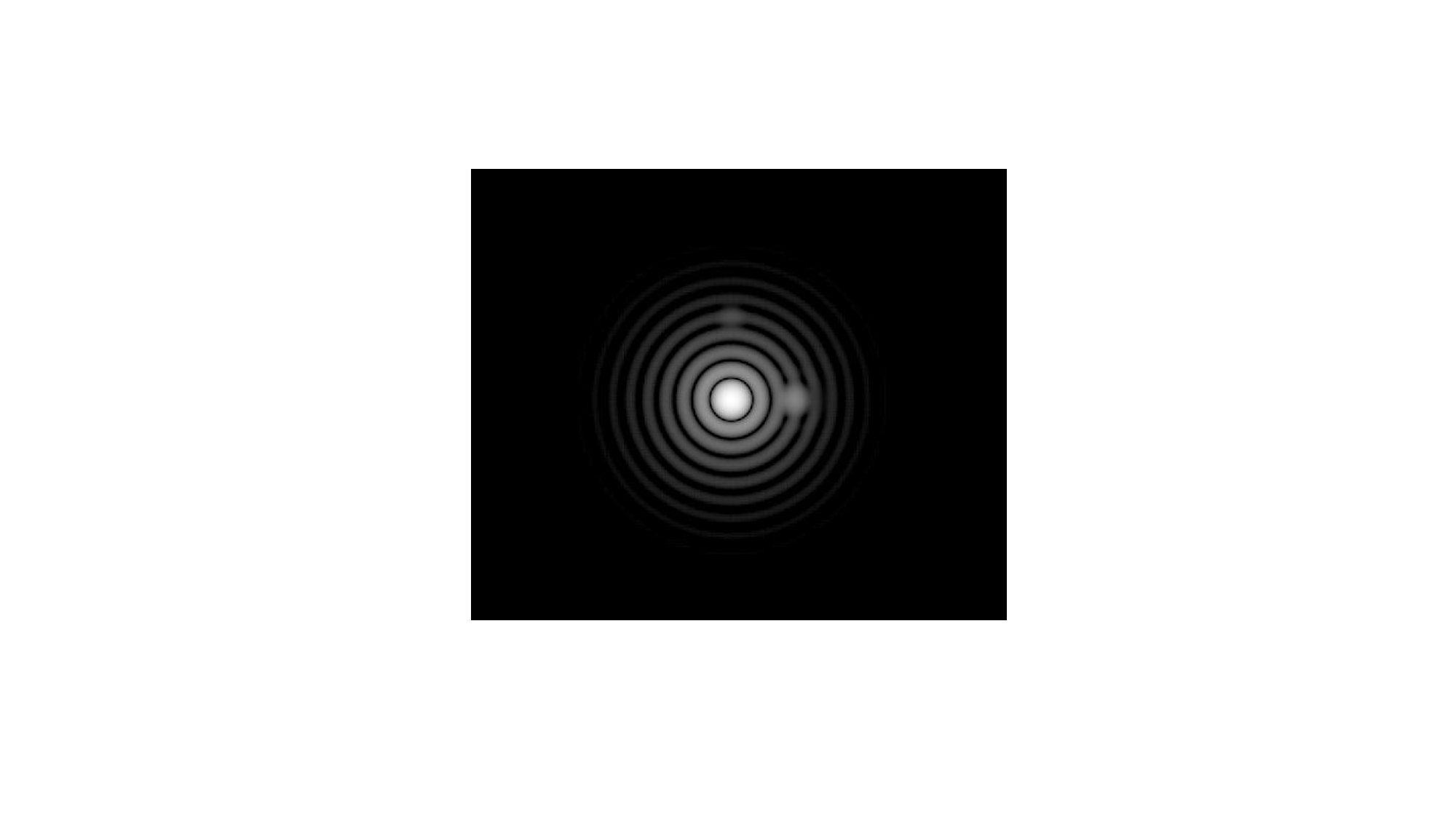
Diffraction is the angular spread of a light beam (or of any type of wave, including water or sound waves) that occurs as the wave passes through an aperture, such as a telescope’s light-collecting mirror. Diffraction causes the starlight to spread across the focal plane into a ringed light distribution called an Airy pattern (see figure below). Since this Airy pattern can be many times brighter than the light emitted from an exoplanet, it also needs to be removed.
A logarithmically scaled simulation of the image of a star with two nearby exoplanets, as seen by a telescope with a circular aperture. The centered multi-ringed Airy pattern is due to diffraction of the starlight. Off-axis exoplanets fainter by 100 times and 1000 times are seen at 3 o’clock on the 3rd Airy ring, and at 12 o’clock on the 4th Airy ring, respectively. An Earth-like exoplanet would be 10 million times fainter than the dimmer of the two exoplanets shown.
Gene Serabyn, NASA JPL
Suppression of the Airy pattern’s rings is usually done with an optical instrument known as a coronagraph. The coronagraph was invented a century ago to allow astronomers to see the faint solar corona that surrounds the Sun. When applied to other stars, a coronagraph can enable us to see faint exoplanets near their much brighter stars.
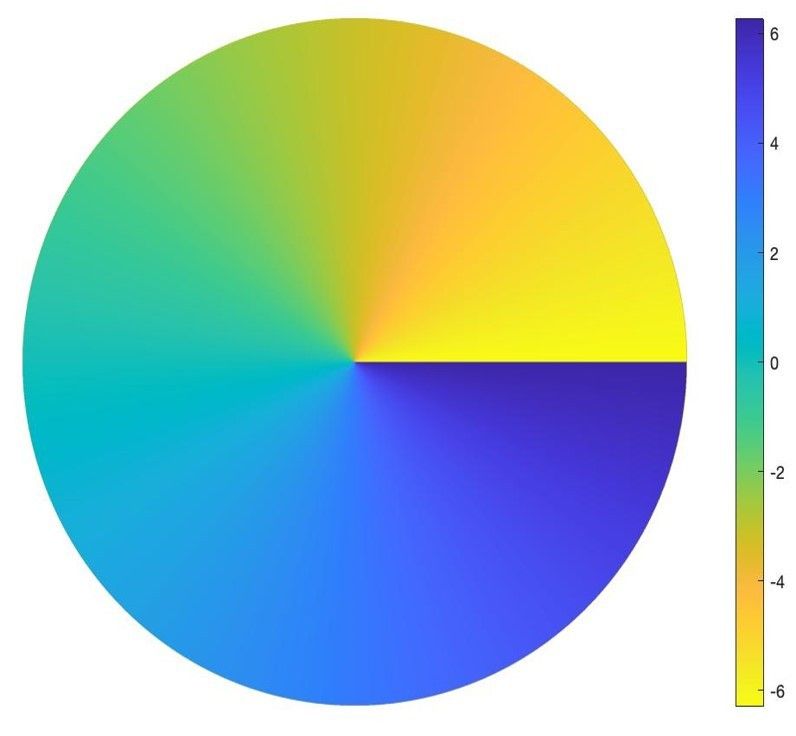
The core component of most coronagraphs is an optical mask—a small piece of glass with a special surface coating or surface shape that is designed to either selectively attenuate or delay the light distribution making up the stellar image. One particularly promising type of optical mask is the optical vortex phase mask, which applies a phase delay that increases in proportion to the azimuthal angle around the center of the mask (see figure below). When centered on the stellar Airy pattern, the mask thus applies delays that increase along the Airy rings.
The colors in this image depict the phase delay pattern that a vortex phase mask applies to the incoming starlight in the focal plane: the phase delay increases azimuthally around the center of the mask. The colors indicate a phase delay range from -2 pi to 2 pi (-6.28 to 6.28) radians.
Gene Serabyn, NASA JPL
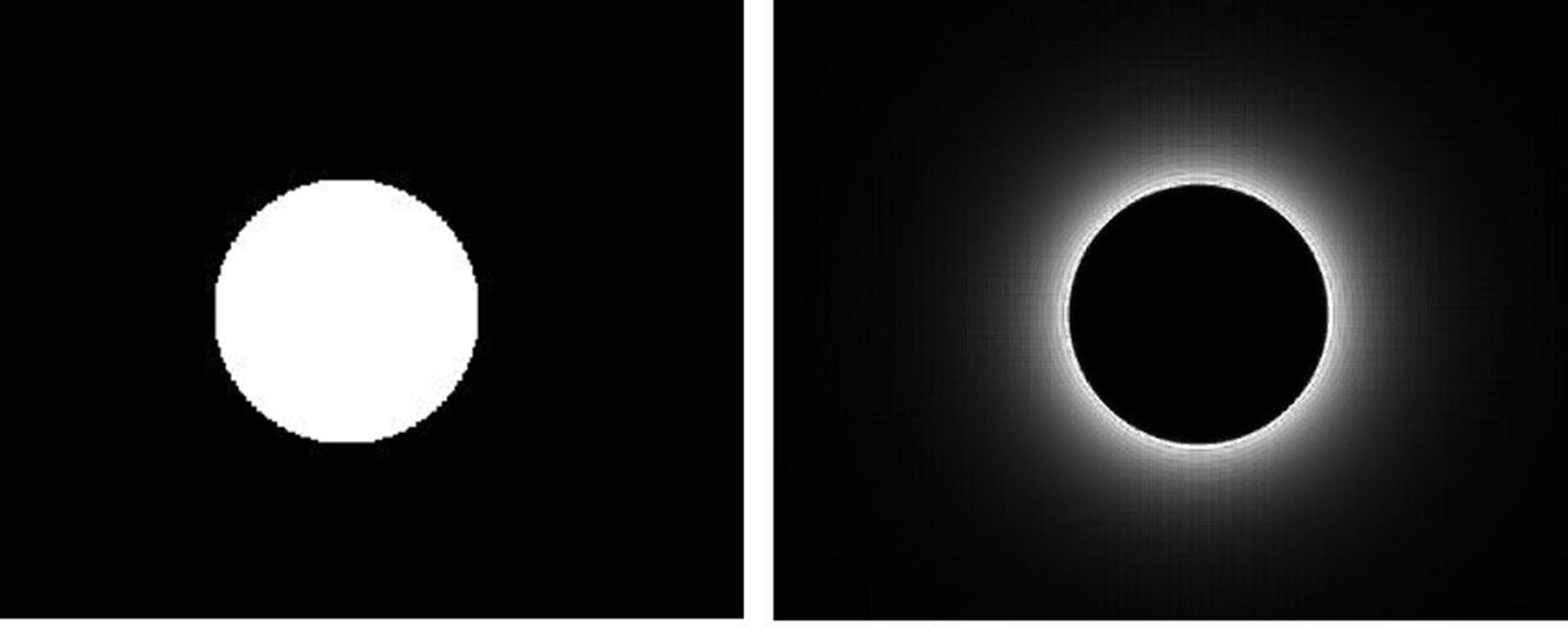
This delay pattern, which is somewhat analogous to the helical surface of a screw thread, causes the starlight to destructively interfere in such a way that if one reimages the telescope aperture downstream of the vortex mask, no starlight remains inside that aperture image. Instead, the starlight is only seen outside of where the filled telescope aperture image is expected to be, where it can then be easily blocked by a simple aperture stop, as is used in photography. (The figure below depicts images of a telescope aperture in advance of and downstream of the vortex mask.) Since the light from the exoplanet typically hits the vortex mask off-center, it propagates unchanged through the aperture stop to reach the detector, where it can be successfully imaged.
The left-hand panel shows a normal image of a telescope aperture that is filled with starlight. After passing through the vortex phase mask, the starlight is expelled from that circular region (as shown in the right-hand image) where it can be blocked by an aperture stop, leaving only exoplanet light inside the bright rim of starlight.
Gene Serabyn, NASA JPL
Fabricating vortex masks is challenging since they must be able to simultaneously reject starlight over a wide range of wavelengths. A team of technologists at the NASA Jet Propulsion Laboratory (JPL) is investigating a number of different technologies that could be used make optical vortex masks with the desired characteristics. To date, the most promising approach uses a flat layer of a specially prepared liquid crystal polymer (LCP) to provide the required optical delay pattern. The long molecular polymer chains making up the LCP layer can be specifically oriented to induce different delays in the two polarization directions of light. (Polarization refers to the direction of oscillation of the electric field vector in a propagating light wave, i.e., whether it is up-down or left-right). Depending on whether the electric field vector lies along or perpendicular to the long LCP axis, the light experiences different delays.
Moreover, if the LCP layer is laid down in a pattern wherein the long LCP axis rotates while following a circular path around the mask’s center (reaching a multiple of a full molecular rotation in a full circuit around the center), the desired delay pattern can be achieved (see figure below). The main advantage of such masks is that since their phase delays are induced geometrically (i.e., by a purely geometric orientation pattern) they are wavelength-independent to first order, and can reject starlight over a wide range of wavelengths.
The JPL team has recently advanced these masks to the point where the light from an artificial “star” can be rejected in the laboratory to about one part in a billion (with the single-wavelength rejection even better), which is within about an order of magnitude of the ultimate 10 billion-to-one rejection needed for the HWO. The team is currently working on further mask improvements to achieve that last factor of ten.
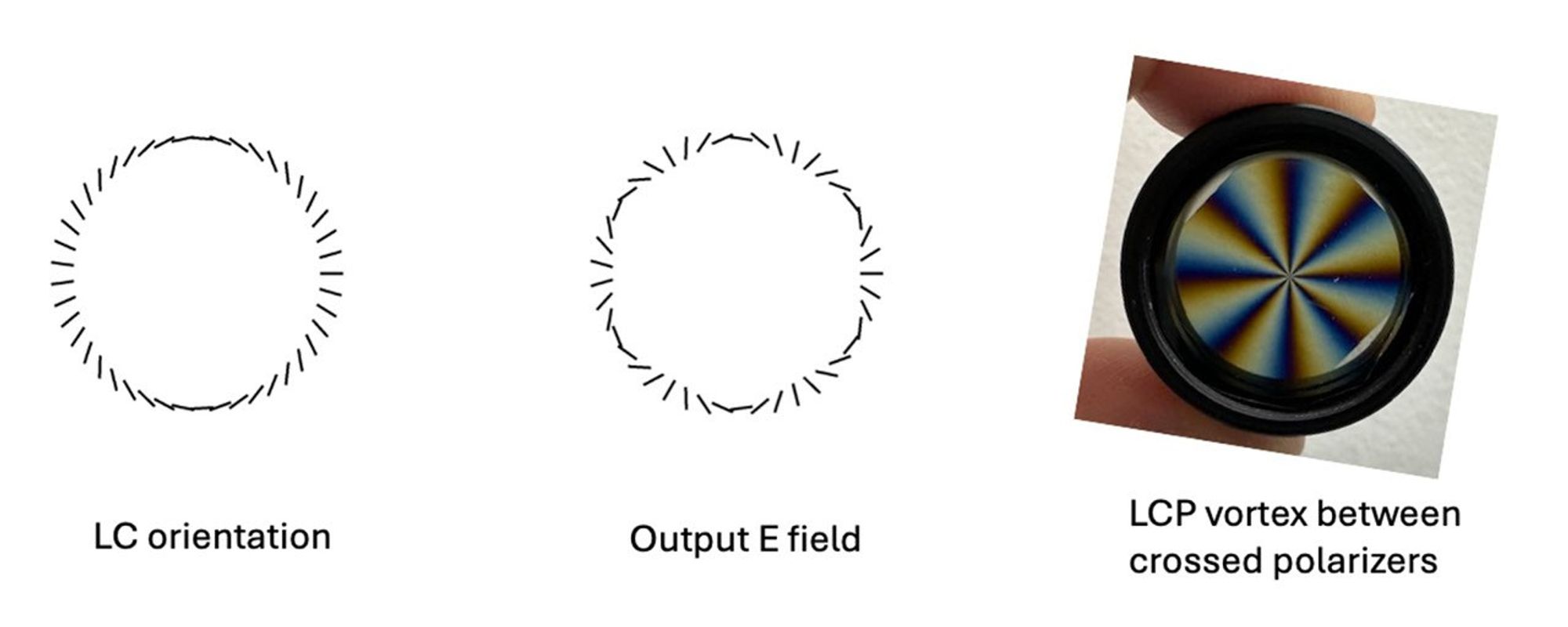
Orientation pattern of the liquid crystal polymer (LCP) molecules in an optical vortex layer. Center: The output electric (E) field directions such a mask produces. Right, an LCP vortex mask seen through crossed polarizers. Note that the mask is dark at all angles at which the output light is horizontally polarized (horizontal lines in the center panel), verifying its functionality.
Gene Serabyn, NASA JPL
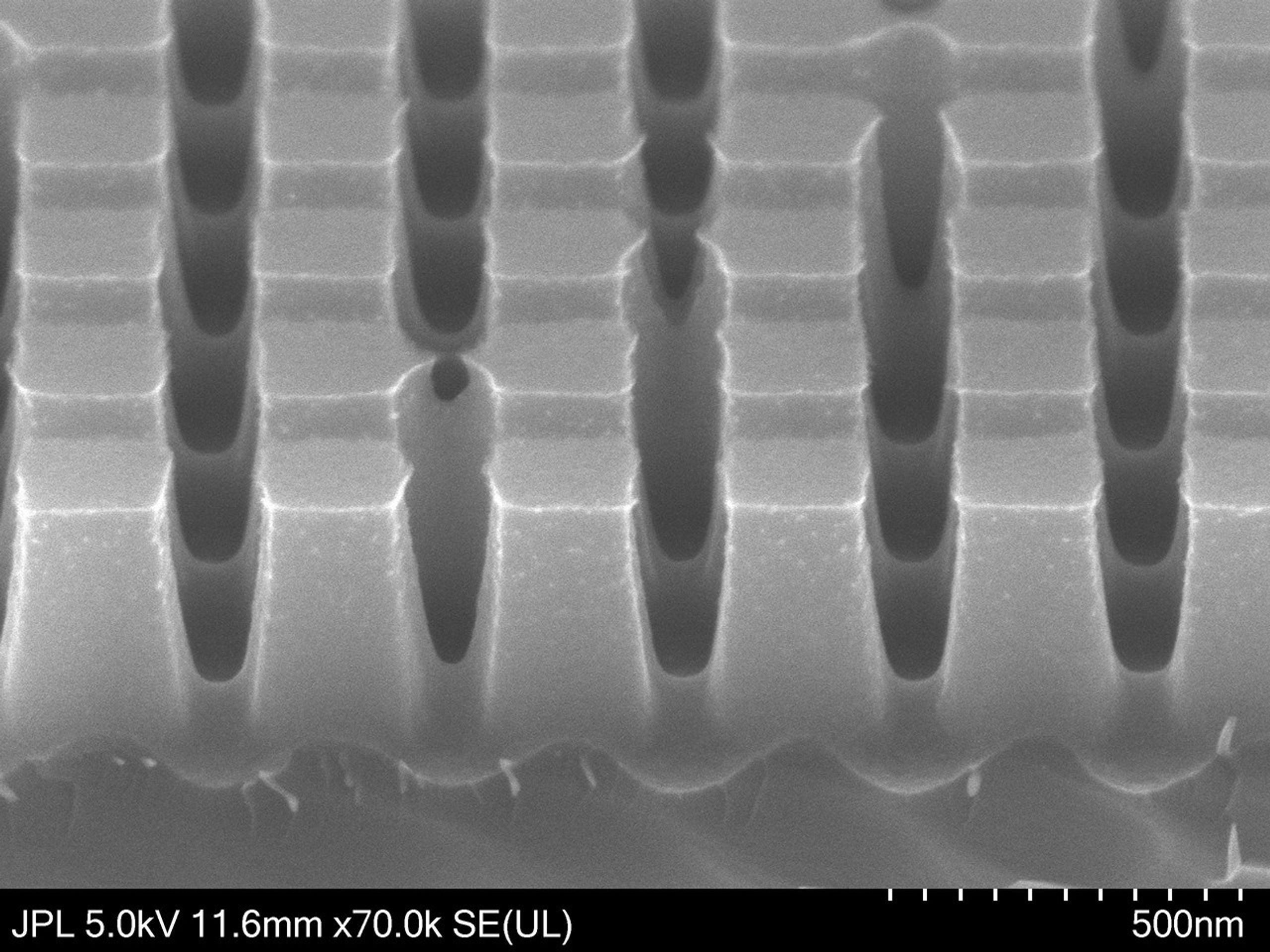
At the same time, the team is also looking into alternative mask approaches with different advantages and disadvantages. In particular, they have been revisiting the idea of shaping the surface of a piece of glass to look like a helical turn of a screw. However, this design will only work across multiple wavelengths if one combines several different pieces of glass, each with its own screw height, and if further deformations of the surface shape are also implemented. Moreover, since only a rather small number of materials seem to have the characteristics required for this design, it is not yet clear what ultimate performance can be achieved by this technique. As a result, the team is also looking into fabricating their own artificial materials (i.e., metamaterials) for use in such masks. Metamaterials are thin layers of tiny nanoposts (see figure below) in which the nanopost heights, widths, shapes, and spacings can be selected to generate material properties that do not exist in nature. While this approach is very new, it is conceivable that it could be used to tailor materials that have the characteristics needed to make optical vortex masks work over a wide range of wavelengths.
Electron microscope image of nanoposts.
Lorenzo König, NASA JPL
Optical vortex coronagraphs are becoming increasingly popular in the hunt for larger (brighter) exoplanets using ground-based telescopes, but seeing dimmer Earth-like exoplanets with a space-based telescope such as HWO will require vortex masks with vastly improved starlight rejection capabilities. While the liquid crystal polymer approach is the clear frontrunner, such masks also have limitations, so it is good that other possibilities are being investigated. These candidate technologies will be fully vetted and tested over the next few years to enable the fabrication of the optical vortex masks needed to be able to pick out and characterize nearby Earth-like exoplanets with HWO.
Project Lead(s): Eugene Serabyn, NASA Jet Propulsion Laboratory, California Institute of Technology, and Dimitri Mawet, California Institute of Technology
Sponsoring Organization(s): NASA Astrophysics Division Strategic Astrophysics Technology (SAT) and Astrophysics Research and Analysis (APRA) programs.
Part of this research was carried out at the Jet Propulsion Laboratory, California Institute of Technology, under contract with NASA (80NM0018D0004)
On Jan. 31, students, library staff, researchers, and community members gathered at the University of Florida’s (UF) Marston Science Library for the Environmental Monitoring through Education, Research, and Geospatial Engagement (EMERGE) NASA Data Hackathon. This initiative empowers libraries, educators, and individuals to engage in public health and environmental science using real-world data tools and citizen science. At the center of EMERGE is NASA’s Global Learning & Observations to Benefit the Environment (GLOBE) Observer app, which allows anyone with a smartphone to collect and explore data on mosquito habitats, land cover, clouds, and more.
From morning workshops to an end-of-day sprint, participants spent the day transforming real environmental data into maps, dashboards, infographics, and practical insights supporting public health and environmental decision-making. The event was hosted by the Geospatial Digital Informatics Lab (part of the Geography Department at UF), SciStarter (the world’s largest citizen science database), and Florida Community Innovation (a civic technology nonprofit), with support from NASA and UF Libraries.
The hackathon gave participants a chance to work directly with these volunteer-collected datasets and see how local observations connect to global research. Participants had access to a digital textbook created by the GeoDI Lab that explains how to download, process, visualize, and analyze GLOBE Observer data. At the hackathon, 13 teams came together to build projects analyzing GLOBE data or reenvisioning data collection for the app. You can explore the gallery of projects online here!
Celebrating Hackathon Winners
The following participants won honors in their categories.
APP IMPROVEMENT TRACK
Winner —Mosquito Tracker Matheus Kunzler Maldaner
Hoang Anh Mai
Luana Kunzler Maldaner
Nicolas Murguia
Alfred Navarro
If you’re interested in civic tech, public-interest data, and community-centered research, you’re invited to get involved with Florida Community Innovation (FCI), one of the Hackathon partners. The FCI works year-round with students and community partners to build accessible tools, maps, and public resources and welcomes new collaborators from a wide range of backgrounds. Get started with FCI by visiting floridainnovation.org, and email info@floridainnovation.org to join one of their Wednesday meetings at 6 p.m. EDT to be matched with a project (like building games for Miami-Dade’s Recyclepedia app, helping create an AI tool for social workers in Orlando, and more).
Interested in shaping future EMERGE events? Apply to join a planning committee to help design the next hackathon! Committee members will help think through formats, tracks, accessibility, and community partnerships, with the goal of keeping future events welcoming, practical, and responsive to local needs. Organizers will receive a small honorarium. For more information, send an email to Caroline Nickerson: caroline.nickerson@floridainnovation.org
To start doing NASA science from your own neighborhood or backyard, you can also download the GLOBE Observer app! This app makes it possible for anyone to collect and explore data on mosquito habitats, land cover, and more!
The EMERGE program is made possible with the support of NASA through the Citizen Science Seed Funding Program, with the goal of enabling more scientists to develop and use citizen science techniques in their work.
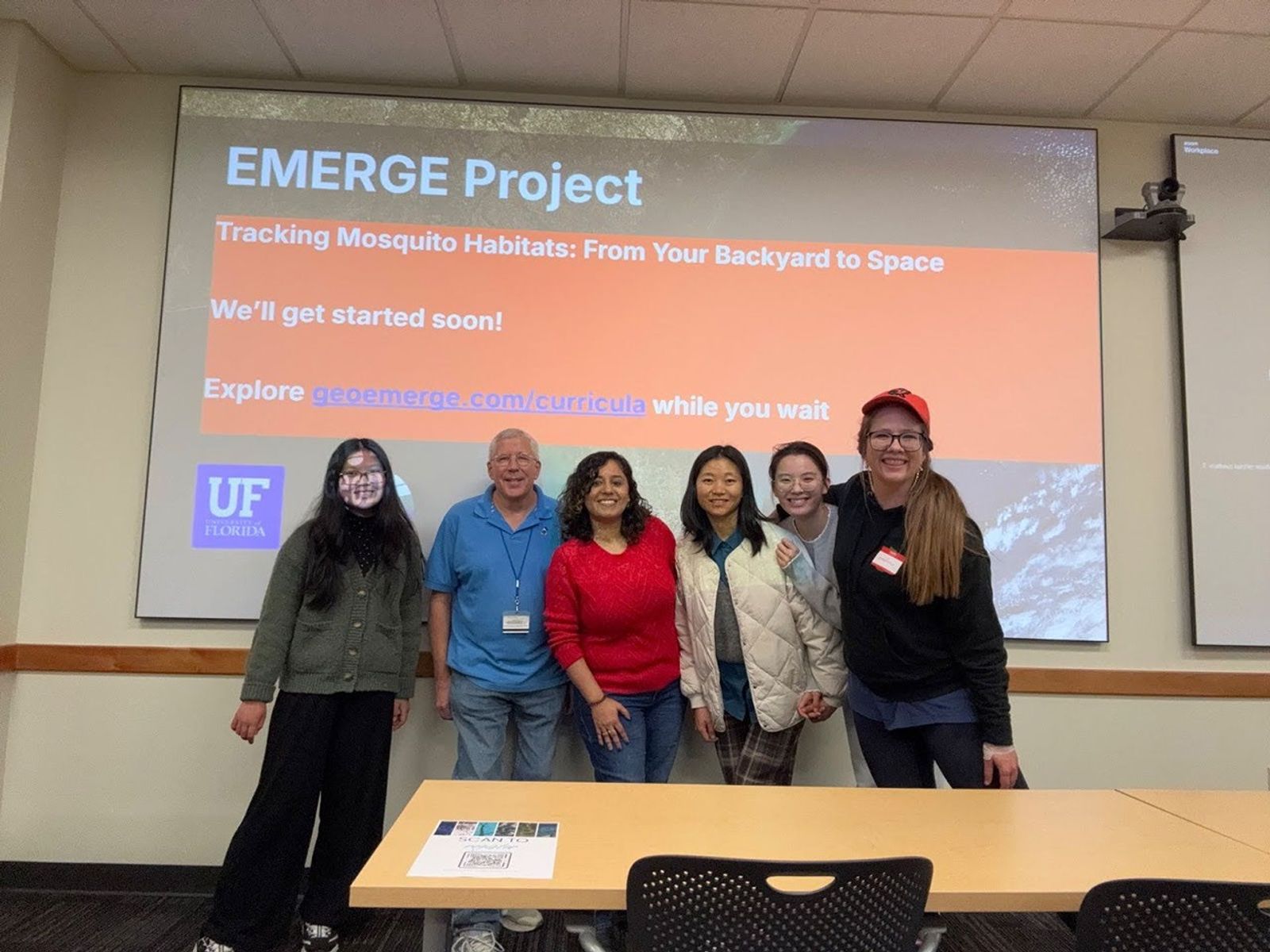
From left: Olivia Zhang, Joe Aufmuth, Natya Hans, Yichan Li, Wei Liu, and Caroline Nickerson.
Science Through Shadows: How Astronomical Alignments Reveal the Universe
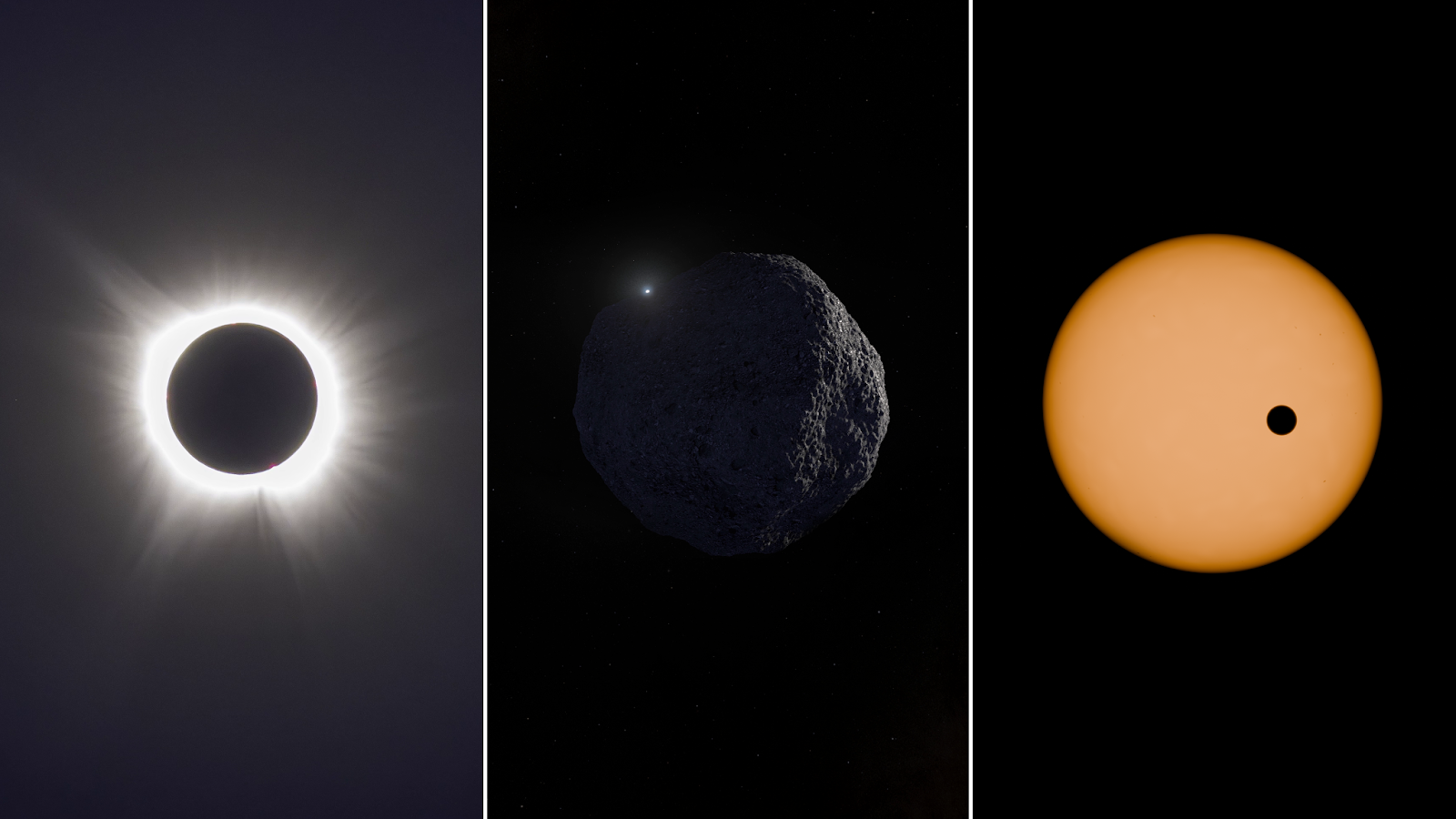
When one celestial object passes in front of another, it can cast a shadow that travels across space – and sometimes across Earth. These moments of alignment, known as eclipses, occultations, and transits, allow scientists to study distant objects in remarkable ways. By observing how light changes when an object briefly blocks another, astronomers can measure sizes and shapes, detect atmospheres, and refine the orbits of asteroids and planets.
From left to right: Image of the total solar eclipse of 2024, an asteroid occulting a distant star, and an exoplanet transiting a star.
The Science Through Shadows project, funded by NASA’s Science Activation program and led by Fiske Planetarium at the University of Colorado Boulder, explores how these shadow-based events help scientists conduct astronomical research. The project has produced a series of short films that explain the science behind eclipses, occultations, and solar observations while highlighting the people who help make these discoveries possible – including students, educators, and volunteer citizen scientists.
The videos are designed for use in classrooms, libraries, planetariums, and informal learning environments, and are available free of charge in both English and Spanish. Versions are available in 2D formats for streaming and classroom use, as well as fulldome formats for planetariums worldwide.
Focus: The annular solar eclipse of October 14, 2023
On October 14, 2023, observers across North America experienced an annular solar eclipse, sometimes called a “ring of fire.” During an annular eclipse, the Moon passes directly in front of the Sun but appears slightly smaller in the sky, leaving a bright ring of sunlight visible around its edges.
This video explains how annular eclipses differ from total solar eclipses, explores the science behind these events, and highlights safe viewing practices. It also helps viewers understand what makes eclipse observations both scientifically valuable and deeply memorable experiences.
Focus: The total solar eclipse of April 8, 2024
A total solar eclipse is one of the most dramatic astronomical events visible from Earth. On April 8, 2024, millions of people across North America had the opportunity to witness the Moon completely block the Sun, revealing the Sun’s faint outer atmosphere, known as the corona.
This video explores what happens during a total solar eclipse, why traveling to the path of totality offers a dramatically different experience, and how scientists use eclipses to study the Sun’s atmosphere.
Why don’t eclipses happen every month? What conditions must occur for the Sun, Earth, and Moon to align?
This episode explains the orbital mechanics that produce eclipses and clarifies the differences between solar and lunar eclipses. By addressing common misconceptions, it helps viewers understand the celestial alignments that create these spectacular events.
When an asteroid passes in front of a distant star, it briefly blocks the star’s light, casting a shadow across Earth. Astronomers call this event an occultation, and it can reveal valuable information about the asteroid’s size, shape, and surrounding environment.
This video follows the Lucy Occultation Project, where scientists and citizen scientists worked together to observe the Trojan asteroid Polymele ahead of NASA’s Lucy mission flyby. On February 3, 2023, more than 100 telescopes across two continents were deployed to capture the moment Polymele passed in front of a star. The resulting observations help scientists better understand the asteroid before the spacecraft’s encounter.
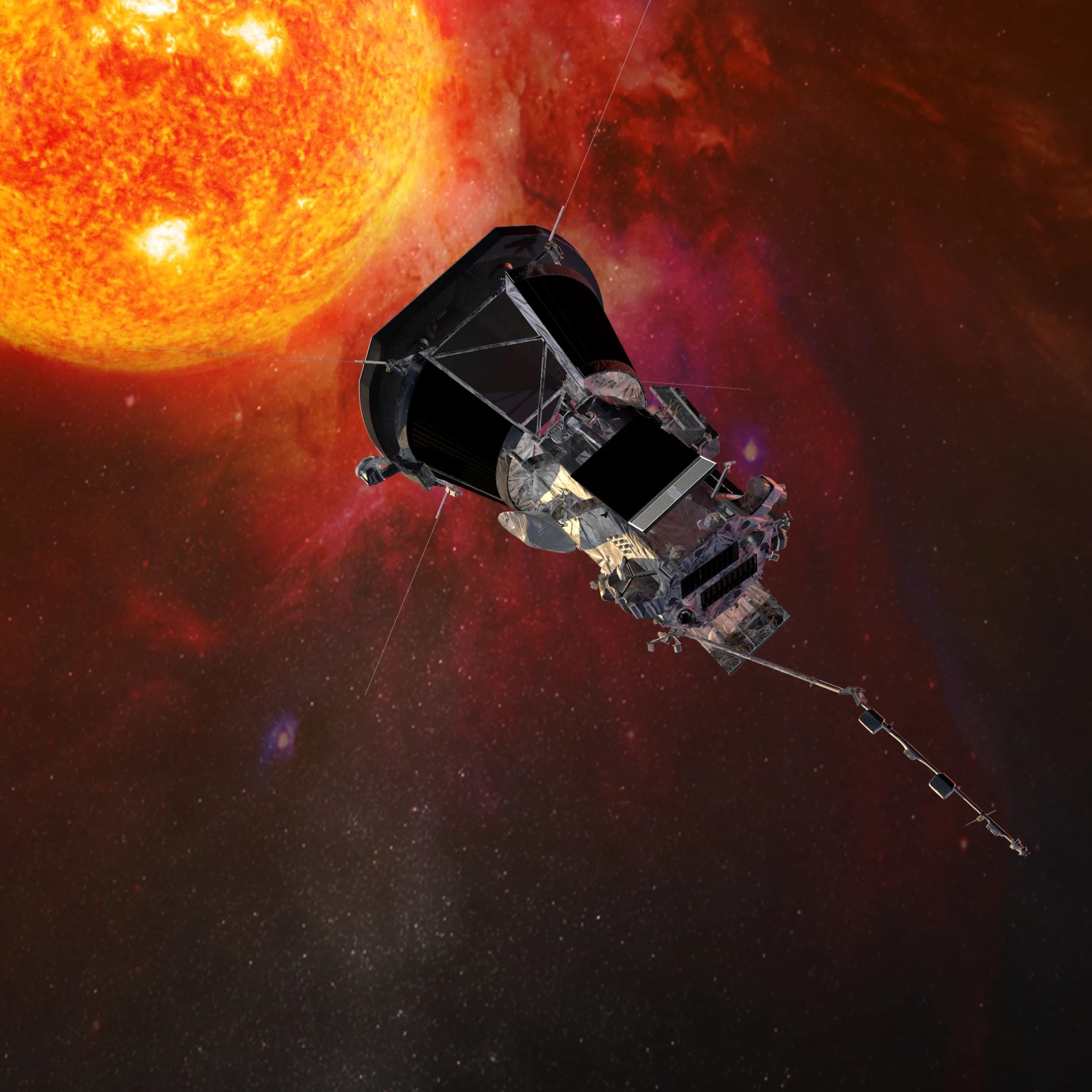
NASA’s Parker Solar Probe is helping scientists explore the Sun closer than ever before. On December 24, 2024, the spacecraft made its closest approach to the Sun, traveling more than 430,000 miles per hour – faster than any human-made object.
This video explores how Parker Solar Probe studies the Sun’s outer atmosphere and helps scientists investigate long-standing questions about the solar corona and solar wind.
NASA’s PUNCH (Polarimeter to Unify the Corona and Heliosphere) mission provides a new way to observe how the Sun influences space throughout the inner solar system.
Consisting of four suitcase-sized satellites in low-Earth orbit, PUNCH creates global, three-dimensional observations of the region between the Sun and Earth. These measurements help scientists better understand how the solar wind forms and evolves, and how solar storms travel through space.
Focus: Citizen science during recent solar eclipses
Solar eclipses create powerful opportunities for collaborative scientific research. This episode follows two large participatory science projects that took place during recent North American eclipses: the Nationwide Eclipse Ballooning Project, another NASA Science Activation-funded project that’s led by Montana State University, and Citizen CATE 2024, a NASA- and National Science Foundation-supported observing campaign.
Through balloon launches, telescope observations, and hands-on engineering challenges, students, educators, and volunteers collected atmospheric and solar data that scientists are now analyzing. The episode highlights how people with curiosity and passion can contribute meaningfully to real scientific discovery.
2D versions of these videos in both English and Spanish can be found on Fiske Planetarium’s YouTube channel, and downloadable versions are available through the project’s distribution page. Fulldome masters (1K, 2K, and 4K) are also available for free download via the Fiske Productions page, allowing planetariums around the world to share these stories of discovery with their audiences.
Through projects like Science Through Shadows, NASA’s Science Activation program helps connect everyone, everywhere with NASA Science content, experts, and opportunities to participate. Whether observing an eclipse, tracking an asteroid’s shadow, or studying data from a spacecraft, these moments of alignment offer powerful opportunities to explore how the universe works – and how people everywhere can participate in the process of discovery.
Everyone, everywhere – regardless of country of origin or citizenship status – can collaborate with professional scientists, conduct cutting-edge science, and make real discoveries as a volunteer for NASA Citizen Science projects. These projects give participants the opportunity to collaborate with professional scientists, conduct cutting-edge science, and make real discoveries related to NASA’s five research divisions: Earth science, planetary science, astrophysics, biological and physical sciences, and heliophysics. Explore available projects and get started: https://science.nasa.gov/citizen-science/
Explore how rivers move, change, and sustain life across the planet.
Using data from the SWOT (Surface Water and Ocean Topography) mission, jointly developed by the NASA/JPL and the Centre National d’Études Spatiales with contributions from the Canadian Space Agency and the United Kingdom Space Agency, scientists can now measure rivers continuously and across the entire globe for the first time in human history.
From the Mississippi River to the Amazon, these observations reveal how rivers flow, how they change over time, and how they support ecosystems, economies, and communities worldwide like never before.