Tuesday, 30 September 2025

Curiosity Blog, Sols 4668-4674: Winding Our Way Along

3 min read

Curiosity Blog, Sols 4668-4674: Winding Our Way Along
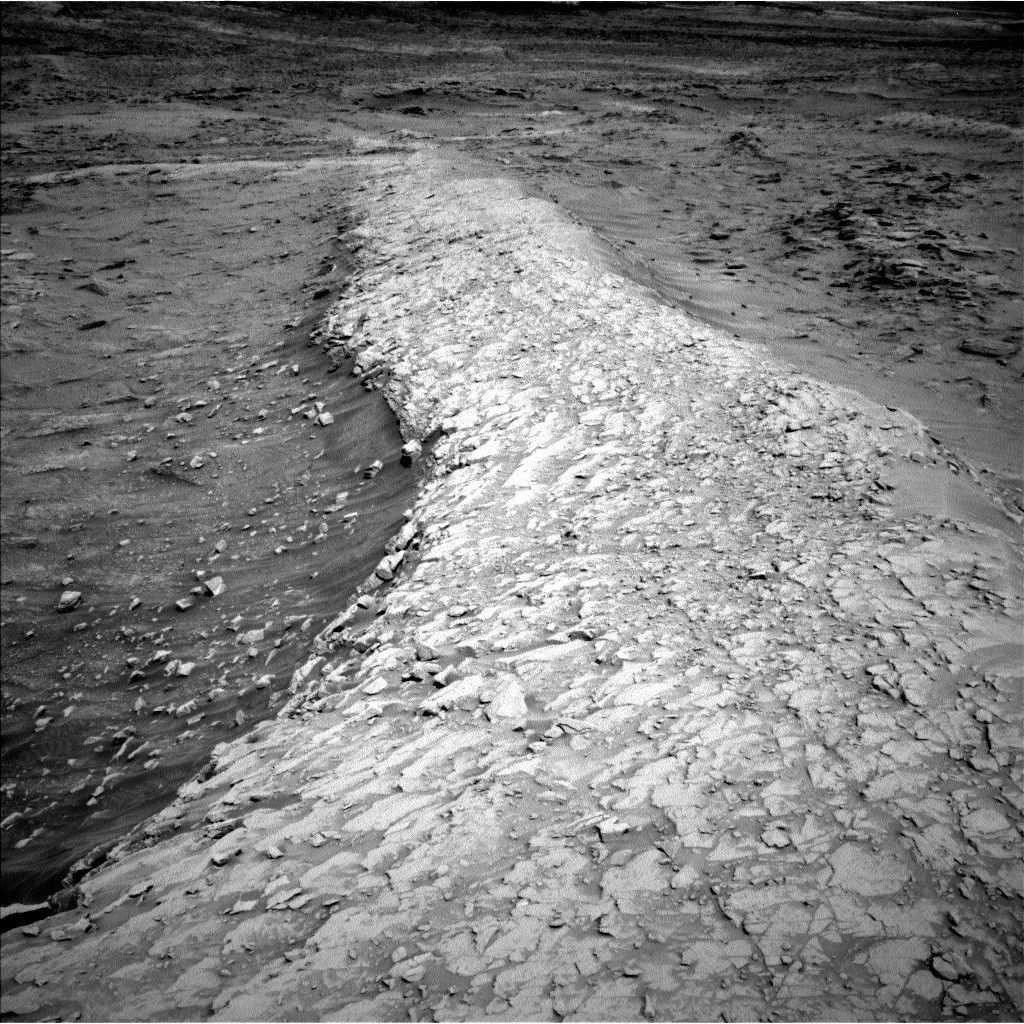
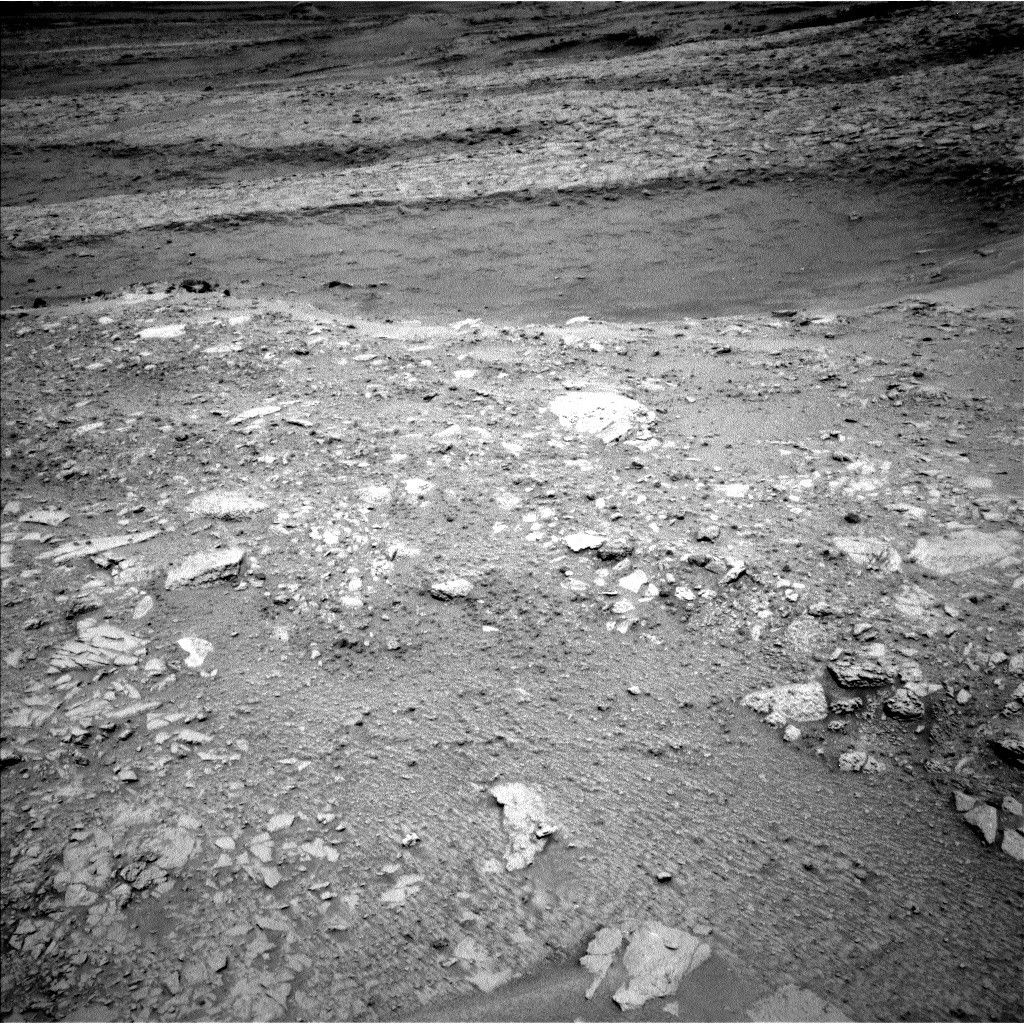
A grayscale photo from the Martian surface shows a landscape with an elevated ridge running from the foreground, at the bottom center of the image, weaving off into the distance near the top of the frame. The ridge itself is very light gray and uneven, composed of layered, chipped rock that looks like a dried-out mud flat. Descending off to either side of the ridge, the surrounding terrain is much darker gray and smoother, almost sandy, with scattered small rocks poking above the surface.
NASA’s Mars rover Curiosity acquired this image of the ridge in front of it, which it was scheduled to drive down the weekend of Sept. 27-28, 2025. To either side of the ridge are two hollows, nicknamed “Laguna Escondida” (left) and “Laguna Socompa” (right). Curiosity used its Left Navigation Camera to capture the image on Sept. 26, 2025 — Sol 4671, or Martian day 4,671 of the Mars Science Laboratory mission — at 12:54:44 UTC.
NASA/JPL-Caltech

Written by Alex Innanen, Atmospheric Scientist at York University

Earth planning date: Friday, Sept. 26, 2025

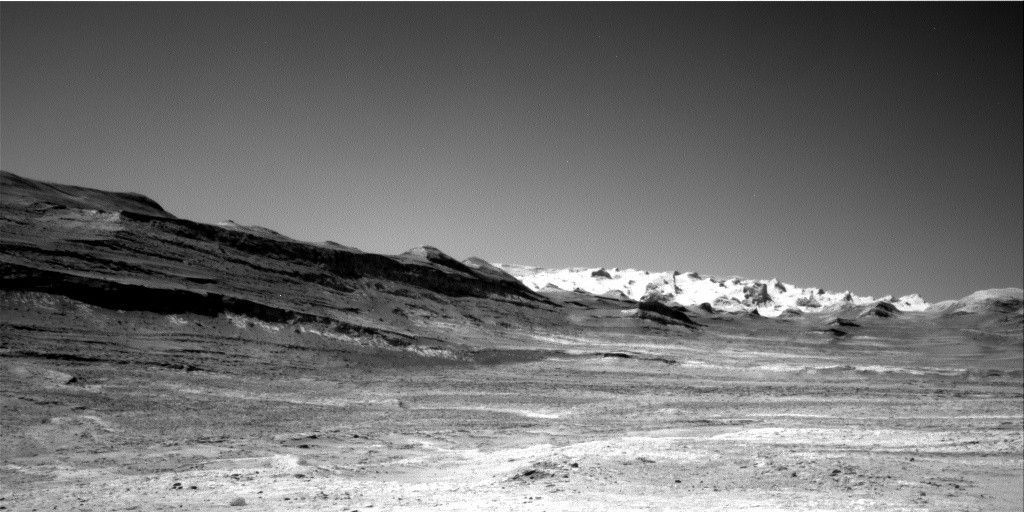
We are continuing through the boxwork region, taking a twisty-turny path along the ridges (many of which are conveniently Curiosity-sized). One thing we’re keeping an eye out for is our next drill location in one of the hollows. Our most recent drive put us right in the middle of two such hollows, which we’ve named “Laguna Escondida,” and “Laguna Socompa.” As we’re keeping an eye out for a good spot to drill though, we’re still using our normal suite of instruments to continue our investigation of the boxwork structures. 

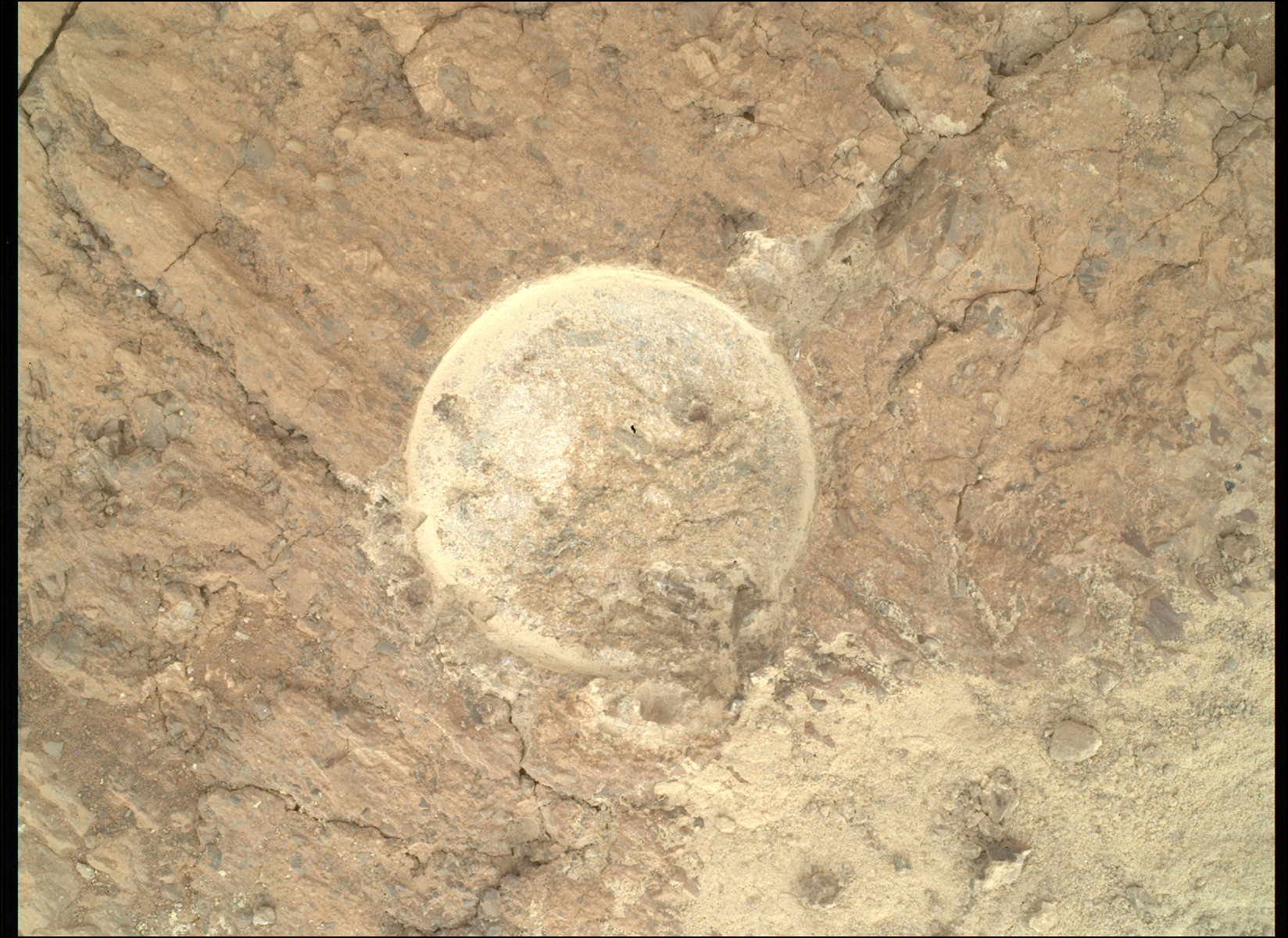
This week, we’ve had six contact science targets along the tops of the ridges, which have given MAHLI and APXS plenty to do. ChemCam and Mastcam have also been keeping busy, with several LIBS measurements from ChemCam and mosaics from both, of targets near and far. We’re not only interested in imaging the hollows to scope out our next drill site but also in continuing to investigate the structure of the ridges, and look further afield at the more distant boxwork structures and buttes around us.  

On Monday, I was on shift as the science theme lead for the environmental science theme group (ENV). We’re coming up to the end of the cloudy season in just over a week. As a result, we’ve been making the most of the clouds while they’re still here with our suite of cloud movies — the shorter suprahorizon and zenith movies, which we use to look at clouds’ properties directly overhead and just over the horizon; a survey to see how the brightness of the sky and clouds change with direction, which consists of nine cloud movies all around the rover; and the cloud altitude observation, which uses shadows cast by clouds to, as its name suggests, infer the height of the clouds. Once the cloudy season is over the number of water-ice clouds we see above Gale crater decreases dramatically, so we shelve the two longer observations for another year and just use the zenith and suprahorizon movies to monitor cloud activity. 

The end of the cloudy season does bring about the start of the dusty season though, where more dust gets lifted into the atmosphere and the lovely view of the crater rim that we’ve been enjoying gets a bit hazier. We monitor this with our regular line-of-sight and tau observations. We also tend to see more dust-lifting activity, like dust devils, which we keep an eye on with 360-degree surveys and dedicated movies. With the ever-changing atmosphere, there’s always something for ENV to do. 

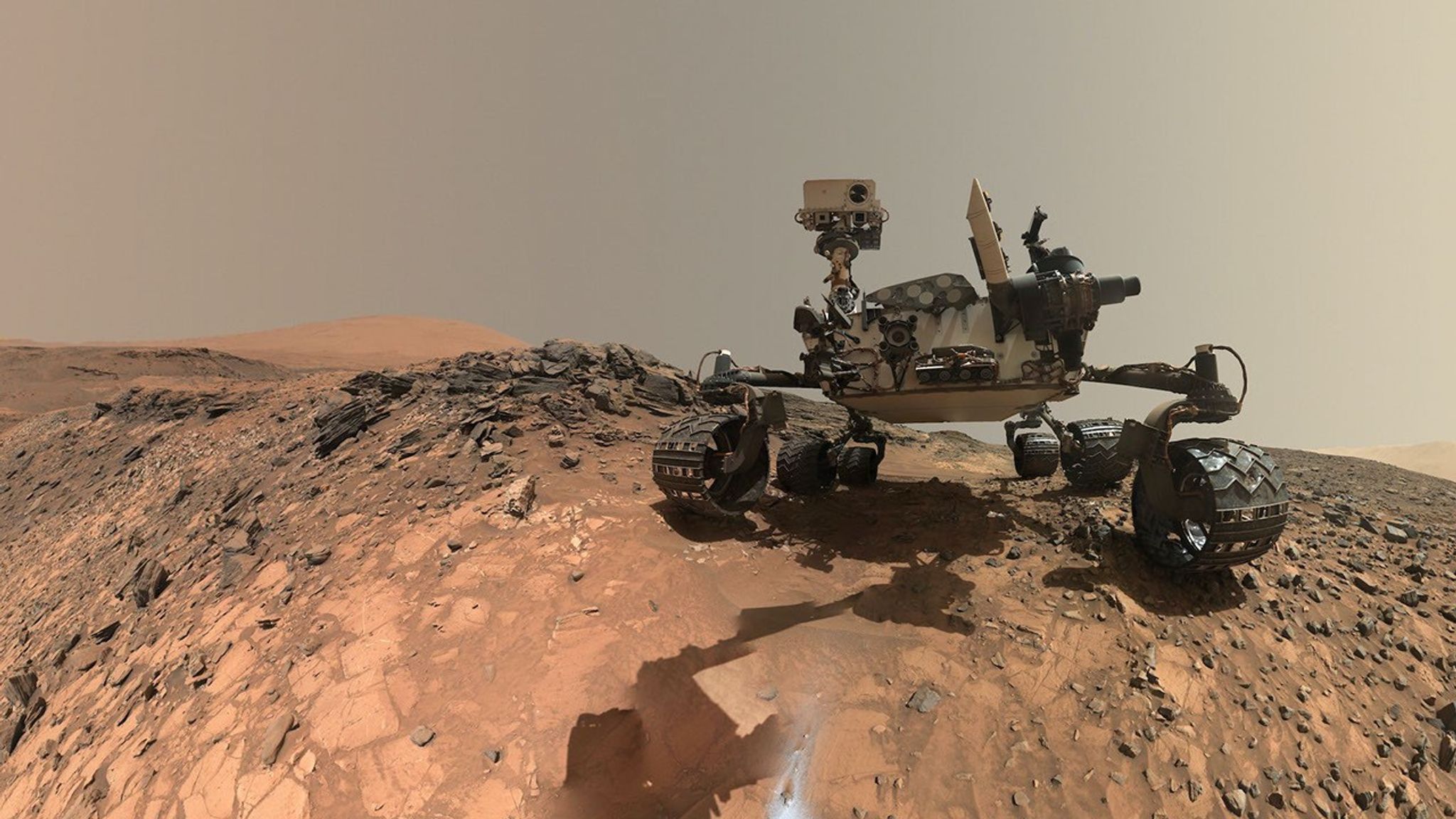
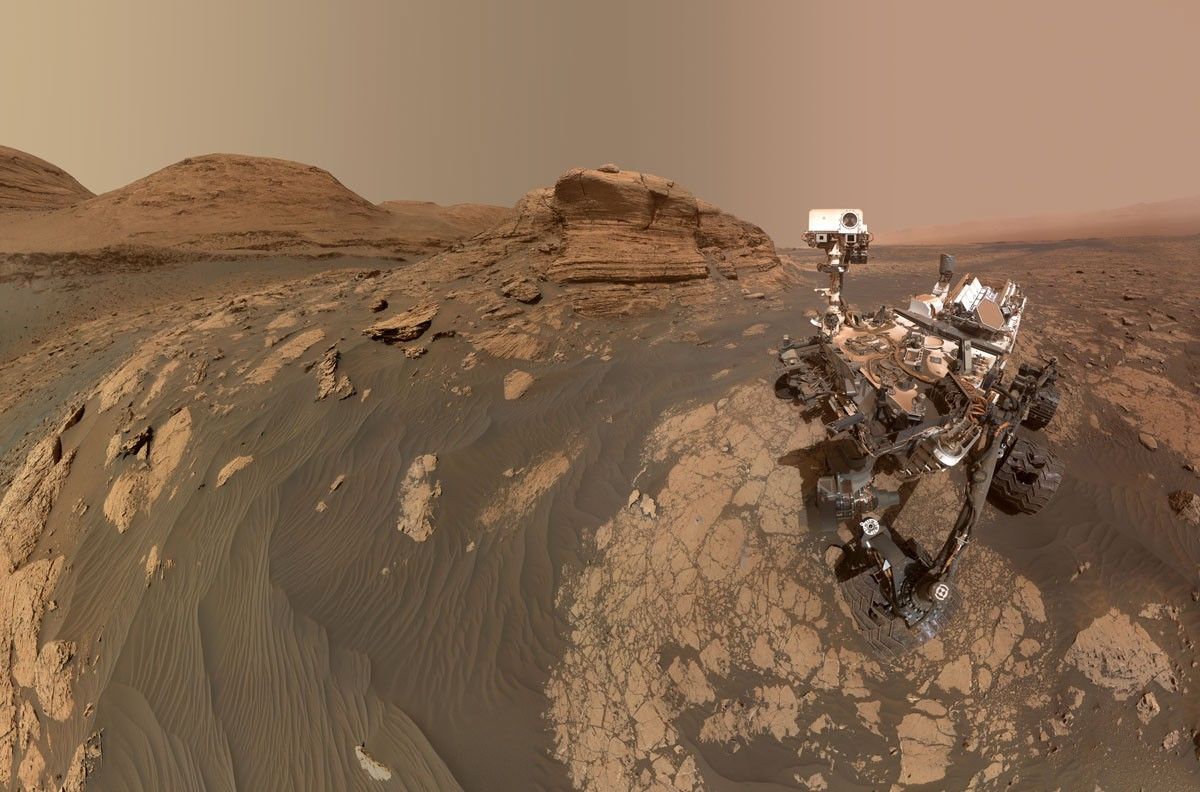
A rover sits on the hilly, orange Martian surface beneath a flat grey sky, surrounded by chunks of rock.
NASA’s Mars rover Curiosity at the base of Mount Sharp
NASA/JPL-Caltech/MSSS

Share

Details

Last Updated
Sep 29, 2025

Related Terms


from NASA https://ift.tt/ADnupXZ
Joe A. Adam Presents Ring Sheared Drop (RSD) Research at 2025 ISSRDC

3 min read

Joe A. Adam Presents Ring Sheared Drop (RSD) Research at 2025 ISSRDC

The Ring-Sheared Drop (RSD) experiment, conducted in the Microgravity Glovebox on ISS, helps scientists learn more about Alzheimer’s & Dementia in hopes of a future cure to similar neurological diseases.
NASA

At the virtual 2025 ISS Research and Development Conference (ISSDRC), Joe A. Adam of Rensselaer Polytechnic Institute, presented the topic titled “Surface Science in Microgravity – Fluid Geometry in the Ring-Sheared Drop,” presented to a broad audience from academia and the scientific community during the Physical Sciences and Materials Development session.

Dr. Adam provided a comprehensive overview of the Ring Sheared Drop (RSD) hardware, experiment campaigns and the evolving role of RSD in advancing biophysical science, particularly in the characterization of proteins. Leveraging the absence of gravity aboard the ISS, the RSD enables researchers to isolate shear-induced aggregation processes relevant to neurodegenerative diseases such as Alzheimer’s and Parkinson’s, offering insight into mechanisms that are difficult to observe with ground-based experiments.

The presentation traced the RSD development, beginning with the initial campaign in 2016 which was funded by Biological and Physical Sciences (BPS) for hardware development and the first science campaign, and culminating in the most recent 2025 flight campaign, which involved the study of three key proteins: Immunoglobulin G (IgG), Insulin, and Human Serum Albumin (HSA).

A highlight of the session was a discussion of the RSD’s custom camera configuration, which has enabled a novel fluid characterization technique known as Particle Tracking Velocimetry (PTV). This method allows researchers to visually track particle motion within the fluid drop, supporting the validation and refinement of theoretical and computational models describing protein behavior in microgravity.

Adam further explained how in-situ imaging and velocimetry techniques, enabled by the unique RSD camera setup, enhance the analysis of fluid flow and shear-driven aggregation at the molecular level.

The presentation showcased a series of comparative videos from past and current RSD campaigns, illustrating protein dynamics under varying sample compositions. He emphasized how flight data are being compared against Earth analog experiments to 1) validate predictive models and 2) inform the design of future microgravity research – the two-fold focus of the research from the beginning.

The session concluded with a summary of preliminary findings from the 2025 campaign, including multi-geometry rheometry results, which offer deeper insight into the viscoelastic behavior of proteins under shear. These findings may well contribute to the development of future pharmaceutical and therapeutic strategies.

To view the entire presentation, a recording is available for downloaded from the 2025 ISSRDC site.

Visit the Physical Sciences Informatics (PSI) database to access experiment data from two RSD campaigns, Interfacial Bioprocessing of Pharmaceuticals (IBP-I) and Amyloid Fibril Formation (AFF) with additional RSD data planned for release in 2026.


from NASA https://ift.tt/nrvb8jX

Monday, 29 September 2025

Inside the Visualization: Aerosols

1 min read

Inside the Visualization: Aerosols

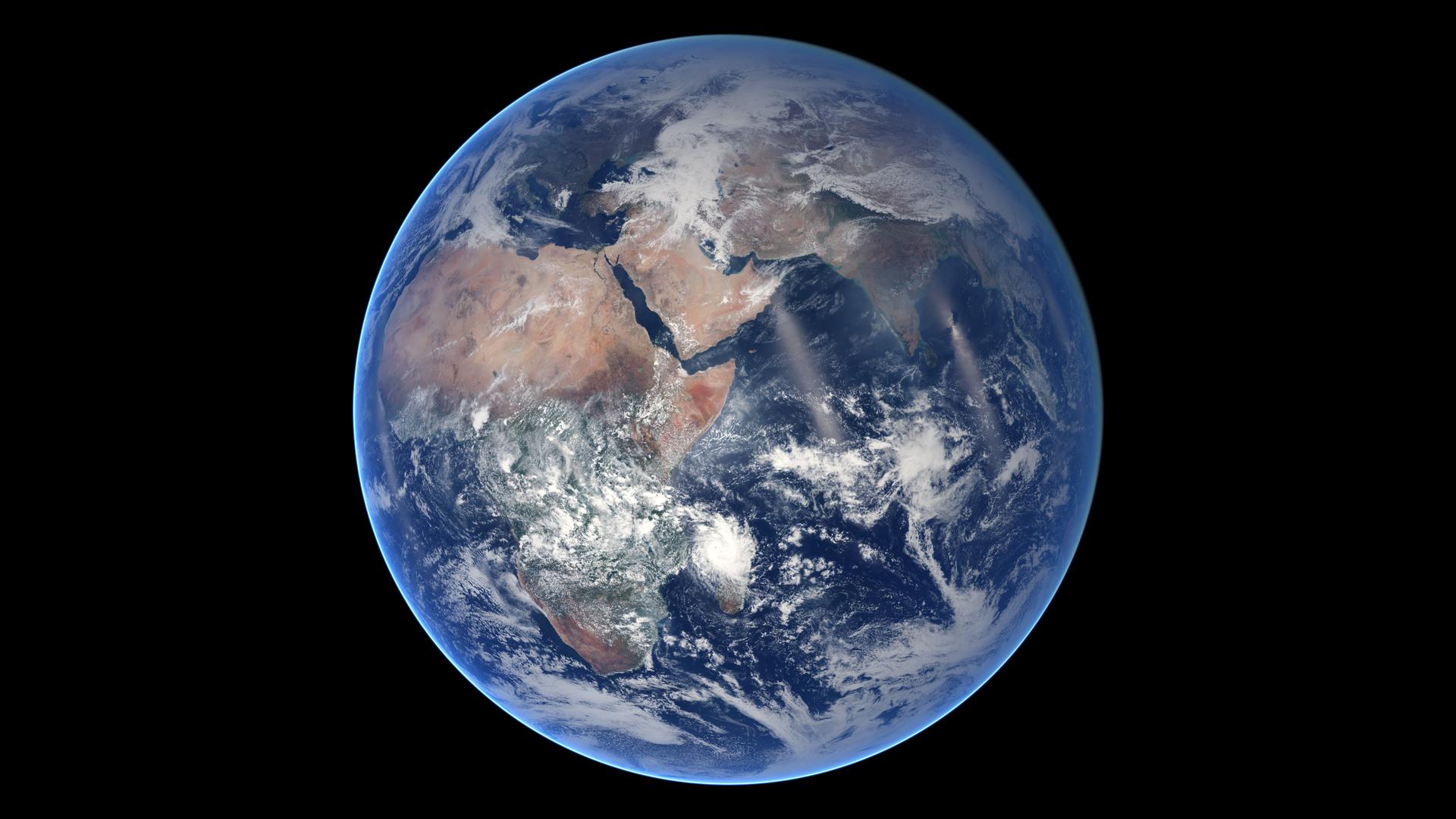
NASA uses satellites, ground measurements, and powerful computer models to track tiny particles floating in our air called aerosols. These small particles can travel thousands of miles, affecting the air we breathe and how far we can see, even far from where they originated.

Share

Details

Last Updated
Sep 29, 2025


from NASA https://ift.tt/KwE34yF

Hubble Surveys Cloudy Cluster

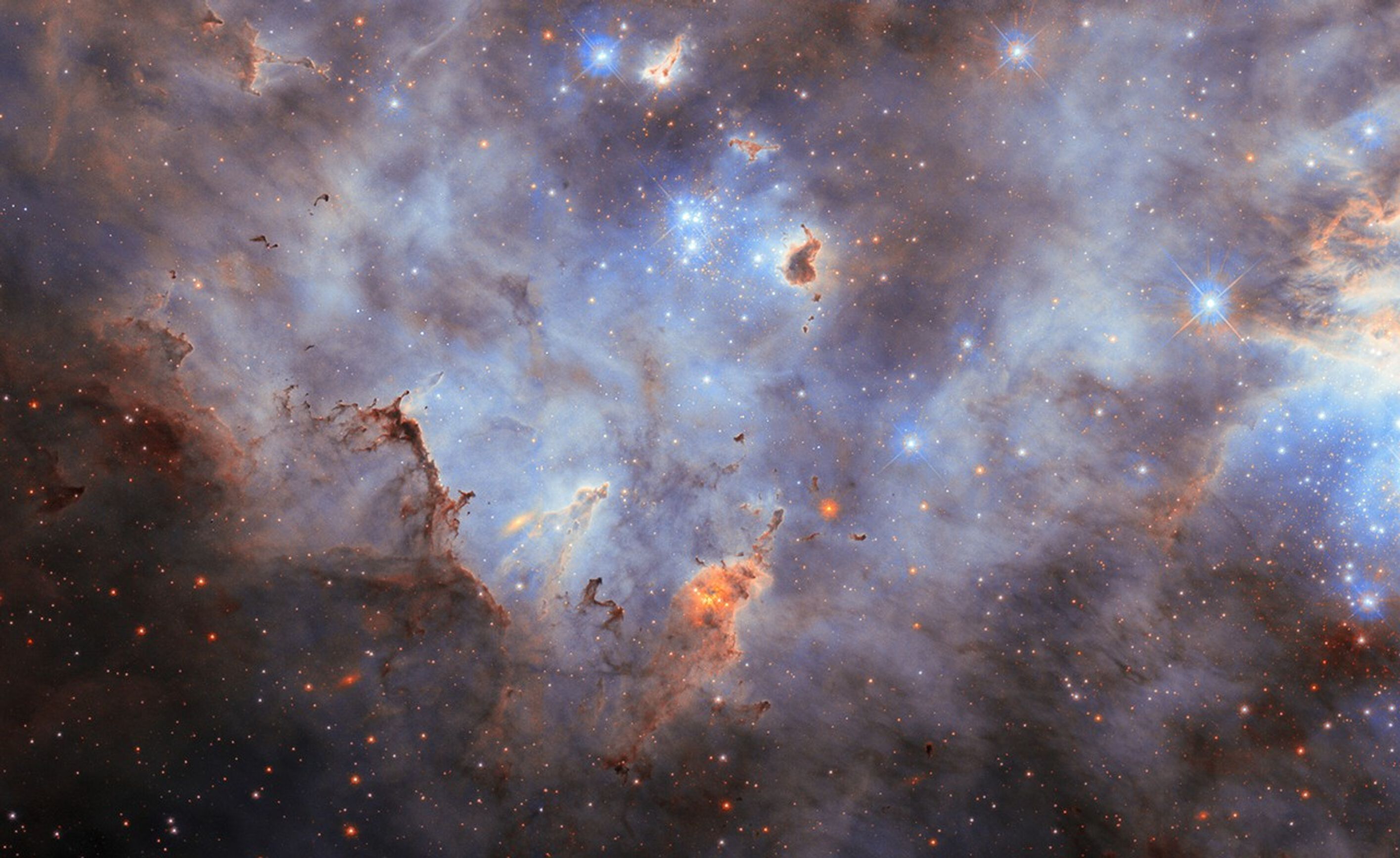
Stars in a star cluster shine brightly blue, with four-pointed diffraction spikes radiating from them. The center shows a small, crowded group of stars while a larger group is partially visible on the right side of the image. The nebula is mostly thick, smoky clouds of gas, lit up in blue tones by the stars. Clumps of dust hover before and around the stars; they are mostly dark but lit around their edges where the starlight erodes them.
ESA/Hubble & NASA, C. Murray, J. Maíz Apellániz

This NASA/ESA Hubble Space Telescope image released on Sept. 12, 2025, features a cloudy starscape from an impressive star cluster. This scene is in the Large Magellanic Cloud, a dwarf galaxy situated about 160,000 light-years away in the constellations Dorado and Mensa. With a mass equal to 10–20% of the mass of the Milky Way, the Large Magellanic Cloud is the largest of the dozens of small galaxies that orbit our galaxy.

The Large Magellanic Cloud is home to several massive stellar nurseries where gas clouds, like those strewn across this image, coalesce into new stars. Today’s image depicts a portion of the galaxy’s second-largest star-forming region, which is called N11. (The most massive and prolific star-forming region in the Large Magellanic Cloud, the Tarantula Nebula, is a frequent target for Hubble.) We see bright, young stars lighting up the gas clouds and sculpting clumps of dust with powerful ultraviolet radiation.

This image marries observations made roughly 20 years apart, a testament to Hubble’s longevity. The first set of observations, which were carried out in 2002–2003, capitalized on the exquisite sensitivity and resolution of the then-newly-installed Advanced Camera for Surveys. Astronomers turned Hubble toward the N11 star cluster to do something that had never been done before at the time: catalog all the stars in a young cluster with masses between 10% of the Sun’s mass and 100 times the Sun’s mass.

The second set of observations came from Hubble’s newest camera, the Wide Field Camera 3. These images focused on the dusty clouds that permeate the cluster, providing us with a new perspective on cosmic dust.

@NASAHubble


from NASA https://ift.tt/pyf4MLz

Astronaut Candidates Get to Work at Johnson Space Center

NASA announced its newest class of astronaut candidates on Sept. 22, 2025, at the agency’s Johnson Space Center in Houston. After the welcome ceremony, the 10 highly qualified individuals rolled up their sleeves and prepared for the next step in their journey to the stars: nearly two years of training to become flight-eligible for missions to low Earth orbit, the Moon, and ultimately, Mars.

An astronaut wears a VR headset and holds controllers in his hands during a training exercise.
NASA astronaut Chris Williams participates in a spacewalk safety system training in the virtual reality lab at NASA’s Johnson Space Center.
NASA/Riley McClenaghan

The training astronaut candidates complete is comprehensive and rigorous. They learn about NASA’s history and vision, and how astronauts advance the agency’s mission. They take classes on space health – gaining an understanding of radiation exposure, microgravity’s effects on the human body, space food and nutrition, and how to use the exercise equipment aboard the International Space Station. They also study first aid and practice providing medical care for crewmates. Each candidate will receive flight training, learning to pilot or improving their current piloting skills through the T-38 supersonic jet and other aviation platforms.

Three astronauts in casual clothing test life support systems, including a face mask, inside a space station mockup.
NASA astronauts Andre Douglas, Christina Birch, Christopher Williams, and Deniz Burnham during life support systems training in a mockup of an International Space Station airlock at Johnson Space Center.
NASA/James Blair

With NASA’s plans for the future of exploration, this class of astronauts may have opportunities to fly to low Earth orbit, or even beyond. Some may contribute to research and technology investigations taking place aboard the space station – which is about to celebrate 25 years of continuous human presence in space. Others may venture to the Moon to prepare for future Mars missions.   

A man uses a small magnifying glass to study a rock that is being held up by a woman wearing a bucket hat.
NASA astronaut Marcos Berríos studies a rock sample during Earth and planetary sciences field training in northern Arizona.
NASA/Riley McClenaghan

To be ready for any destination, this class will complete both space station training and advanced preparation for deep space. These exercises allow astronaut candidates to work through problems and build relationships with their classmates while preparing them for space flights.

“Training was such an intense period that we got to know each other really well,” said NASA astronaut Anil Menon, who joined the agency as part of the 2021 class – astronaut group 23. “Now when we come together, there are these moments – like we might be handing off a capcom shift, or we might be flying a jet together – and in those moments, I feel like I know them so well that we know how to navigate all sorts of challenges together and just be our best selves as a team.”

A NASA astronaut wearing a blue flight suit is pictured climbing a ladder into a T-38 training jet.
NASA astronaut Luke Delaney prepares for a training flight in a T-38 jet.
NASA/Robert Markowitz

Astronaut candidate training also teaches foundational skills that can be applied to any destination in space. The group will complete several dives in the Neutral Buoyancy Laboratory, simulating spacewalks in different environments and learning how to do maintenance tasks in microgravity with a full-scale underwater mockup of the International Space Station as their worksite. They will also train inside other mockups of space vehicles, learning emergency procedures, maintenance, and repair of spacecraft, along with how to contribute to future developmental programs.

A NASA astronaut is helped into a spacesuit on the deck of the large training pool in NASA's Neutral Buoyancy Laboratory.
NASA astronaut Anil Menon suits up before completing a training dive in the Neutral Buoyancy Laboratory at Johnson Space Center.
NASA/Josh Valcarcel

Robotics training will prepare them to use the station’s Canadarm2 robotic arm. They will trek through the wilderness as part of their land and water survival training, and they will study geology in the classroom and in the field. The group will practice tasks in a variety of simulations, leveraging Johnson’s world-class facilities, virtual reality, and immersive technologies. Additionally, the class will work shifts in the Mission Control Center in Houston to experience a day in the life of the people who keep watch over the astronauts and vehicles.

Astronaut candidates who successfully complete the training program celebrate their achievement in a graduation ceremony, after which they are officially flight-eligible members of NASA’s astronaut corps. They will also receive office and ground support roles at Johnson while they await future flight assignments.

Three people wearing brown camouflage build a shelter out of branches in the woods.
NASA astronauts Anil Menon, Nichole Ayers, and Andrea Douglas work to build a shelter during wilderness survival training at Ft. Rucker, Alabama.
NASA/Robert Markowitz

“I’ve been exposed to a lot of different parts of what we do at Johnson Space Center, working both with the current increment of supporting operations aboard the International Space Station, as well as supporting some development of the Orion spacecraft and Artemis II preparations,” said NASA astronaut Chris Birch, another member of astronaut group 23.

Many members of NASA’s active astronaut corps emphasize that the learning does not stop when astronaut candidate training ends. “You have the foundational training and you continue to build off of that,” said Deniz Burnham, adding that the hardest days can be the most educational. “You get to learn, you get to improve, and then you’re still getting the opportunity. It’s such a positively unique experience and environment, and you can’t help but be grateful.”

As NASA astronaut Frank Rubio, class mentor, told the group, “You’ll become part of a legacy of those who trained before you, continuing the adventure they started, and looking ahead to future human exploration.”


from NASA https://ift.tt/4myqrbt

NASA’s Webb Telescope Studies Moon-Forming Disk Around Massive Planet

4 Min Read

NASA’s Webb Telescope Studies Moon-Forming Disk Around Massive Planet

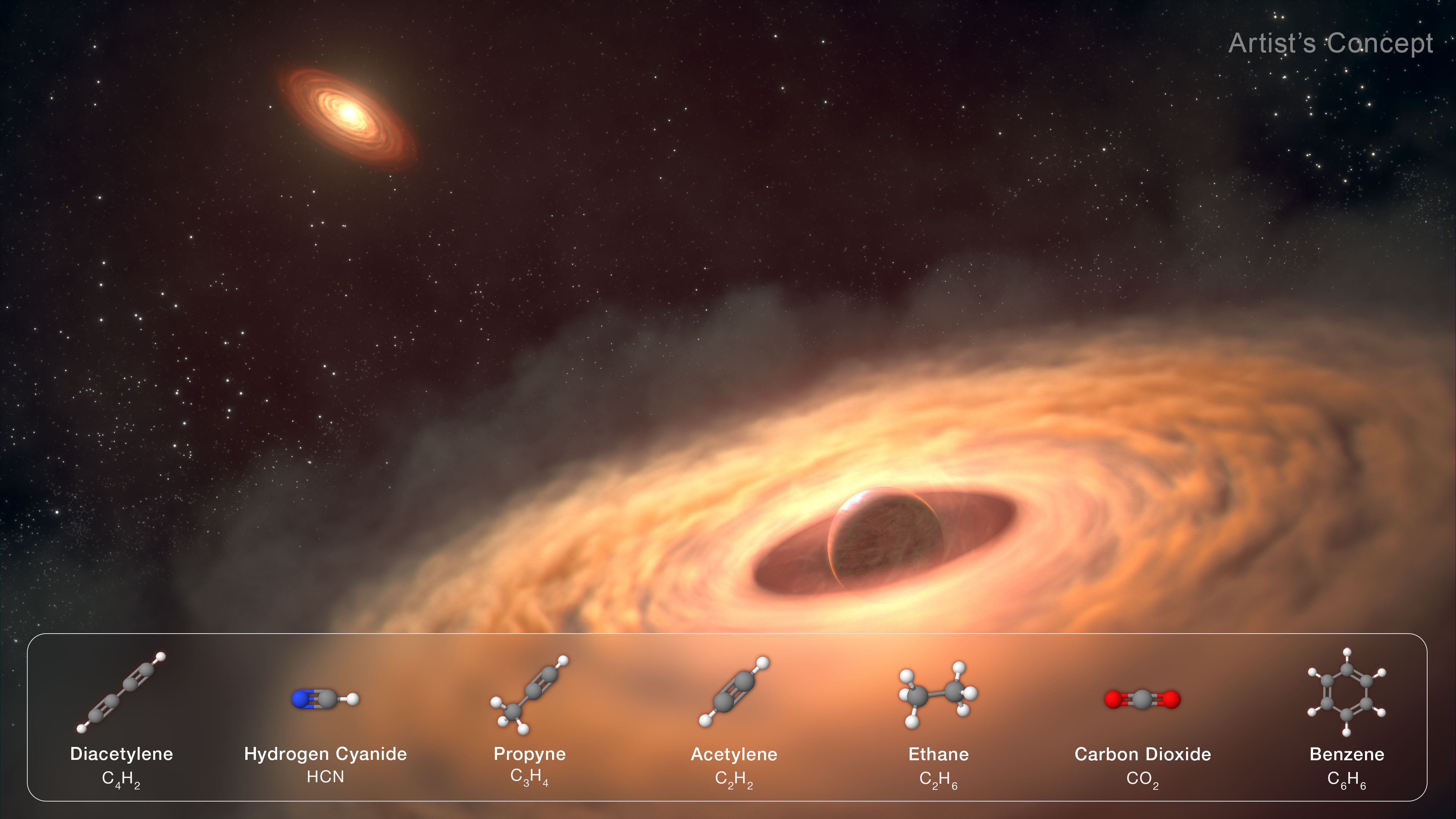
An illustration of a young planet with a surrounding disk of dust and gas potentially forming moons. The planet, which appears dark red, is shown at lower right, circled by a cloudy, clumpy reddish orange-colored disk. The host star appears at upper left, and glows yellow, with its own reddish disk of debris. The disk that surrounds the planet takes up about half the illustration. The black background of space is speckled with stars. The words Artist’s Concept appear at upper right.
An artistic rendering of a dust and gas disk encircling the young exoplanet, CT Cha b, 625 light-years from Earth. Full image, annotation, and caption shown below.
Credits:
Illustration: NASA, ESA, CSA, STScI, Gabriele Cugno (University of Zürich, NCCR PlanetS), Sierra Grant (Carnegie Institution for Science), Joseph Olmsted (STScI), Leah Hustak (STScI)

NASA’s James Webb Space Telescope has provided the first direct measurements of the chemical and physical properties of a potential moon-forming disk encircling a large exoplanet. The carbon-rich disk surrounding the world called CT Cha b, which is located 625 light-years away from Earth, is a possible construction yard for moons, although no moons are detected in the Webb data.

The results published today in The Astrophysical Journal Letters.

The young star the planet orbits is only 2 million years old and still accreting circumstellar material. However, the circumplanetary disk discovered by Webb is not part of the larger accretion disk around the central star. The two objects are 46 billion miles apart.

Observing planet and moon formation is fundamental to understanding the evolution of planetary systems across our galaxy. Moons likely outnumber planets, and some might be habitats for life as we know it. But we are only now entering an era where we can witness their formation.

This discovery fosters a better understanding of planet and moon formation, say researchers. Webb’s data is invaluable for making comparisons to our solar system’s birth over 4 billion years ago.

“We can see evidence of the disk around the companion, and we can study the chemistry for the first time. We’re not just witnessing moon formation — we’re also witnessing this planet’s formation,” said co-lead author Sierra Grant of the Carnegie Institution for Science in Washington.

“We are seeing what material is accreting to build the planet and moons,” added main lead author Gabriele Cugno of the University of Zürich and member of the National Center of Competence in Research PlanetS.

Image A: Circumplanetary Disk (Artist’s Concept)

An illustration of a young planet with a surrounding disk of dust and gas potentially forming moons. The planet, which appears dark red, is shown at lower right, circled by a cloudy, clumpy reddish orange-colored disk. The host star appears at upper left, and glows yellow, with its own reddish disk of debris. The disk that surrounds the planet takes up about half the illustration. The black background of space is speckled with stars. At the bottom of the illustration, graphics of molecules are listed in the following order: diacetylene, hydrogen cyanide, propyne, acetylene, ethane, carbon dioxide, benzene. The words Artist’s Concept appear at upper right.
An artistic rendering of a dust and gas disk encircling the young exoplanet, CT Cha b, 625 light-years from Earth. Spectroscopic data from NASA’s James Webb Space Telescope suggests the disk contains the raw materials for moon formation: diacetylene, hydrogen cyanide, propyne, acetylene, ethane, carbon dioxide, and benzene. The planet appears at lower right, while its host star and surrounding circumstellar disk are visible in the background.
Illustration: NASA, ESA, CSA, STScI, Gabriele Cugno (University of Zürich, NCCR PlanetS), Sierra Grant (Carnegie Institution for Science), Joseph Olmsted (STScI), Leah Hustak (STScI)

Dissecting starlight

Infrared observations of CT Cha b were made with Webb’s MIRI (Mid-Infrared Instrument) using its medium resolution spectrograph. An initial look into Webb’s archival data revealed signs of molecules within the circumplanetary disk, which motivated a deeper dive into the data. Because the planet’s faint signal is buried in the glare of the host star, the researchers had to disentangle the light of the star from the planet using high-contrast methods.

“We saw molecules at the location of the planet, and so we knew that there was stuff in there worth digging for and spending a year trying to tease out of the data. It really took a lot of perseverance,” said Grant.

Ultimately, the team discovered seven carbon-bearing molecules within the planet’s disk, including acetylene (C2H2) and benzene (C6H6). This carbon-rich chemistry is in stark contrast to the chemistry seen in the disk around the host star, where the researchers found water but no carbon. The difference between the two disks offers evidence for their rapid chemical evolution over only than 2 million years.

Genesis of moons

A circumplanetary disk has long been hypothesized as the birthplace of Jupiter’s four major moons. These Galilean satellites must have condensed out of such a flattened disk billions of years ago, as evident in their co-planar orbits about Jupiter. The two outermost Galilean moons, Ganymede and Callisto, are 50% water ice. But they presumably have rocky cores, perhaps either of carbon or silicon.

“We want to learn more about how our solar system formed moons. This means that we need to look at other systems that are still under construction. We’re trying to understand how it all works,” said Cugno. “How do these moons come to be? What are their ingredients? What physical processes are at play, and over what timescales? Webb allows us to witness the drama of moon formation and investigate these questions observationally for the first time.”

In the coming year, the team will use Webb to perform a comprehensive survey of similar objects, to better understand the diversity of physical and chemical properties in the disks around young planets.

The James Webb Space Telescope is the world’s premier space science observatory. Webb is solving mysteries in our solar system, looking beyond to distant worlds around other stars, and probing the mysterious structures and origins of our universe and our place in it. Webb is an international program led by NASA with its partners, ESA (European Space Agency) and CSA (Canadian Space Agency).

To learn more about Webb, visit:

https://science.nasa.gov/webb

Related Information

Read more: NASA’s Webb Finds Planet-Forming Disks Lived Longer in Early Universe

Explore more: ViewSpace Detecting Other Worlds: Direct Imaging

Explore more: How to Study Exoplanets: Webb and Challenges

Read more: Webb’s Star Formation Discoveries

More Webb News

More Webb Images

Webb Science Themes

Webb Mission Page

Related For Kids

What is the Webb Telescope?

SpacePlace for Kids

Share

Details

Last Updated
Sep 29, 2025
Editor
Marty McCoy
Contact


from NASA https://ift.tt/0lrimUE

NASA’s Nancy Grace Roman Space Telescope Completed

Over the course of several hours, technicians meticulously connected the inner and outer segments of NASA’s Nancy Grace Roman Space Tel...