Thursday, 31 July 2025

NASA Installs Key ‘Sunblock’ Shield on Roman Space Telescope

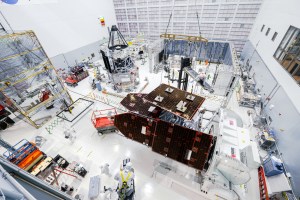
Technicians have successfully installed two sunshields onto NASA’s Nancy Grace Roman Space Telescope’s inner segment. Along with the observatory’s Solar Array Sun Shield and Deployable Aperture Cover, the panels (together called the Lower Instrument Sun Shade), will play a critical role in keeping Roman’s instruments cool and stable as the mission explores the infrared universe.

This video shows technicians installing two sunshields onto NASA's nearly complete Nancy Grace Roman Space Telescope on July 17. The large yet lightweight panels will block sunlight, keeping Roman’s instruments cool and stable as the mission explores the infrared universe.
Credit: NASA/Sophia Roberts

The team is on track to join Roman’s outer and inner assemblies this fall to complete the full observatory, which can then undergo further prelaunch testing.

“This shield is like an extremely strong sunblock for Roman’s sensitive instruments, protecting them from heat and light from the Sun that would otherwise overwhelm our ability to detect faint signals from space,” said Matthew Stephens, an aerospace engineer at NASA’s Goddard Space Flight Center in Greenbelt, Maryland.

The sunshade, which was designed and engineered at NASA Goddard, is essentially an extension of Roman’s solar panels, except without solar cells. Each sunshade flap is roughly the size of a garage door — about 7 by 7 feet (2.1 by 2.1 meters) — and 3 inches (7.6 centimeters) thick.

“They’re basically giant aluminum sandwiches, with metal sheets as thin as a credit card on the top and bottom and the central portion made up of a honeycomb structure,” said Conrad Mason, an aerospace engineer at NASA Goddard.

This design makes the panels lightweight yet stiff, and the material helps limit heat transfer from the side facing the Sun to the back—no small feat considering the front will be hot enough to boil water (up to 216 degrees Fahrenheit, or 102 degrees Celsius) while the back will be much colder than Antarctica’s harshest winter (minus 211 Fahrenheit, or minus 135 Celsius). A specialized polymer film blanket will wrap around each panel to temper the heat, with 17 layers on the Sun side and one on the shaded side.

The sunshade will be stowed and gently deploy around an hour after launch.

In this time-lapse video, technicians manually deploy the Lower Instrument Sun Shield for NASA's Nancy Grace Roman Space Telescope. The test helps verify the panels will operate as designed in space.
NASA/Sophia Roberts

“The deploying mechanisms have dampers that work like soft-close hinges for drawers or cabinets, so the panels won’t slam open and rattle the observatory,” Stephens said. “They each take about two minutes to move into their final positions. This is the very first system that Roman will deploy in space after the spacecraft separates from the launch vehicle.”

Now completely assembled, Roman’s inner segment is slated to undergo a 70-day thermal vacuum test next. Engineers and scientists will test the full functionality of the spacecraft, telescope, and instruments under simulated space conditions. Following the test, the sunshade will be temporarily removed while the team joins Roman’s outer and inner assemblies, and then reattached to complete the observatory. The mission remains on track for launch no later than May 2027 with the team aiming for as early as fall 2026.

Download high-resolution video and images from NASA’s Scientific Visualization Studio

The Nancy Grace Roman Space Telescope is managed at NASA’s Goddard Space Flight Center in Greenbelt, Maryland, with participation by NASA’s Jet Propulsion Laboratory in Southern California; Caltech/IPAC in Pasadena, California; the Space Telescope Science Institute in Baltimore; and a science team comprising scientists from various research institutions. The primary industrial partners are BAE Systems Inc. in Boulder, Colorado; L3Harris Technologies in Rochester, New York; and Teledyne Scientific & Imaging in Thousand Oaks, California.

By Ashley Balzer
NASA’s Goddard Space Flight Center, Greenbelt, Md.

Share

Details

Last Updated
Jul 31, 2025
Editor
Ashley Balzer
Contact
Ashley Balzer
Location
Goddard Space Flight Center


from NASA https://ift.tt/qCWaKmu
NASA Invites Proposals to Lease Aircraft Hangar in Cleveland

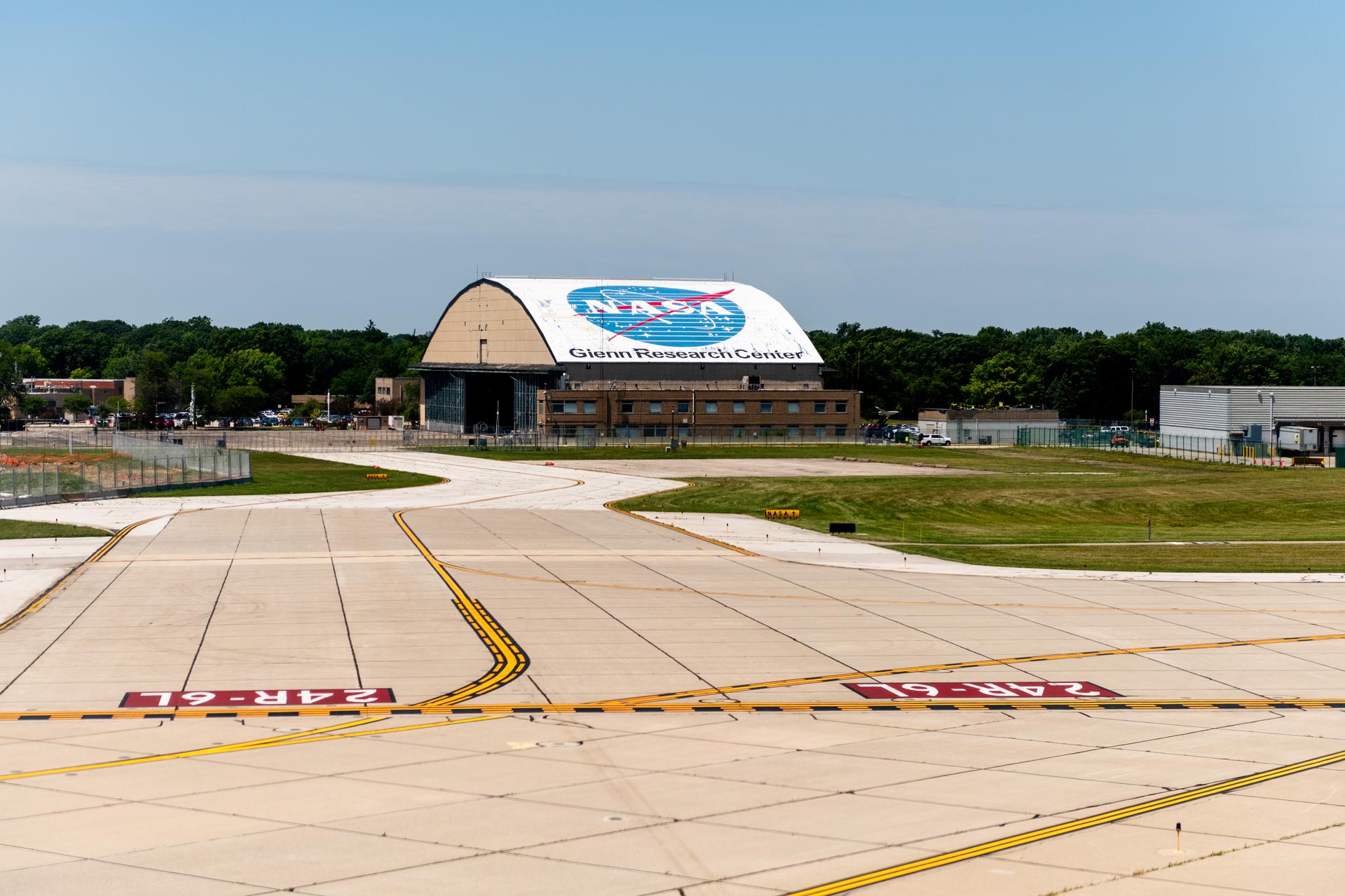
The large blue, red, and white NASA “meatball” logo appears prominently on the roof of the NASA Glenn aircraft hangar under a clear blue sky. Cleveland Hopkins International Airport runway 24R-6L is in the foreground, and a lush green tree line shows in the background.
View of the NASA Glenn Research Center hangar from the Cleveland Hopkins International Airport runway during a testing flight on Thursday, June 13, 2024. The Operations and Integration Building sits to the hangar’s right.
Credit: NASA/Sara Lowthian Hanna

NASA’s Glenn Research Center in Cleveland is seeking proposals for the use of its historic aircraft hangar, along with a parking lot, tarmac, and a small neighboring office building. Proposals are due by 1 p.m. EDT on Nov. 28.  

The hangar, formally known as the Flight Research Building, is available for lease by signing a National Historic Preservation Act agreement for a 10-year base period and two optional five-year extensions.

NASA first announced plans to lease the Flight Research Building and other facilities in May 2024 under the government’s Enhanced Use Lease authority. These lease agreements allow space, aeronautics, and other related industries to use agency land and facilities, reducing NASA’s maintenance costs while fostering strategic partnerships that spur innovation.

“Glenn is making great progress as we modernize our Cleveland and Sandusky campuses to support NASA’s future missions,” said Dr. Jimmy Kenyon, Glenn’s center director. “Through Enhanced Use Leases, we’re ensuring full use of land and facilities while preserving an iconic, historic building and creating regional economic opportunities.”

The property available for lease includes up to 6.7 acres of land, which contains the heated aircraft hangar, Operations and Integration Building, parking lot, and tarmac. The hangar is 160 feet by 280 feet, and the Operations and Integration Building is 5,947 square feet. Proceeds from this lease will be used to maintain Glenn facilities and infrastructure. 

Visible from Brookpark Road and Cleveland Hopkins International Airport, Glenn’s hangar was the first building completed after the center was established in 1941. It has sheltered many unique aircraft used to perform vital research. From studying ice accumulation on aircraft wings to the first use of laser communications to stream 4K video from an aircraft to the International Space Station, Glenn flight research has contributed to aviation safety, atmospheric studies, and cutting-edge technology development.

Interested parties should contact both Carlos Flores at carlos.a.flores-1@nasa.gov and Diana Munro at diana.c.munro@nasa.gov to sign up for a walk-through from Monday, Sept. 8, to Friday, Sept. 12, or the week of Oct. 6.  

For a 360-degree virtual tour of the Flight Research Building, visit:

https://www3.nasa.gov/specials/hangar360/

-end-

Jan Wittry
Glenn Research Center, Cleveland
216-433-5466
jan.m.wittry-1@nasa.gov

Share

Details

Last Updated
Jul 31, 2025


from NASA https://ift.tt/cbxJTZU

NASA Releases Opportunity to Boost Commercial Space Tech Development

5 min read

Preparations for Next Moonwalk Simulations Underway (and Underwater)

NASA meatball logo

NASA has released a new proposal opportunity for industry to tap into agency know-how, resources, and expertise. The Announcement of Collaboration Opportunity (ACO), managed by the Space Technology Mission Directorate, enables valuable collaboration without financial exchanges between NASA and industry partners. Instead, companies leverage NASA subject matter experts, facilities, software, and hardware to accelerate their technologies and prepare them for future commercial and government use. 

On Wednesday, NASA issued a standing ACO announcement for partnership proposals which will be available for five years and will serve as the umbrella opportunity for topic-specific appendix releases. NASA intends to issue appendices every six to 12 months to address evolving space technology needs. The 2025 ACO appendix is open for proposals until Sept. 24.  

NASA will host an informational webinar about the opportunity and appendix at 2 p.m. EDT on Wednesday, Aug. 6. Interested proposers are encouraged to submit questions which will be answered during the webinar and will be available online after the webinar.   

NASA teaming with industry isn’t new – decades of partnerships have resulted in ambitious missions that benefit all of humanity. But in recent years, NASA has also played a key role as a technology enabler, providing one-of-a-kind tools, resources, and infrastructure to help commercial aerospace companies achieve their goals.  

Since 2015, NASA has collaborated with industry on approximately 80 ACO projects. Here are some ways the collaborations have advanced space technology: 

Lunar lander systems 

Blue Origin and NASA worked together on several ACOs to mature the company’s lunar lander design. NASA provided technical reports and assessments and conducted tests at multiple centers to help Blue Origin advance a stacked fuel cell system for a lander’s primary power source. Other Blue Origin ACO projects evaluated high-temperature engine materials and advanced a landing navigation and guidance system. 

Blue Origin’s Blue Moon Mark 1 (MK1) lander is delivering NASA science and technology to the Moon through the agency’s Commercial Lunar Payload Services initiative. In 2023, NASA selected Blue Origin as a Human Landing System provider to develop its Blue Moon MK2 lander for future crewed lunar exploration. 

Artist concept of Blue Origin’s Blue Moon Mark 1 (MK1) lander.
Blue Origin

Blue Origin’s Blue Moon Mark 1 (MK1) lander is delivering NASA science and technology to the Moon through the agency’s Commercial Lunar Payload Services initiative. In 2023, NASA selected Blue Origin as a Human Landing System provider to develop its Blue Moon MK2 lander for future crewed lunar exploration. 

Cryogenic fluid transfer 

Throughout a year-long ACO, NASA and SpaceX engineers worked together to perform in-depth computational fluid analysis of proposed propellant transfer methods between two SpaceX Starship spacecraft in low-Earth orbit. The SpaceX-specific analysis utilized Starship flight data and data from previous NASA research and development to identify potential risks and help mitigate them during the early stages of commercial development. NASA also provided inputs as SpaceX developed an initial concept of operations for its orbital propellant transfer missions. 

Artist’s concept of Starship propellant transfer in space with Earth above.
Artist’s concept of Starship propellant transfer in space.
SpaceX

SpaceX used the ACO analyses to inform the design of its Starship Human Landing System, which NASA selected in 2021 to put the first Artemis astronauts on the Moon. 

Autonomous spacecraft navigation solution 

Advanced Space and NASA partnered to advance the company’s Cislunar Autonomous Positioning System – software that allows lunar spacecraft to determine their location without relying exclusively on tracking from Earth.  

Dylan Schmidt, CAPSTONE assembly integration and test lead, installs solar panels onto the CAPSTONE spacecraft at Tyvak Nano-Satellite Systems, Inc., in Irvine, California.
NASA/Dominic Hart

The CAPSTONE (Cislunar Autonomous Positioning System Technology Operations and Navigation Experiment) spacecraft launched to the Moon in 2022 and continues to operate and collect critical data to refine the software. Under the ACO, Advanced Space was able to use NASA’s Lunar Reconnaissance Orbiter to conduct crosslink experiments with CAPSTONE, helping mature the navigation solution for future missions. The mission’s Cislunar Autonomous Positioning System technology was initially supported through the NASA Small Business Innovation Research program. 

Multi-purpose laser sensing system 

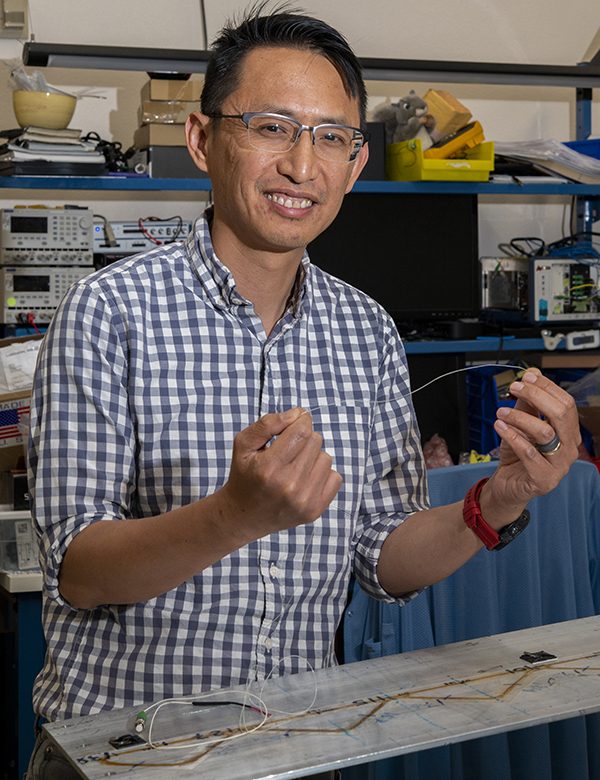
Sensuron and NASA matured a miniature, rugged fiber optic sensing system capable of taking thermal and shape measurements for multiple applications. Throughout the ACO, Sensuron benefitted from NASA’s expertise in fiber optics and electrical, mechanical, and system testing engineering to design, fabricate, and “shake and bake” its prototype laser. 

NASA’s Armstrong Flight Research Center’s FOSS, Fiber Optic Sensing System, recently supported tests of a system designed to turn oxygen into liquid oxygen, a component of rocket fuel. Patrick Chan, electronics engineer, and NASA Armstrong’s FOSS portfolio project manager, shows fiber like that used in the testing.
NASA/Genaro Vavuris

Space missions could use the technology to monitor cryogenic propellant levels and determine a fuel tank’s structural integrity throughout an extended mission. The laser technology also has medical applications on Earth, which ultimately resulted in the Sensuron spinoff company, The Shape Sensing Company. 

Flexible lunar tires 

In 2023, Venturi Astrolab began work with NASA under an ACO to test its flexible lunar tire design. The company tapped into testing capabilities unique to NASA, including heat transfer to cold lunar soil, traction, and life testing. The data validated the performance of tire prototypes, helping ready the design to support future NASA missions. 

In 2024, NASA selected three companies, including Venturi Astrolab, to advance capabilities for a lunar terrain vehicle that astronauts could use to travel around the lunar surface, conducting scientific research on the Moon and preparing for human missions to Mars. 

Artist rendition of the flex venturi wheel
Venturi Lab designed and developed a durable, robust, and hyper-deformable lunar wheel.
Venturi Lab

The Announcement of Collaboration Opportunity (ACO) is one of many ways NASA enables commercial industry to develop, build, own, and eventually operate space systems. To learn more about these technology projects and more, visit: https://techport.nasa.gov/.


from NASA https://ift.tt/fAyp6li

Wednesday, 30 July 2025

Looking Forward to the Moon

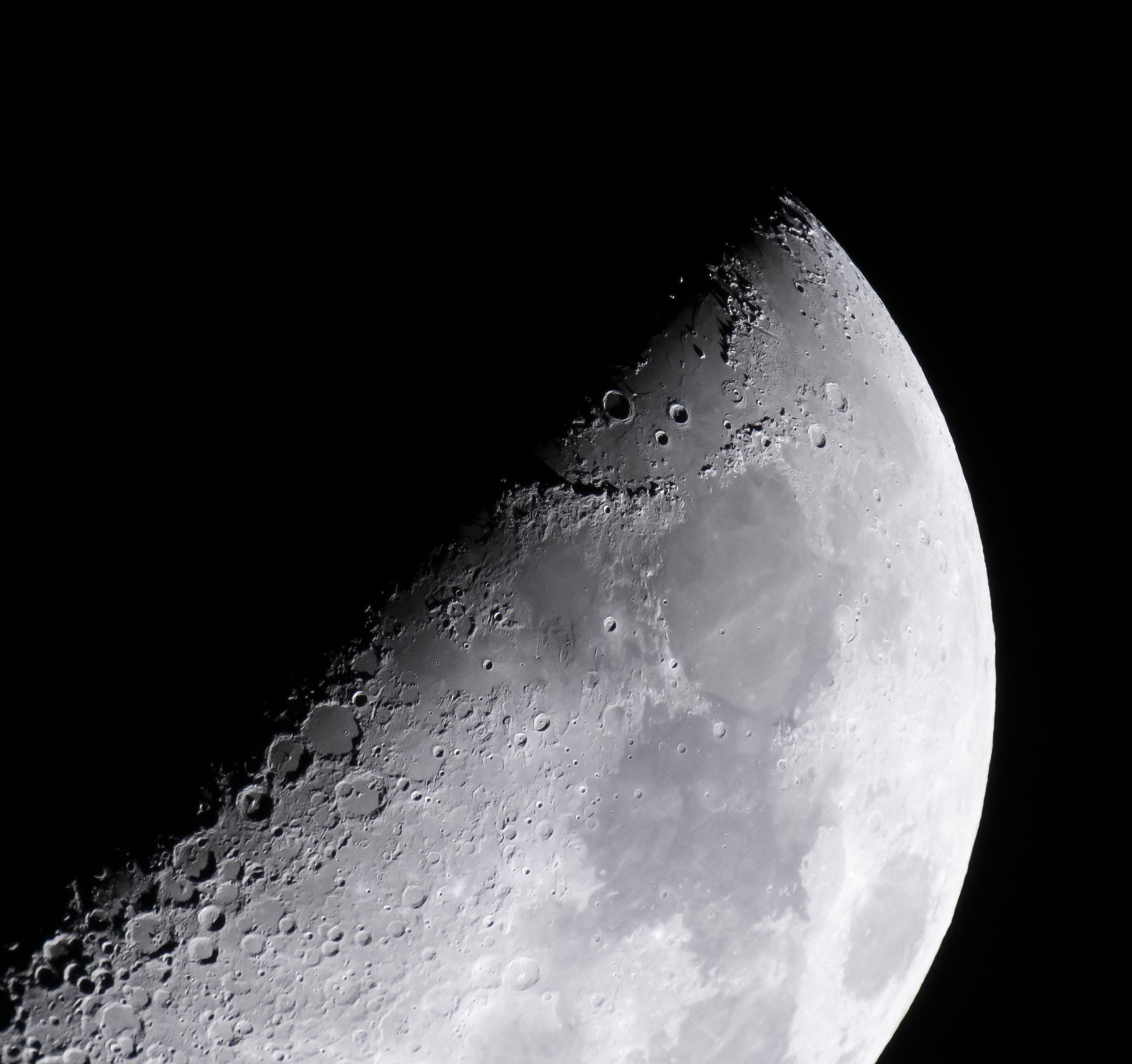
The Moon is lit so only half of it, diagonally, is visible. Along that line, craters of different sizes are visible. As you look toward the right, you can see light and dark gray areas on the Moon's surface. The Apollo 15 landing site
NASA/Shawn Quinn

On May 8, 2022, NASA’s Exploration Ground Systems’ Program Manager Shawn Quinn captured this crop of a full frame image of the Hadley–Apennine region of Earth’s Moon including the Apollo 15 landing site (very near the edge of the shadow of one of the lunar mountains in the area). Building upon the pioneers from the Apollo Program, Artemis crews will plan to verify capabilities for humans to explore deep space and pave the way for long-term exploration and science on the lunar surface.

Read the Artemis blog for the latest mission updates.

Image credit: NASA/Shawn Quinn


from NASA https://ift.tt/VbvHf3h

Curiosity Blog, Sols 4614-4615: Driving Along the Boxwork

2 min read

Curiosity Blog, Sols 4614-4615: Driving Along the Boxwork

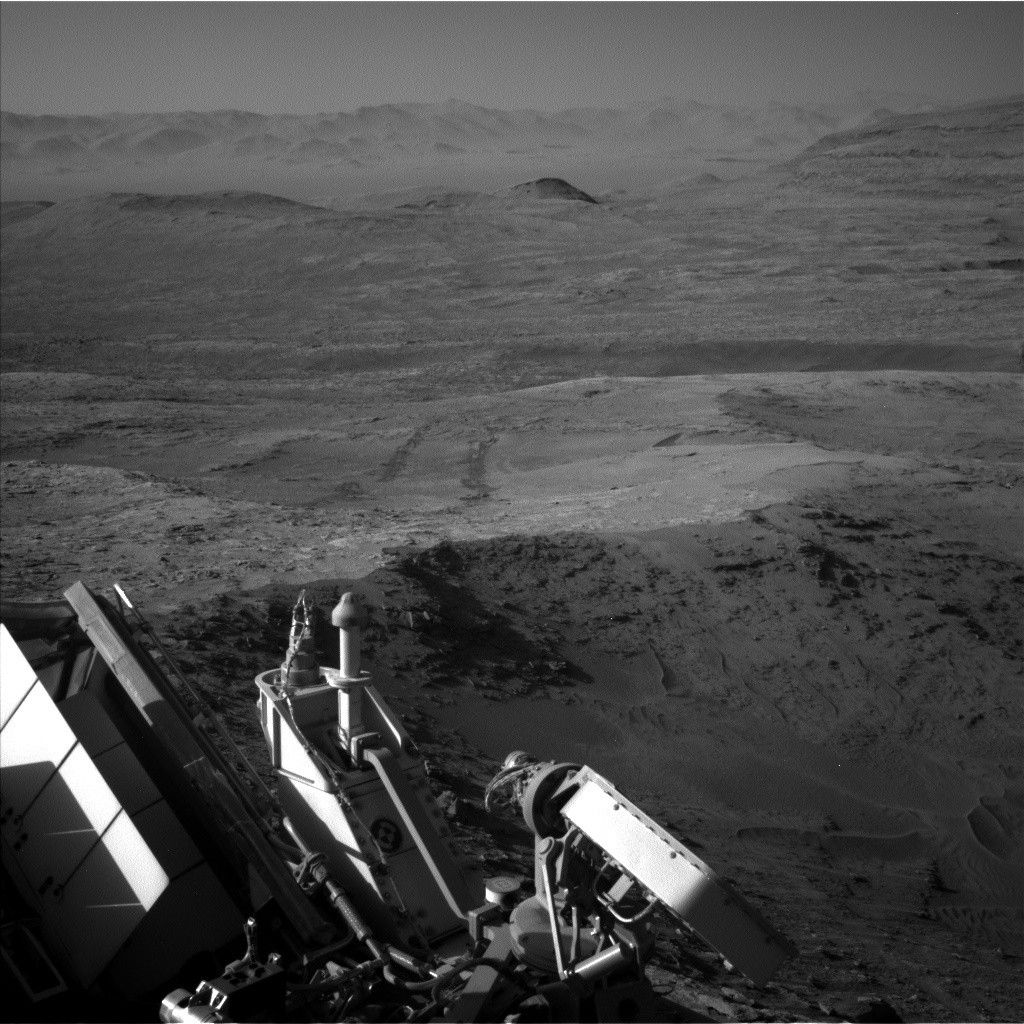
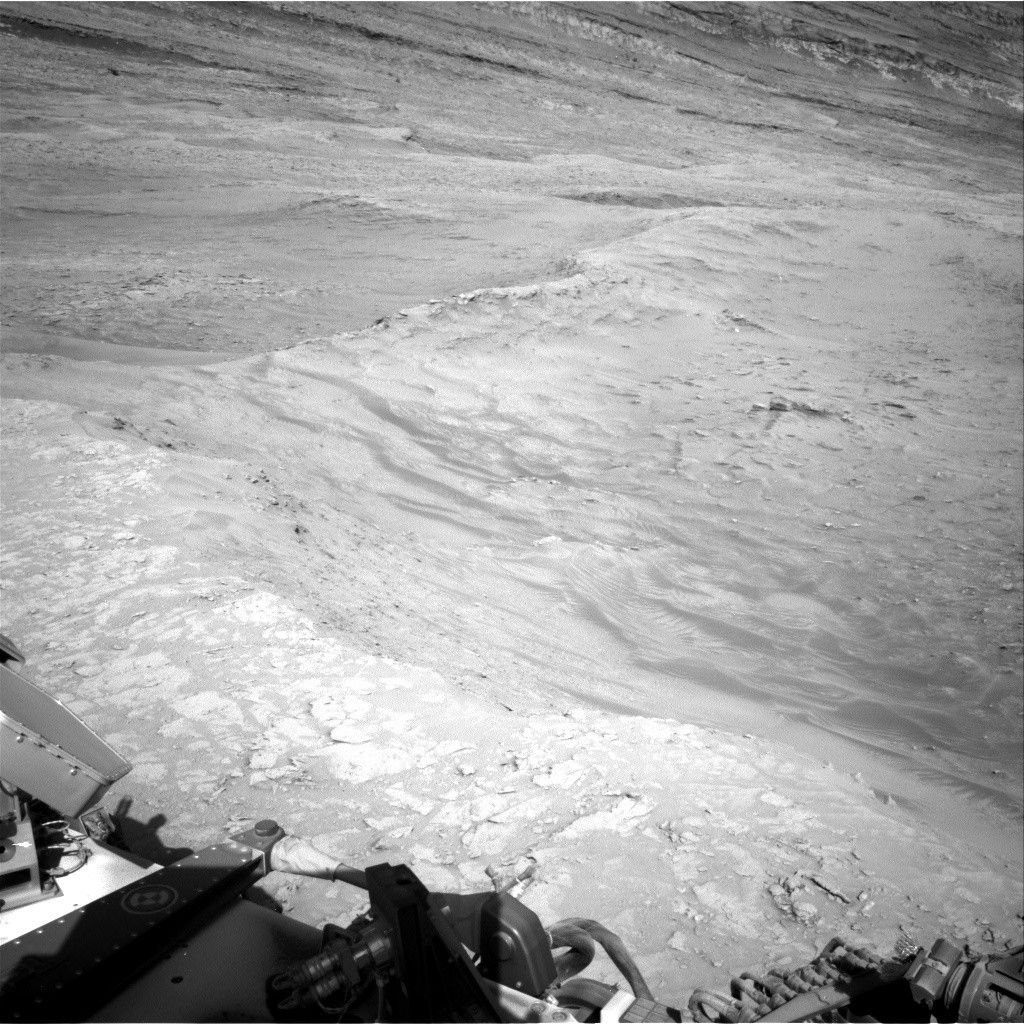
A grayscale photo from the Martian surface shows a landscape of dark gray, slightly uneven, desert-like terrain stretching off into the distance, where a line of peaks that look like sand dunes create a hazy horizon line. Part of the rover is dimly visible in the bottom of the frame, and a pair of wheel tracks, darker than the surrounding ground, extend backward from there, scratched into the soil at the center of the frame.
NASA’s Mars rover Curiosity acquired this image, looking out in the direction from where it came, with the rover’s tracks visible through the dust and sand covering the ground. Curiosity acquired this image using its Left Navigation Camera on July 28, 2025 — Sol 4612, or Martian day 4,612 of the Mars Science Laboratory mission — at 00:27:23 UTC.
NASA/JPL-Caltech

Written by Conor Hayes, Graduate Student at York University

Earth planning date: Monday, July 28, 2025

Today was a pretty straightforward day of planning. Our drive over the weekend completed successfully, and we quickly confirmed that we are parked in a stable position. Thus, we were able to unstow the rover’s arm to poke around in our new workspace, which features a large sand-filled fracture. Aside from all of the good geology work to be done, the view from our current location is quite spectacular. 

We’re still in the time of year where the atmosphere at Gale is reasonably dust-free (at least, compared to later in the year), allowing us to look all the way out to and beyond the Gale crater rim. The upper slopes of Mount Sharp have also re-emerged to our east after spending months hidden behind the walls of Gediz Vallis. There’s a bit more sand and dust in this location than we’ve seen recently, so we can also see the trail left behind by the rover’s wheels as we drove to this location (see the image above).

We’re still deep in our examination of the boxwork structures that we’re now driving through, so most of Curiosity’s attention in this plan is focused much closer to the rover than any of the scenic vista surrounding us. APXS, DRT, and MAHLI will all take a look at “Cañón de Palca,” some bedrock close to the large fracture in this workspace. Mastcam and ChemCam RMI will image some boxwork ridges at “Caine,” and will also collaborate on imaging of the weekend’s post-drive AEGIS target and a LIBS bedrock target “Doña Ines.” Mastcam’s solo activities include taking a look at some layering at “Paniri butte” and at MAHLI to examine a speck of dust that may have fallen on the lens.

We’ll be driving away from this location along one of the boxwork ridges, which, at about 5 meters (about 16 feet) wide, is more than large enough to fit our car-sized rover. Post-drive activities are largely focused on environmental monitoring, including Navcam line-of-sight and dust-devil surveys to look at dust, and several Navcam cloud movies. As usual, ChemCam will also join the post-drive fun with an AEGIS observation. More environmental monitoring by REMS, RAD, and DAN fill out the remainder of this plan.

Share

Details

Last Updated
Jul 29, 2025

Related Terms


from NASA https://ift.tt/kZNVKRi

Spheres in the Sand

3 min read

Spheres in the Sand

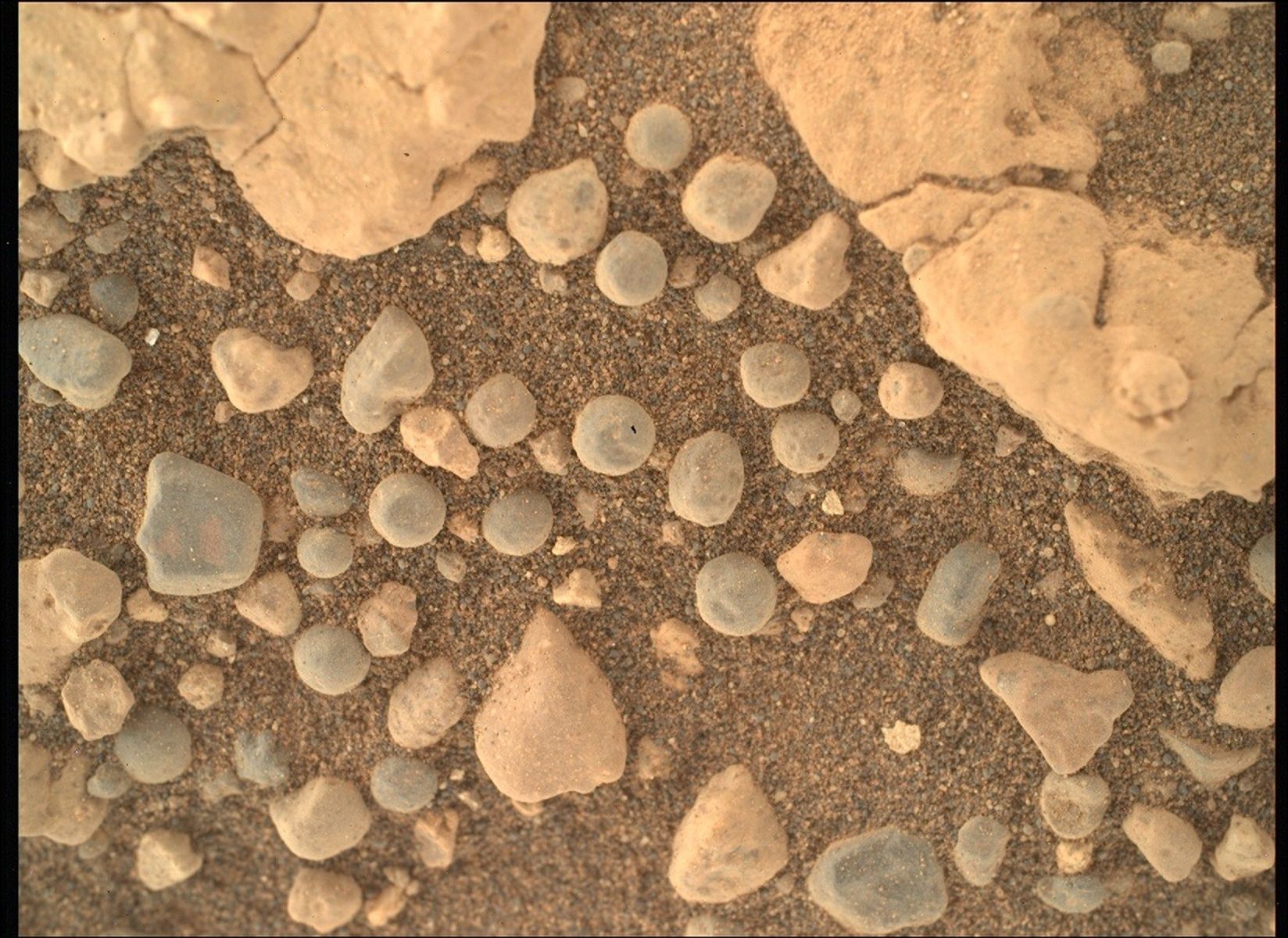
A close-up color photograph from the Martian surface shows an overhead view of a patch of ground covered in what looks like very coarse, rust-colored sand, with numerous rocks in various colors resting atop the sand. Large pale-orange rocks, knobby and lined with small fractures, dominate the upper right and left corners of the frame. Most of the rest of the image is highlighted by dozens of smaller rocks, about half of them pale gray and nearly spherical, resembling dust-covered blueberries or frozen peas.
NASA’s Perseverance rover captured this image of spherule-bearing regolith at Rowsell Hill using its arm-mounted WATSON camera on July 5, 2025 — Sol 1555, or Martian day 1,555 of the Mars 2020 mission — at the local mean solar time of 12:46:29. WATSON (Wide Angle Topographic Sensor for Operations and eNgineering) is a close-range color camera that works with the rover’s SHERLOC instrument (Scanning Habitable Environments with Raman and Luminescence for Organics and Chemicals); both are located on the turret at the end of the rover’s robotic arm.
NASA/JPL-Caltech

Written by Andrew Shumway, Postdoctoral Researcher at the University of Washington

It is not common for a rover to spot nearly perfect spheres in the soil beneath its wheels. Over two decades ago, the Opportunity rover famously discovered spherules made of hematite (nicknamed “blueberries”) near its landing site in Meridiani Planum. More recently, the Perseverance rover has similarly encountered spherules embedded in bedrock and loosely scattered throughout the region informally called “Witch Hazel Hill.” In a previous blog post, we described Perseverance’s investigations of a spherule-bearing outcrop at the “Hare Bay” abrasion patch, where the team later collected a core. With the “Bell Island” sample added to the rover’s collection, the science team next decided to take a closer look at loose spherules in the area, which appear to have eroded out of the nearby bedrock.  

On Sol 1555, while the United States was celebrating the Fourth of July with hotdogs and fireworks, Perseverance was hard at work studying spherule-rich regolith at the target “Rowsell Hill” using the proximity instruments on its robotic arm. SHERLOC’s Autofocus and Context Imager and WATSON camera both captured high resolution pictures of the target (shown above), while PIXL measured the elemental makeup of the spherules and surrounding grains. 

Despite their superficial similarity to Opportunity’s “blueberries”, the spherules at “Rowsell Hill” have a very different composition and likely origin. In Meridiani Planum, the spherules were composed of the mineral hematite and were interpreted to have formed in groundwater-saturated sediments in Mars’ distant past. By comparison, the spherules in “Rowsell Hill” have a basaltic composition and likely formed during a meteoroid impact or volcanic eruption. When a meteoroid crashes into the surface of Mars, it can melt rock and send molten droplets spraying into the air. Those droplets can then rapidly cool, solidifying into spherules that rain down on the surrounding area.  Alternatively, the spherules may have formed from molten lava during a volcanic eruption. 

With these new data in hand, the Perseverance science team continues to search for answers about where these spherules came from. If they formed during an ancient impact, they may be able to tell us about the composition of the meteoroid and the importance of impact cratering in early Mars’s history. If they instead formed during a volcanic eruption, they could preserve clues about past volcanism in the region around Jezero crater. Either way, these spherules are a remnant of an energetic and dynamic period in Mars’ history! 

Share

Details

Last Updated
Jul 29, 2025

Related Terms


from NASA https://ift.tt/6g3zUHZ

NASA’s Nancy Grace Roman Space Telescope Completed

Over the course of several hours, technicians meticulously connected the inner and outer segments of NASA’s Nancy Grace Roman Space Tel...