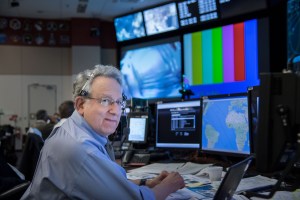
NASA announced Monday its latest plans to team up with a streaming service to bring space a little closer to home. Starting this summer, NASA+ live programming will be available on Netflix.
Audiences now will have another option to stream rocket launches, astronaut spacewalks, mission coverage, and breathtaking live views of Earth from the International Space Station.
“The National Aeronautics and Space Act of 1958 calls on us to share our story of space exploration with the broadest possible audience,” said Rebecca Sirmons, general manager of NASA+ at the agency’s headquarters in Washington. “Together, we’re committed to a Golden Age of Innovation and Exploration – inspiring new generations – right from the comfort of their couch or in the palm of their hand from their phone.”
Through this partnership, NASA’s work in science and exploration will become even more accessible, allowing the agency to increase engagement with and inspire a global audience in a modern media landscape, where Netflix reaches a global audience of more than 700 million people.
The agency’s broader efforts include connecting with as many people as possible through video, audio, social media, and live events. The goal is simple: to bring the excitement of the agency’s discoveries, inventions, and space exploration to people, wherever they are.
NASA+ remains available for free, with no ads, through the NASA app and on the agency’s website.
Additional programming details and schedules will be announced ahead of launch.
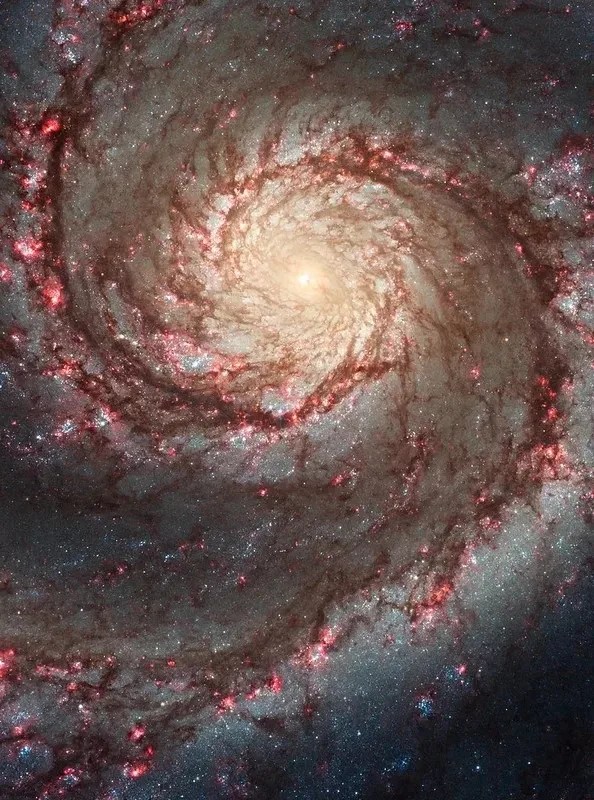
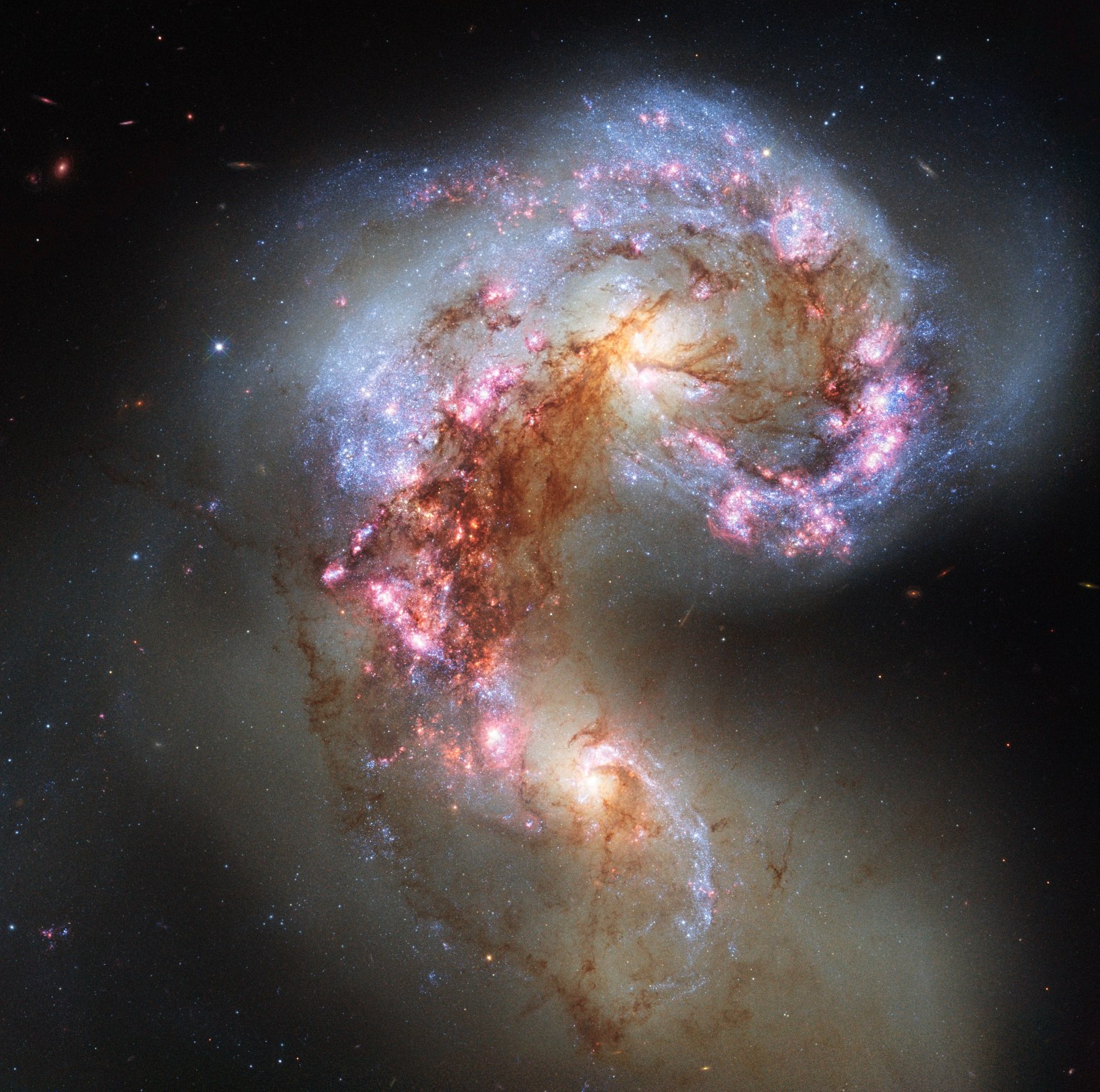
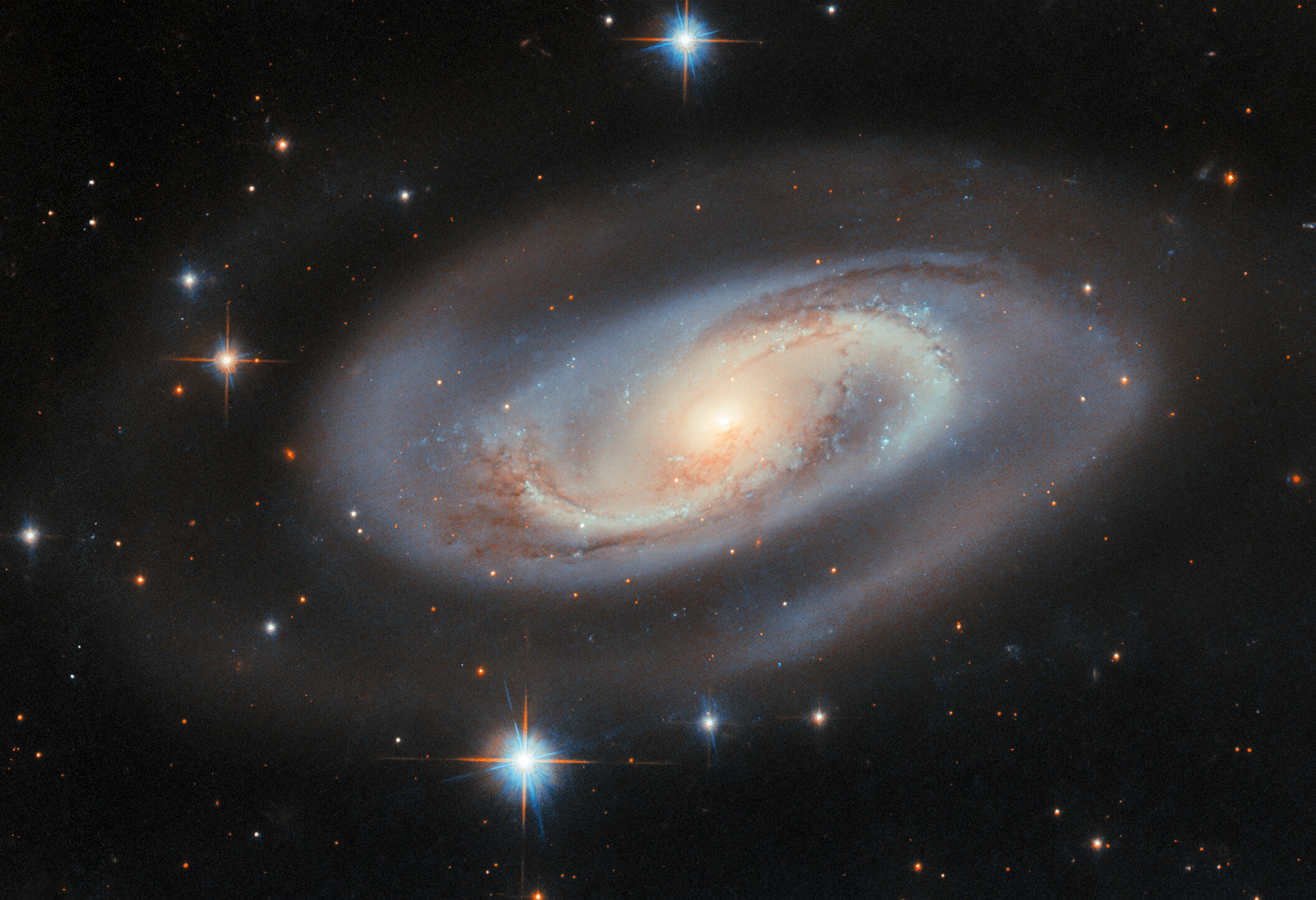
The light that the NASA/ESA Hubble Space Telescope collected to create this image reached the telescope after a journey of 250 million years. Its source was the spiral galaxy UGC 11397, which resides in the constellation Lyra (The Lyre). At first glance, UGC 11397 appears to be an average spiral galaxy: it sports two graceful spiral arms that are illuminated by stars and defined by dark, clumpy clouds of dust.
What sets UGC 11397 apart from a typical spiral lies at its center, where a supermassive black hole containing 174 million times the mass of our Sun grows. As a black hole ensnares gas, dust, and even entire stars from its vicinity, this doomed matter heats up and puts on a fantastic cosmic light show.
Material trapped by the black hole emits light from gamma rays to radio waves, and can brighten and fade without warning. But in some galaxies, including UGC 11397, thick clouds of dust hide much of this energetic activity from view in optical light. Despite this, UGC 11397’s actively growing black hole was revealed through its bright X-ray emission — high-energy light that can pierce the surrounding dust. This led astronomers to classify it as a Type 2 Seyfert galaxy, a category used for active galaxies whose central regions are hidden from view in visible light by a donut-shaped cloud of dust and gas.
Using Hubble, researchers will study hundreds of galaxies that, like UGC 11397, harbor a supermassive black hole that is gaining mass. The Hubble observations will help researchers weigh nearby supermassive black holes, understand how black holes grew early in the universe’s history, and even study how stars form in the extreme environment found at the very center of a galaxy.
Text credit: ESA
Image credit: ESA/Hubble & NASA, M. J. Koss, A. J. Barth
Lisa Pace knows a marathon when she sees one. An avid runner, she has participated in five marathons and more than 50 half marathons. Though she prefers to move quickly, she also knows the value of taking her time. “I solve most of my problems while running – or realize those problems aren’t worth worrying about,” she said.
She has learned to take a similar approach to her work at NASA’s Johnson Space Center in Houston. “Earlier in my career, I raced to get things done and felt the need to do as much as possible on my own,” she said. “Over time, I’ve learned to trust my team and pause to give others an opportunity to contribute. There are times when quick action is needed, but it is often a marathon, not a sprint.”
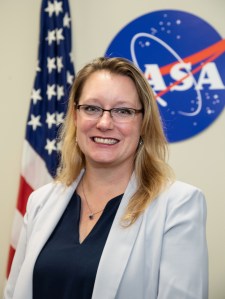
Official portrait of Lisa Pace.
NASA/Josh Valcarcel
Pace is chief of the Exploration Development Integration Division within the Exploration Architecture, Integration, and Science Directorate at Johnson. In that role, she leads a team of roughly 120 civil servants and contractors in providing mission-level system engineering and integration services that bring different architecture elements together to achieve the agency’s goals. Today that team supports Artemis missions, NASA’s Commercial Lunar Payload Services initiative and other areas as needed.
Lisa Pace, seated at the head of the table, leads an Exploration Development Integration Division team meeting at NASA’s Johnson Space Center in Houston.
NASA/James Blair
“The Artemis missions come together through multiple programs and projects,” Pace explained. “We stitch them together to ensure the end-to-end mission meets its intended requirements. That includes verifying those requirements before flight and ensuring agreements between programs are honored and conflicts resolved.” The division also manages mission-level review and flight readiness processes from planning through execution, up to the final certification of flight readiness.
Leading the division through the planning, launch, and landing of Artemis I was a career highlight for Pace, though she feels fortunate to have worked on many great projects during her time with NASA. “My coolest and most rewarding project involved designing and deploying an orbital debris tracking telescope on Ascension Island about 10 years ago,” she said. “The engineers, scientists, and military personnel I got to work and travel with on that beautiful island is tough to top!”
Pace says luck and great timing led her to NASA. Engineering jobs were plentiful when she graduated from Virginia Tech in 2000, and she quickly received an offer from Lockheed Martin to become a facility engineer in Johnson’s Astromaterials Research and Exploration Science Division, or ARES. “I thought working in the building where they keep the Moon rocks would be cool – and it was! Twenty-five years later, I’m still here,” Pace said.
During that time, she has learned a lot about problem-solving and team building. “I often find that when we disagree over the ‘right’ way to do something, there is no one right answer – it just depends on your perspective,” she said. “I take the time to listen to people, understand their side, and build relationships to find common ground.”
Lisa Pace, right, participates in a holiday competition hosted by her division.
Image courtesy of Lisa Pace
She also emphasizes the importance of getting to know your colleagues. “Relationships are everything,” she said. “They make the work so much more meaningful. I carry that lesson over to my personal life and value my time with family and friends outside of work.”
Investing time in relationships has given Pace another unexpected skill – that of matchmaker. “I’m responsible for setting up five couples who are now married, and have six kids between them,” she said, adding that she knew one couple from Johnson.
She hopes that strong relationships transfer to the Artemis Generation. “I hope to pass on a strong NASA brand and the family culture that I’ve been fortunate to have, working here for the last 25 years.”
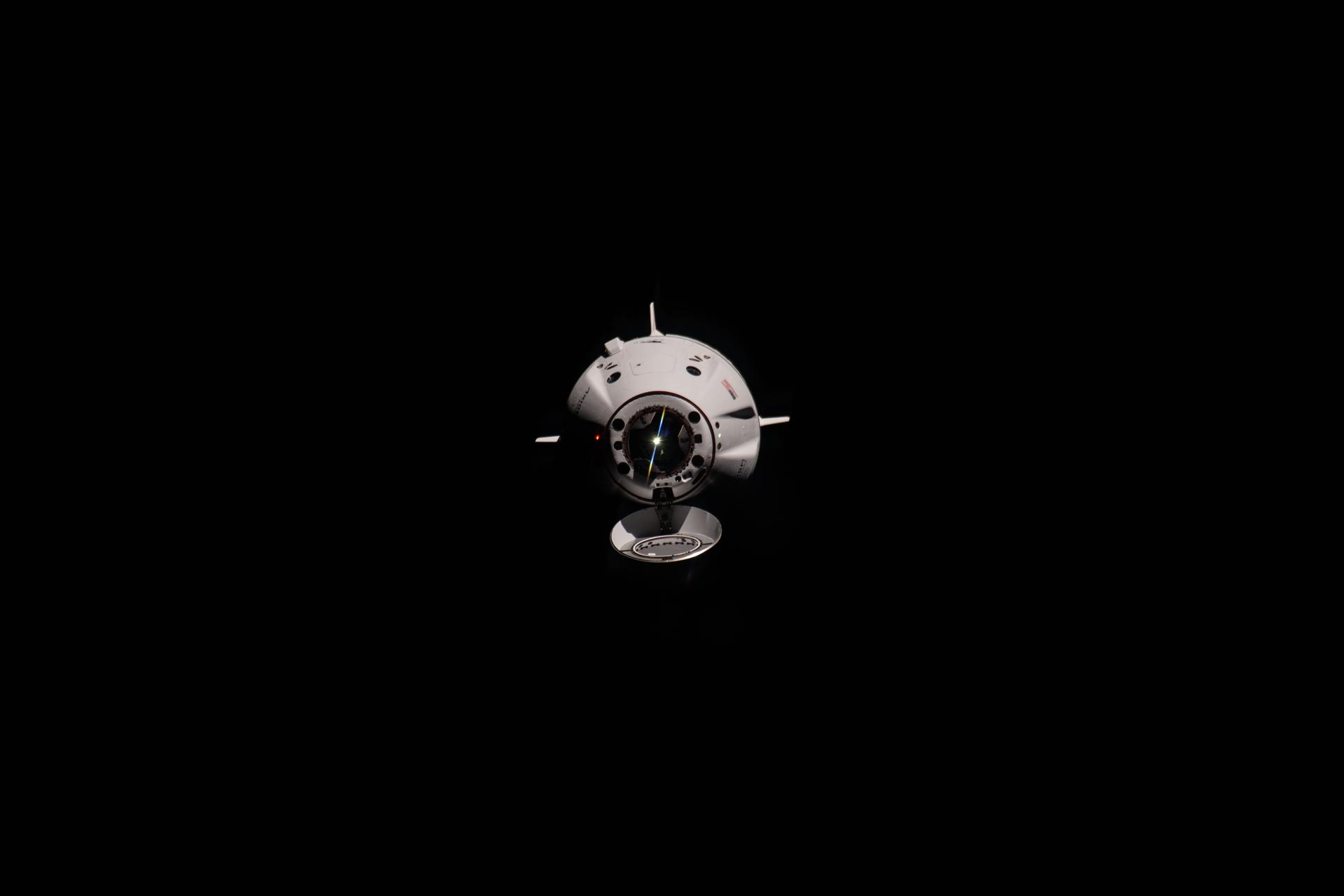
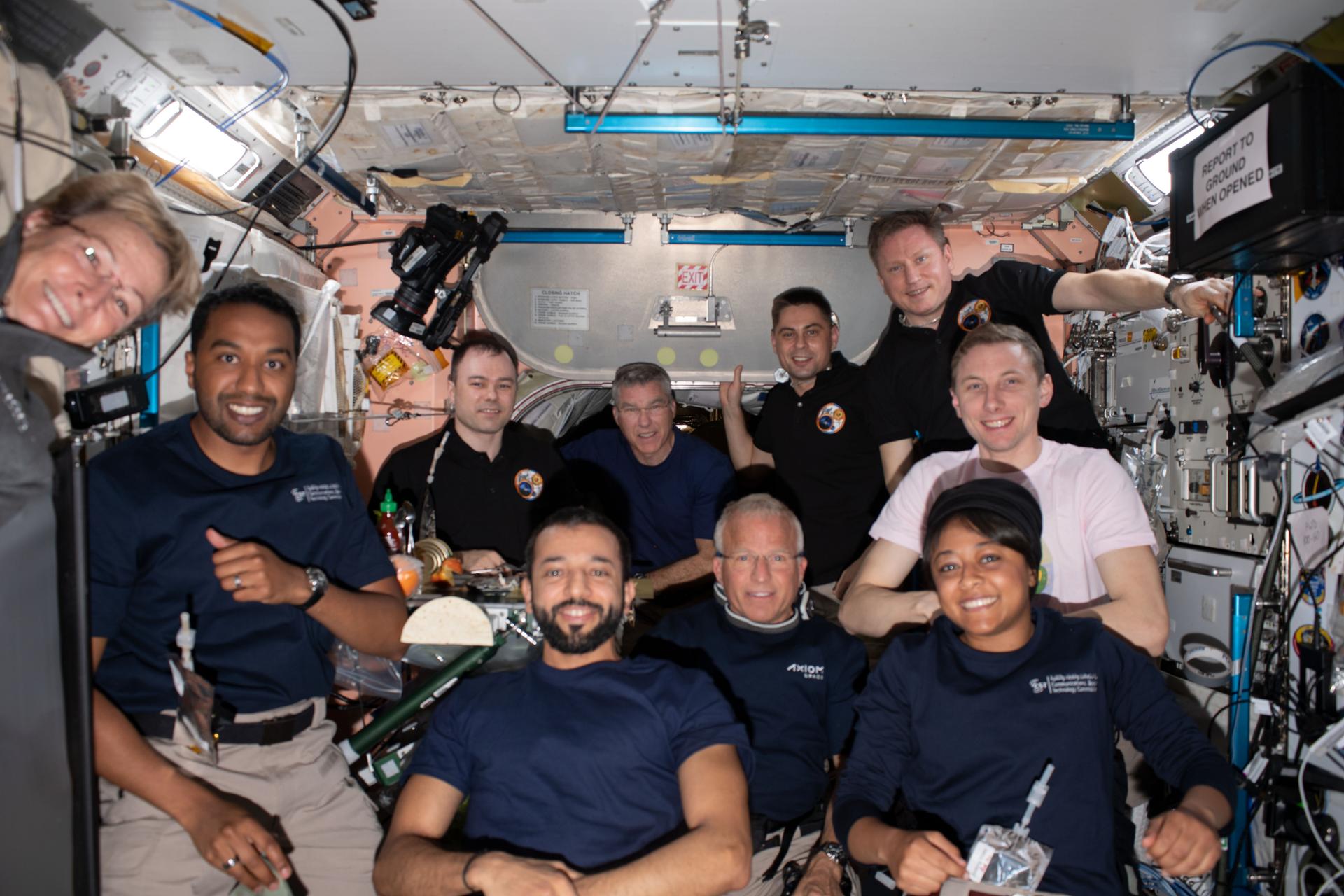
A SpaceX Dragon spacecraft carrying the Axiom Mission 4 crew docks to the space-facing port of the International Space Station’s Harmony module on June 26. Axiom Mission 4 is the fourth all-private astronaut mission to the orbiting laboratory, welcoming commander Peggy Whitson, former NASA astronaut and director of human spaceflight at Axiom Space, ISRO (Indian Space Research Organisation) astronaut and pilot Shubhanshu Shukla, and mission specialists ESA (European Space Agency) project astronaut Sławosz Uznański-Wiśniewski of Poland and HUNOR (Hungarian to Orbit) astronaut Tibor Kapu of Hungary.
The crew is scheduled to remain at the space station, conducting microgravity research, educational outreach, and commercial activities, for about two weeks. This mission serves as an example of the success derived from collaboration between NASA’s international partners and American commercial space companies.
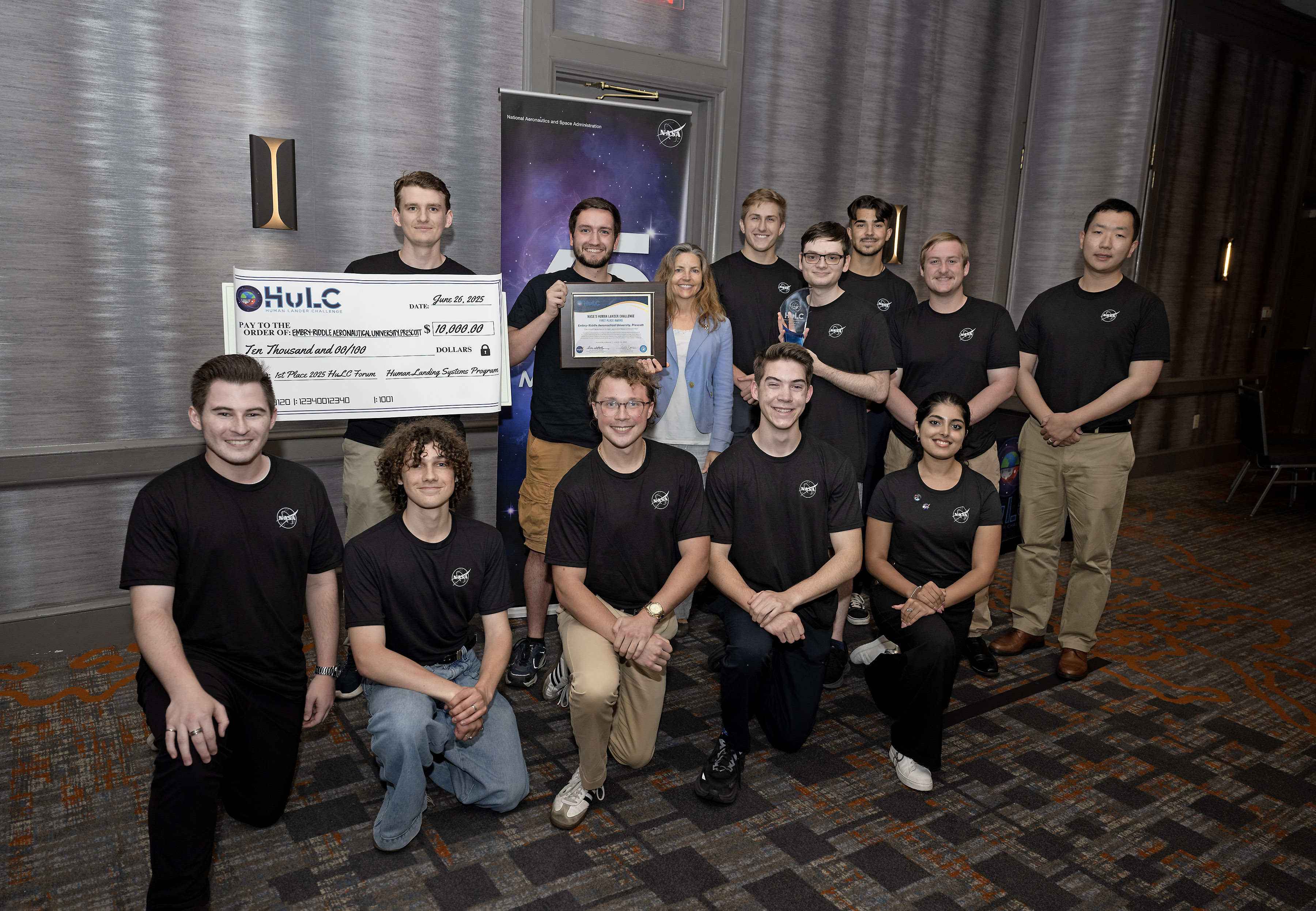
NASA’s Human Lander Challenge marked its second year on June 26, awarding $18,000 in prize money to three university teams for their solutions for long-duration cryogenic, or super chilled, liquid storage and transfer systems for spaceflight.
Building on the crewed Artemis II flight test, NASA’s Artemis III mission will send astronauts to explore the lunar South Pole region with a human landing system and advanced spacesuits, preparing humanity to ultimately go to Mars. In-space propulsion systems that use cryogenic liquids as propellants must stay extremely cold to remain in a liquid state and are critical to mission success. The Artemis mission architecture will need these systems to function for several weeks or even months.
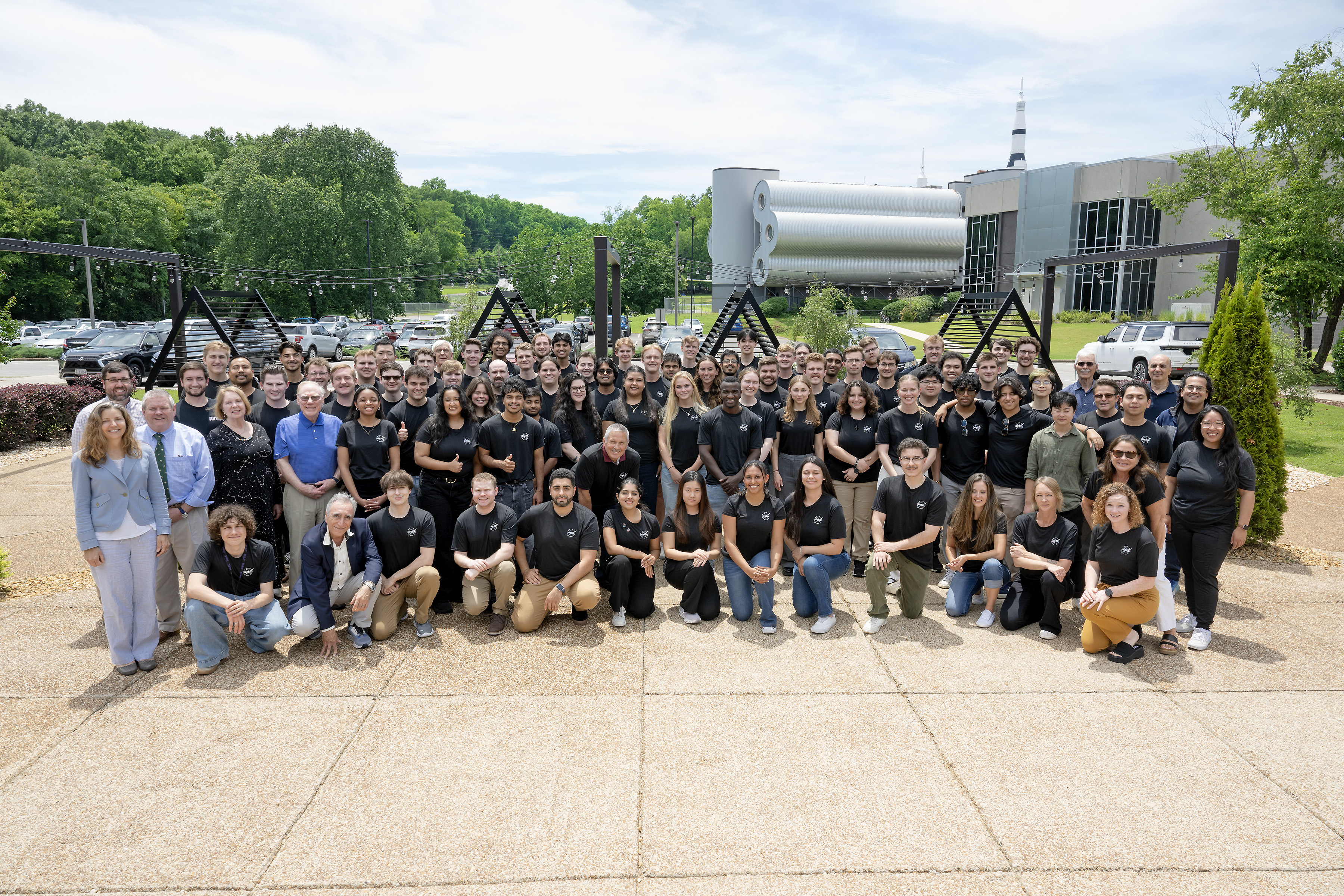
Students and advisors with the 12 finalist teams for the 2025 Human Lander Challenge competed in Huntsville, Alabama, near the agency’s Marshall Space Flight Center between June 24-26.
NASA/Charles Beason
NASA announced Embry-Riddle Aeronautical University, Prescott as the overall winner and recipient of the $10,000 top prize award. Old Dominion University won second place and a $5,000 award, followed by Massachusetts Institute of Technology in third place and a $3,000 award.
Before the winners were announced, 12 finalist teams selected in April gave their presentations to a panel of NASA and industry judges as part of the final competition in Huntsville. As part of the 2025 Human Lander Challenge, university teams developed systems-level solutions that could be used within the next 3-5 years for Artemis.
NASA selected Embry-Riddle Aeronautical University, Prescott as the overall winner of NASA’s 2025 Human Lander Challenge Forum June 26. Lisa Watson-Morgan, manager of NASA’s Human Landing System Program, presented the awards at the ceremony.
NASA/Charles Beason
“Today’s Golden Age of Innovation and Exploration students are tomorrow’s mission designers, systems engineers, and explorers,” said Juan Valenzuela, main propulsion systems and cryogenic fluid management subsystems lead for NASA’s Human Landing System Program at NASA’s Marshall Space Flight Center in Huntsville, Alabama. “The Human Lander Challenge concepts at this year’s forum demonstrate the ingenuity, passion, and determination NASA and industry need to help solve long-duration cryogenic storage challenges to advance human exploration to deep space.”
The challenge is sponsored by the agency’s Human Landing System Program within the Exploration Systems Development Mission Directorate and managed by the National Institute of Aerospace.
Through the Artemis campaign, NASA will send astronauts to explore the Moon for scientific discovery, economic benefits, and to build the foundation for the first crewed missions to Mars – for the benefit of all.
For more information about Artemis missions, visit:
This Hubble image shows the spiral galaxy UGC 11397.
ESA/Hubble & NASA, M. J. Koss, A. J. Barth
The light that the NASA/ESA Hubble Space Telescope collected to create this image reached the telescope after a journey of 250 million years. Its source was the spiral galaxy UGC 11397, which resides in the constellation Lyra (The Lyre). At first glance, UGC 11397 appears to be an average spiral galaxy: it sports two graceful spiral arms that are illuminated by stars and defined by dark, clumpy clouds of dust.
What sets UGC 11397 apart from a typical spiral lies at its center, where a supermassive black hole containing 174 million times the mass of our Sun grows. As a black hole ensnares gas, dust, and even entire stars from its vicinity, this doomed matter heats up and puts on a fantastic cosmic light show.
Material trapped by the black hole emits light from gamma rays to radio waves, and can brighten and fade without warning. But in some galaxies, including UGC 11397, thick clouds of dust hide much of this energetic activity from view in optical light. Despite this, UGC 11397’s actively growing black hole was revealed through its bright X-ray emission — high-energy light that can pierce the surrounding dust. This led astronomers to classify it as a Type 2 Seyfert galaxy, a category used for active galaxies whose central regions are hidden from view in visible light by a donut-shaped cloud of dust and gas.
Using Hubble, researchers will study hundreds of galaxies that, like UGC 11397, harbor a supermassive black hole that is gaining mass. The Hubble observations will help researchers weigh nearby supermassive black holes, understand how black holes grew early in the universe’s history, and even study how stars form in the extreme environment found at the very center of a galaxy.
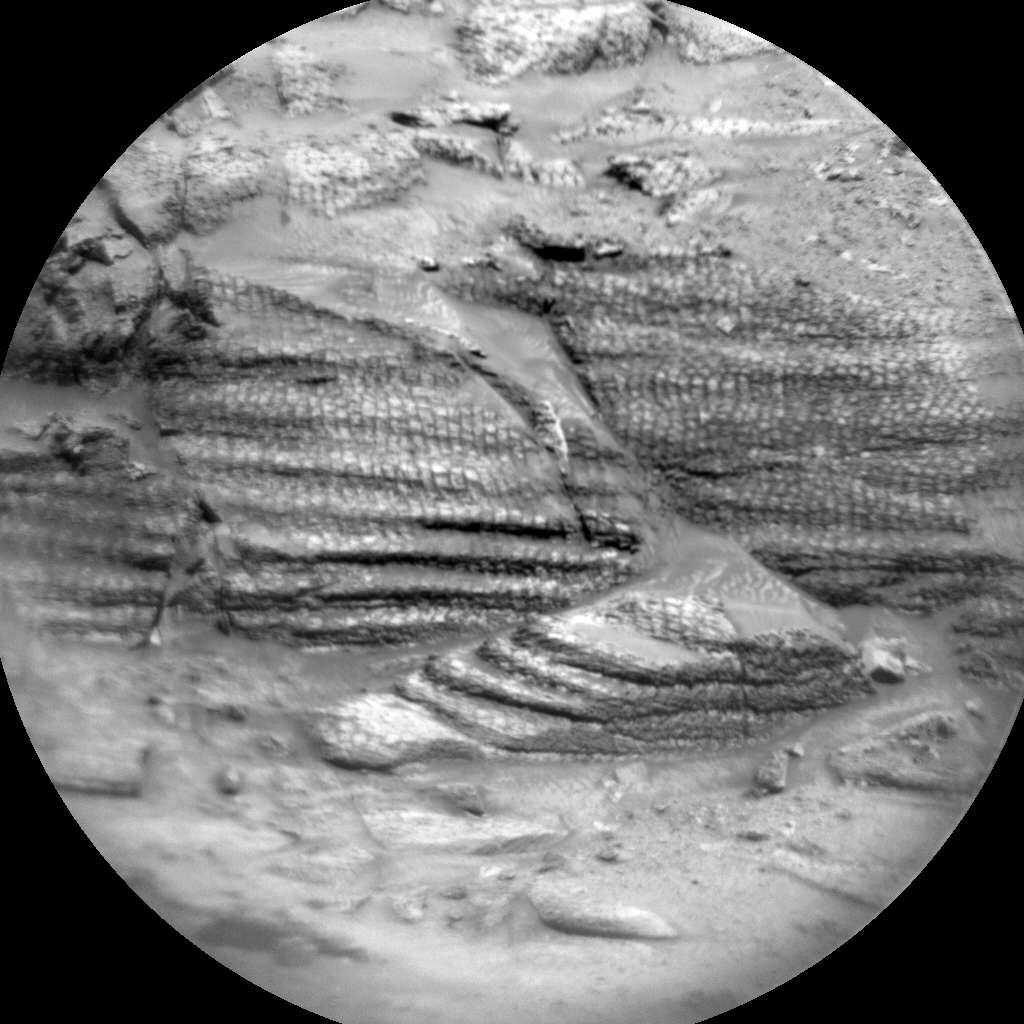
Curiosity Blog, Sols 4580-4581: Something in the Air…
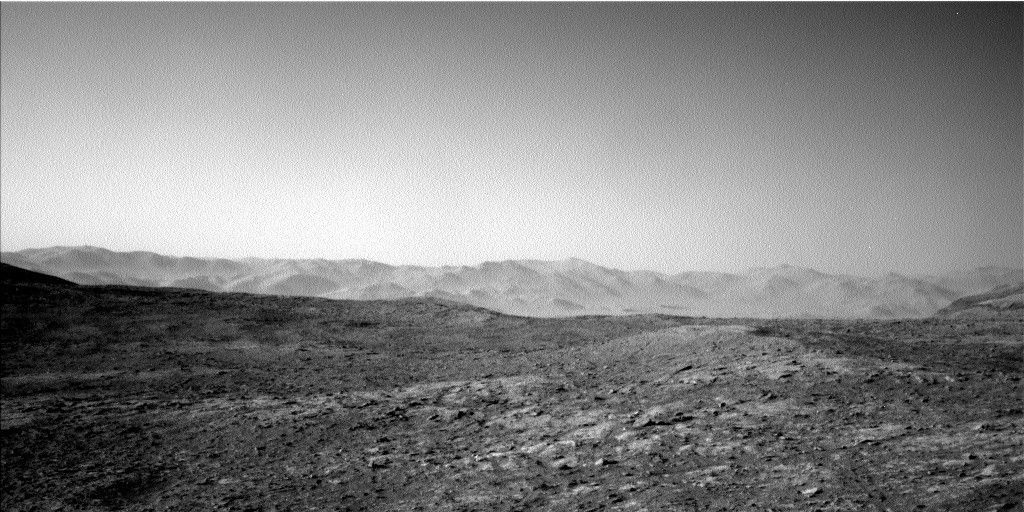
NASA’s Mars rover Curiosity acquired this image using its Left Navigation Camera on June 23, 2025 — Sol 4578, or Martian day 4,578 of the Mars Science Laboratory mission — at 02:38:50 UTC.
NASA/JPL-Caltech
Written by Scott VanBommel, Planetary Scientist at Washington University in St. Louis
Earth planning date: Monday, June 23, 2025
Curiosity was back at work on Monday, with a full slate of activities planned. While summer has officially arrived for much of Curiosity’s team back on Earth, Mars’ eldest active rover is recently through the depths of southern Mars winter and trending toward warmer temperatures itself. Warmer temperatures mean less component heating is required and therefore more power is freed up for science and driving. However, the current cooler temperatures do present an opportunity to acquire quality short-duration APXS measurements first thing in the morning, which is what Curiosity elected to do once again.
Curiosity’s plan commenced by brushing a rock target with potential cross-cutting veins, “Hornitos,” and subsequently analyzing it with APXS. A sequence of Mastcam images followed on targets such as “Volcán Peña Blanca,” “La Pacana,” “Iglesia de Jarinilla de Umatia,” and “Ayparavi.” ChemCam, returning to action after a brief and understood hiatus, rounded out the morning’s chemical analysis activities with a 5-point analysis of Ayparavi. After some images of the brush, and a handful of MAHLI snaps of Hornitos, Curiosity was on its way with a planned drive of about 37 meters (about 121 feet).Curiosity’s night would not be spent entirely dreaming of whatever rovers dream, but rather conducting a lengthy APXS analysis of the atmosphere. These analyses enable Curiosity’s team to assess the abundance of argon in the atmosphere — from a volume about the size of a pop can (or soda can, depending on your unit of preference) — which can be used to trace global circulation patterns and better understand modern Mars. Recently, Curiosity has been increasing the frequency of these measurements and pairing them with ChemCam “Passive Sky” observations. These ChemCam activities do not utilize the instrument’s laser, but instead use its other components to characterize the air above the rover. By combining APXS and ChemCam observations of the atmosphere, Curiosity’s team is able to better assess daily and seasonal trends in gases around Gale crater. A ChemCam “Passive Sky” was the primary observation in the second sol of the plan, with Curiosity spending much of the remaining time recharging and eagerly awaiting commands from Wednesday’s team.
For some people, a passion for space is something that might develop over time, but for Patrick Junen, the desire was there from the beginning. With a father and grandfather who both worked for NASA, space exploration is not just a dream; it remains a family legacy.
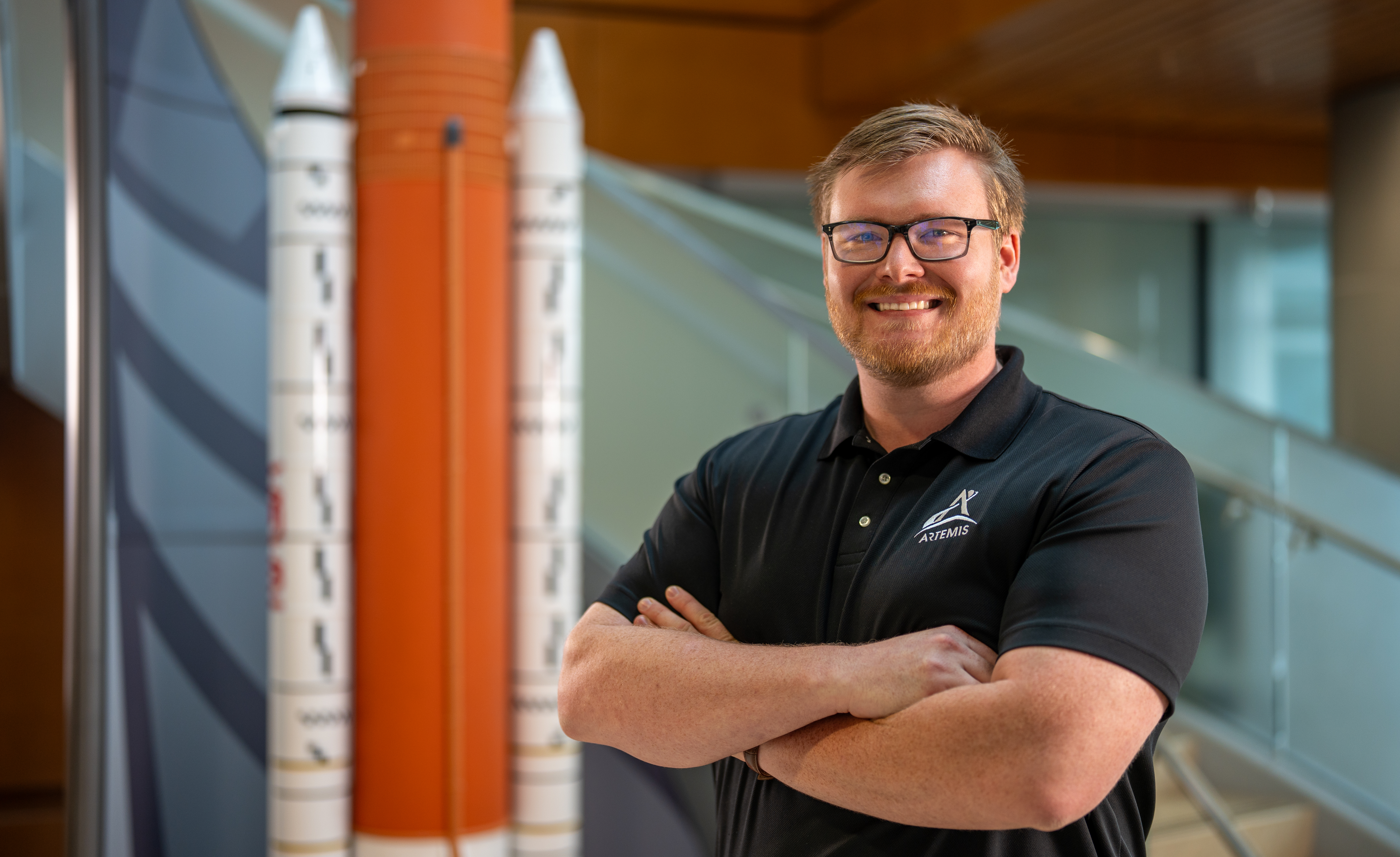
Now, as the stage assembly and structures subsystem manager at NASA’s Marshall Space Flight Center in Huntsville, Alabama, for the BOLE (Booster Obsolescence Life Extension) Program — an advanced solid rocket booster for NASA’s SLS (Space Launch System) heavy lift rocket — Junen is continuing that legacy.
“My grandfather worked on the Apollo & Space Shuttle Programs. Then my dad went on to work for the Space Shuttle and SLS Programs,” Junen says. “I guess you could say engineering is in my blood.”
In his role, he’s responsible for managing the Design, Development, Test, & Evaluation team for all unpressurized structural elements, such as the forward skirt, aft skirt, and the integration hardware that connects the boosters to the core stage. He also collaborates closely with NASA’s Exploration Ground Systems at Kennedy Space Center in Florida to coordinate any necessary modifications to ground facilities or the mobile launcher to support the new boosters.
Junen enjoys the technical challenges of his role and said he feels fortunate to be in a position of leadership — but it takes a team of talented individuals to build the next generation of boosters. As a former offensive lineman for the University of Mississippi, he knows firsthand the power of teamwork and the importance of effective communication in guiding a coordinated effort.
“I’ve always been drawn to team activities, and exploration is the ultimate team endeavor,” Junen says. “On the football field, it takes a strong team to be successful — and it’s really no different from what we’re doing as a team at NASA with our Northrop Grumman counterparts for the SLS rocket and Artemis missions.”
As a kid, Junen often accompanied his dad to Space Shuttle launches and was inspired by some of the talented engineers that developed Shuttle. Years later, he’s still seeing some of those same faces — but now they’re teammates, working together toward a greater mission.
“Growing up around Marshall Space Flight Center in Huntsville, Alabama, there was always this strong sense of family and dedication to the Misson. And that has always resonated with me,” Junen recalls.
This philosophy of connecting family to the mission is a tradition Junen now continues with his own children. One of his fondest NASA memories is watching the successful launch of Artemis I on Nov. 16, 2022. Although he couldn’t attend in person, Junen and his family made the most of the moment — watching the launch live beneath the Saturn V rocket at Huntsville’s U.S. Space & Rocket Center. With his dad beside him and his daughter on his shoulders, three generations stood beneath the rocket Junen’s grandfather helped build, as a new era of space exploration began.
In June, Junen witnessed the BOLE Demonstration Motor-1 perform a full-scale static test to demonstrate the ballistic performance for the evolved booster motor. This test isn’t just a technical milestone for Junen — it’s a continuation of a lifelong journey rooted in family and teamwork.
As NASA explores the Moon and prepares for the journey to Mars through Artemis, Junen is helping shape the next chapter of human spaceflight. And just like the generations before him, he’s not only building rockets — he’s building a legacy.
News Media Contact
Jonathan Deal
Marshall Space Flight Center, Huntsville, Ala.
256-544-0034 jonathan.e.deal@nasa.gov
The Andromeda galaxy, also known as Messier 31 (M31), is a glittering beacon in this image released on June 25, 2025, in tribute to the groundbreaking legacy of astronomer Dr. Vera Rubin, whose observations transformed our understanding of the universe. In the 1960s, Rubin and her colleagues studied M31 and determined that there was some unseen matter in the galaxy that was affecting how the galaxy and its spiral arms rotated. This unknown material was named “dark matter.”
M31 is the closest spiral galaxy to the Milky Way at a distance of about 2.5 million light-years. Astronomers use Andromeda to understand the structure and evolution of our own spiral, which is much harder to do since Earth is embedded inside the Milky Way.
NASA-Assisted Scientists Get Bird’s-Eye View of Population Status
Through the eBird citizen scientist program, millions of birders have recorded their observations of different species and submitted checklists to the Cornell Lab of Ornithology. Through a partnership with NASA, the lab has now used this data to model and map bird population trends for nearly 500 North American species.
Led by Alison Johnston of the University of St. Andrews in Scotland, the researchers reported that 75% of bird species in the study are declining at wide-range scales. And yet this study has some good news for birds. The results, published in Science in May, offer insights and projections that could shape the future conservation of the places where birds make their homes.
“This project demonstrates the power of merging in situ data with NASA remote sensing to model biological phenomena that were previously impossible to document,” said Keith Gaddis, NASA’s Biological Diversity and Ecological Forecasting program manager at the agency’s headquarters in Washington, who was not involved in the study. “This data provides not just insight into the Earth system but also provides actionable guidance to land managers to mitigate biodiversity loss.”
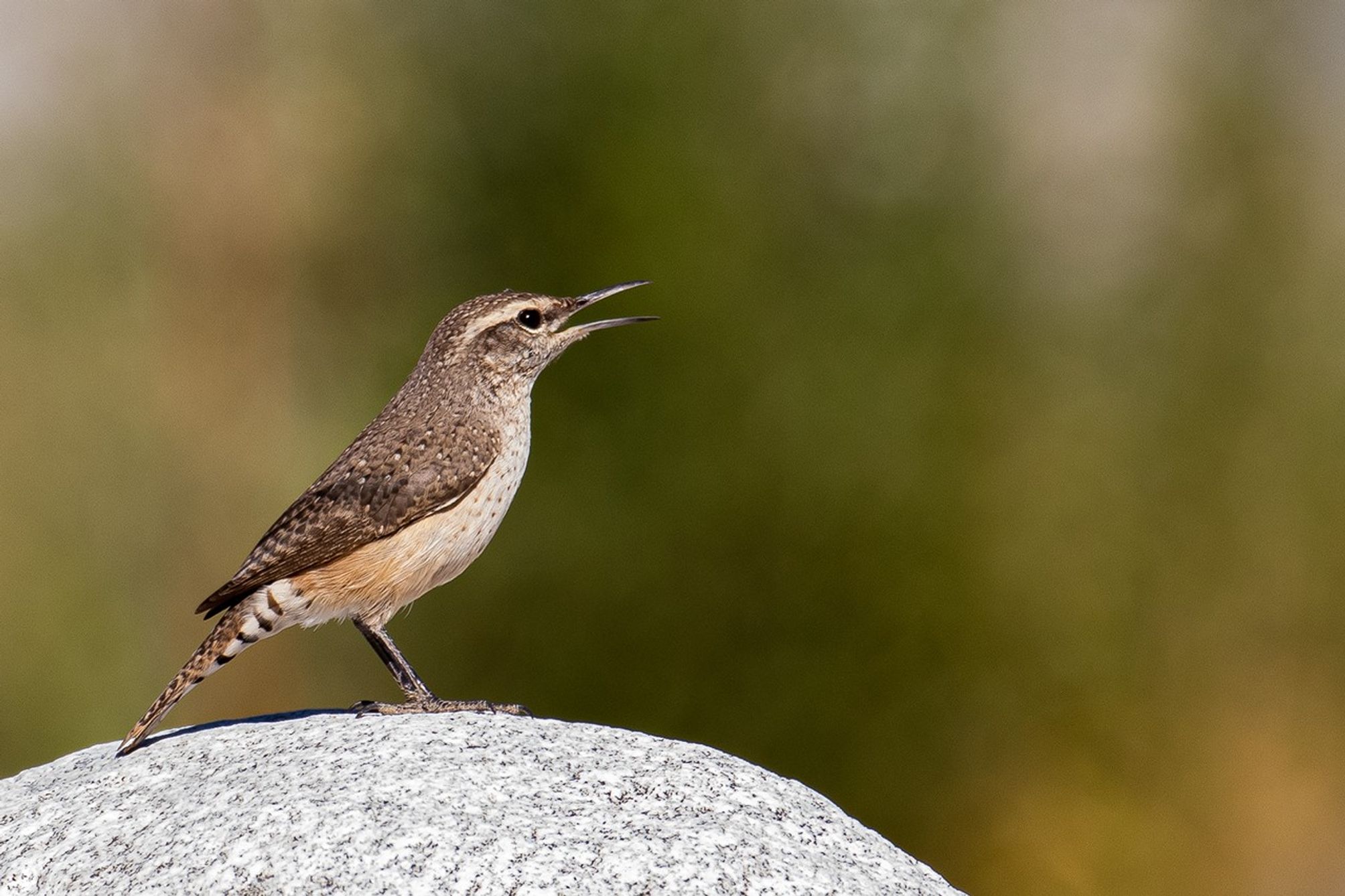
Rock wren in Joshua Tree National Park.
National Park Service / Jane Gamble
A team from Cornell, the University of St. Andrews, and the American Bird Conservancy used land imaging data from NASA’s Moderate Resolution Imaging Spectroradiometer (MODIS) instruments to distinguish among such specific bird habitats as open forests, dense shrublands, herbaceous croplands, and forest/cropland mosaics. They also drew on NASA weather information and water data that matched the dates and times when birders made their reports.
When combined with a 14-year set of eBird checklists — 36 million sets of species observations and counts, keyed directly to habitats — the satellite data gave researchers almost a strong foundation to produce a clear picture of the health of bird populations. But there was one missing piece.
Wrestling with Wren Data
While some eBird checklists come from expert birders who’ve hiked deep into wildlife preserves, others are sent in by novices watching bird feeders and doing the dishes. This creates what Cornell statistician Daniel Fink described as “an unstructured, very noisy data set,” complete with gaps in the landscape that birders did not reach and, ultimately, some missing birds.
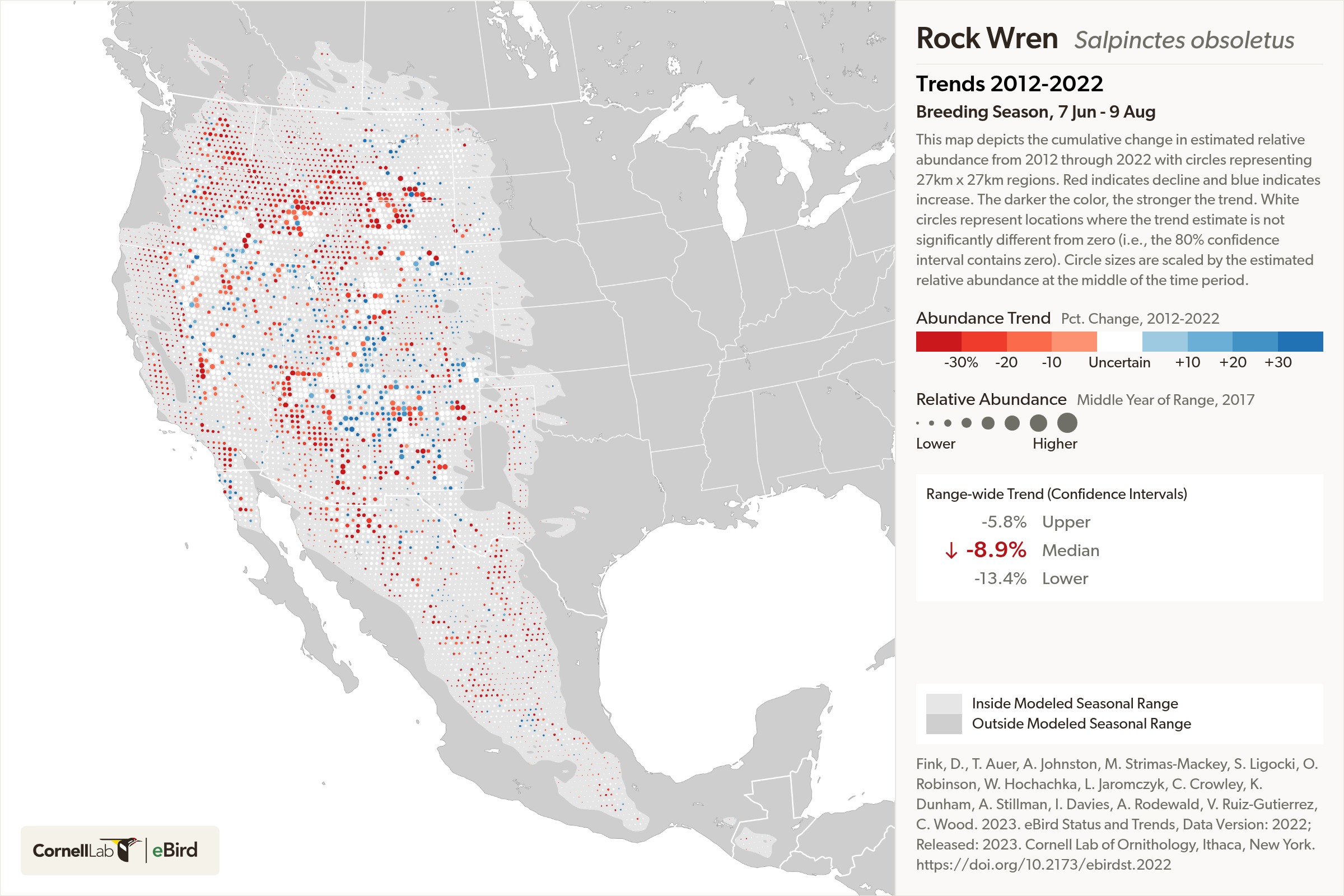
To account for gaps where birds weren’t counted, the researchers trained machine learning models to fill in the maps based on the remote sensing data. “For every single species — say the rock wren — we’ve created a simulation that mimics the species and a variety of ways that it could respond to changes in the environment,” Johnston said. “Thousands of simulations underlie the results we showed.”
CornellLab eBird
The researchers achieved unprecedented resolution, zeroing in on areas 12 miles by 12 miles (27 km by 27 km), the same area as Portland, Oregon. This new population counting method can also be applied to eBird data from other locations, Fink said. “Now we’re using modeling to track bird populations — not seasonally through the year, but acrossthe years — a major milestone,” he added.
“We’ve been able to take citizen science data and, through machine learning methodology, put it on the same footing as traditionally structured surveys, in terms of the type of signal we can find,” said Cornell science product manager Tom Auer. “It will increase the credibility and confidence of people who use this information for precise conservation all over the globe.”
The Up Side
Since 1970, North America has lost one-quarter of its breeding birds, following a global trend of declines across species. The causes range from increased pollution and land development to changing climate and decreased food resources. Efforts to reverse this loss depend on identifying the areas where birds live at highest risk, assessing their populations, and pinpointing locations where conservation could help most.
For 83% of the reported species in the new study, the decline was greatest in spots where populations had previously been most abundant — indicating problems with the habitat.
“Even in species where populations are declining a lot, there are still places of hope, where the populations are going up,” Johnston said. The team found population increases in the maps of 97% of the reported species. “That demonstrates that there’s opportunity for those species.”
“Birds face so many challenges,” said Cornell conservationist Amanda Rodewald. “This research will help us make strategic decisions about making changes that are precise, effective, and less costly. This is transformative. Now we can really drill in and know where specifically we’re going to be able to have the most positive impact in trying to stem bird declines.”








/Space%20Launch%20System%20(SLS).png)